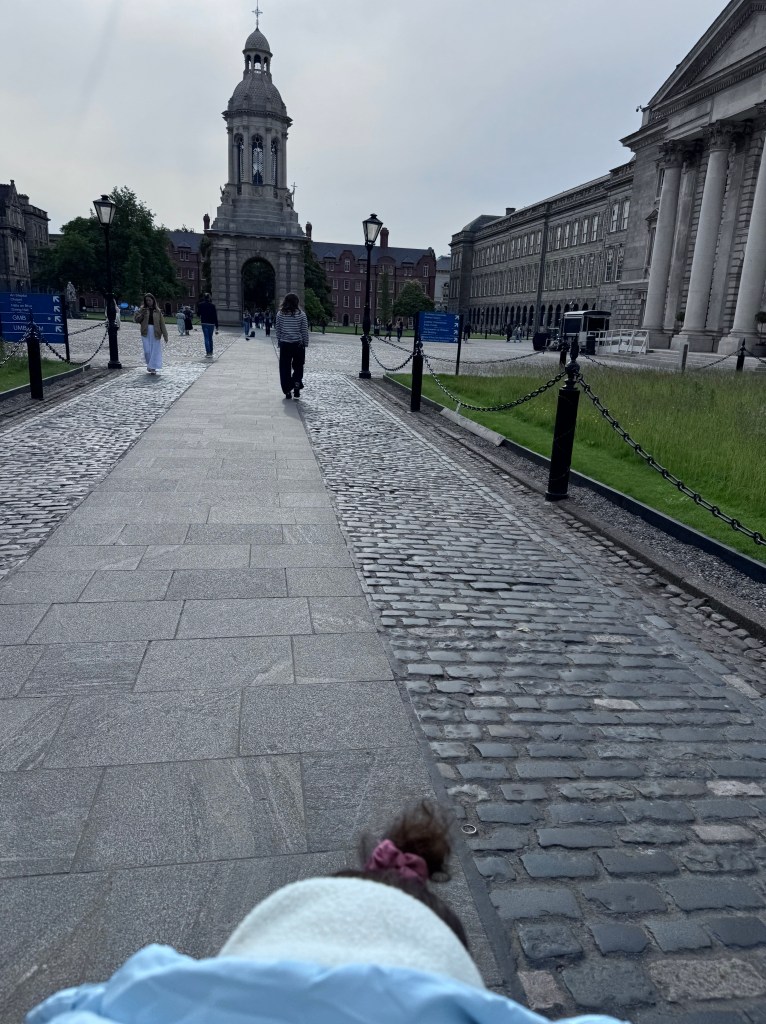
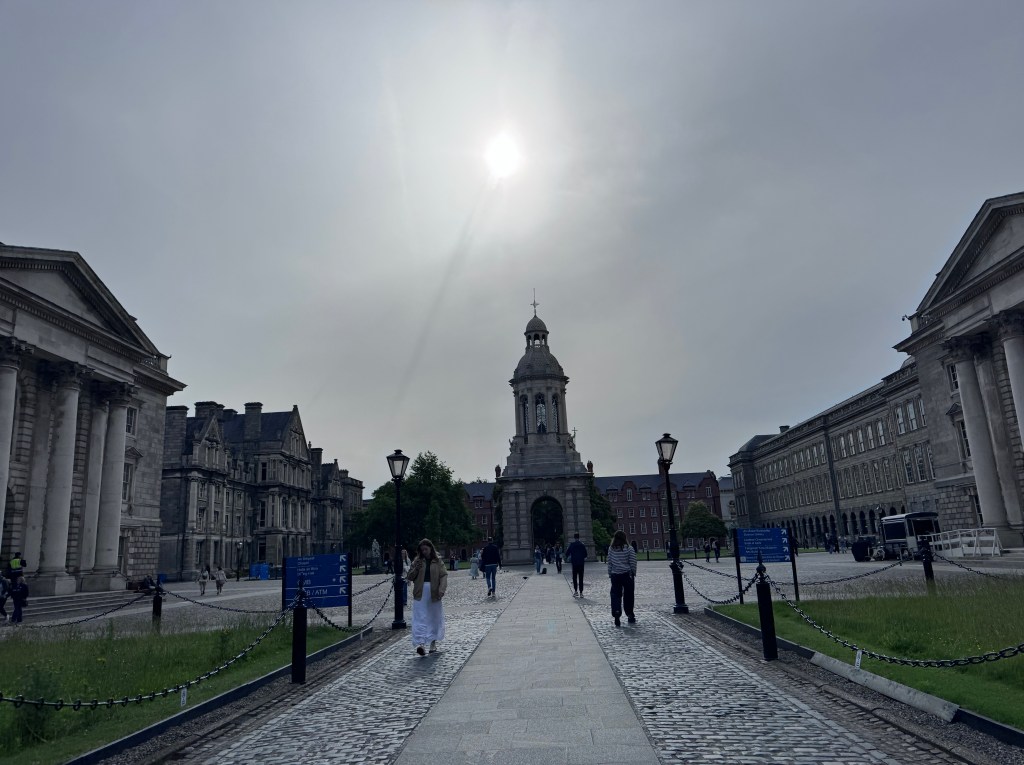
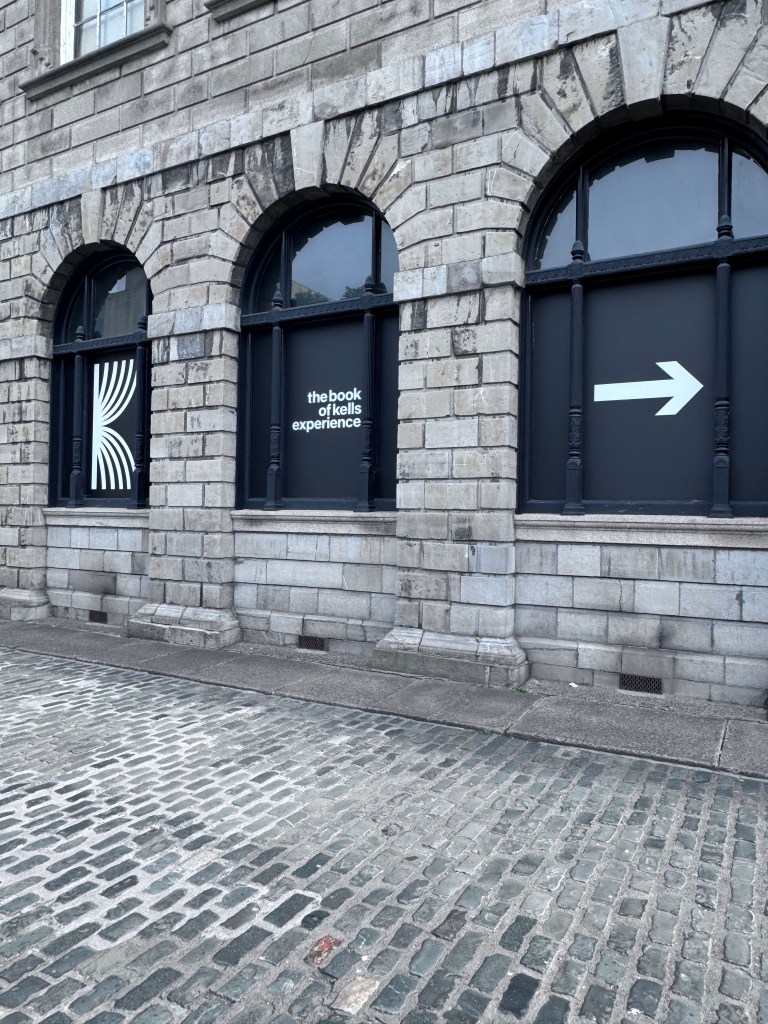
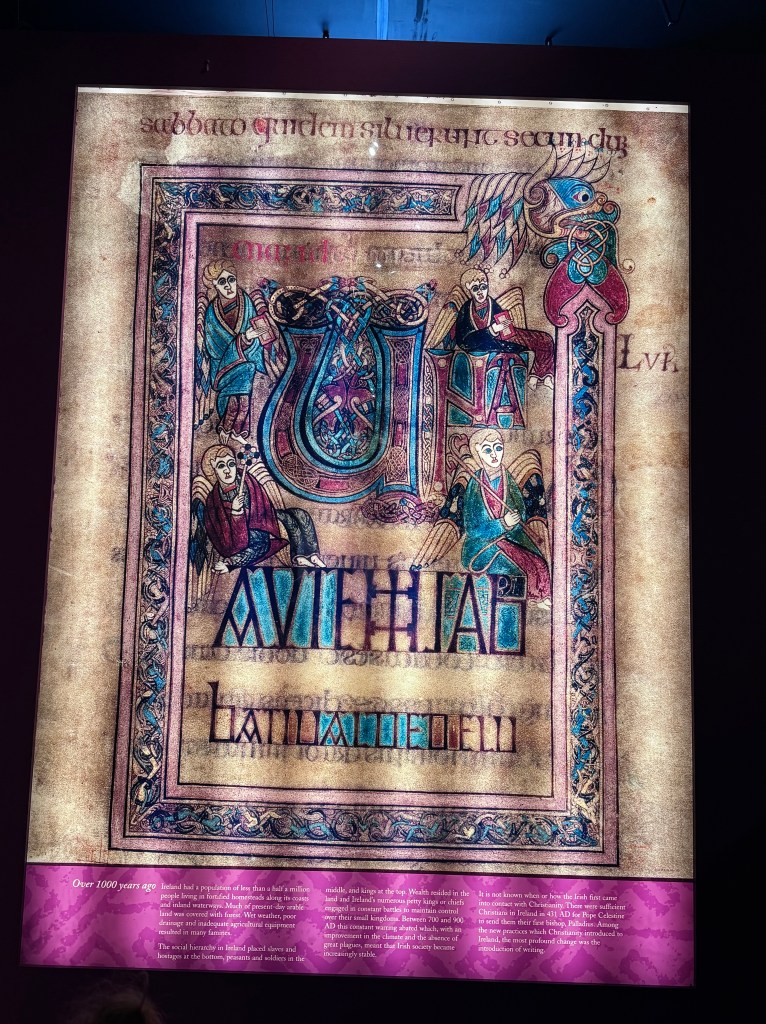
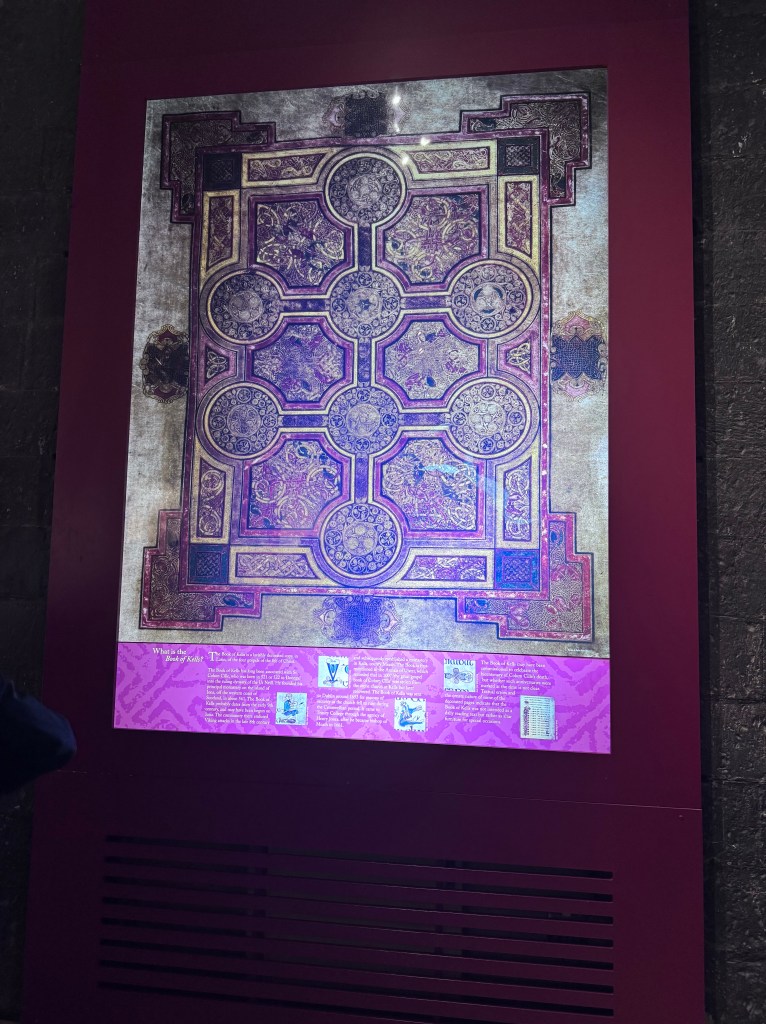
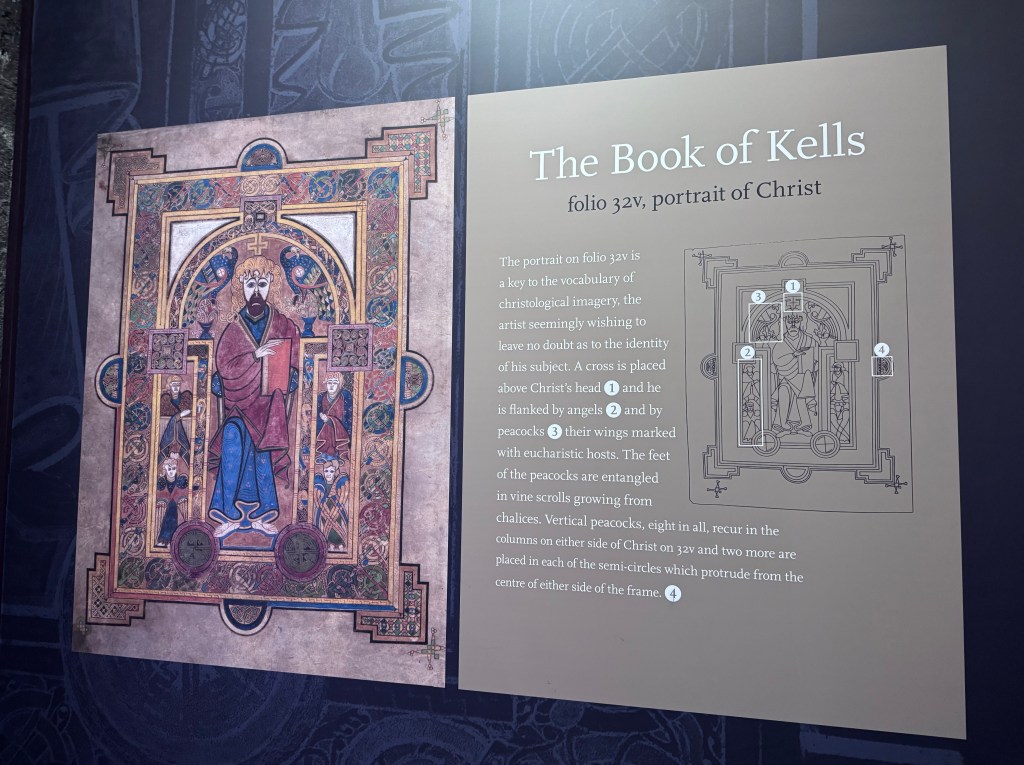
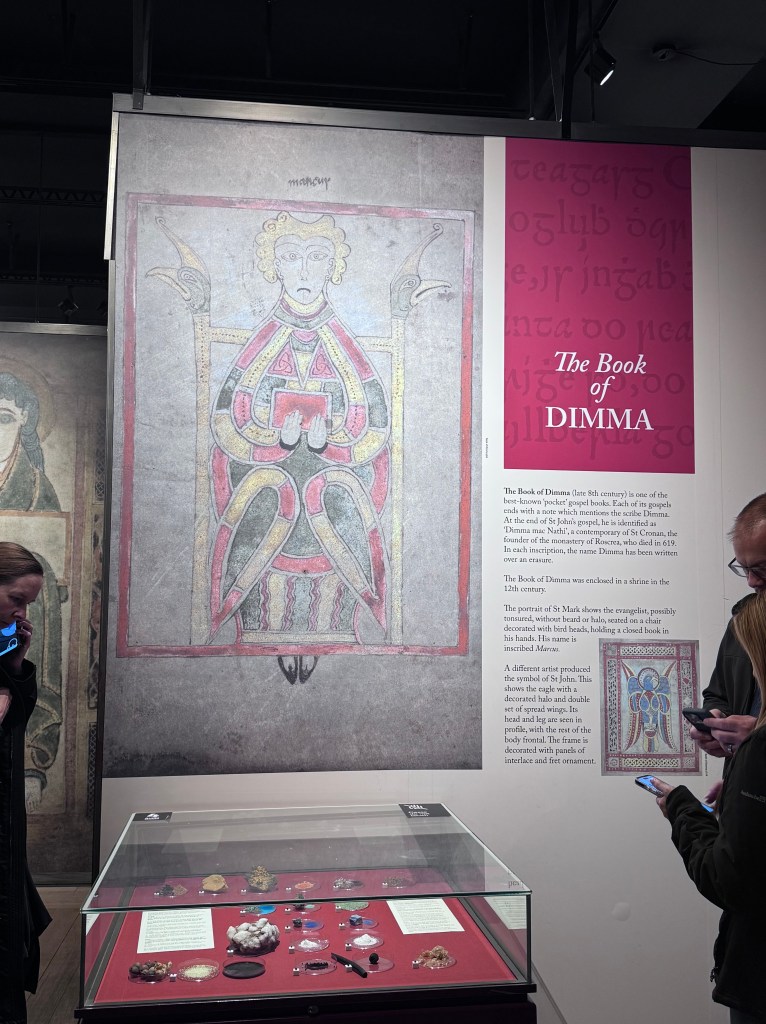
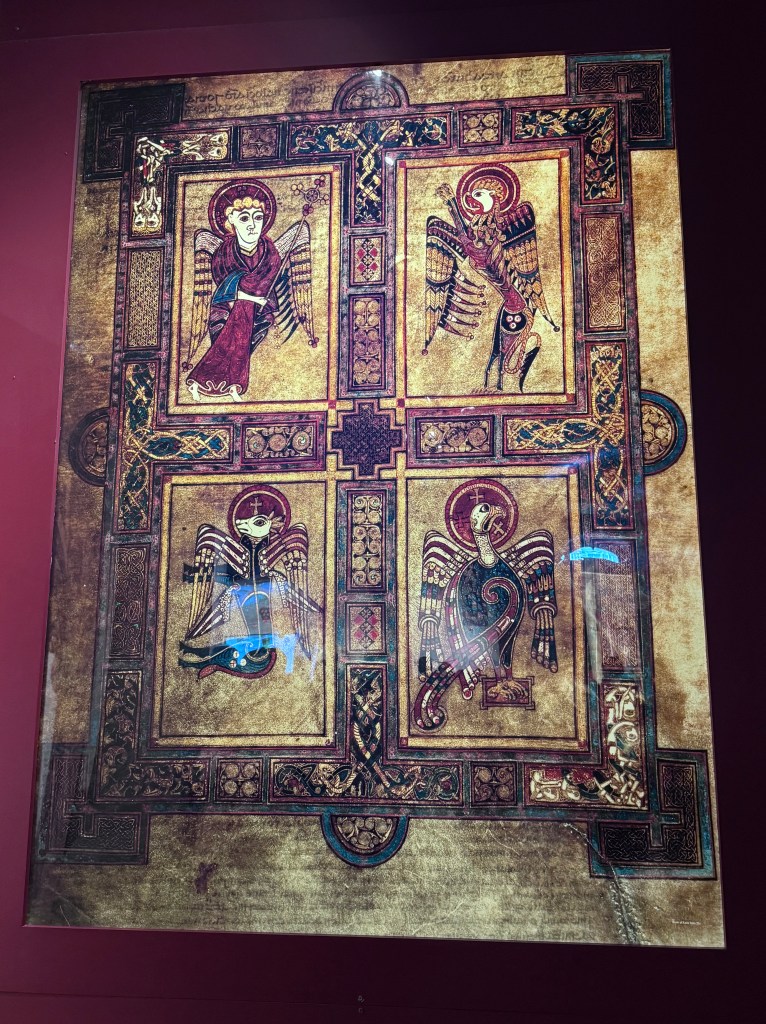
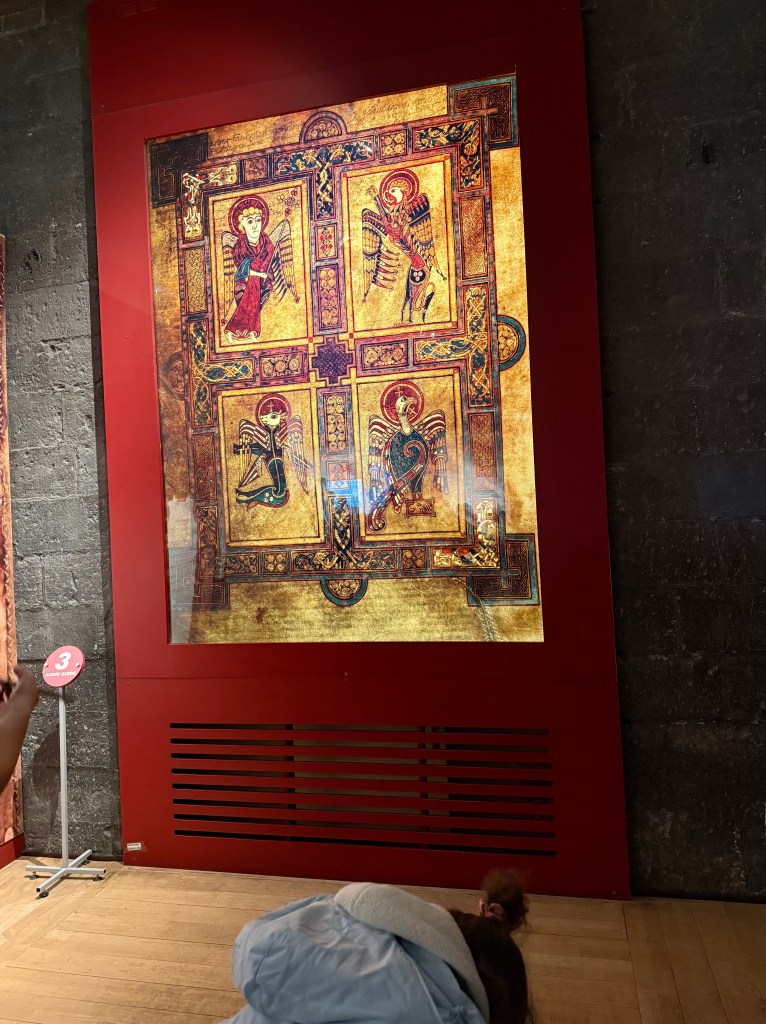
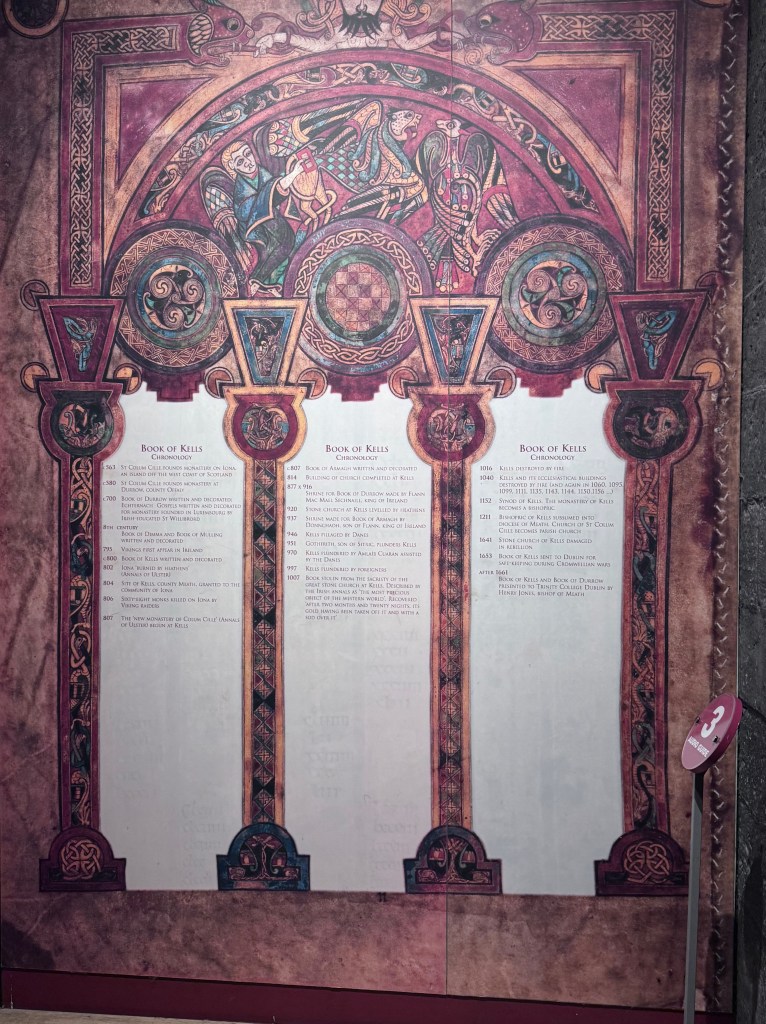
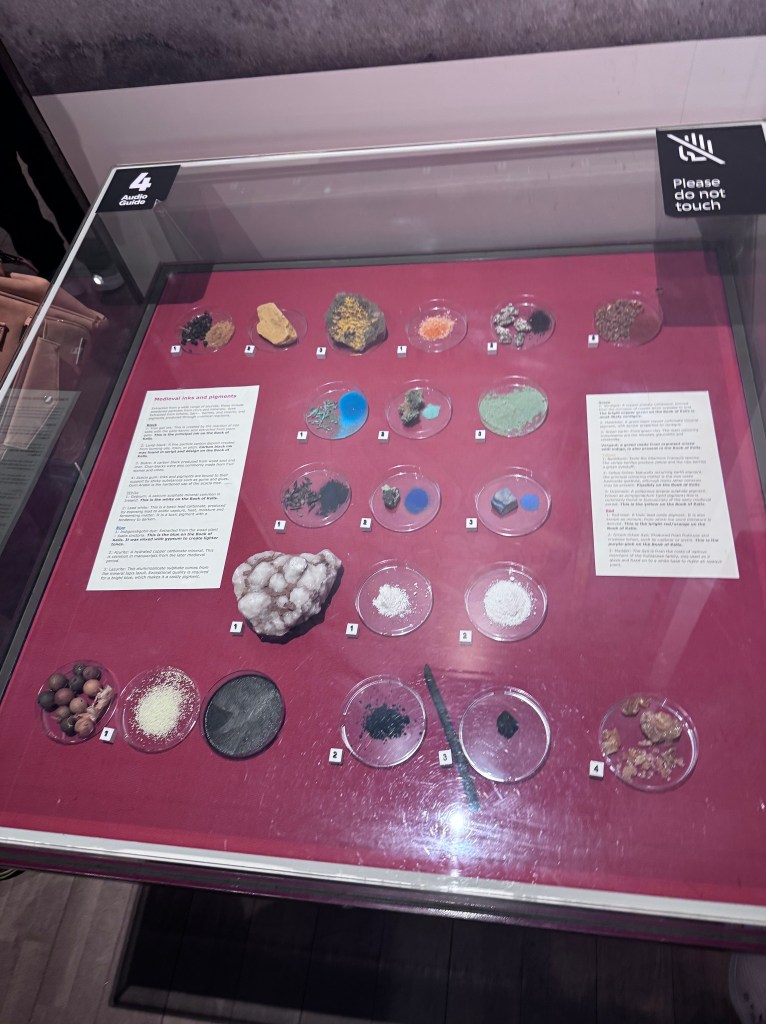
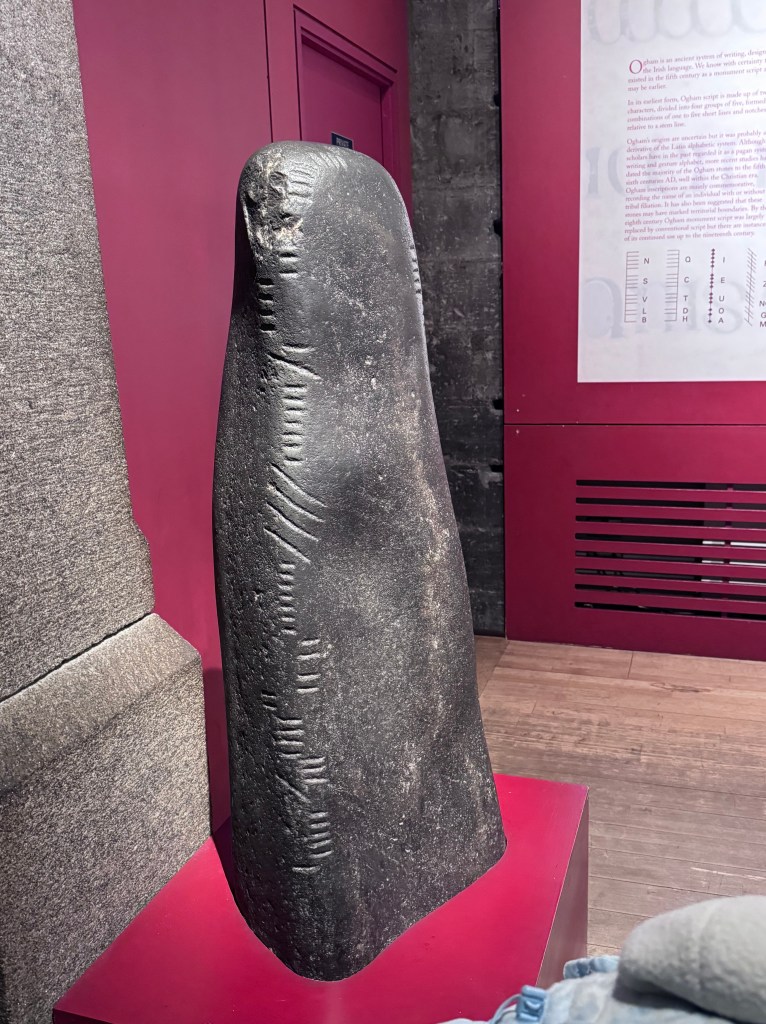
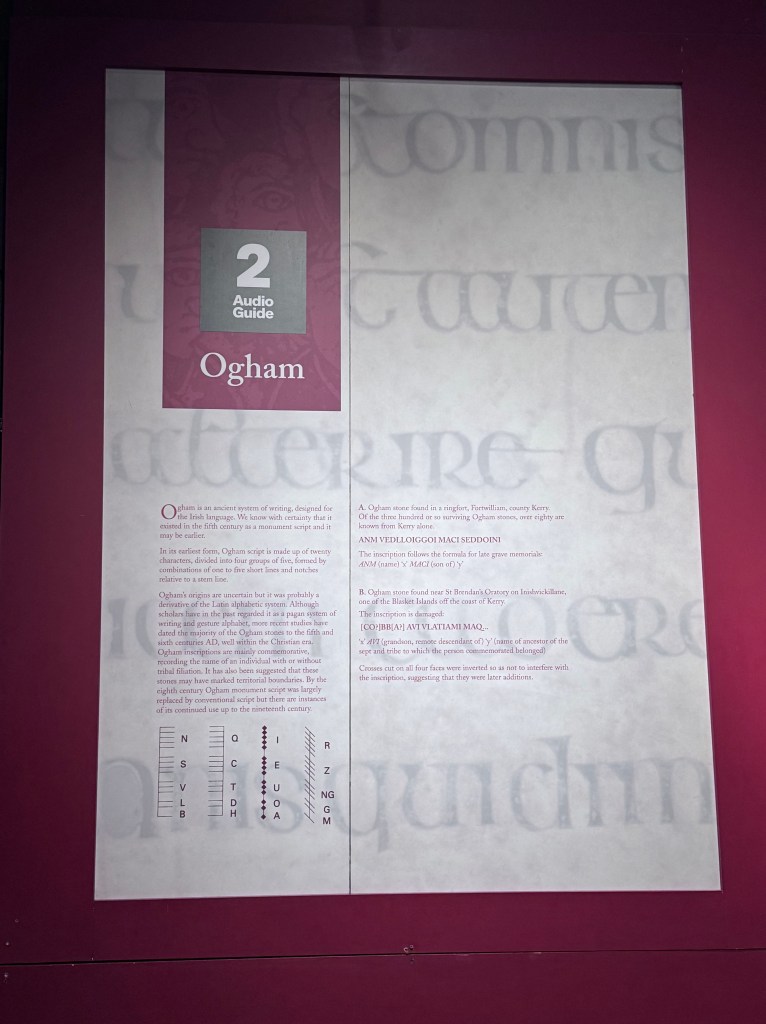
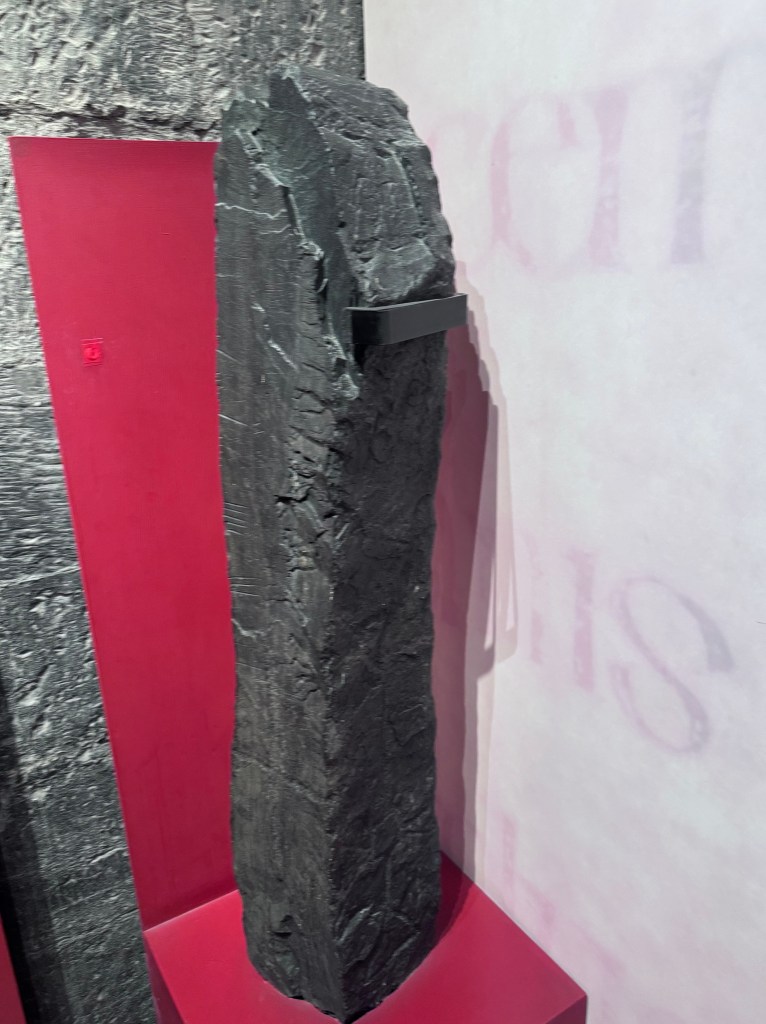
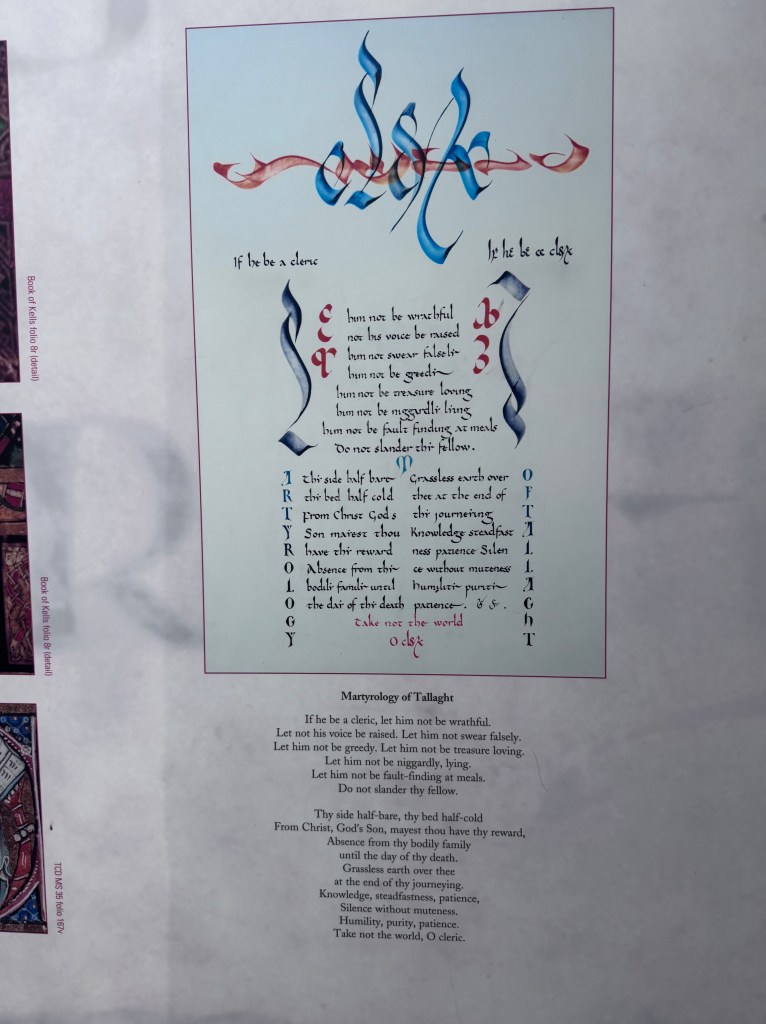
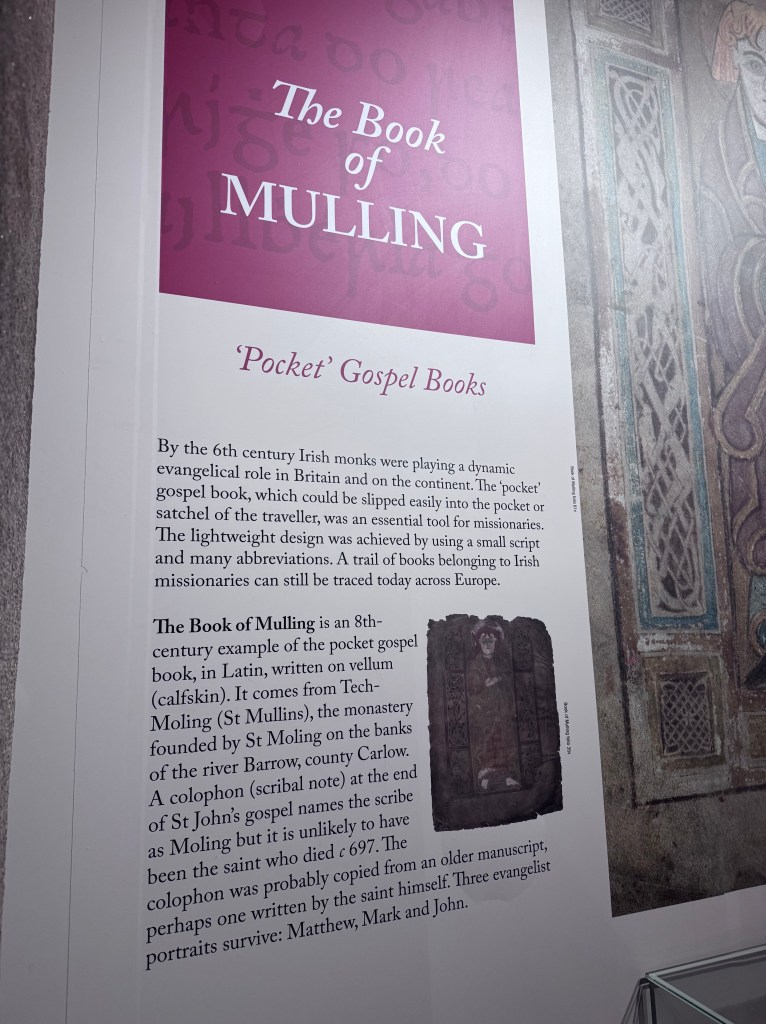
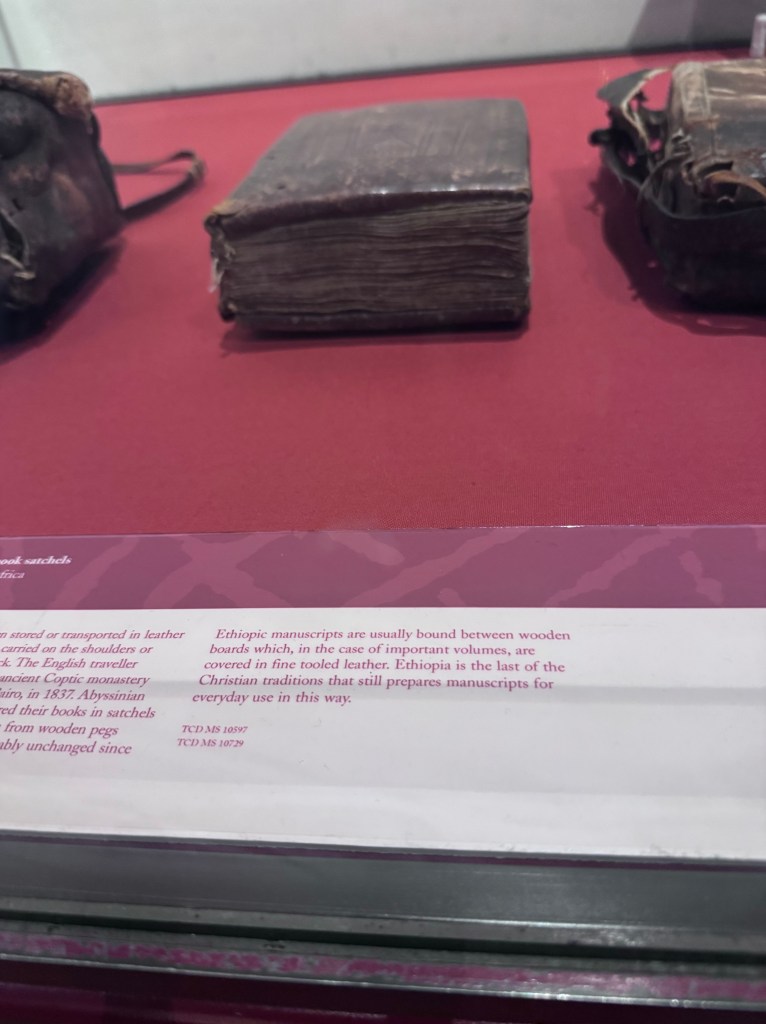
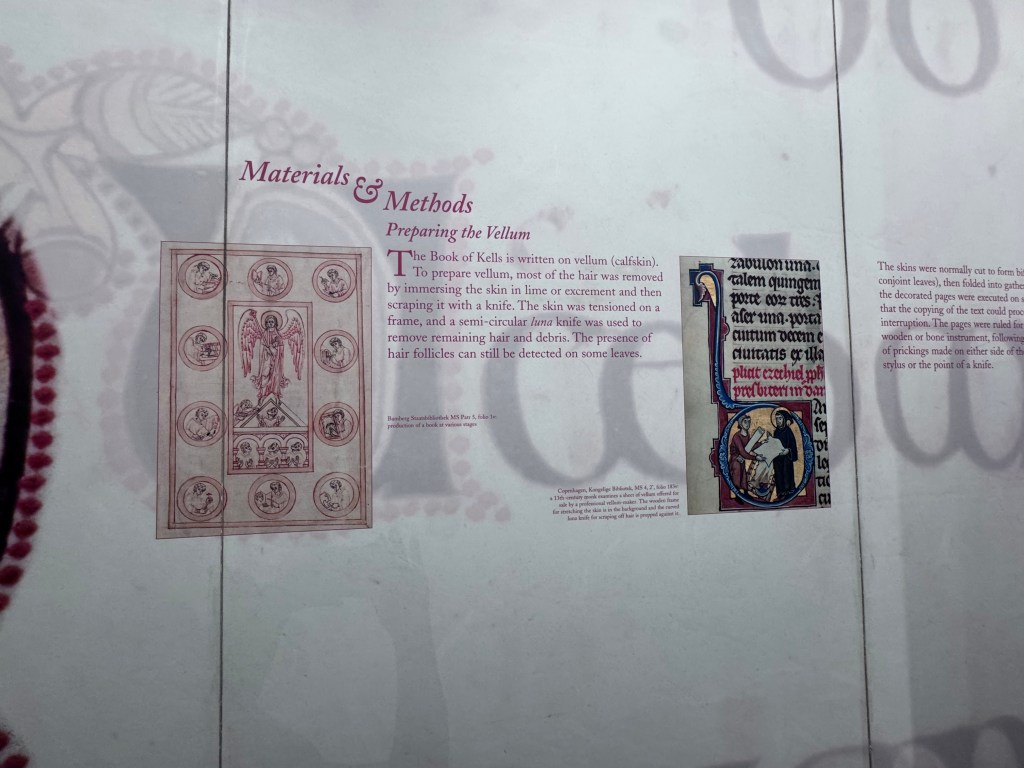
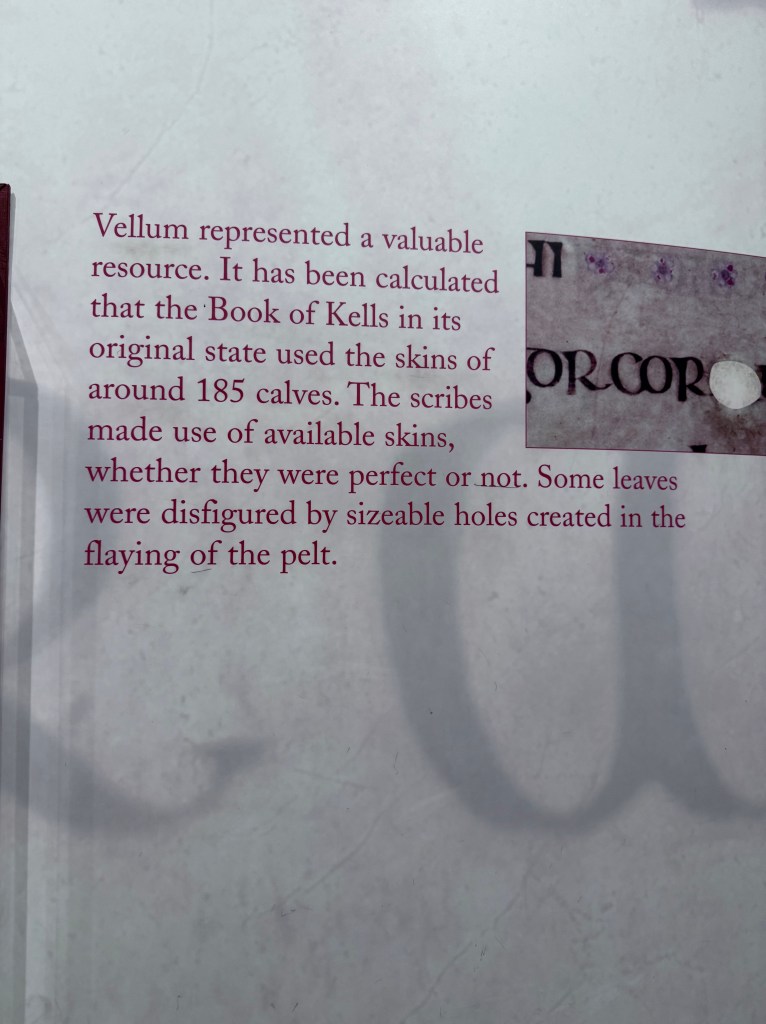
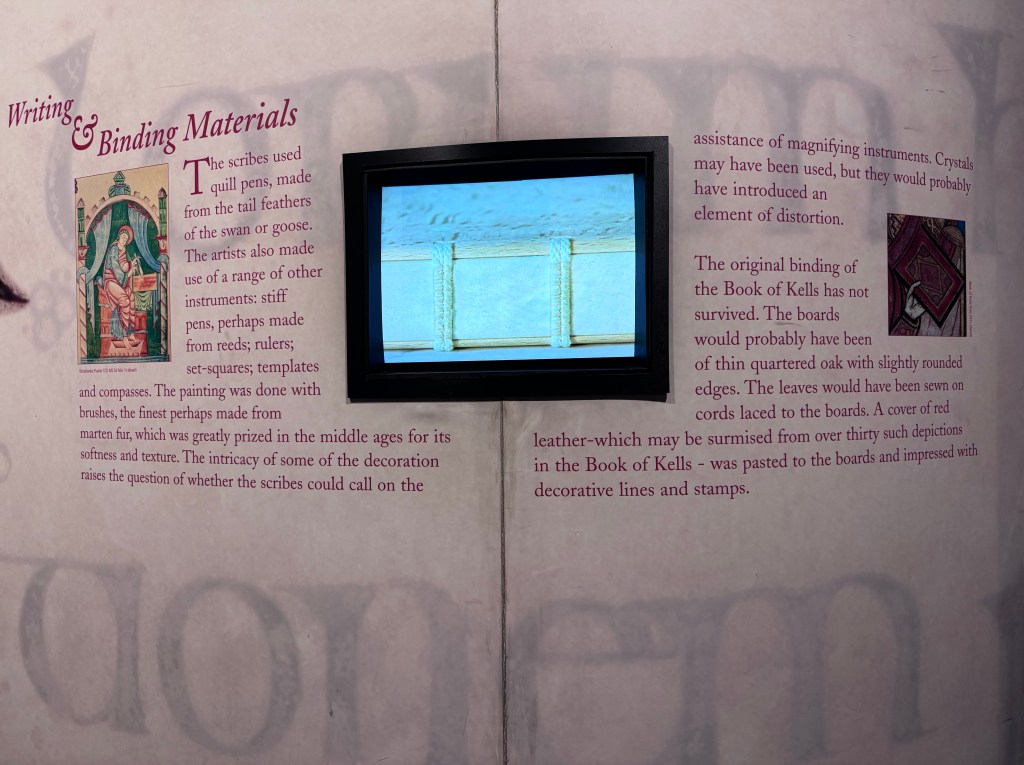
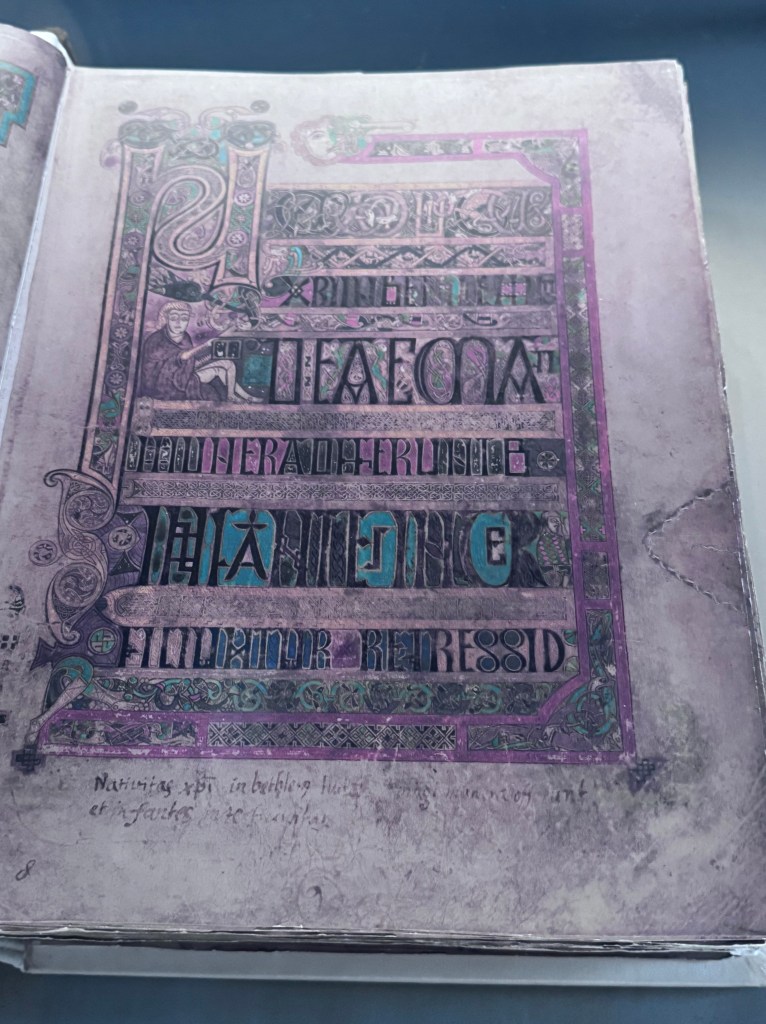
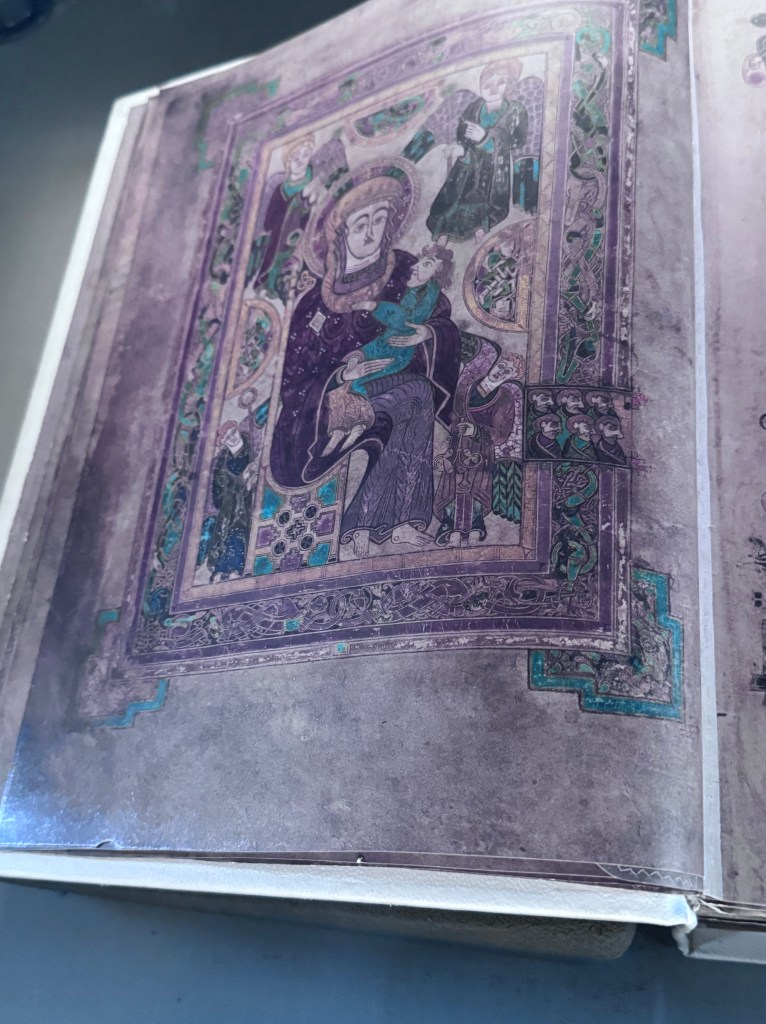
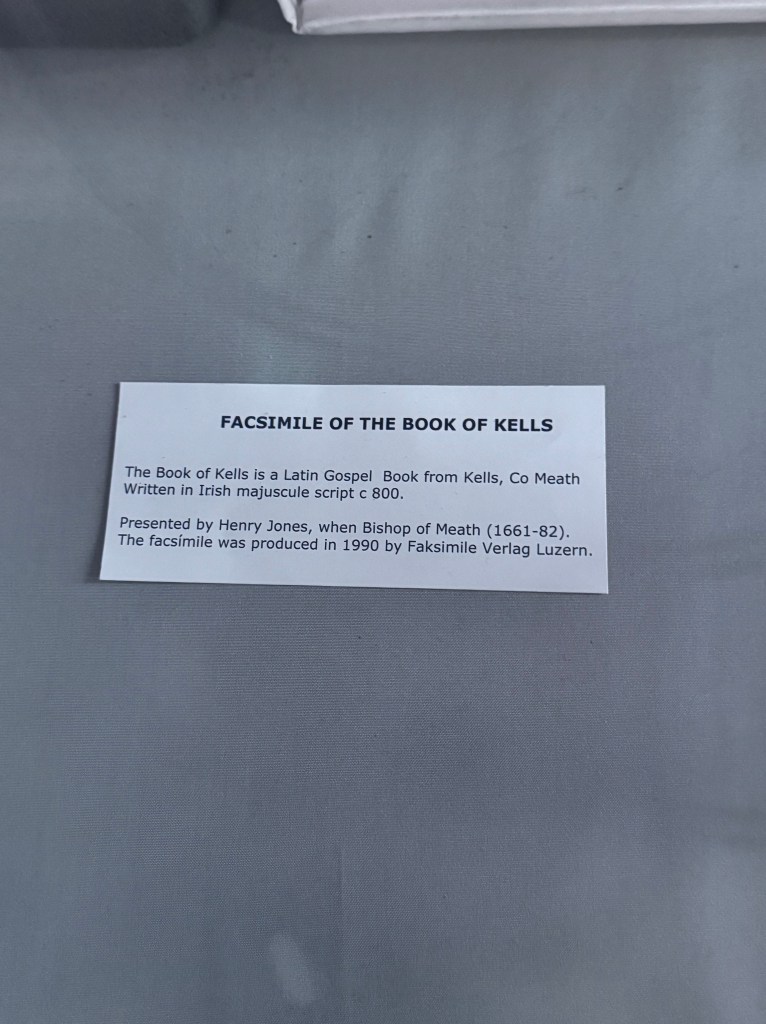
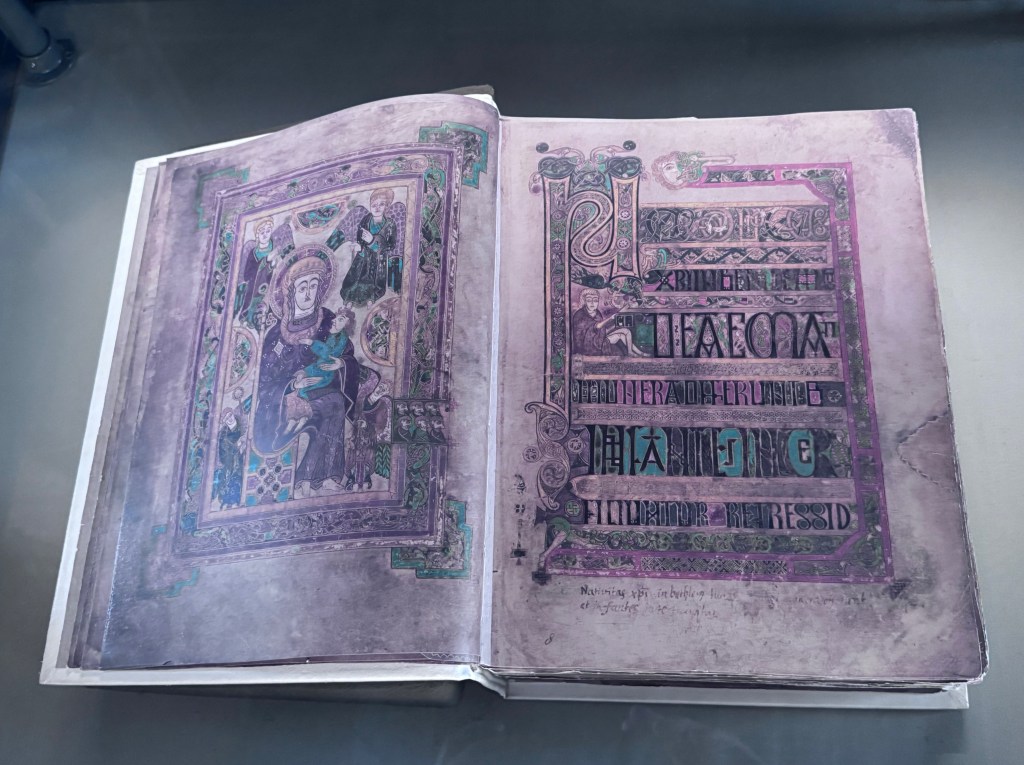
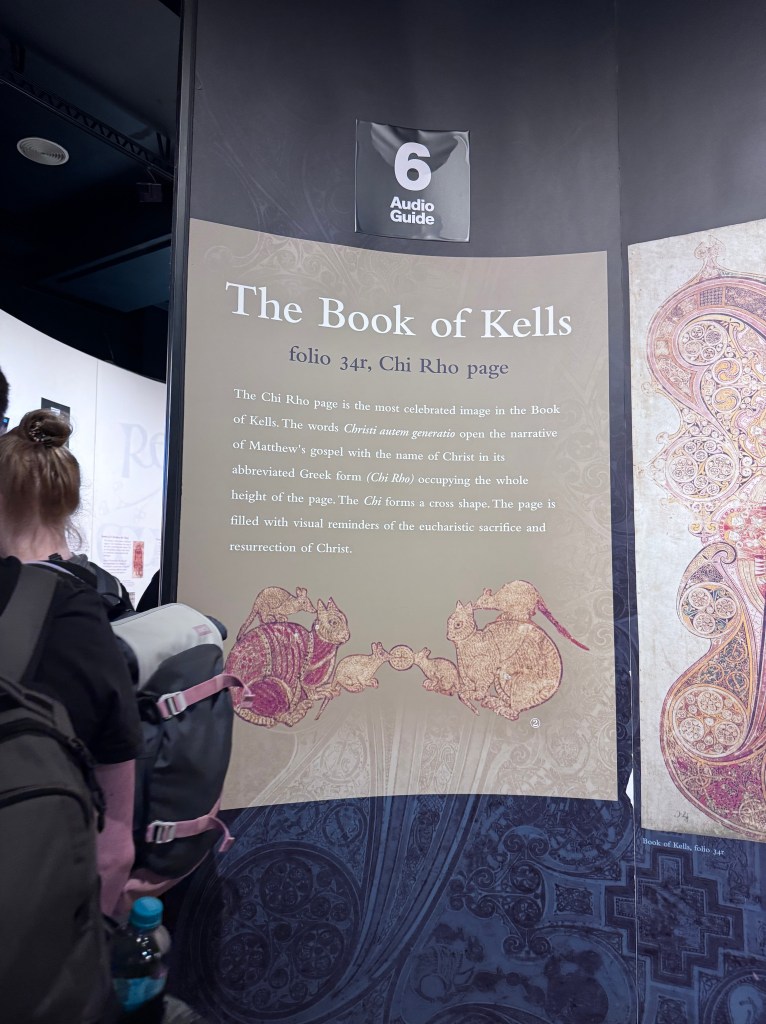
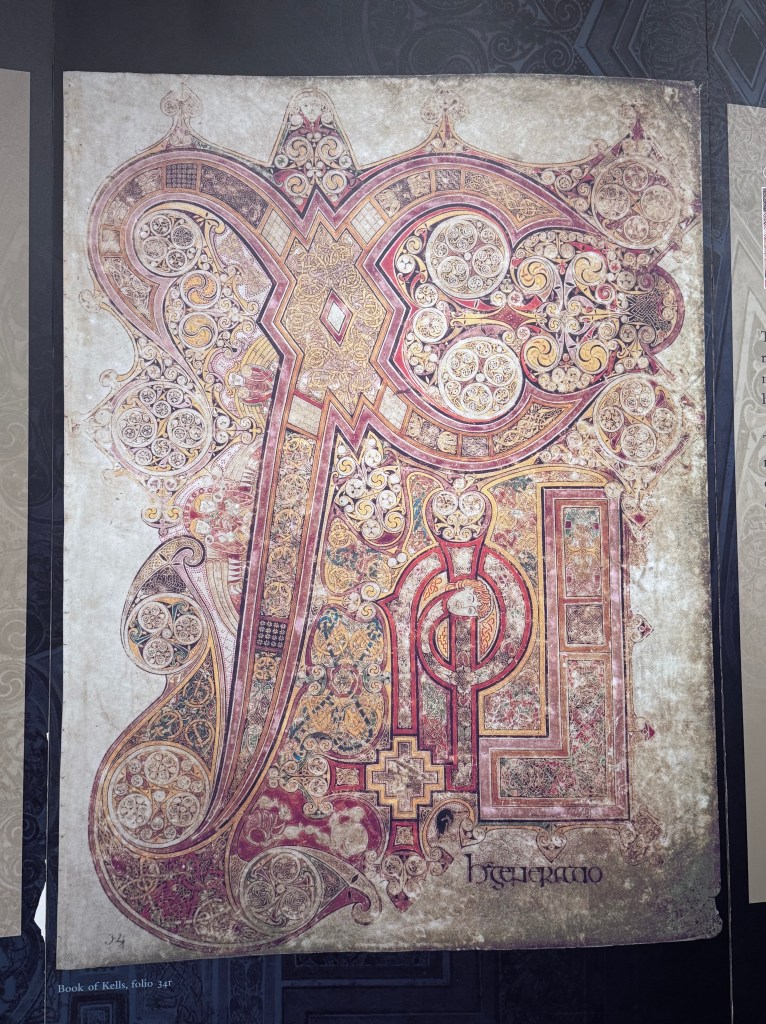
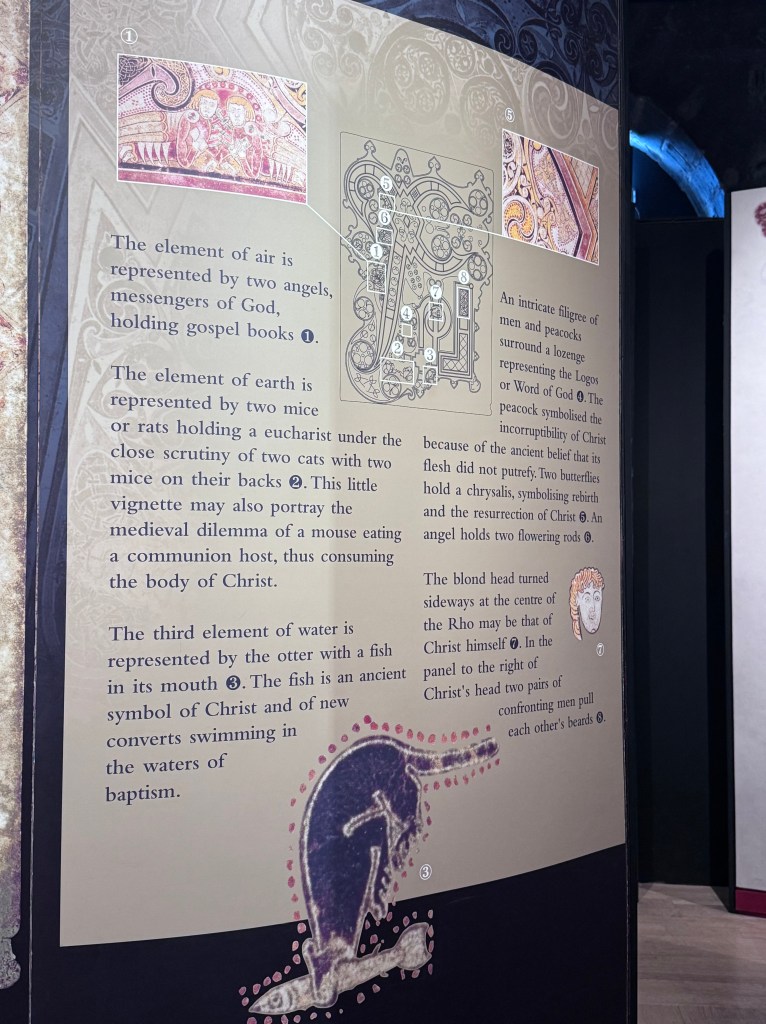
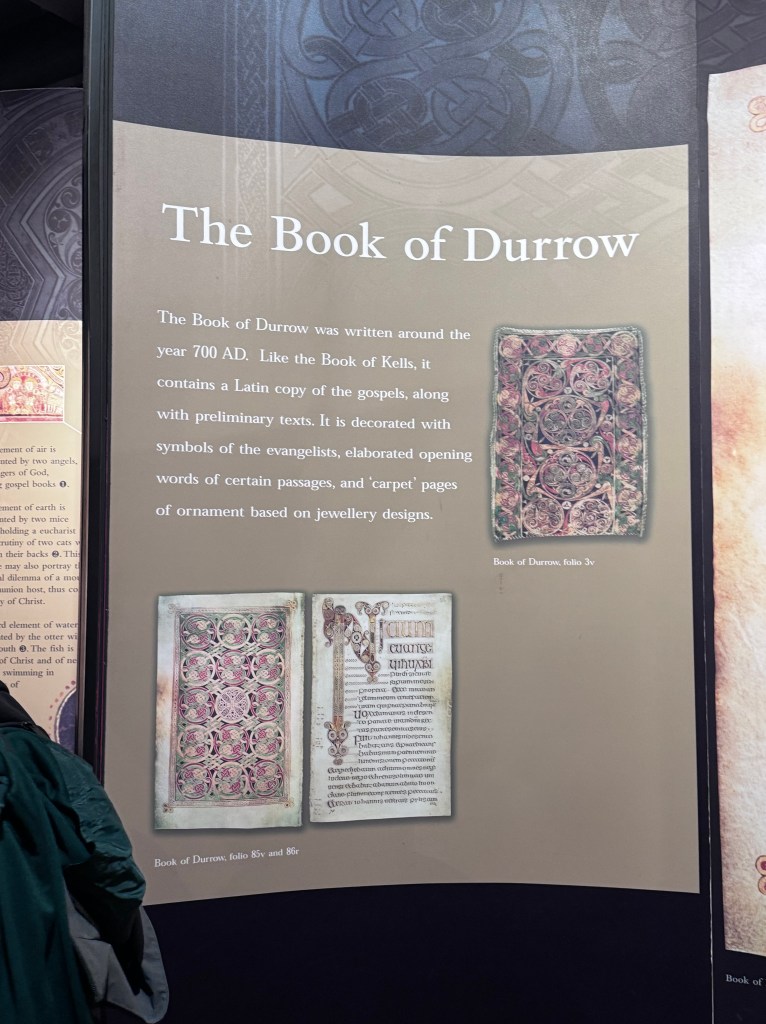
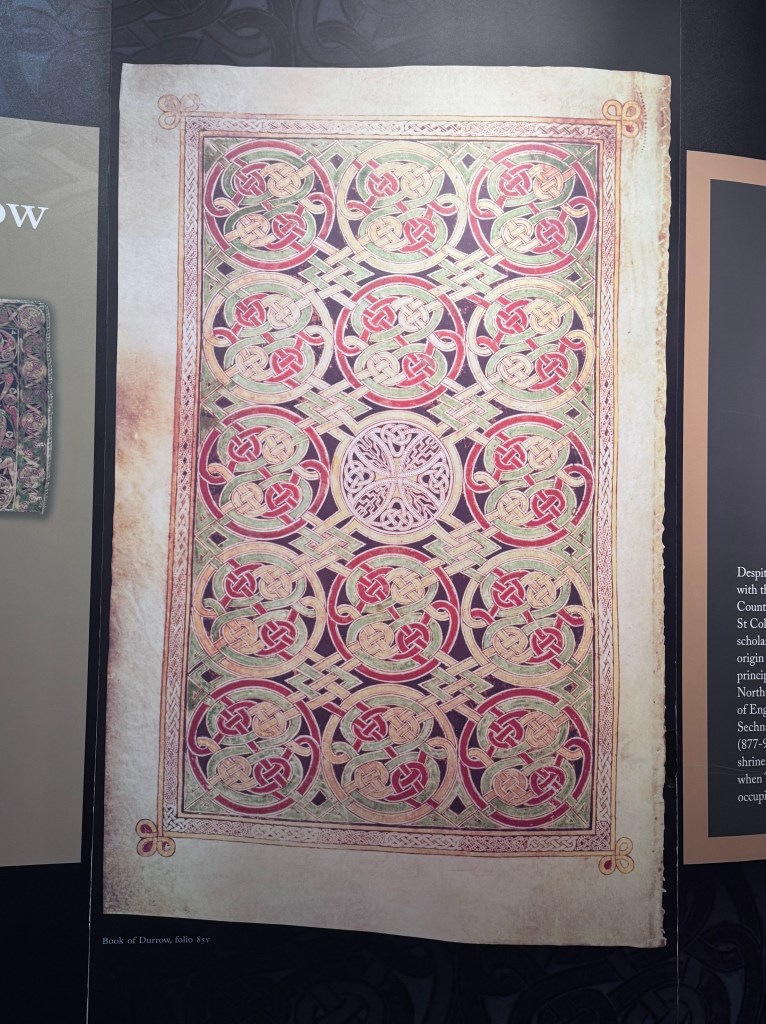
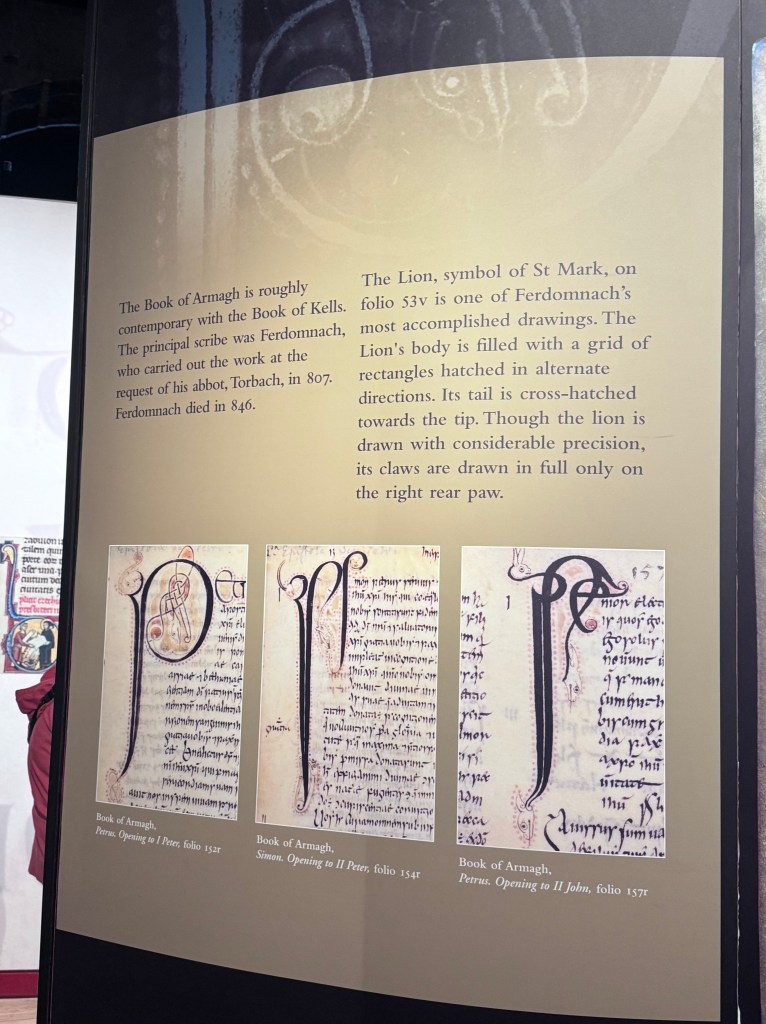
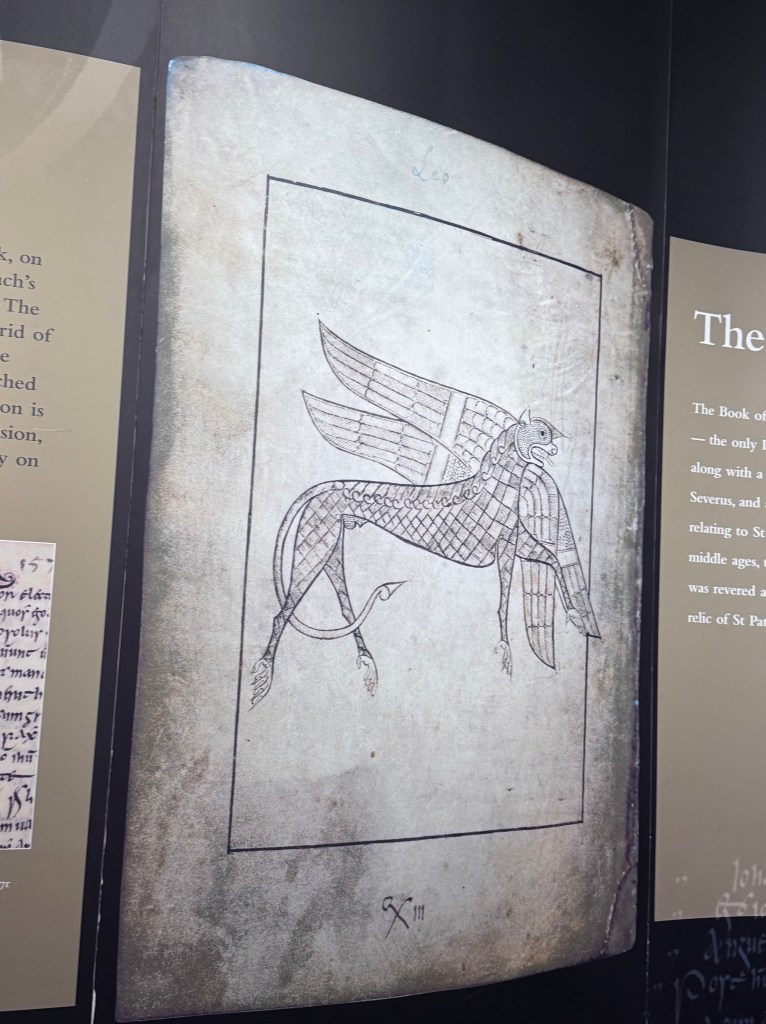
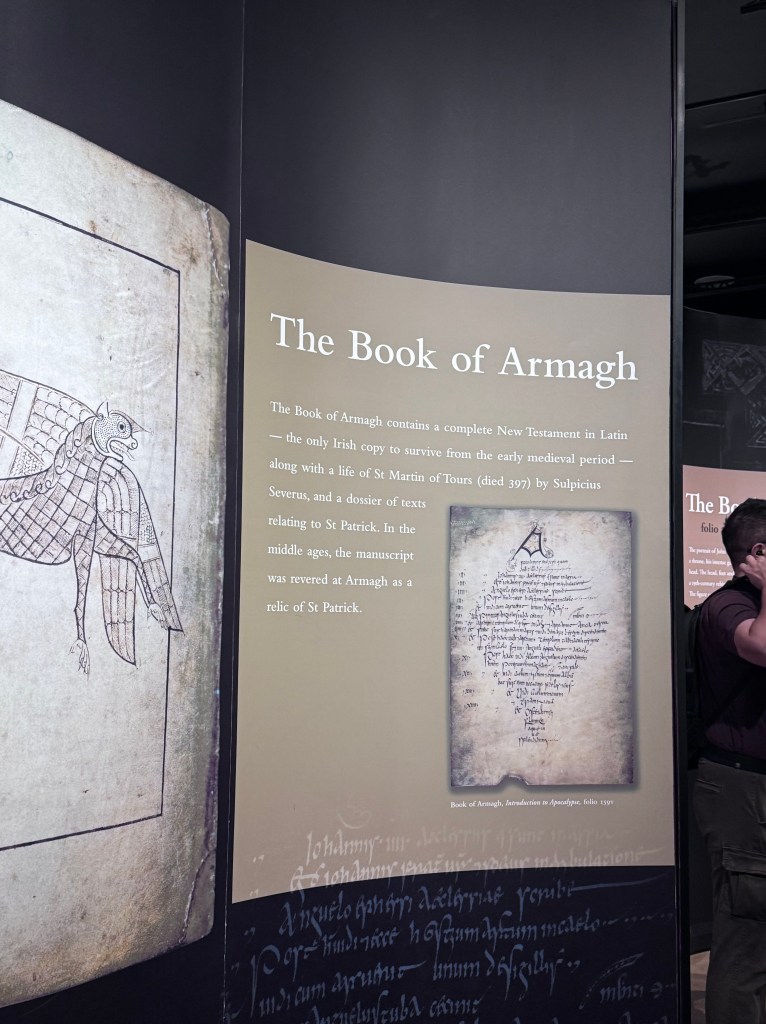
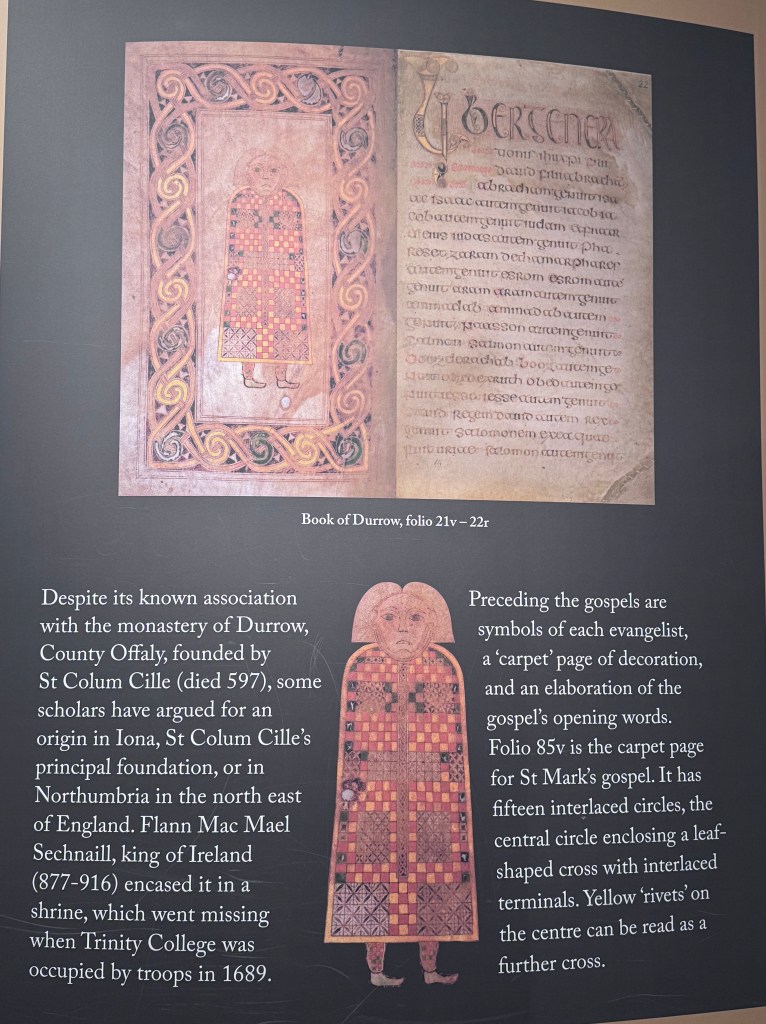
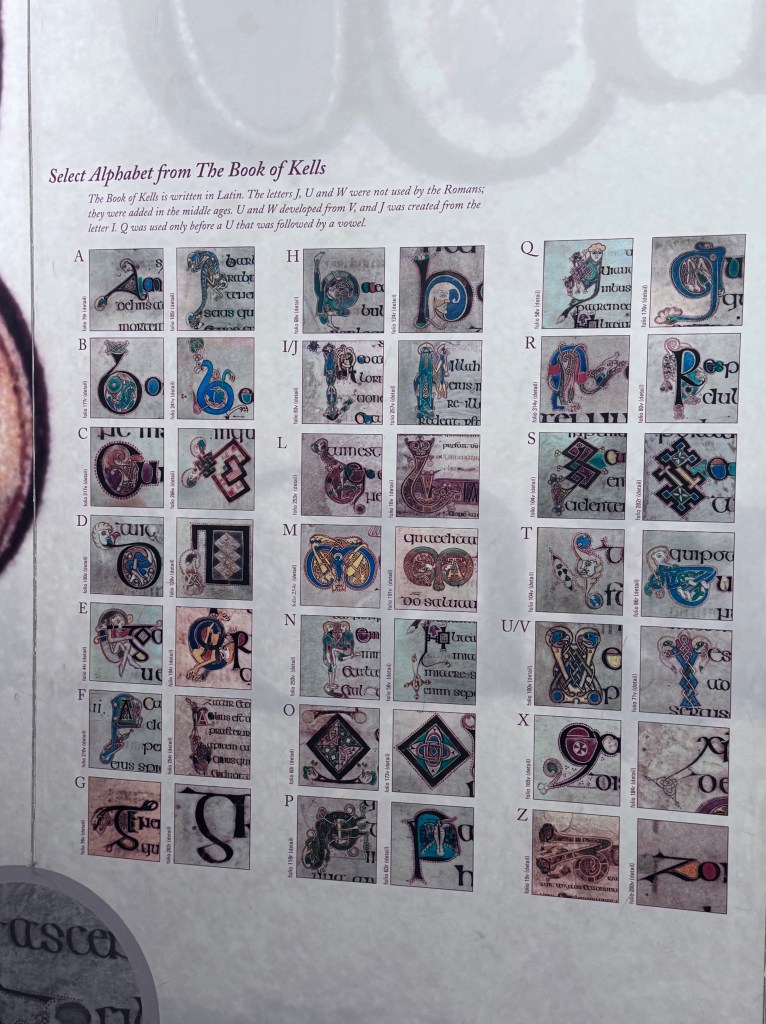
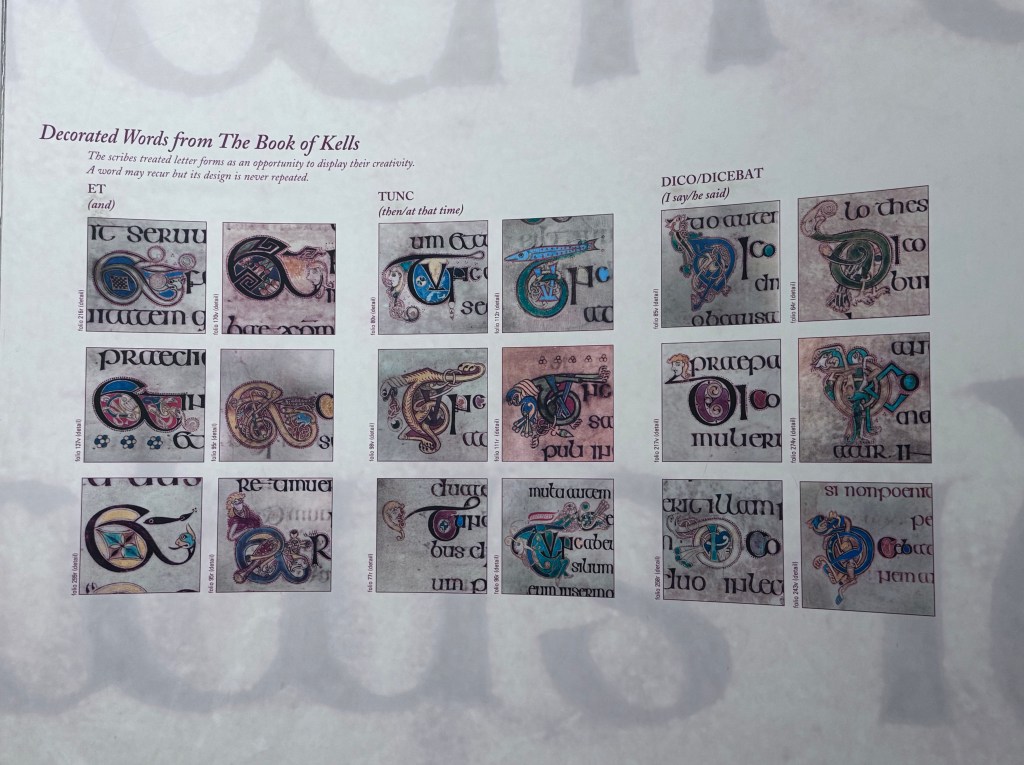
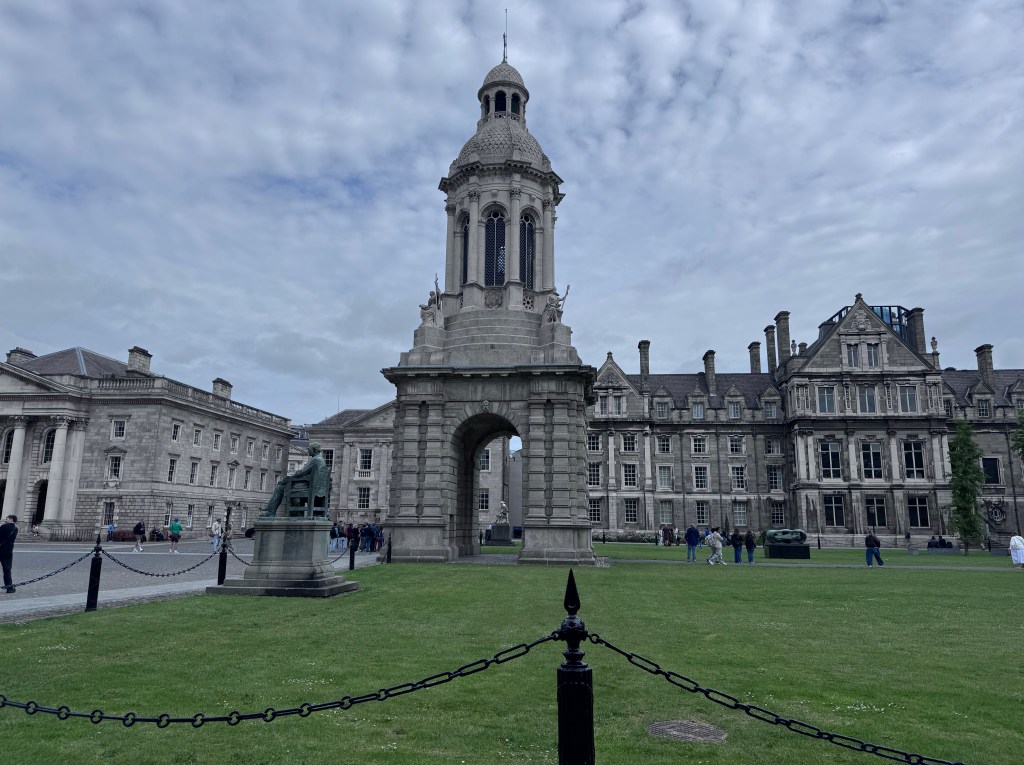
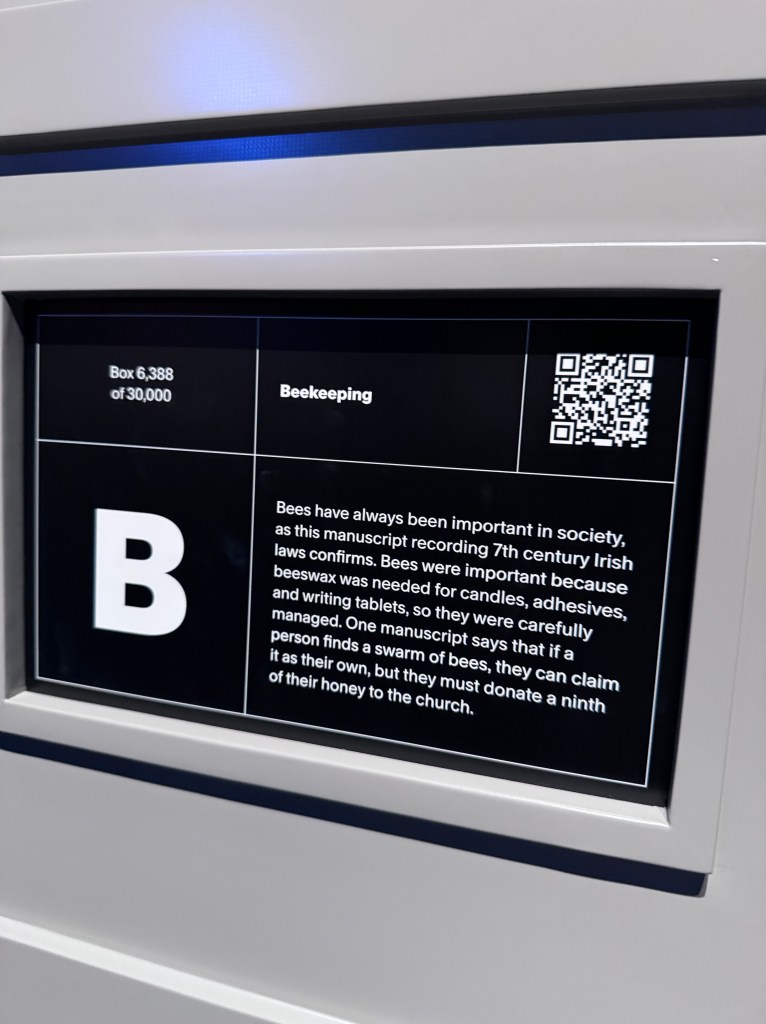
Yesterday we visited Trinity College Dublin and saw the incredible Book of Kells. What an experience that was! It is hard to describe the feeling of standing in front of something so old. When you understand the journey the book has taken and everything it survived through the centuries, it becomes even more remarkable. The illustrations are vivid and stunning, created using pigments and minerals that still seem to glow today. It was truly inspiring. Go see the Book of Kells. I would go back again!!! Watch some of the videos I post to help you understand. At one point it was buried underground. The photos show the colors but in person they are startling.
“The Book of Kells is one of Ireland’s greatest cultural treasures and one of the finest illuminated manuscripts in the world. Created around 800 AD by Celtic monks, likely on the Scottish island of Iona before being moved to Kells, Ireland, for safekeeping during Viking raids, the book contains the four Gospels of the New Testament. What makes it extraordinary is its intricate artwork, vibrant colors, and elaborate decorative pages created using natural pigments and minerals sourced from across Europe and beyond. Despite being over 1,200 years old and surviving Viking attacks, theft, and centuries of wear, much of its beauty remains intact today. The manuscript eventually found a permanent home at Trinity College Dublin, where it continues to inspire millions of visitors each year as a remarkable example of medieval artistry, faith, and scholarship.”
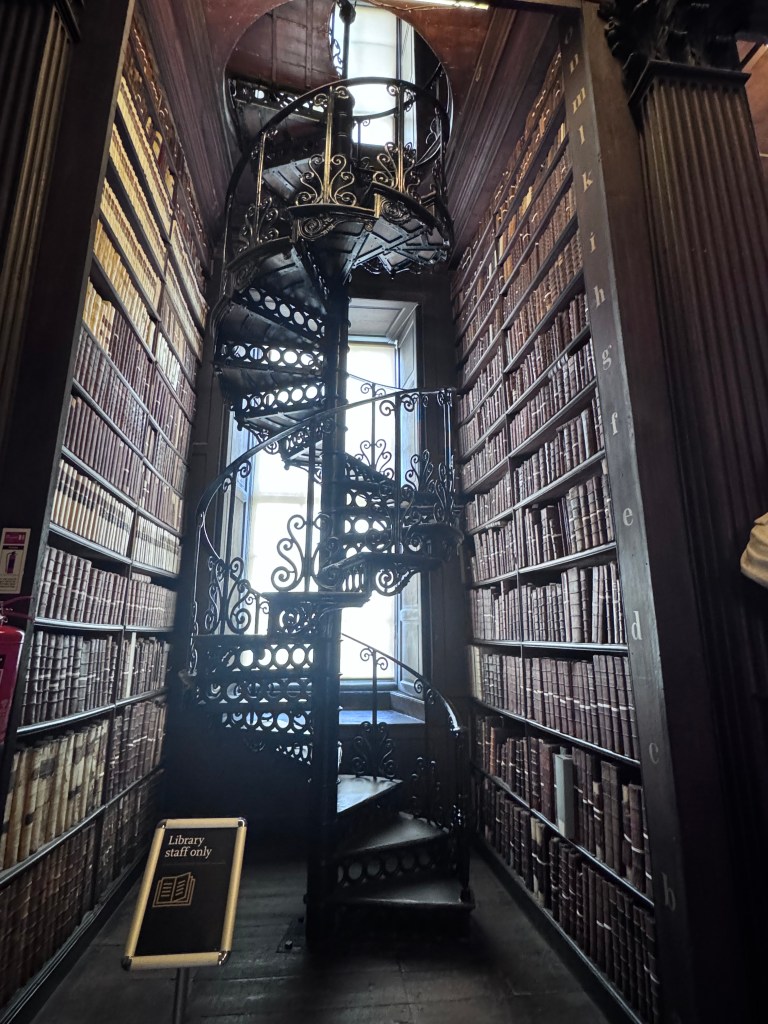
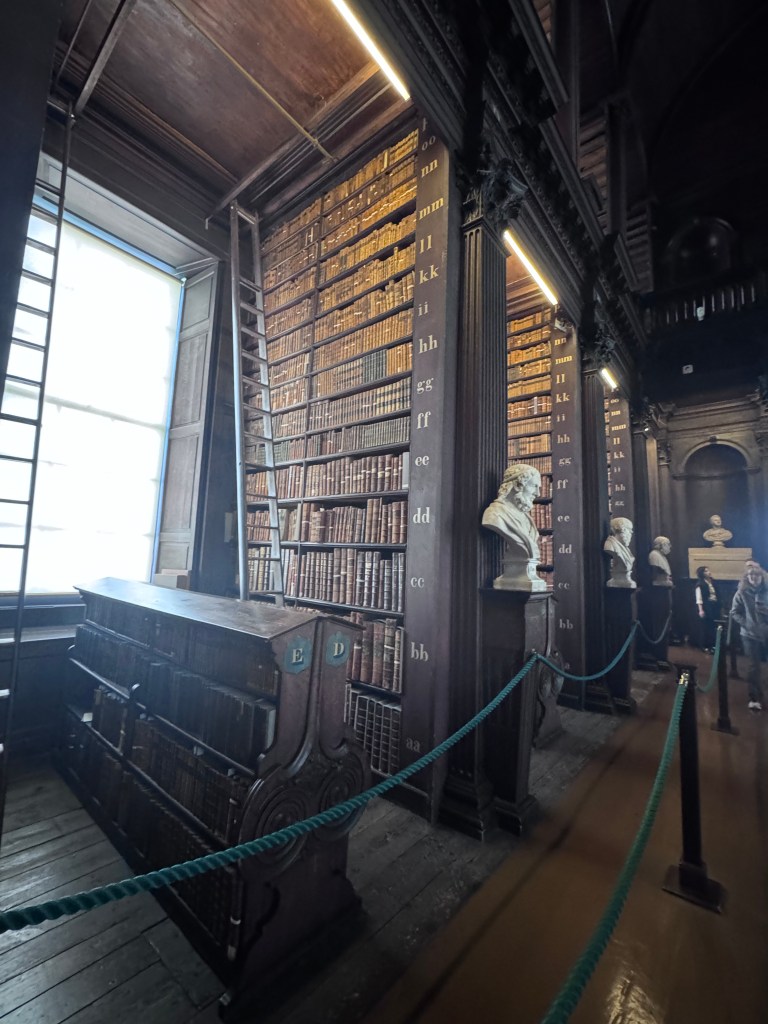
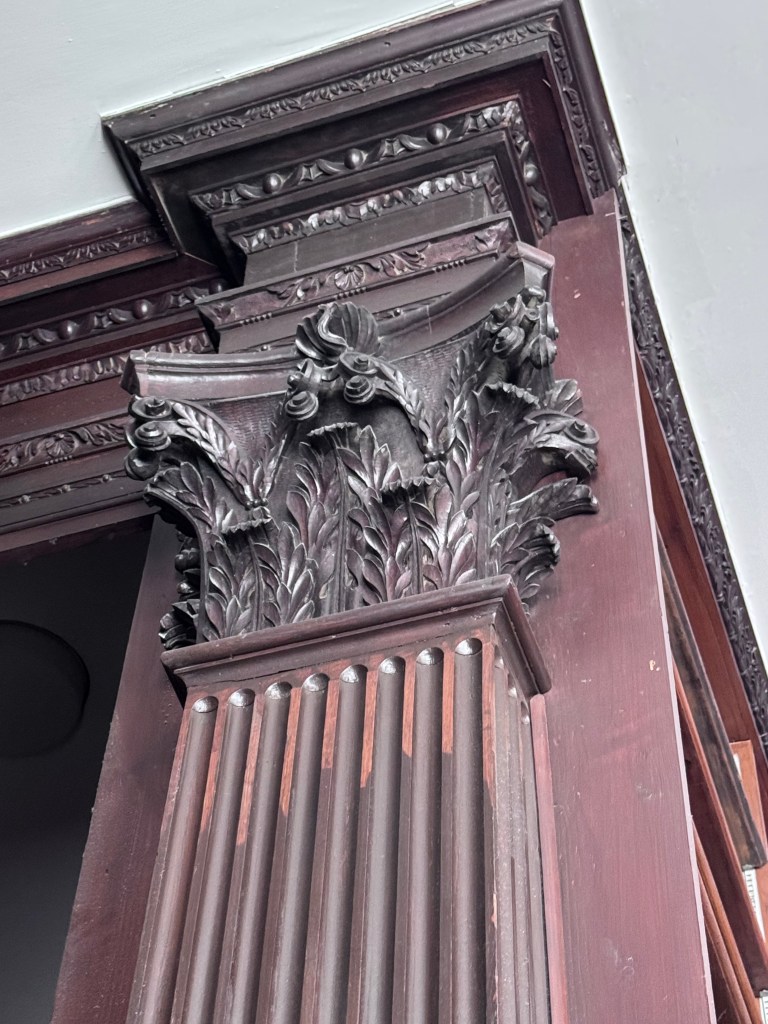
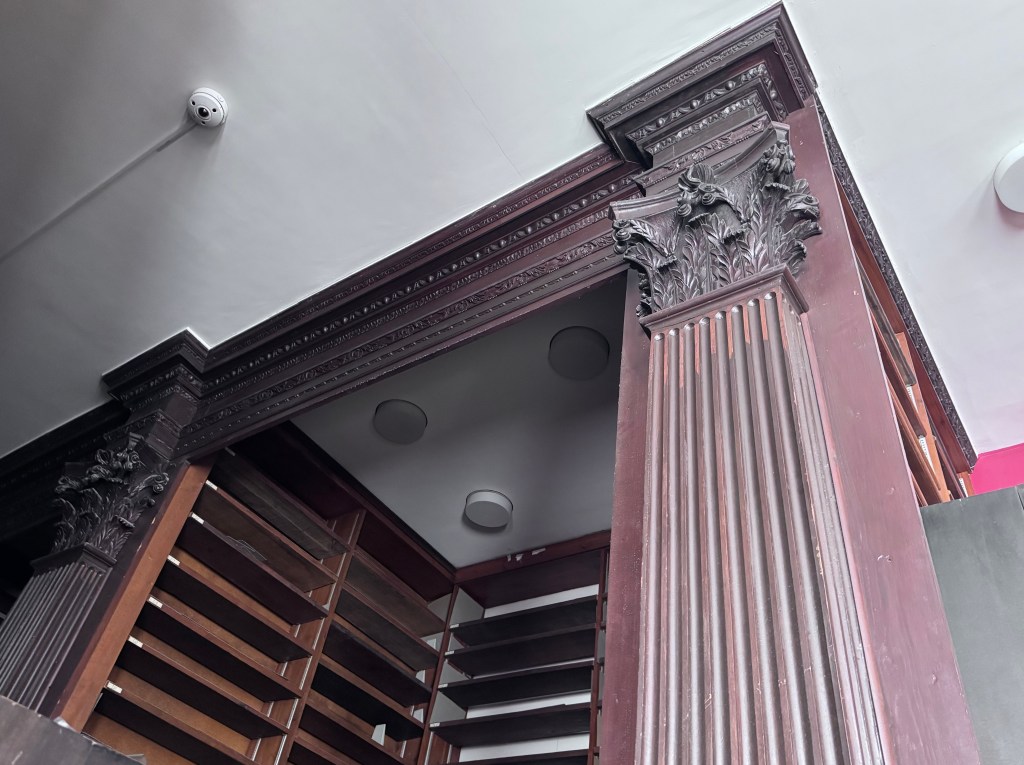
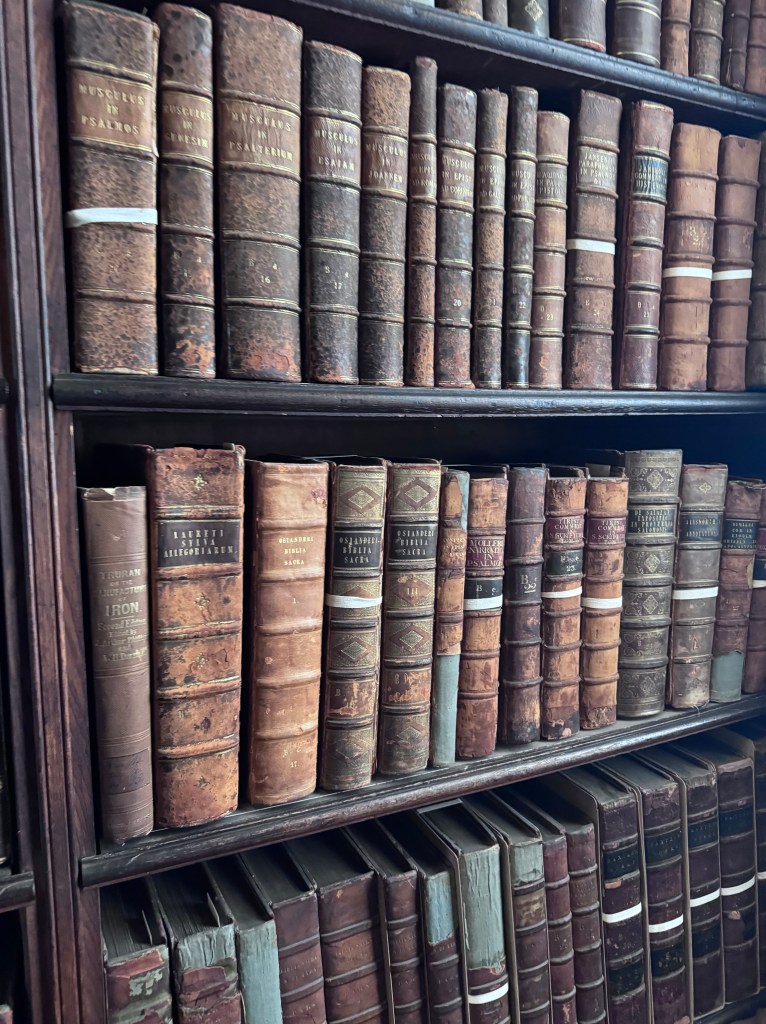
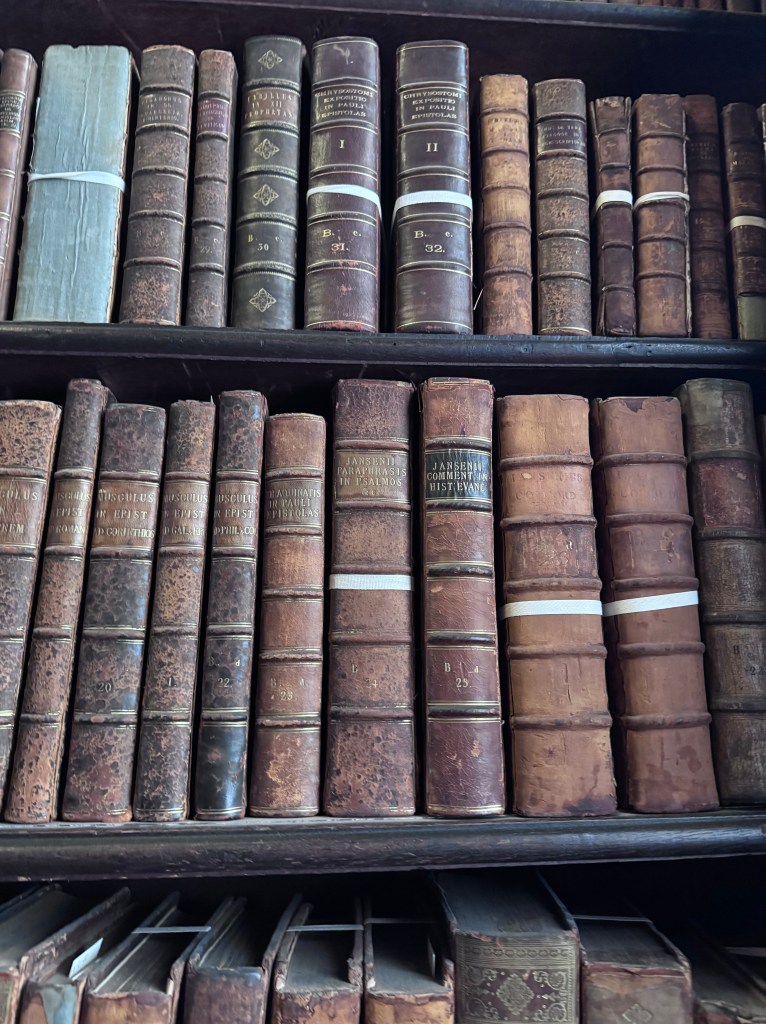
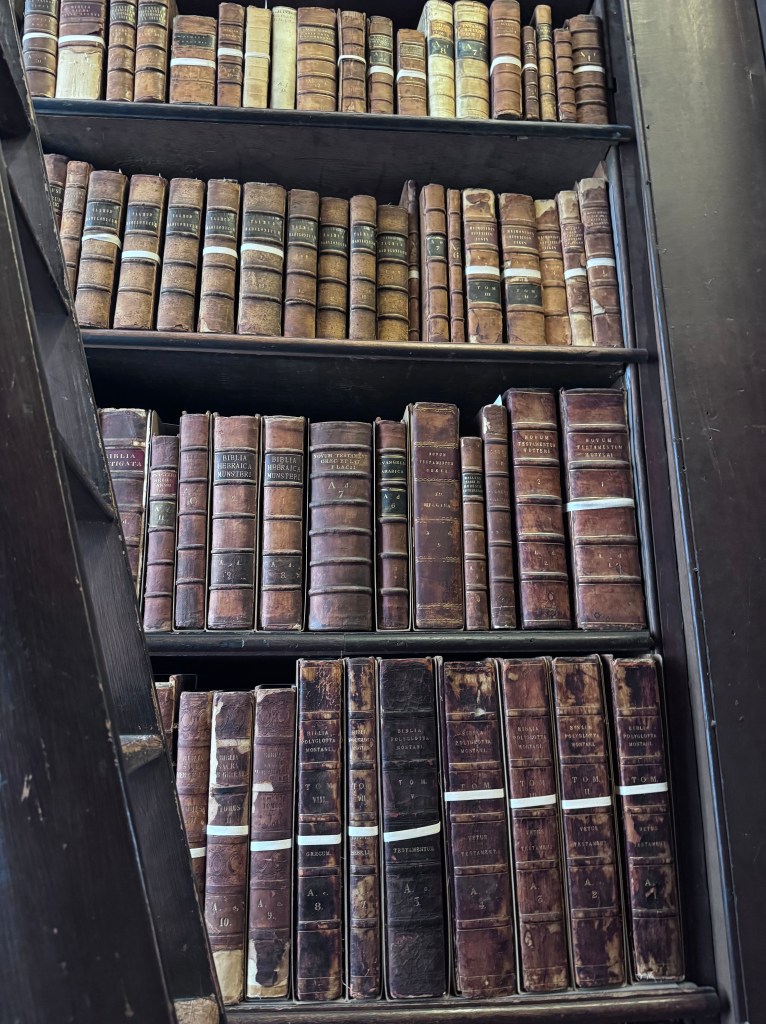
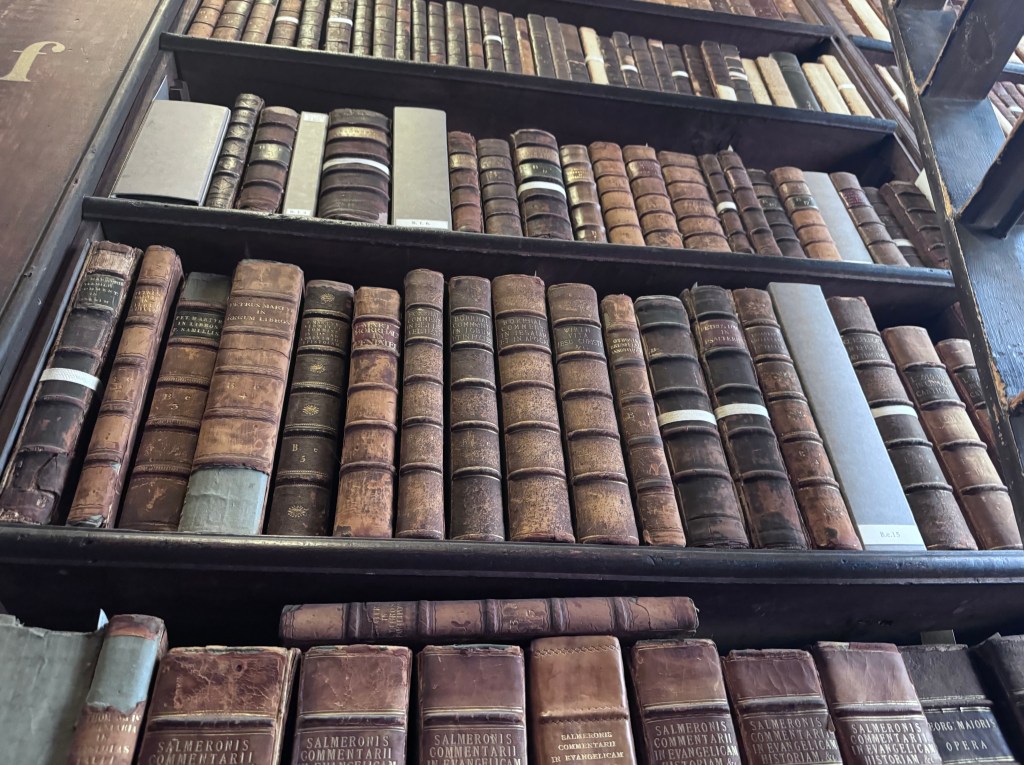
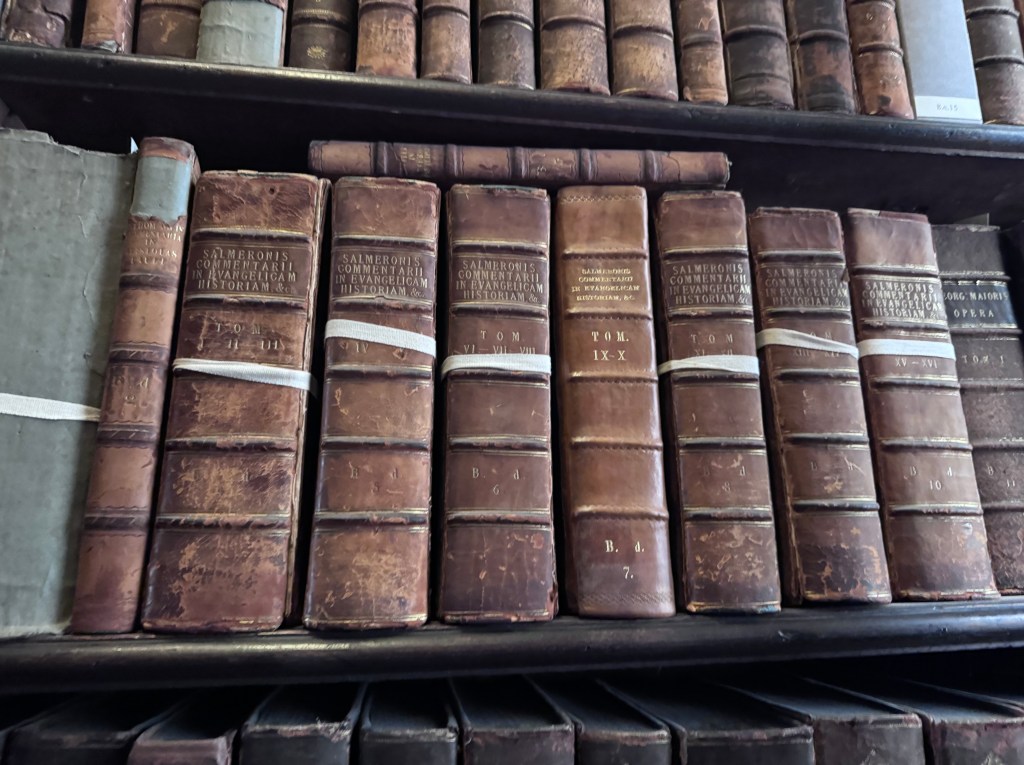
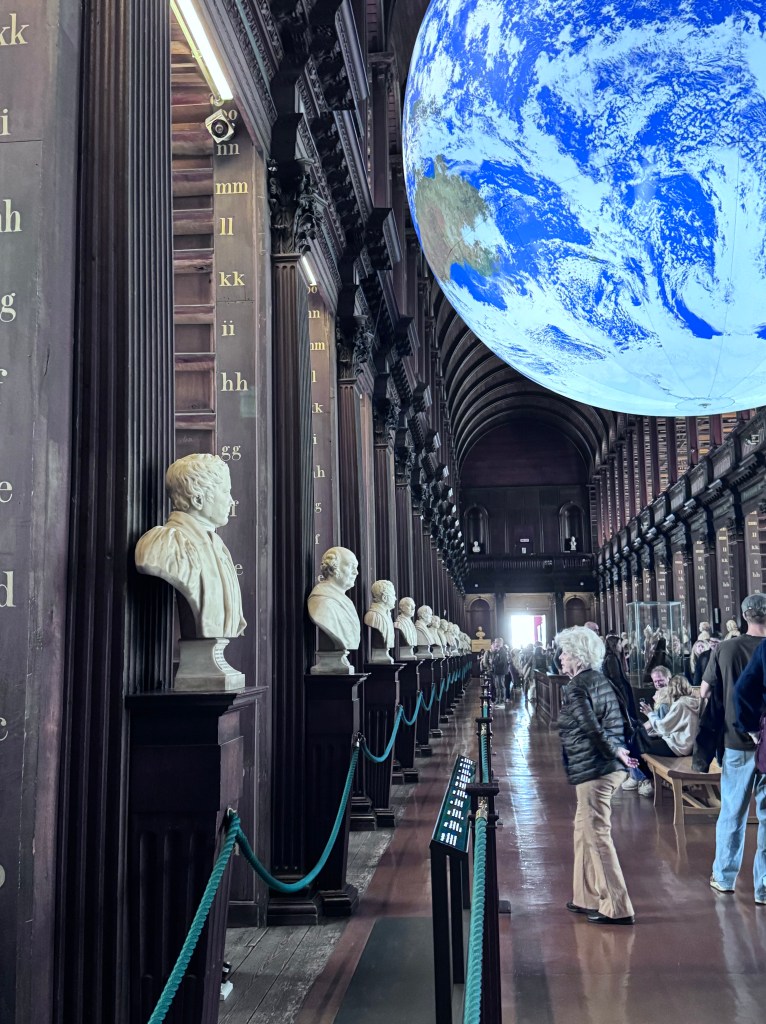
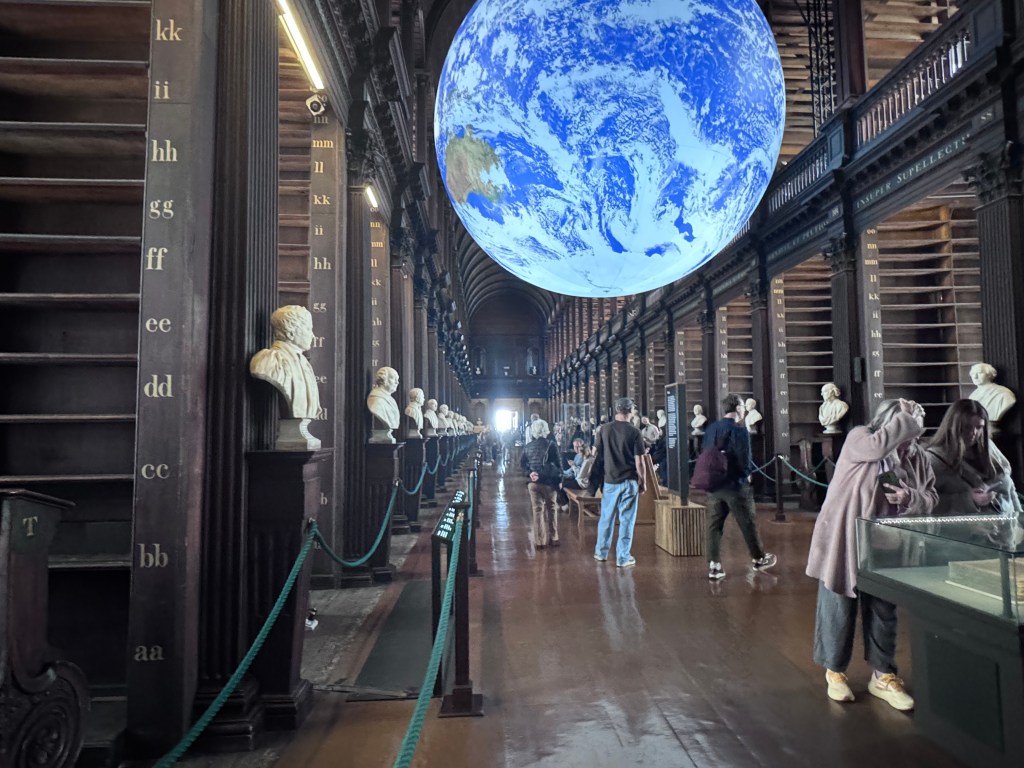
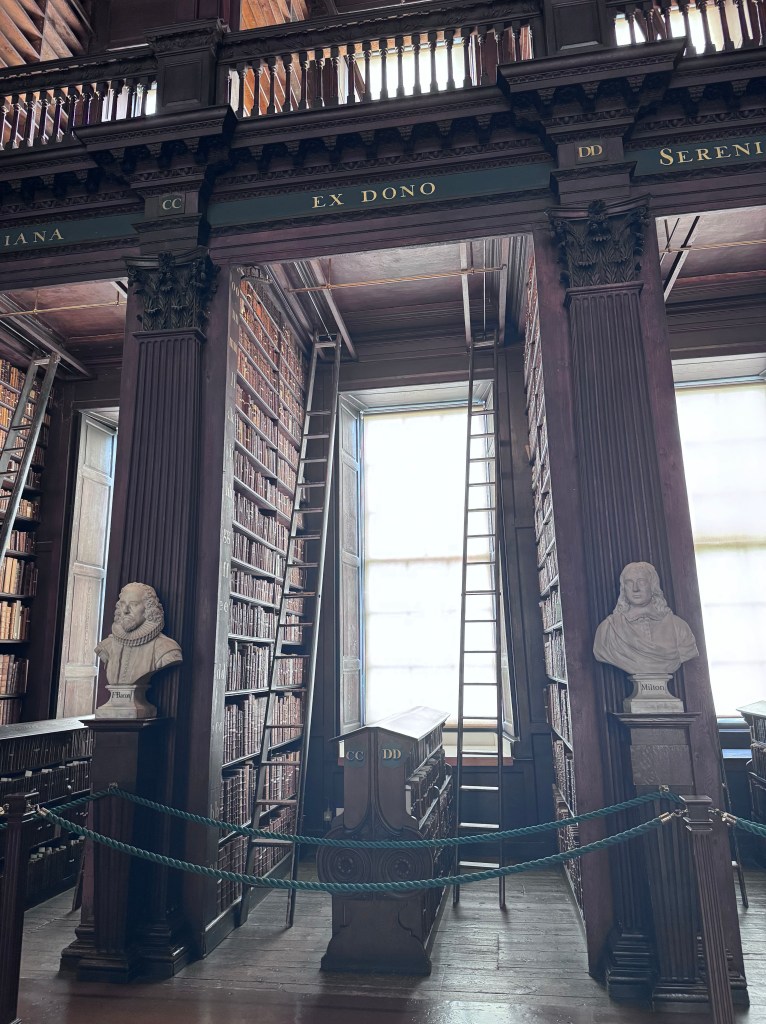
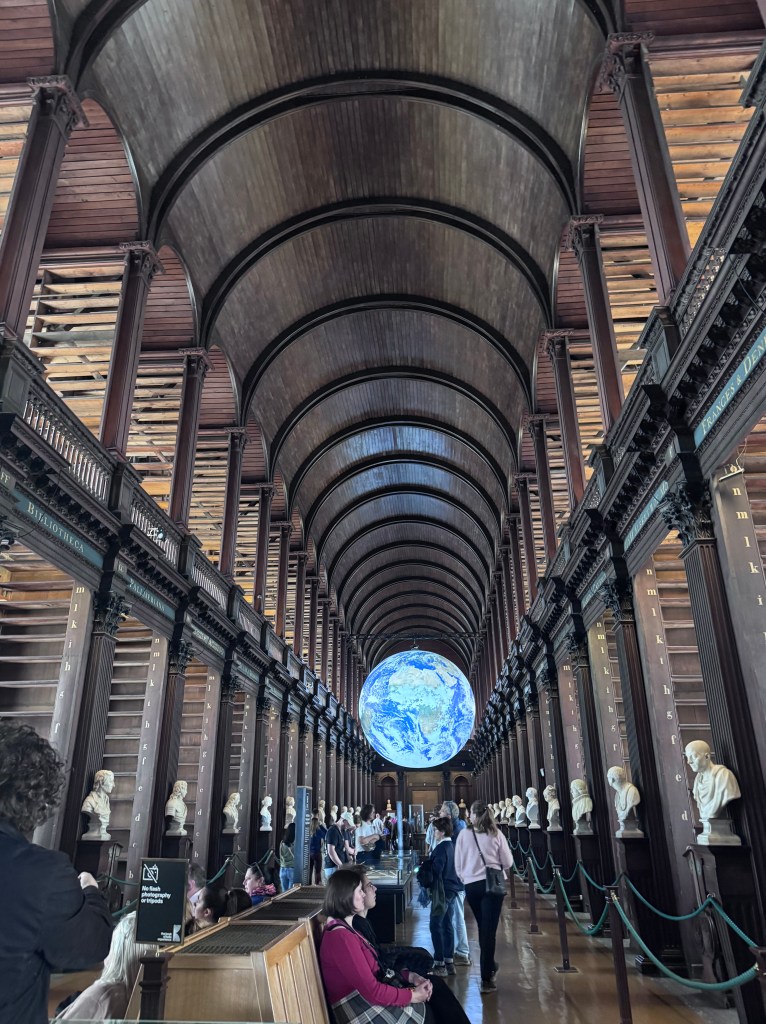
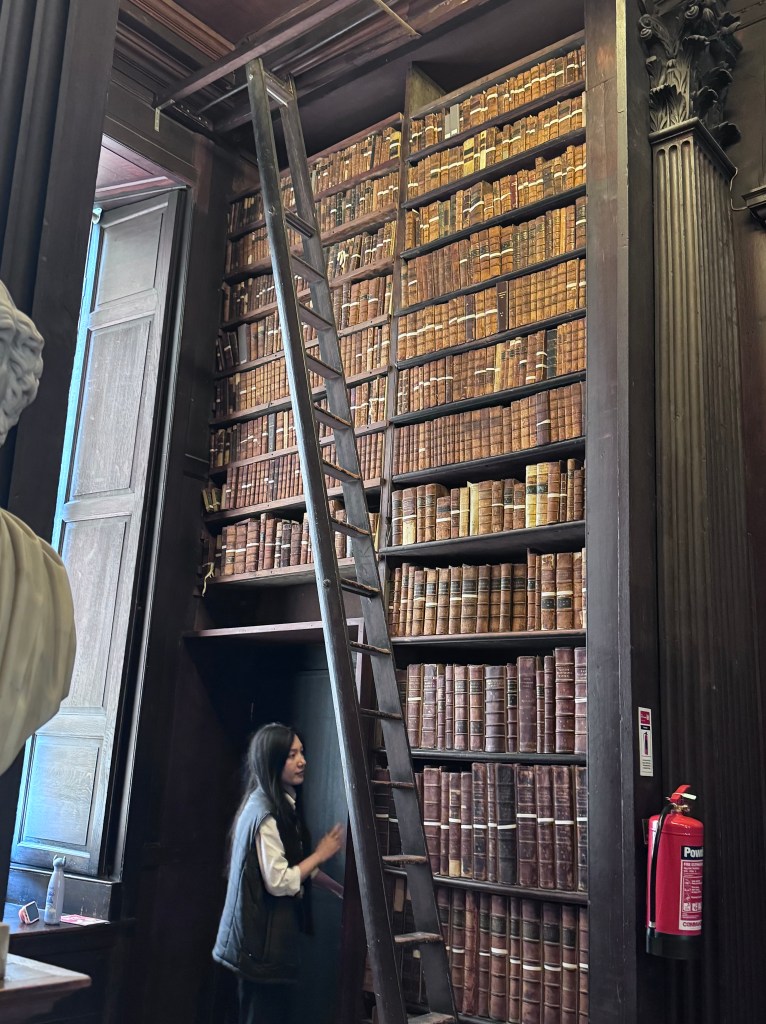
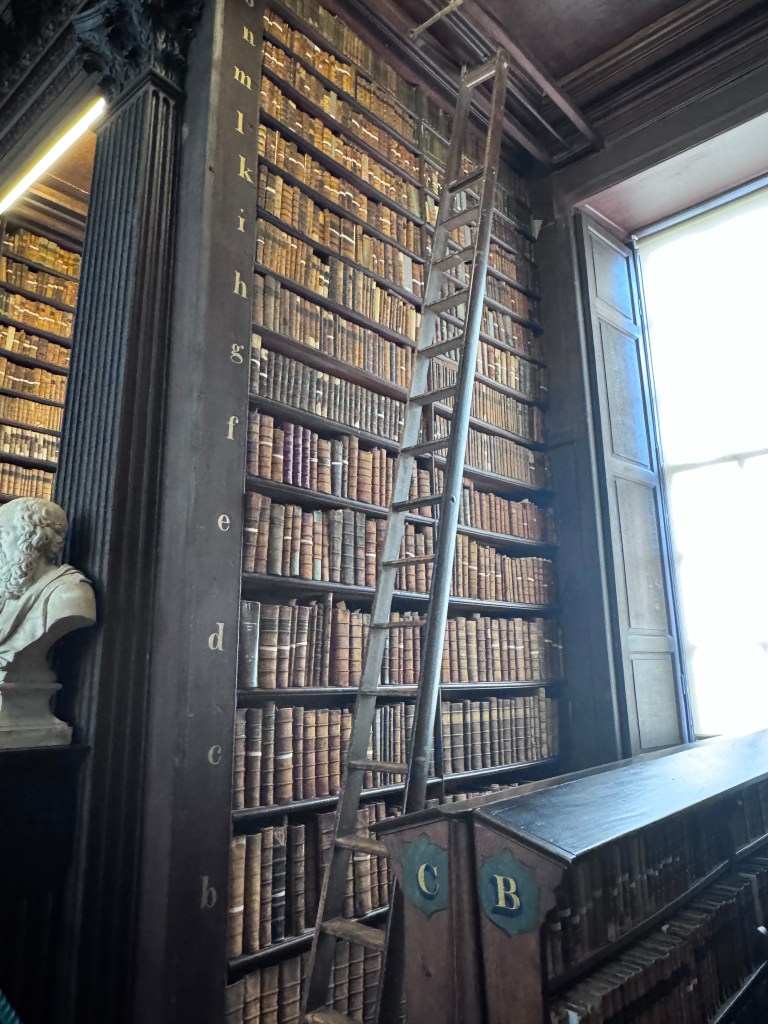
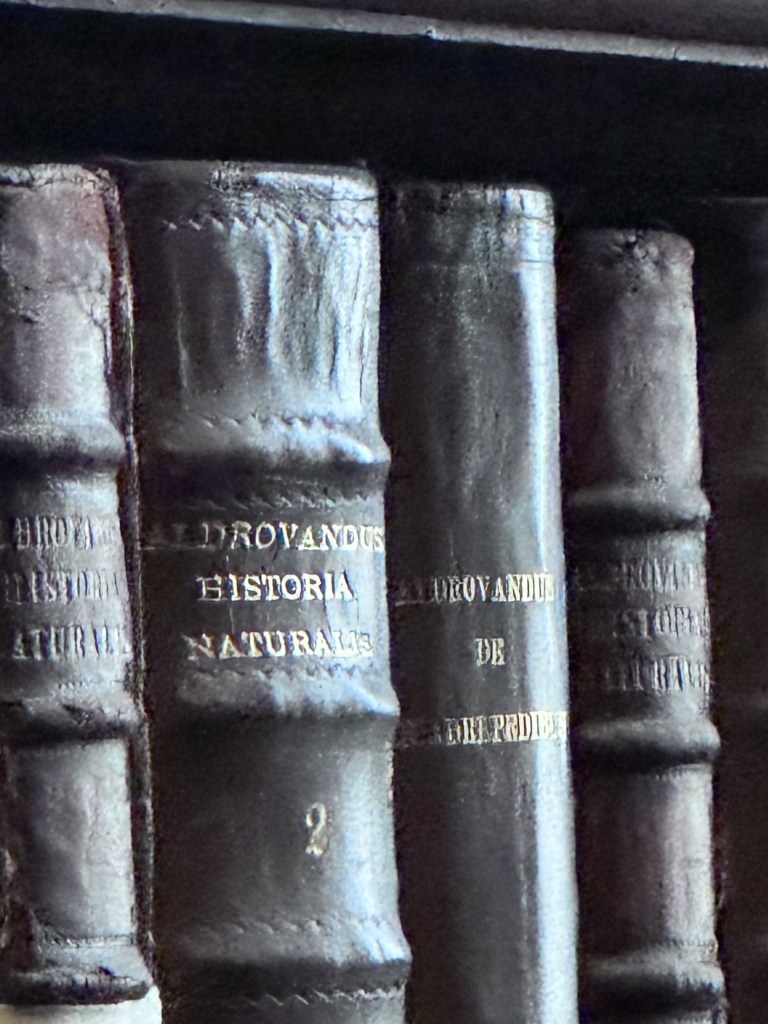
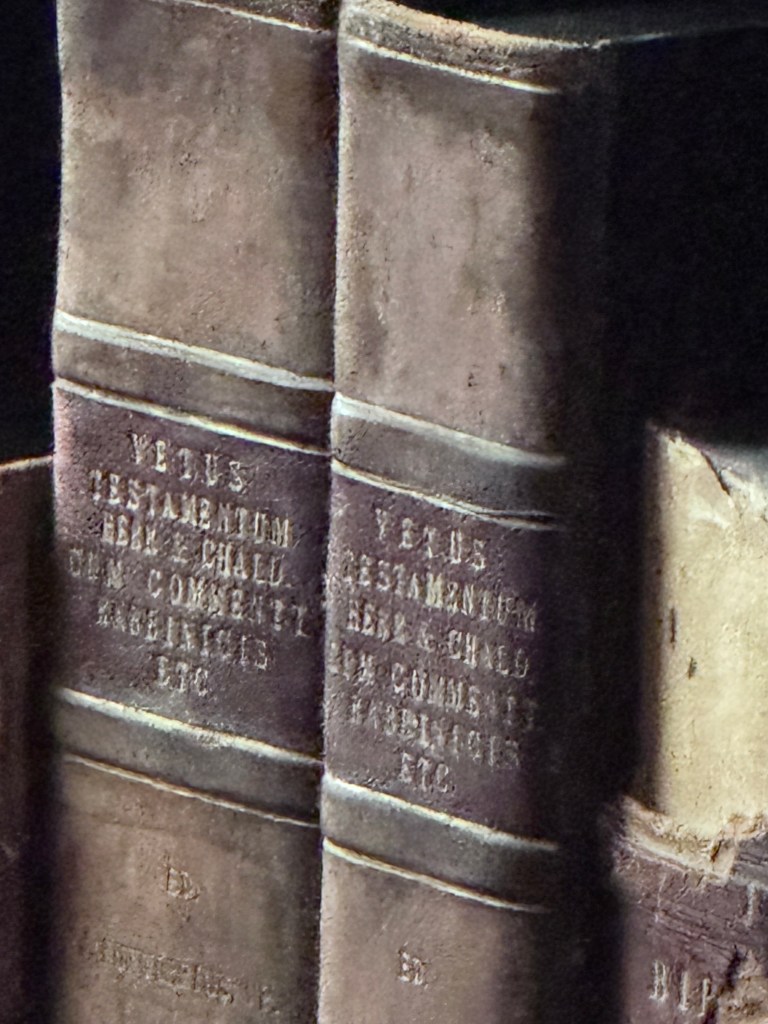
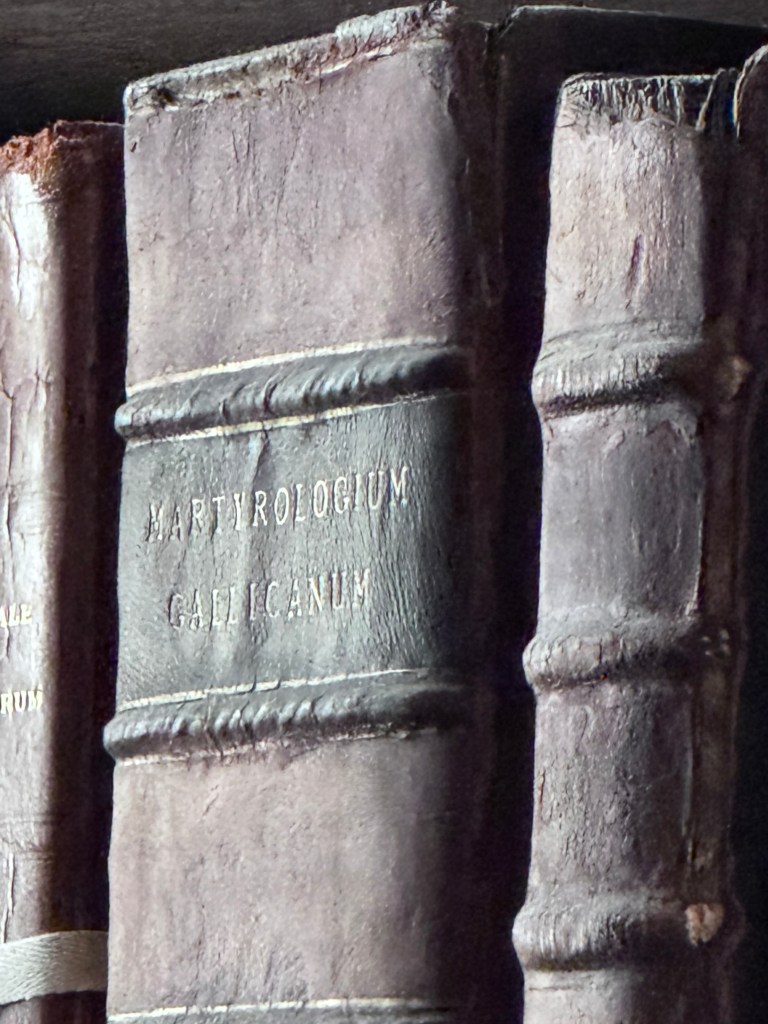
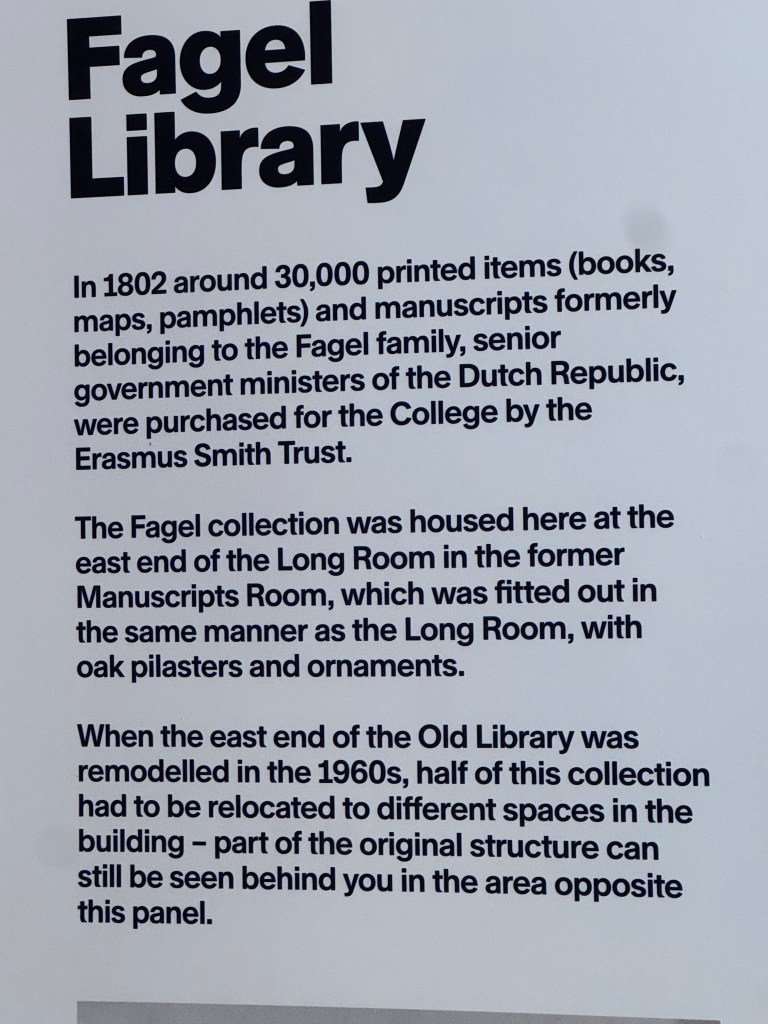
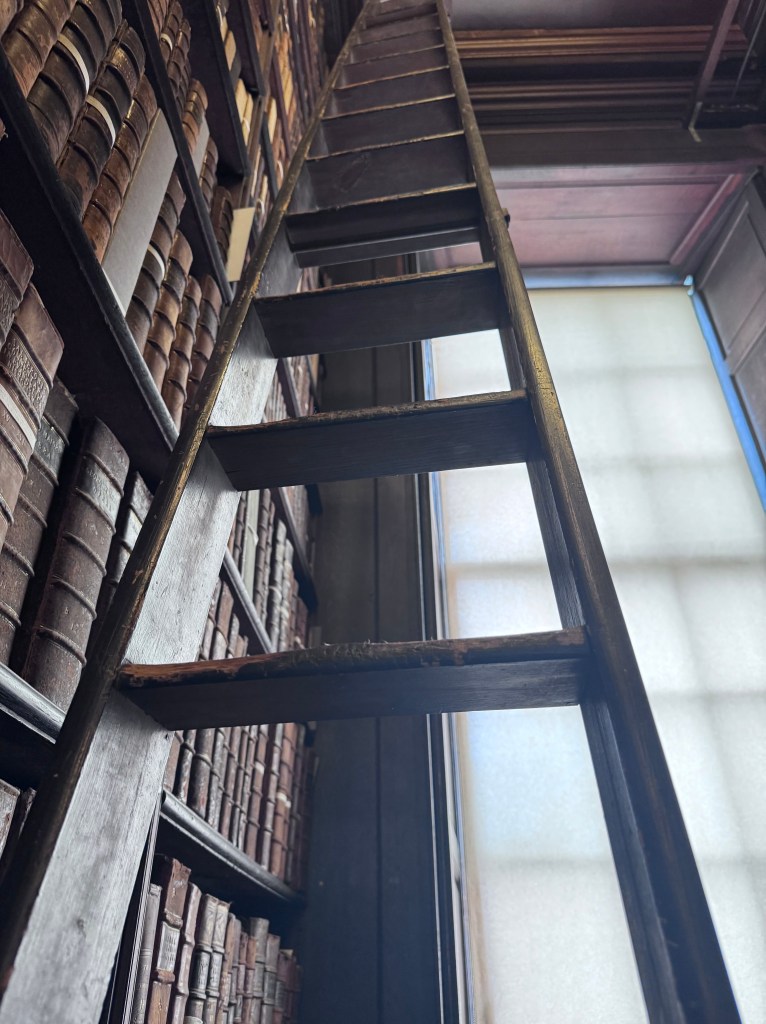
The library itself is overwhelming. Trying to comprehend the sheer number of books housed there is almost impossible. You will notice in some of our photos that portions of the bookshelves are empty. This is because the library is currently undergoing a major restoration project, and many of the books have been temporarily relocated. One unexpected benefit of Kiya’s accessibility needs was that we were able to use lifts to reach different floors, which allowed us to get up close and personal with some of the books. I even managed to take a few photos while we were in the Bible section.
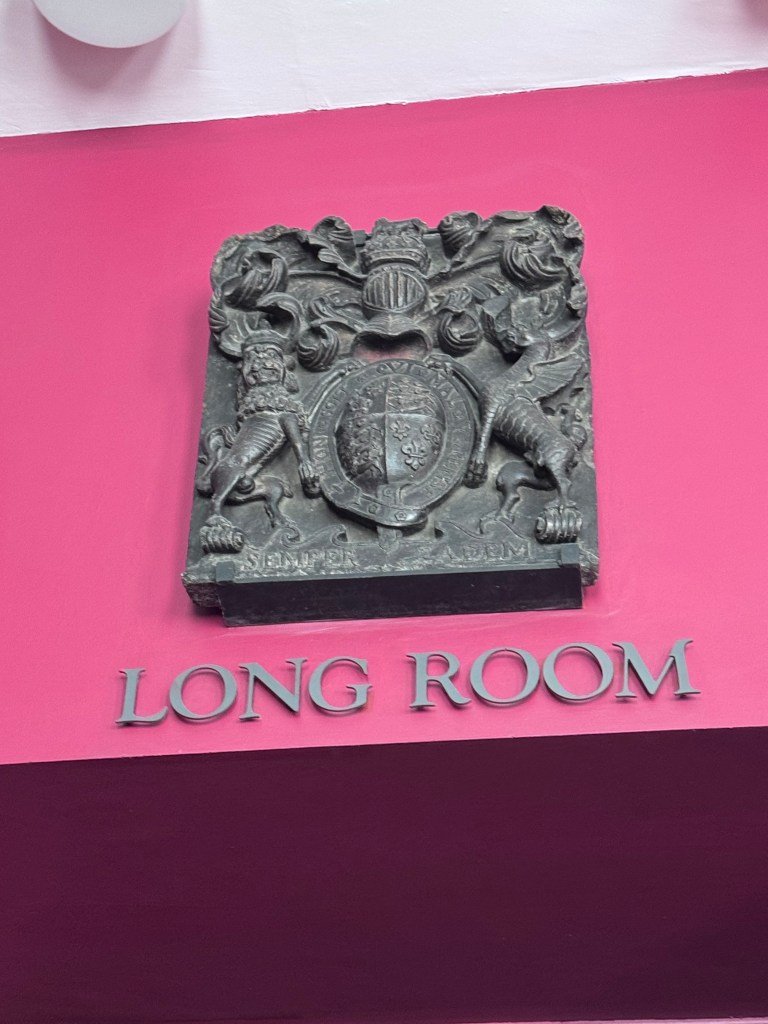
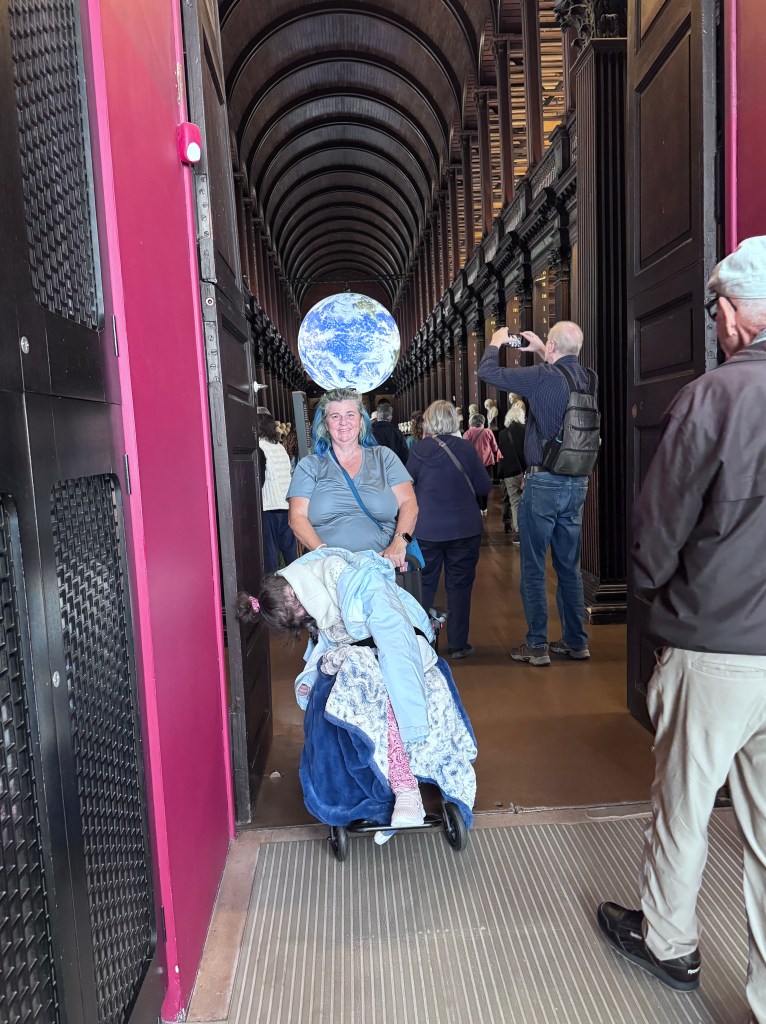
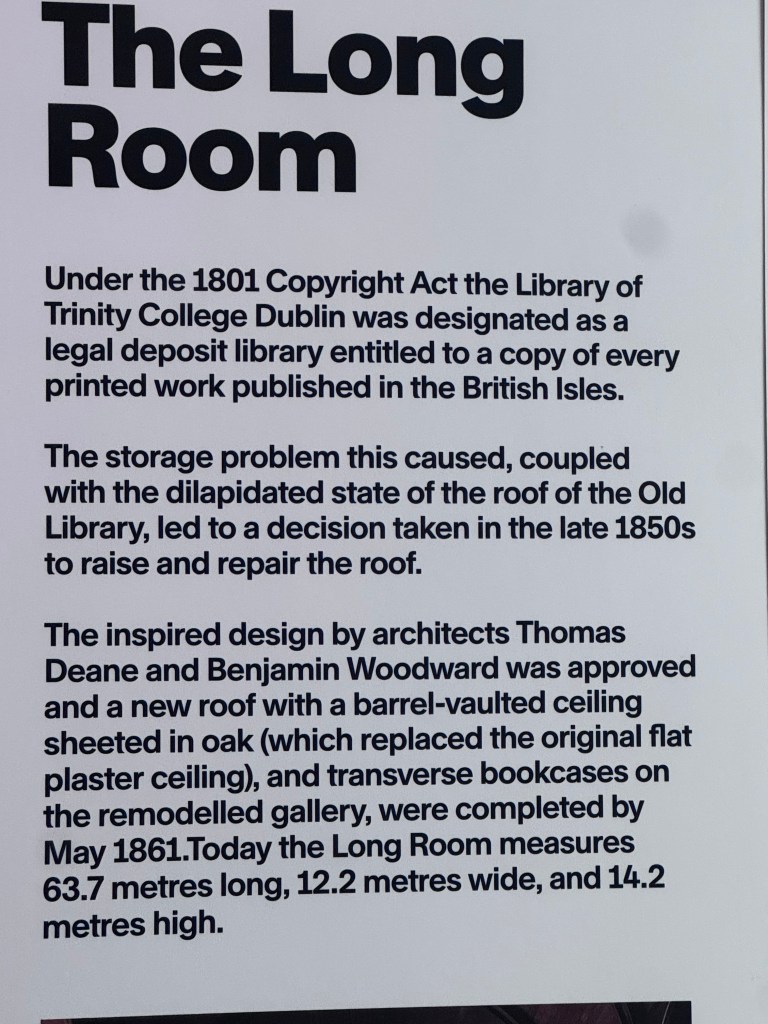
“The Long Room Library at Trinity College Dublin is one of the most iconic libraries in the world. Built between 1712 and 1732, the magnificent hall stretches approximately 65 meters (213 feet) long and houses more than 200,000 of the library’s oldest and most valuable books. The soaring barrel-vaulted ceiling was added in the 1860s when the collection outgrew the original space. For centuries, the library has served as a repository for knowledge, receiving a copy of every book published in Ireland and the United Kingdom under legal deposit laws. Walking through the Long Room feels like stepping into another era, surrounded by shelves of historic volumes and the unmistakable scent of old books.
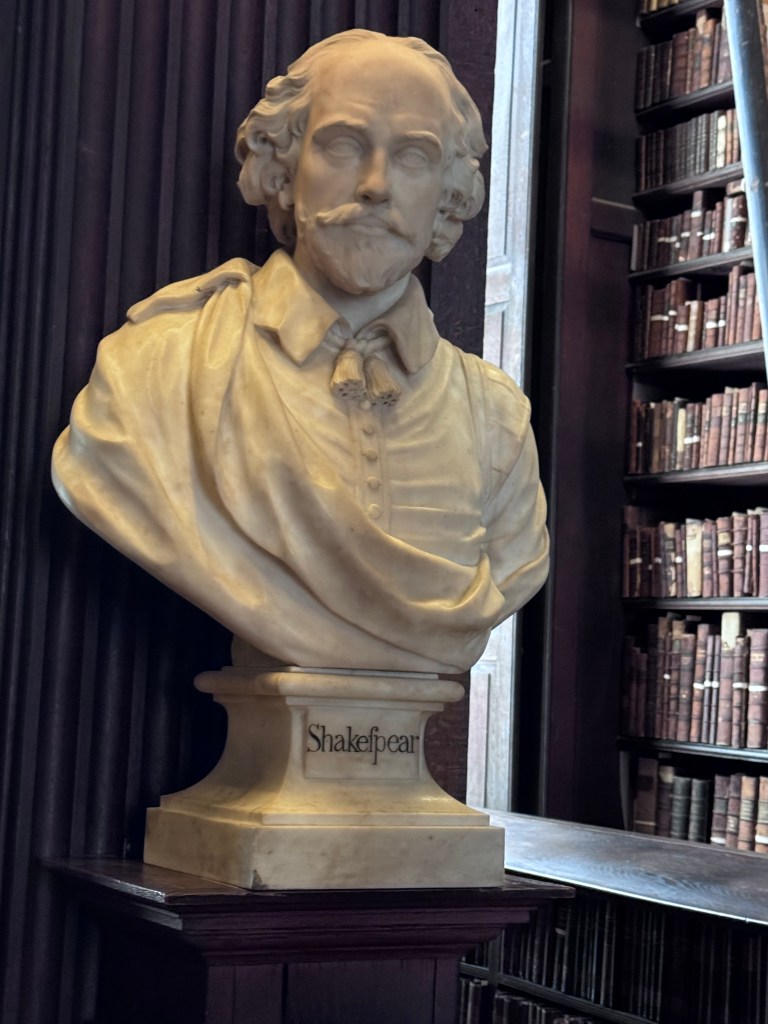
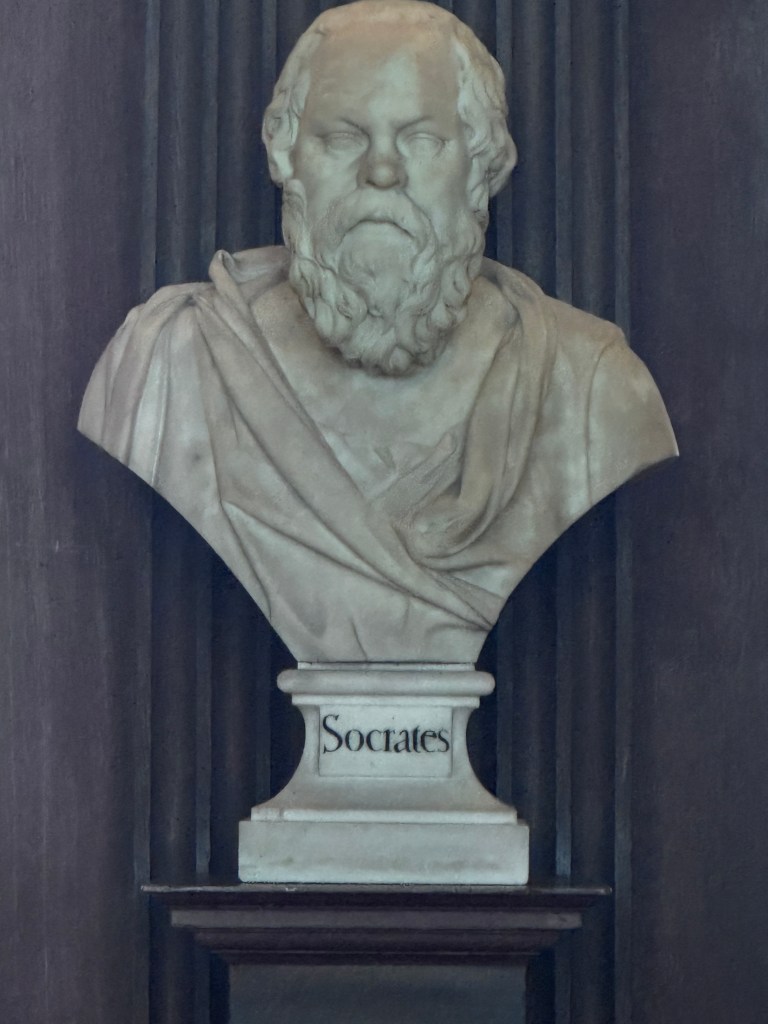
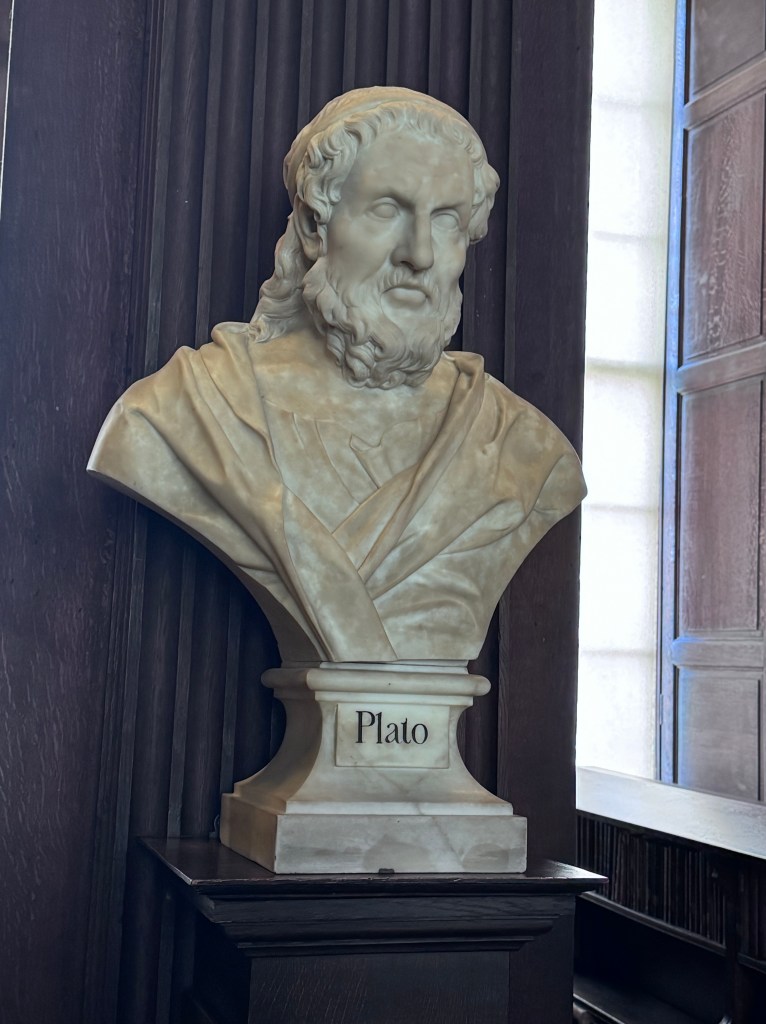
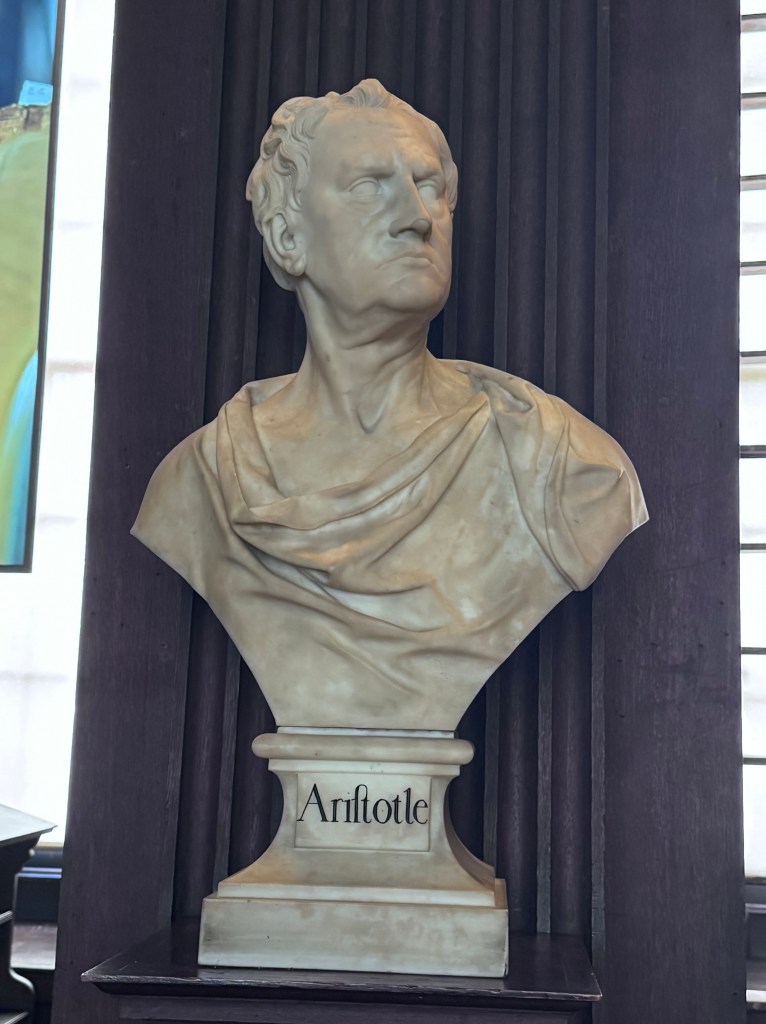
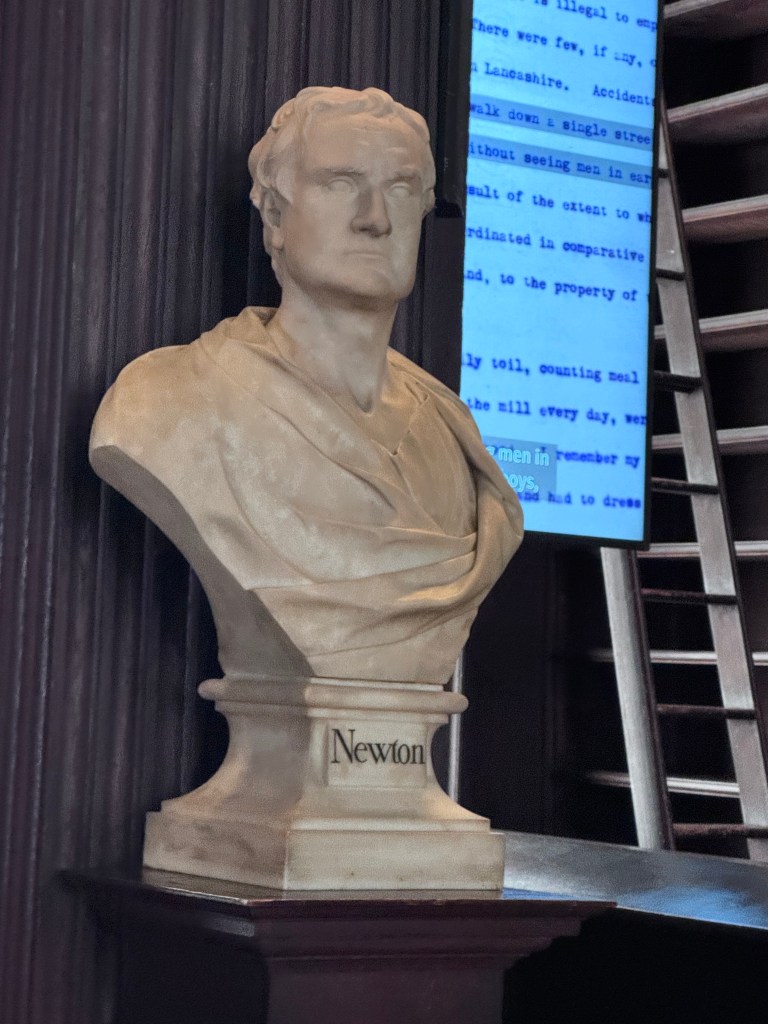
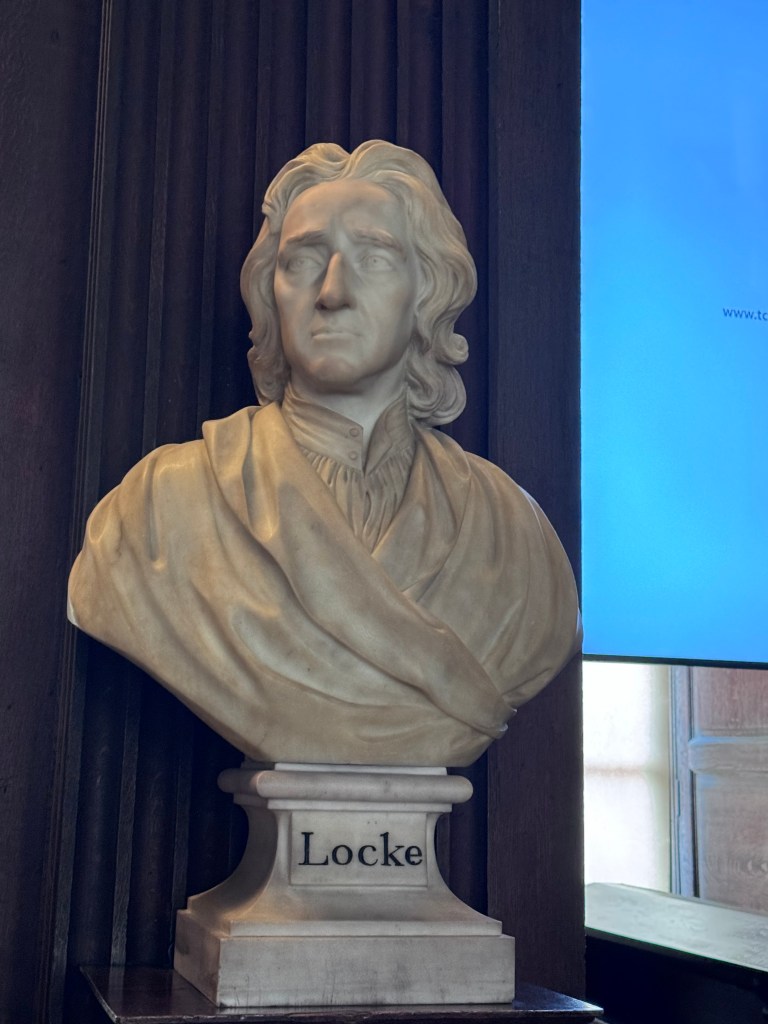
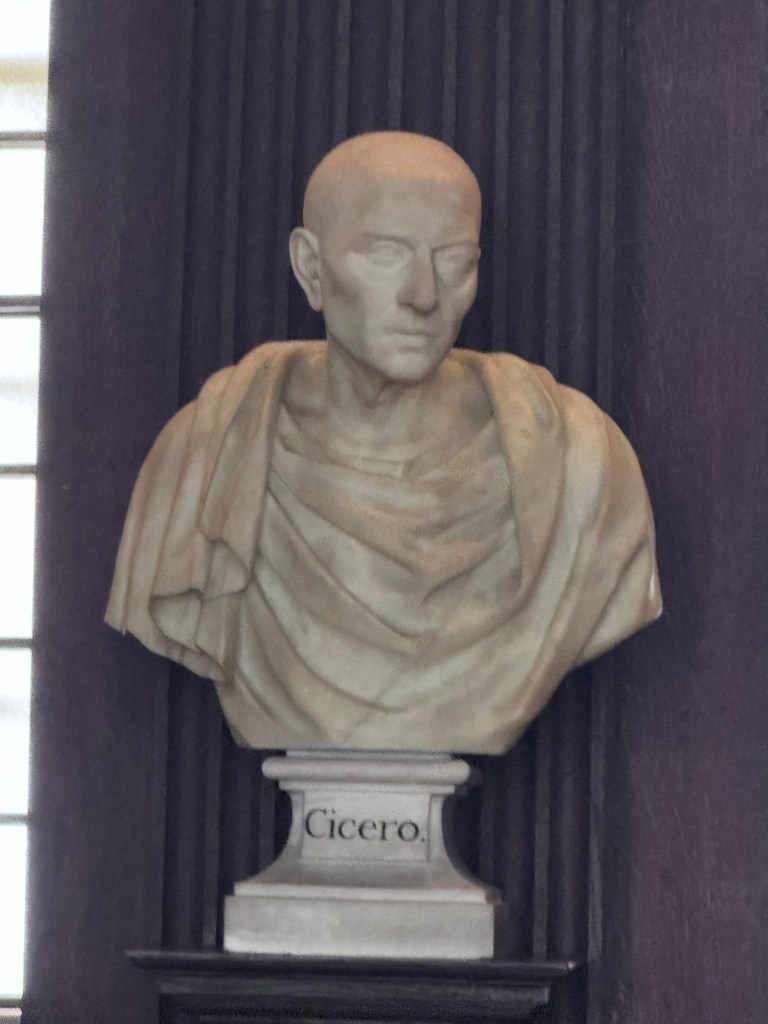
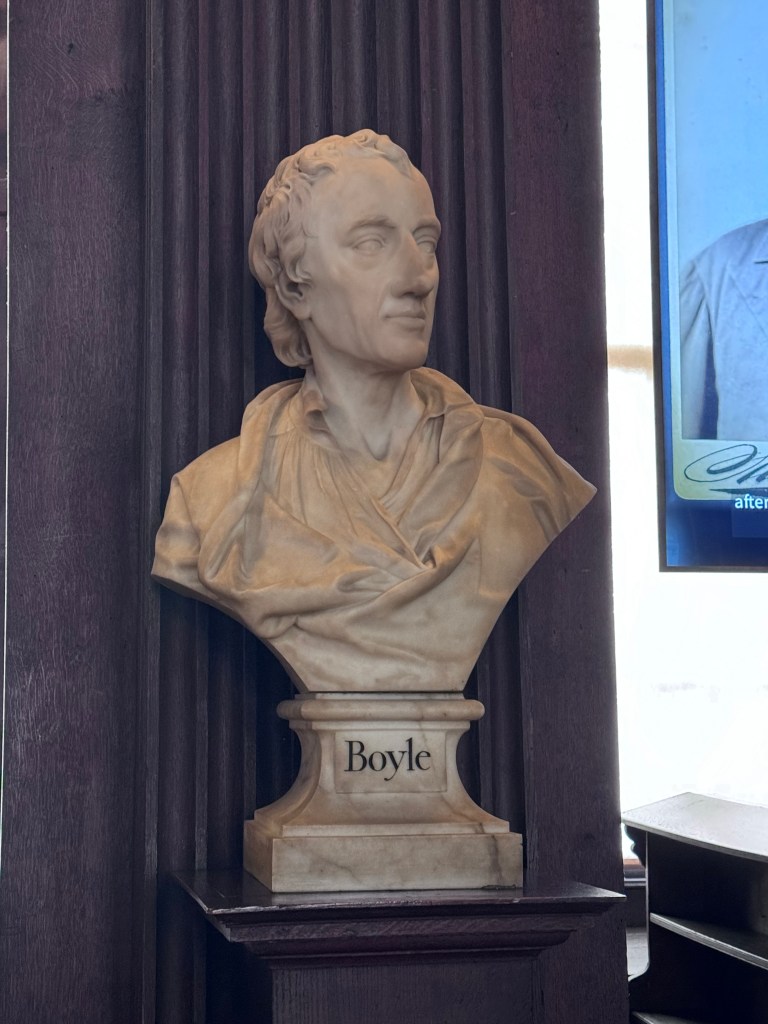
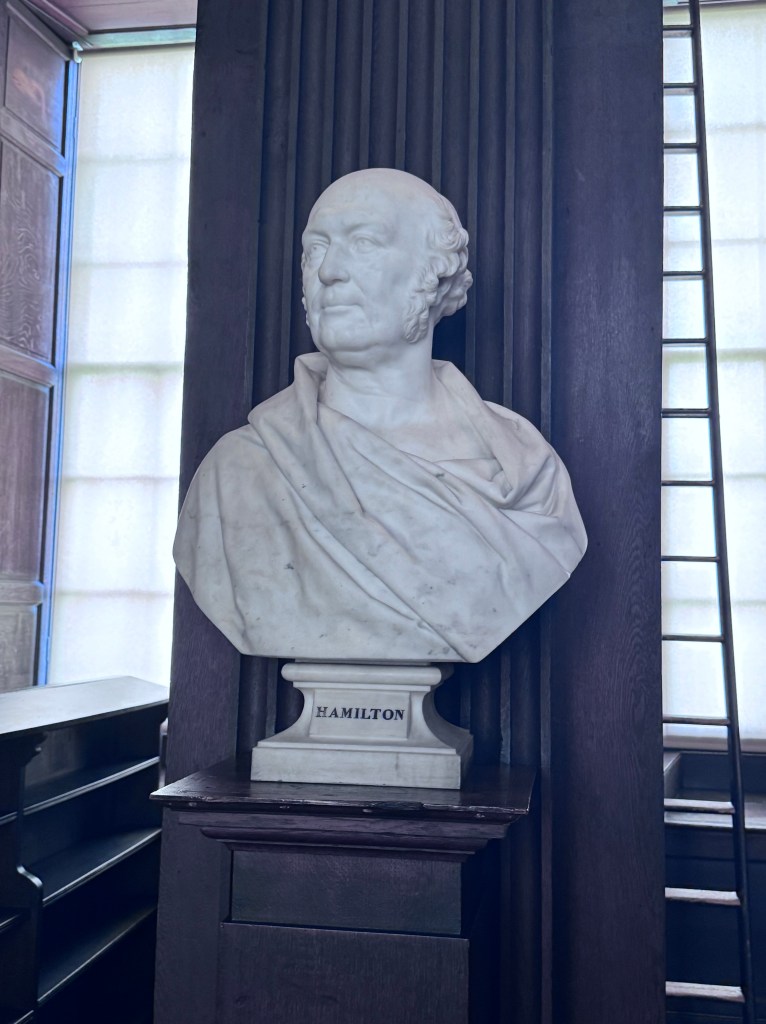
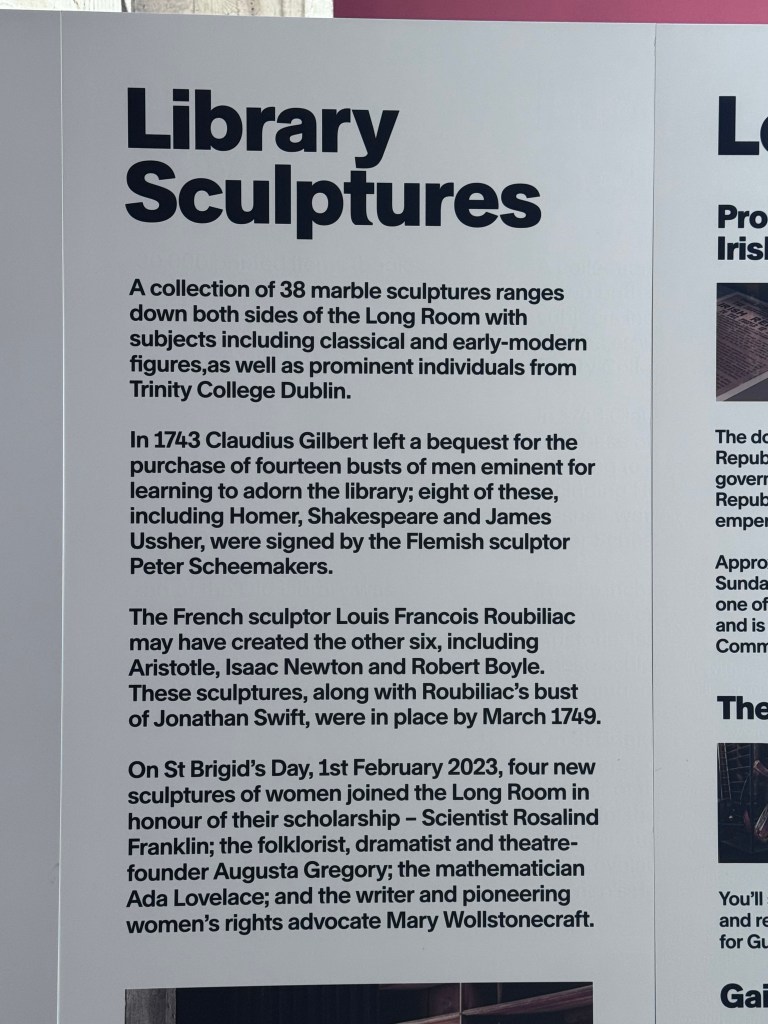
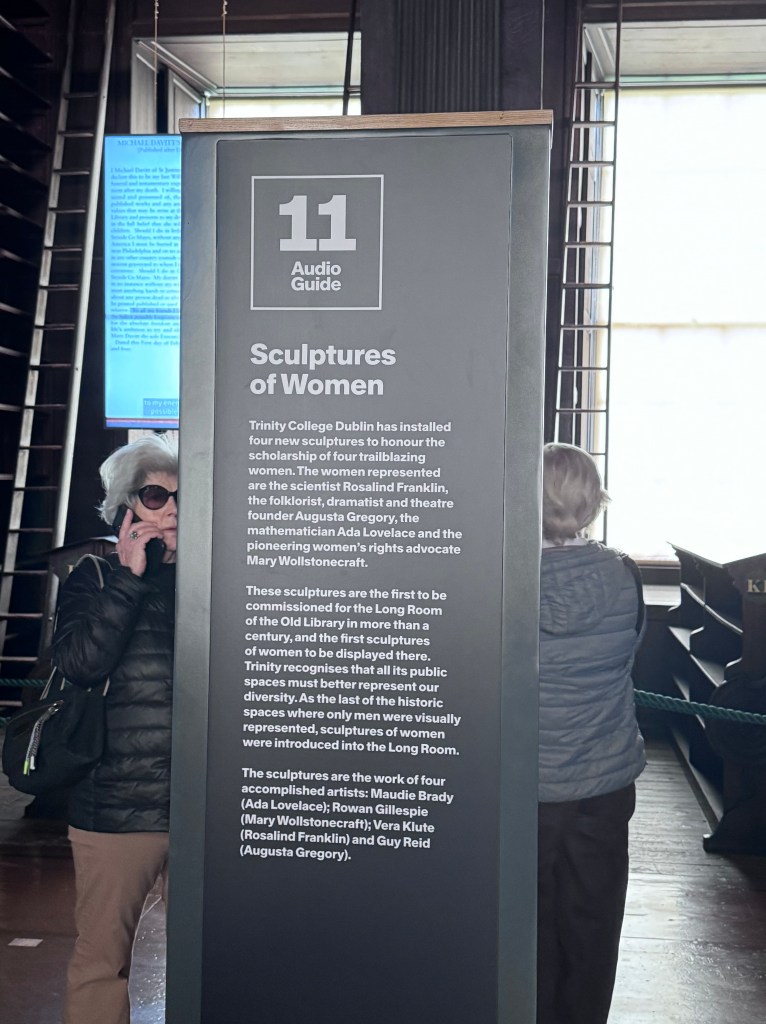
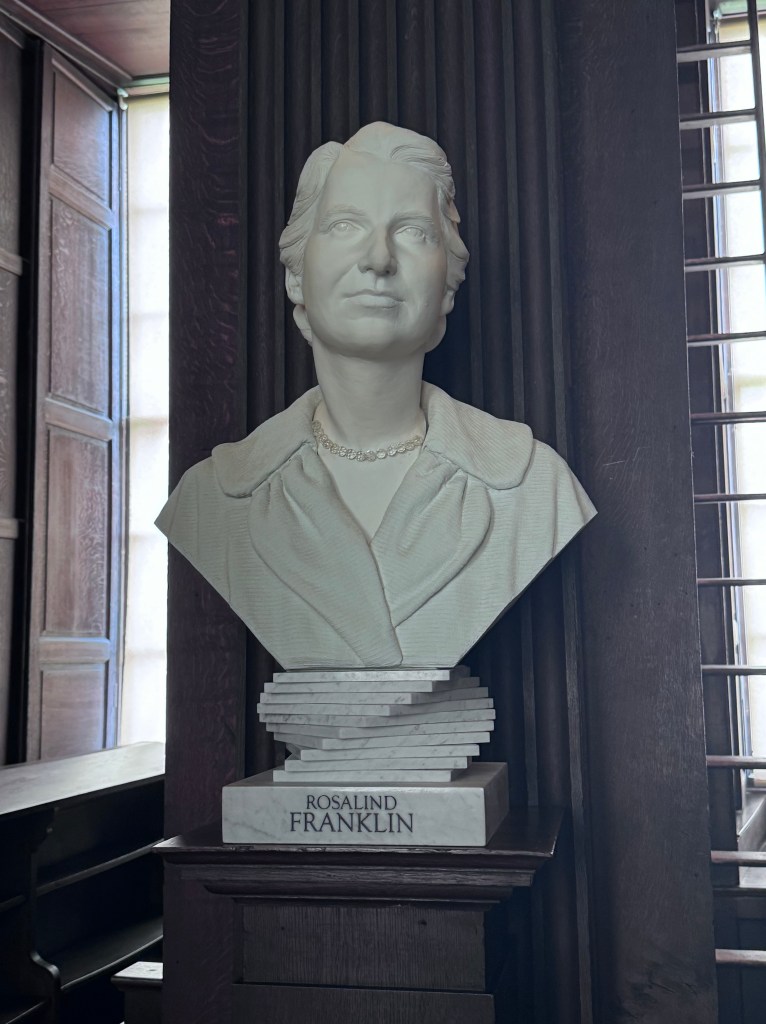
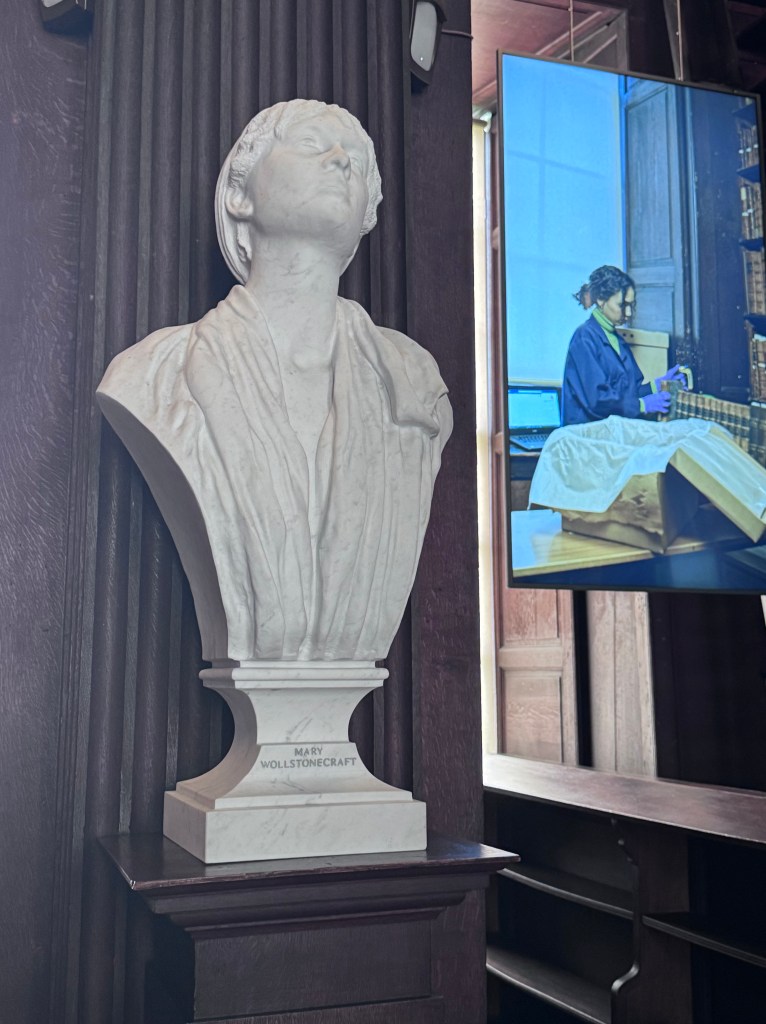
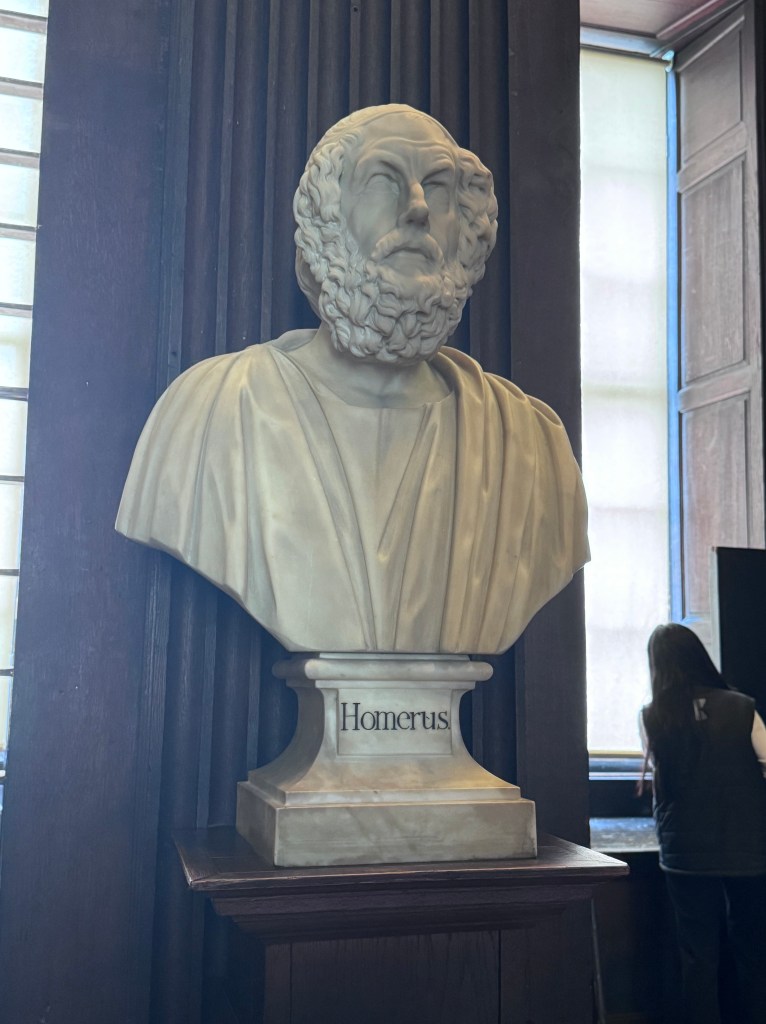
Lining the central aisle of the Long Room are a series of impressive marble busts and statues representing some of the world’s greatest thinkers, writers, philosophers, and scholars. The collection began in the 1740s and includes figures such as Homer, Aristotle, William Shakespeare, and Isaac Newton. Many of the busts were sculpted by renowned artists of the 18th century and were intended to celebrate the pursuit of knowledge and learning. As visitors walk through the Long Room, these marble figures seem to stand watch over the books, creating an atmosphere that feels both scholarly and almost sacred. I needed the statues during Government class this last school year. I will be using the photos this coming school year.
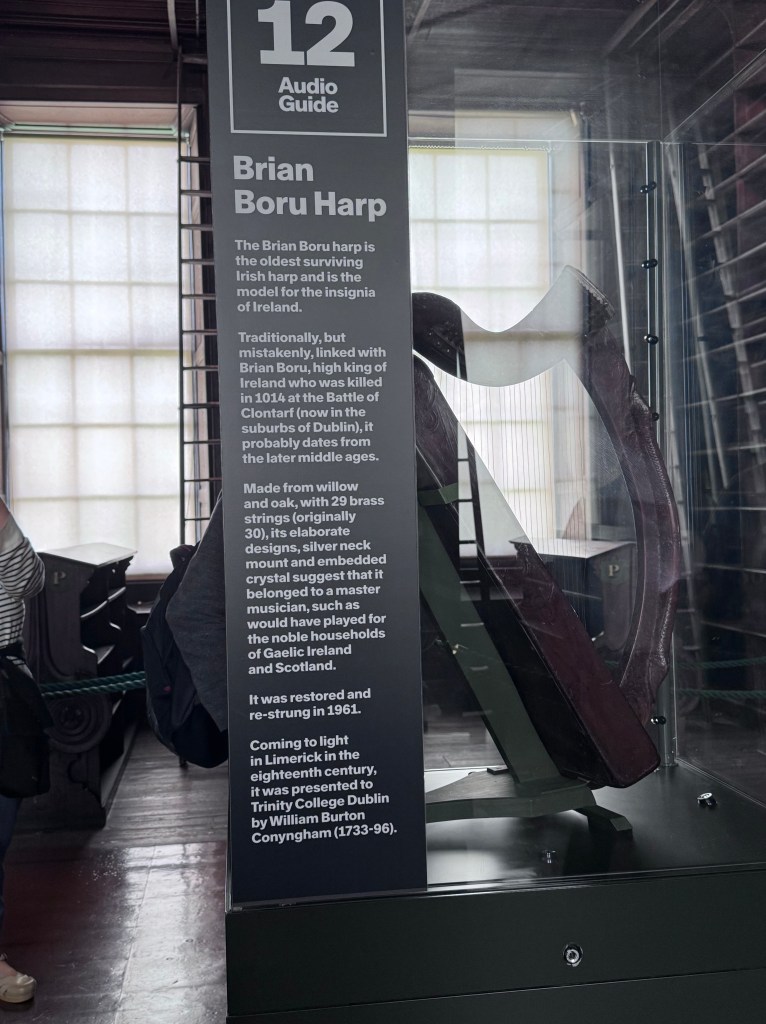
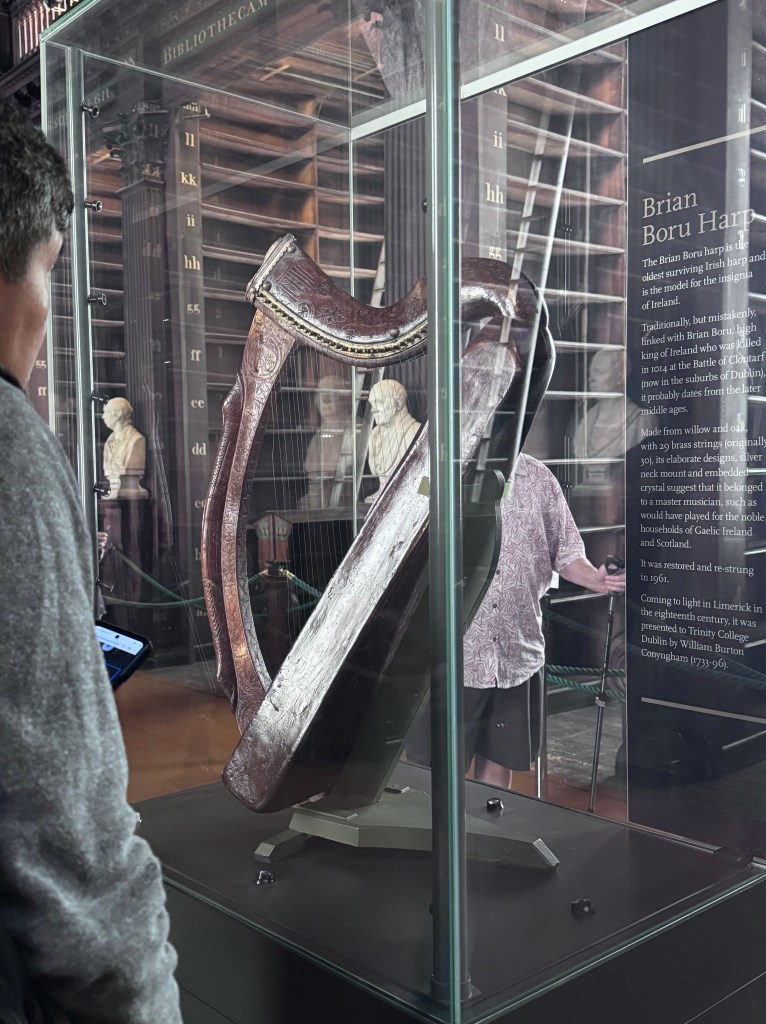
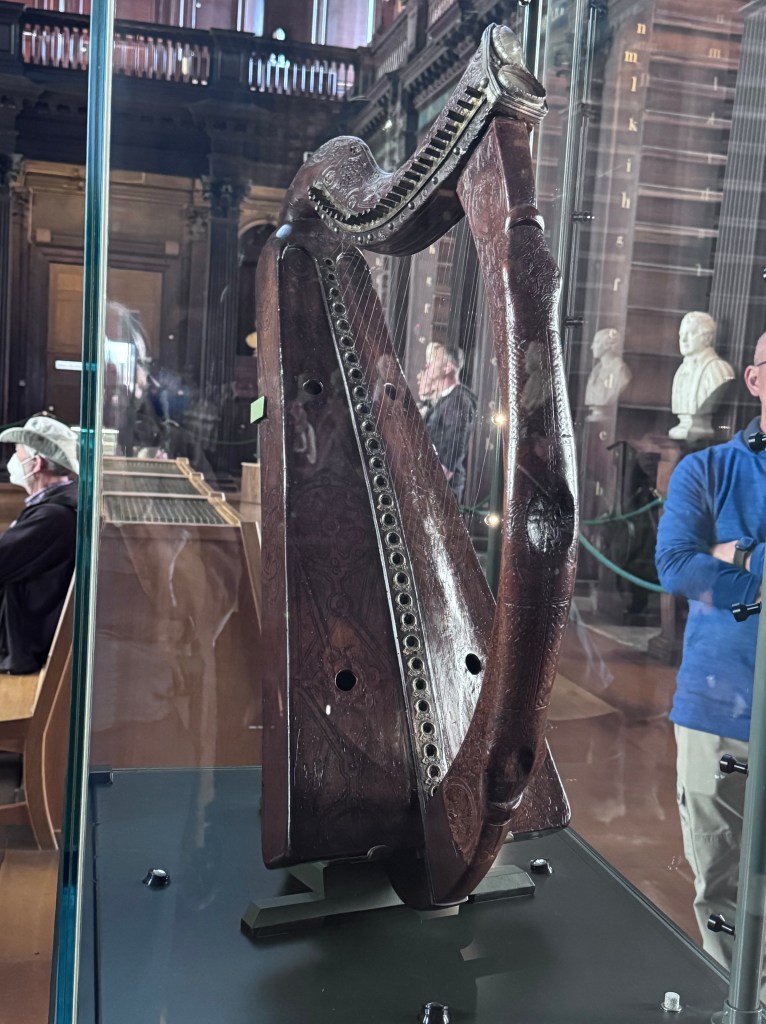
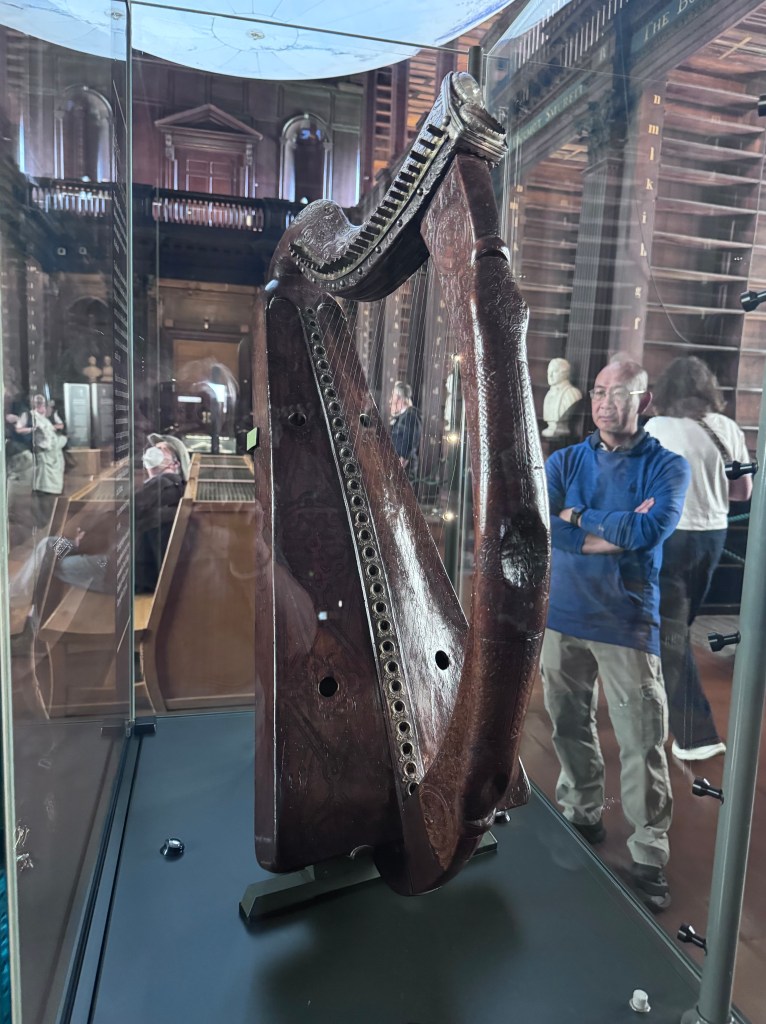
One of the library’s most famous treasures, in addition to the Book of Kells, is the Brian Boru Harp, a medieval Irish harp that is one of the oldest surviving harps in Ireland and serves as the model for the national symbol of Ireland seen on coins, government seals, and official documents. The combination of ancient books, historic artifacts, and the rows of marble busts makes the Long Room one of the most memorable parts of a visit to Trinity College.”
After viewing the Book of Kells, you enter the Red Pavilion, where several videos explain the history of the manuscript, how it survived, and the challenges it faced over the centuries. In hindsight, I would recommend watching those videos first because they provide valuable context that makes the exhibit even more meaningful.
We narrowly missed connecting with Karla Hines, who was staying at Trinity College. We were only minutes apart, but she was heading to Belfast while we were making our way into Dublin.
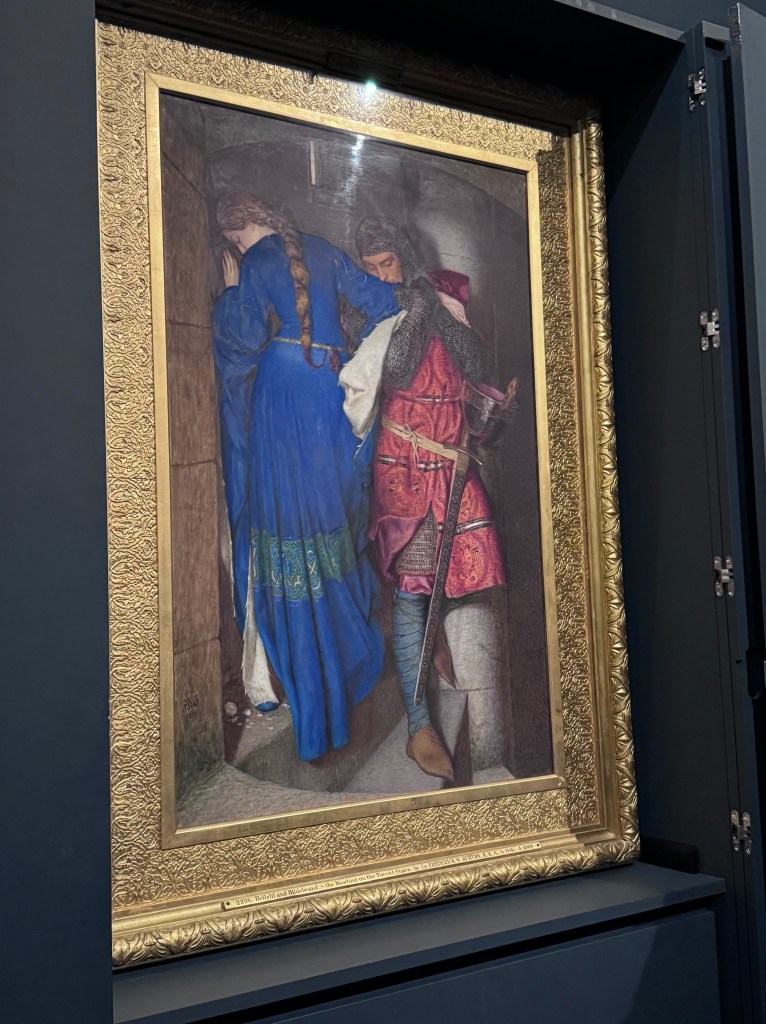
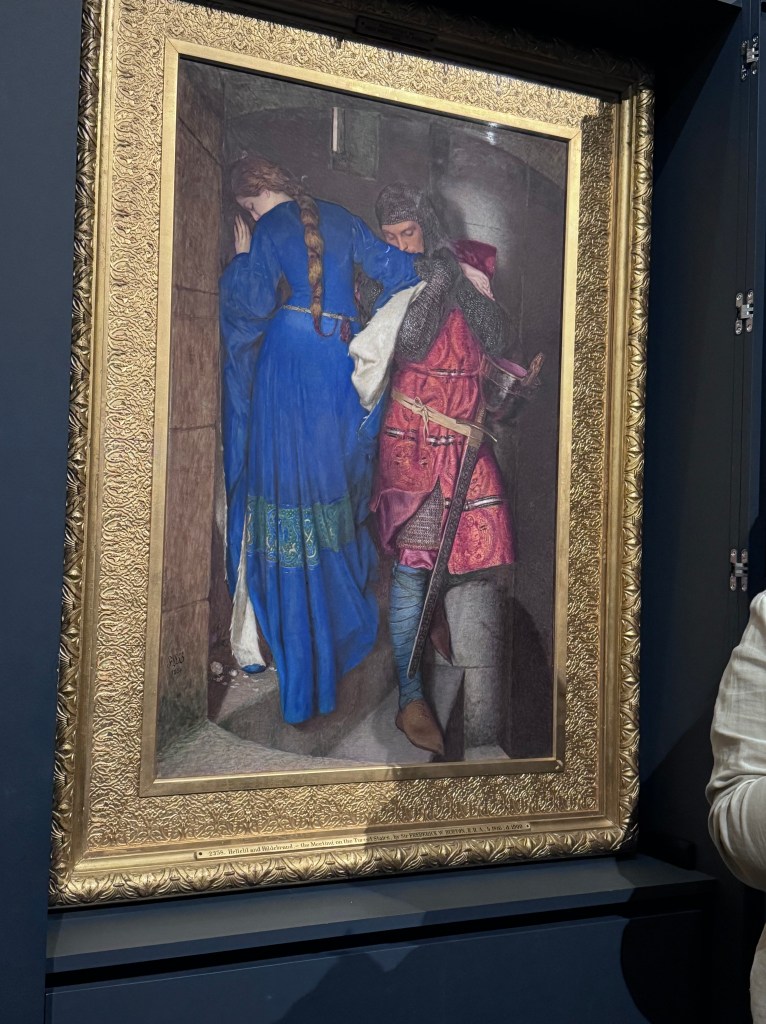
From there, we visited the National Gallery of Ireland and spent time wandering through the artwork. Diann had sent us an Instagram post about a painting called The Meeting on the Turret Stairs, which is only displayed for two hours each week. We were lucky enough to catch it during its viewing time.
If you are ever in Dublin, it is absolutely worth making time to see this painting. It is gorgeous, and the story behind it is heartbreaking. The painting depicts Hellelil and Hildebrand, lovers whose story comes from a poem. She is a noblewoman, and he is a soldier of fortune. They fall in love, but she is promised to someone else. Hildebrand asks her father for permission to marry her, but he refuses. A duel follows, and Hildebrand ends up fighting her father and eight brothers. He kills her father and seven of the brothers before the youngest brother kills him. Hellelil is devastated as she watches her lover die. Her family then punishes her, eventually sending her to a convent. When she tells her story to one of the sisters, a bell rings and she dies.
The funniest part of the whole story is that none of it actually happened. The couple is entirely fictional, created from a poem. Yet visitors constantly ask the docent questions like, “How old was she when she died?” or “Where is she buried?” The docent patiently has to explain, “She’s imaginary. I don’t know!” That absolutely cracked me up.
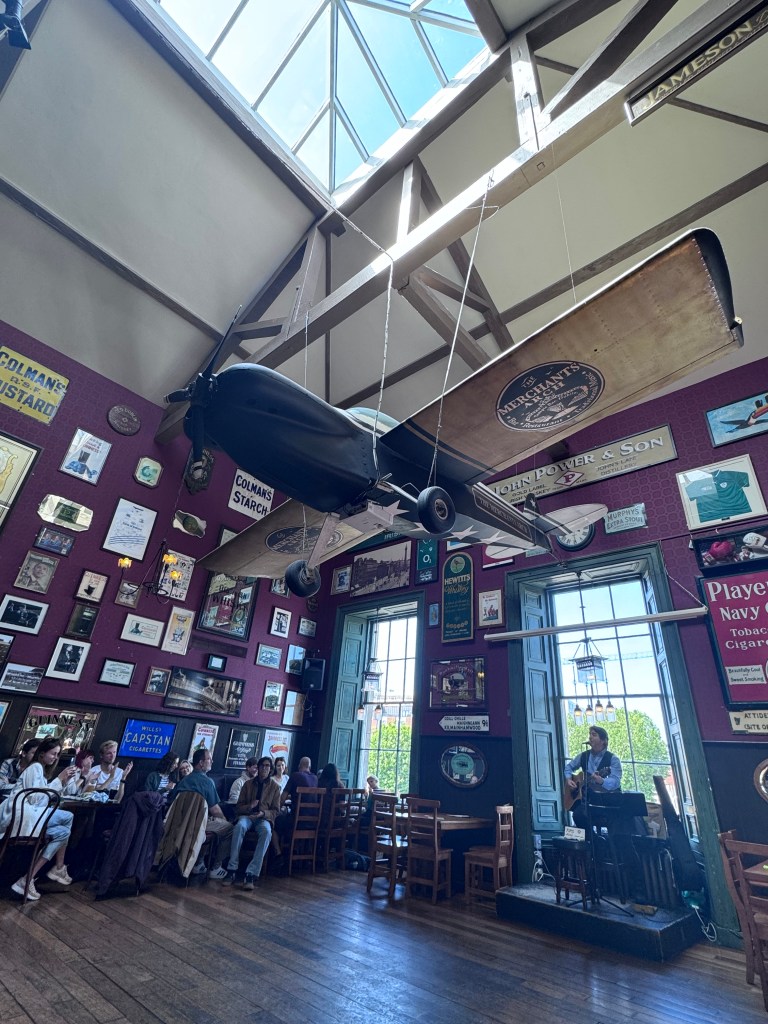
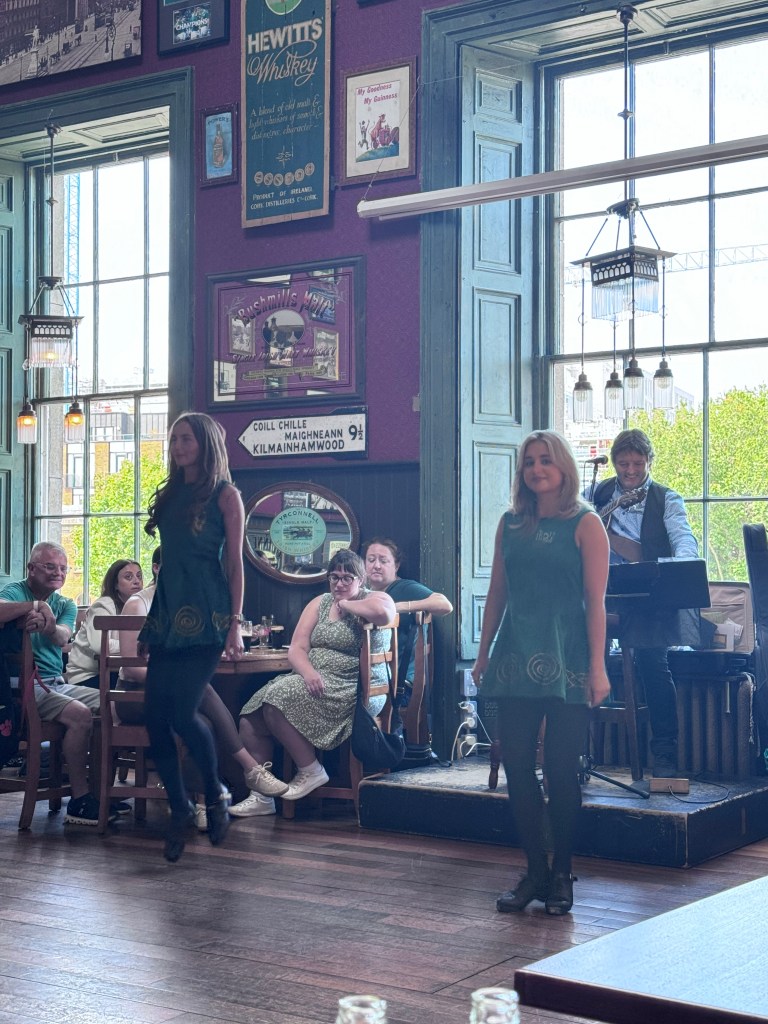
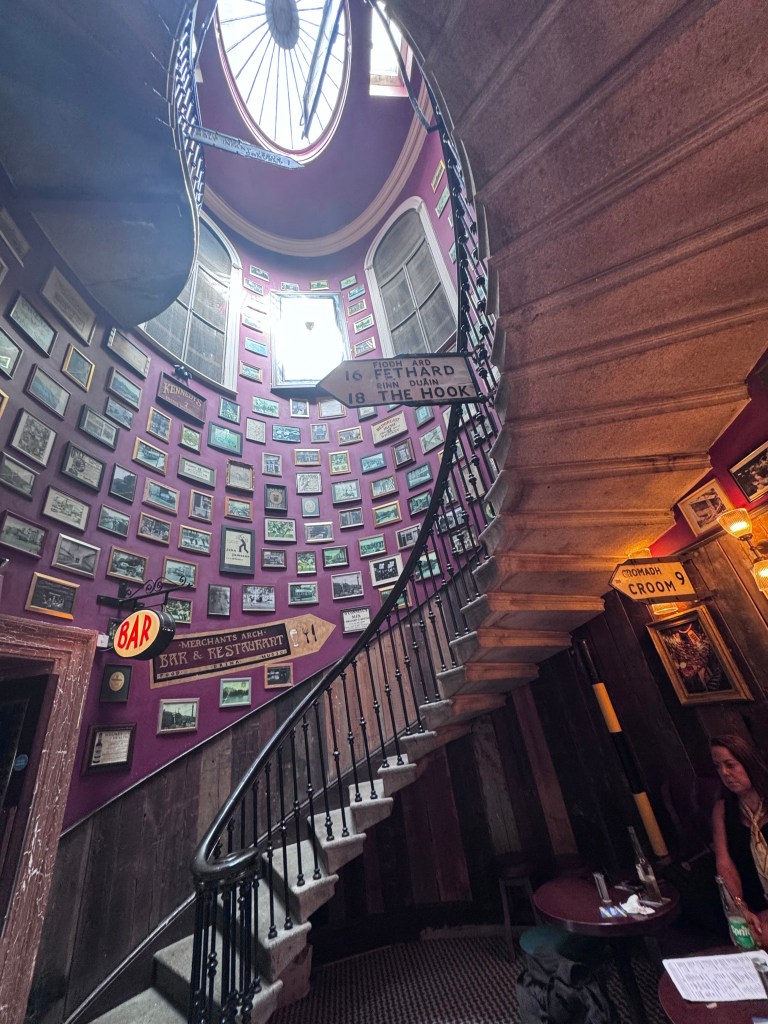
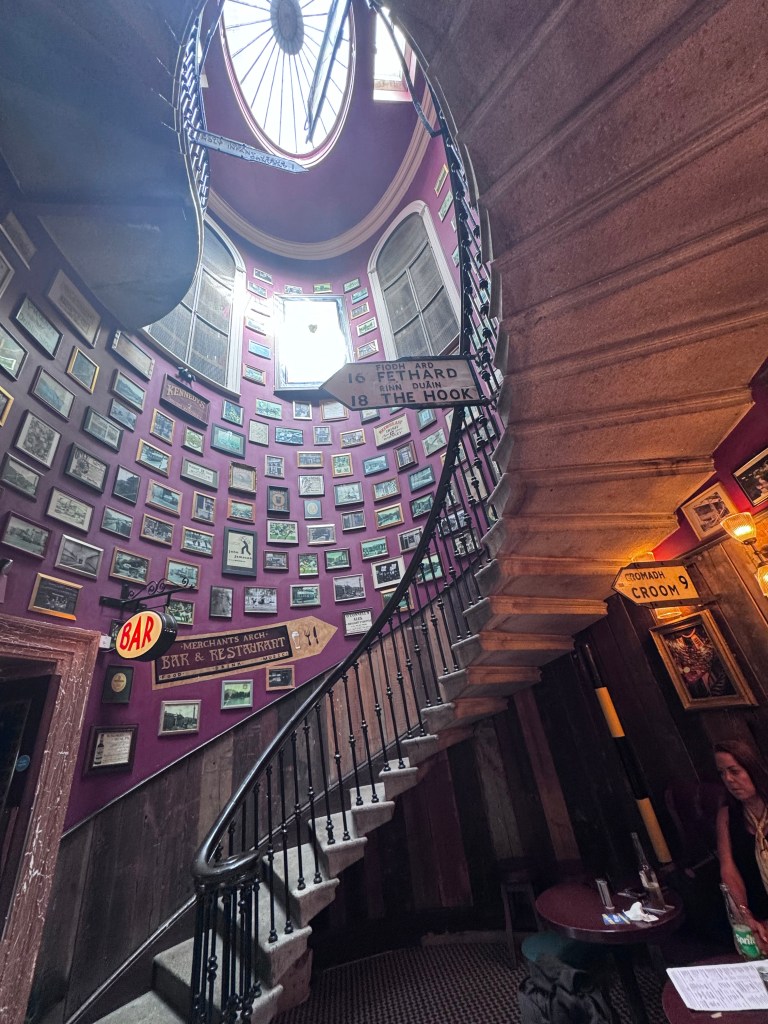
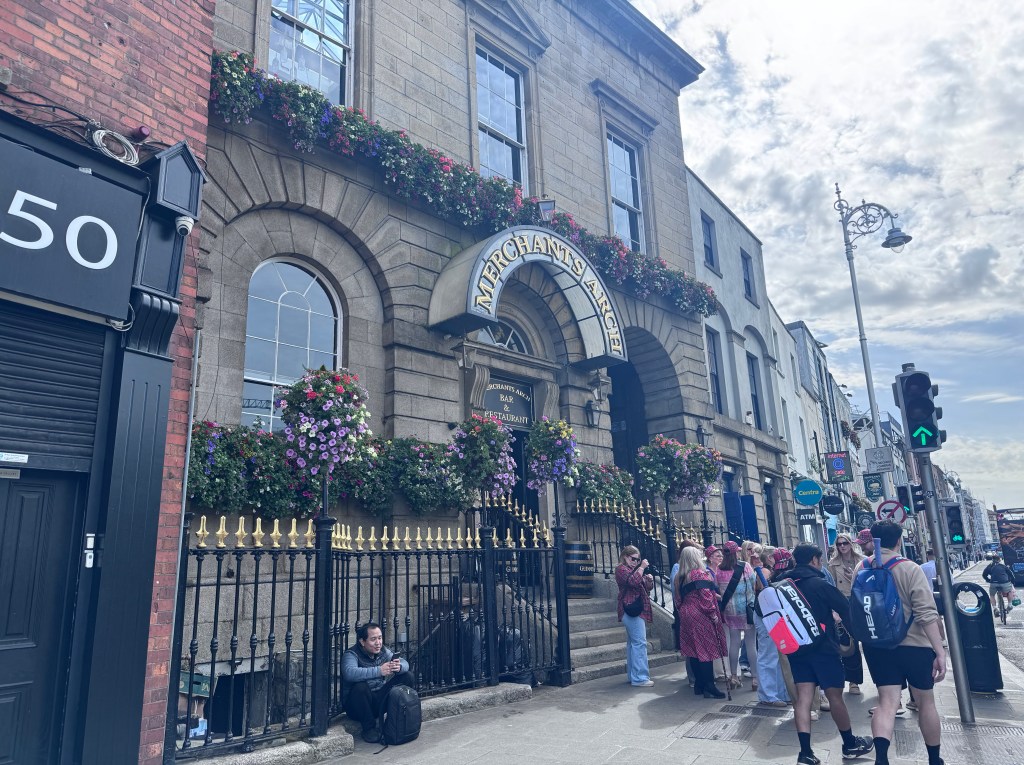
Later, we headed downtown to the famous Temple Bar district and attended an afternoon of traditional Irish music and dancing. We had hoped Kiya would be awake to enjoy it, but between the crowds, excitement, and a seizure while we were trying to get settled, she crashed and slept through most of it. I, however, got up and joined some of the dancing. The music was fantastic, and it was a lot of fun.
Afterward, we took what can only be described as a slightly sketchy cab ride back to where we are staying.
Today we are headed to Cork. I plan to kiss the famous Blarney Stone while Mom and Kiya explore the grounds. After that, we’ll spend some time wandering around Cork, visiting the market, and picking up supplies for dinner and breakfast before settling in for the evening.
Ireland continues to amaze us, and we’re excited to see what adventures today brings.
I will add more photos and videos