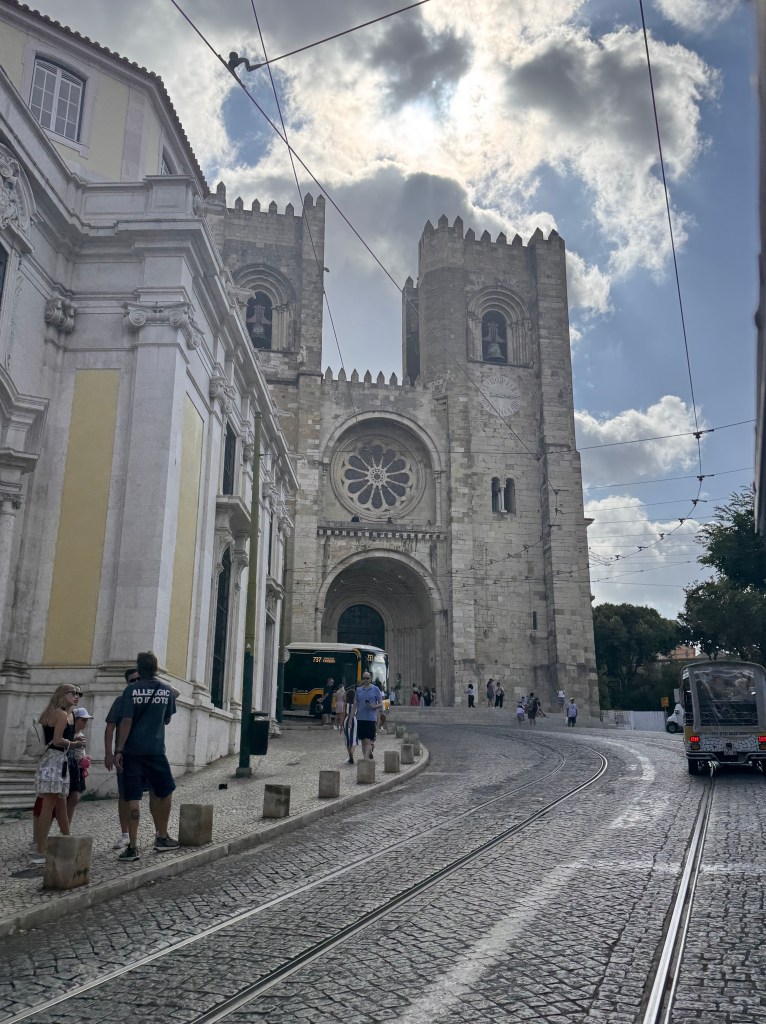
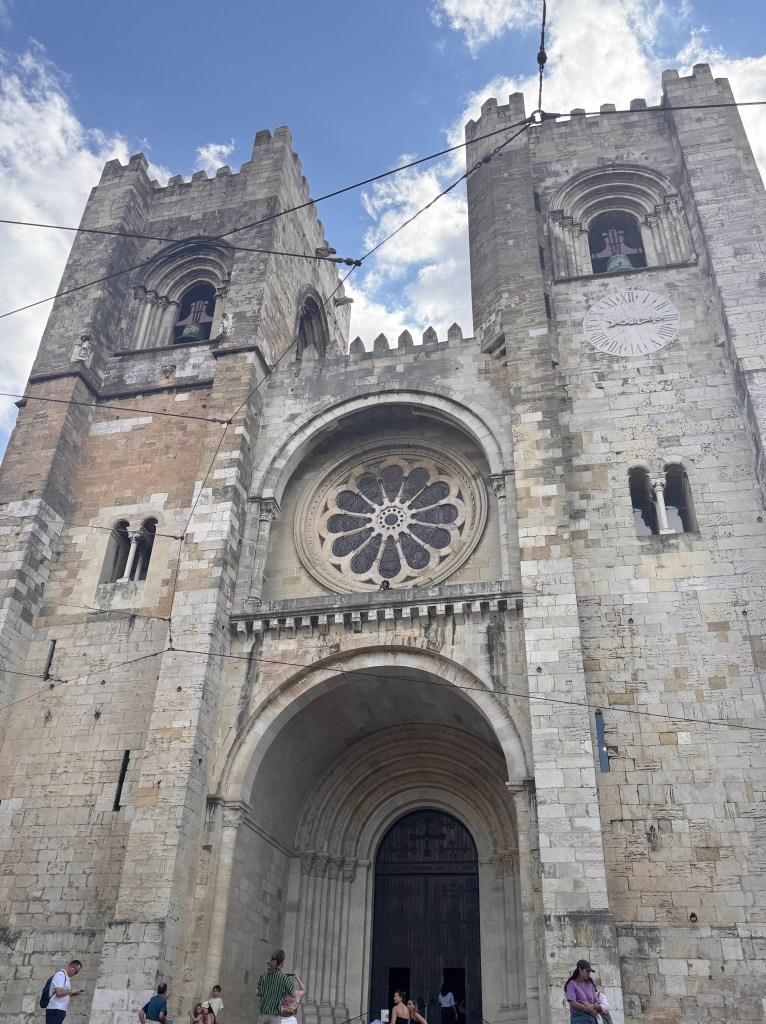
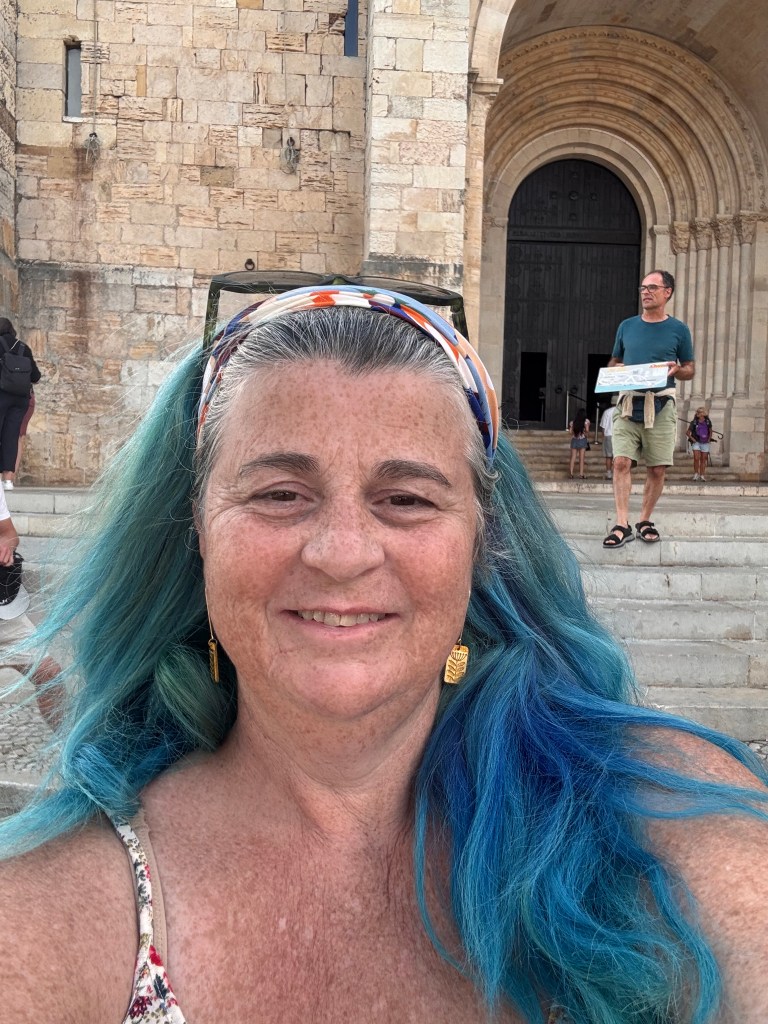
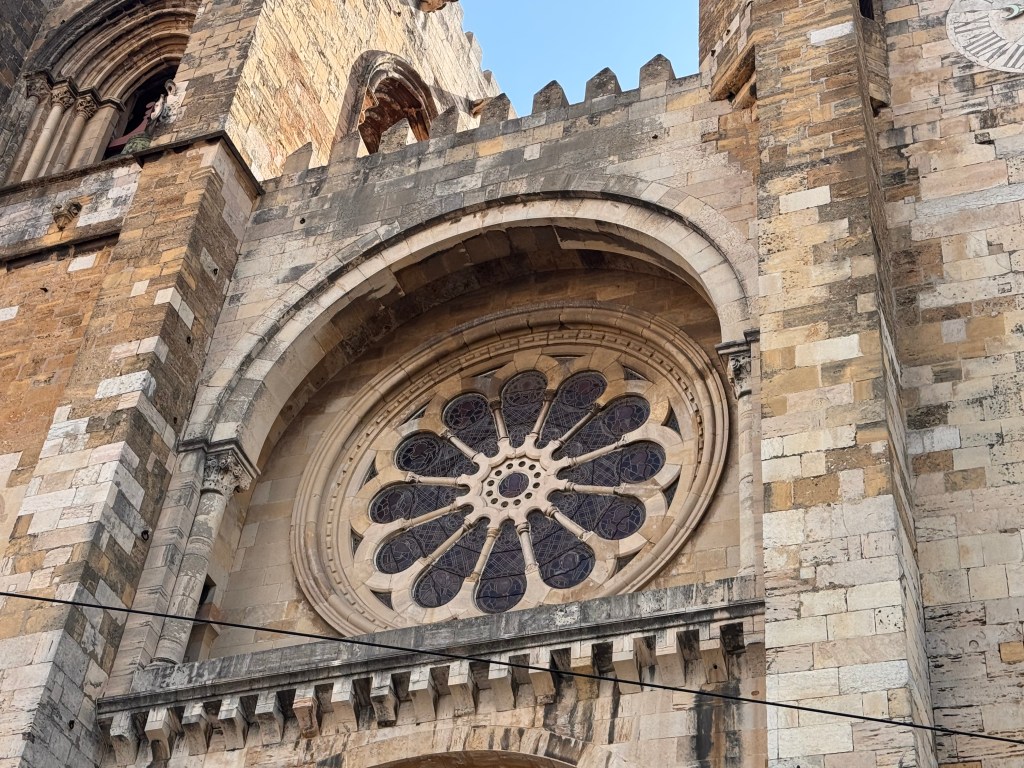
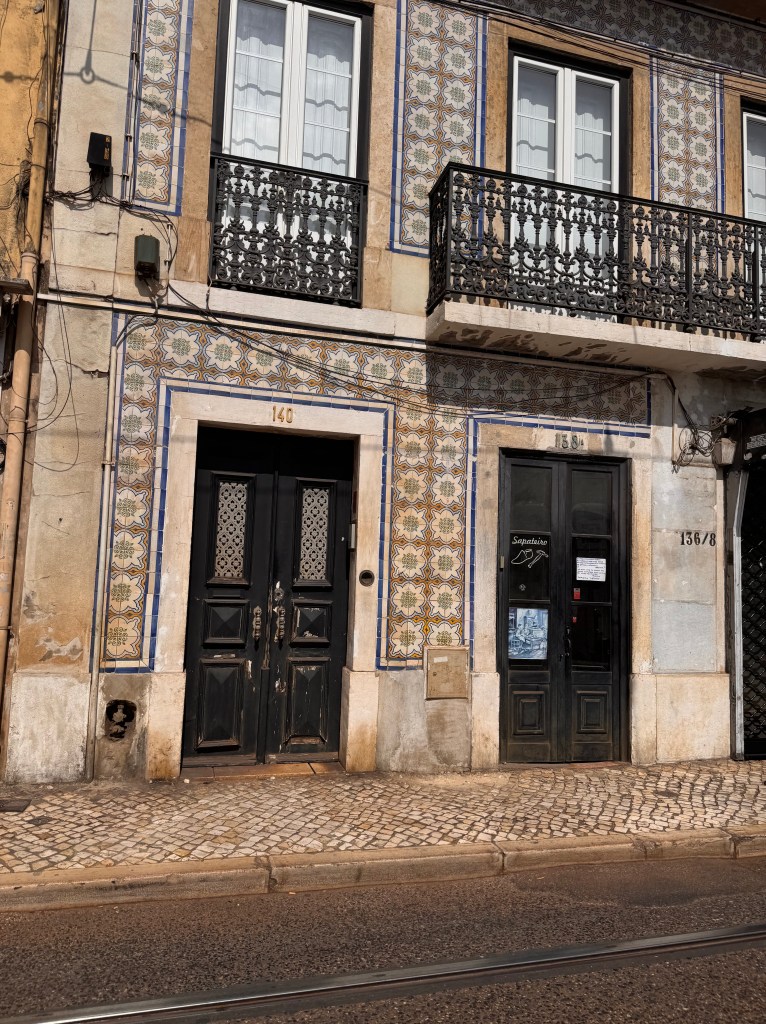
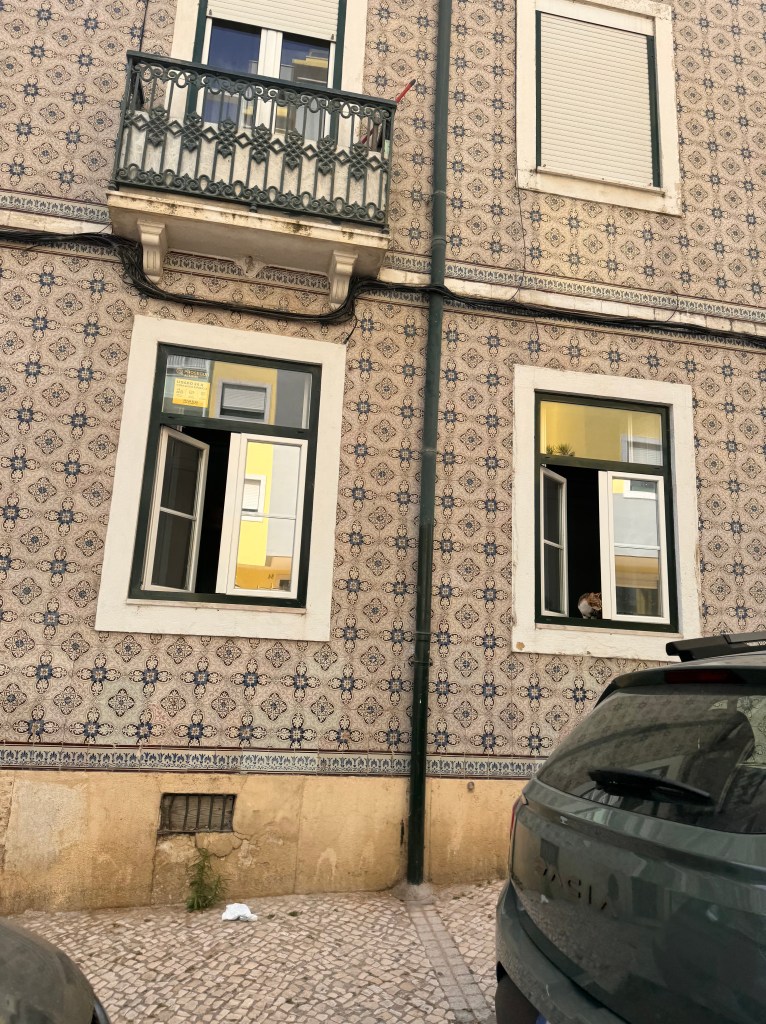
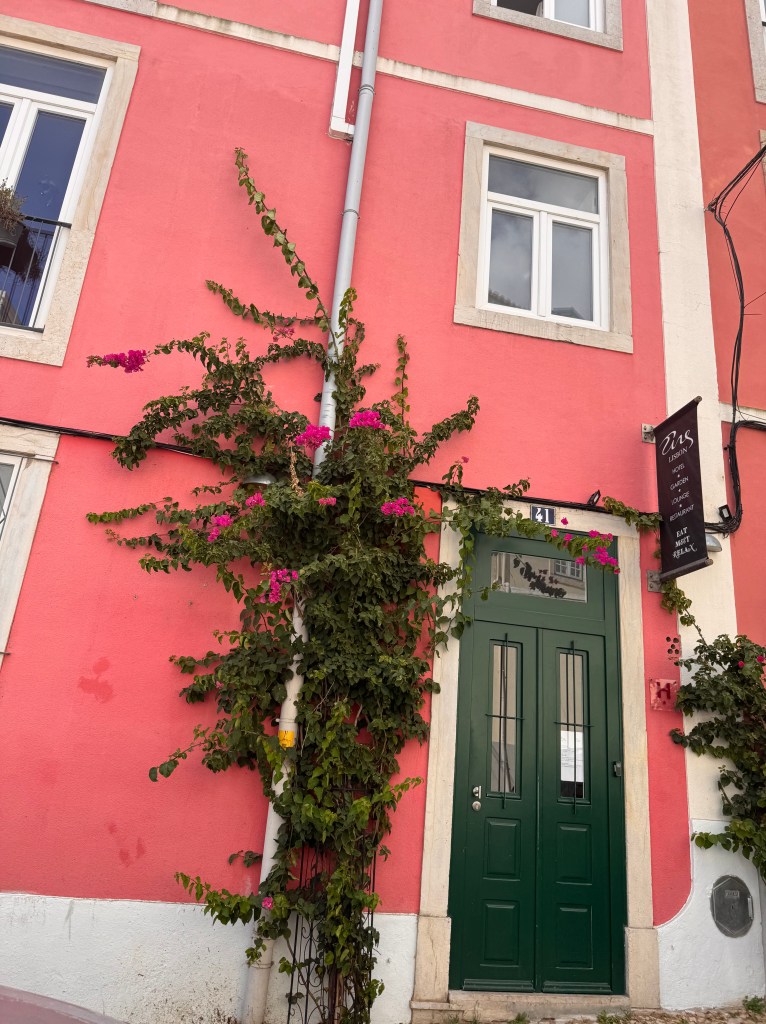
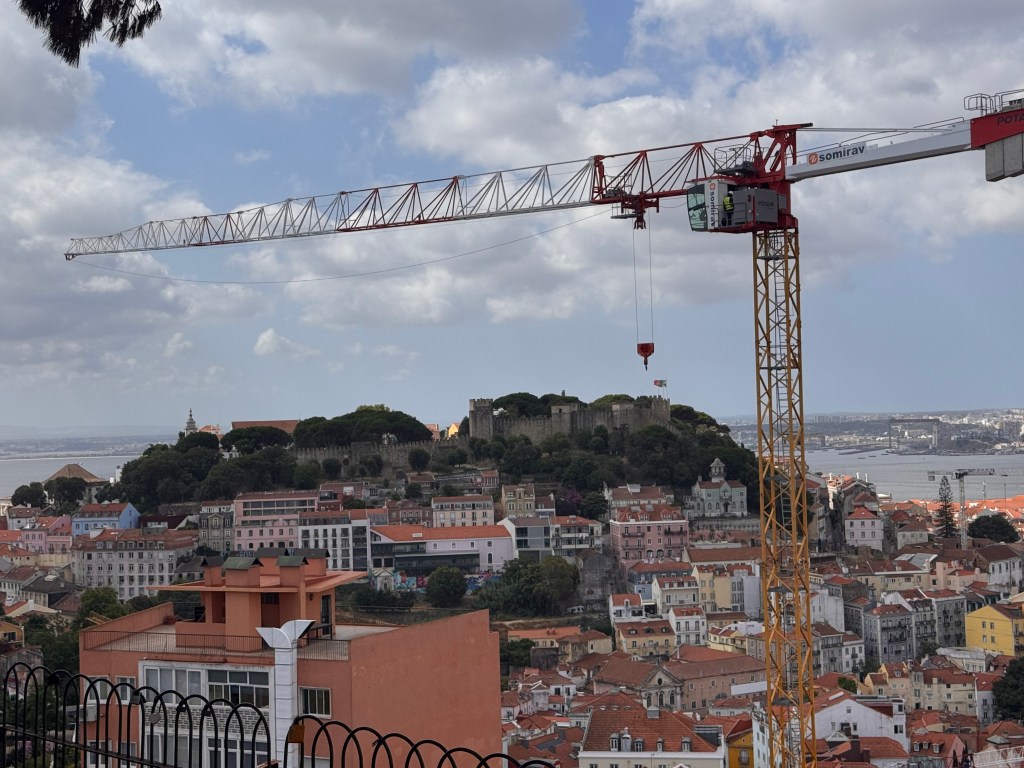
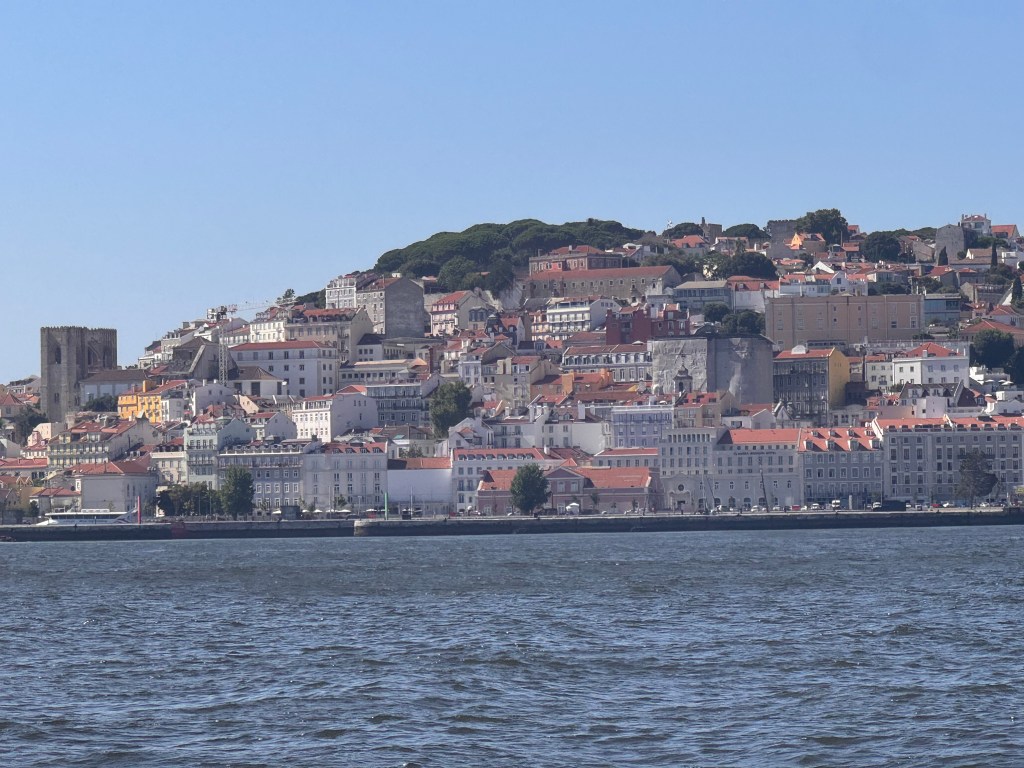
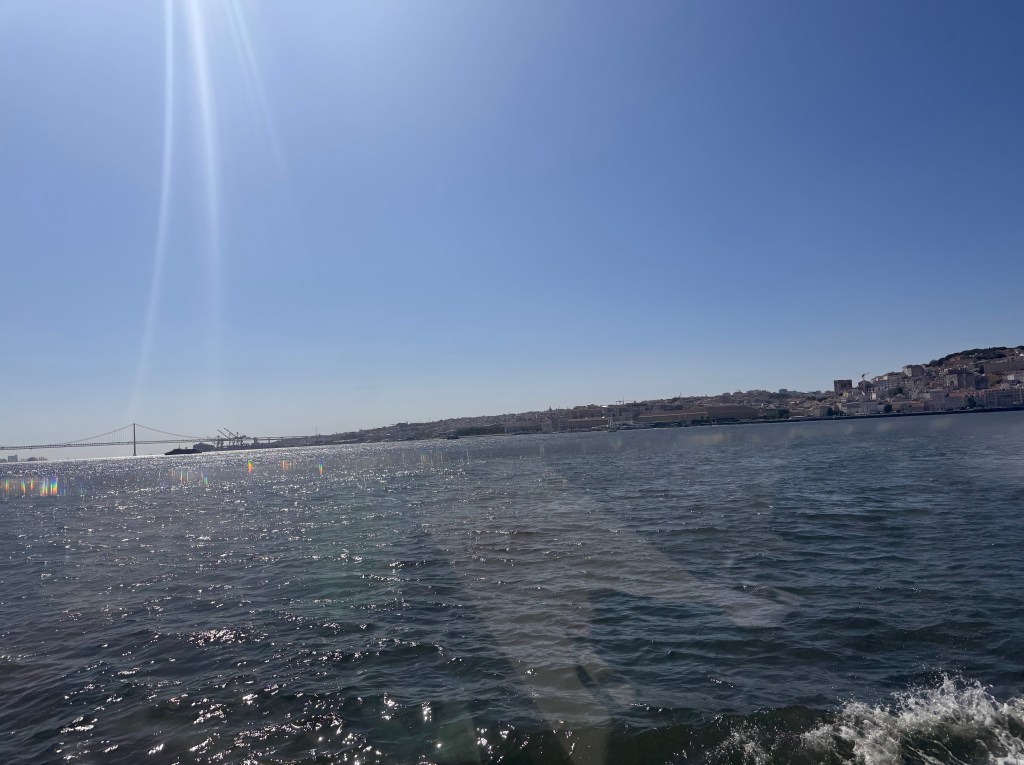
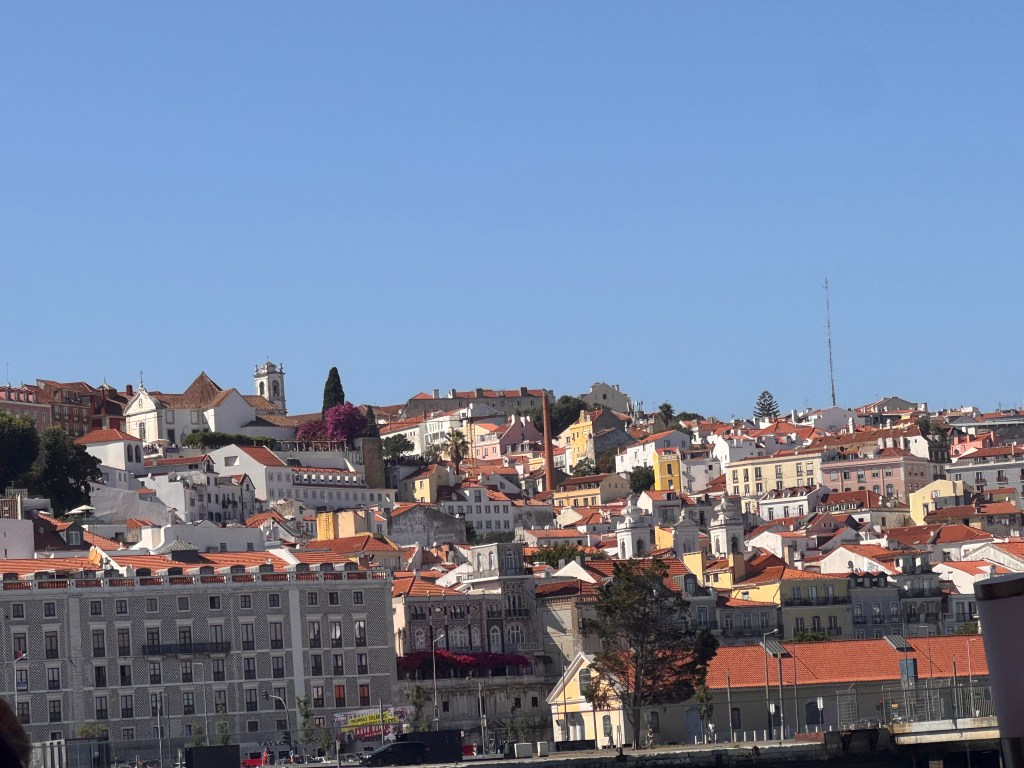
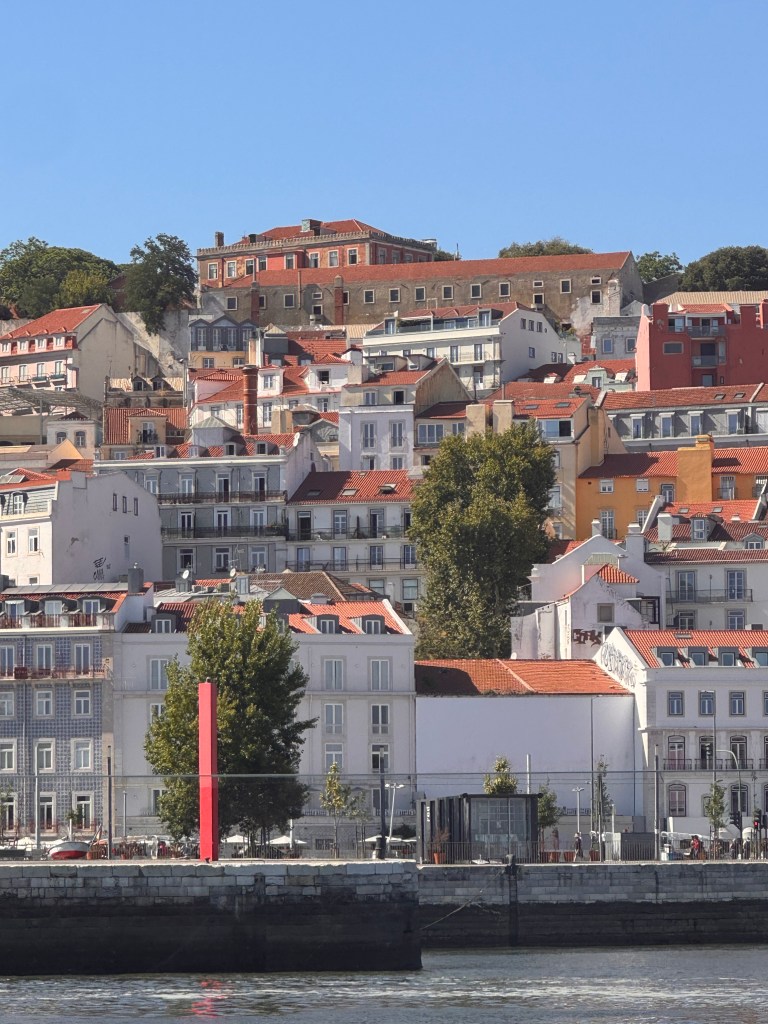
One Last Wander Through Lisboa

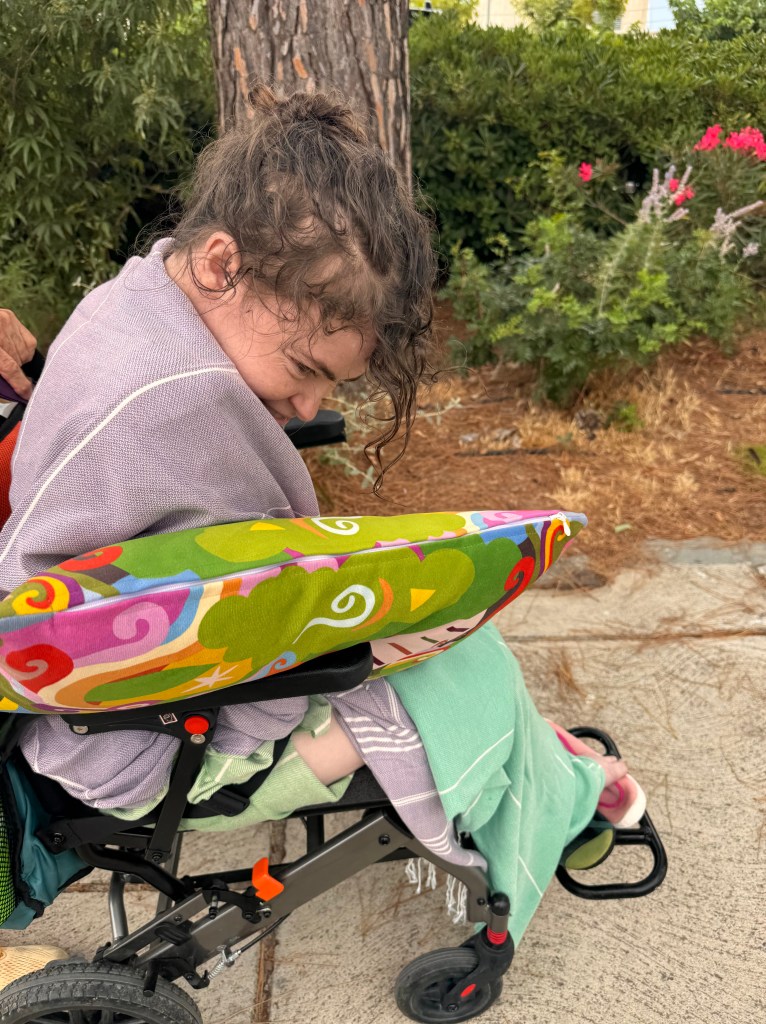
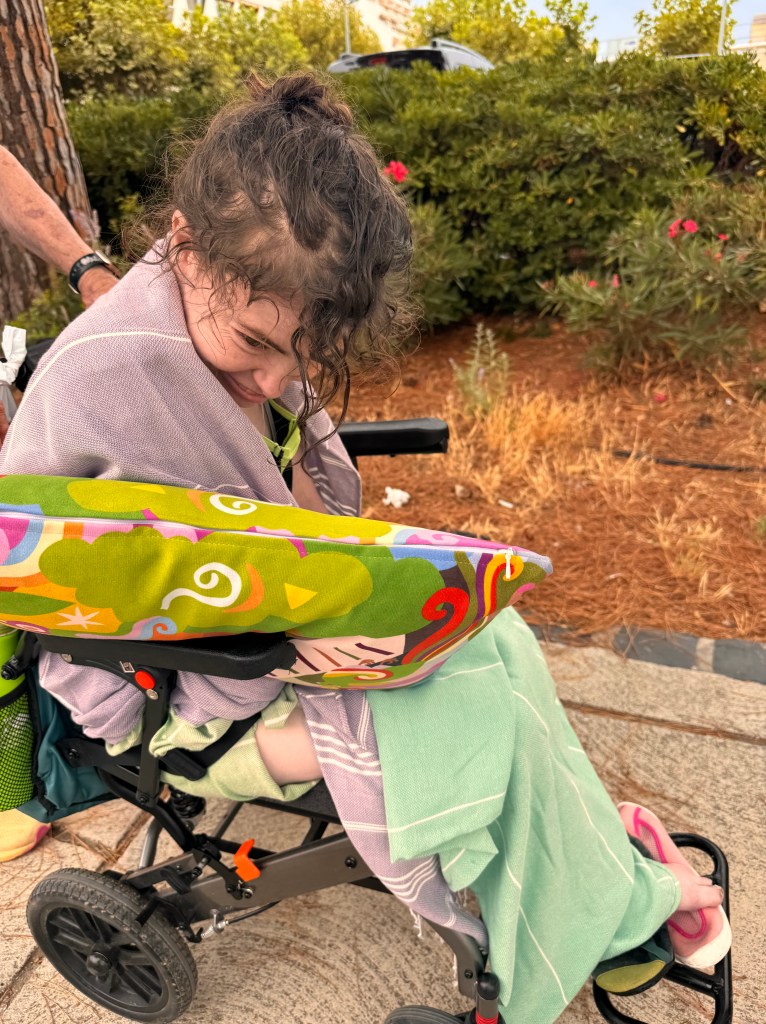
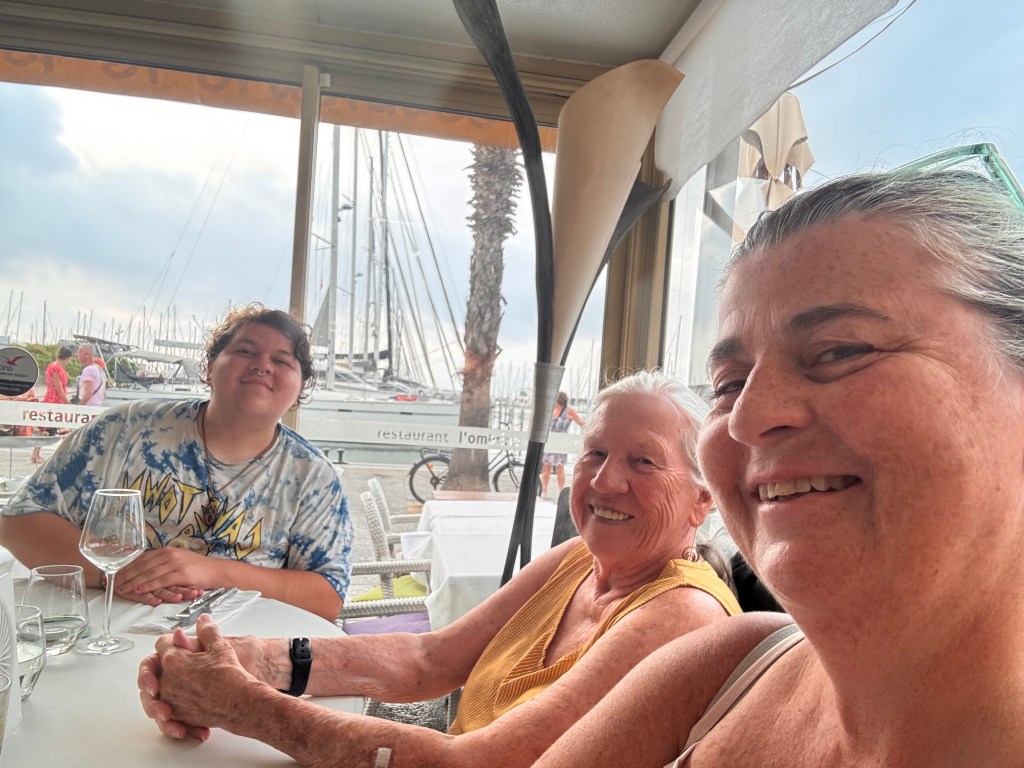
We decided to take it easy on our final day in Lisboa.

After seven weeks of traveling, sightseeing, walking, trains, planes, taxis, and more cobblestones than I ever need to see again, no one was in a hurry. We let Kiya sleep until 11:00 and enjoyed a slow morning at the apartment.

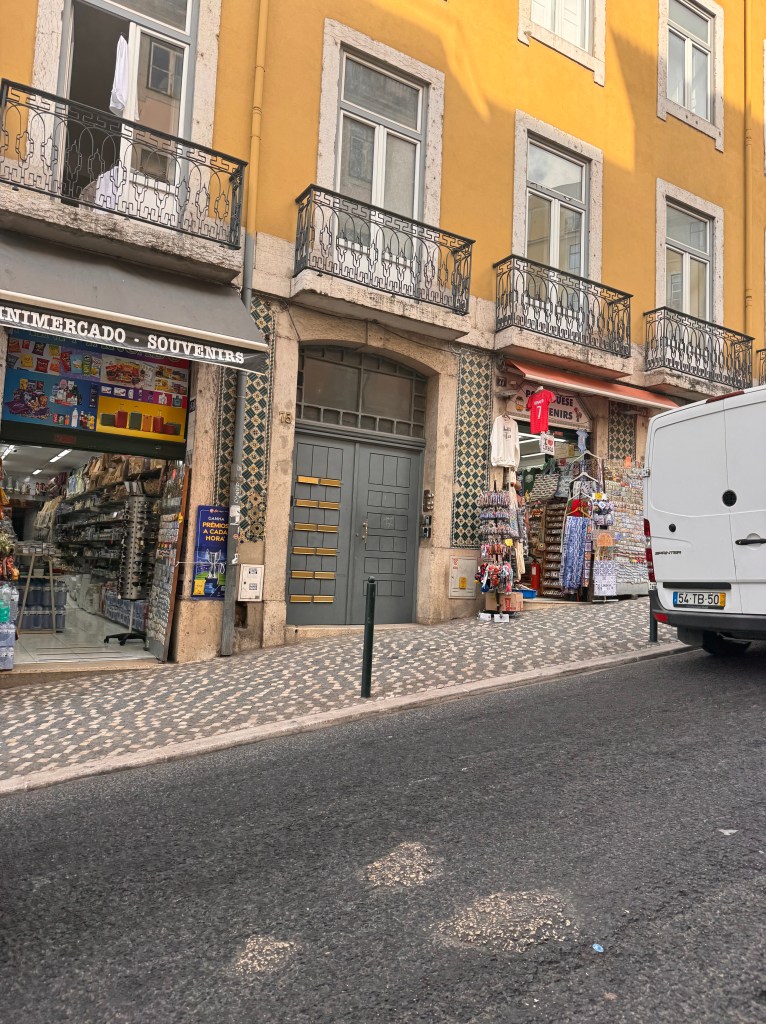
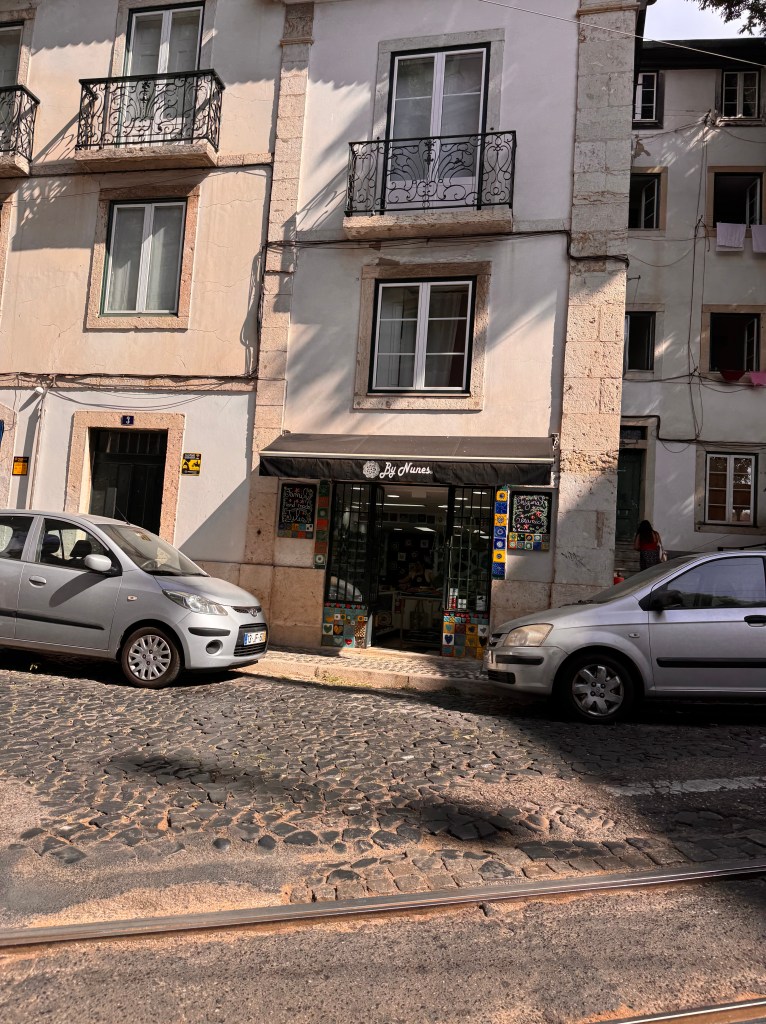
Once everyone was awake and ready, we headed out to revisit a few shops we’d discovered a couple of days earlier. There were several things that had intrigued us, and this was our last chance to go back and get them.

I had one particular mission.

I wanted to find a little cloth Portuguese rooster keychain. They are so cute and colorful, and every time I see one, it reminds me of Heihei, the crazy chicken from the movie Moana.

The Rooster of Barcelos is everywhere in Portugal. According to legend, a man wrongly accused of a crime declared that a roasted rooster would crow to prove his innocence—and it did. The colorful rooster eventually became a Portuguese symbol of good luck, honesty, justice, and faith. Today you can find versions of him on just about everything.

And speaking of finding something on everything…

Sardines.

Lisboa loves its sardines.

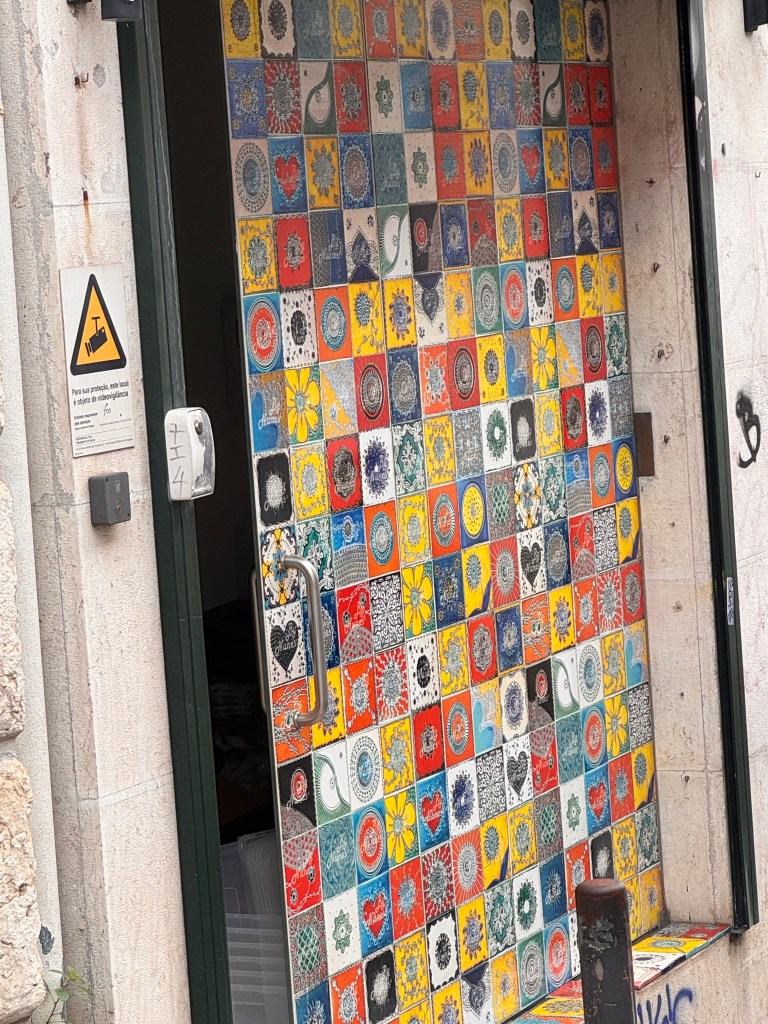
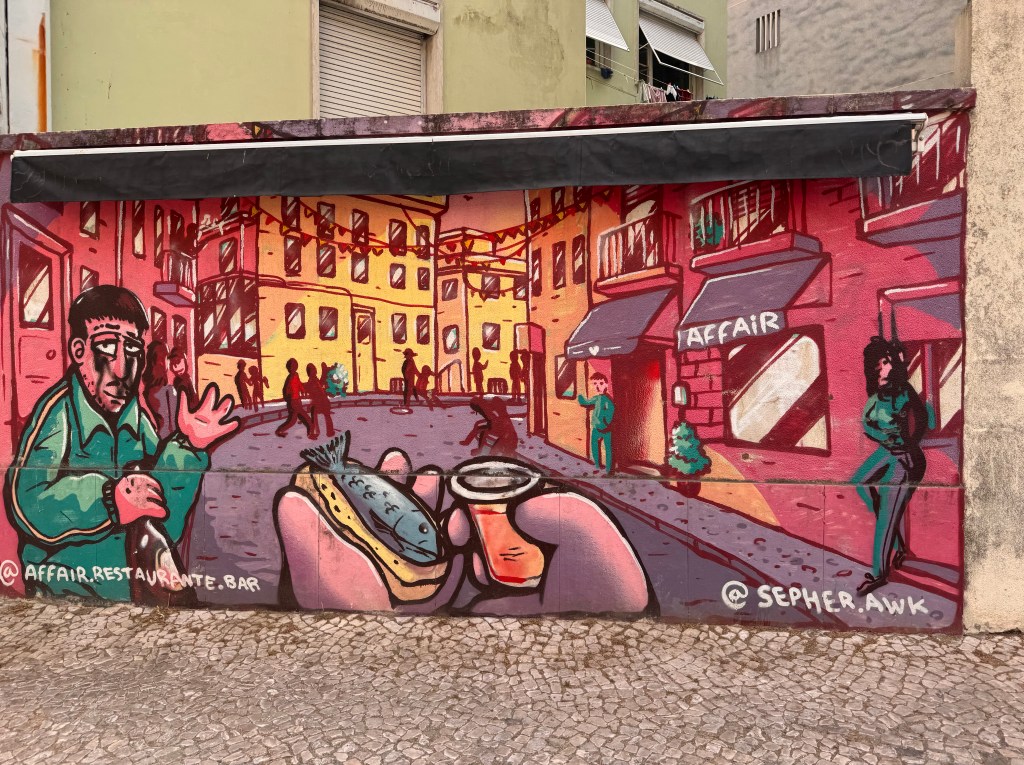
You can find sardine shirts, jewelry, bags, artwork, souvenirs, and, of course, actual sardines packaged in some of the most beautiful tins I’ve ever seen.

We returned to a sardine shop we’d visited earlier in our stay. When we left the first time, I had told the woman working there that we’d be back.

As soon as I walked through the door, she recognized me.

“You did come back!”

I did!

I bought a pair of sardine earrings, and I couldn’t resist bringing home one of the beautifully designed tins. The artwork is so colorful and detailed that the tin itself feels like a souvenir.

From there, we wandered through several more shops and eventually made our way onto one of the busier boulevards.

Suddenly there were people everywhere.

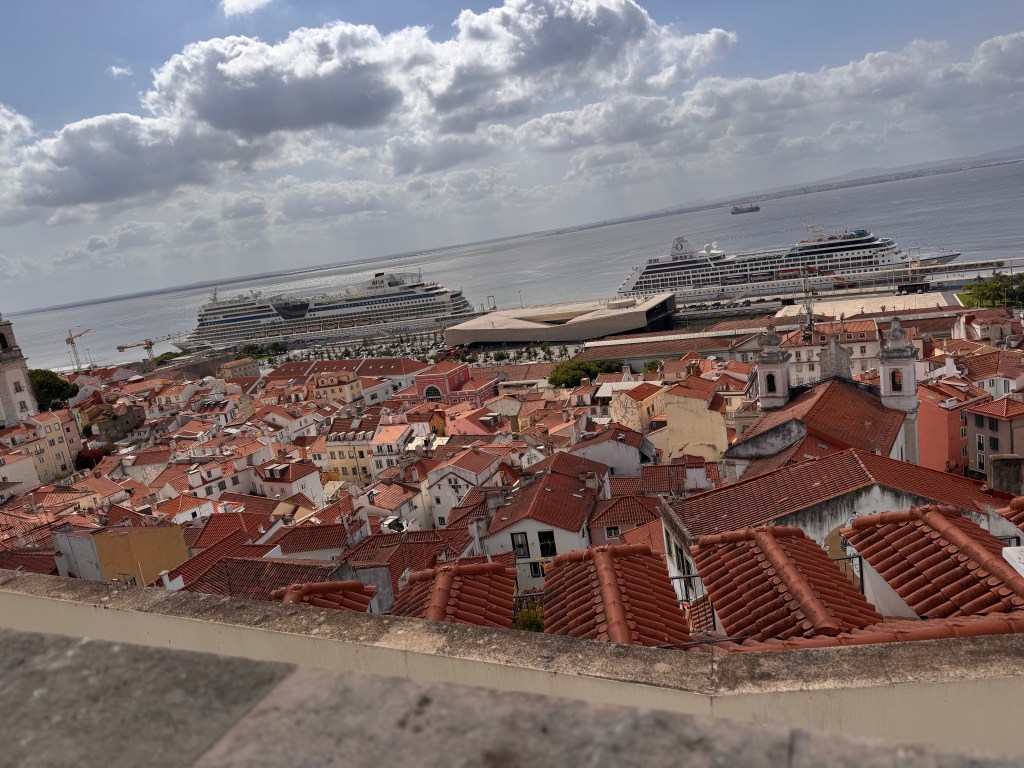
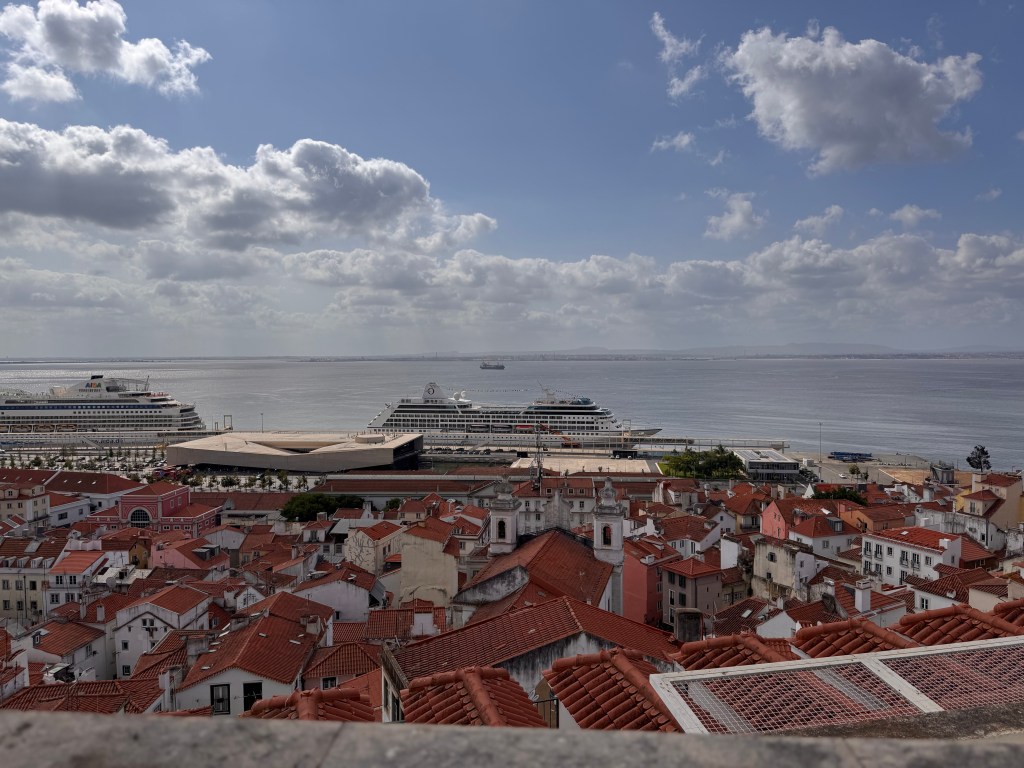
It honestly felt like a cruise ship had pulled into port and unloaded every passenger at once. After several days of relatively easy wandering, we suddenly found ourselves surrounded by crowds.

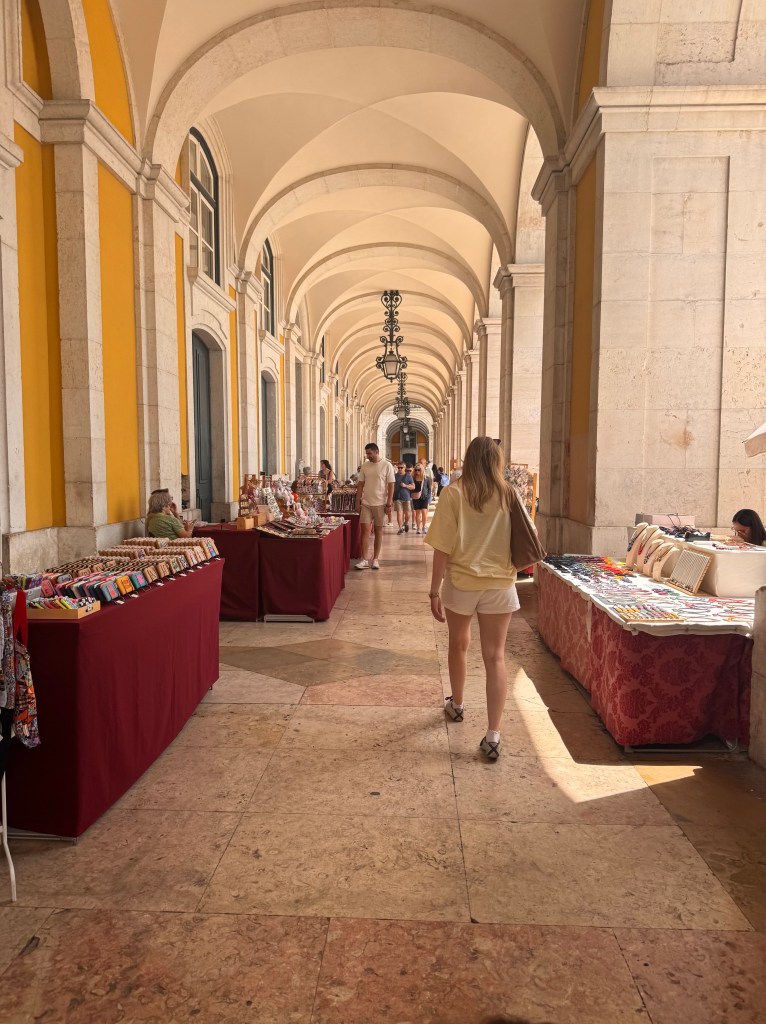
We escaped down a little side street and accidentally stumbled upon an open-air market.

Those unexpected finds have been some of my favorite parts of this trip.

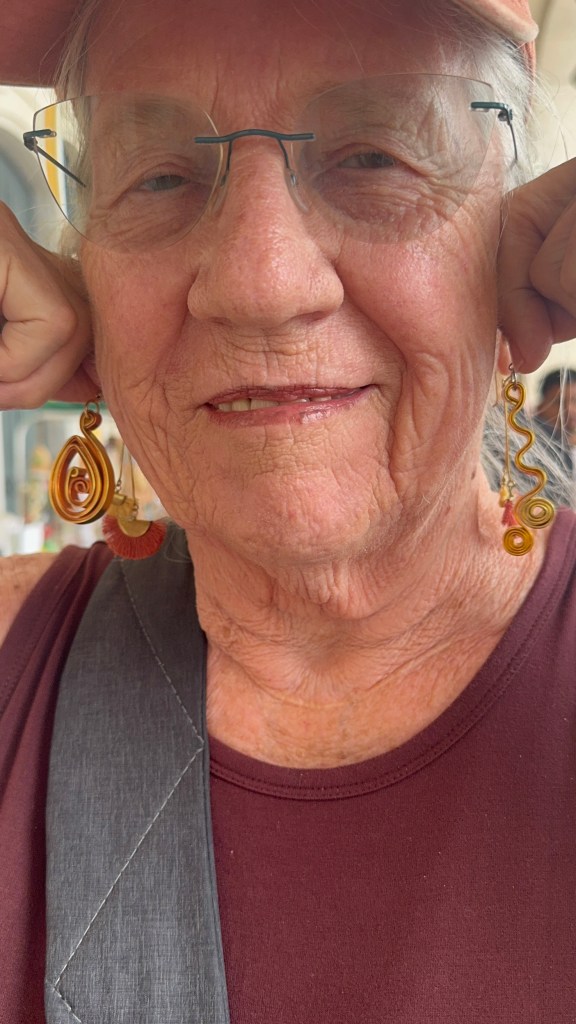
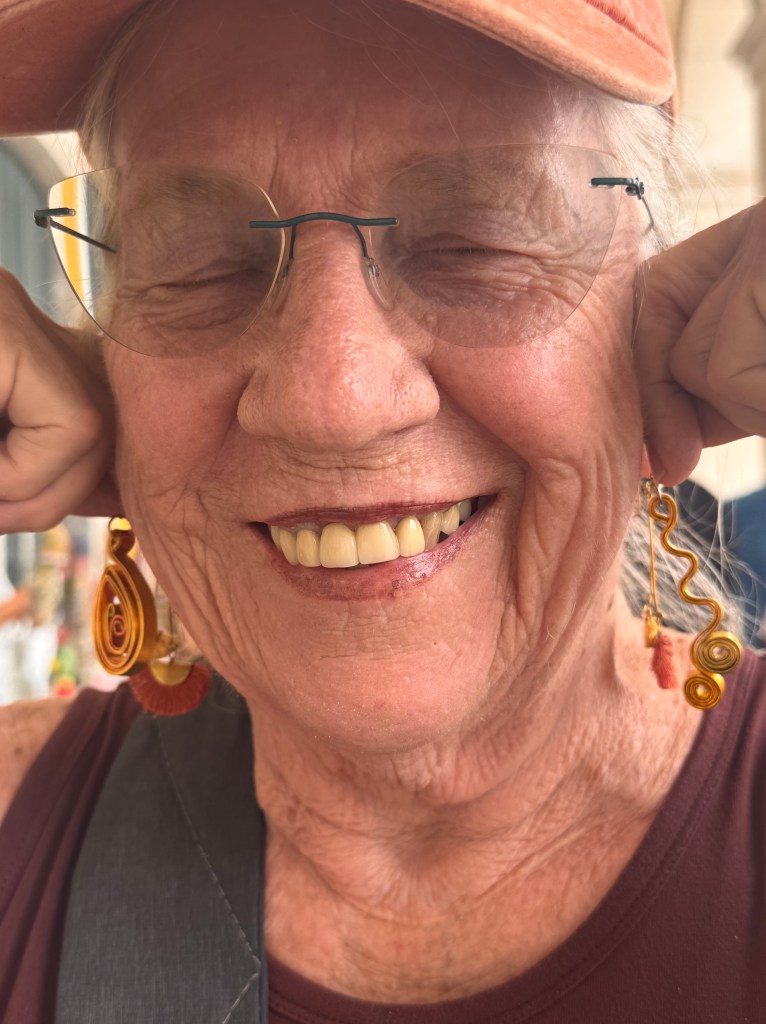
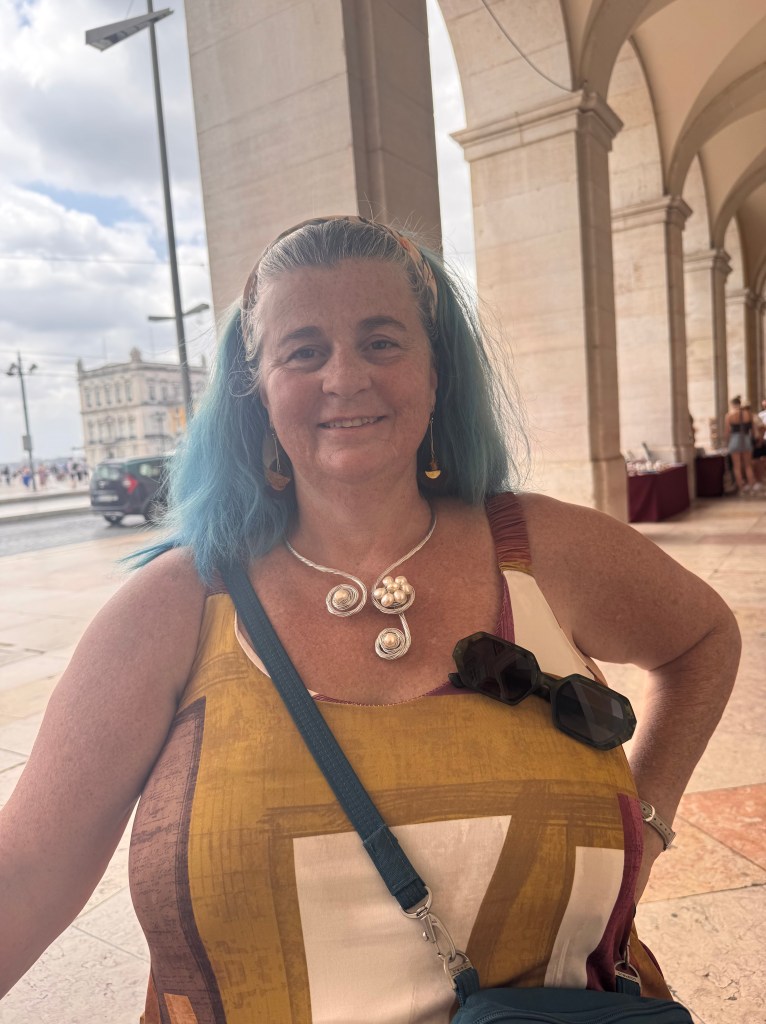
One vendor was selling handmade aluminum jewelry, and naturally we had to stop. We ended up buying rings, earrings, and a necklace.

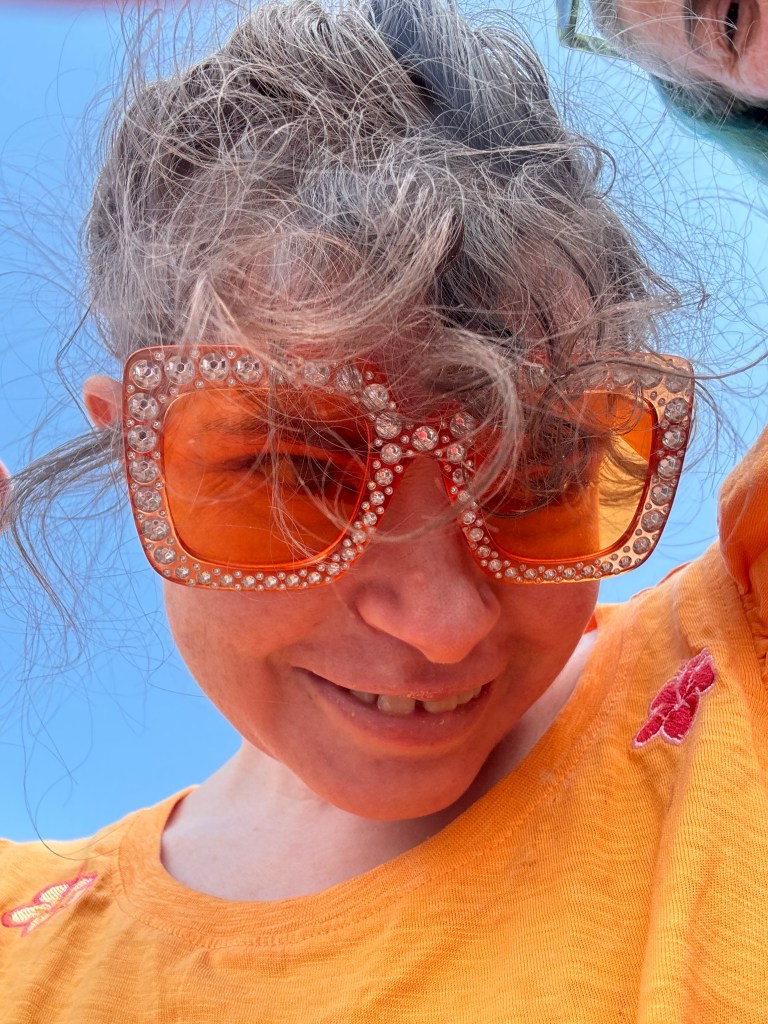
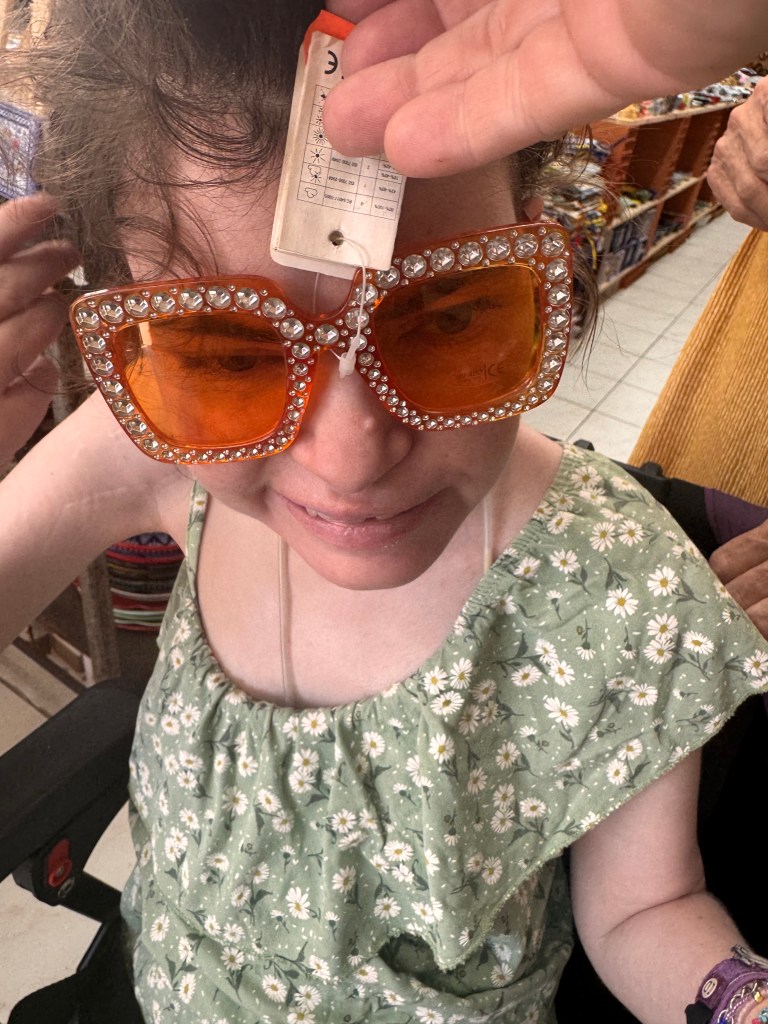
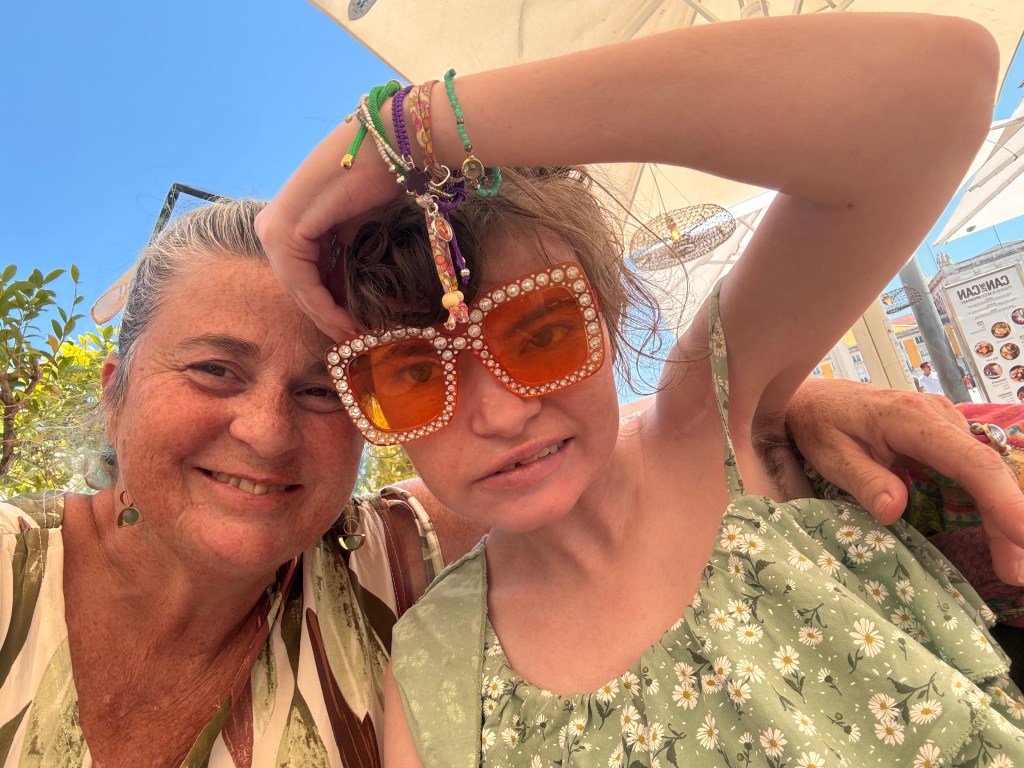
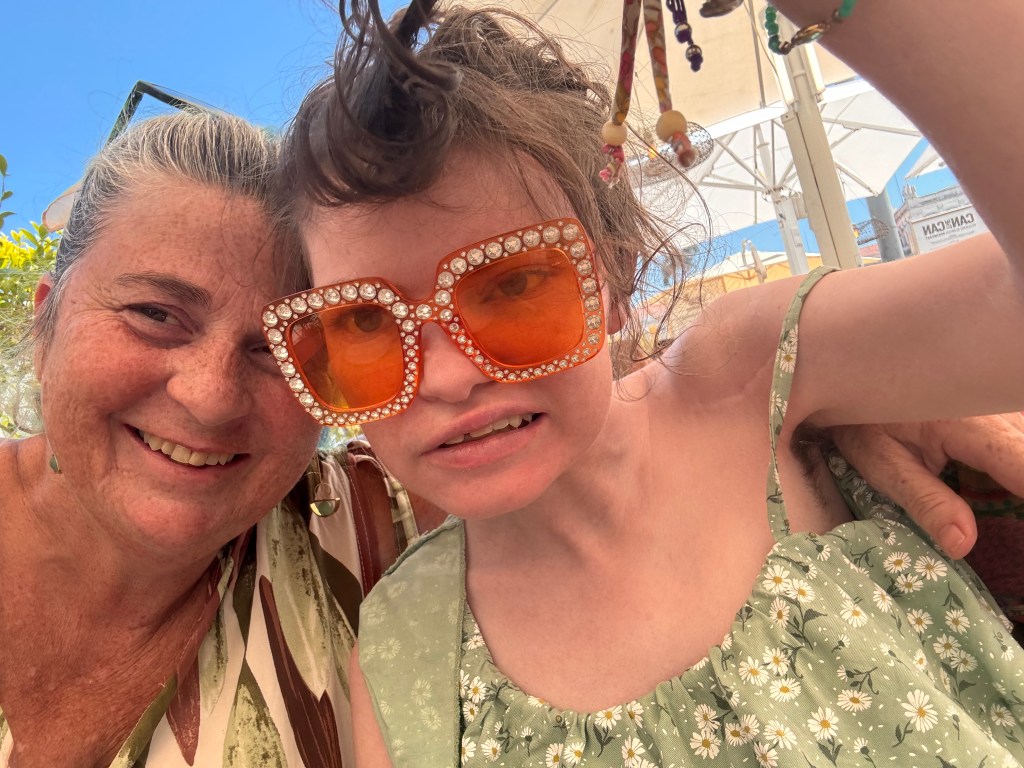
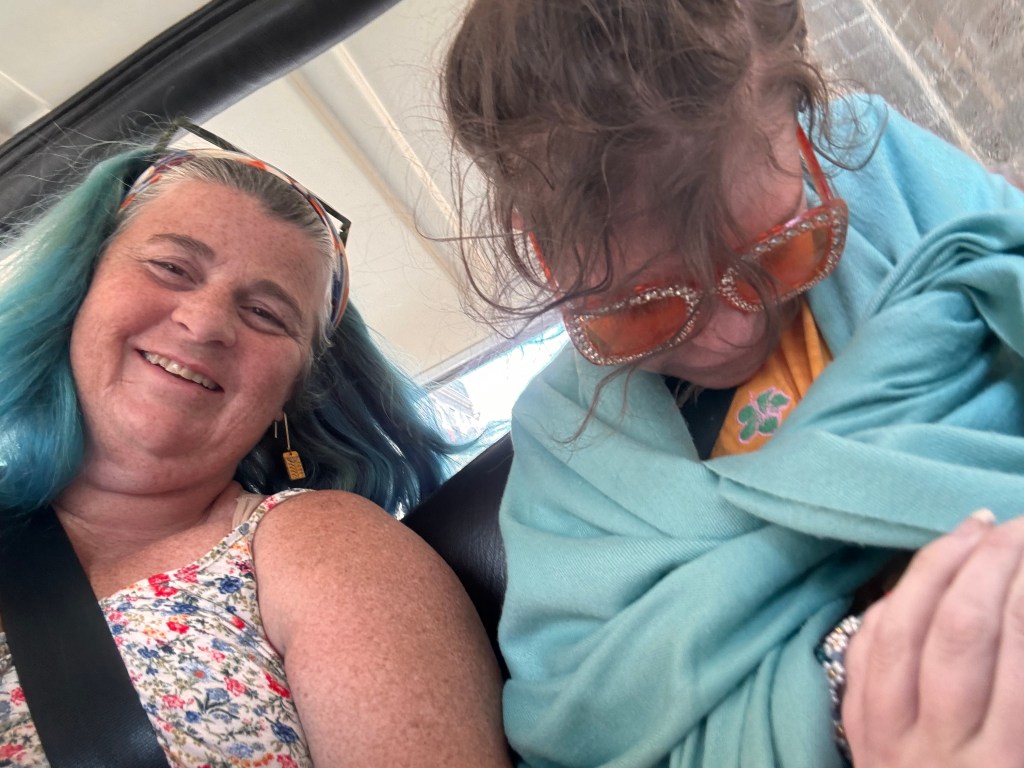
As you already know, Kiya has fallen in love with her fabulous orange, diamond-studded sunglasses. Mom had been searching for an eyeglass strap for her, and today she finally found one.

Even better—it matched Kiya’s sunglasses.

Perfect.

There was also one food stop we knew we had to repeat.

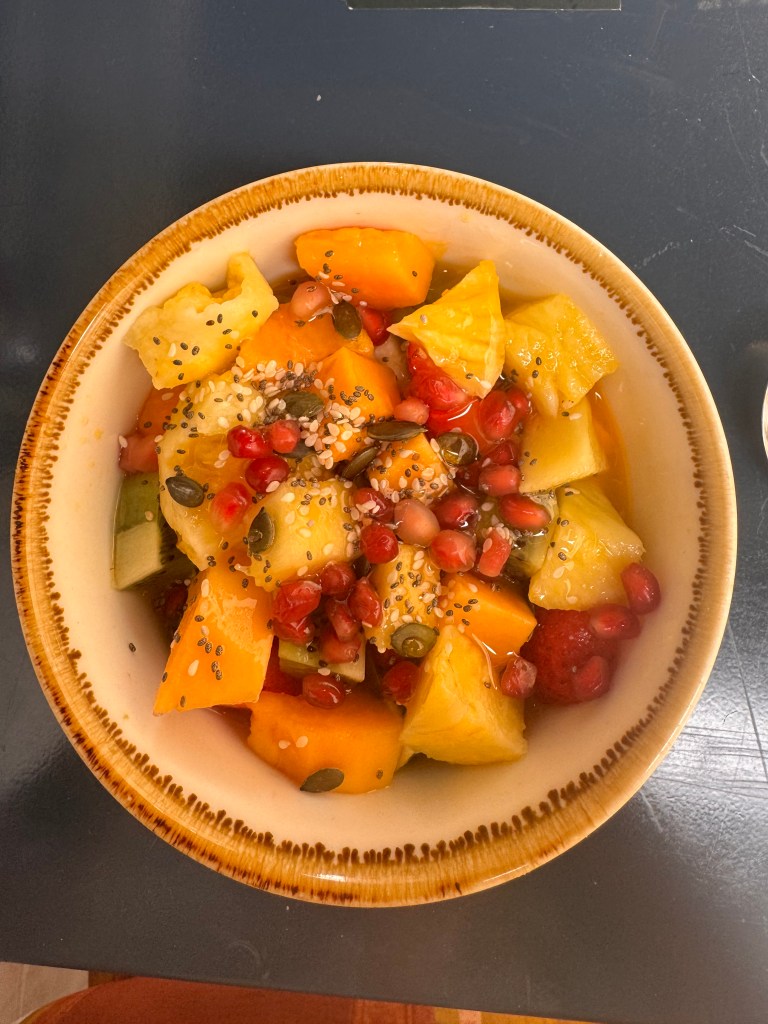
Earlier in our stay we’d discovered a café serving a delicious fruit bowl in orange juice and honey. It had been so good that we made a point of going back.

It was just as yummy the second time.

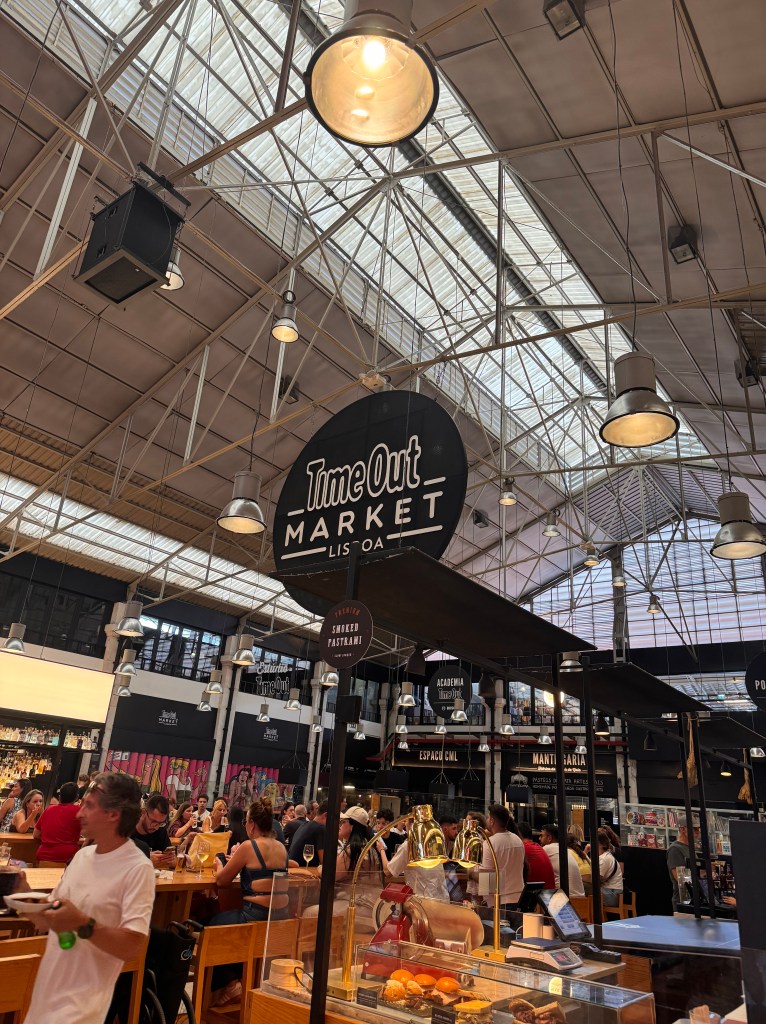
Then we had another important repeat destination—the Time Out Market.

There was really only one reason we needed to go back.

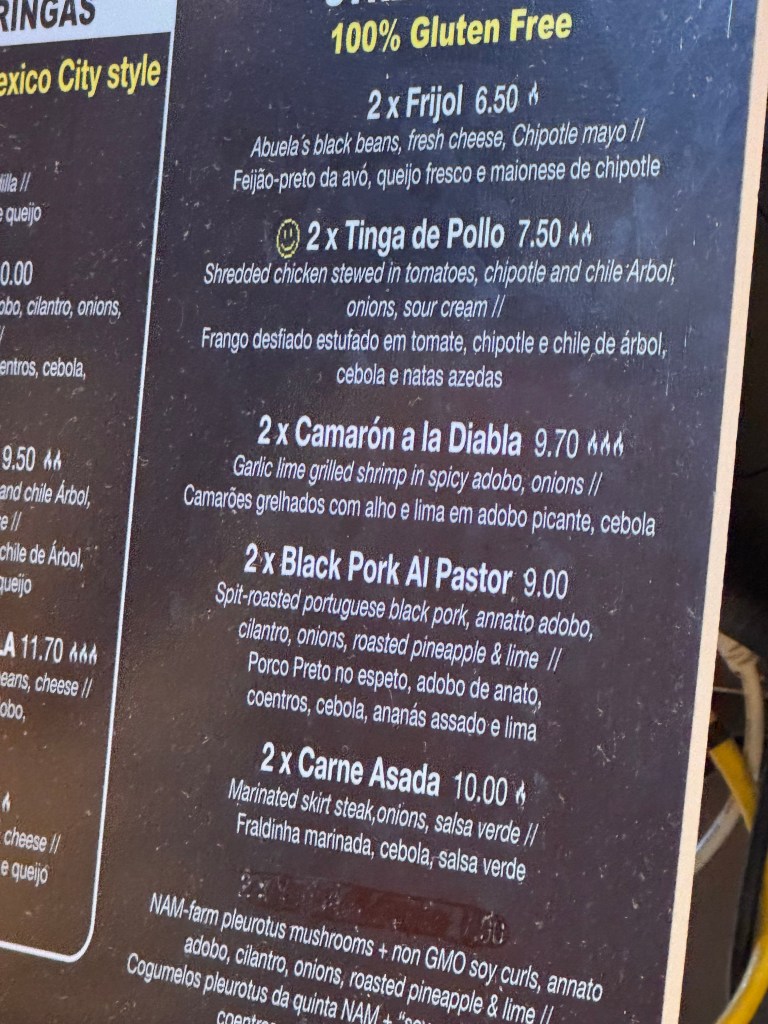
Those pork al pastor tacos.

We’d been thinking about them since we ate there the first time, so we ordered another round.

Yep.

Just as yummy the second time too.

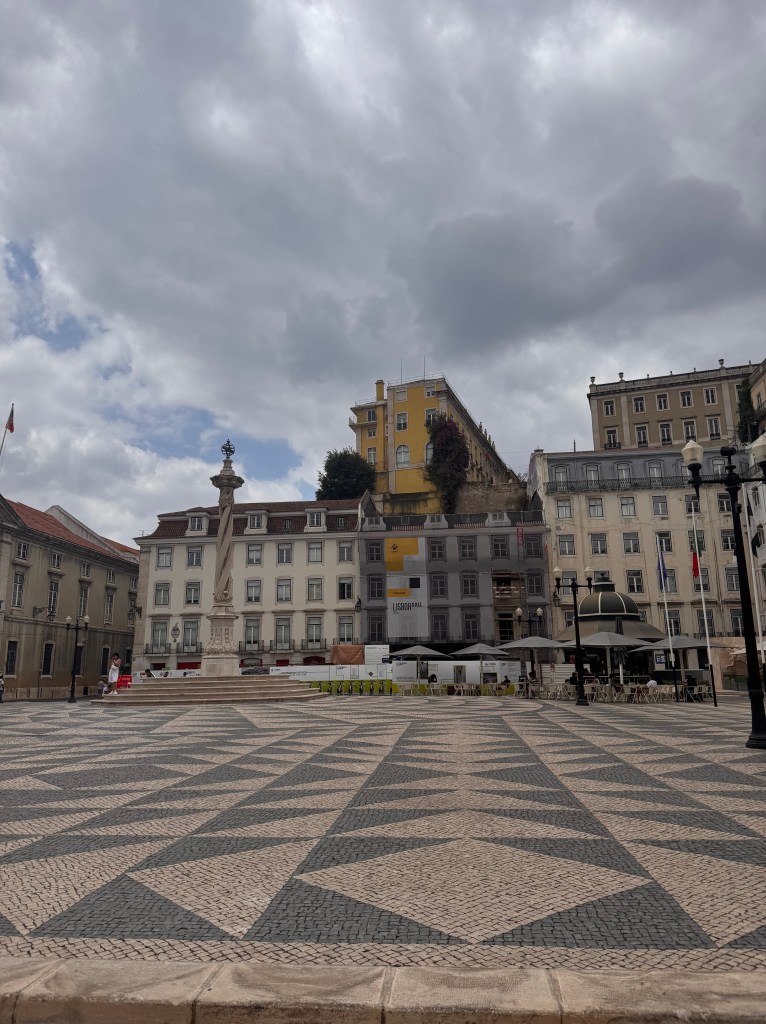
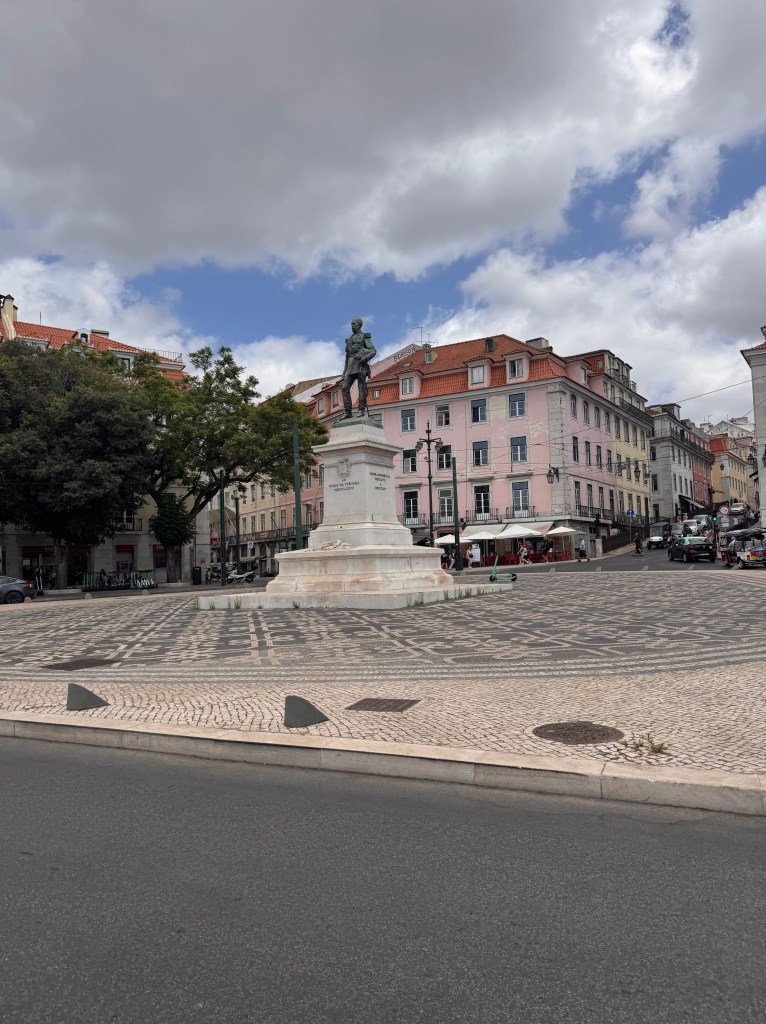
After lunch, we slowly wandered back toward the apartment. There was no need to squeeze in another attraction or race across the city. We had seen so much of Lisboa over the past several days, and it felt good to simply enjoy one final walk through the streets.

Then came the familiar ritual we’ve repeated over and over during this trip.

Packing.

Once again, we spread everything out and began figuring out how to fit our clothes, souvenirs, scarves, earrings, artwork, and all the other little treasures we’ve collected into our suitcases.

This time, though, something was different.

When I packed for this seven-week adventure, one of my biggest worries was making sure we had enough of Kiya’s prescription formula, medications, pull-ups, wipes, and medical supplies. Running out of something she needed while we were traveling through Europe wasn’t an option, so I intentionally overpacked.

And I definitely overpacked the formula and pull-ups.

Some of those will be staying behind in Lisboa. I’m going to contact the apartment manager and see if they can be donated to a care center or another organization that can put them to good use rather than throwing them away.

Looking at what remains, though, I feel pretty good about my planning.

I packed almost exactly the right amount of medication and wipes for seven weeks of travel. Considering how much thought, calculating, weighing, and worrying went into those medical bags before we ever left Montana, that’s a pretty satisfying feeling.

Tomorrow morning our ride will arrive at 8:00 a.m. to take us to the airport.

We’ll fly from Lisboa back to Dublin, bringing us full circle to the city where our European adventure began seven weeks ago.

The suitcases are a little more battered.

They’re definitely filled with more souvenirs.

We’re a lot more tired.

And we have seven weeks’ worth of incredible memories packed in with everything else.

Tomorrow, we begin the journey toward home.
Seeing Lisbon from Top to Bottom

Yesterday we decided to give our legs a break and see Lisbon a different way.

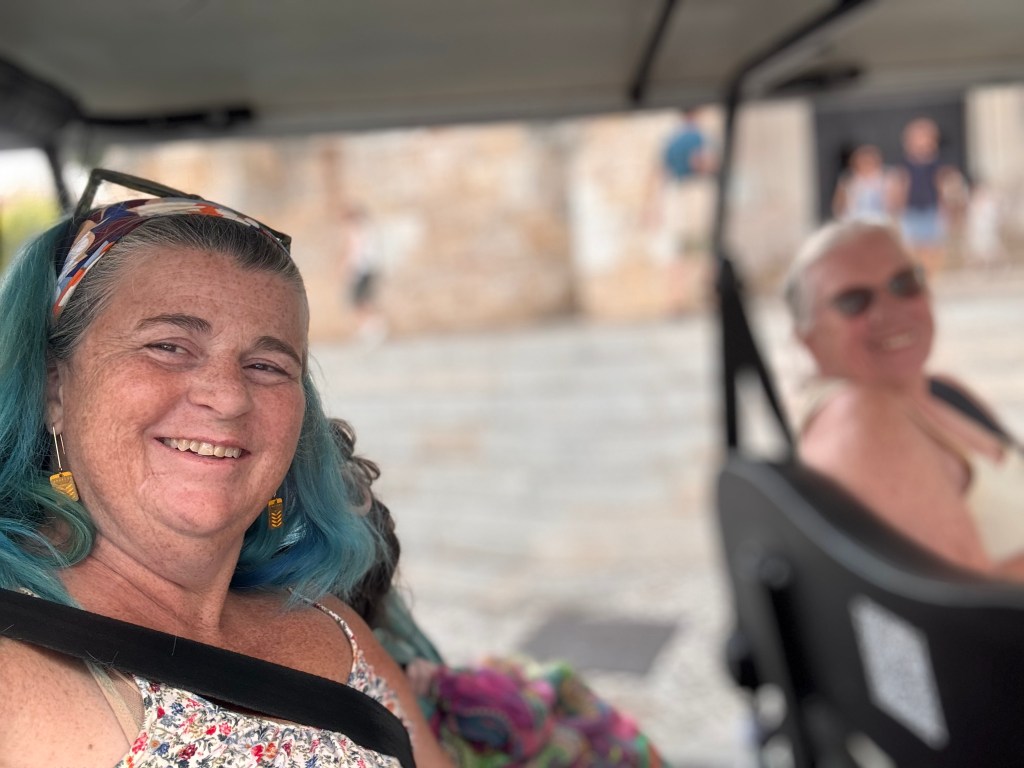
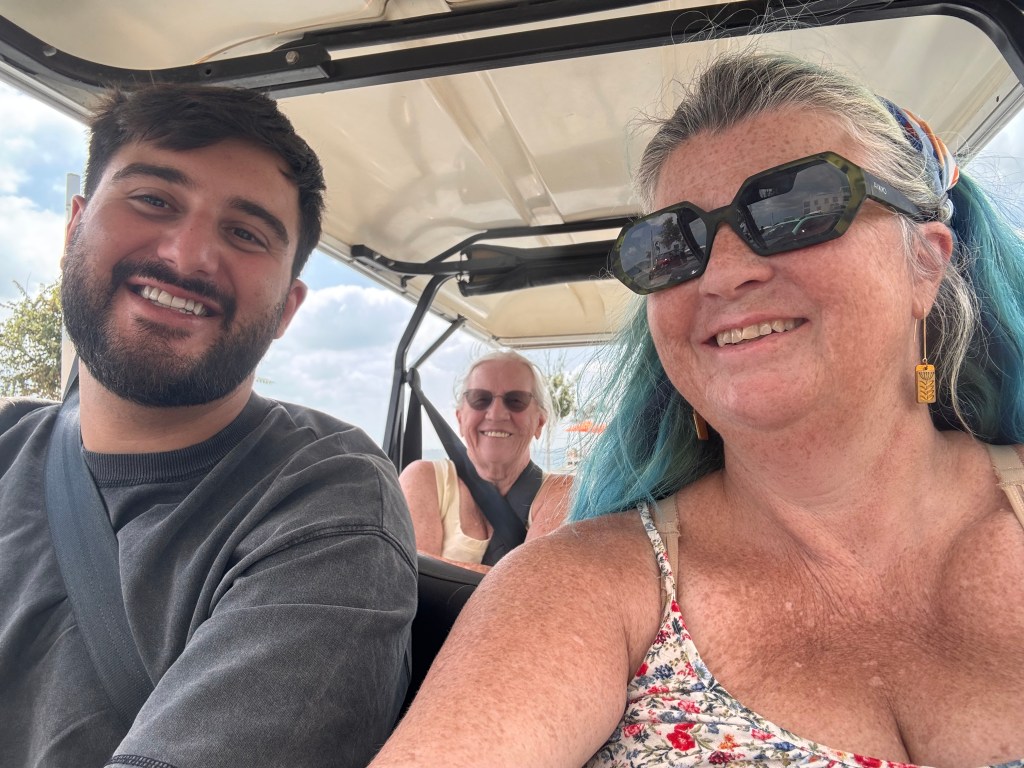
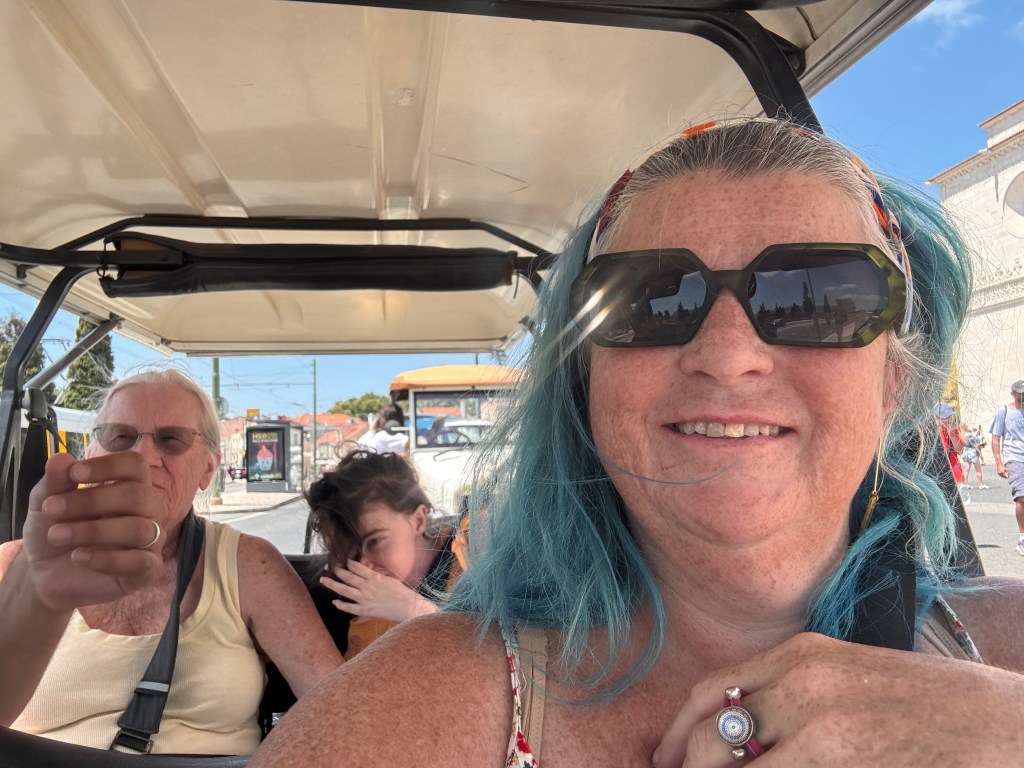
Lisbon is beautiful, but those uneven cobblestone sidewalks and hills are no joke when you’re pushing Kiya in her transport chair. Mom’s knee also needed a chance to heal, so we decided to rent a quad and take a four-hour tour of the city.

When I made the reservation, I specifically chose the larger quad because it had more legroom and space in the back for Kiya’s transport chair.

We took a taxi to the 1908 Lisboa Hotel, where we met our guide, Andrew.

What a fun day we had with him!

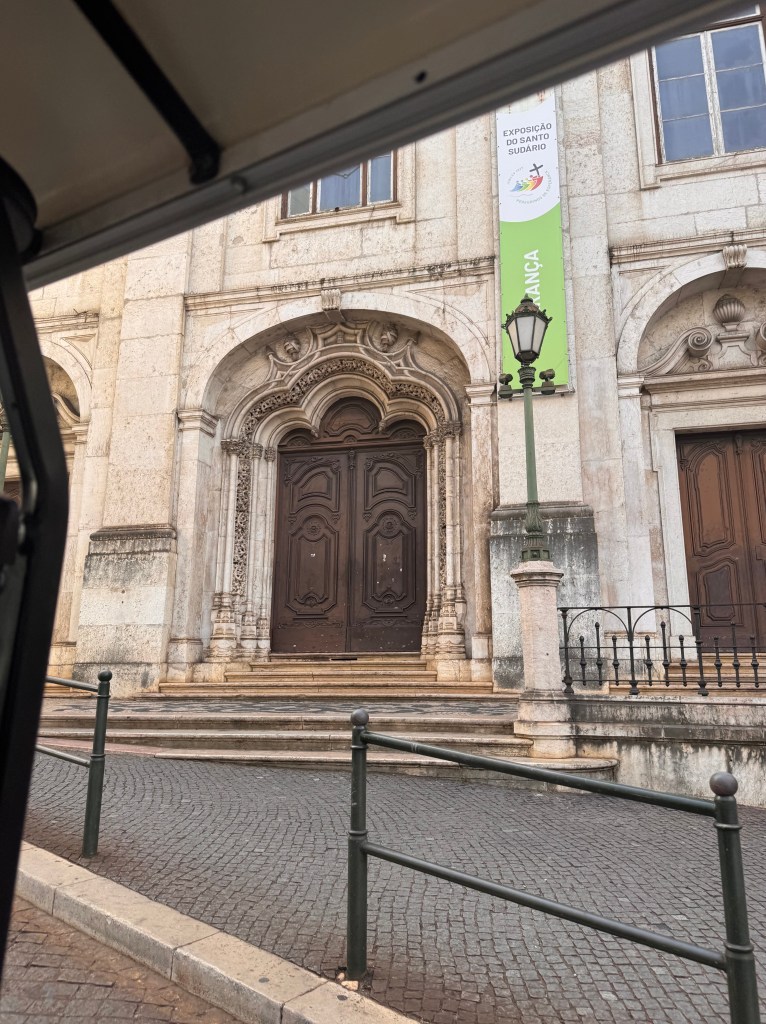
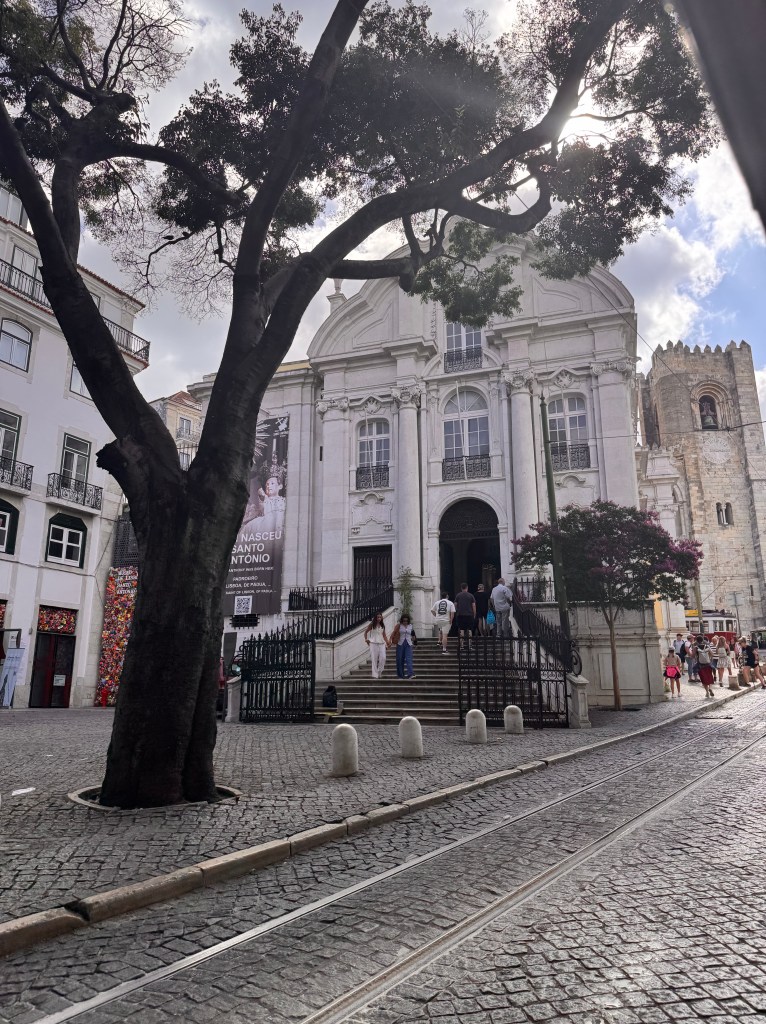
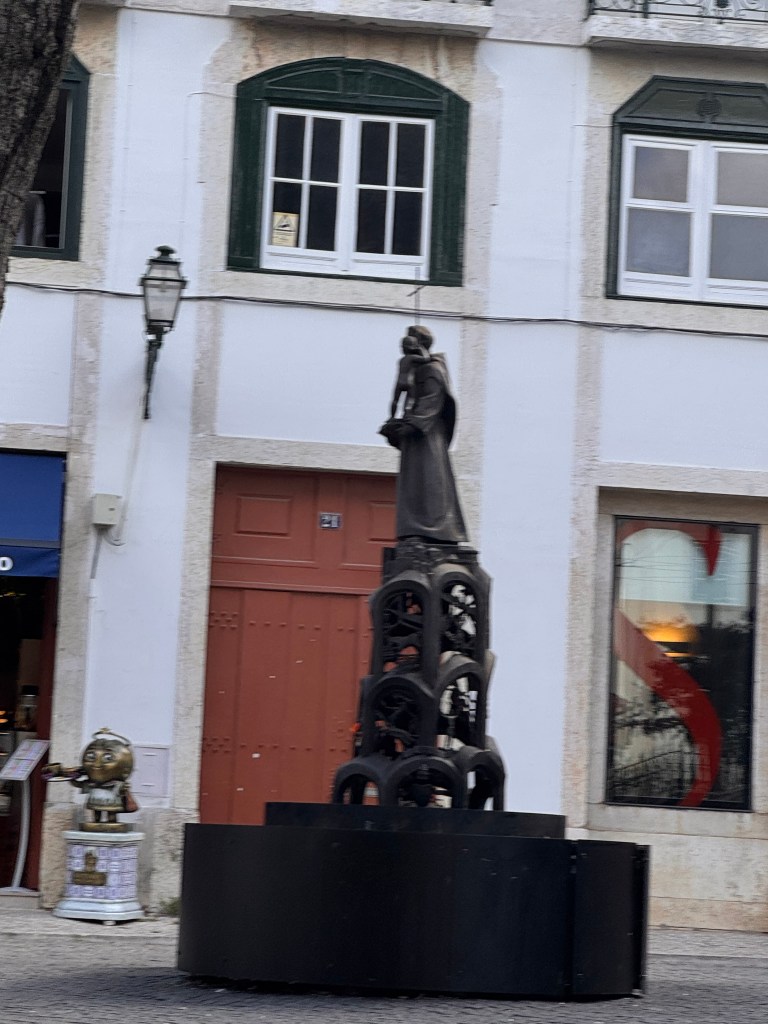
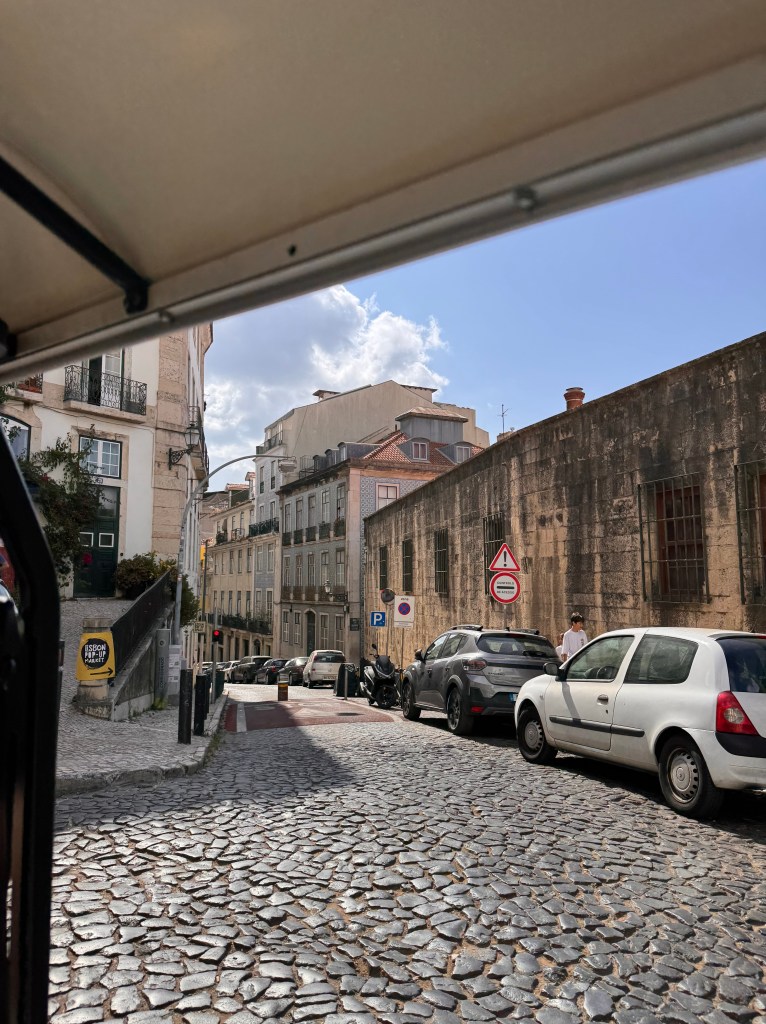
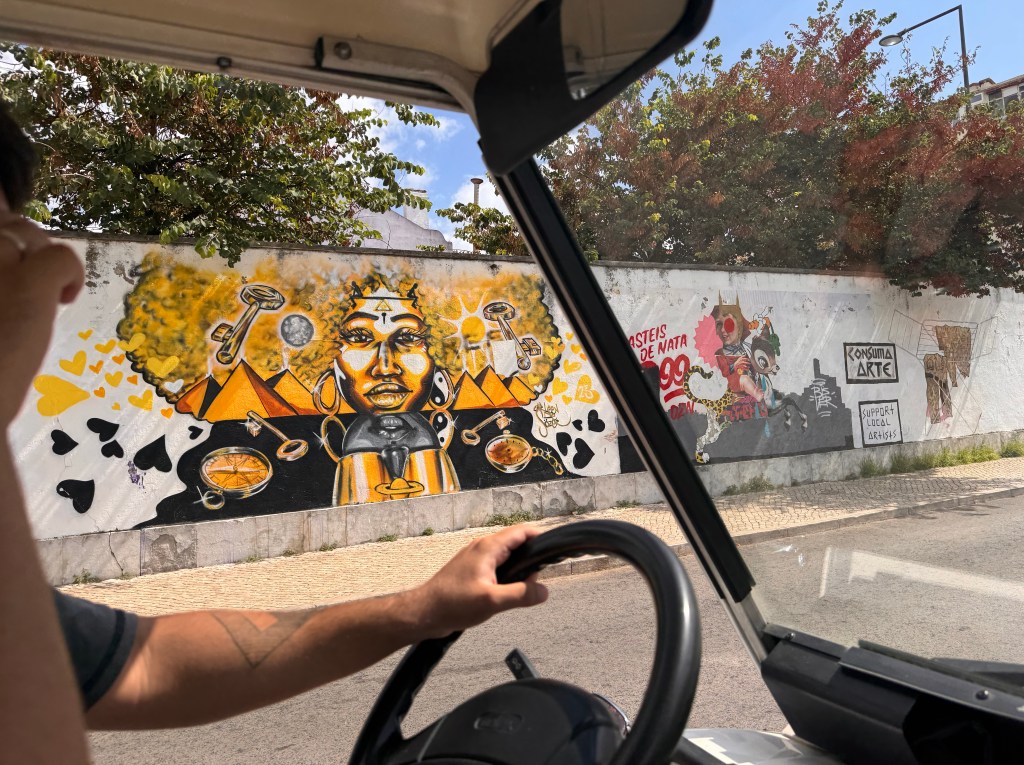
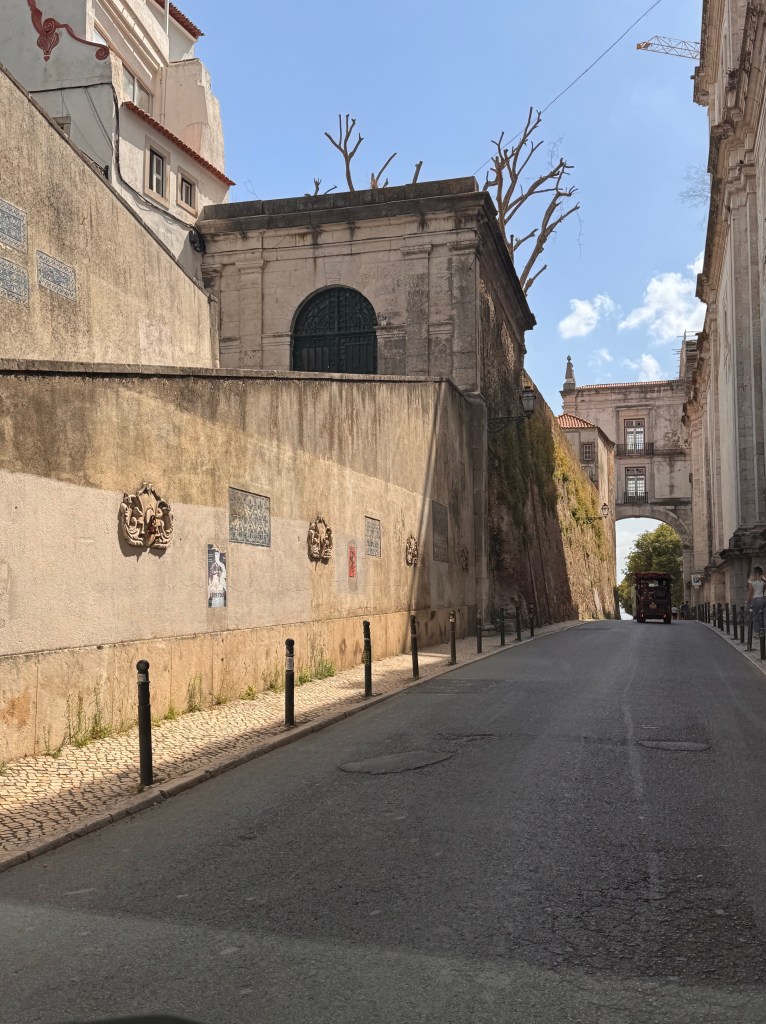
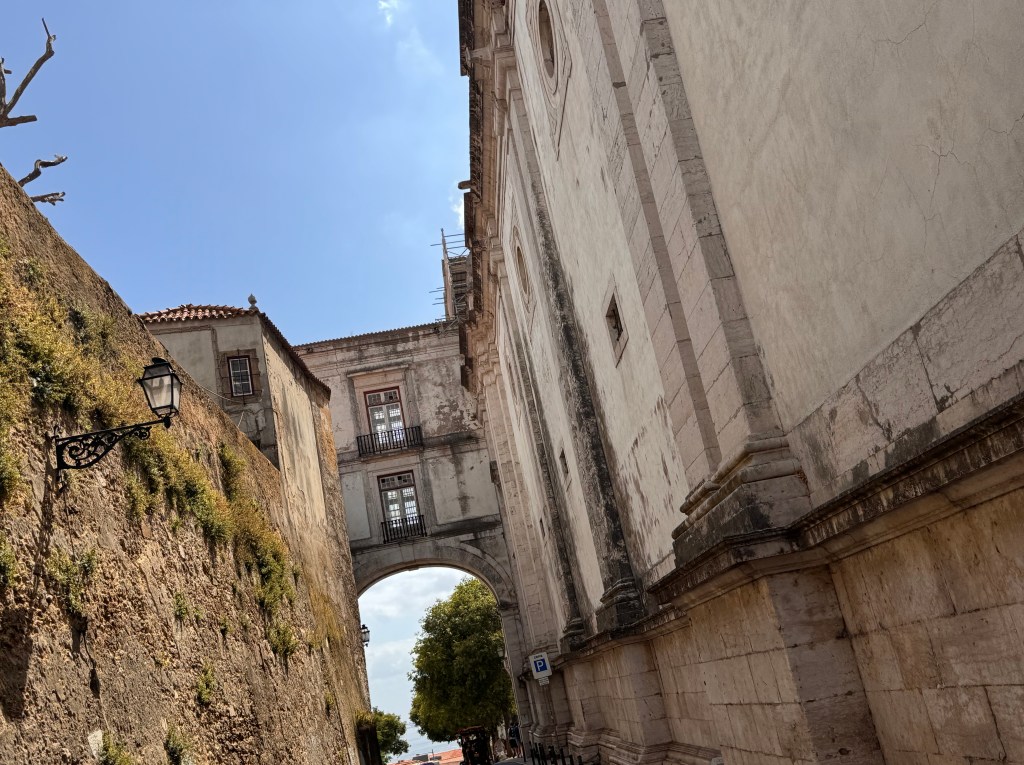
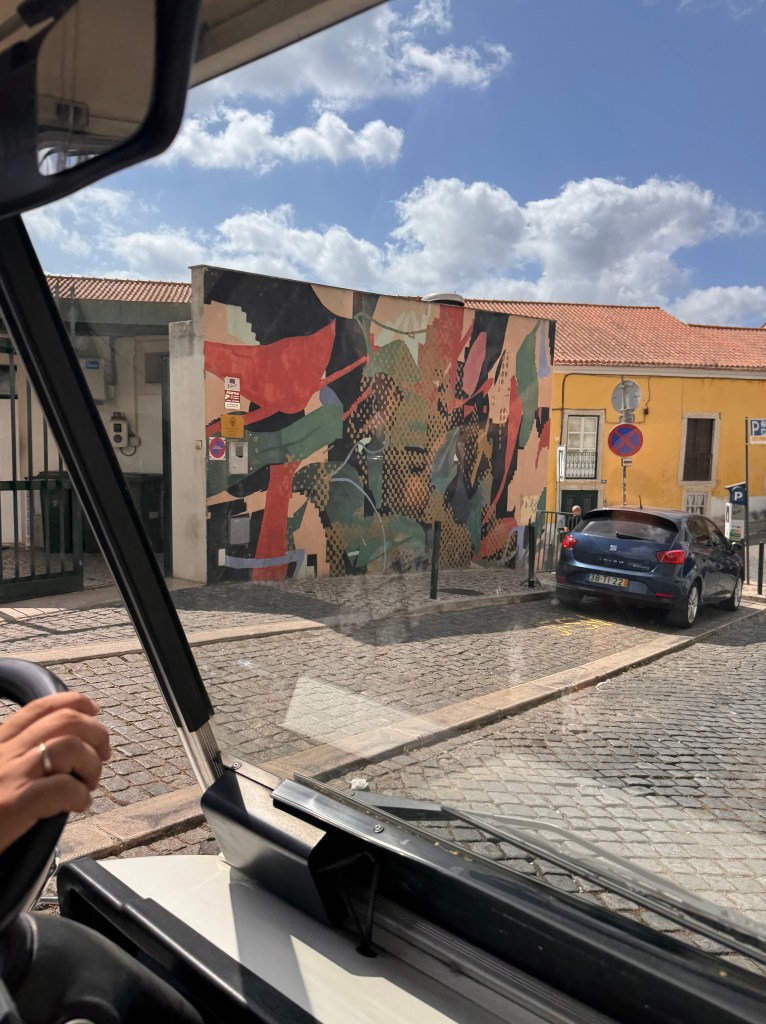
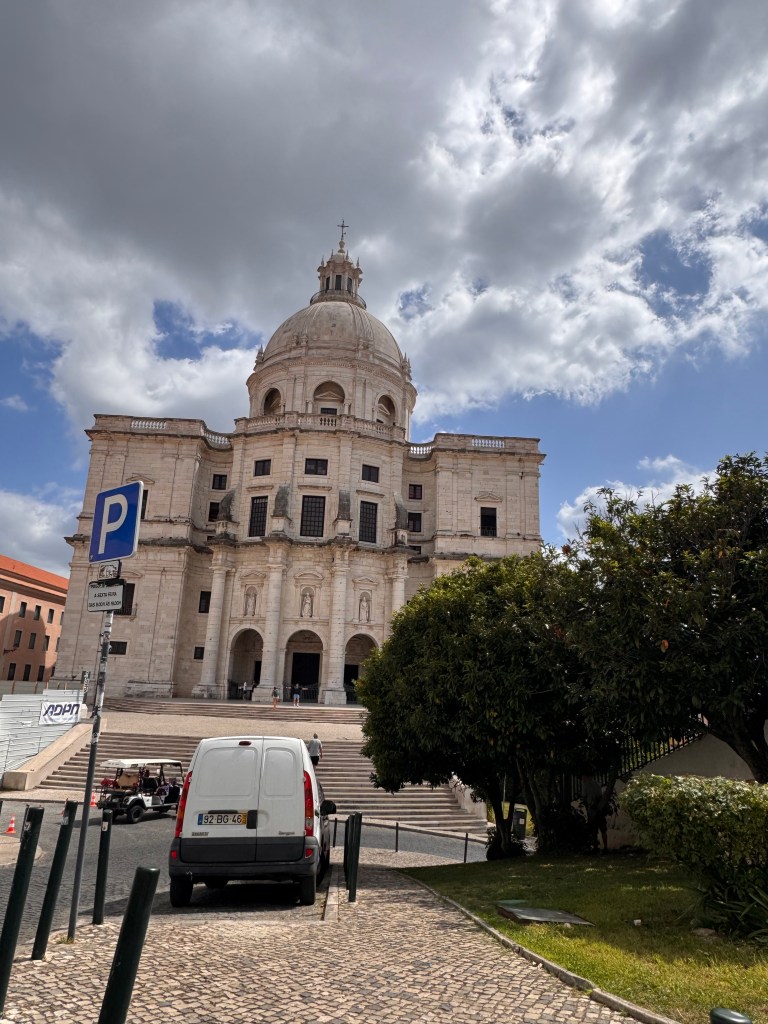
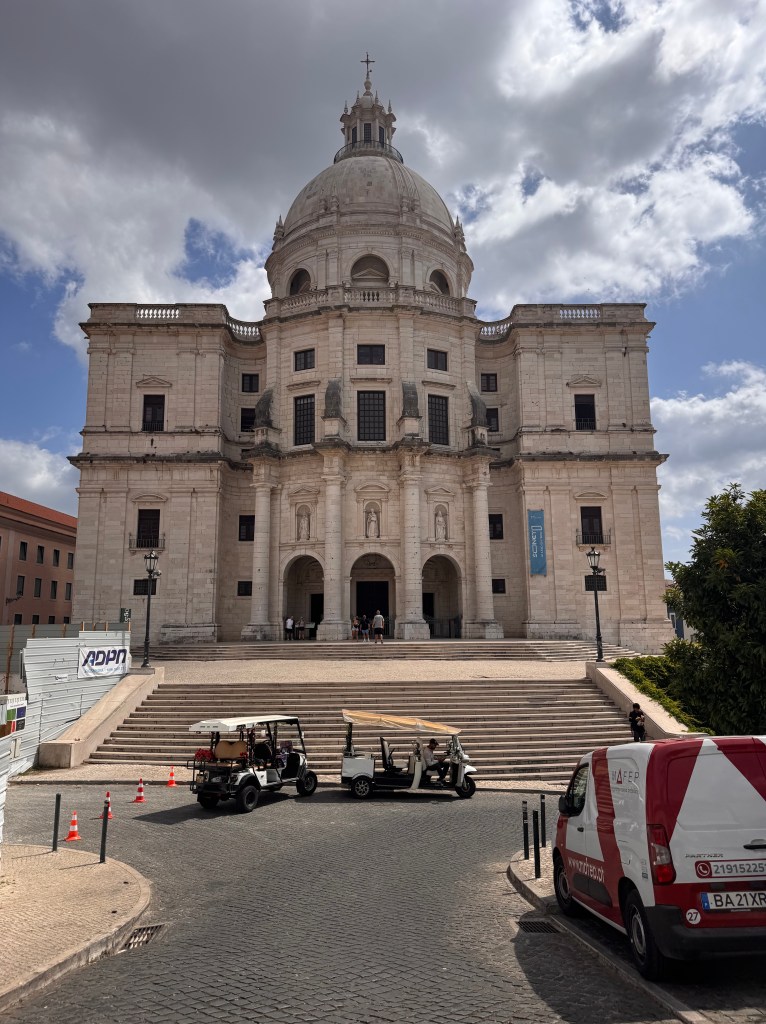
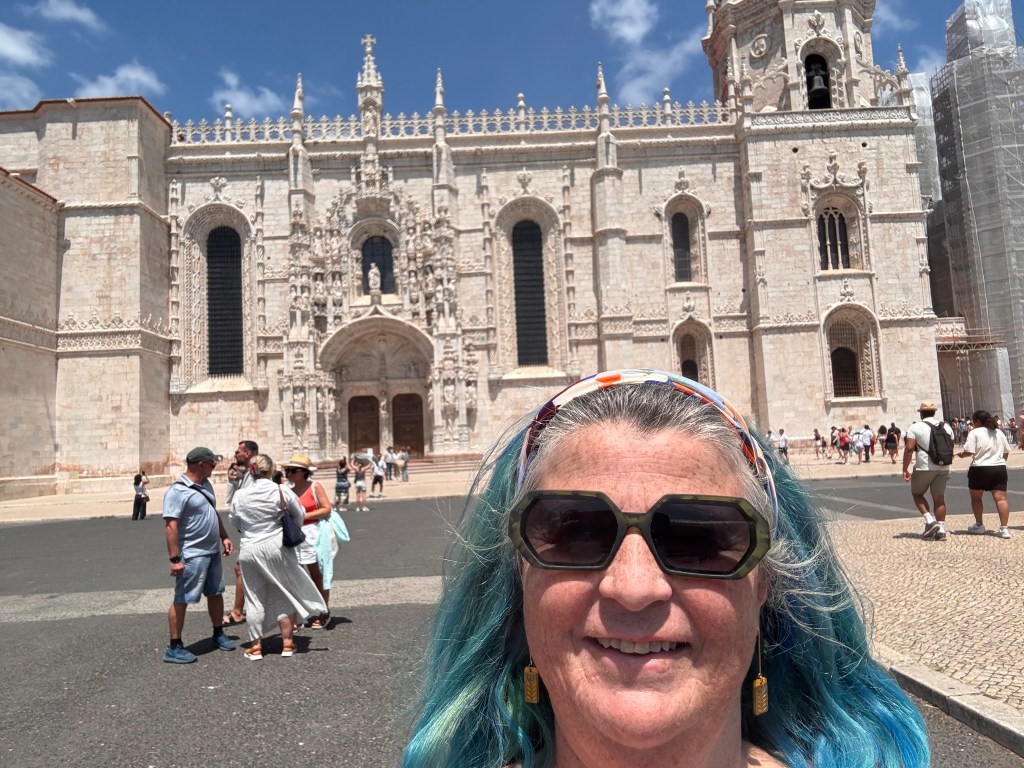
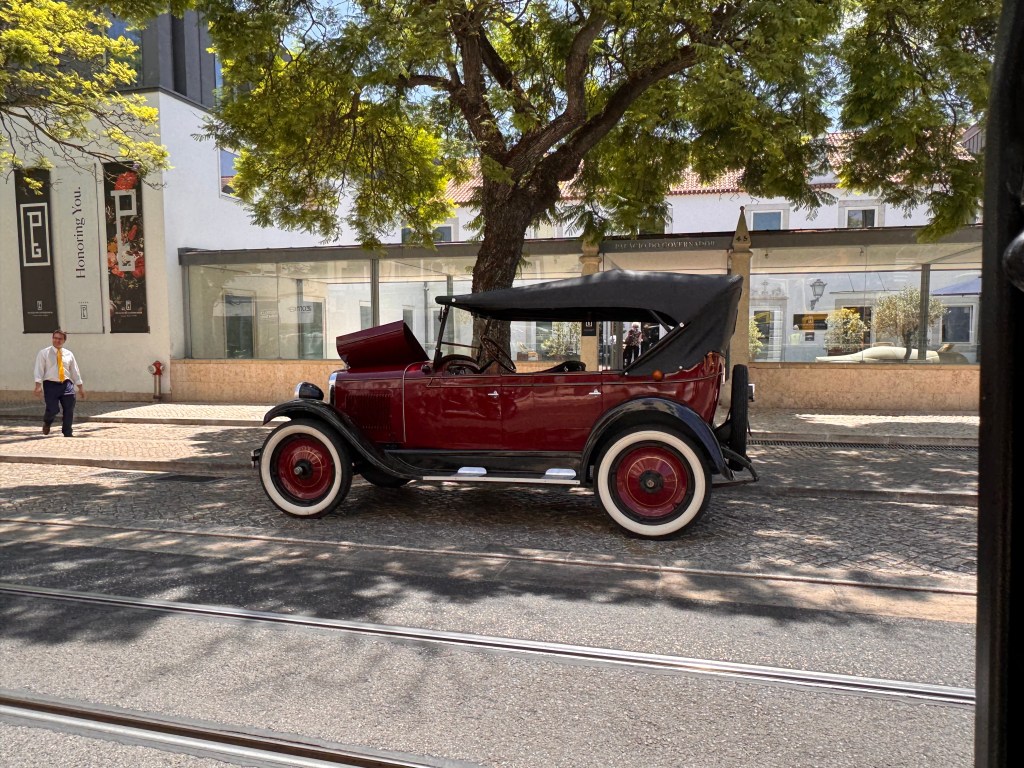
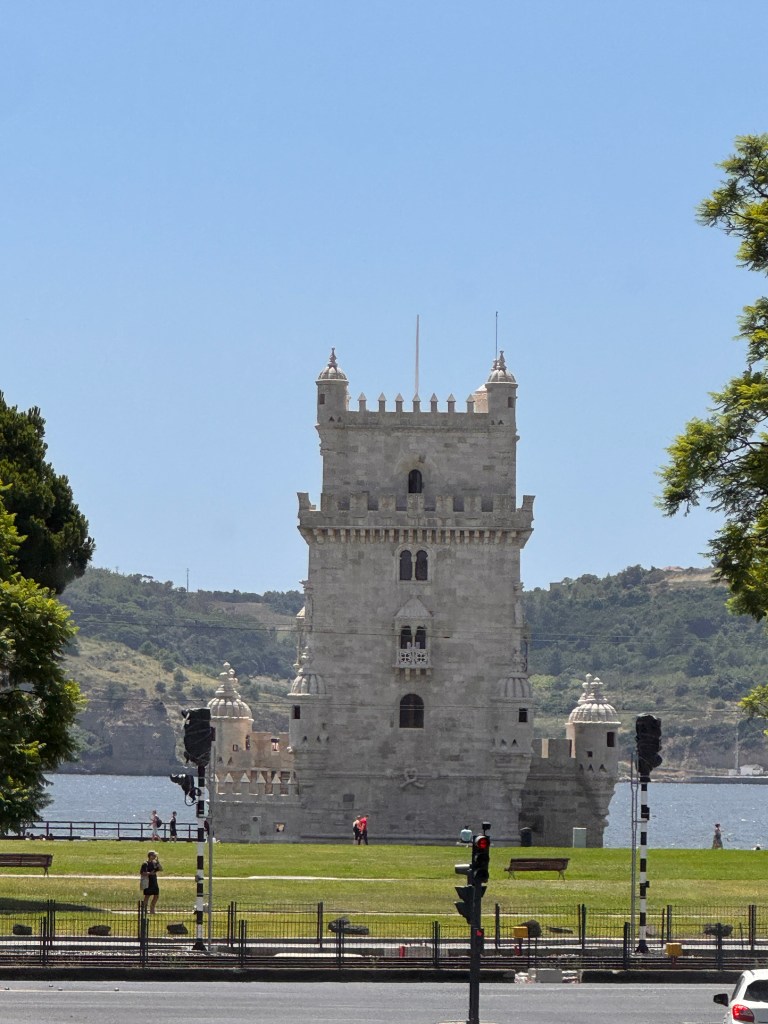
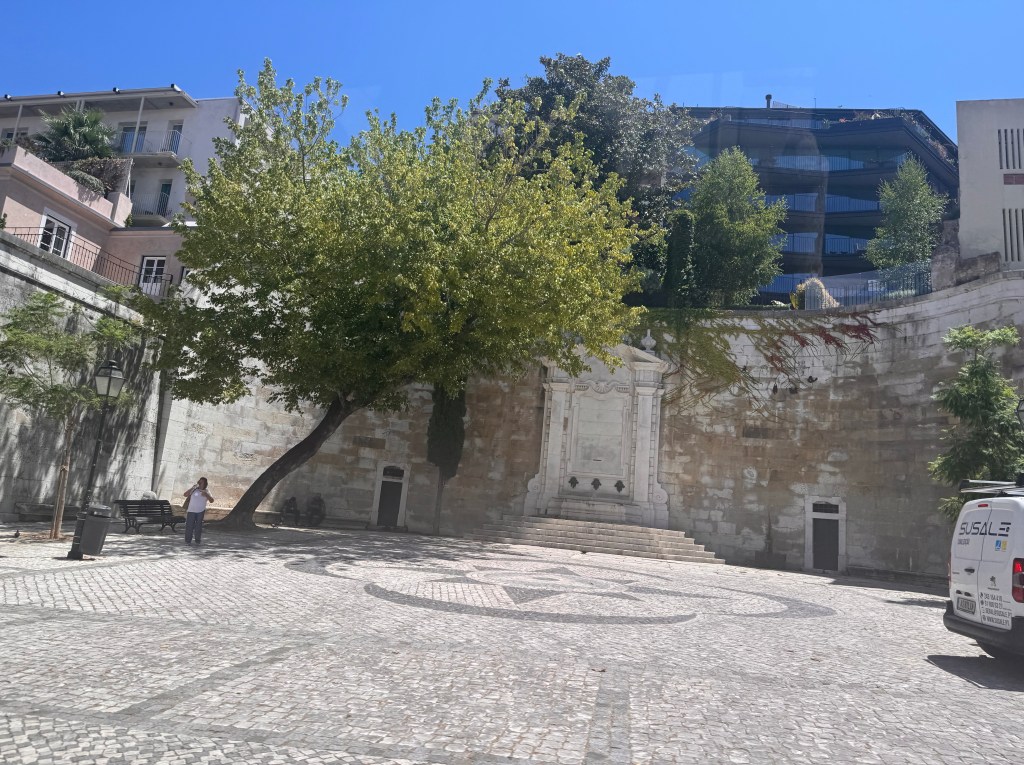
For the next four hours, Andrew drove us all over Lisbon—from top to bottom and east to west. We traveled through tiny streets, climbed hills we definitely wouldn’t have wanted to walk, and visited places throughout the city that we otherwise might never have seen.

Andrew was an absolute joy to spend the day with.

From the beginning, he wanted to make things as easy as possible for us. Every time we stopped, he immediately jumped out, unloaded Kiya’s transport chair, and had it ready for her. When it was time to leave, he folded it up and loaded it again.

He also never rushed us. If we wanted to get out, explore an area, or take photos, he simply waited until we were ready.

During our four hours together, we learned quite a bit about each other. We told him about Montana and our lives back home, and he told us about his life in Portugal. He and his partner are expecting a baby in December, and he had recently graduated after studying contract law, tourism, and marketing.

One of our most important stops involved food, of course.

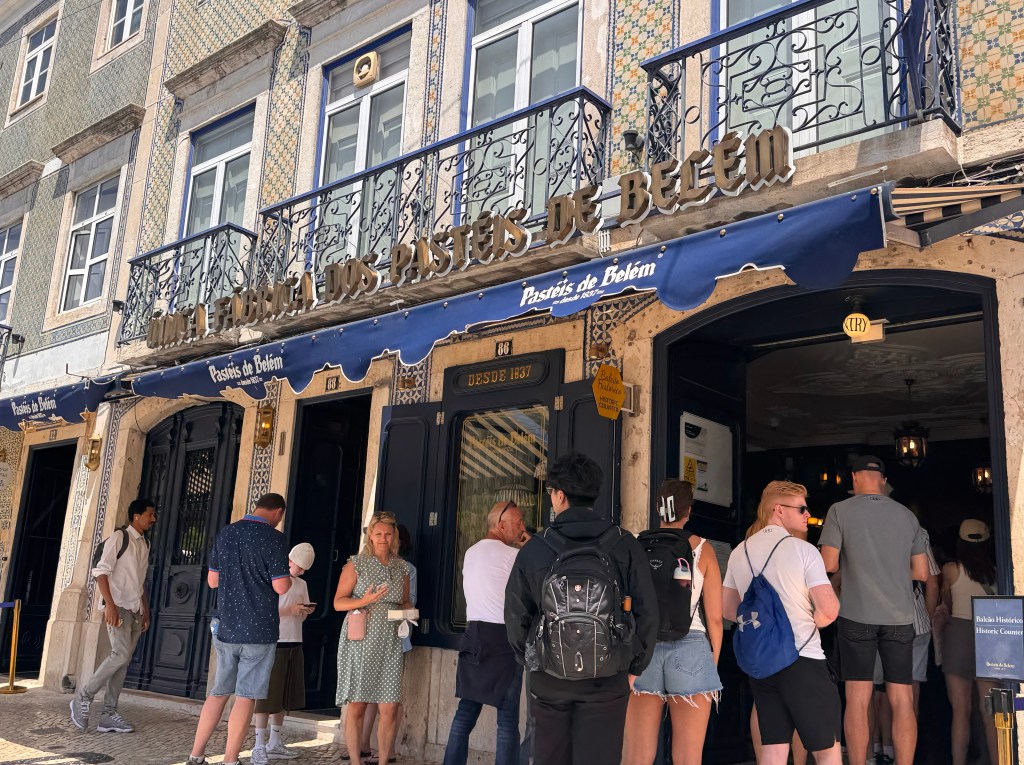
Andrew told us he knew the best place to try Portugal’s famous pastel de nata.

We had already sampled these little custard tarts, but these were on an entirely different level.

They arrived piping hot, with incredibly flaky pastry surrounding warm, rich, creamy custard.

Oh my goodness.

So yummy!

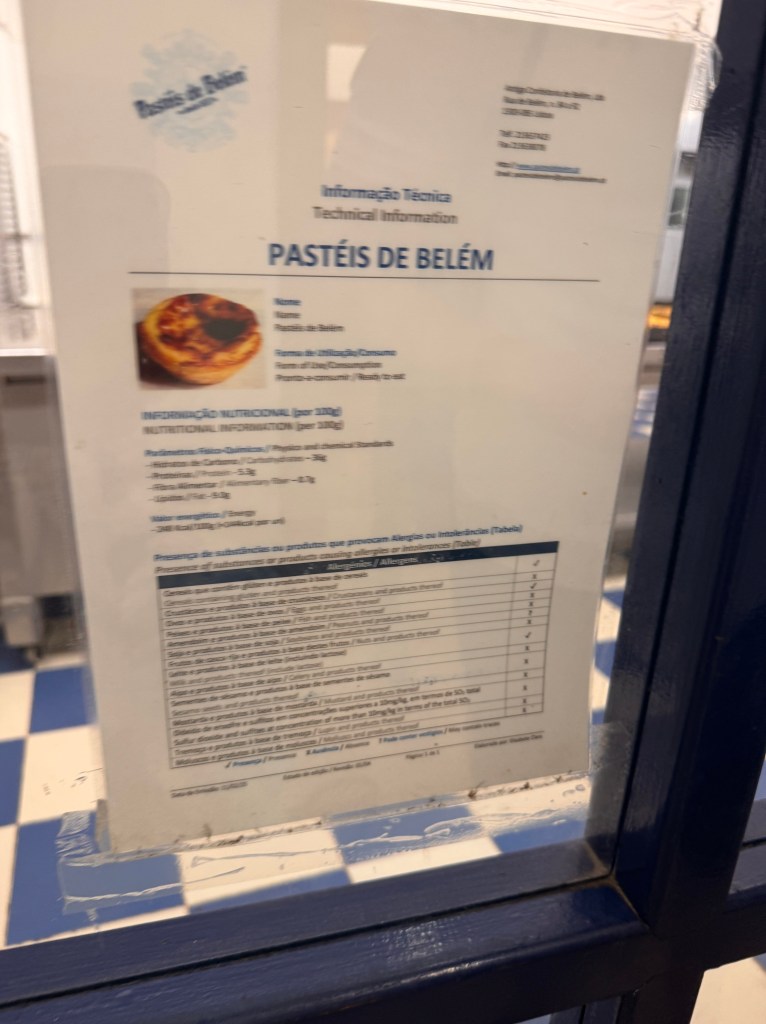
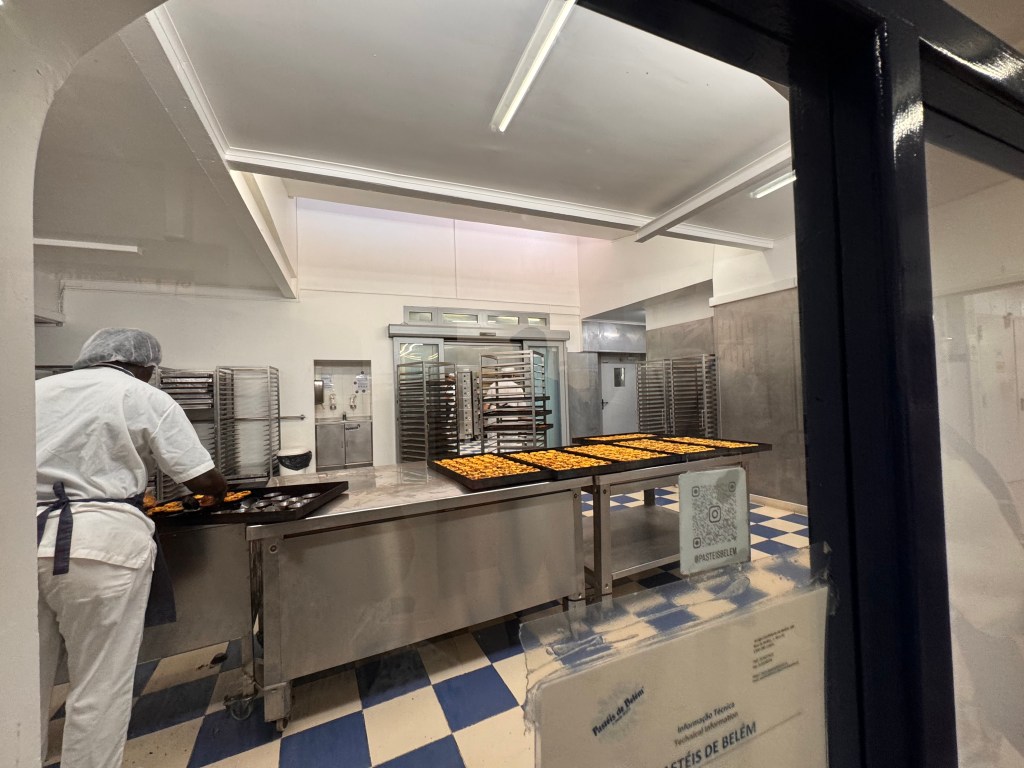
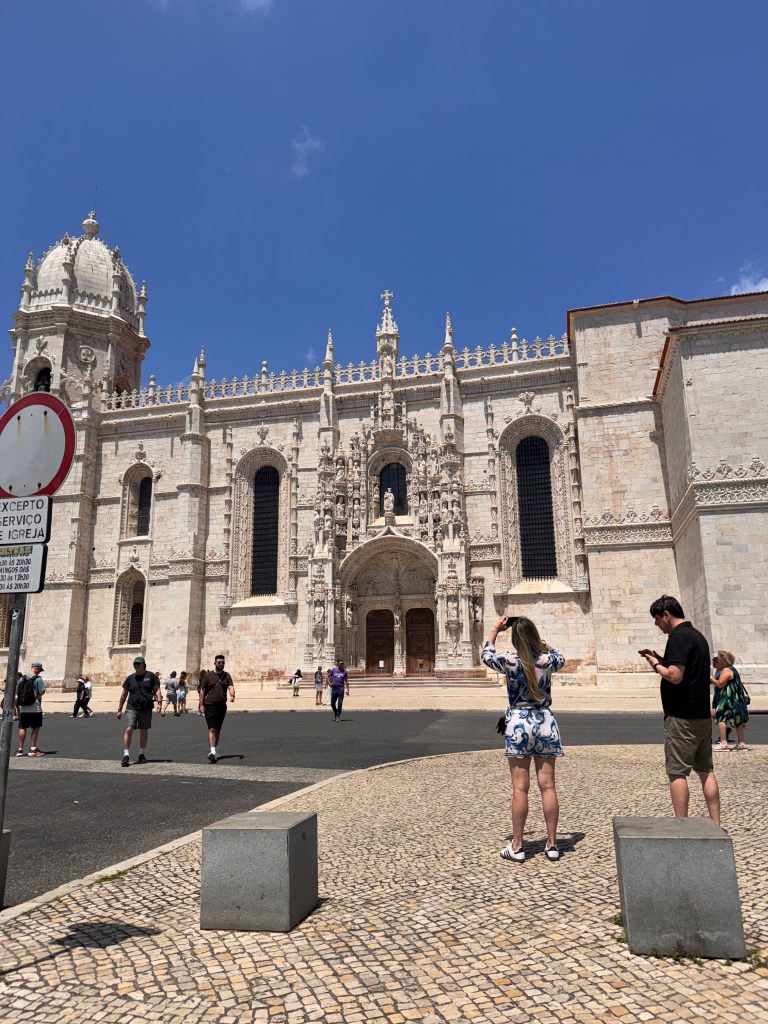
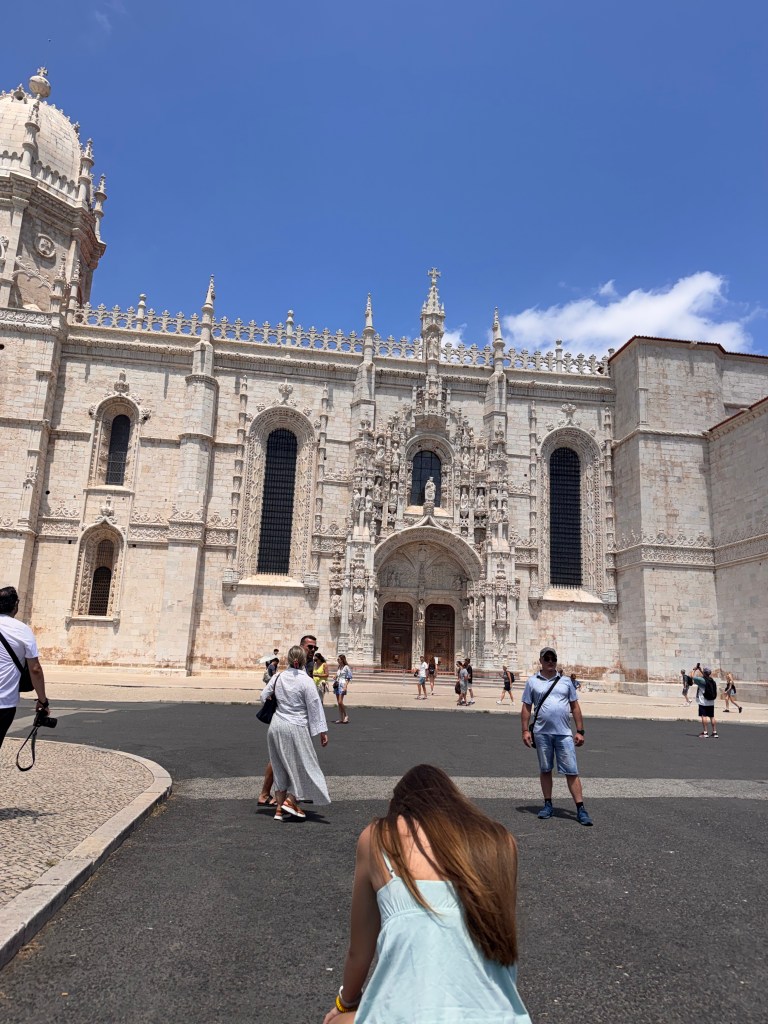
Pastéis de nata are one of Portugal’s most famous foods. Their history dates to the early 1800s and the monks of the Jerónimos Monastery in Belém. After Portugal’s religious orders were dissolved in the 1830s, the monastery’s custard-tart recipe was eventually sold to a nearby sugar refinery. In 1837, the famous Pastéis de Belém bakery began making them using a secret recipe that is still closely guarded today.

Andrew also gave us time to wander through a market filled with little shops, restaurants, and vendors before we continued our tour.

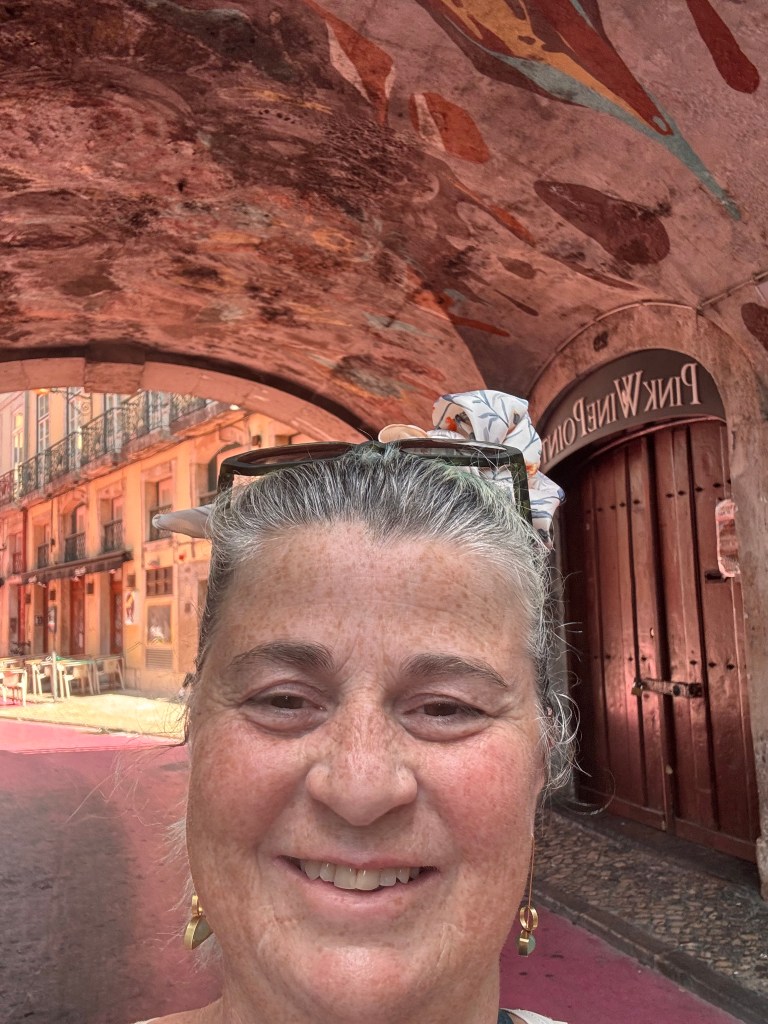
At some point we mentioned that we’d taken a taxi to meet him at the hotel but were actually staying right around the corner from Pink Street.

That changed everything.

Pink Street was already part of our tour, so Andrew modified his route and offered to drop us near our apartment instead of making us return all the way to the hotel.

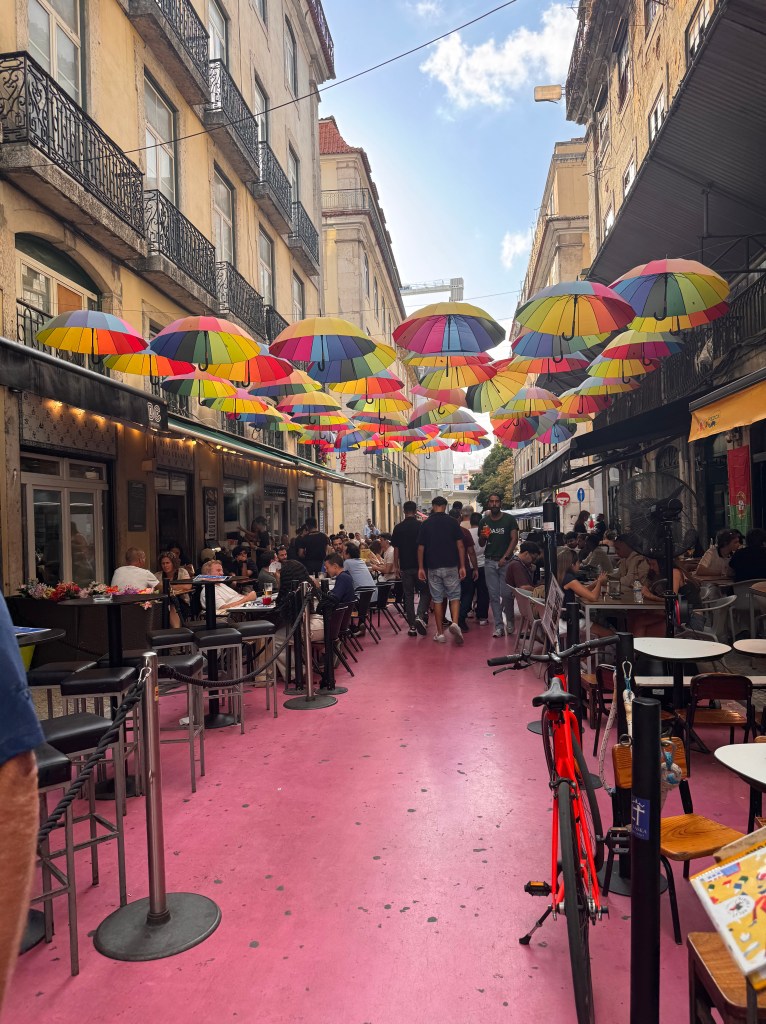
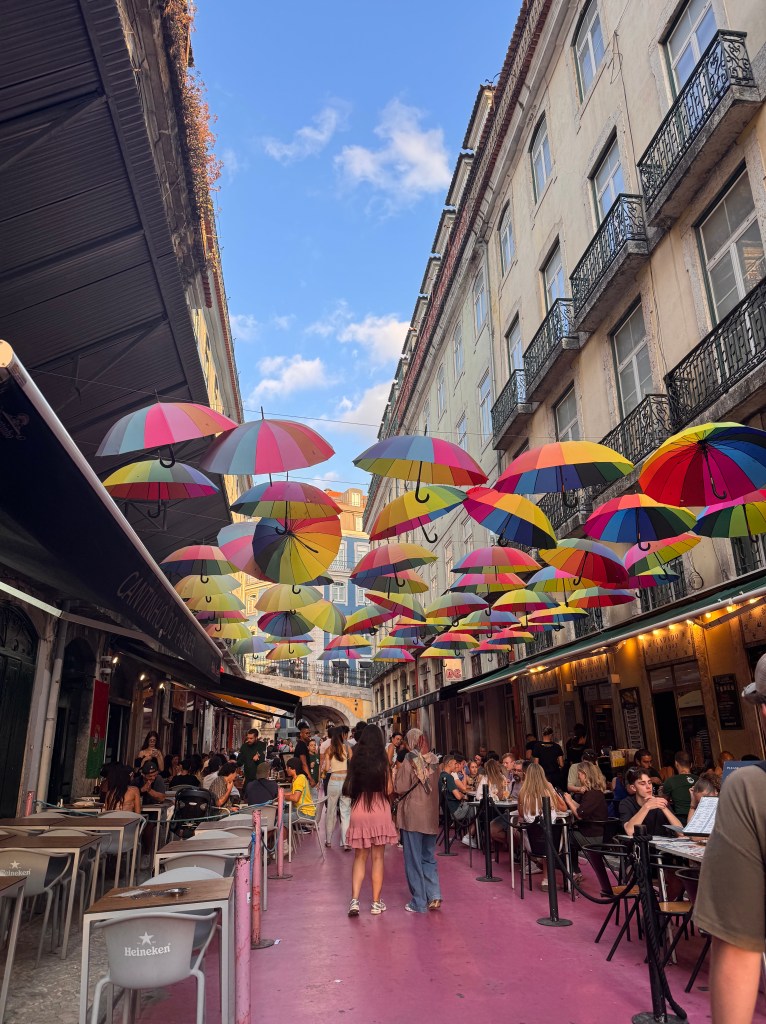
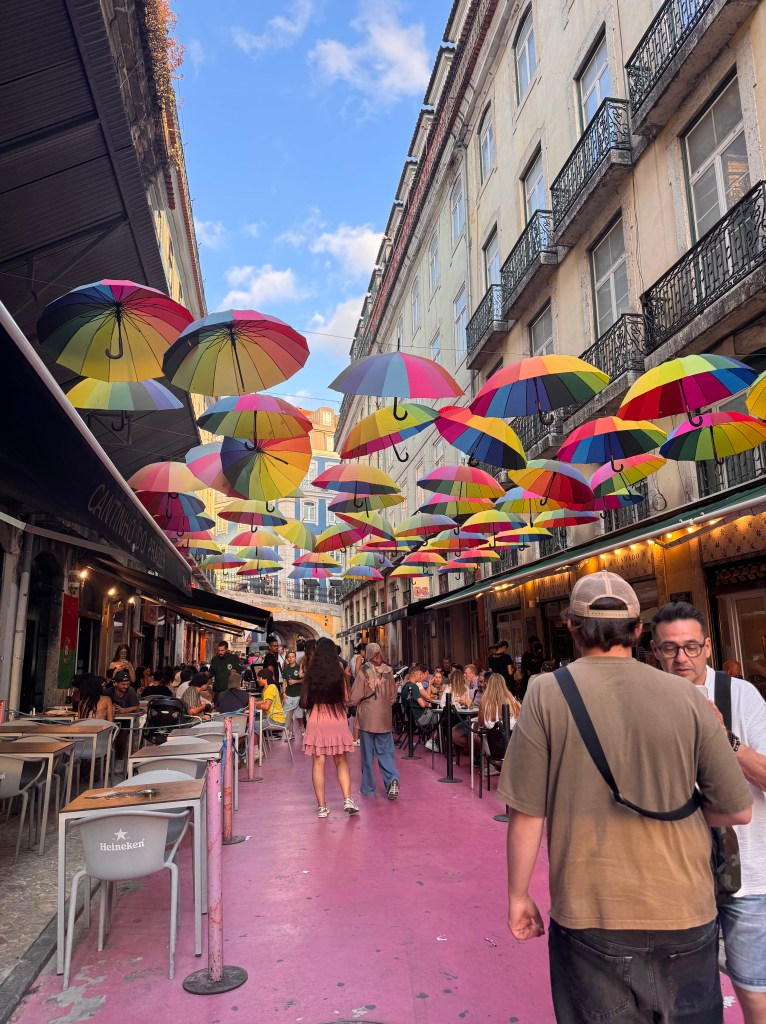
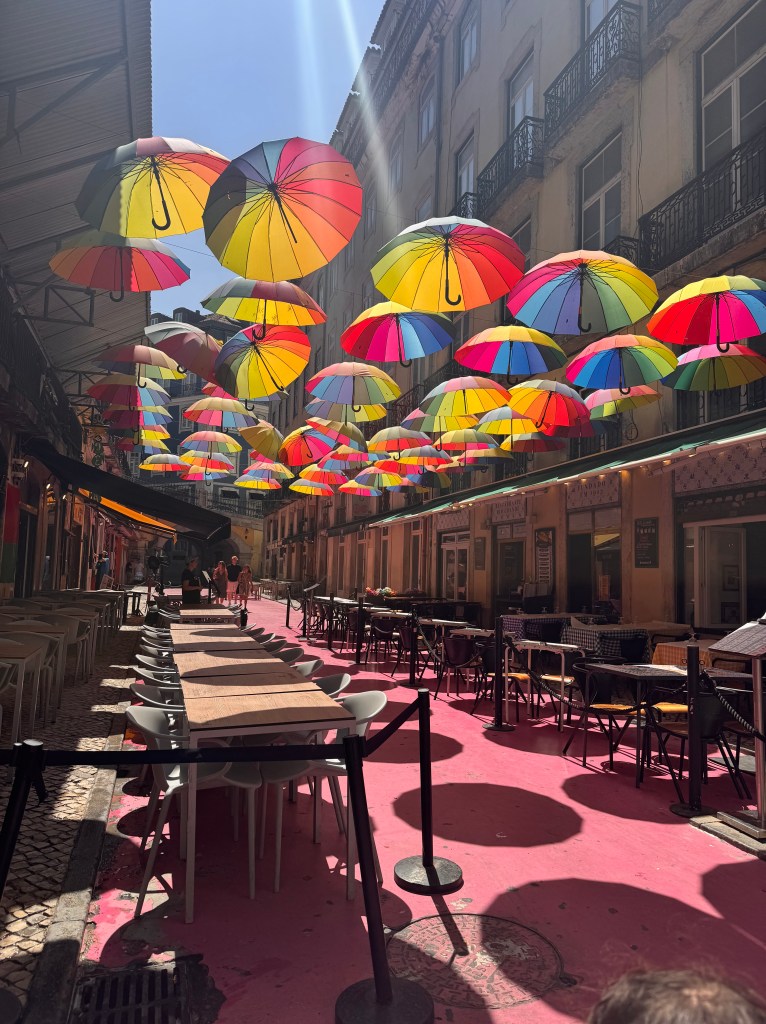
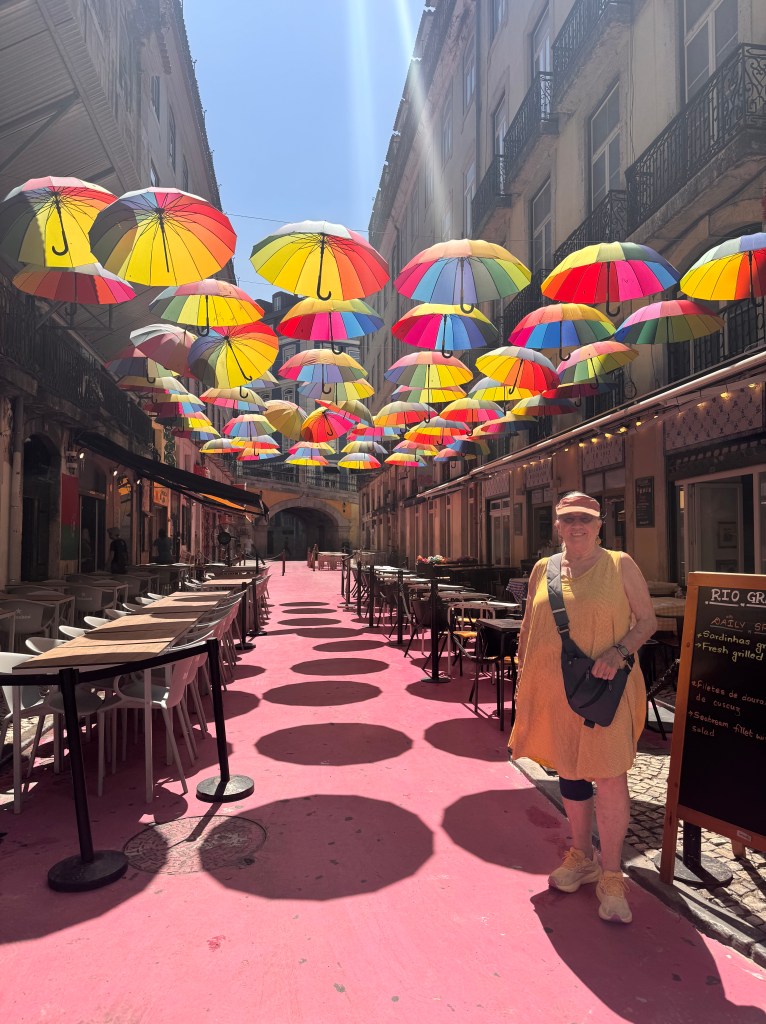
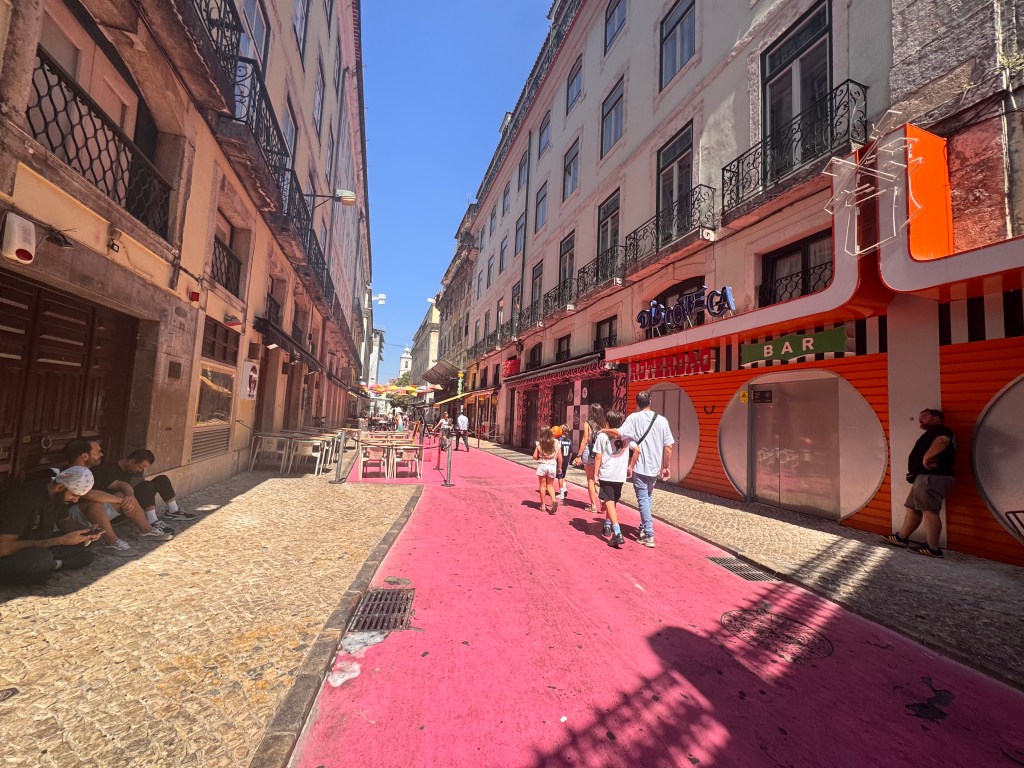
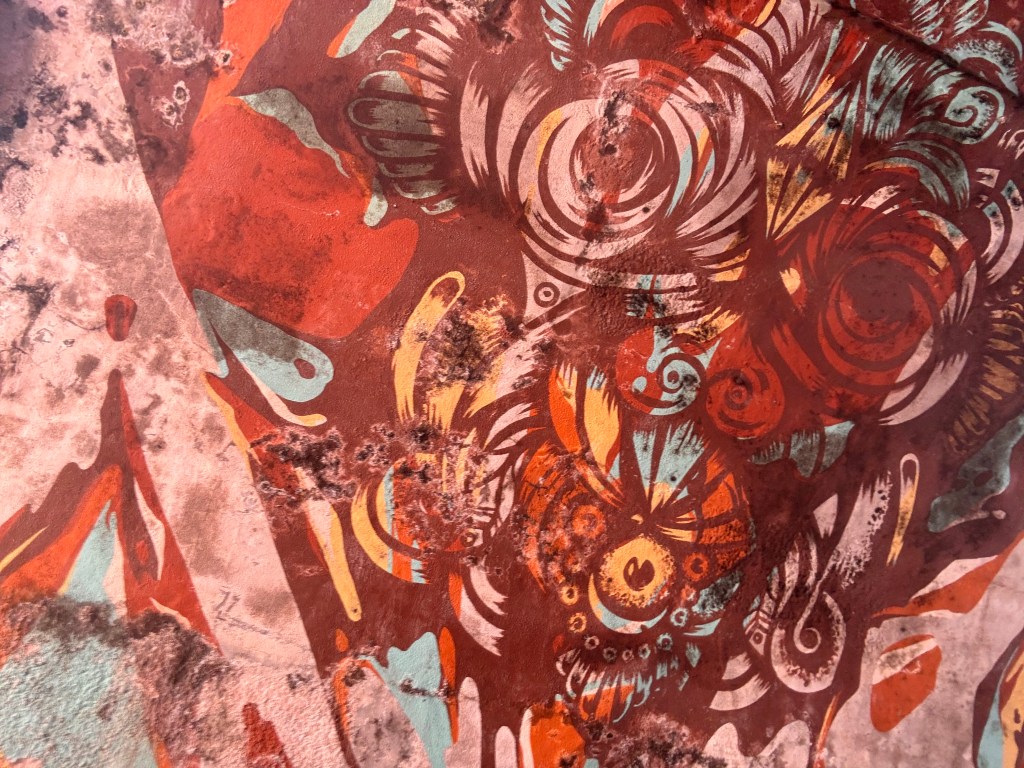
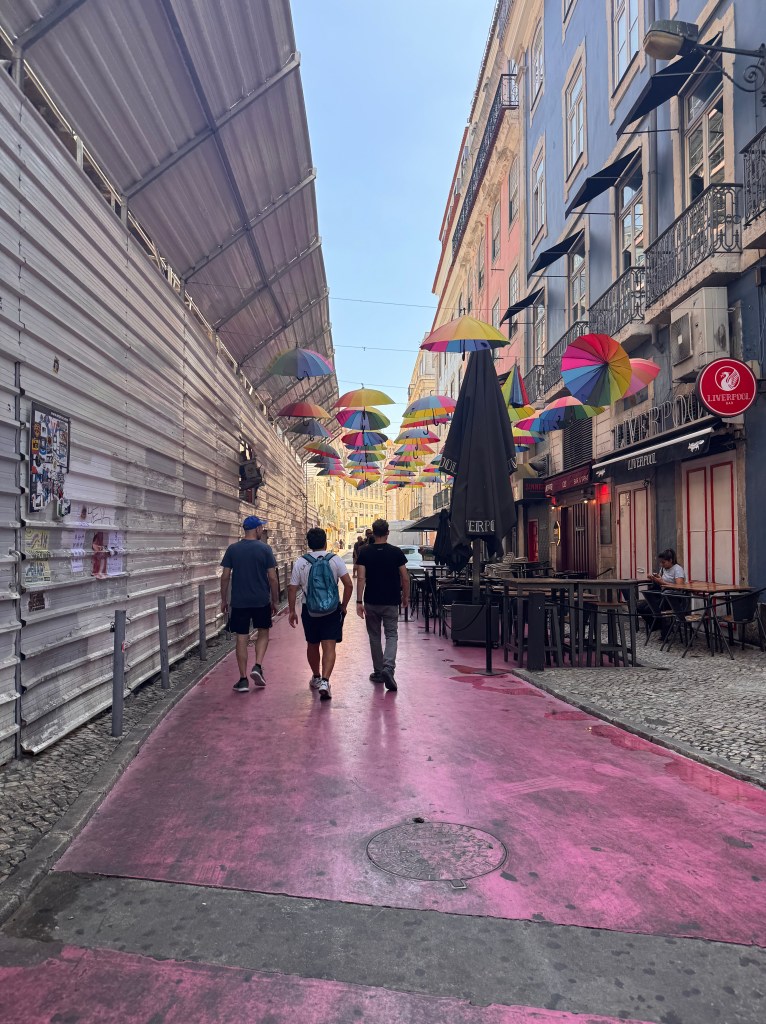
Pink Street, officially Rua Nova do Carvalho, wasn’t always the colorful tourist attraction it is today. The Cais do Sodré neighborhood was once closely connected to Lisbon’s port and was filled with sailors, bars, gambling houses, and nightclubs. As the neighborhood was revitalized, the street was painted its now-famous bright pink in 2013. Today it’s packed with restaurants, bars, cafés, and nightlife—and happens to be practically around the corner from our apartment.

We decided to have Andrew drop us at the Time Out Market, which was just a short walk from where we were staying.

Time Out Market Lisboa occupies part of the historic Mercado da Ribeira, a market with roots going back to the 19th century. Today, one side remains a traditional market while the enormous food hall brings together restaurants and some of Lisbon’s best-known chefs and food vendors under one roof.

And it was packed!

We pushed our way through the throngs of people and eventually decided on Mexican food.

We ordered two frijoles tacos and two pork al pastor tacos.

They were so yummy.

After lunch, we wandered through an outdoor market nearby. Naturally, some shopping happened.

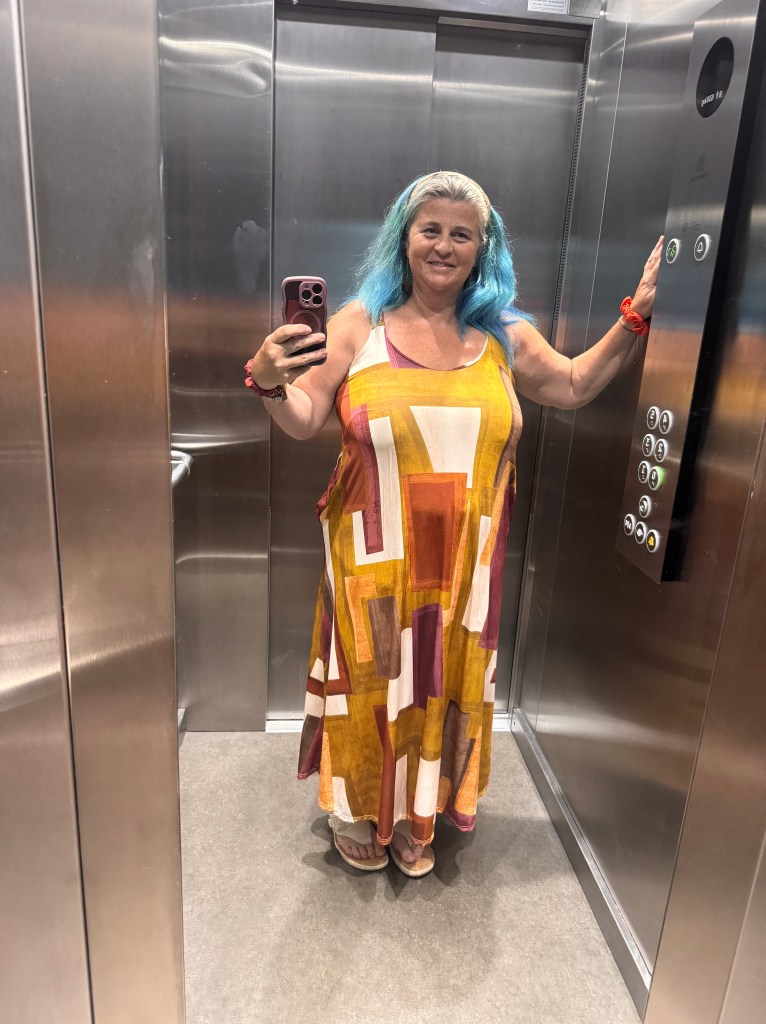
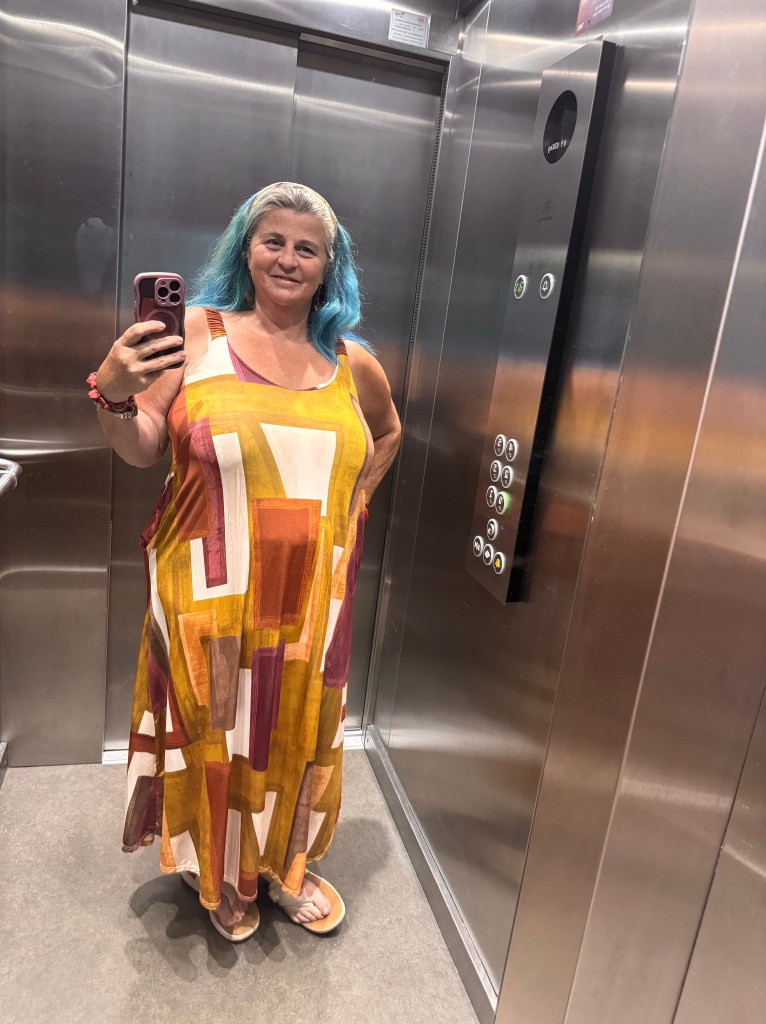
I found a dress and a pair of sardine earrings. Mom found two pairs of pants.

Then we walked back to the apartment and gave Kiya a couple of hours to rest.

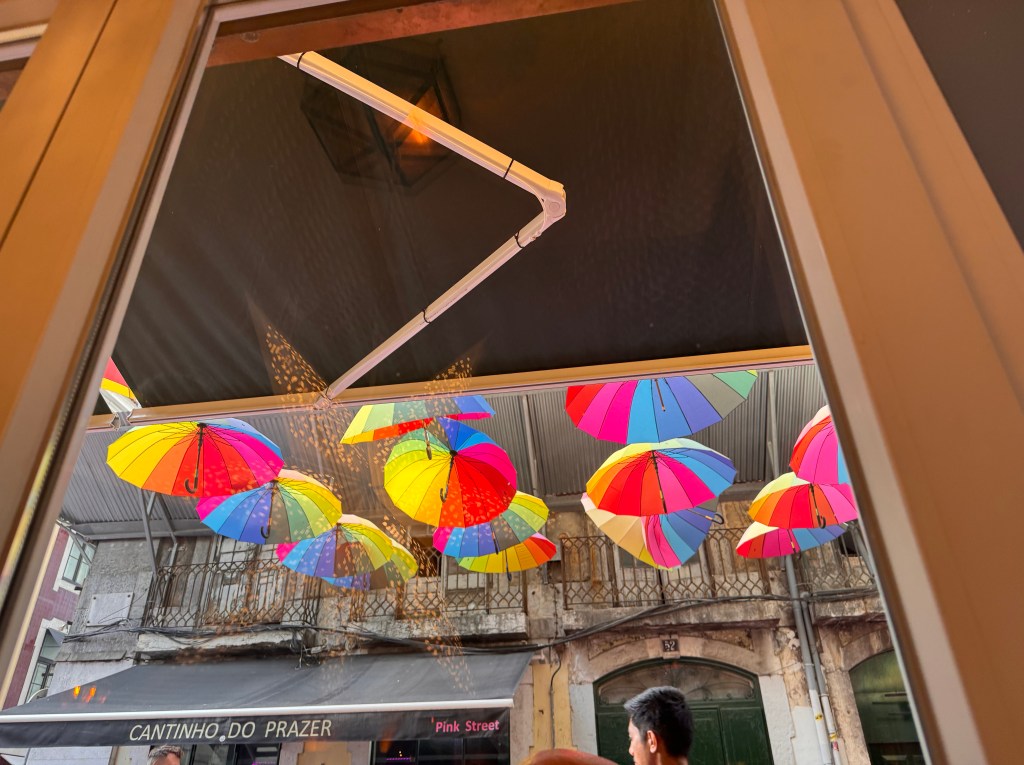
For dinner, we decided we should actually eat on Pink Street since it was literally around the corner from us.

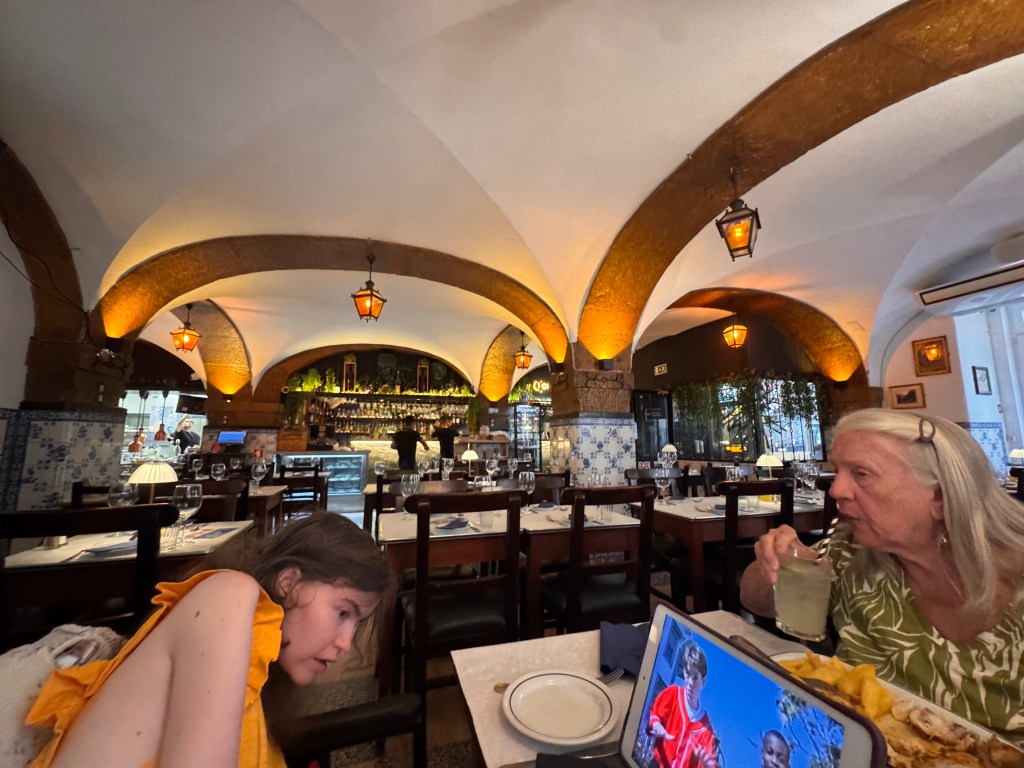
This time we tried another Portuguese favorite—piri-piri chicken. Piri-piri sauce is traditionally made with small hot peppers brought to Portugal through its connections with Africa, combined with ingredients such as garlic, oil, lemon, and spices. It has become one of the flavors most associated with Portuguese cooking.

Unfortunately, by the end of dinner, Kiya had reached her limit.

She had a seizure.

She has had a few seizures during our trip, but overall she has done exceptionally well considering everything we’ve asked of her over the past seven weeks. This one was harder than the others, and we knew immediately it was time to call it a night.

We asked the restaurant to box up our leftovers and added a dessert to take with us.

Then we headed straight back to the apartment so Kiya could get comfortable and relax in bed.

Later, Mom and I sampled the coffee cake we’d brought home.

It was absolutely delicious.

As an added bonus, we now had enough leftover dinner for our final night in Lisbon, which meant no cooking and no searching for another restaurant.

Our peaceful evening did come with one new development.

We apparently have new neighbors in the apartment above us.

And they are stompers.

Very enthusiastic stompers.

Evening stompers.

Early-morning stompers.

At least after seven weeks of trains, planes, taxis, heat waves, broken elevators, missing assistance, cobblestones, and everything else this adventure has thrown at us, a little stomping above our heads isn’t going to defeat us.

Another wonderful—and very full—day in Lisbon was complete.

Day 2 in Lisboa: Sunglasses, Sailing, and Sweet Pastries

We all slept in a bit this morning.

I think all of us needed it.

The air conditioning in our apartment is incredible. Poor Kiya about froze sleeping next to me! After weeks of battling heat waves across Europe, though, I wasn’t about to complain.

We took our time getting ready and headed out with no real agenda other than exploring the neighborhood around us. One of the things we’ve learned on this trip is that some of the best memories happen when you aren’t rushing from one attraction to the next.

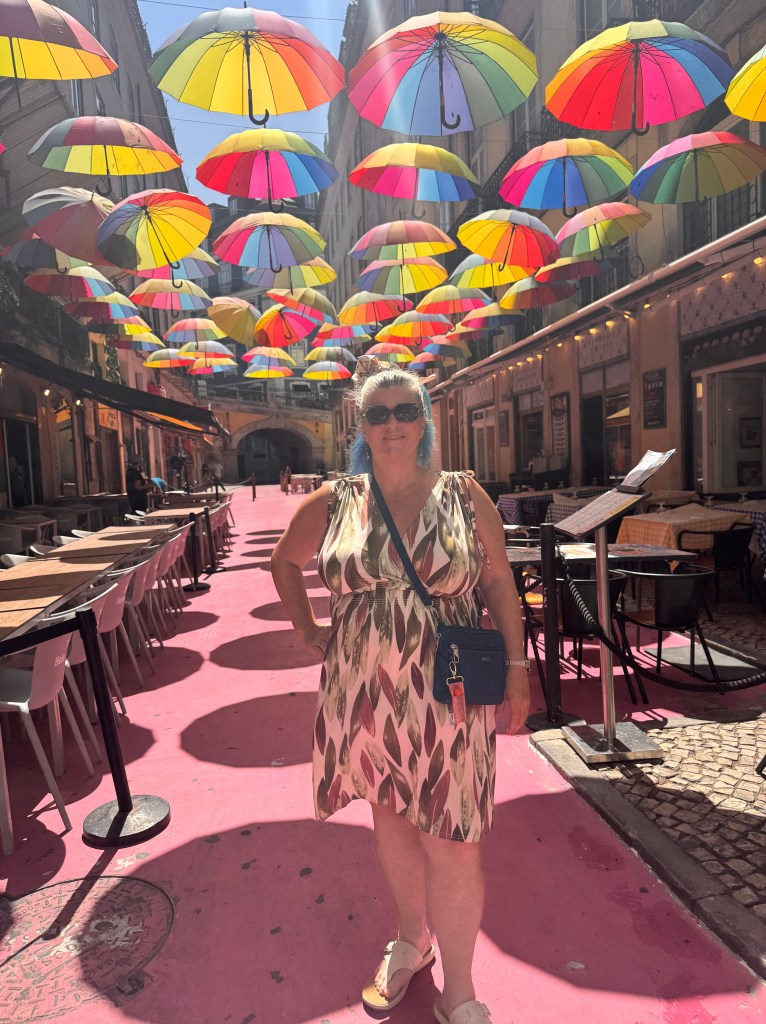
Our apartment is just a short walk from the famous Pink Street, so we took advantage of the quiet morning before the crowds arrived to snap some photos. By later in the day, the street would be packed with people enjoying the cafés, restaurants, and nightlife, but early in the morning we almost had it to ourselves.

From there, we wandered in and out of little shops.

Kiya kept putting her hand in front of her eyes every time we stepped into the bright sunshine, so we decided it was time to find her a pair of sunglasses.

The first couple we tried on weren’t winners. She immediately dropped her head.

Then we found them.

Bright orange with little diamond accents.

She lifted her head, smiled, and never tried to take them off.

When we finished paying for the rest of our purchases, the shop owner smiled and said he wanted to give us a deal.

Then he handed Kiya the sunglasses for free.

Those little acts of kindness are something we’ll remember long after we’ve forgotten what we bought.

As we continued exploring, we noticed something that seemed to be everywhere—sardines and colorful roosters.

Portugal is famous for both. Sardines have been an important part of Portuguese life for centuries and are especially celebrated during Lisbon’s June festivals honoring Saint Anthony, when they’re grilled on nearly every street corner. Shops throughout the city sell beautifully decorated sardine tins that have become iconic souvenirs. The colorful rooster, known as the Rooster of Barcelos, is one of Portugal’s national symbols. According to legend, a rooster miraculously crowed to prove an innocent man had been wrongly accused, making it a symbol of honesty, faith, justice, and good luck.

We wandered into one of the sardine shops, and honestly, the artwork on the tins was almost too pretty to open. Each can looked like a tiny work of art. While browsing, we picked up a couple pairs of earrings and some anklets before continuing on our way.

By then Kiya was ready for lunch.

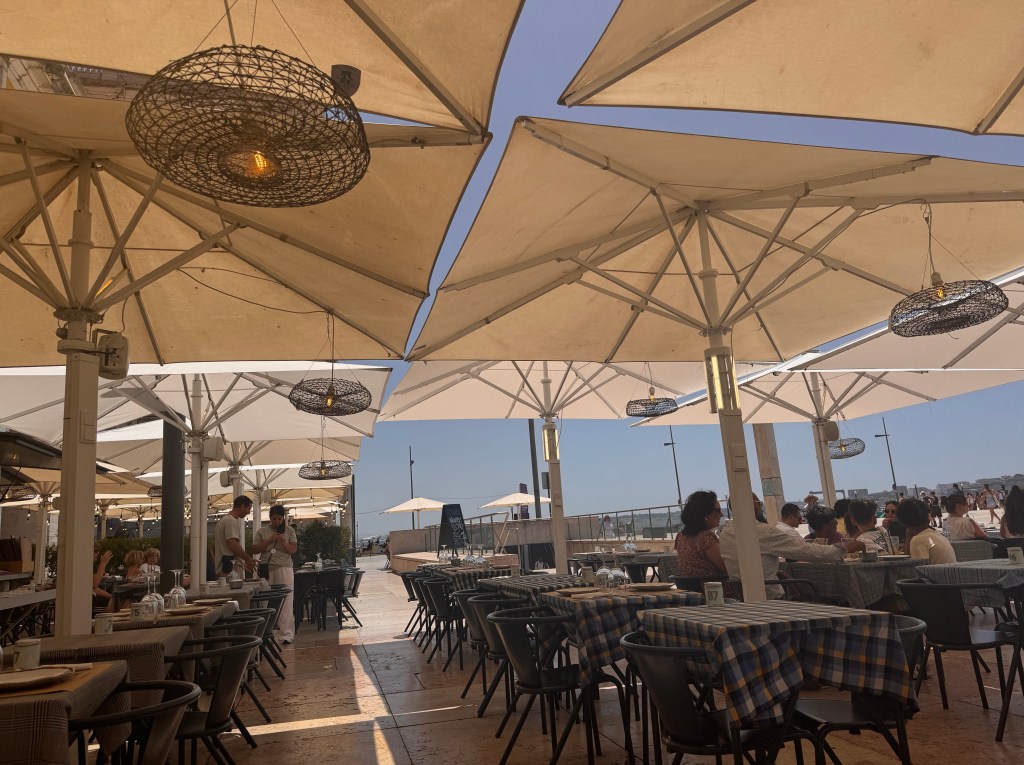
We stopped at a little café where we enjoyed fresh lemonade and a fruit bowl unlike any we’d had before. The fruit was served in fresh orange juice with a drizzle of honey over the top.

Simple.

Fresh.

Absolutely delicious.

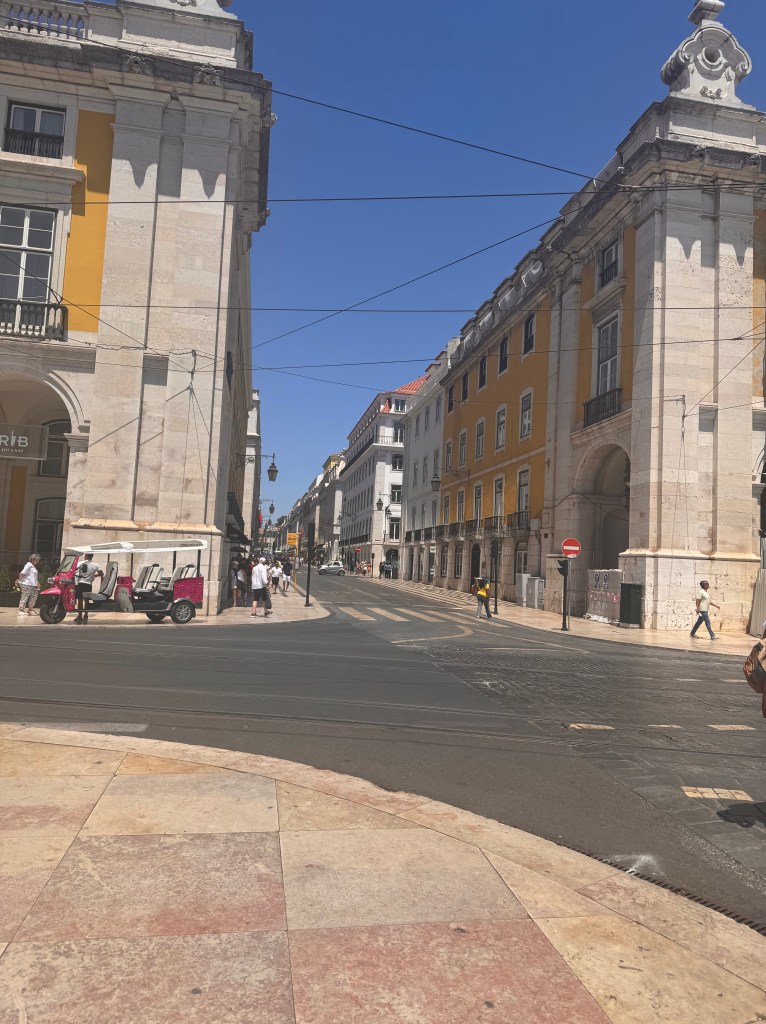
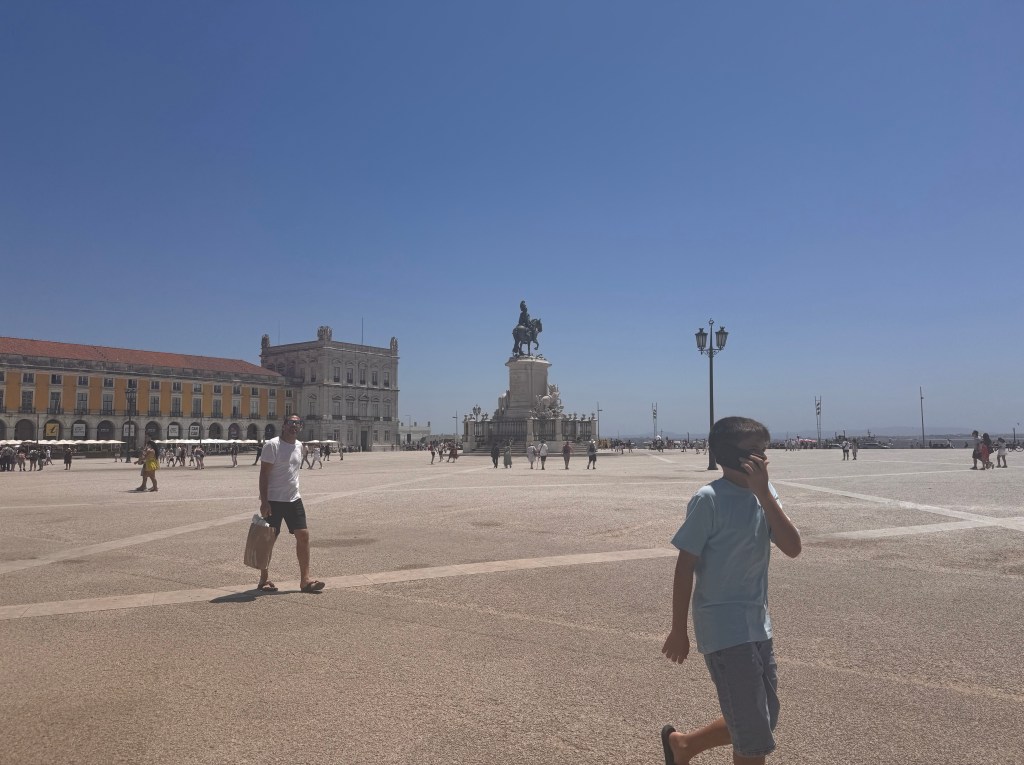
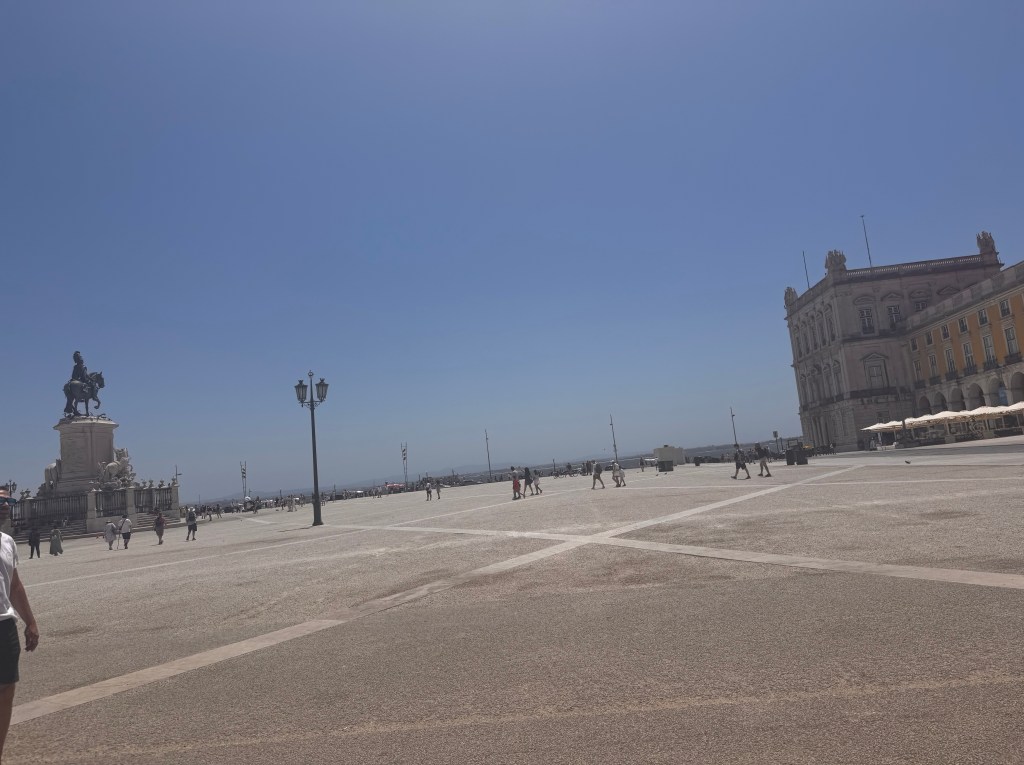
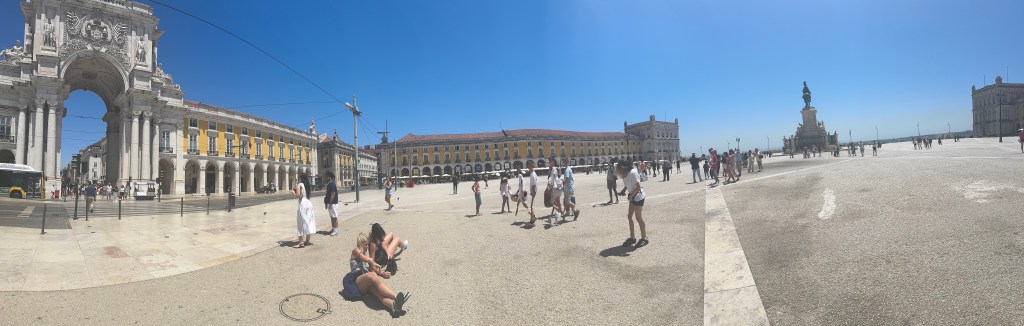
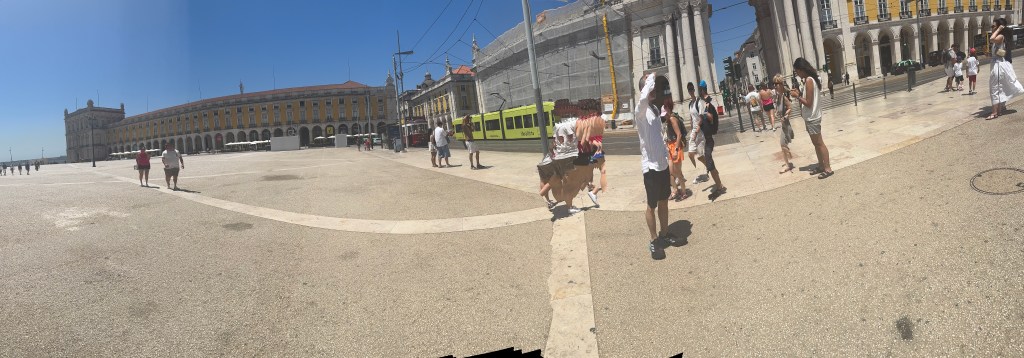
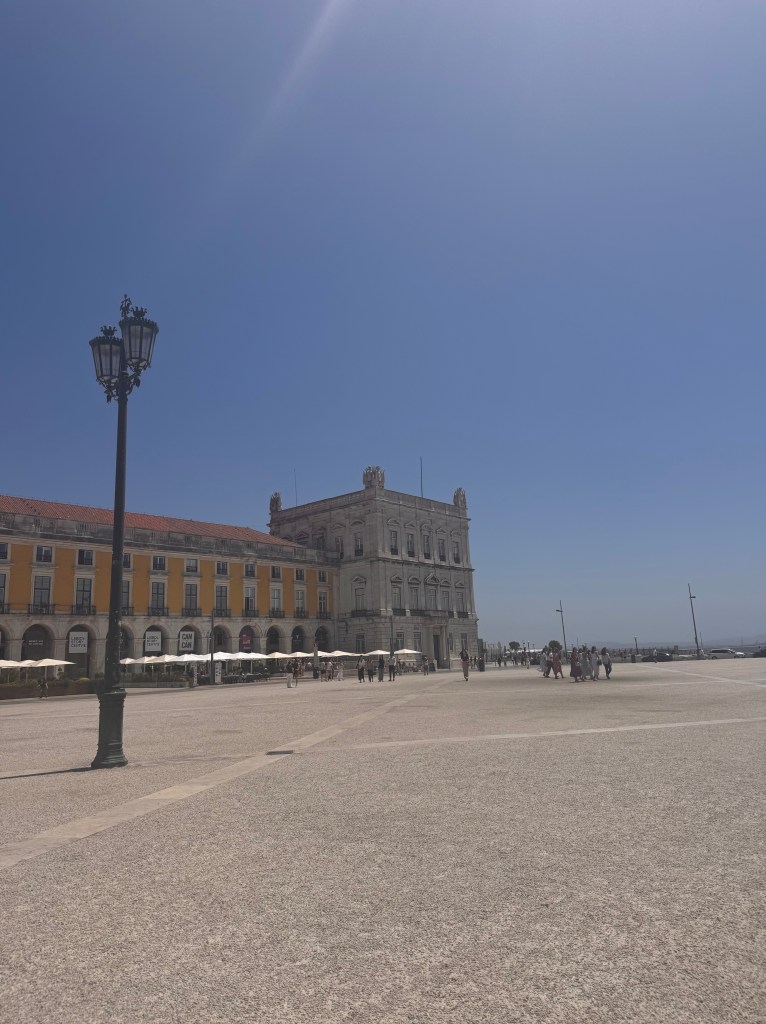
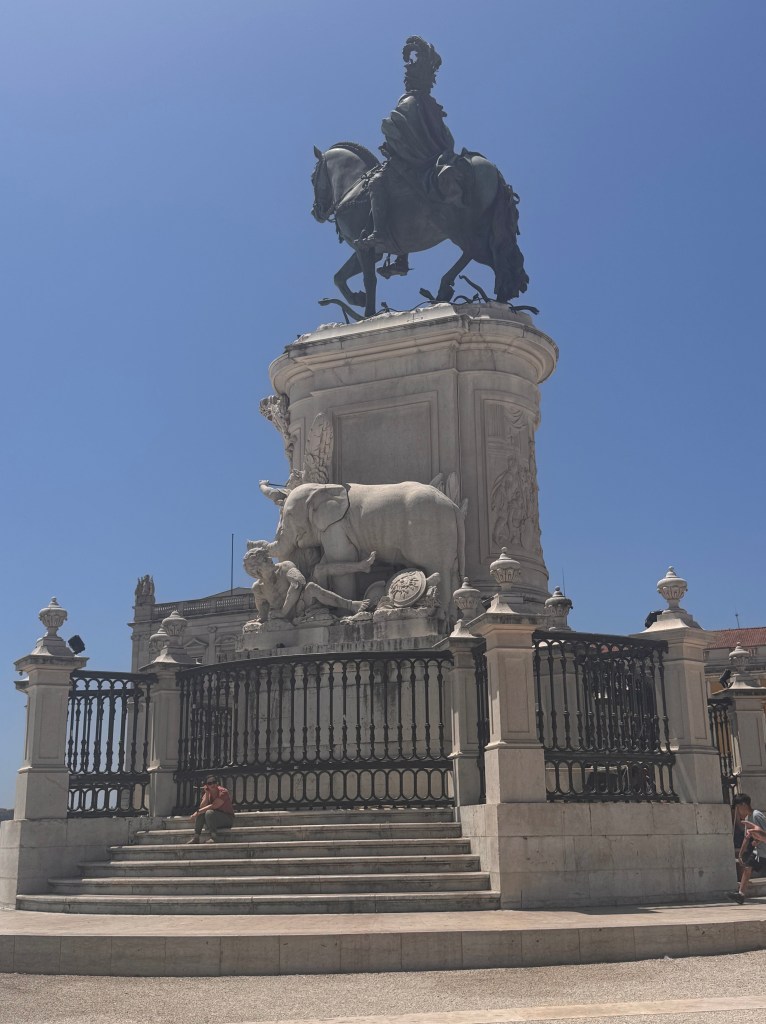
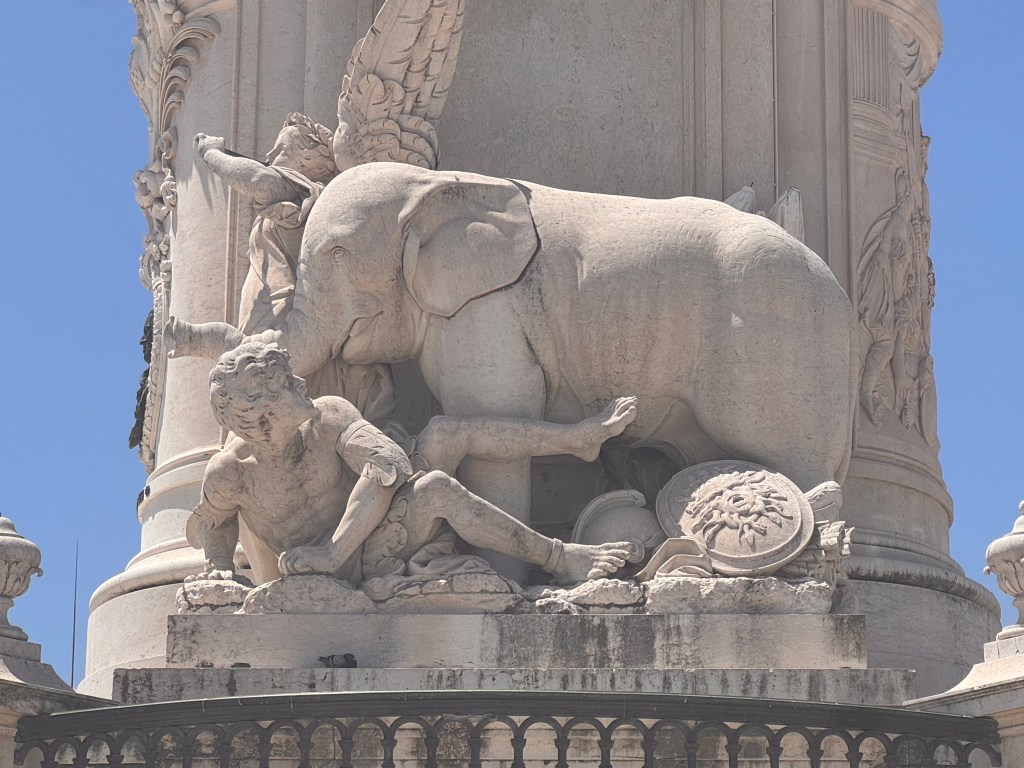
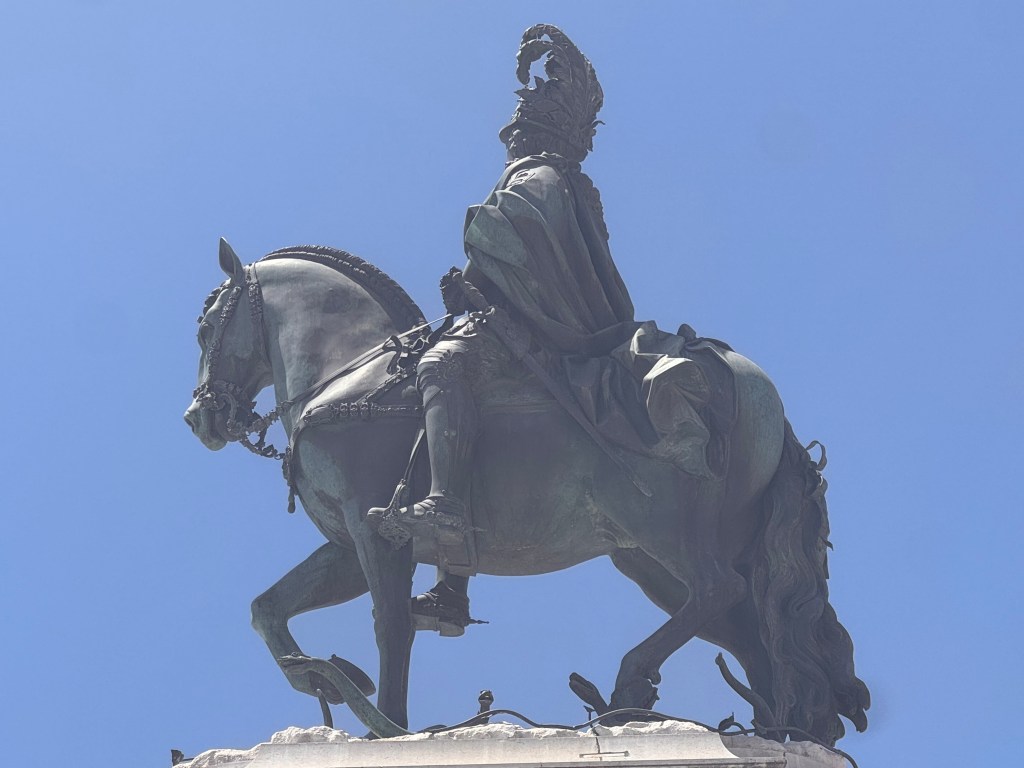
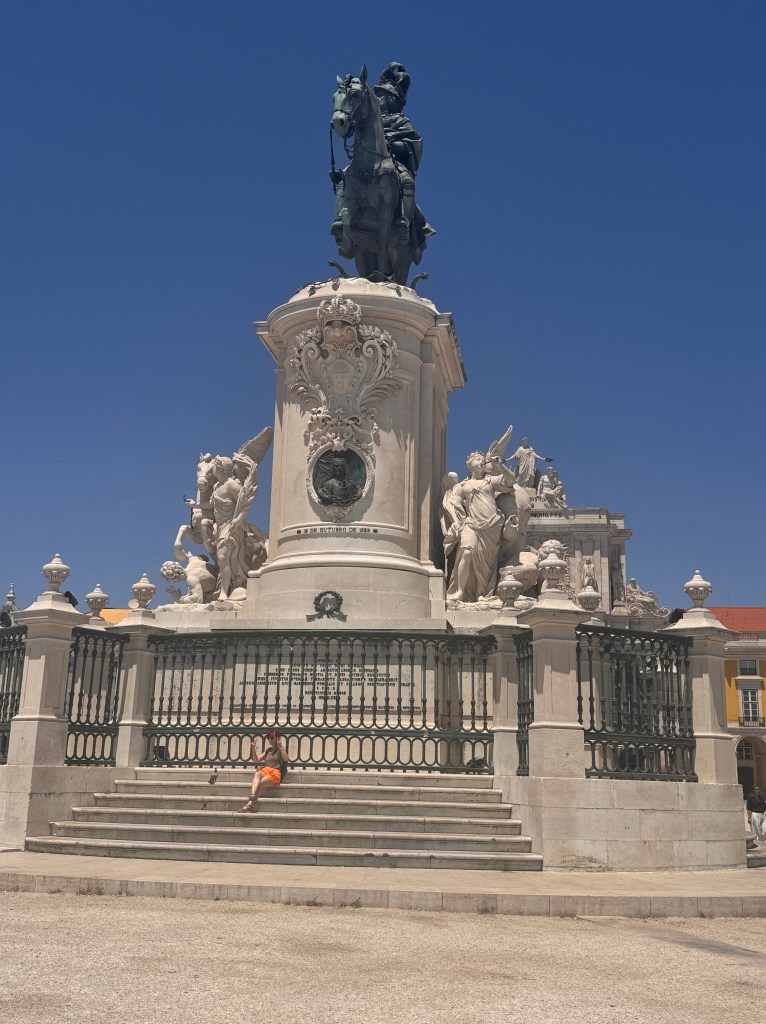
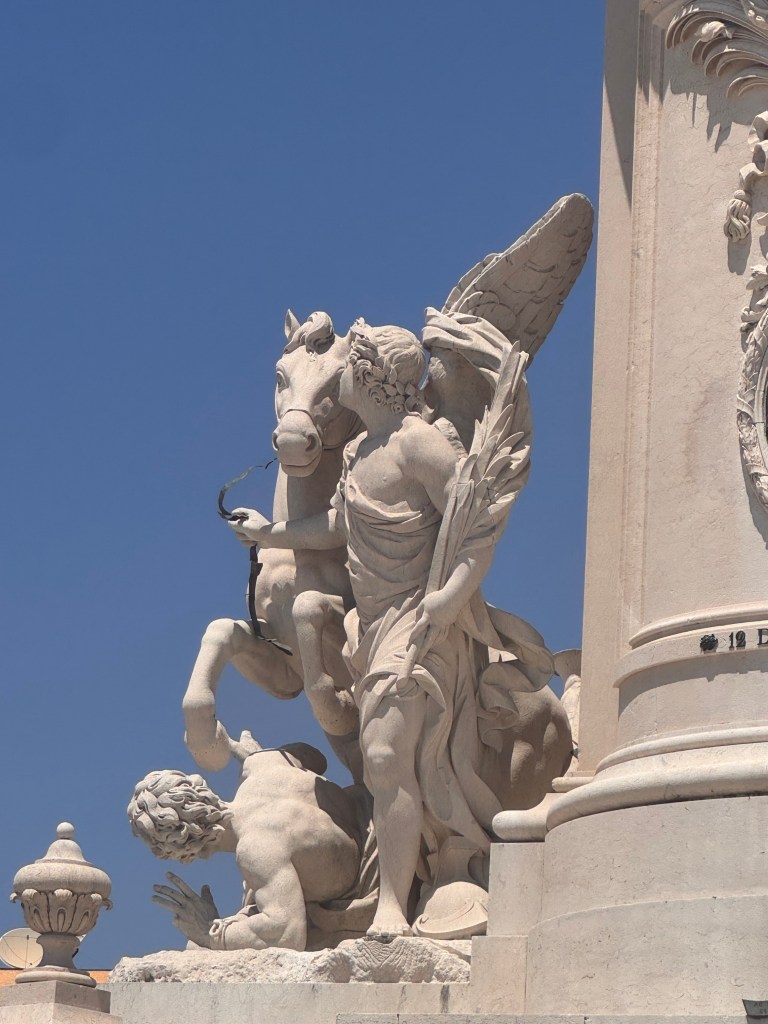
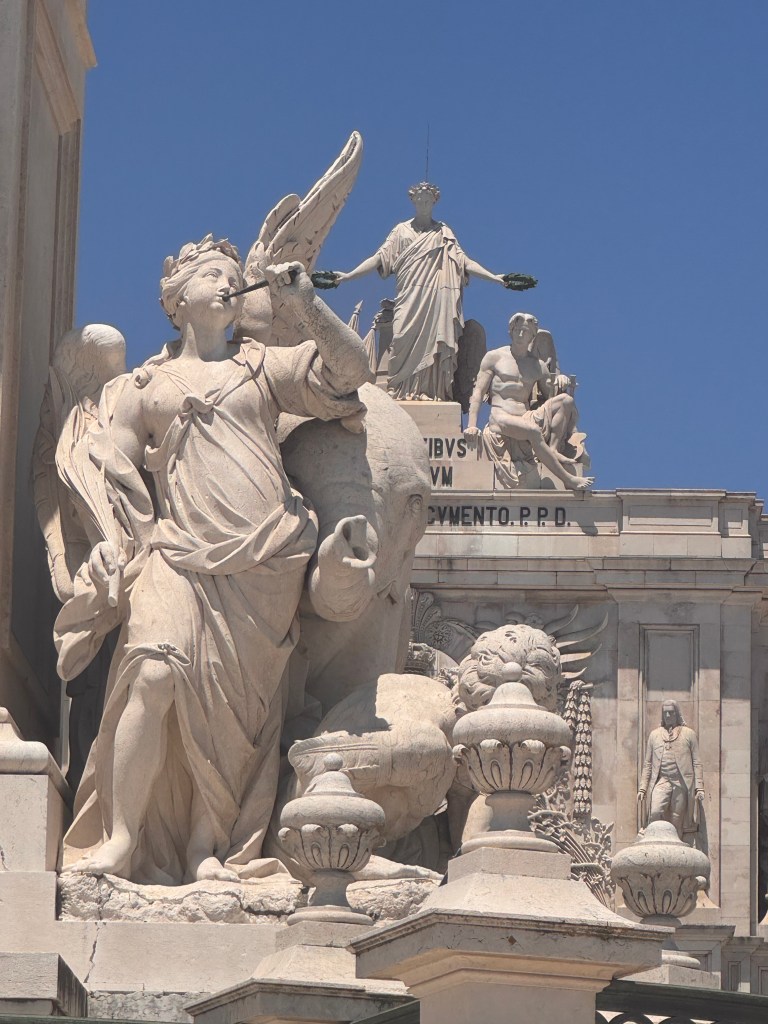
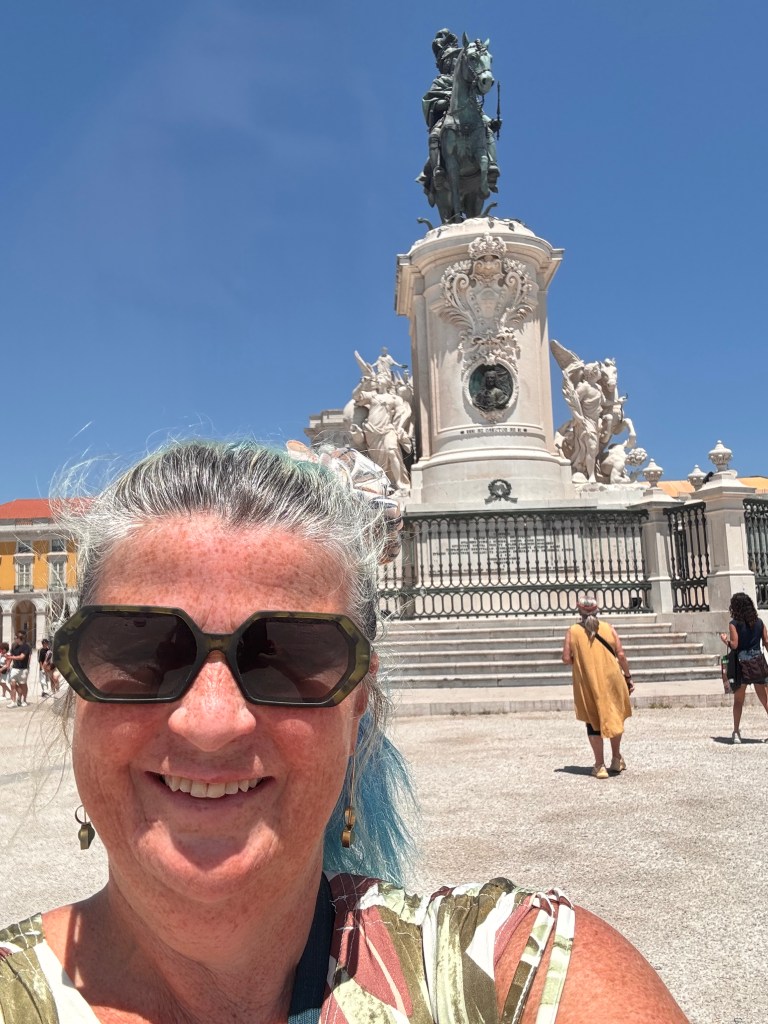
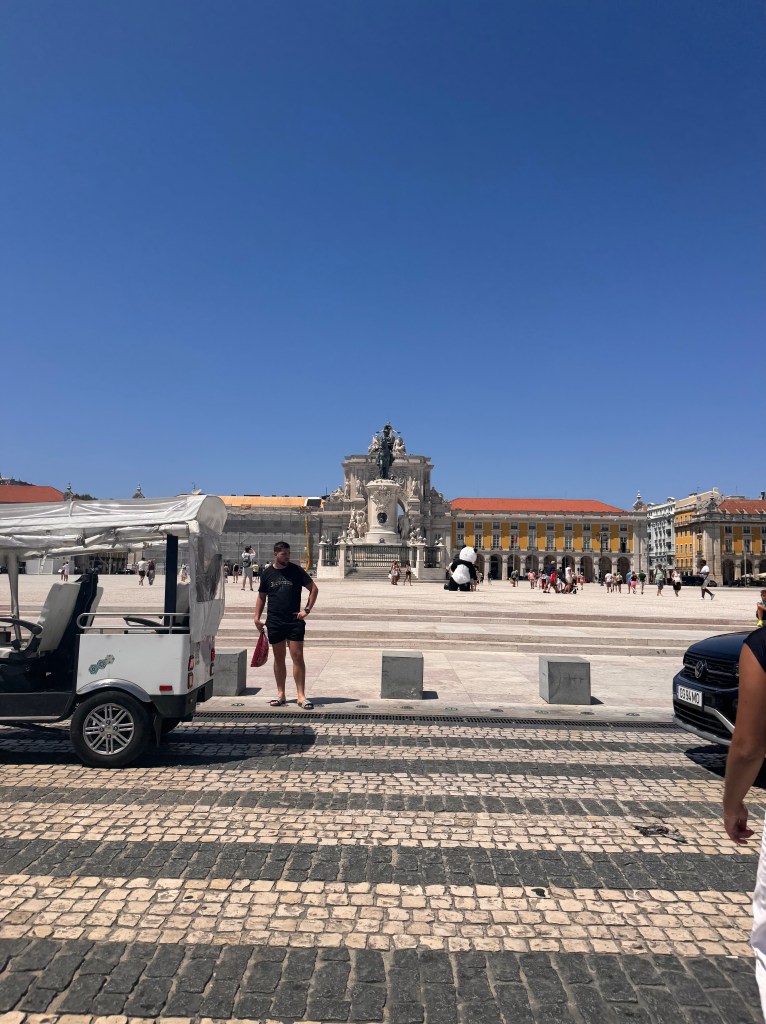
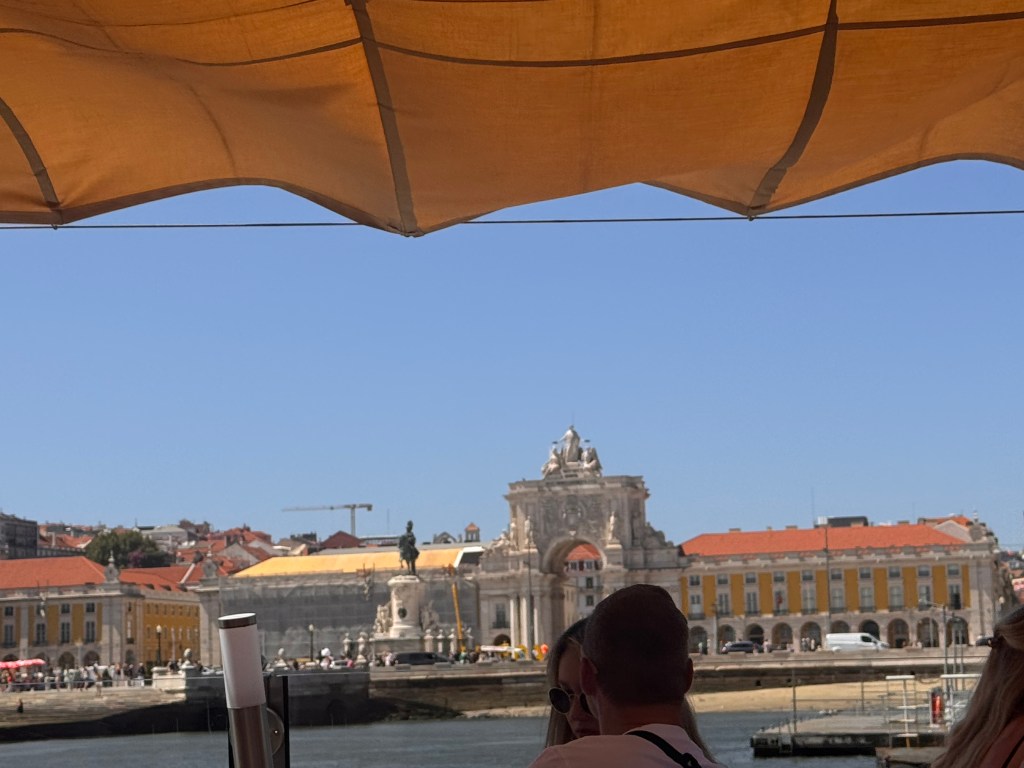
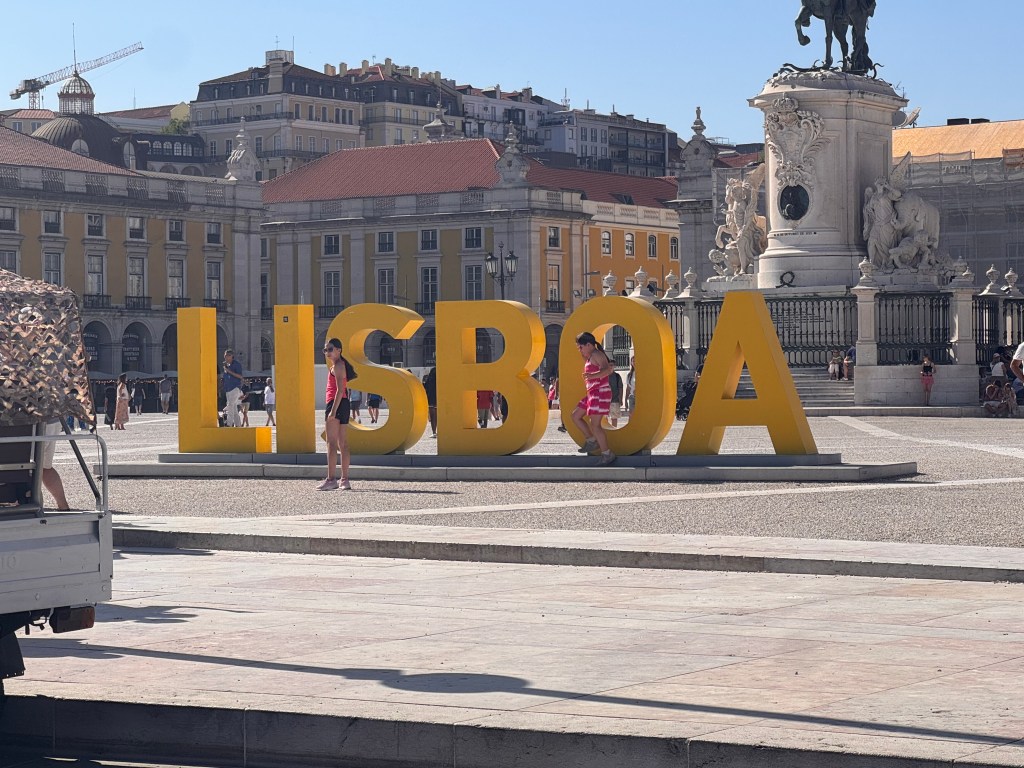
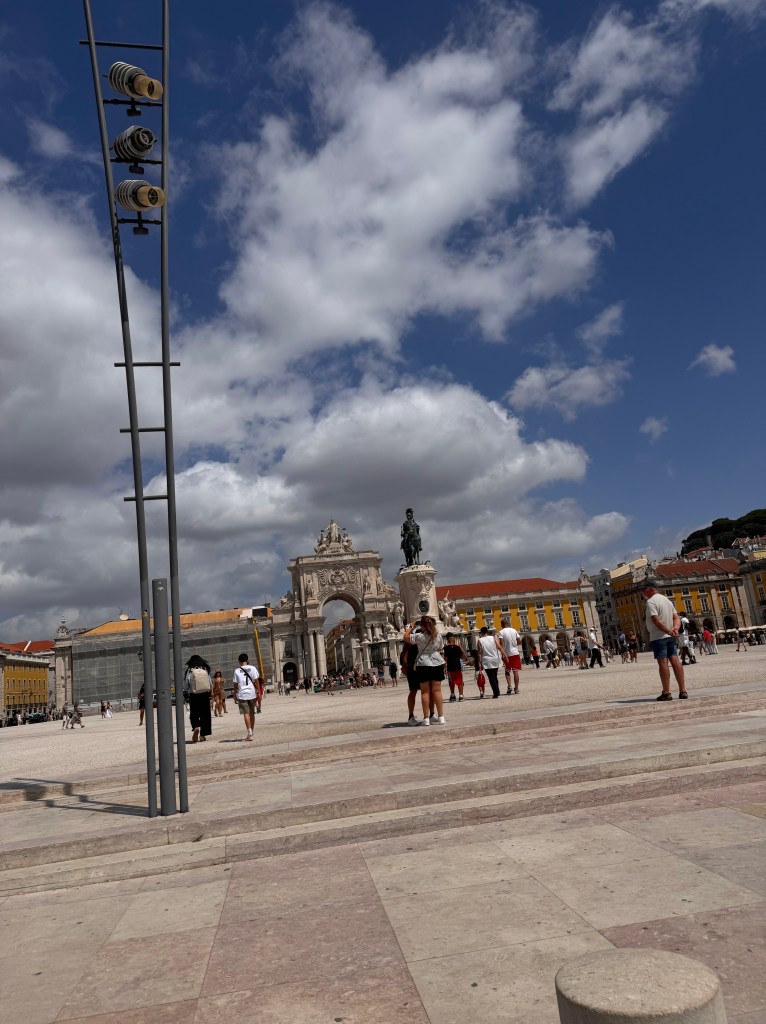
From there we made our way to Praça do Comércio, one of Lisbon’s most famous squares. Once the site of Portugal’s royal palace before it was destroyed in the devastating 1755 earthquake, today the enormous plaza opens directly onto the Tagus River. At its center stands a grand equestrian statue of King José I, who led Portugal during the rebuilding of Lisbon after the earthquake.

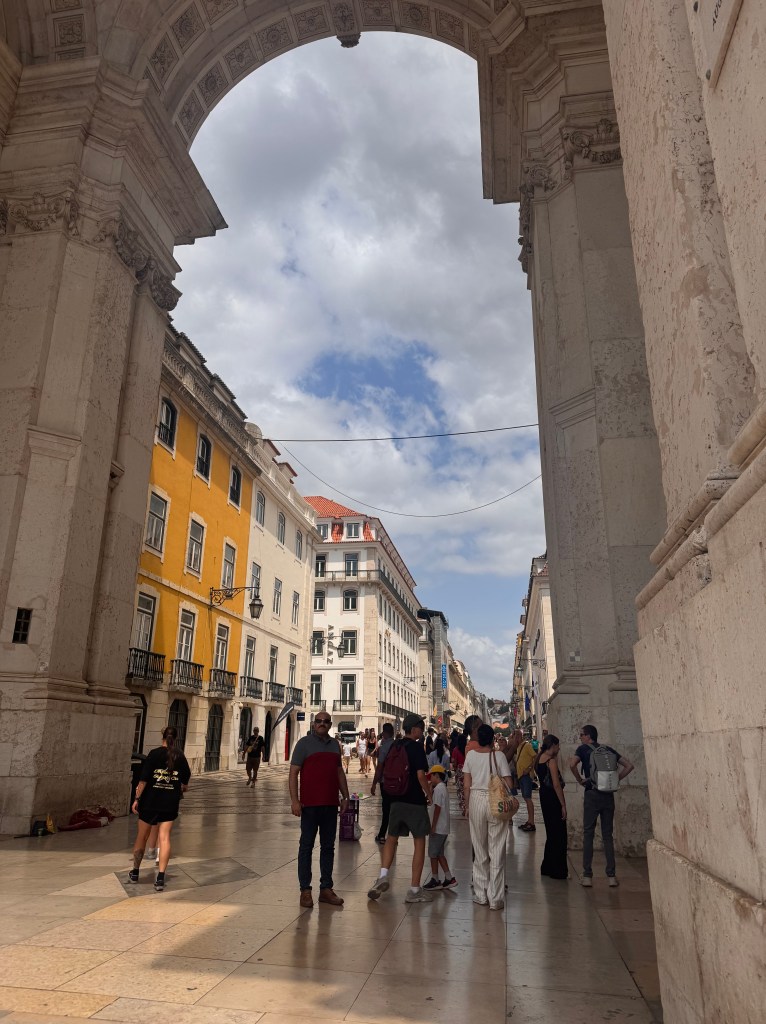
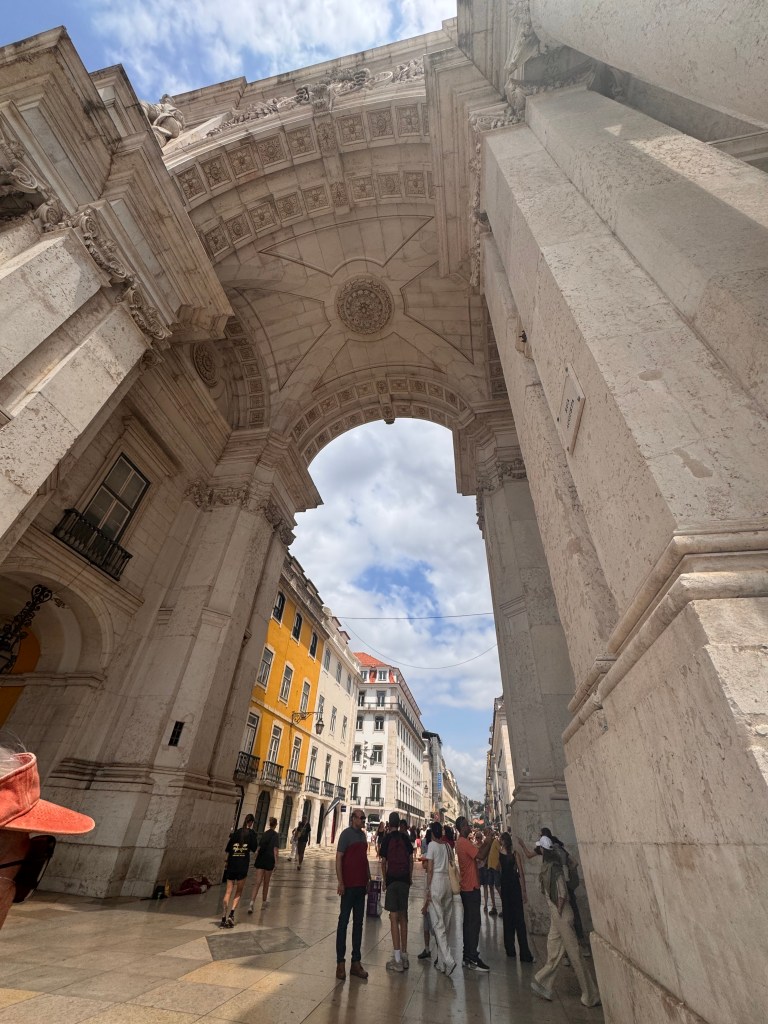
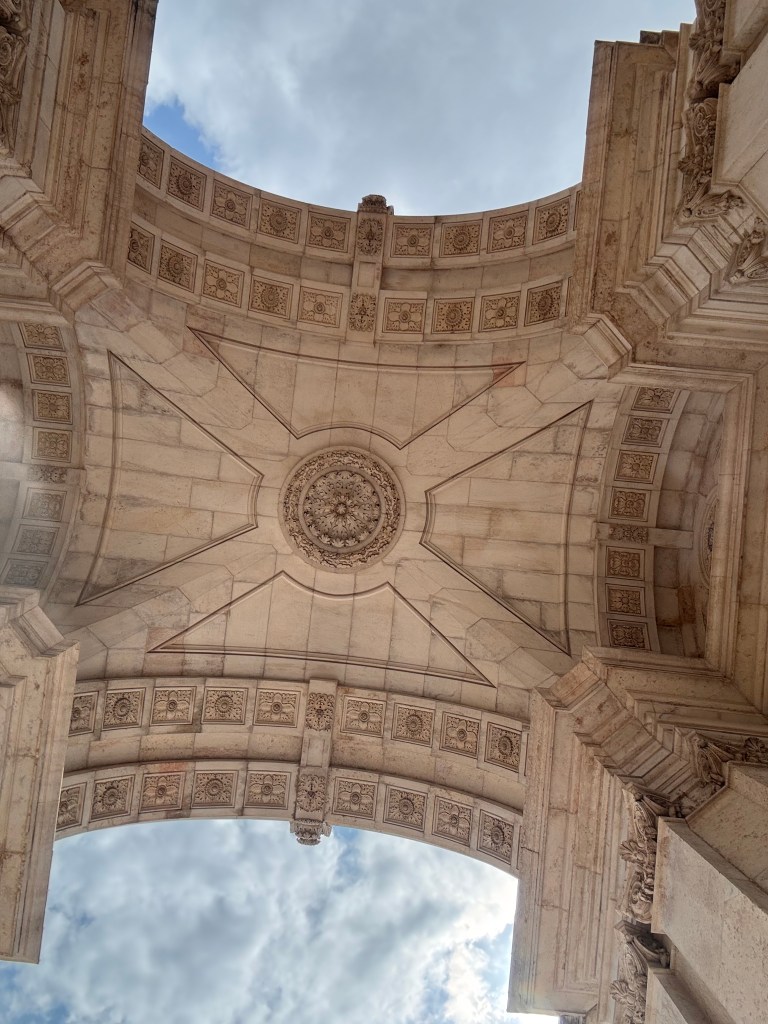
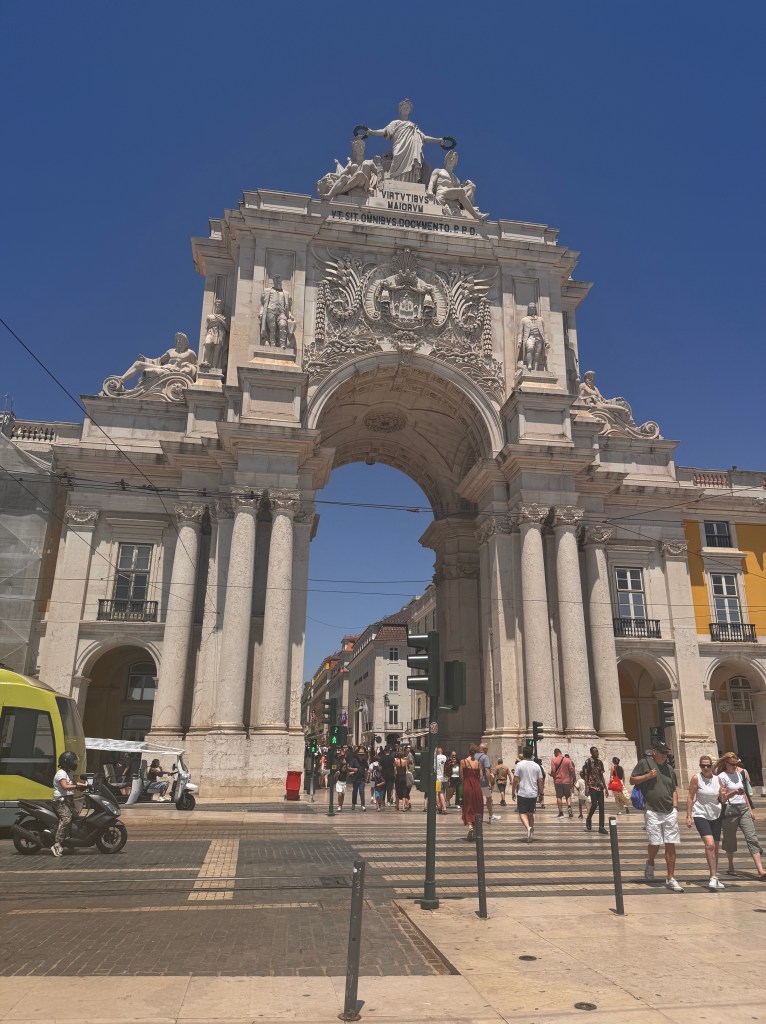
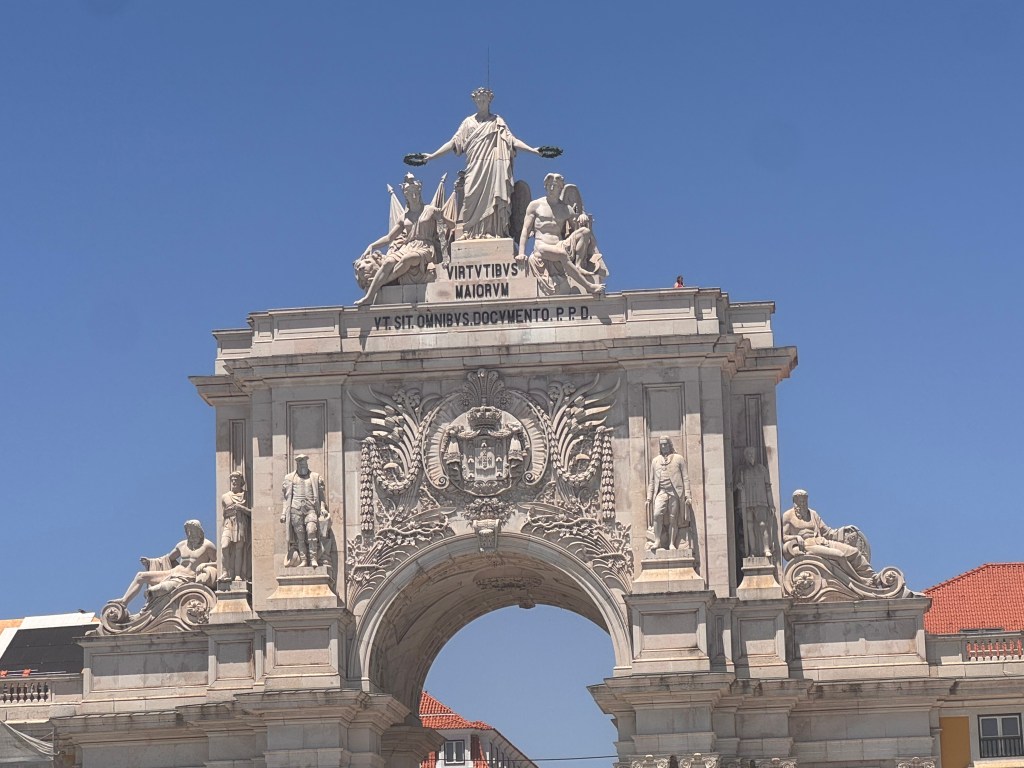
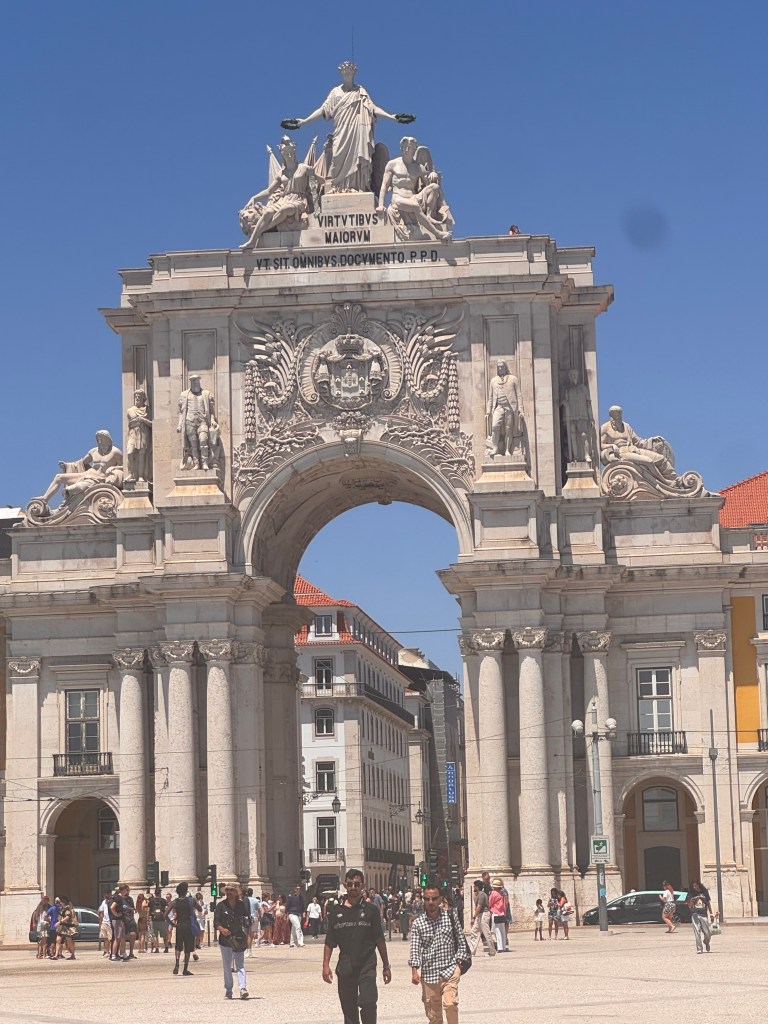
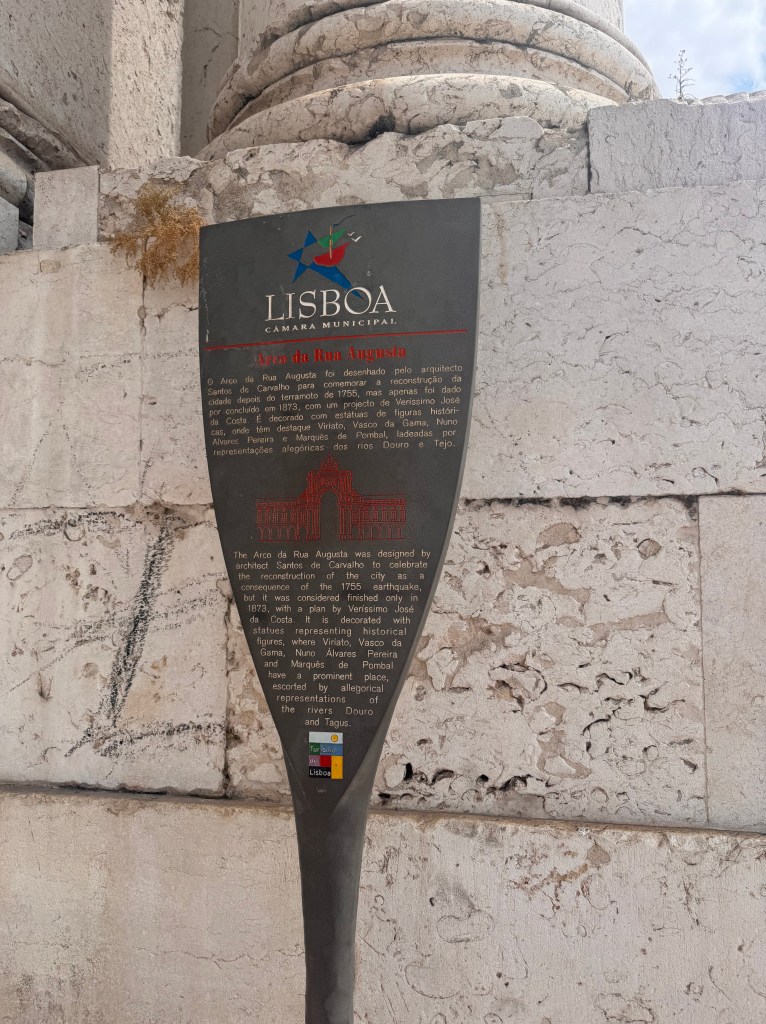
Standing at the northern end of the square is the magnificent Rua Augusta Arch. Built to celebrate Lisbon’s reconstruction, the arch is decorated with sculptures representing Glory, Valor, and Genius, along with important figures from Portuguese history. Walking beneath it feels like stepping through a grand gateway into the heart of the city.

After stopping for another wonderful lunch, we made our way to the marina for our afternoon cruise along the Tagus River.

What a relaxing afternoon.

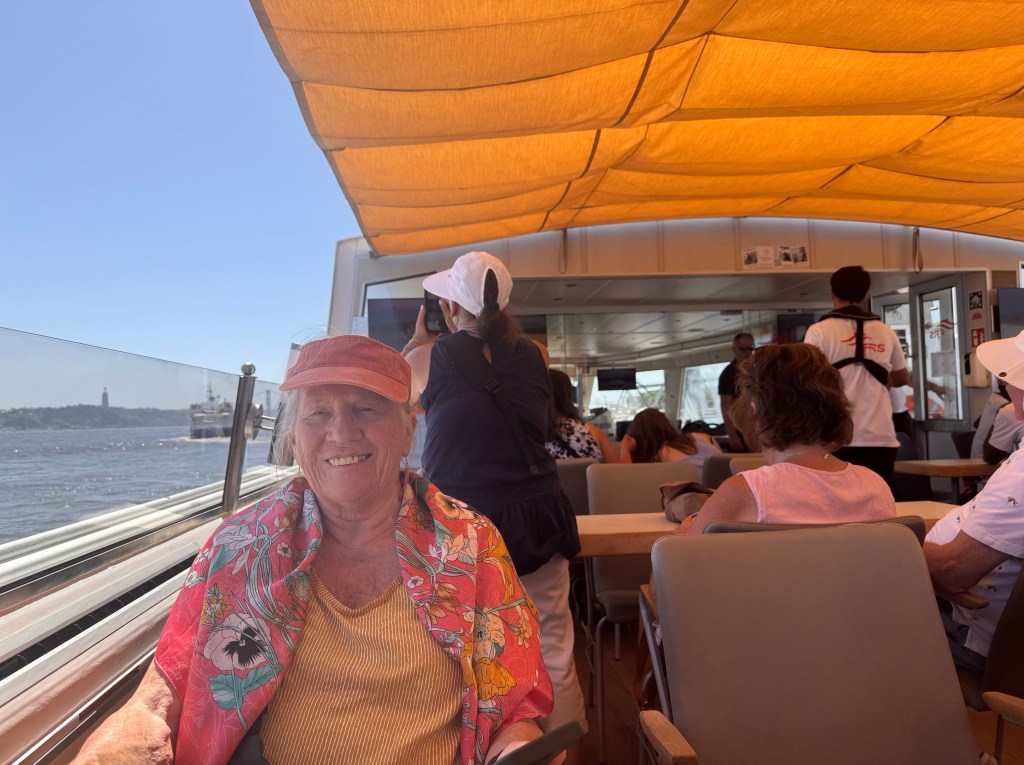
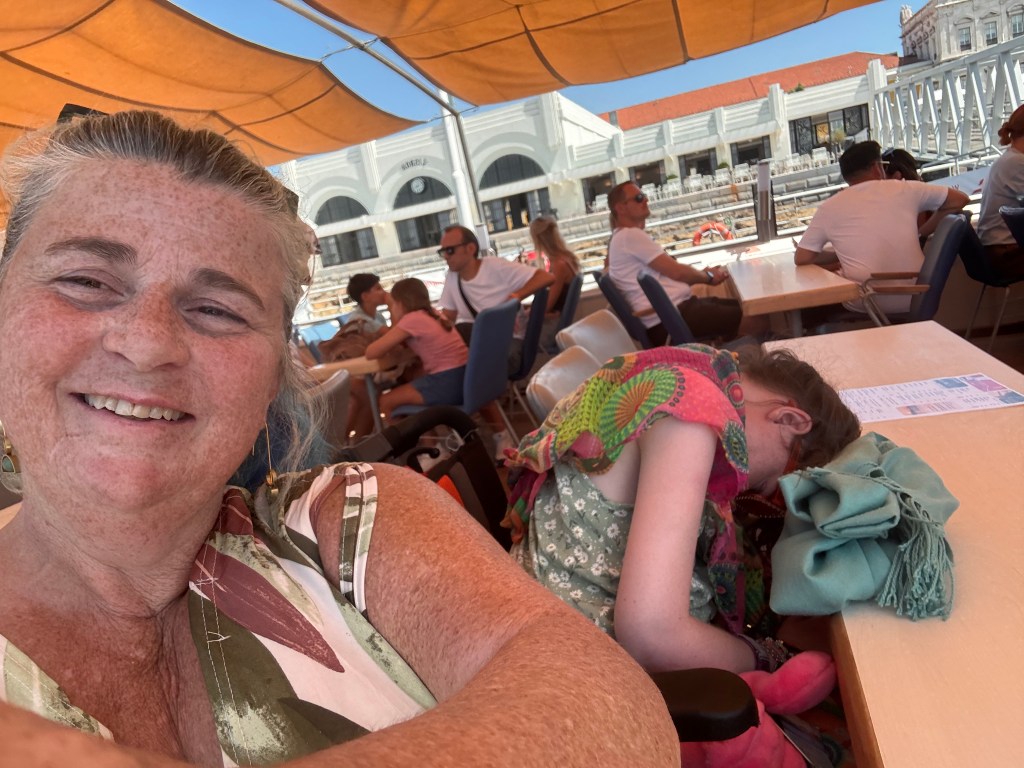
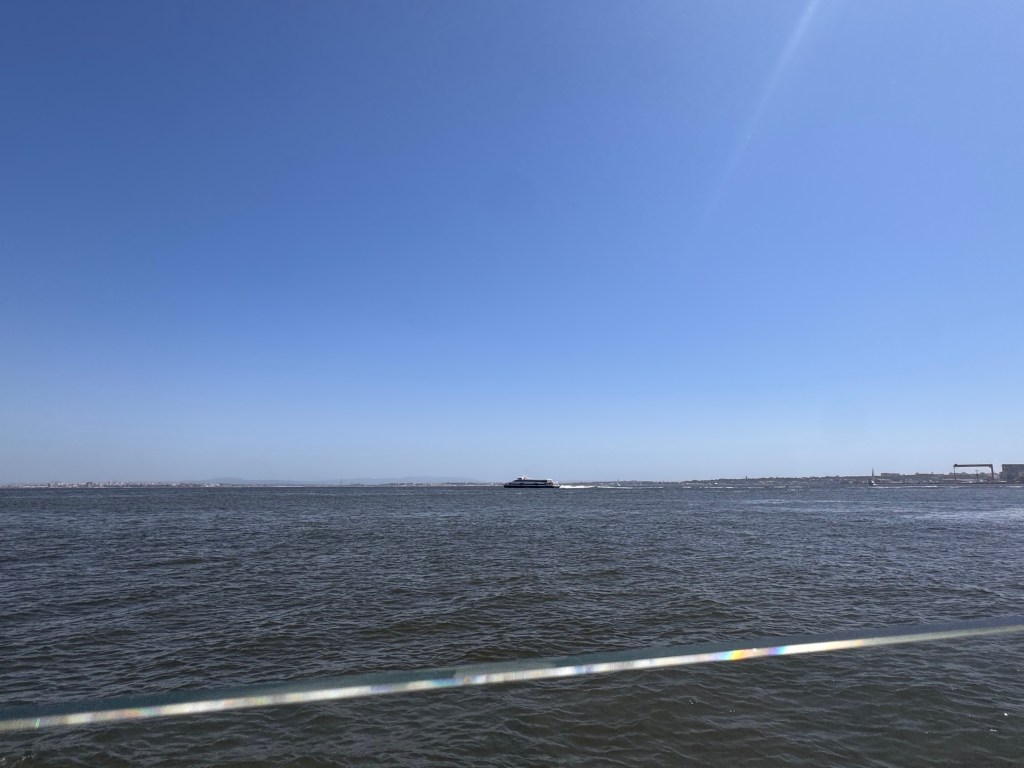
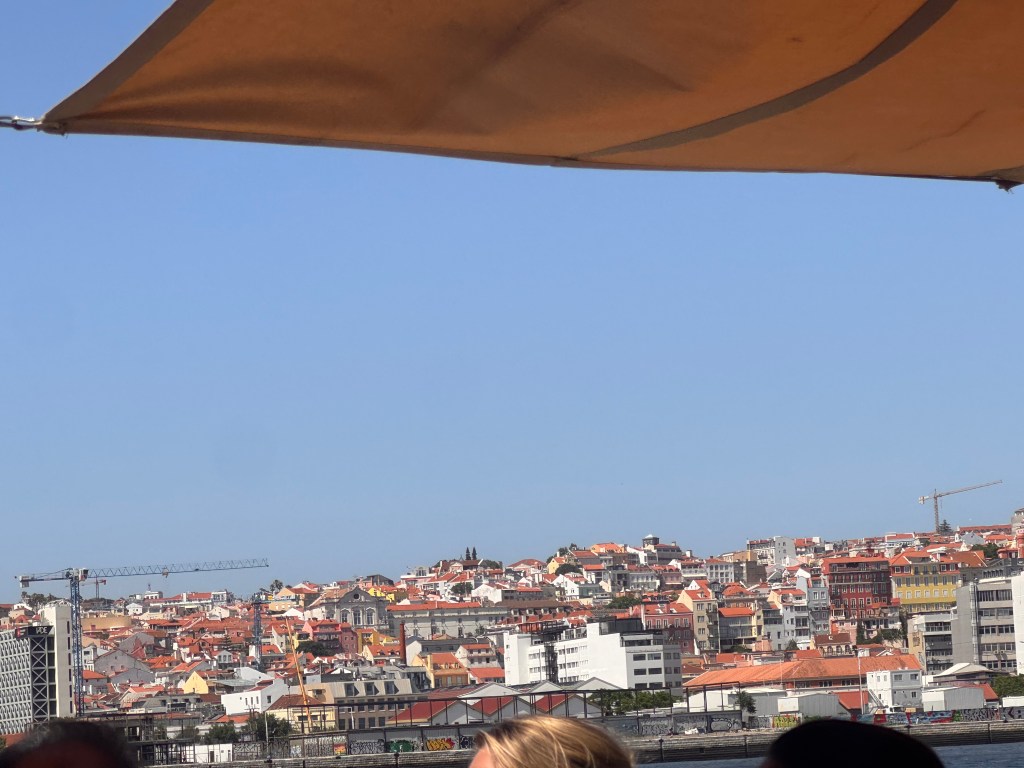
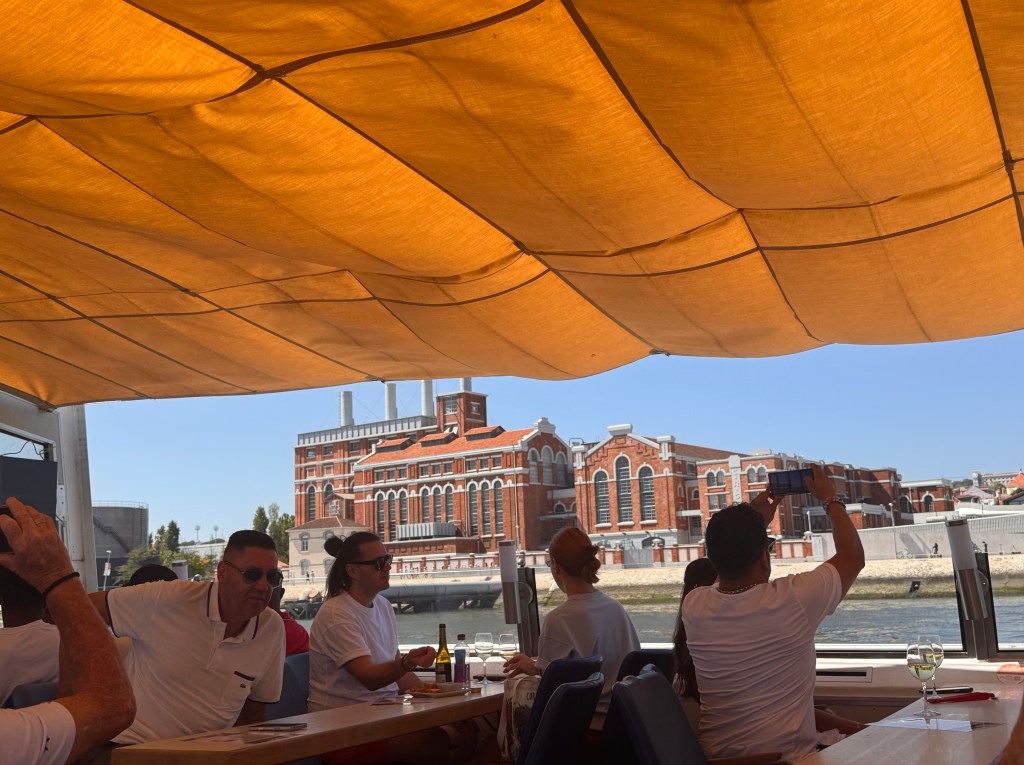
There weren’t very many people onboard, so everyone had plenty of room to spread out. We found seats on the upper deck where there was plenty of shade, open windows, and a wonderful breeze blowing off the water.

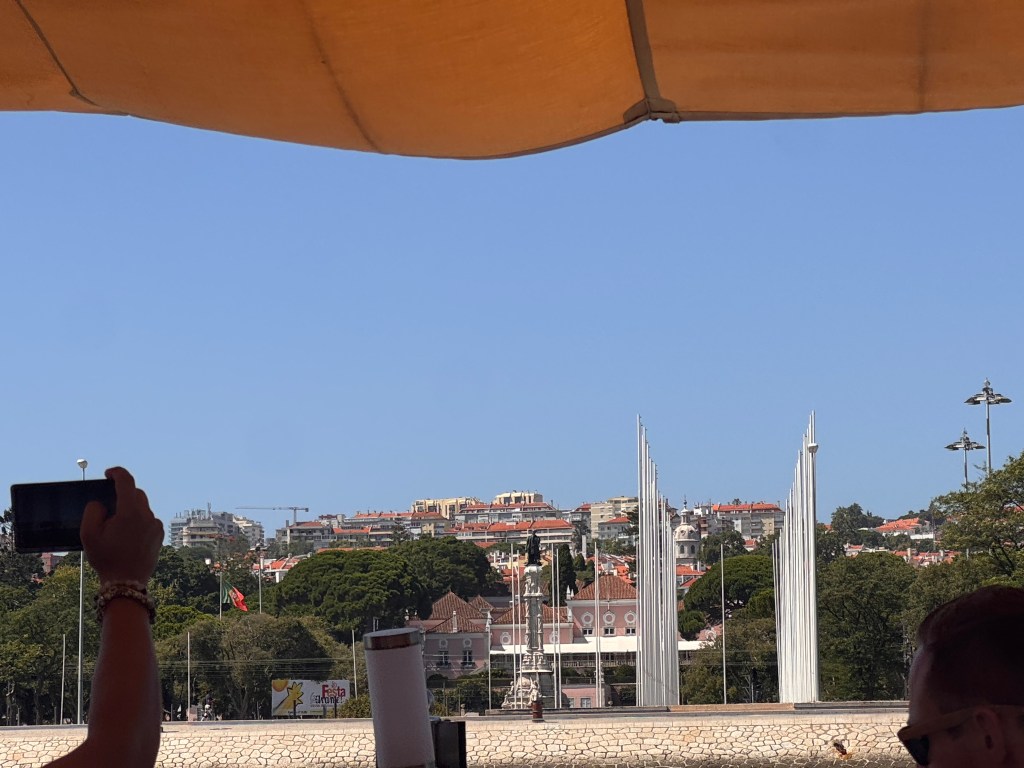
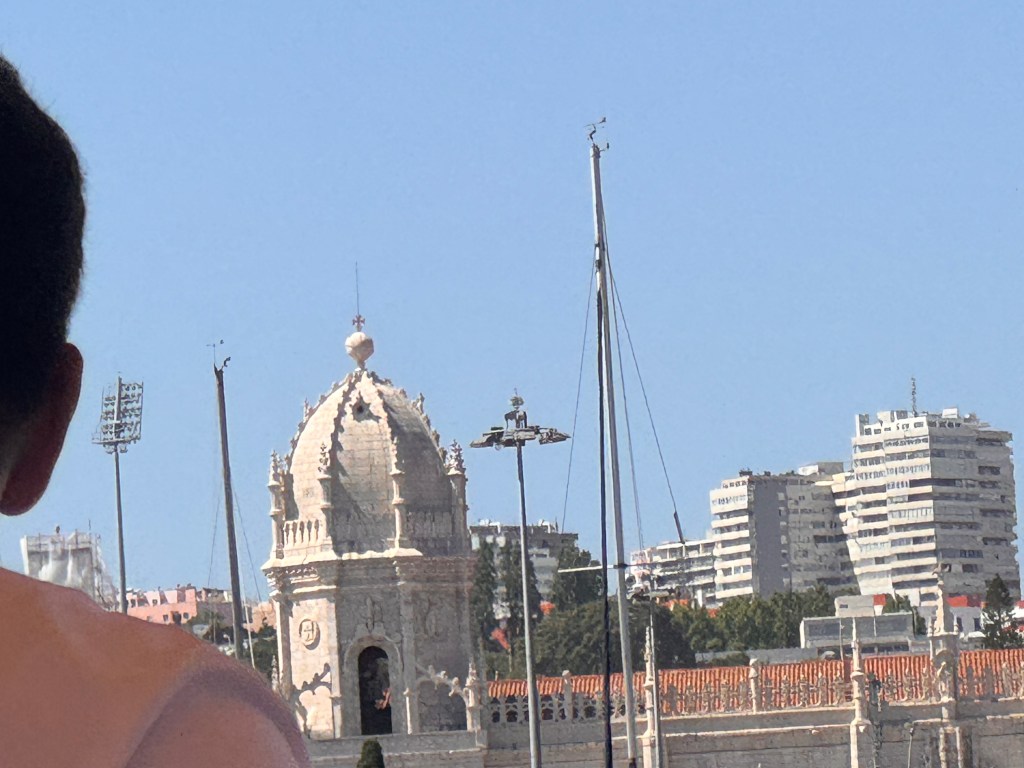
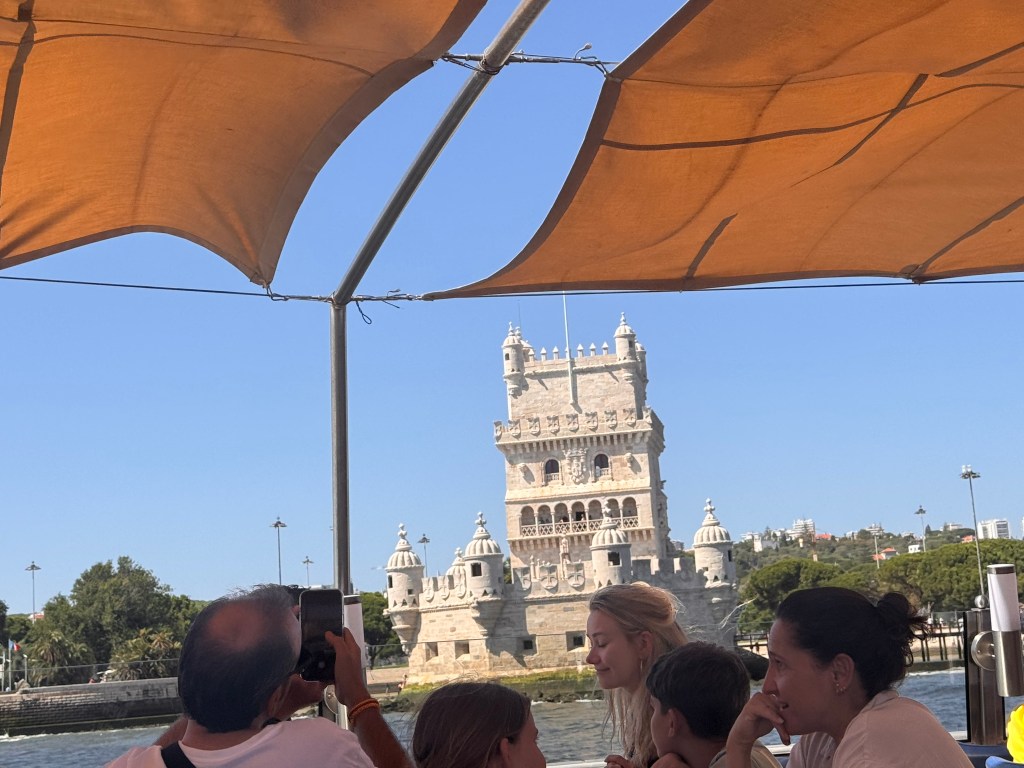
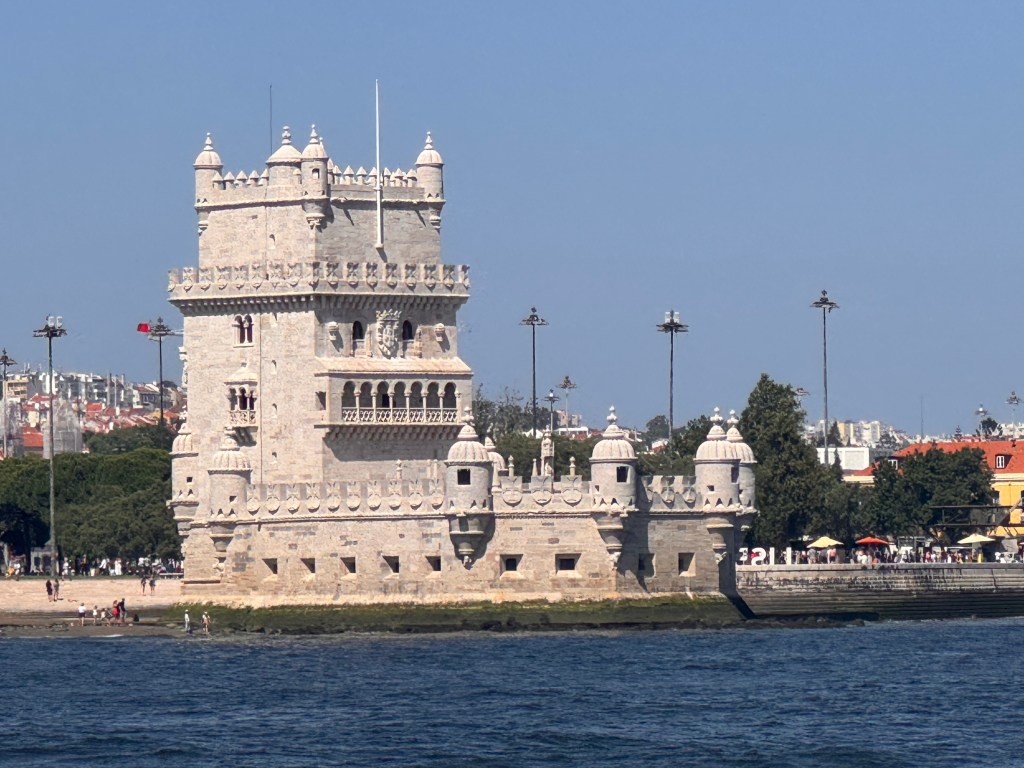
As we sailed down the river, we passed one famous landmark after another.

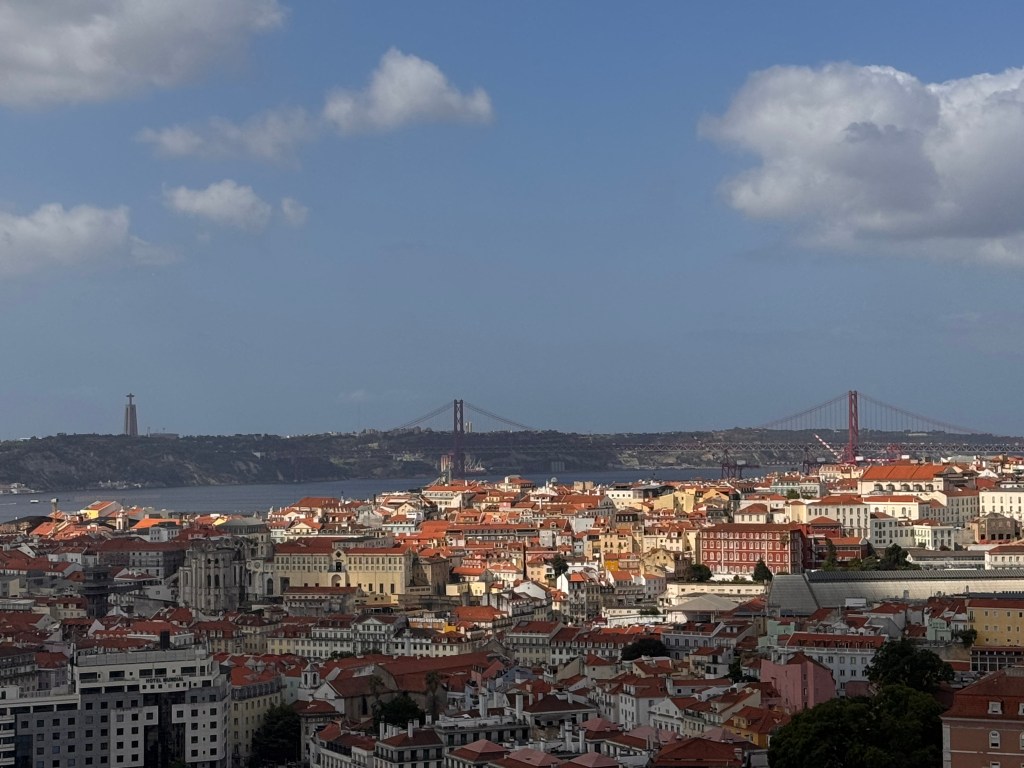
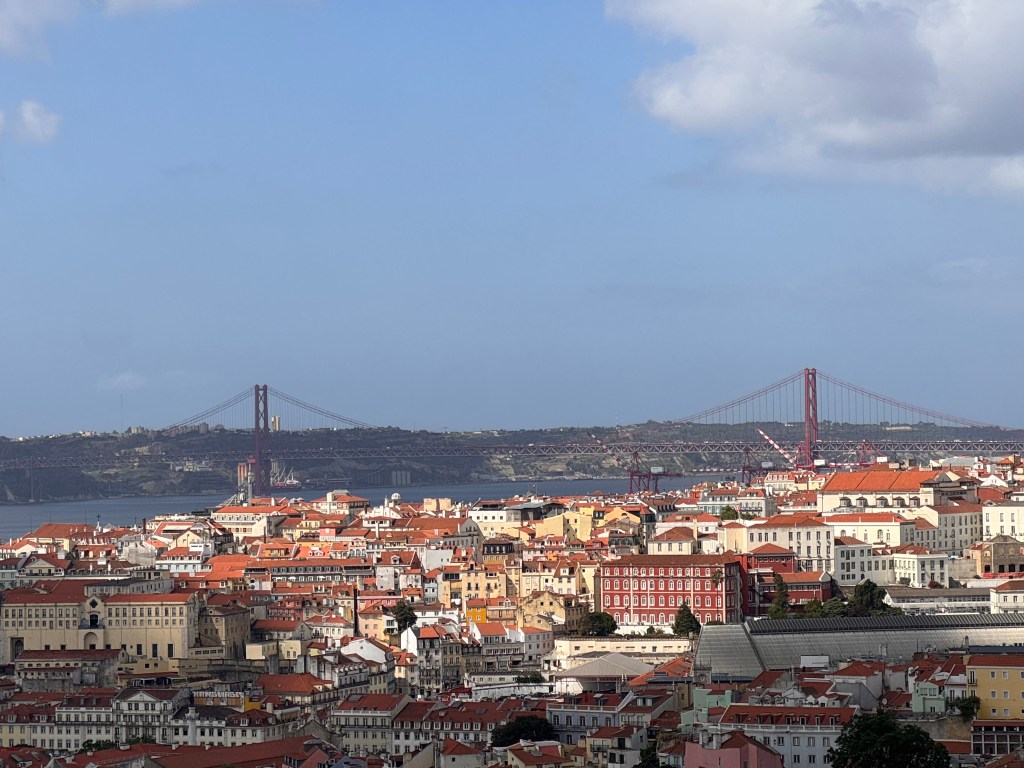
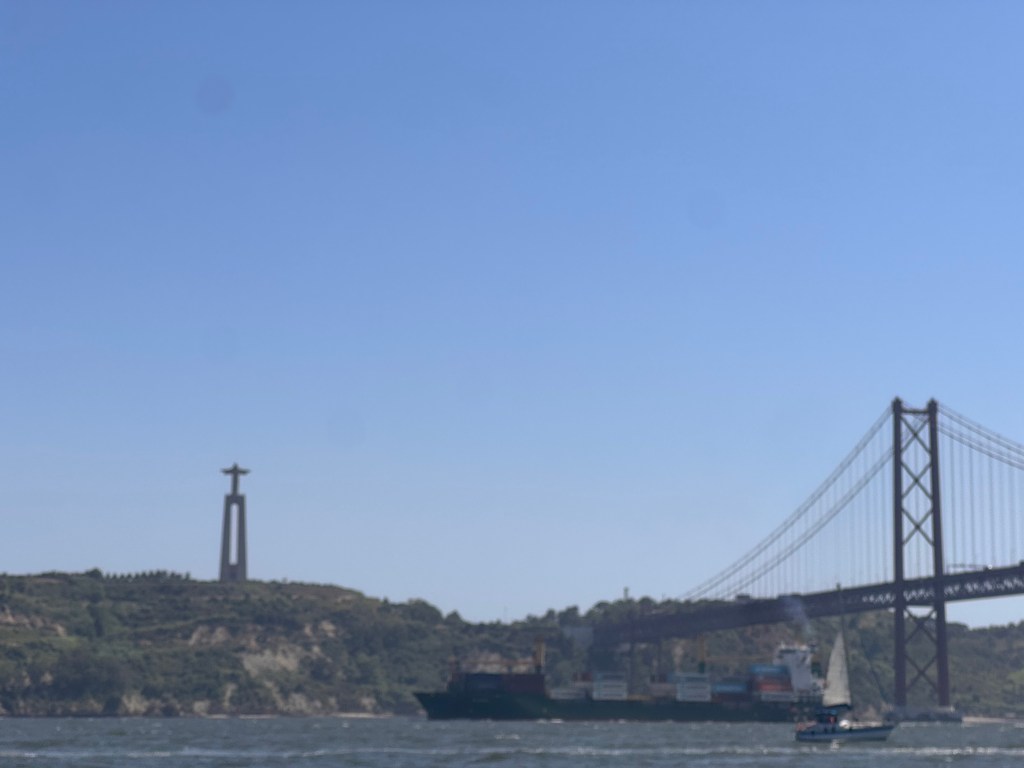
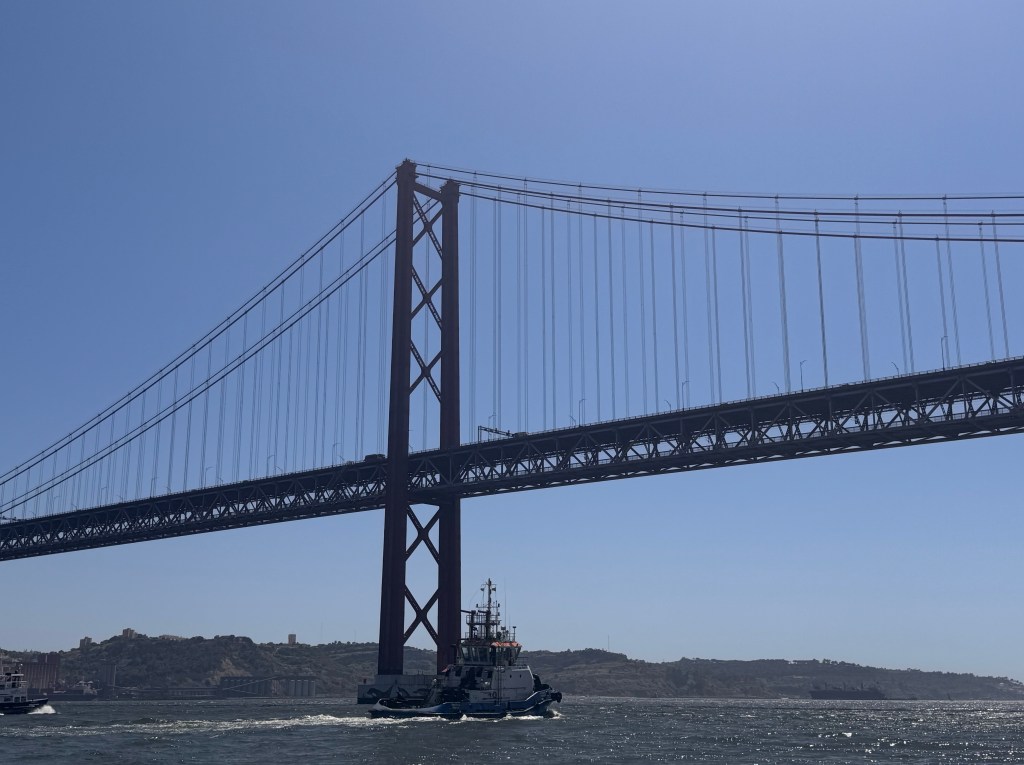
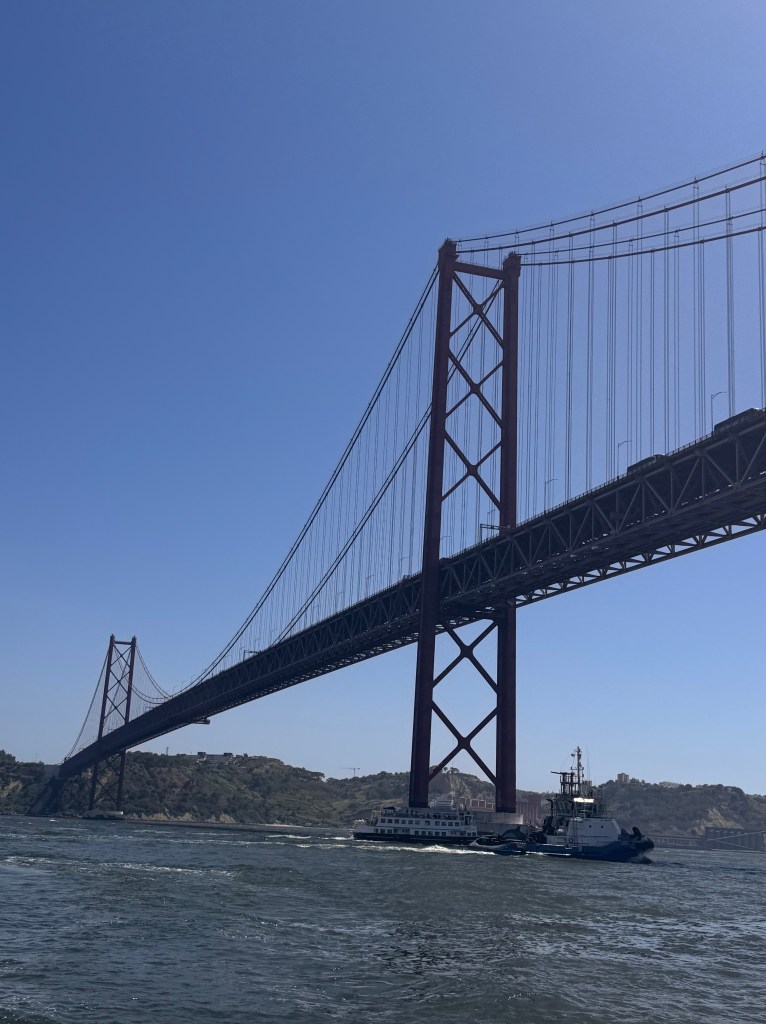
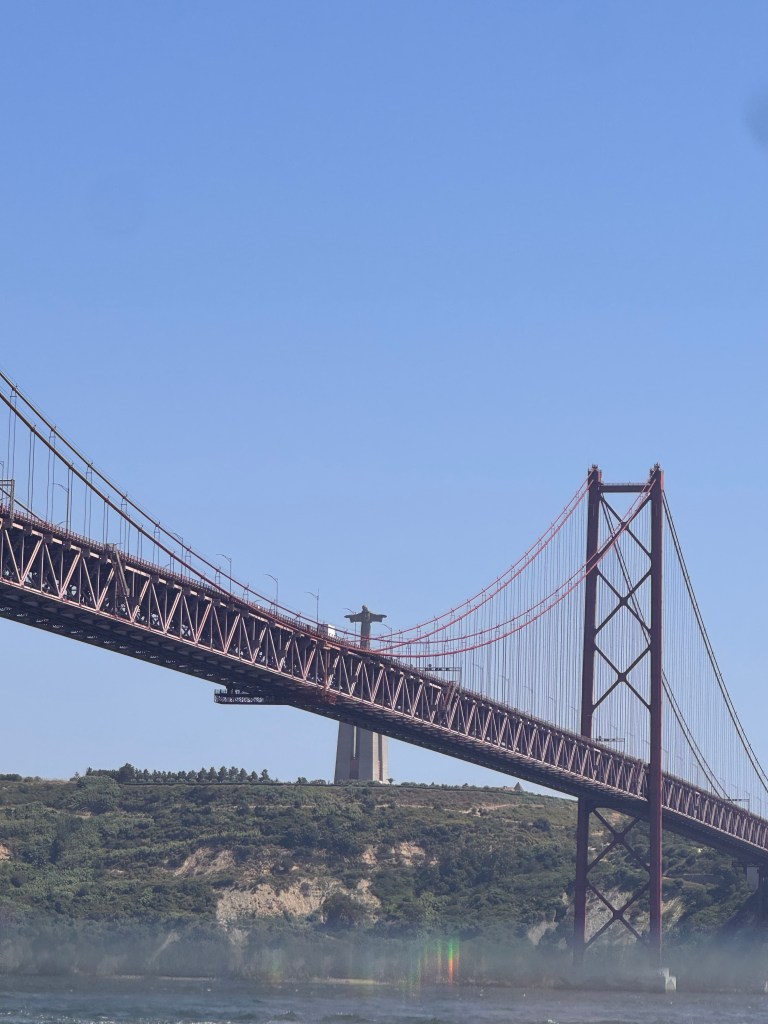
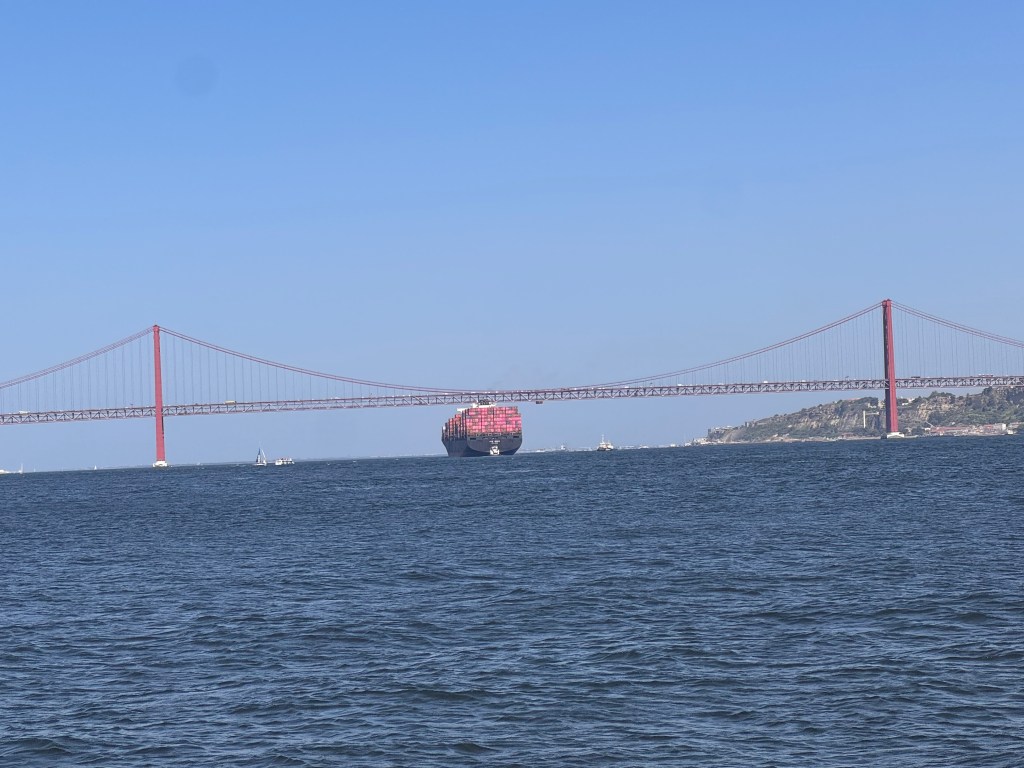
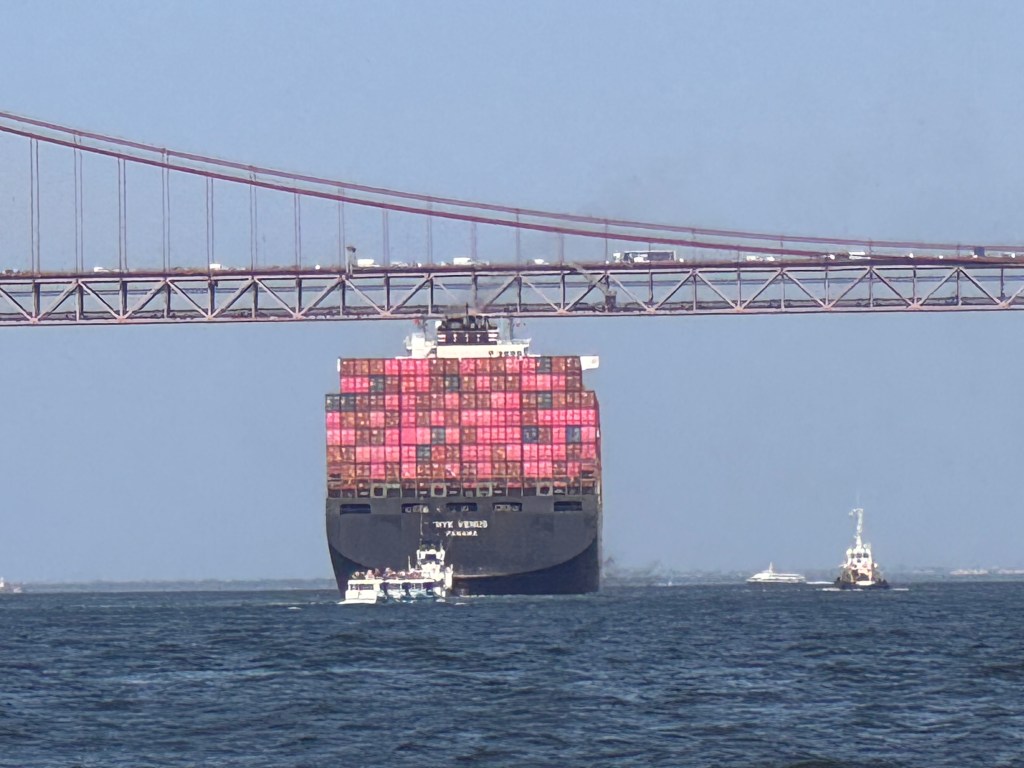
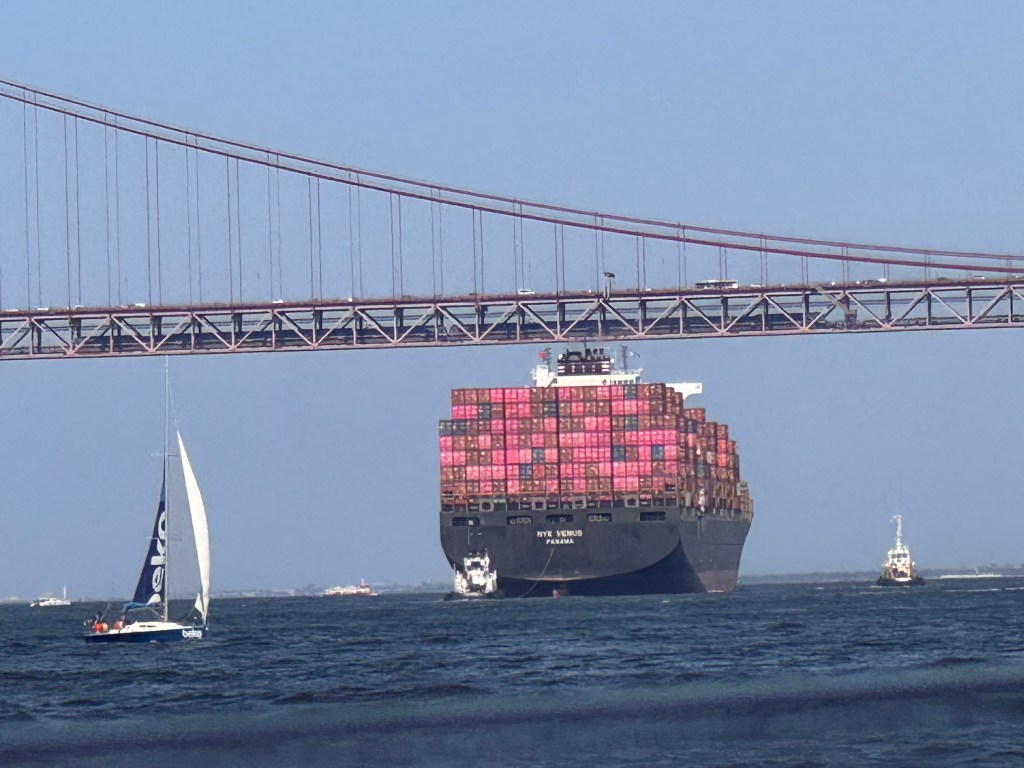
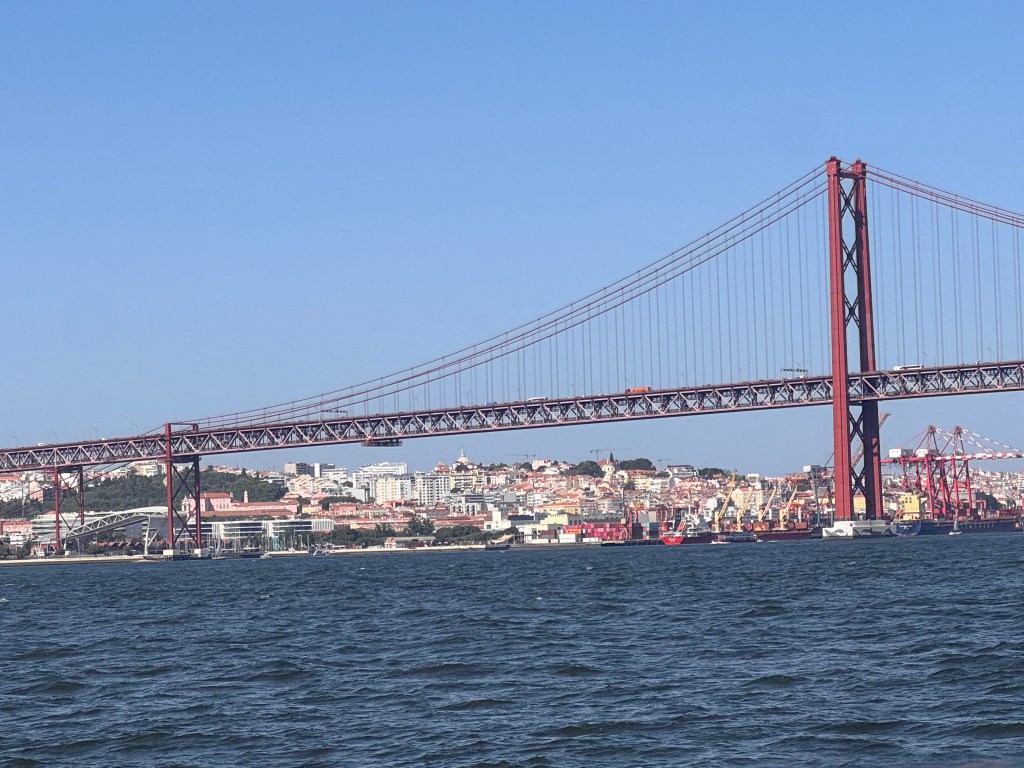
The 25 de Abril Bridge stretched across the Tagus, its bright red color often reminding visitors of San Francisco’s Golden Gate Bridge. Opened in 1966, it connects Lisbon with the southern side of the river and has become one of the city’s most recognizable landmarks.

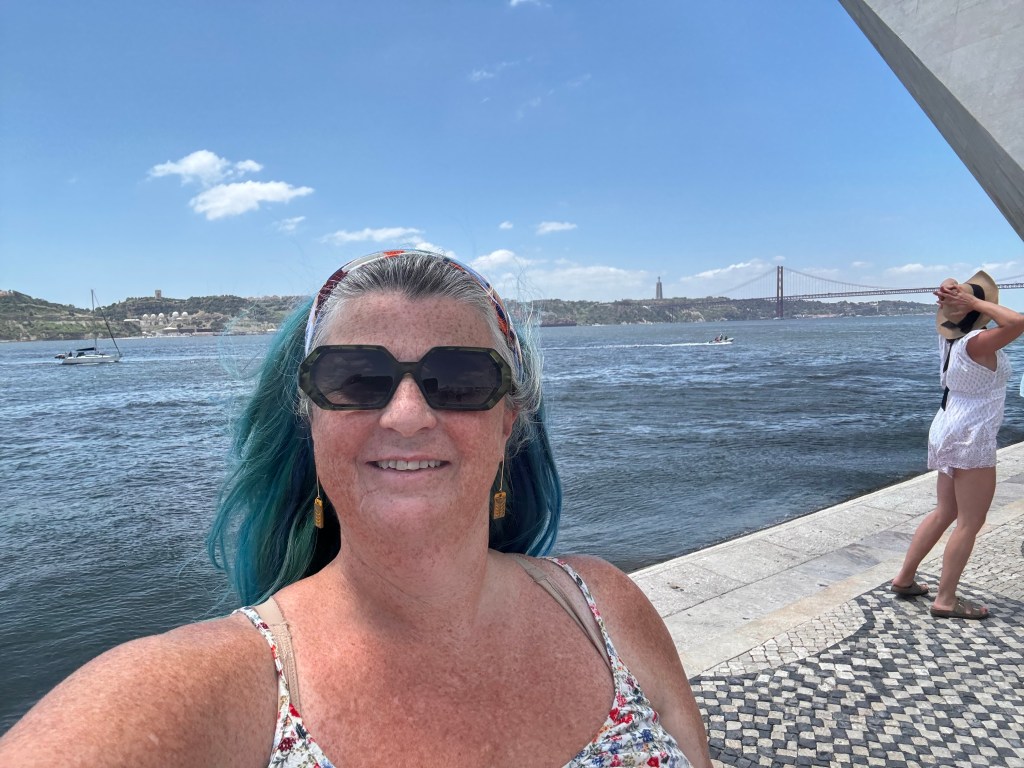
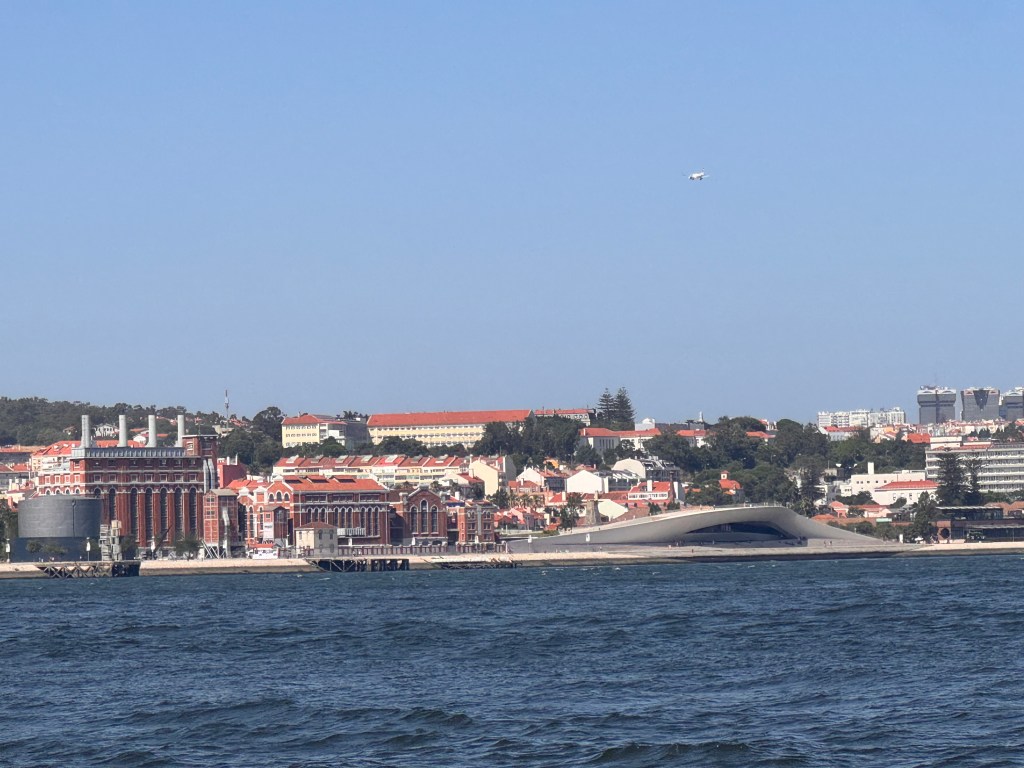
Next came the MAAT—the Museum of Art, Architecture and Technology. Its modern flowing design almost looks like a wave rising out of the riverbank, beautifully contrasting with Lisbon’s historic buildings.

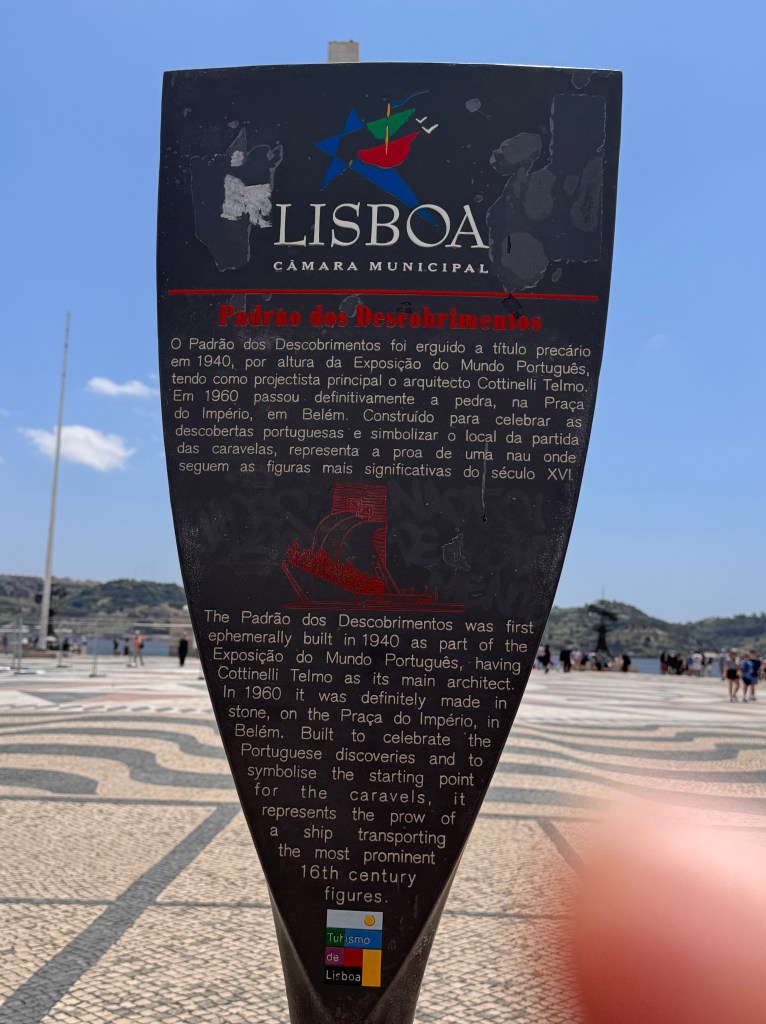
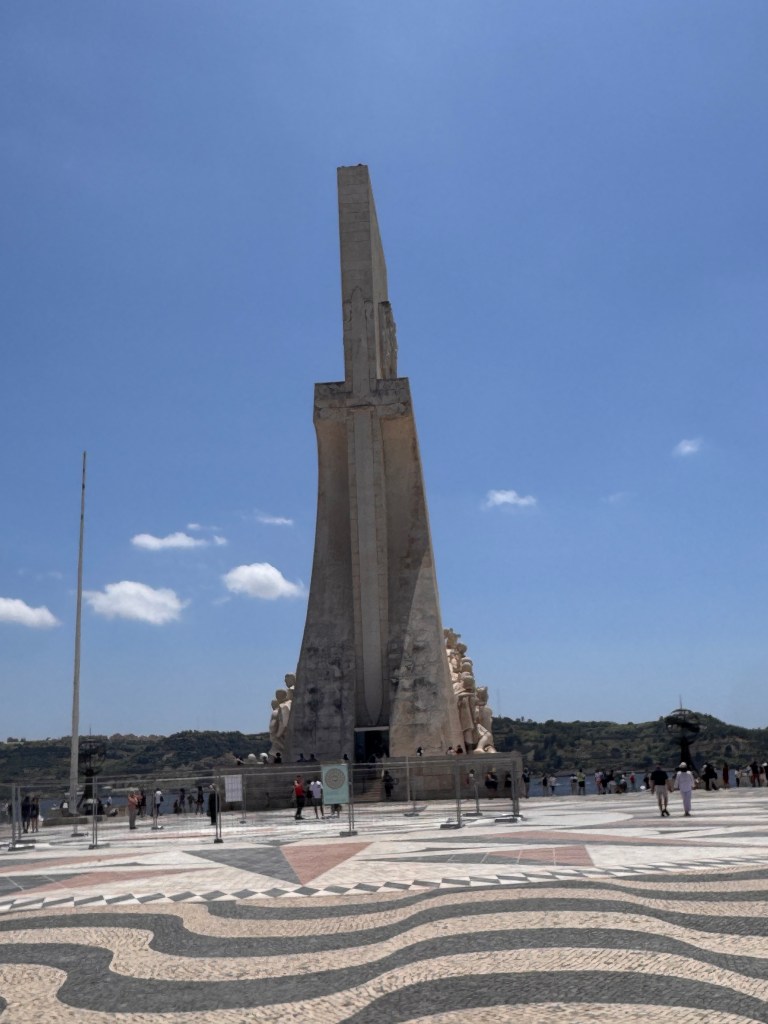
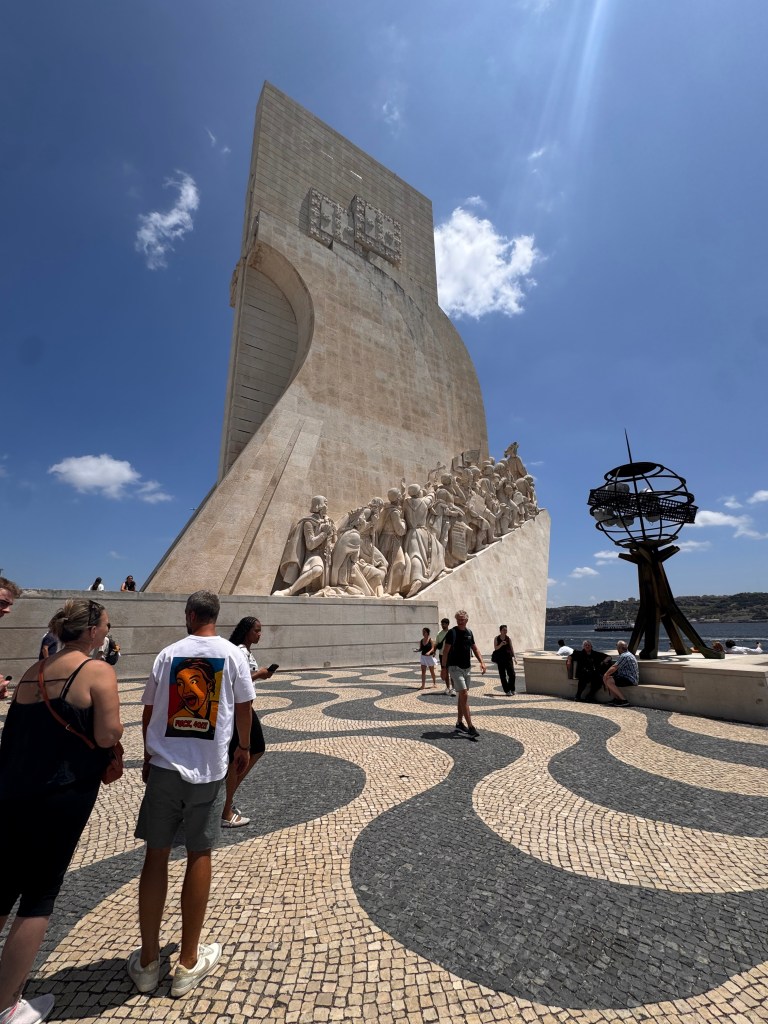
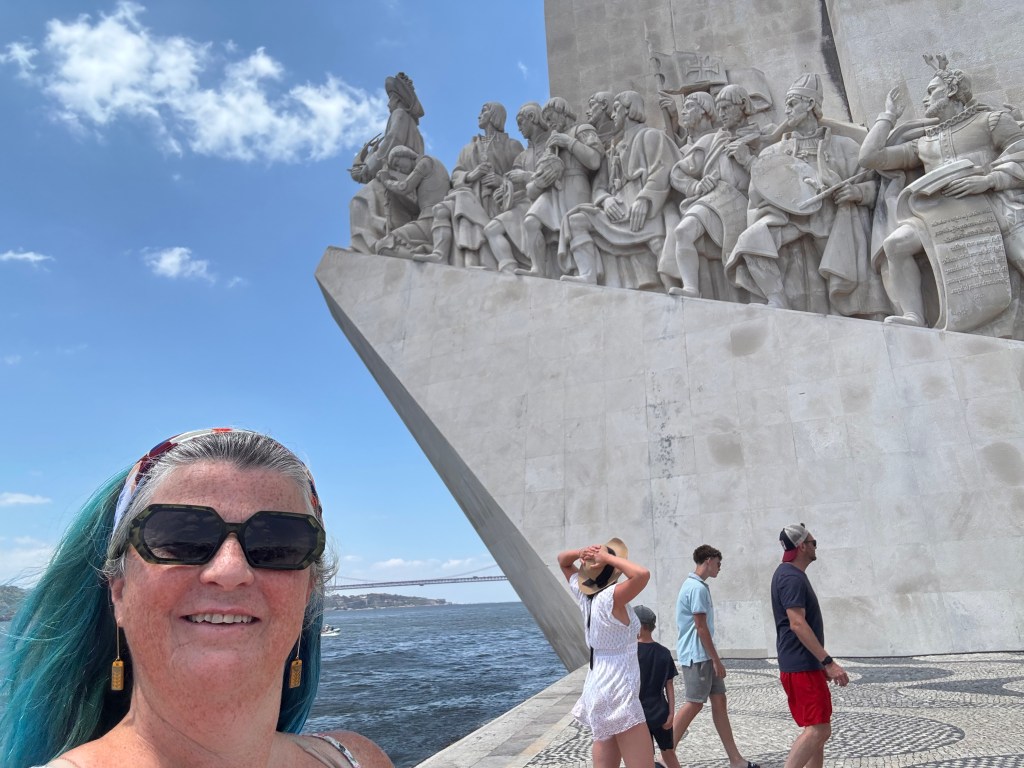
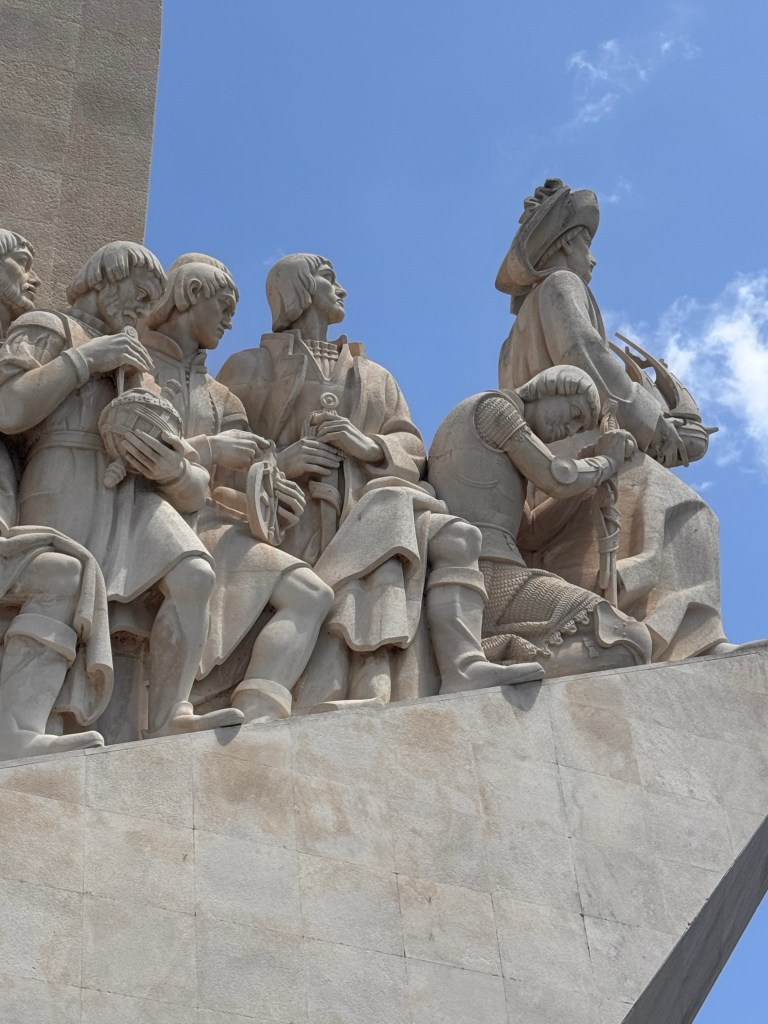
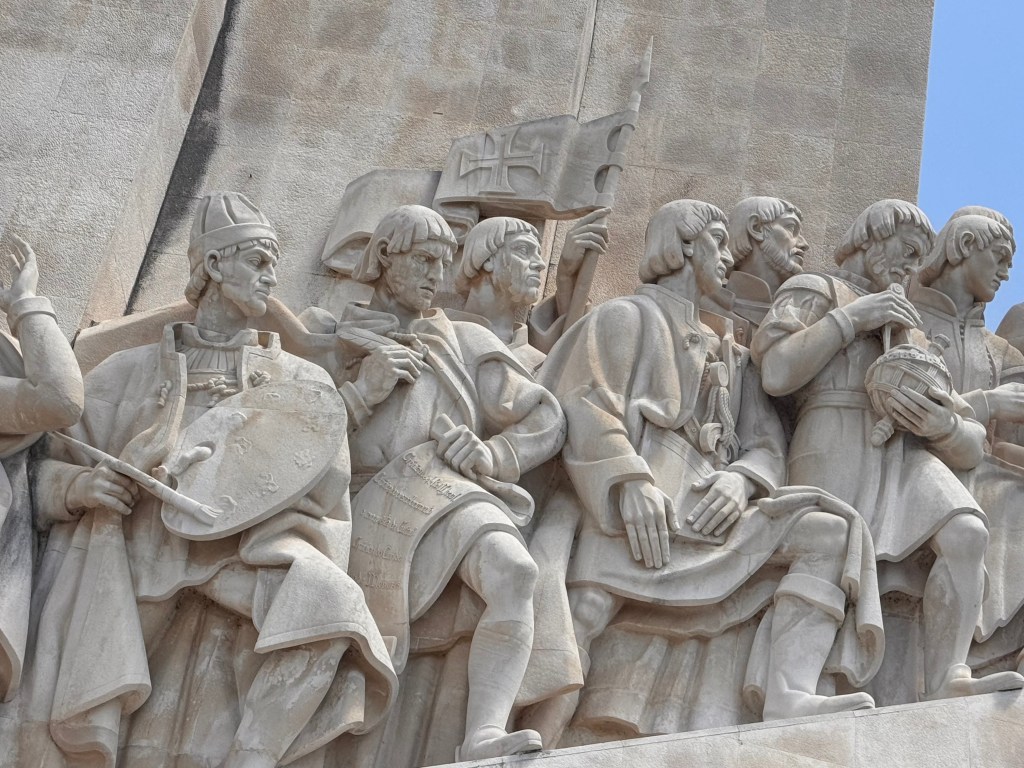
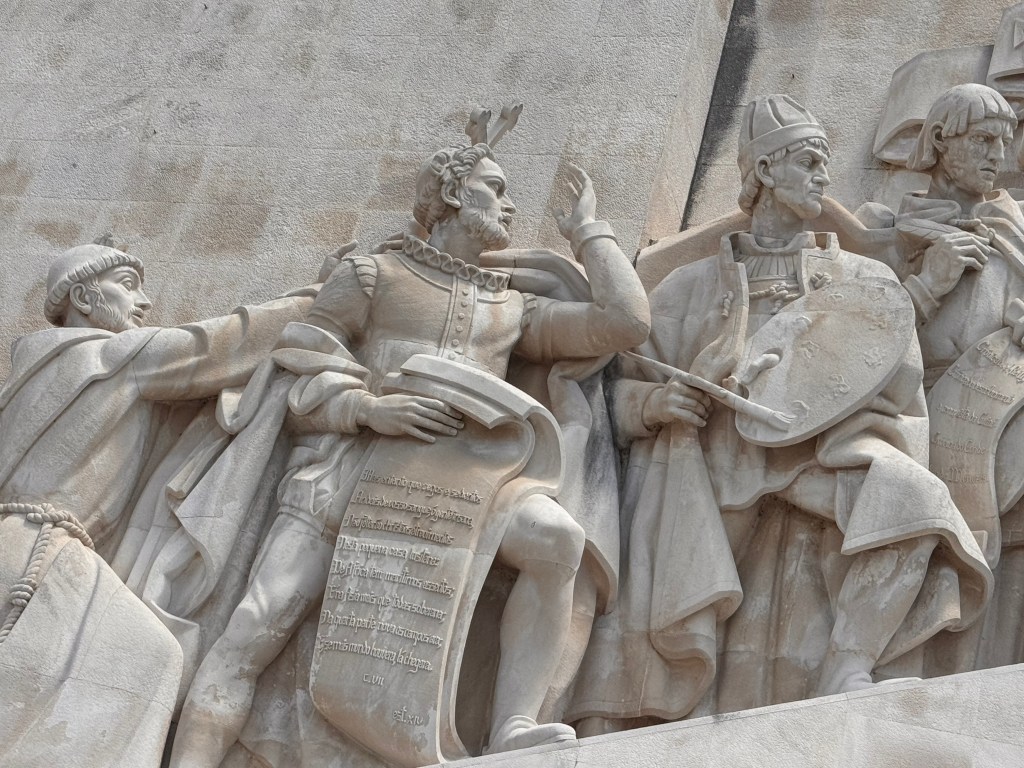
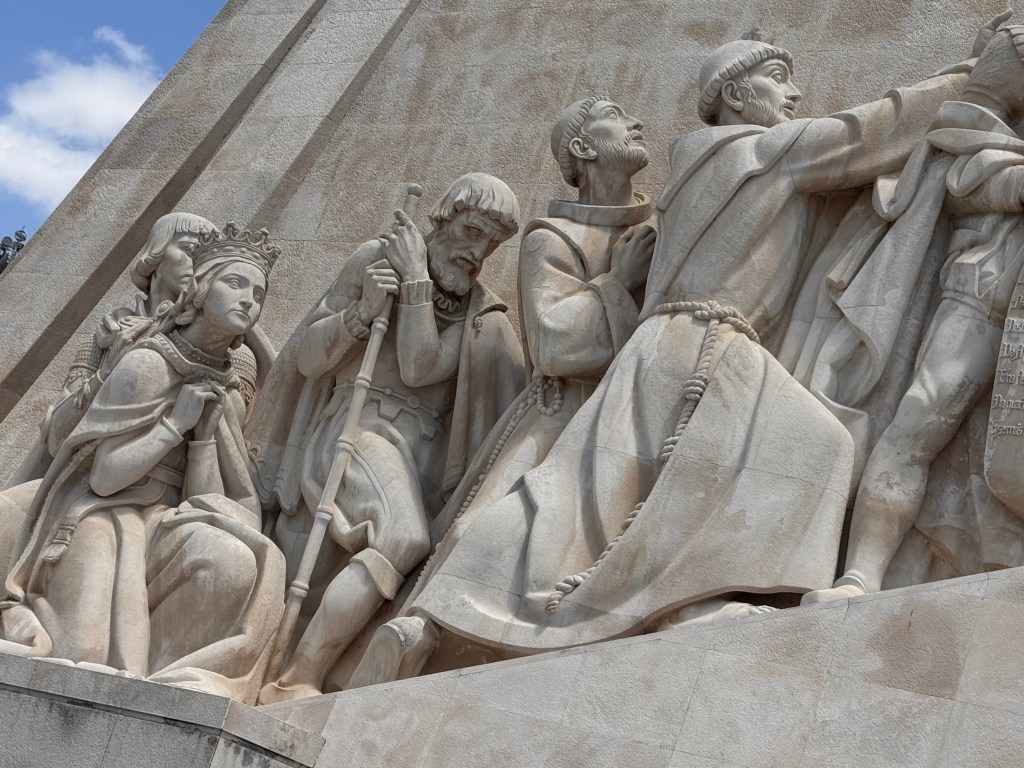
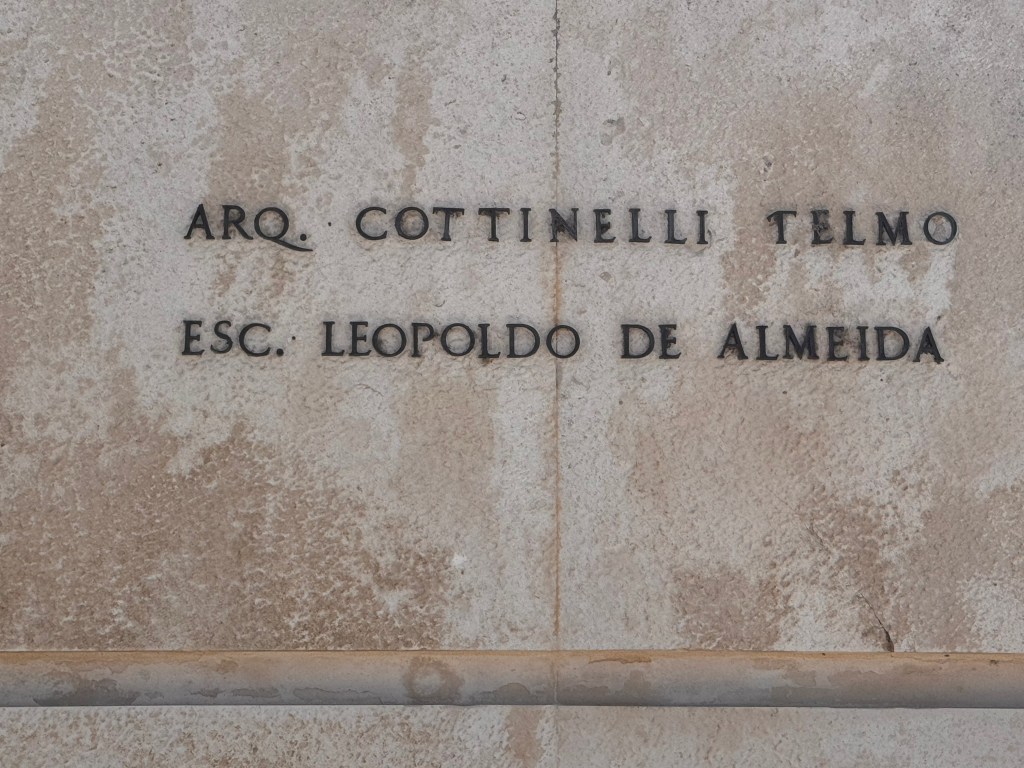
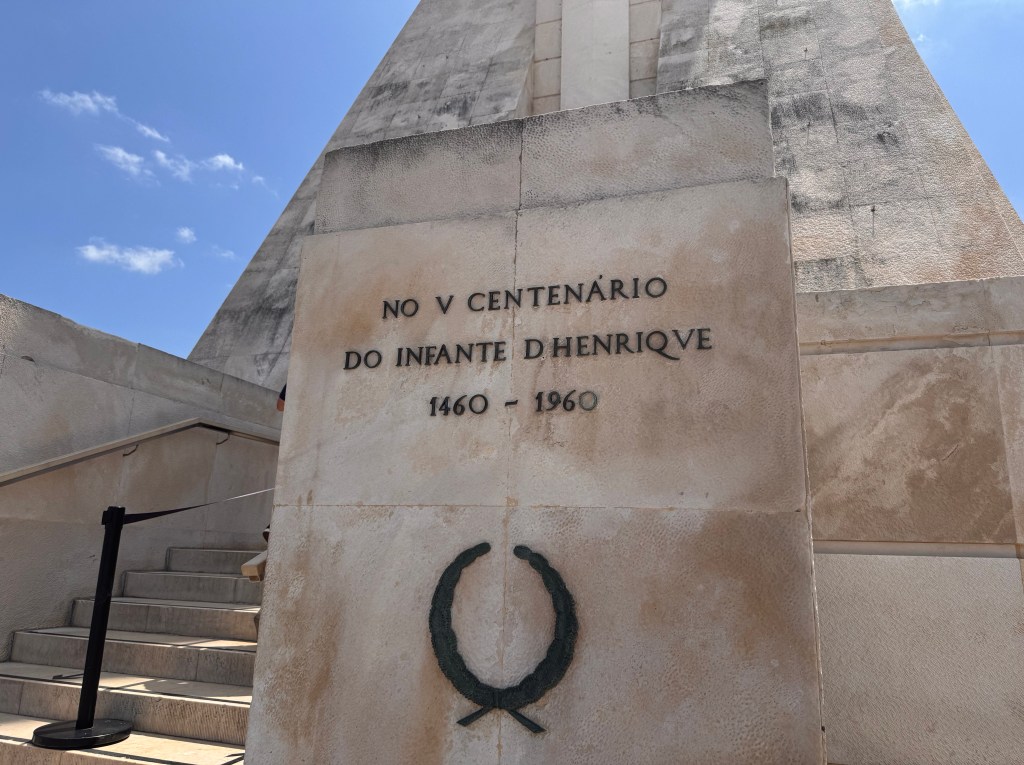
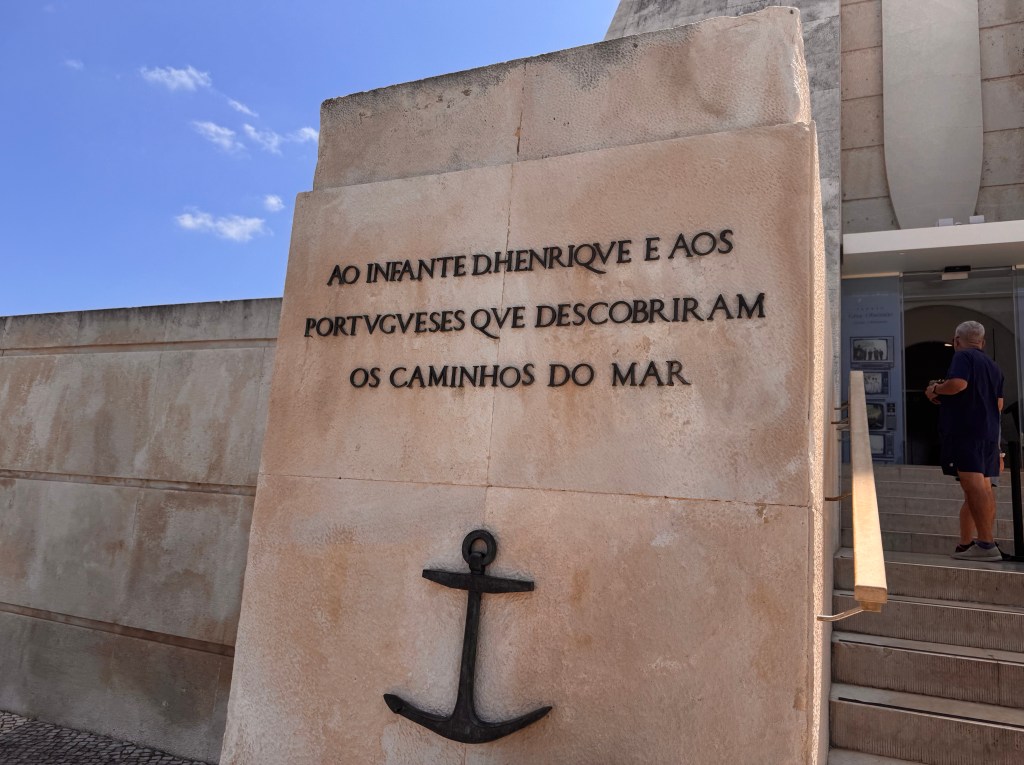
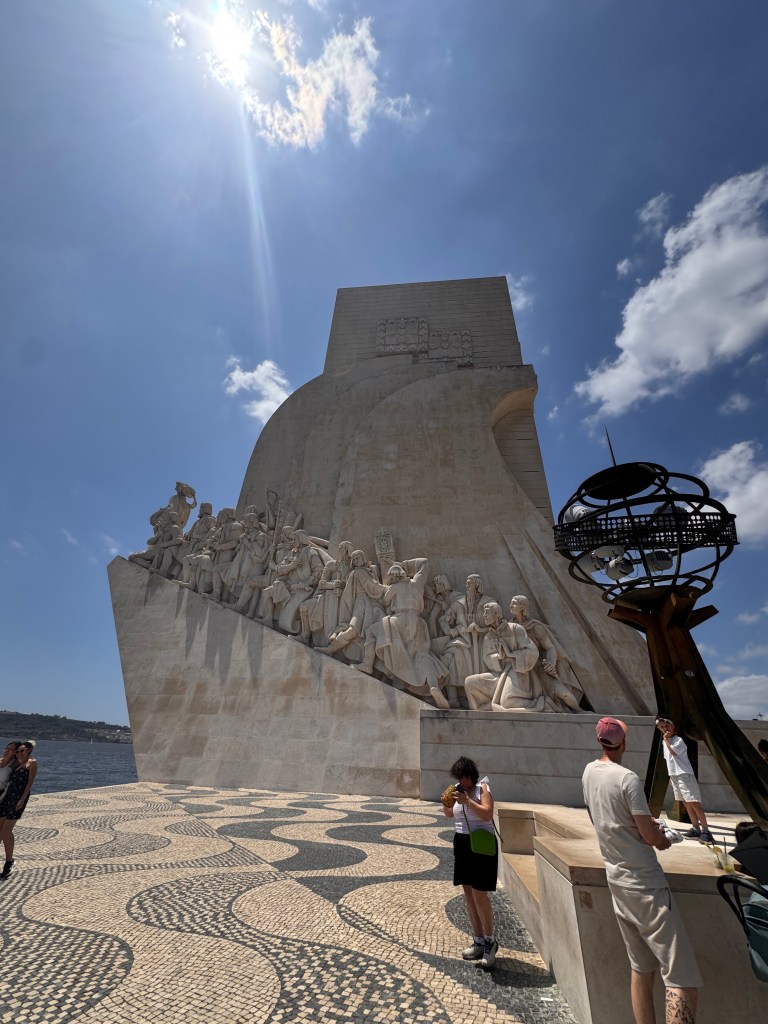
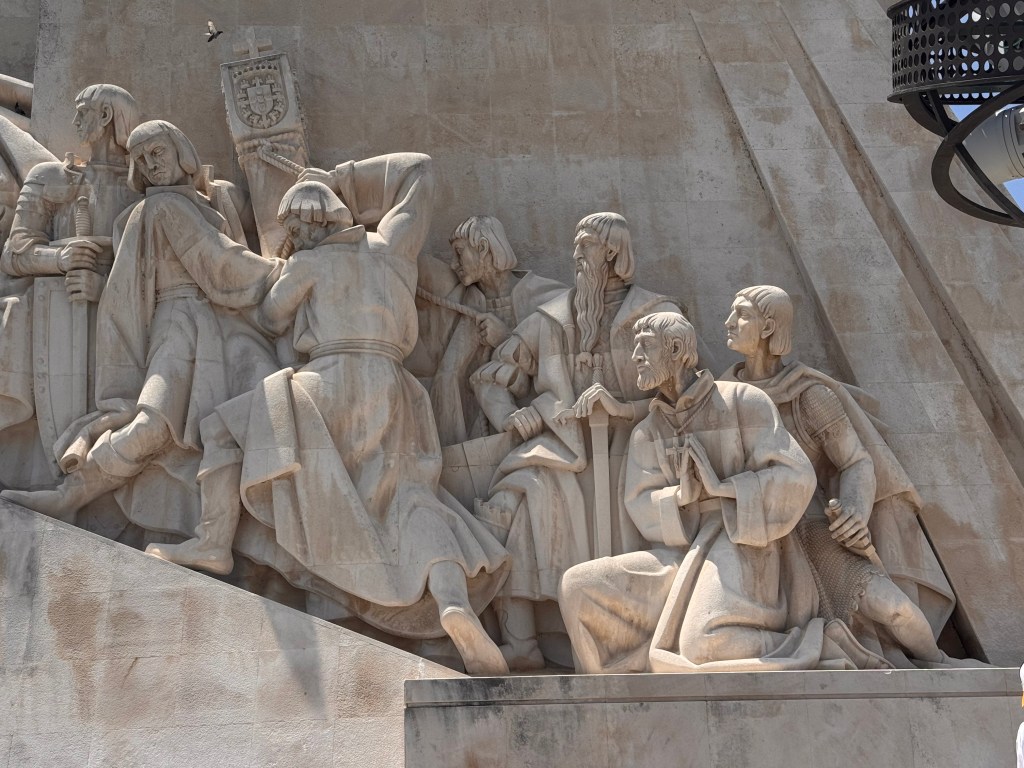
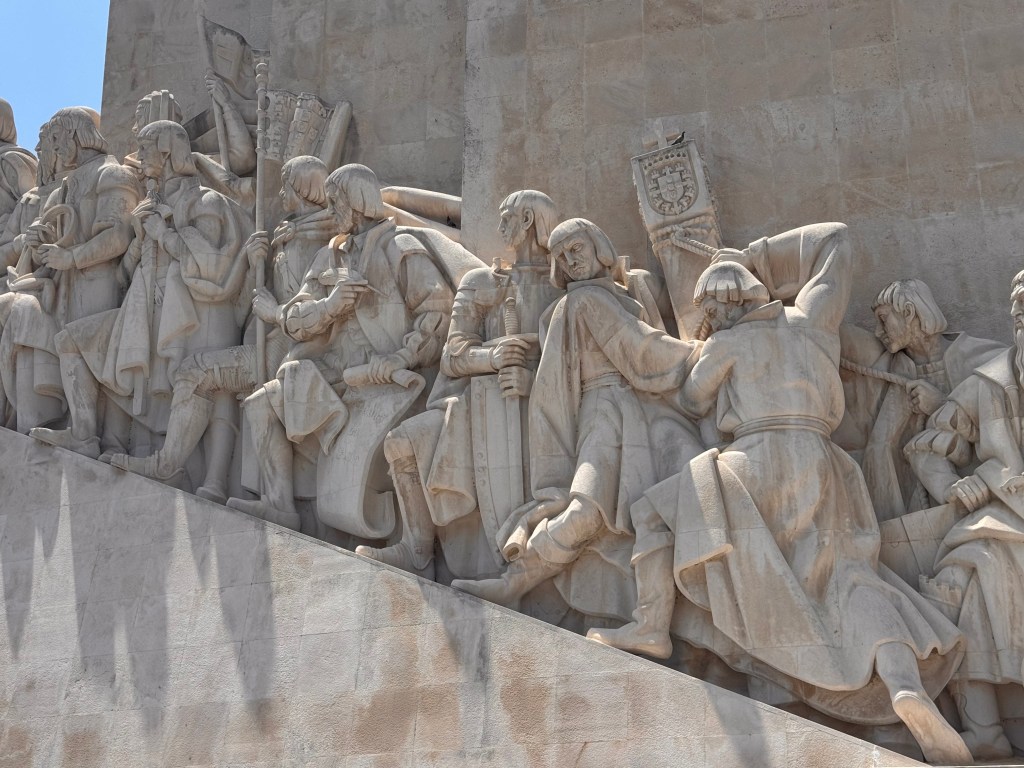
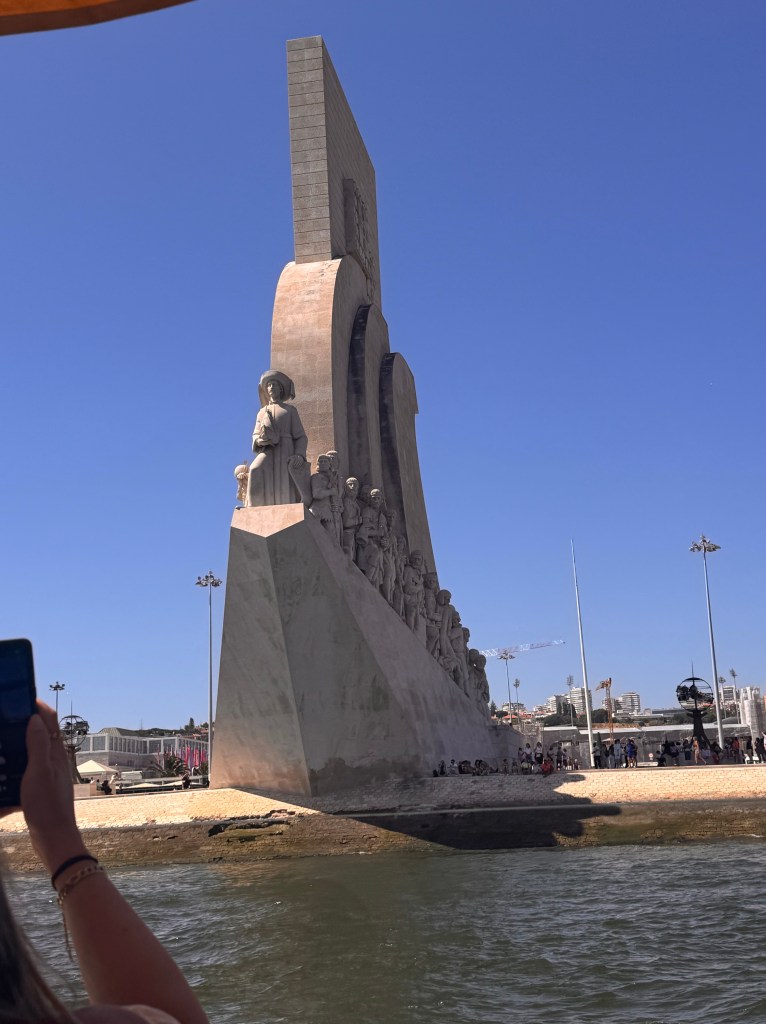
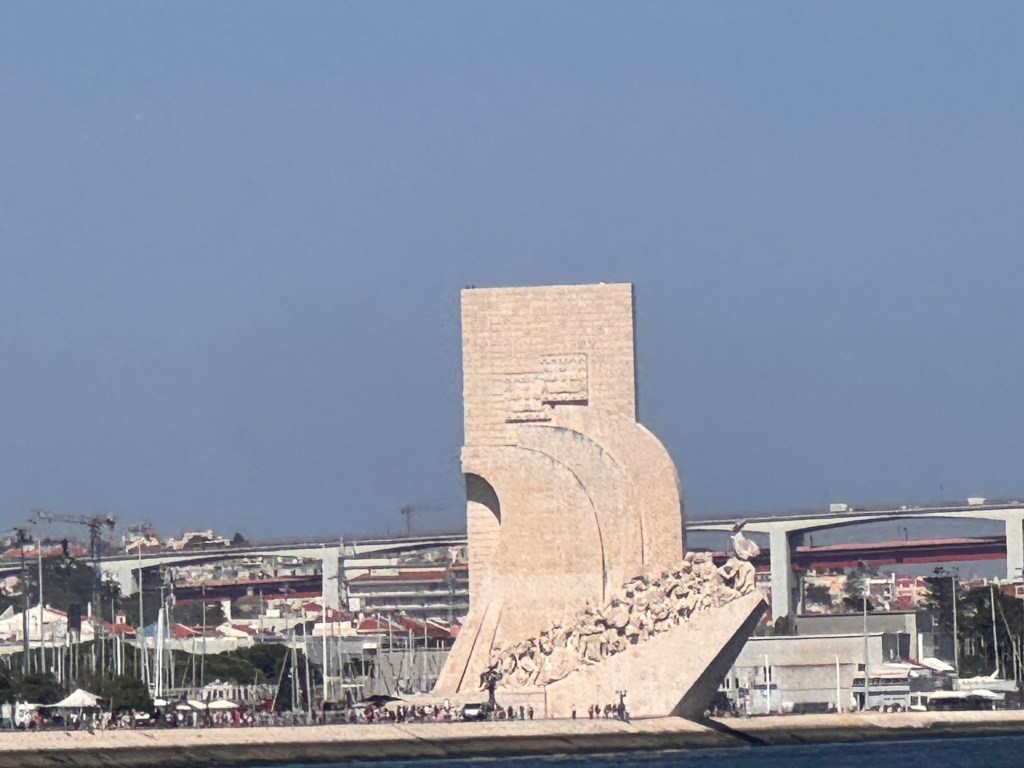
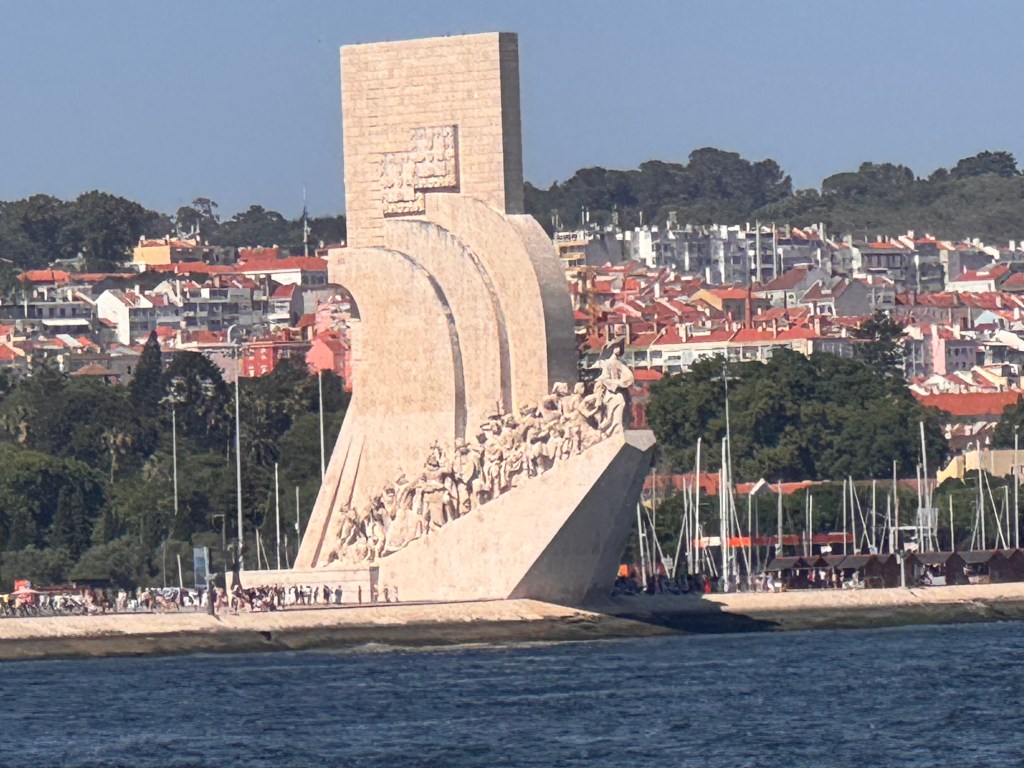
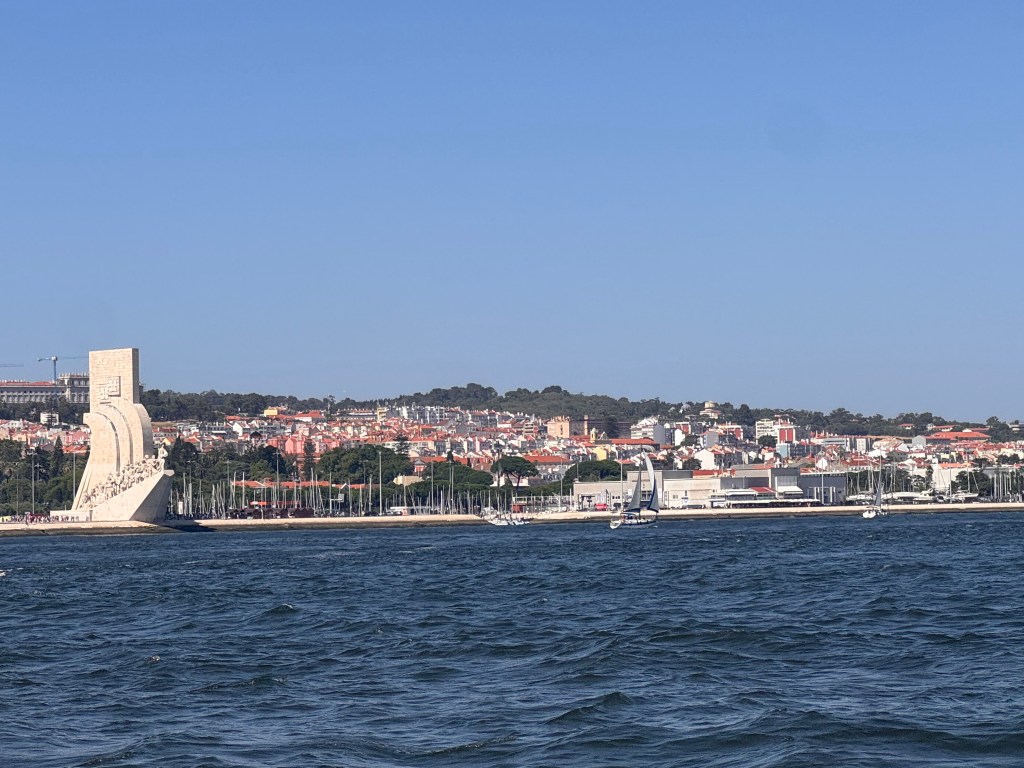
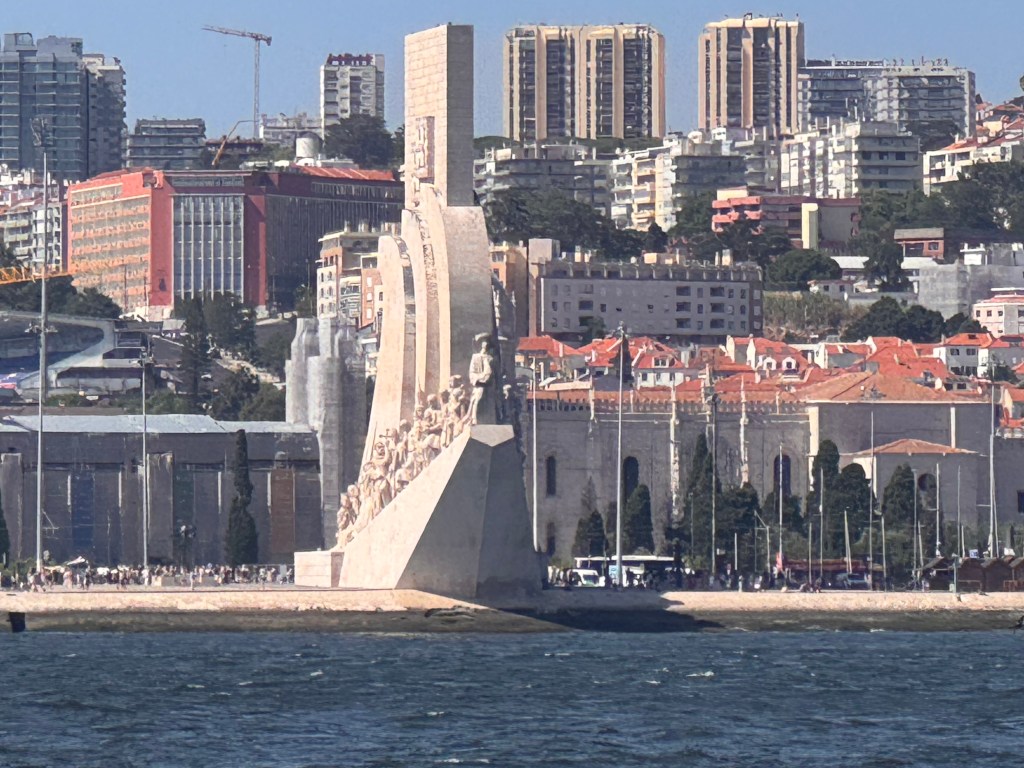
We cruised past the Padrão dos Descobrimentos, or Monument to the Discoveries, built to honor Portugal’s great Age of Exploration. Prince Henry the Navigator stands proudly at the front, followed by explorers, cartographers, missionaries, and other important figures who helped shape Portugal’s maritime history.

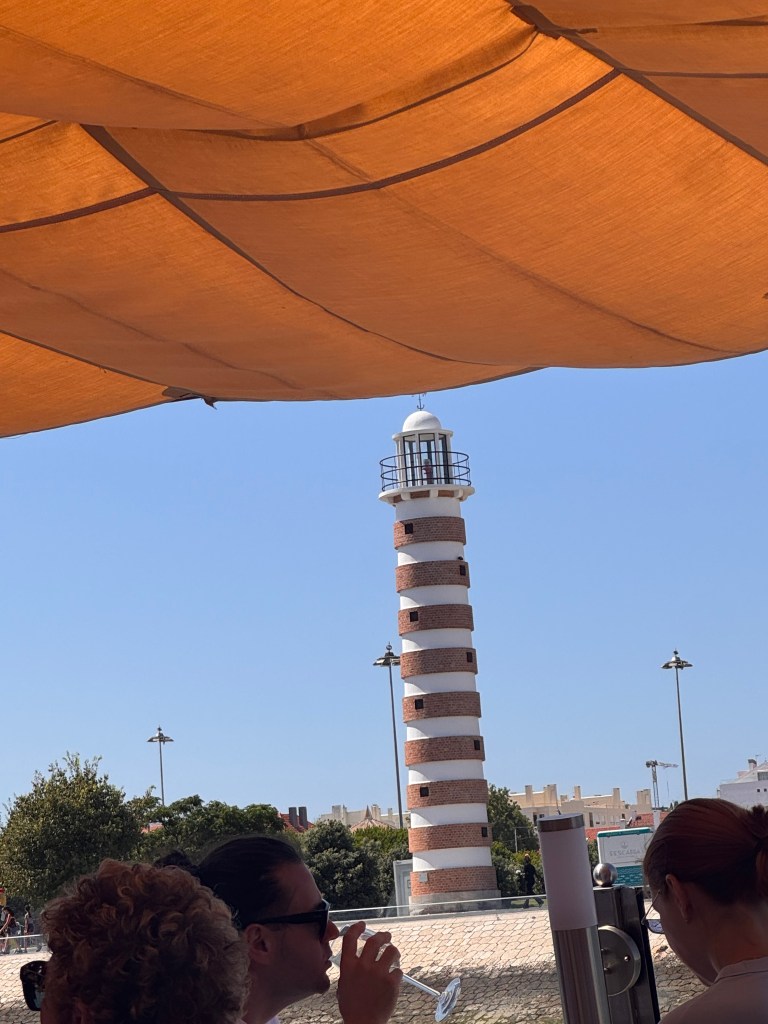
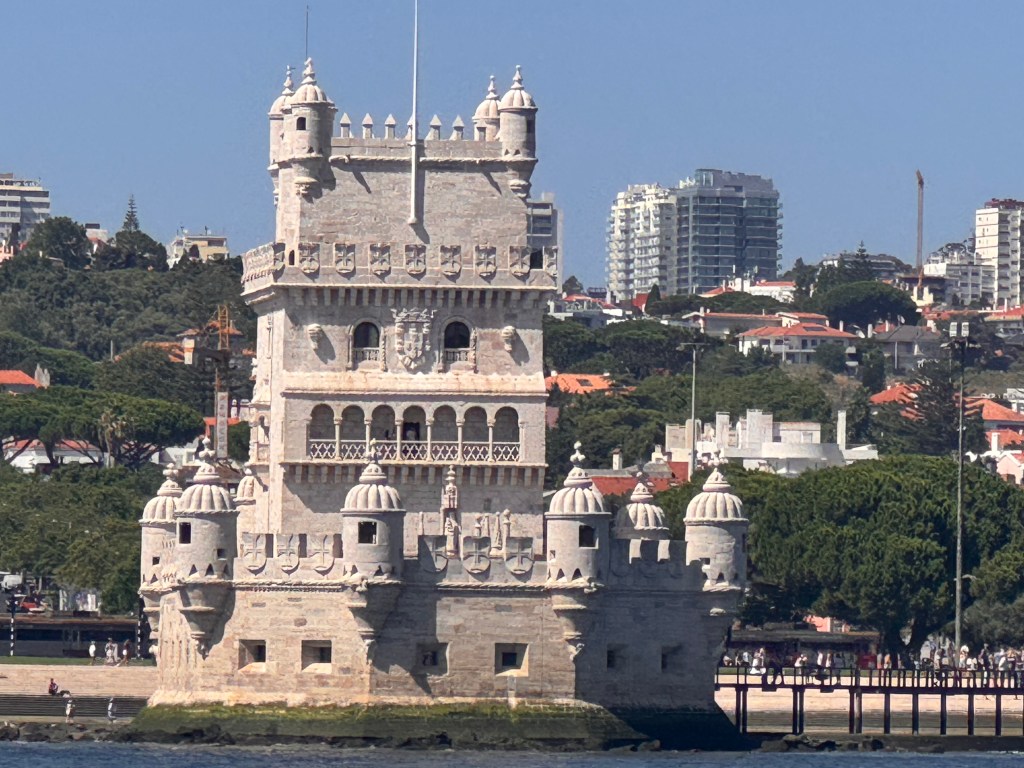
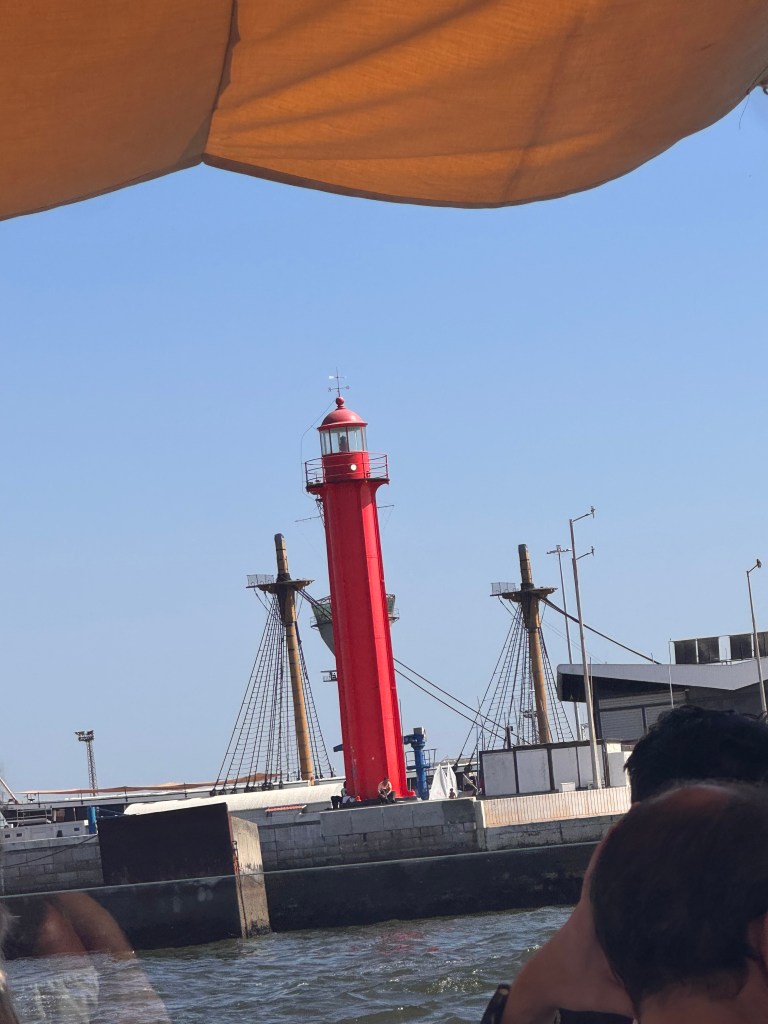
Nearby stood the elegant Belém Lighthouse, marking the entrance to one of Portugal’s most historic waterways.

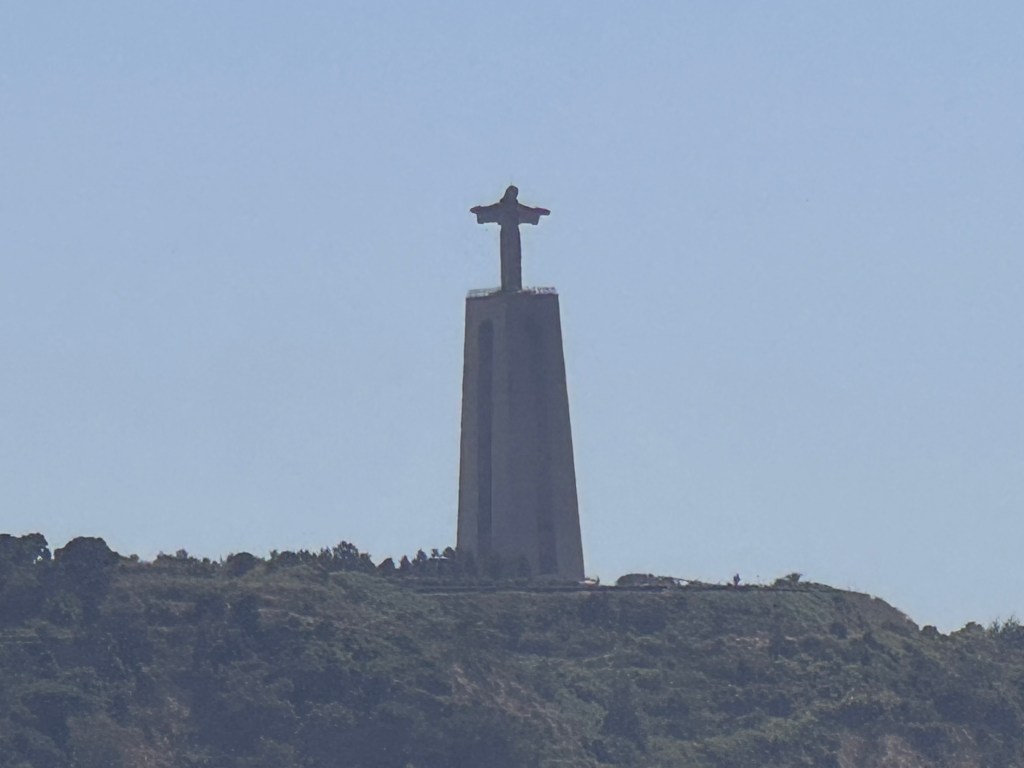
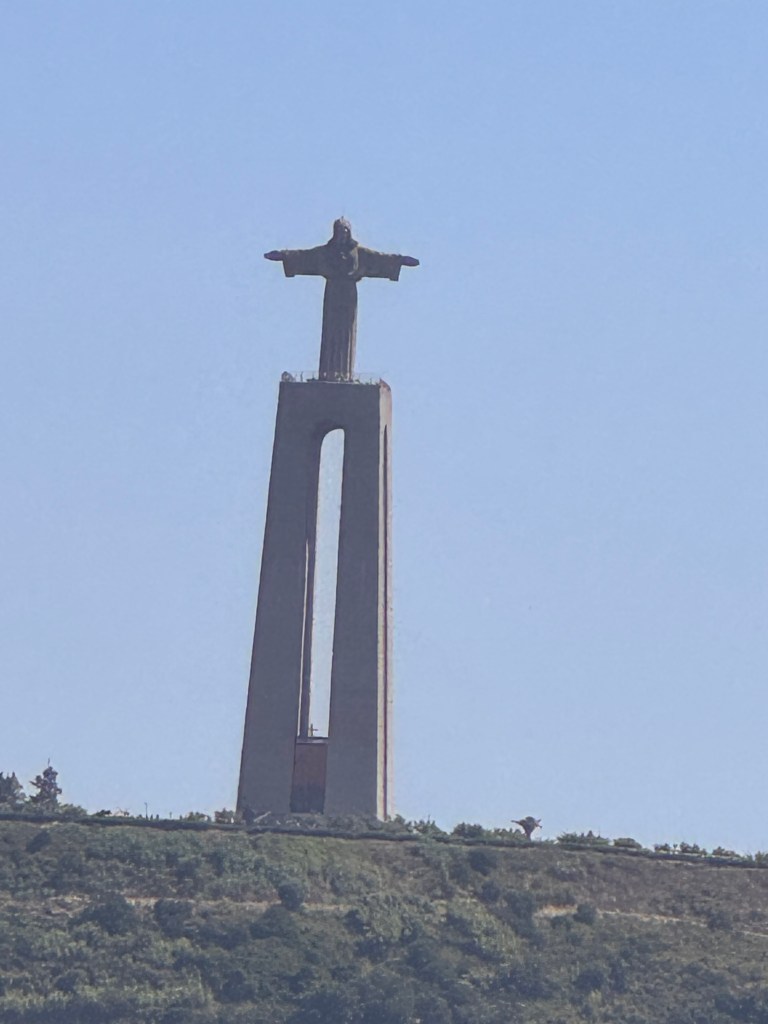
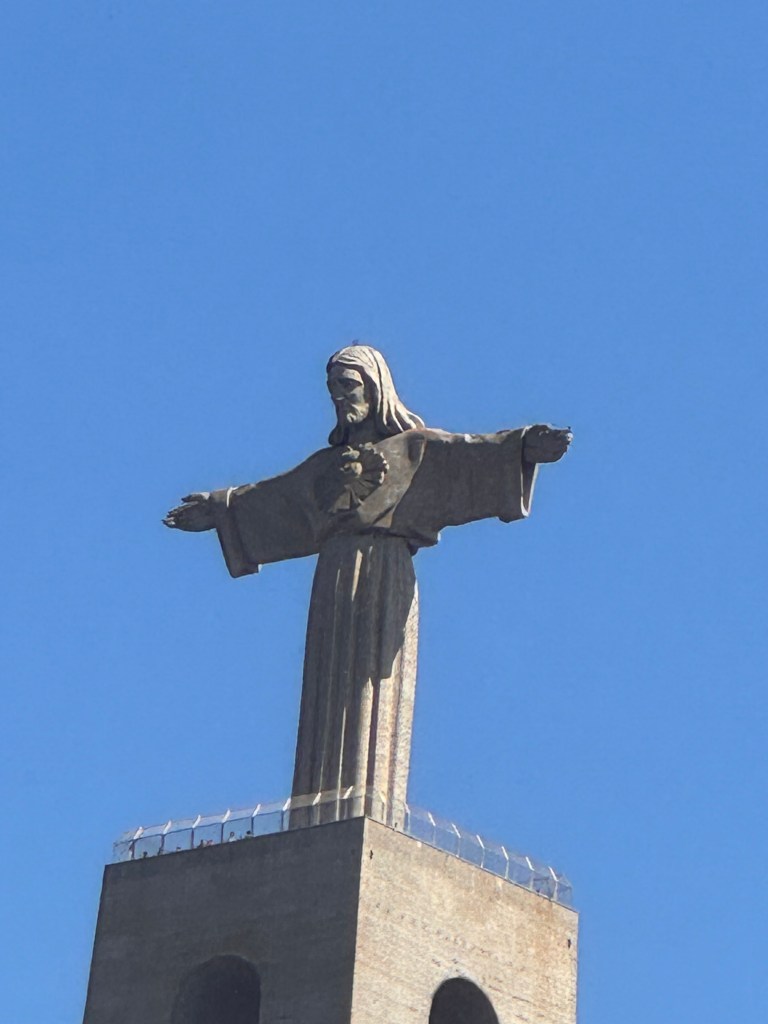
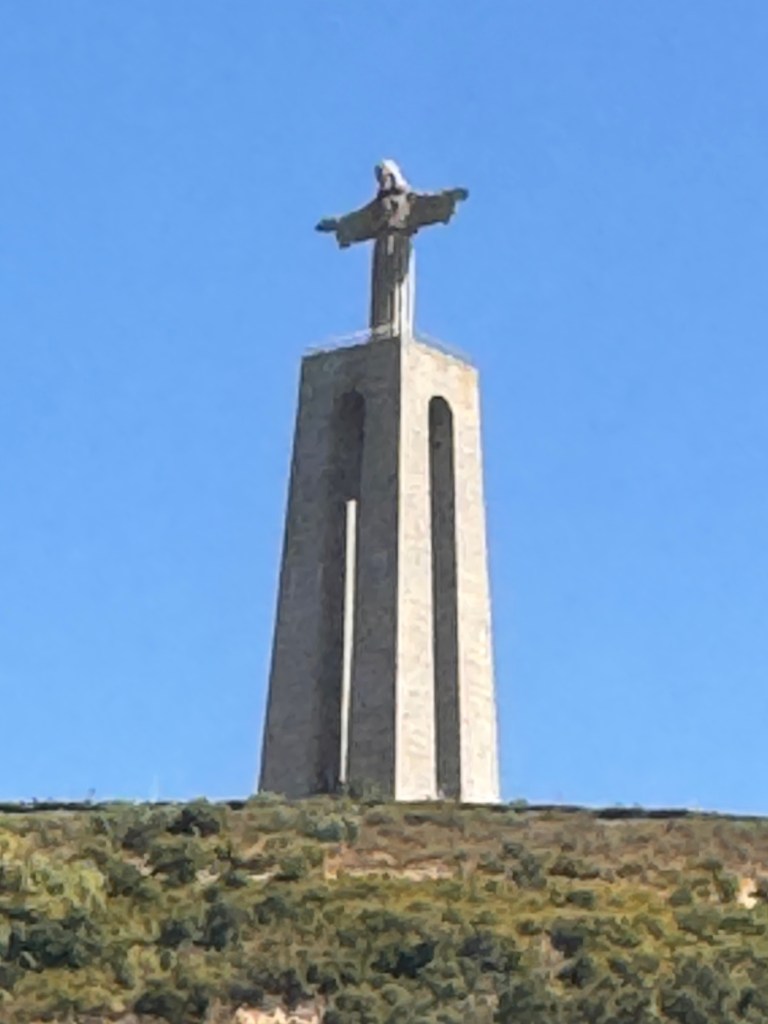
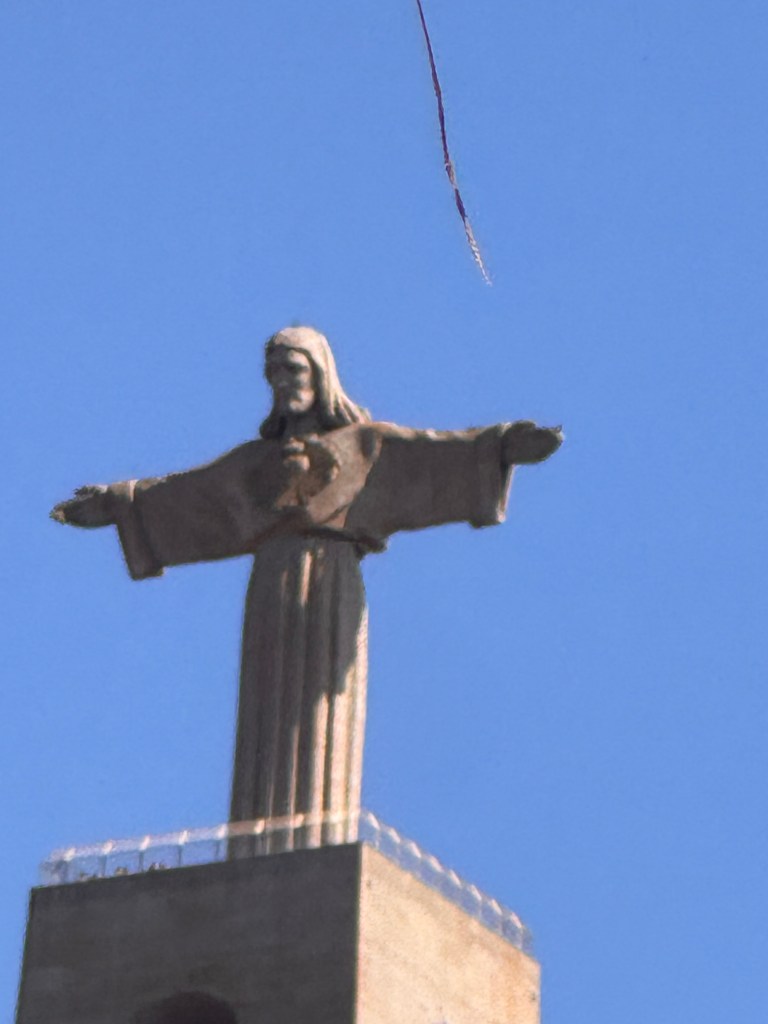
Across the river we could see the towering Sanctuary of Christ the King. Inspired by Rio de Janeiro’s famous Christ the Redeemer statue, the monument overlooks Lisbon with outstretched arms and has become a symbol of peace and hope since its completion in 1959.

One of the most fascinating sights wasn’t a monument at all.

We watched an enormous cargo ship loaded high with shipping containers slowly make its way into port while several tugboats carefully maneuvered it into position. Watching those tiny boats control something so massive was impressive.

After returning to shore, we wandered back along the waterfront boardwalk, browsing the local artisan booths. We found several beautiful photographs that we thought would look perfect hanging on a wall back home, a wonderful reminder of our time in Portugal.

Before heading back to the apartment, we made one more stop at the bakery just around the corner.

Their version of pain aux raisins was absolutely delicious, so naturally we bought more.

While we were there, we couldn’t leave without picking up Portugal’s most famous pastry—the pastel de nata. These little custard tarts date back over 300 years to the Jerónimos Monastery in Belém, where Catholic monks originally created them. Because the monks used large quantities of egg whites to starch their robes, they searched for ways to use up the leftover yolks. Their solution was a rich, creamy custard baked inside flaky pastry. The recipe eventually spread throughout Portugal and has become one of the country’s most beloved treats.

We also picked up a pizza for dinner before heading back to the apartment.

After another full day of wandering, exploring, cruising, eating, and discovering the charm of Lisbon, we were more than happy to relax in the wonderful air conditioning and call it a night.

Lisbon: One Forgotten Suitcase, One Missing Pillow, and Our Final Country

On to Lisbon!

We loaded up our mountain of luggage and were happily on our way to the Madrid airport when the phone rang.

We had left a suitcase behind.

And, of course, it wasn’t just any suitcase. It was Kiya’s.

Around we went in the taxi, back to the apartment, where we grabbed the forgotten suitcase, loaded it up, and started for the airport again. Our little detour put us about half an hour behind schedule.

Once we arrived at the airport and started unloading everything, we realized something else was missing.

Kiya’s brand-new pillow.

Seriously?

I quickly sent Angel a message to let him know we had left it behind. Once again, he proved what an amazing host he was. He was incredibly gracious and found a way to package the pillow up and mail it all the way back home for us.

Kiya doesn’t know it yet, but her new pillow will be waiting for her when we finally arrive home in Montana. After seven weeks of traveling, I think she is going to be very happy to walk into the house and discover that her pillow made its own journey home from Madrid!

Gabe stayed with us at the airport until it was time for us to head toward our boarding area. Then came the hard part—saying goodbye. He went off to find his own gate and wait for his flight back to the United States, while Mom, Kiya, and I hurried to find our gate for Lisbon.

We had already missed our priority boarding.

Earlier, we had specifically asked the young man at the check-in counter whether we needed to put any special tags on Kiya’s medical suitcases or her transport chair. He told us we were fine.

Apparently, we were not fine.

When we arrived at the gate, there was quite the hubbub over Kiya’s transport chair. No one seemed to know what to do because it hadn’t been marked that she needed the chair taken all the way to the plane.

So there we stood off to the side while practically the entire plane boarded without us.

Finally, an assistance supervisor arrived and escorted us down to the plane.

By this point, Kiya was sound asleep.

I picked her up and carried her down the aisle, trying not to whack anyone with Kiya, my purse, or my backpack as I maneuvered past all the already-seated passengers.

The crew decided her transport chair wouldn’t fit in the cabin and would need to be checked. We hefted her medical suitcases into the overhead bins, settled Kiya into her seat, and finally sat down ourselves.

We departed Madrid at 10:25 a.m.

We arrived in Lisbon at 10:41 a.m.

Now that’s a fast flight!

Of course, there is a one-hour time difference between Madrid and Lisbon, but seeing those times still made us laugh.

The flight itself was wonderfully uneventful, which was exactly what we needed.

We had arranged for a transfer to pick us up when we arrived in Lisbon—or at least we thought we had.

Before arriving, our apartment management company had contacted me about paying the required tourist tax. I had already made the payment through PayPal. Apparently, however, €2.56 had been deducted somewhere in the transaction, leaving our payment short.

Because of €2.56, they wouldn’t finish processing our apartment check-in.

They also hadn’t arranged our transfer.

So there I was at the Lisbon airport, on the phone with management for nearly 30 minutes, trying to figure out how a €2.56 shortage was keeping us from both our apartment and our ride.

At one point, it sounded as though they weren’t even going to allow us to stay because the tourist tax hadn’t been paid in full before our arrival.

I sent screenshots showing the payment I had already made, explained the situation over and over, and eventually paid the remaining €2.56.

Finally, everything was approved.

They arranged transportation to their management office, where we could store our luggage until the apartment was ready.

We quickly discovered something about Lisbon.

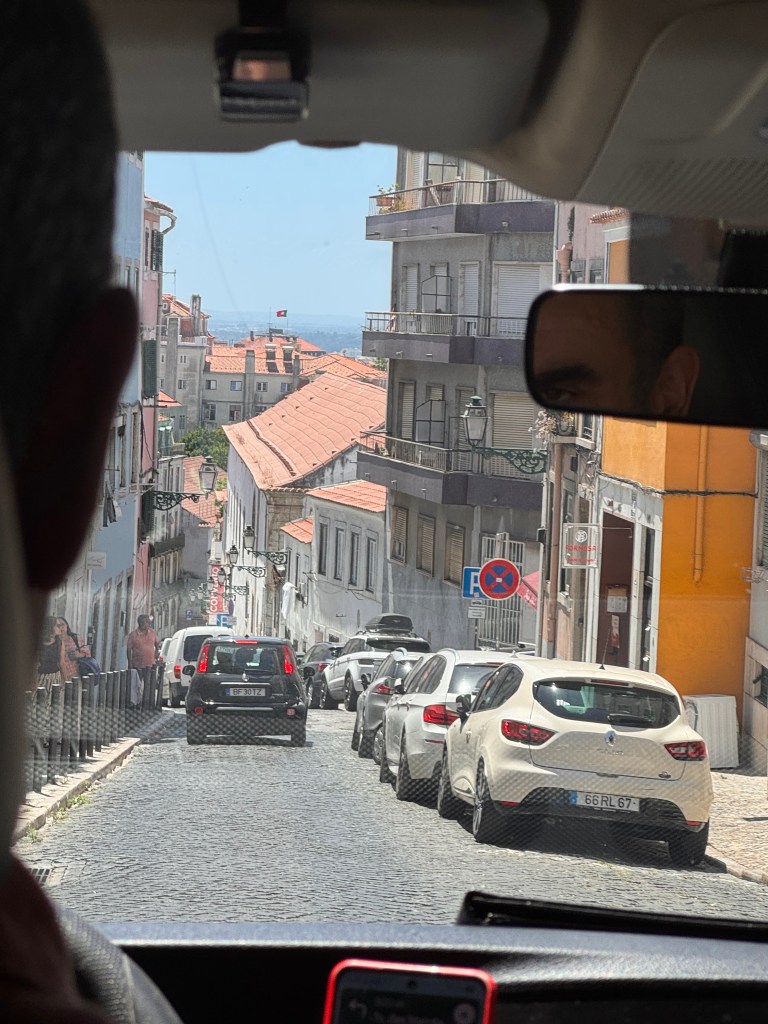
It has hills.

Lots and lots of hills.

And naturally, the management office was up one of them.

Once we dropped off our luggage, we decided the best thing to do was find somewhere to sit, eat, and regroup.

We found a cute brunch restaurant and ordered a meal that included an açaí bowl, mini caramel pancakes, and a ham-and-cheese sandwich.

Everything was delicious.

There was only one problem.

Both the açaí bowl and caramel pancakes came covered in coconut.

I do not like coconut.

Apparently, our waitress noticed me carefully picking every little piece of coconut off my food. Without me even asking, she brought over a little fruit pancake without coconut—on the house.

It was such a small act of kindness, but after the morning we’d had, it meant a lot.

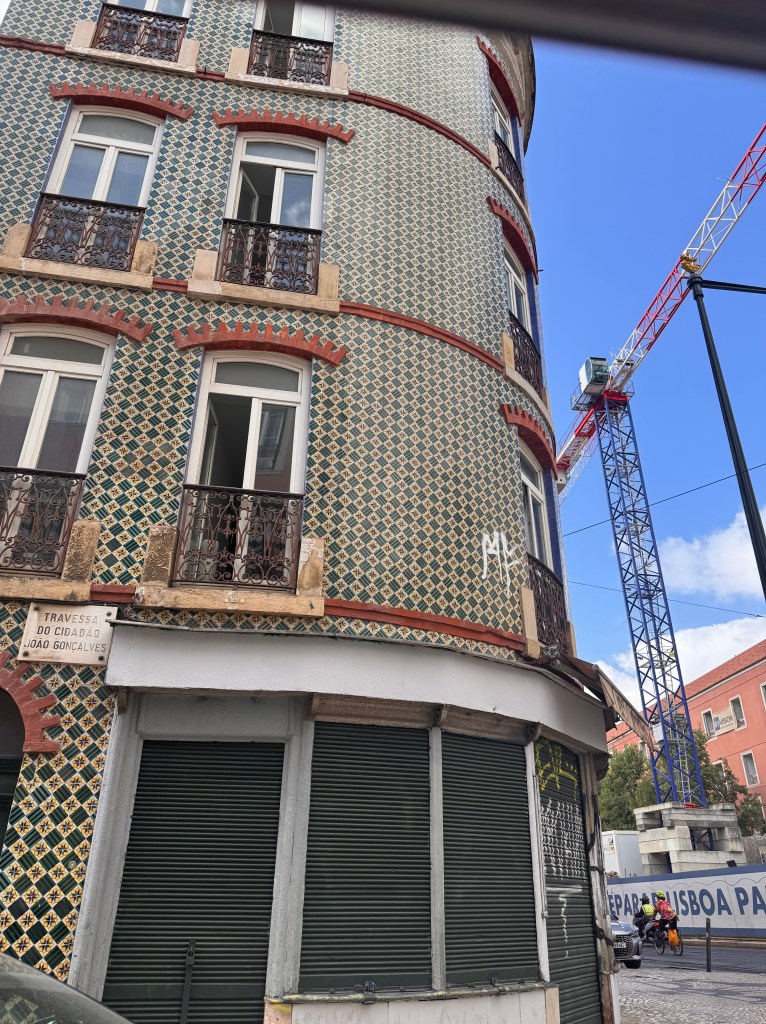
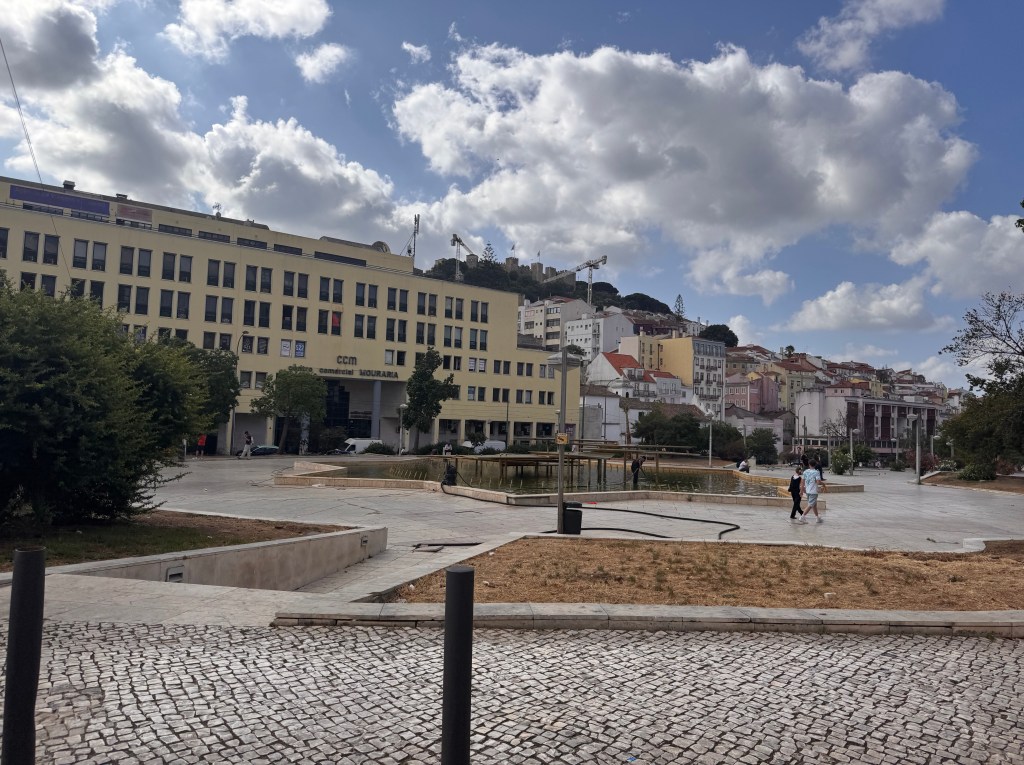
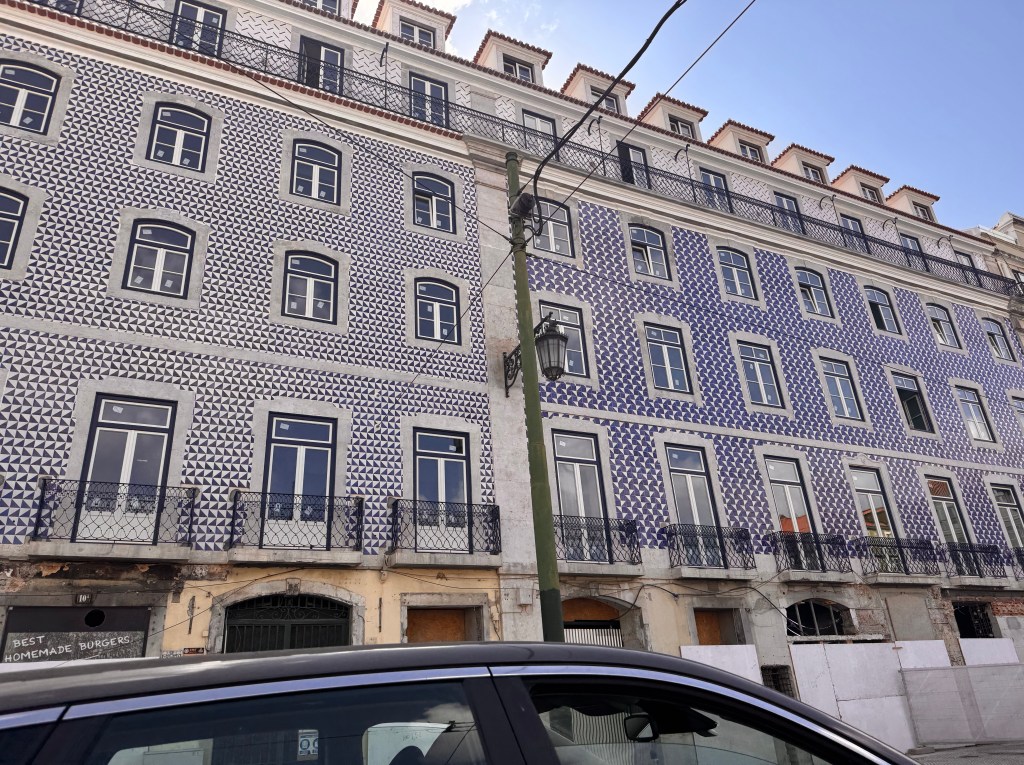
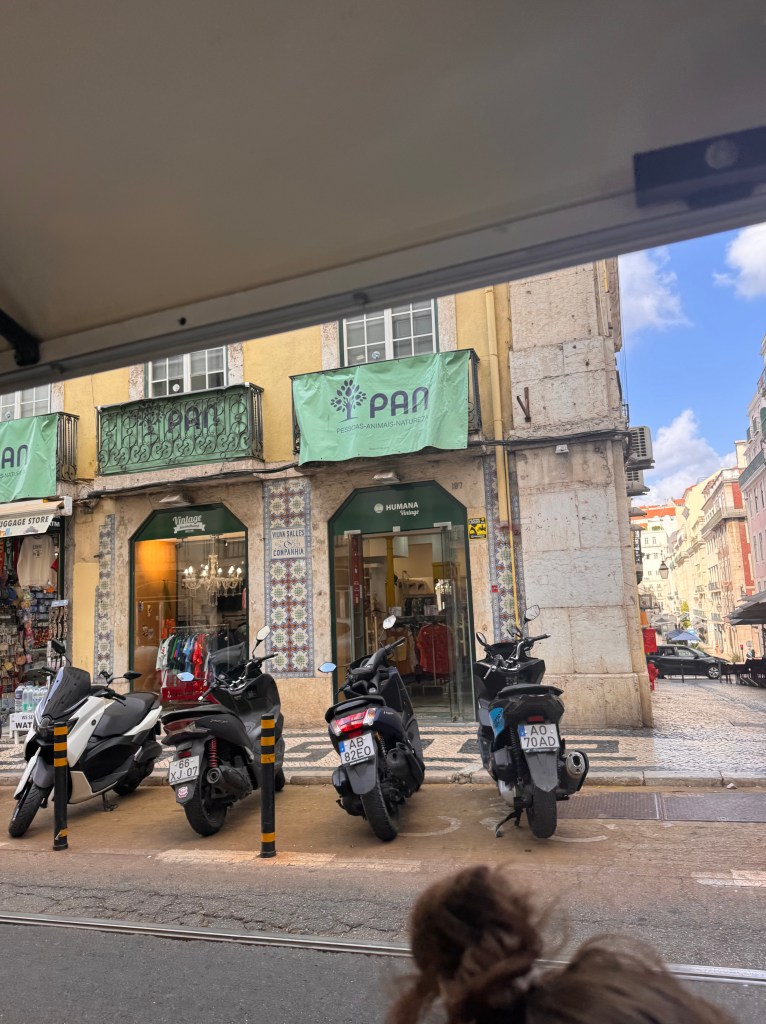
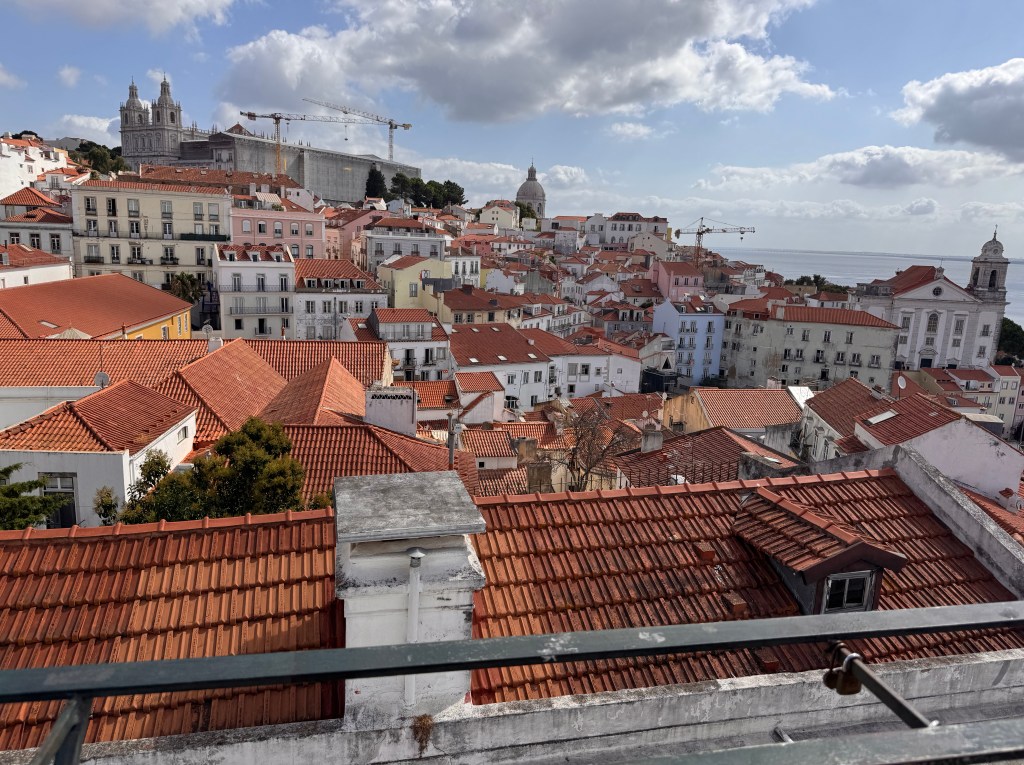
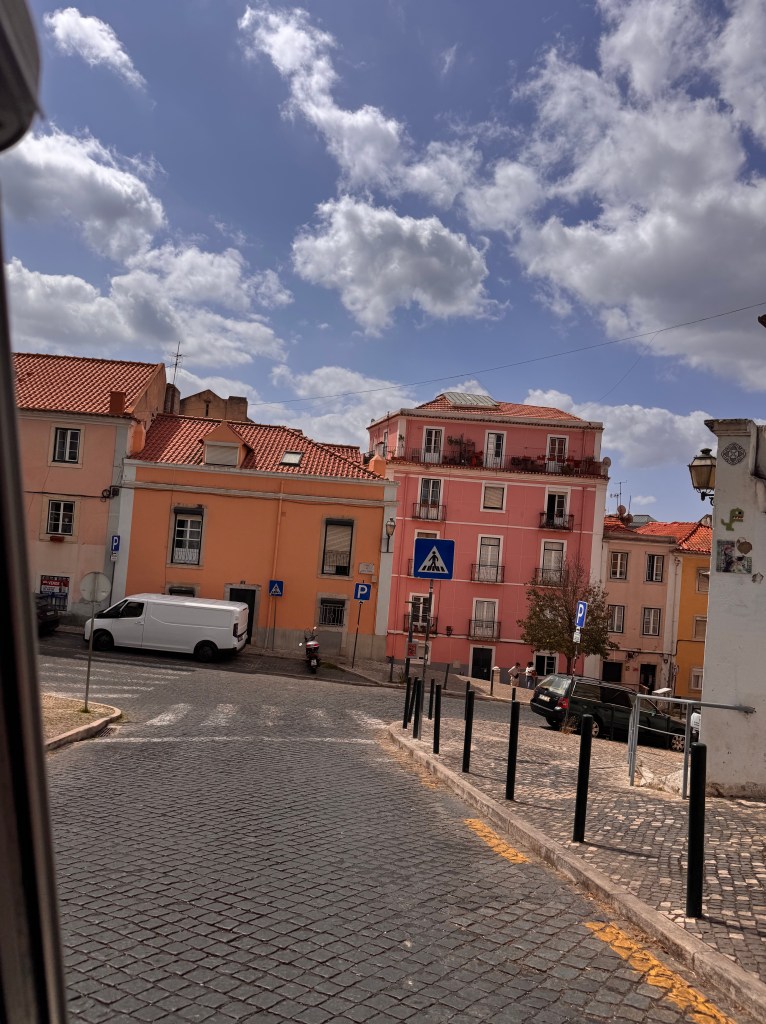
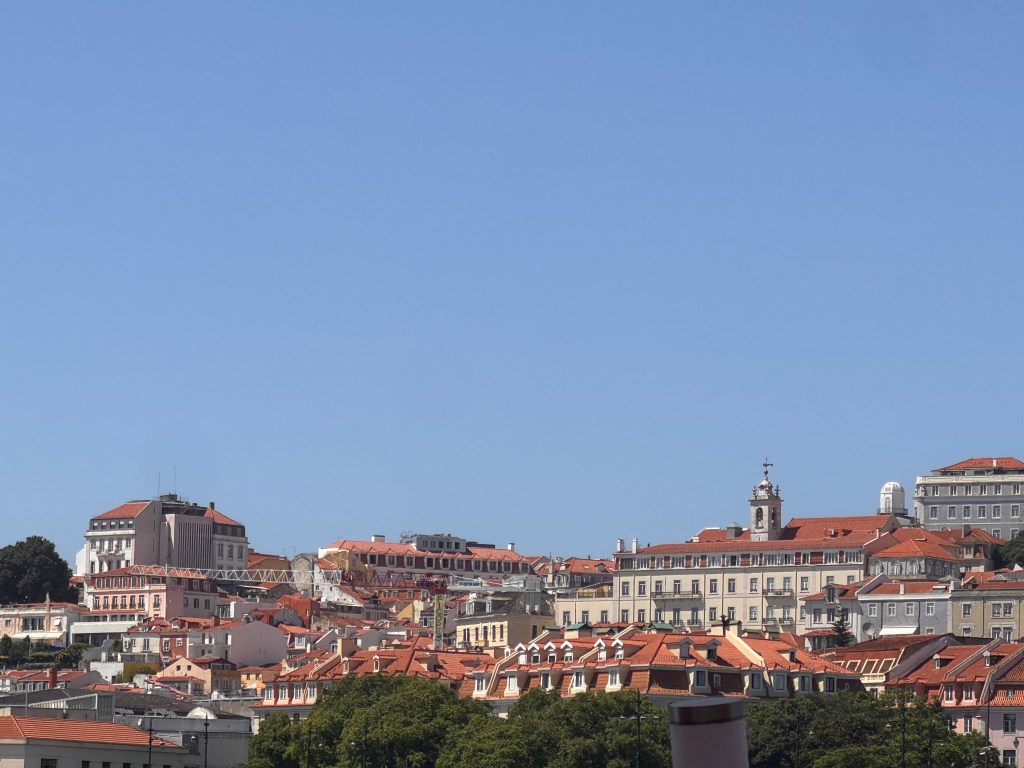
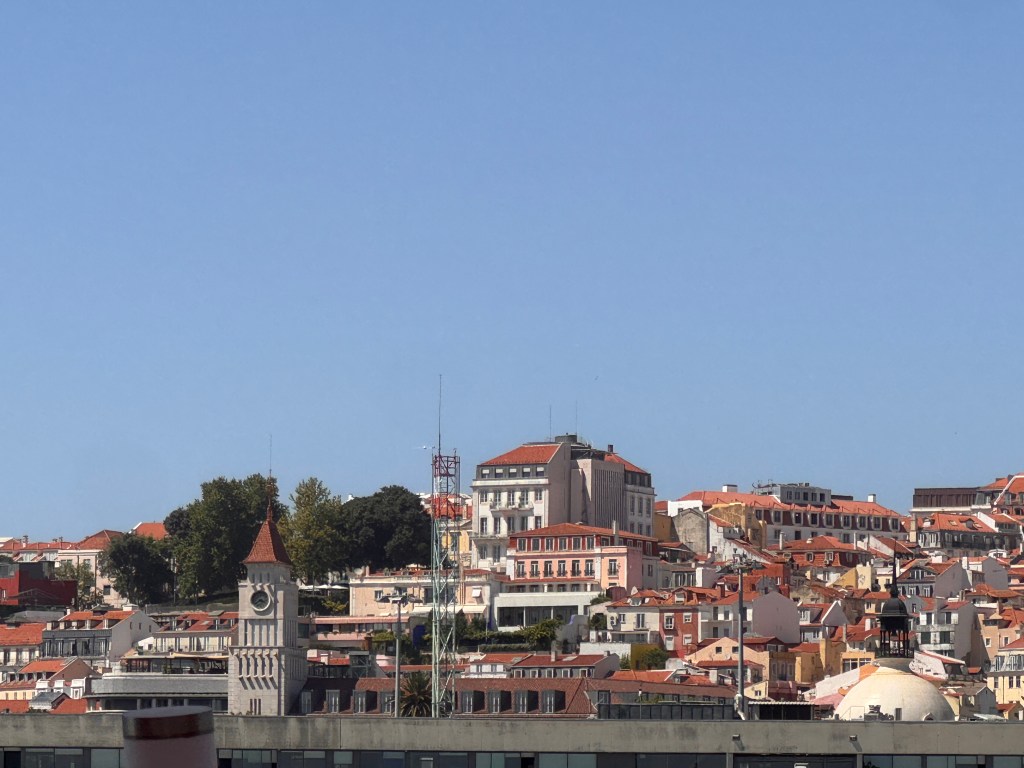
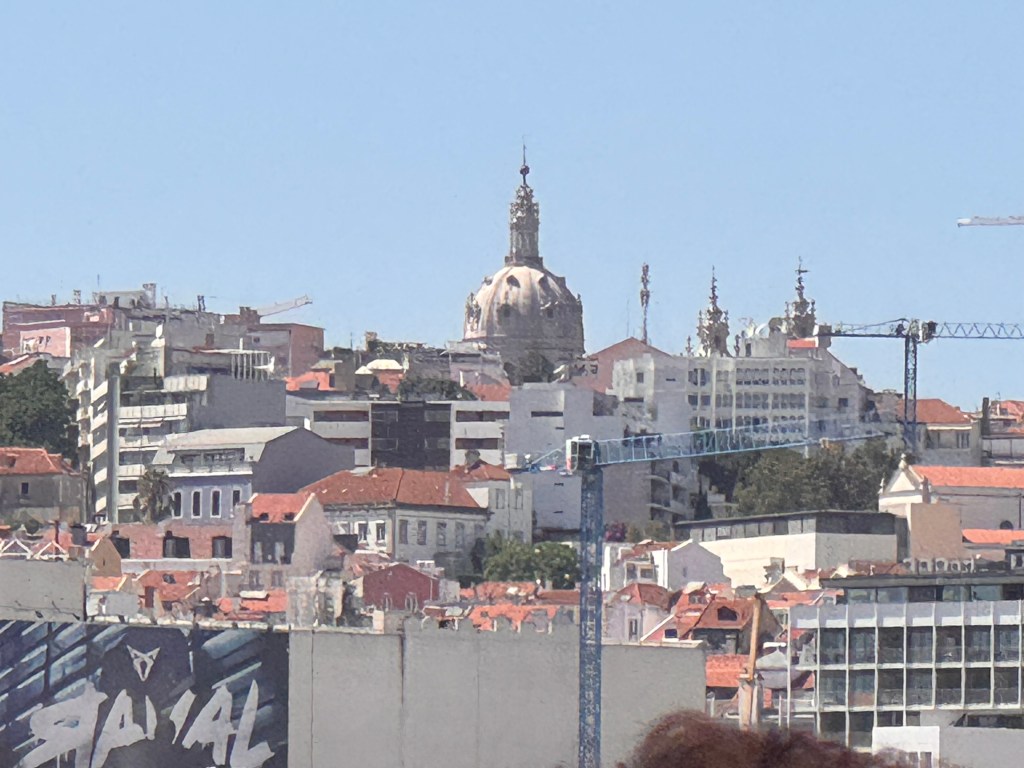
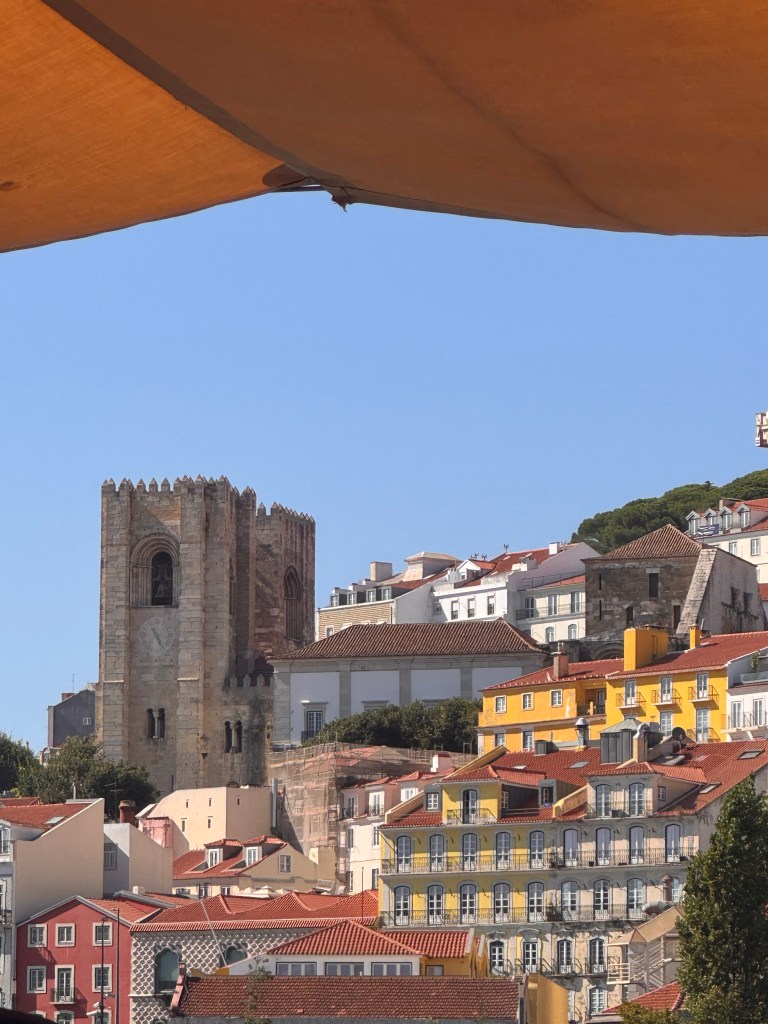
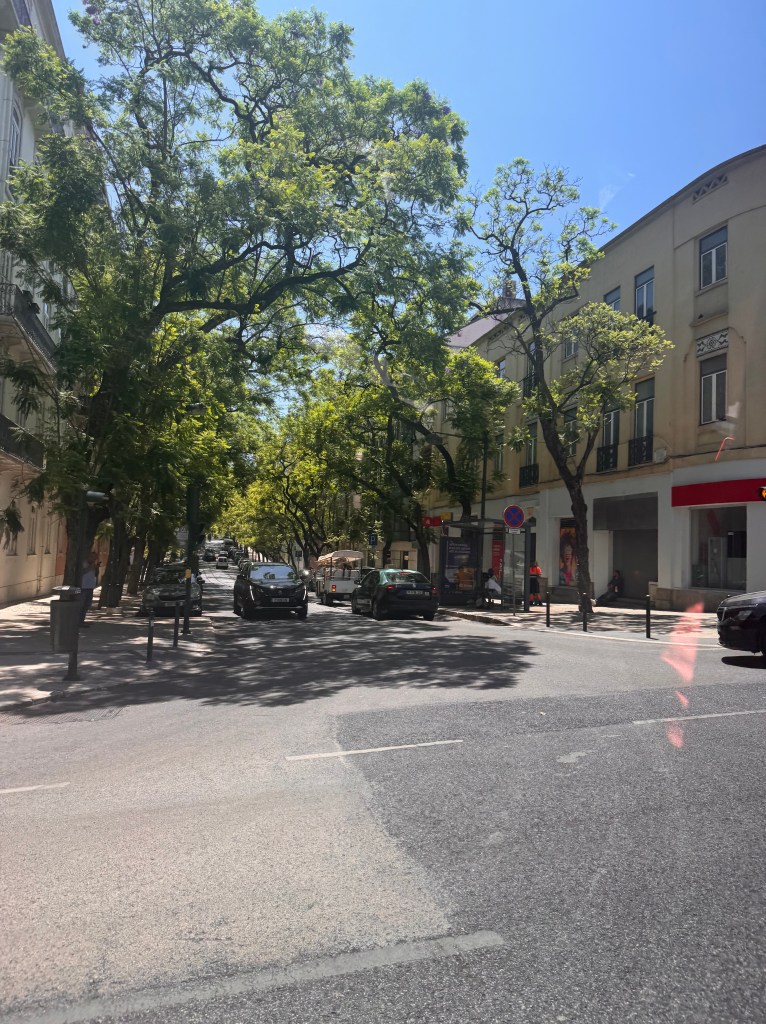
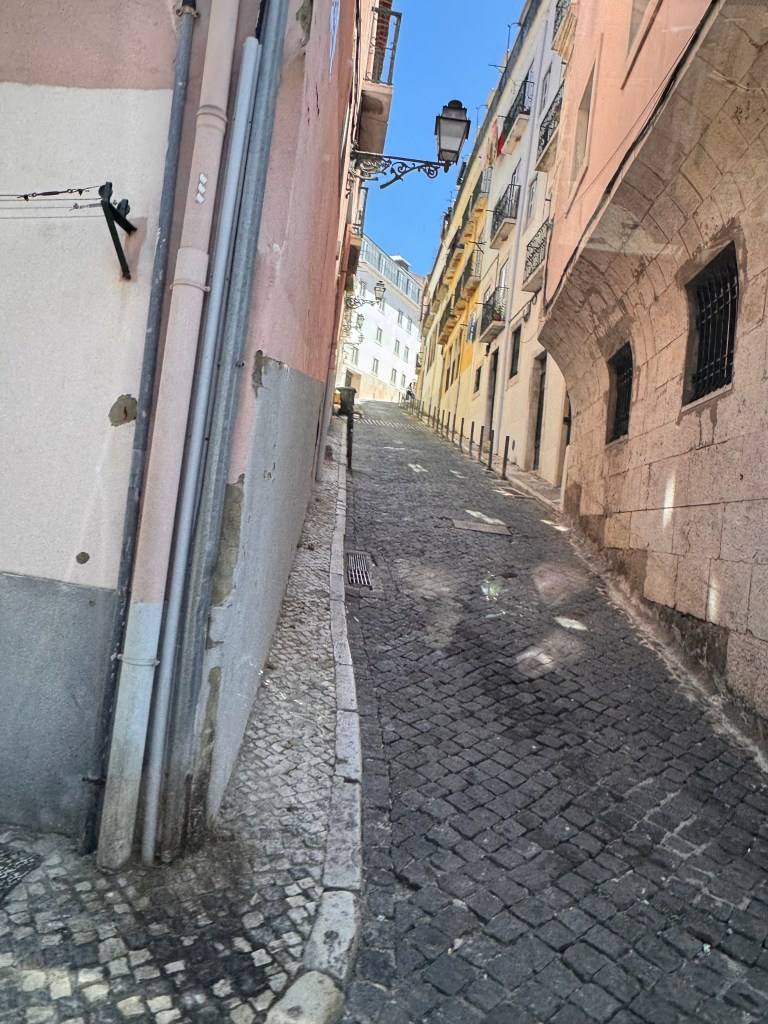
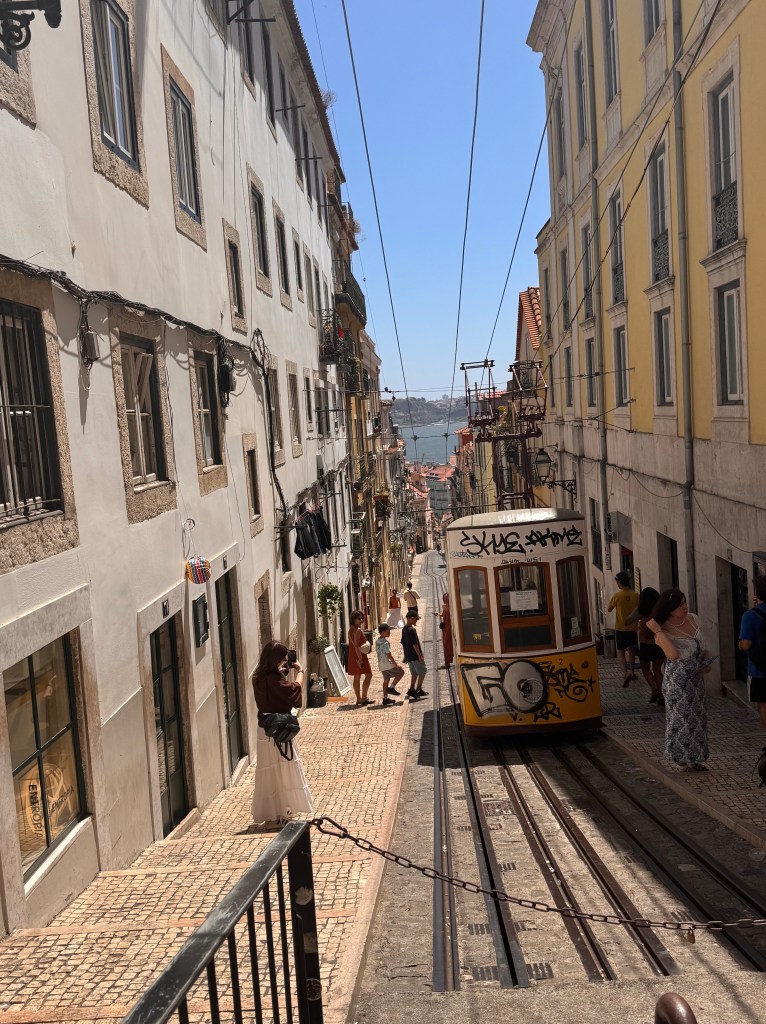
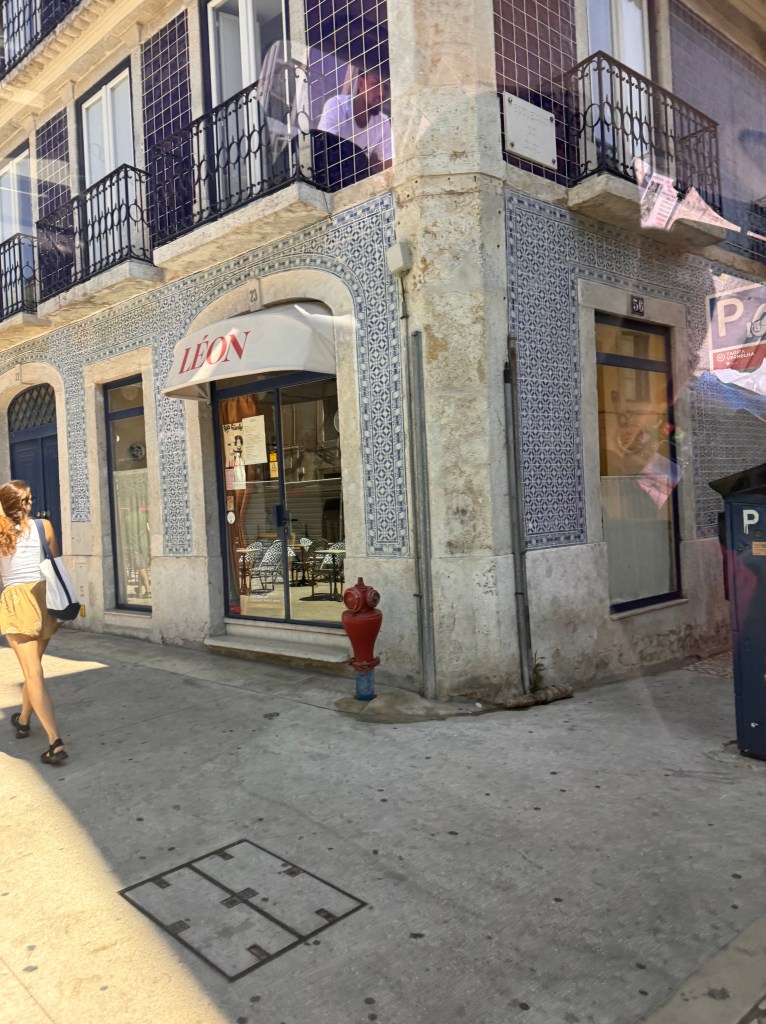
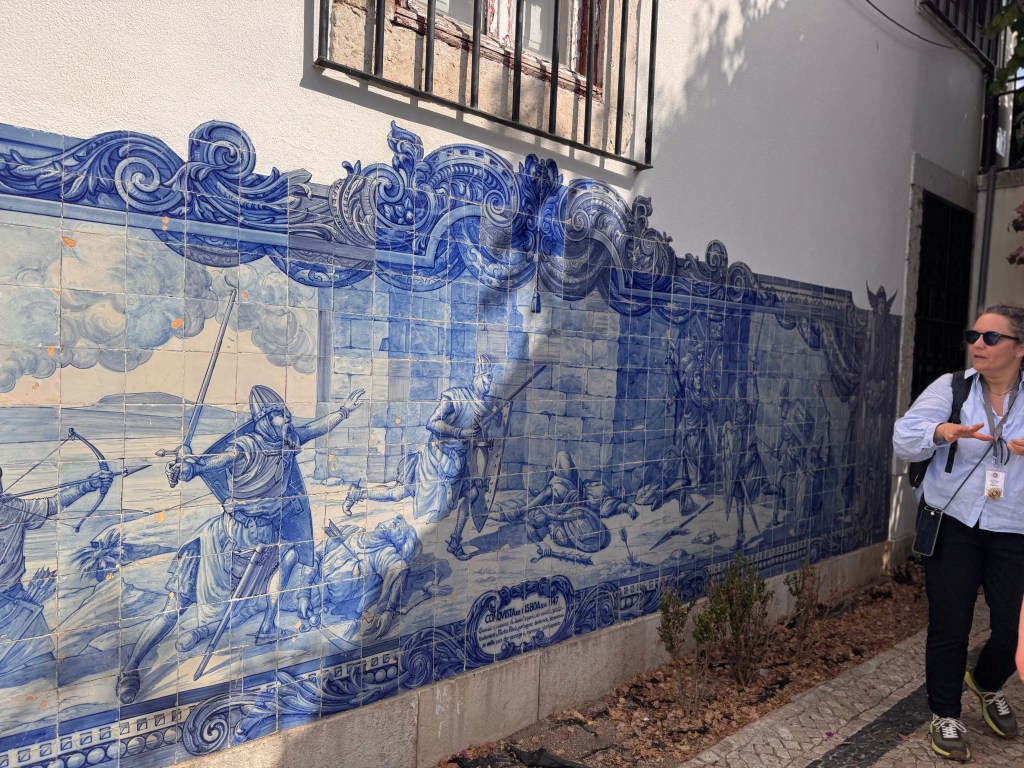
After brunch, we wandered up and down the surrounding streets for a few blocks. Lisbon immediately felt different from Madrid. The streets were narrow, the buildings colorful, and there seemed to be something interesting around every corner.

Eventually, we decided we’d had enough wandering and would simply return to the management office and wait.

Wouldn’t you know it?

Just as we arrived, we were told our apartment was ready.

We ordered another ride and set off across Lisbon.

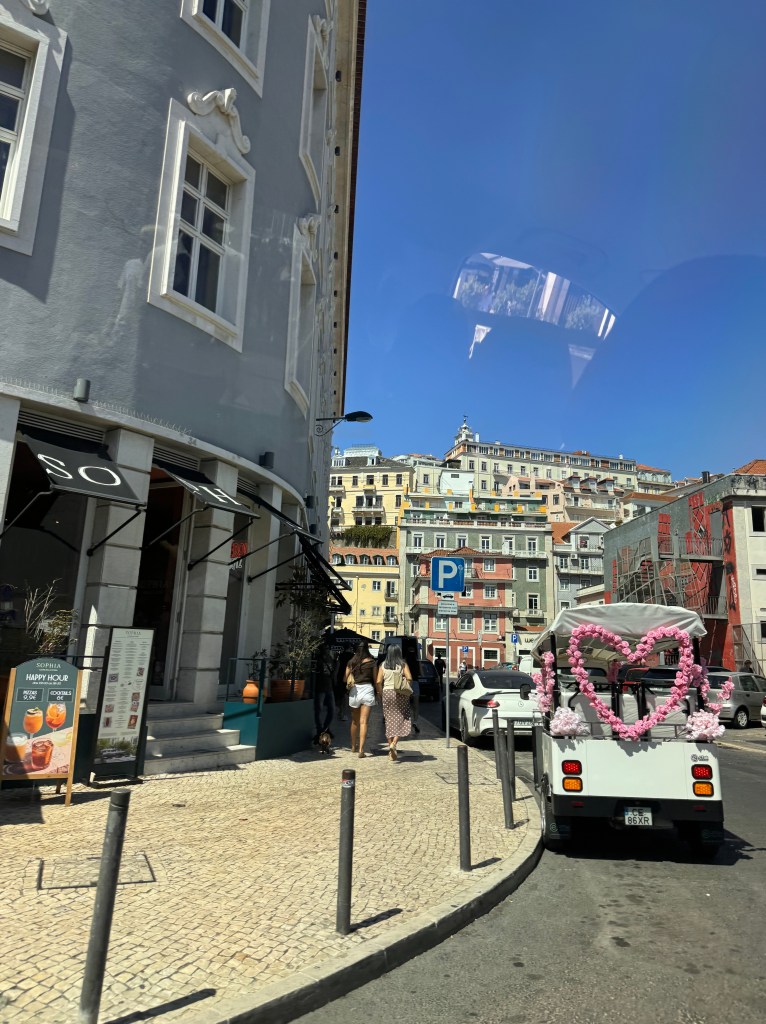
Driving through the city was an experience in itself. Some of the streets are unbelievably narrow, and we were in a fairly large vehicle. There were moments when I wasn’t entirely sure we were going to fit!

Eventually we arrived, figured out all the door codes, and stepped inside.

What a relief.

The apartment was lovely, spacious, comfortable, and—most importantly—cool!

We were only about two blocks from the Tagus River and very close to the Time Out Market and several historic areas of Lisbon. It was going to be a wonderful location for exploring our final city.

The temperature change was also amazing. We had left Madrid at around 102°F and arrived in Lisbon to temperatures around 78°F.

What a difference!

We spent some time unpacking, figuring out the apartment, and simply relaxing.

Eventually we ventured back outside to explore the neighborhood, find somewhere for dinner, and pick up groceries.

Right on our corner we discovered a wonderful little bakery, so naturally we stopped and bought breakfast for the next morning.

Then we found a Mexican restaurant for dinner, picked up a few groceries, and headed back to the apartment for the night.

And can I just say how wonderful our beds felt?

In Madrid, Gabe and I each had extremely narrow single beds. They were the kind where you picked one sleeping position and stayed there all night because rolling over came with the very real possibility of landing on the floor.

Now I could actually spread out!

Kiya was also happily reunited with Mom for sleeping arrangements. She had slept with Mary in Madrid and wasn’t particularly thrilled about the arrangement, but she suffered through it.

LOL.

After a forgotten suitcase, a missing pillow, airport confusion, wheelchair drama, a €2.56 tourist-tax crisis, and hauling our belongings through yet another city, we were finally settled into Lisbon.

Our last first country.

Our last first city.

The final chapter of our seven-week European adventure had officially begun.

One Last Day on the Mediterranean

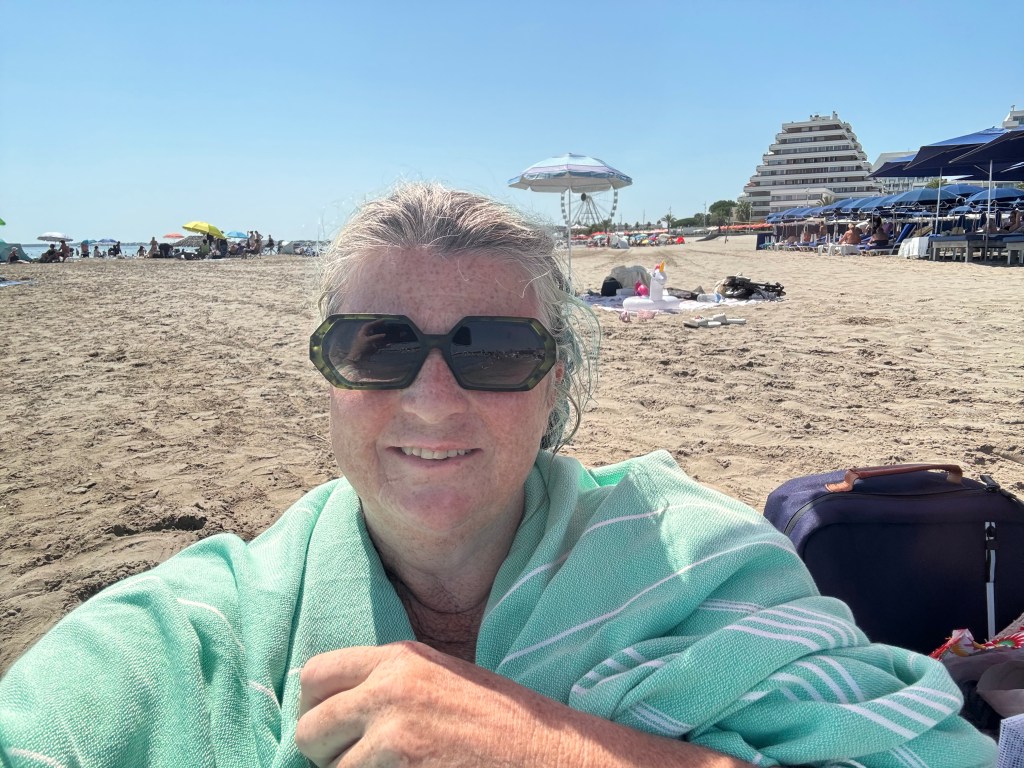
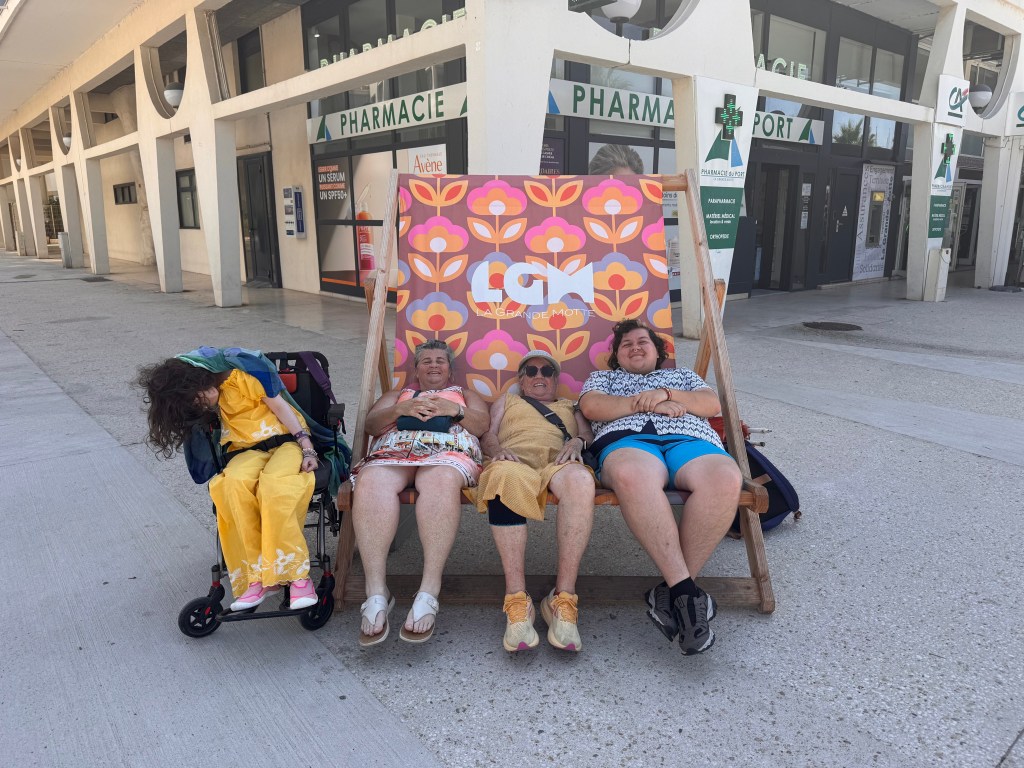
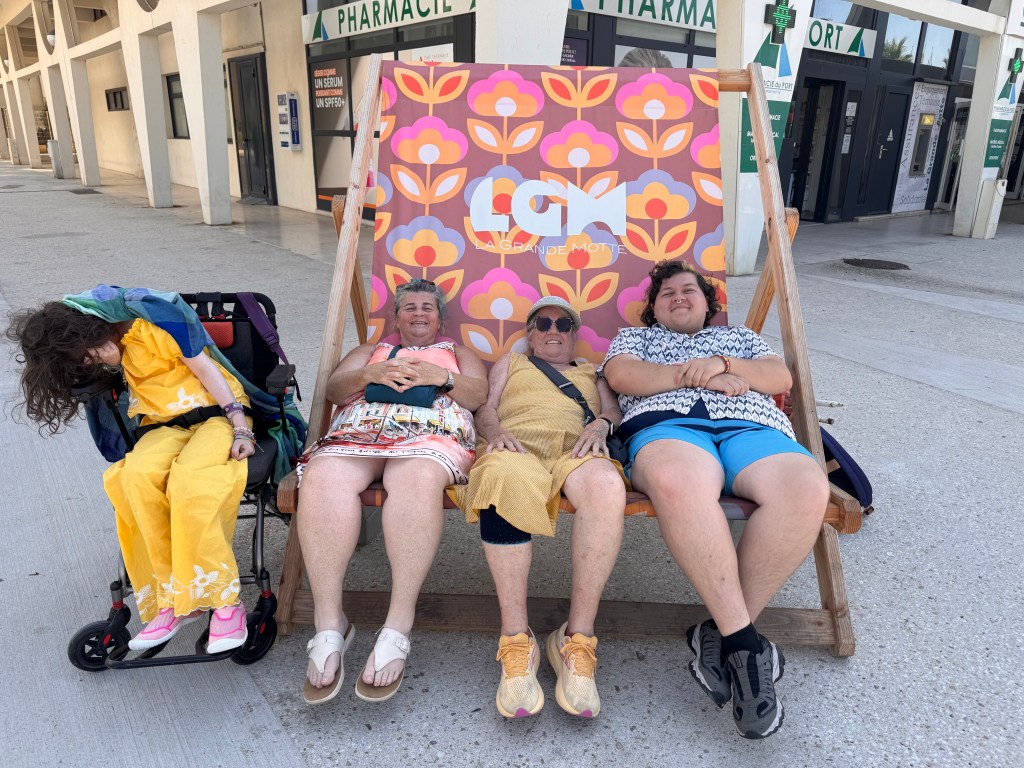
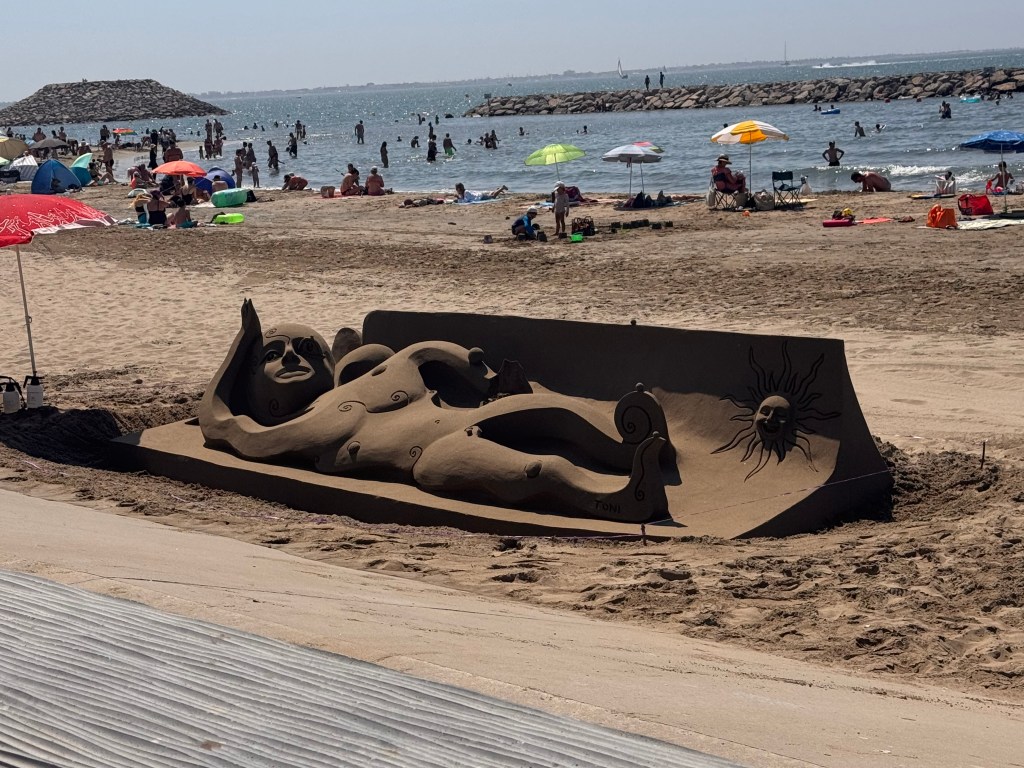
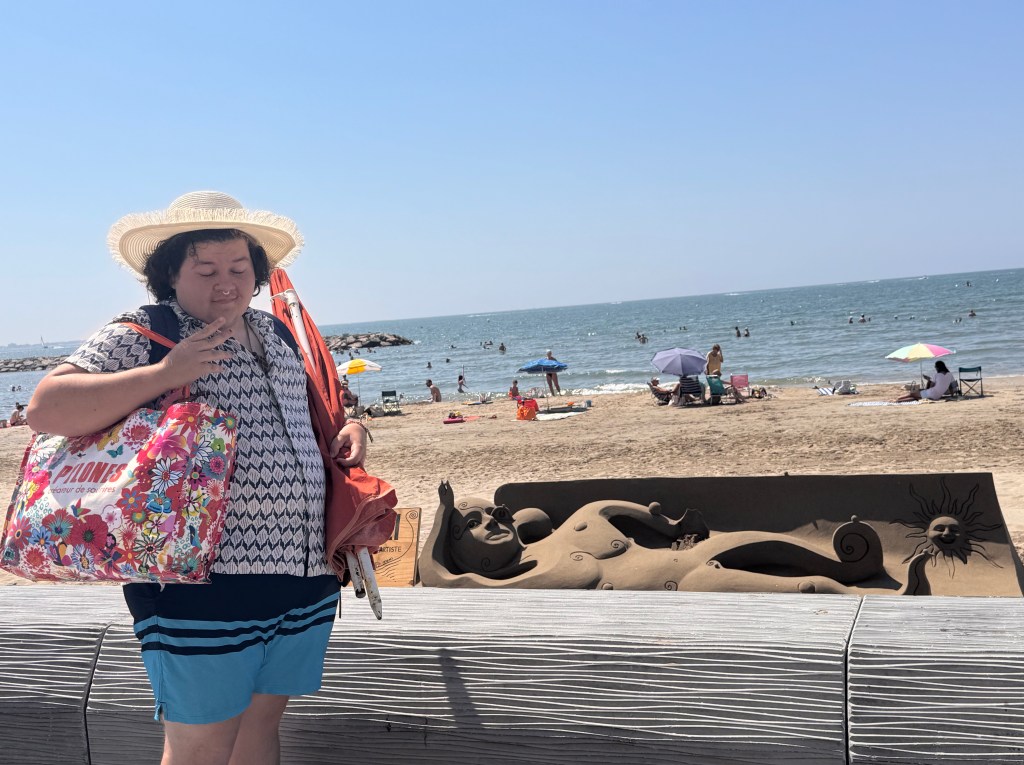
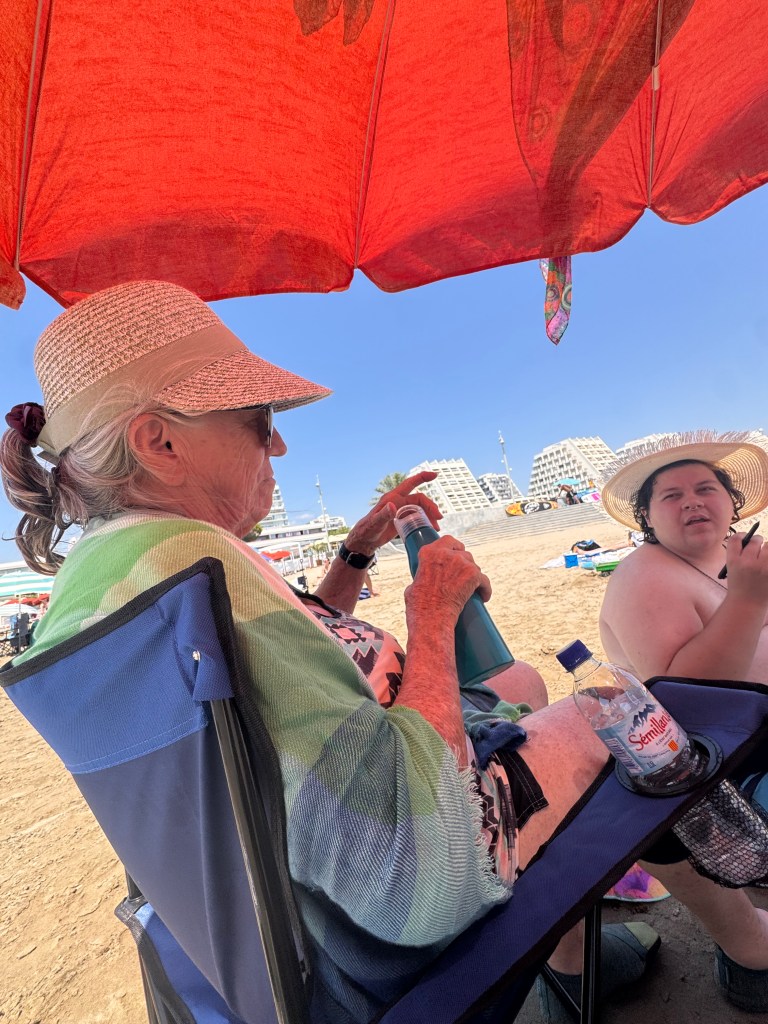
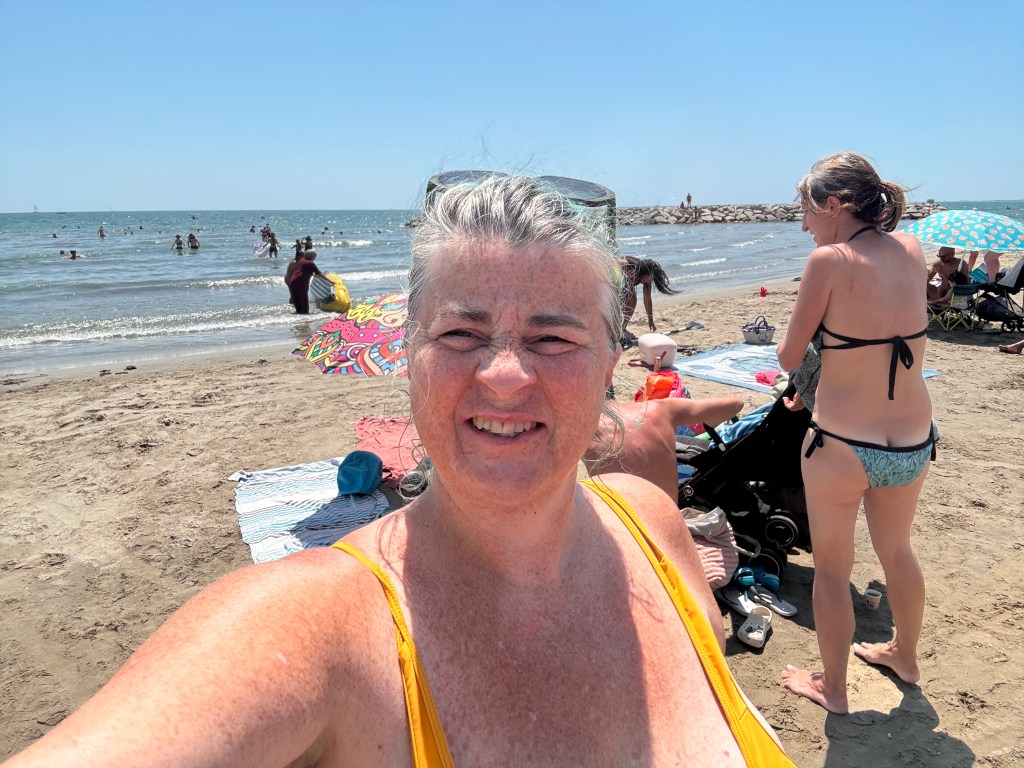
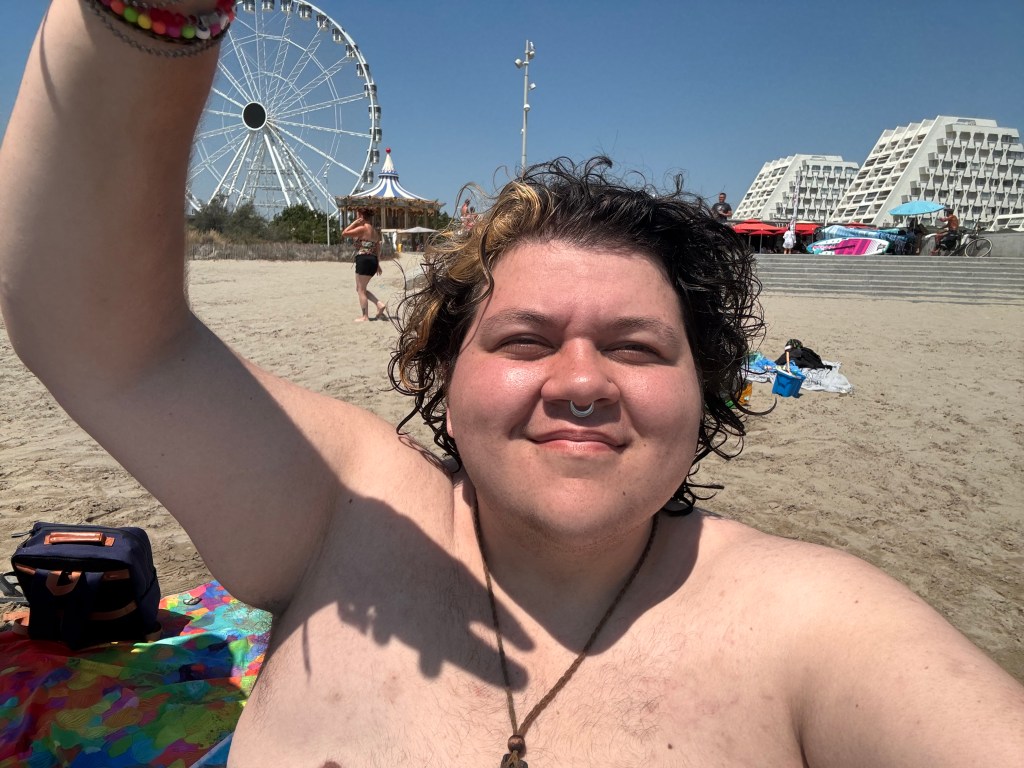
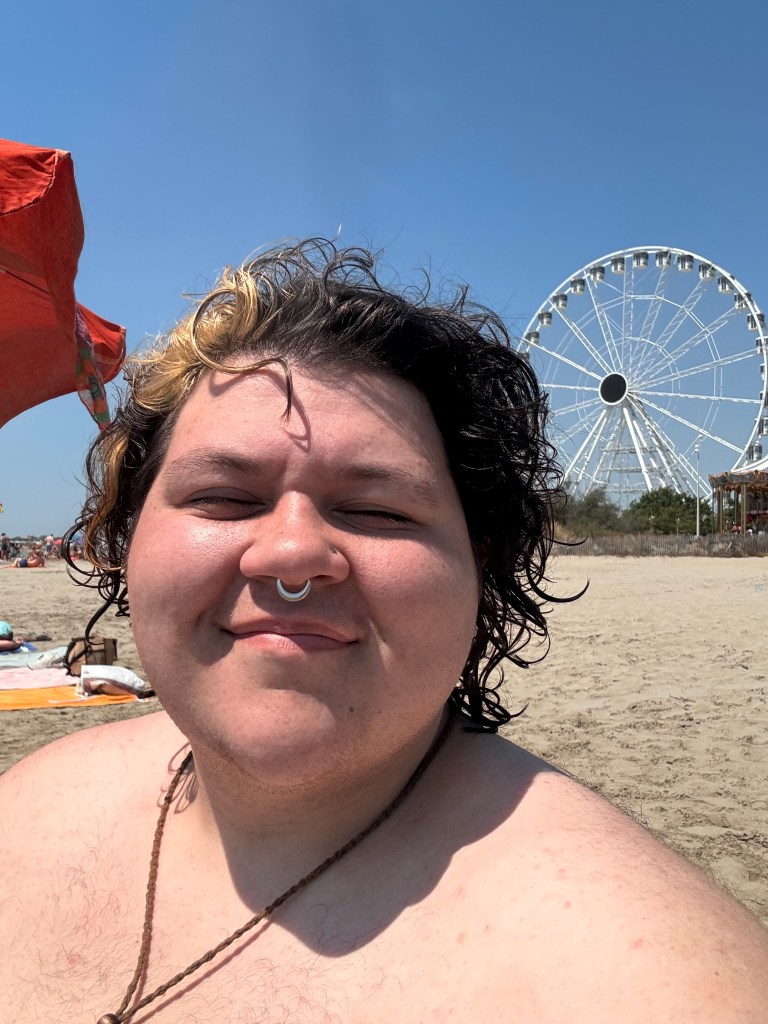
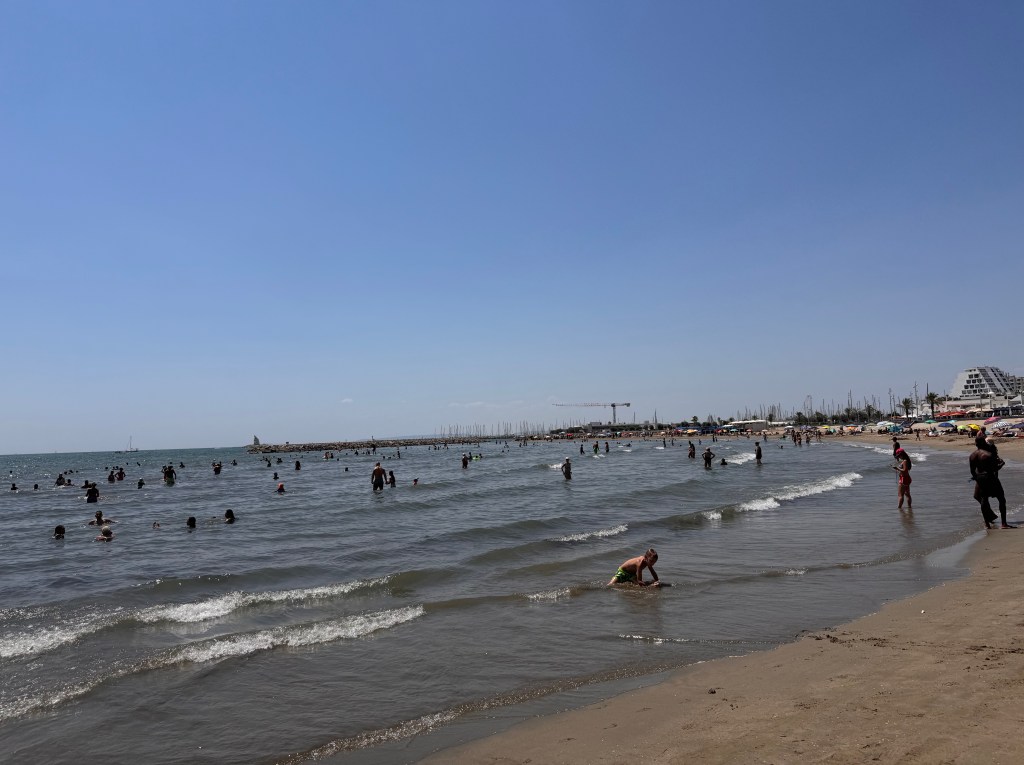
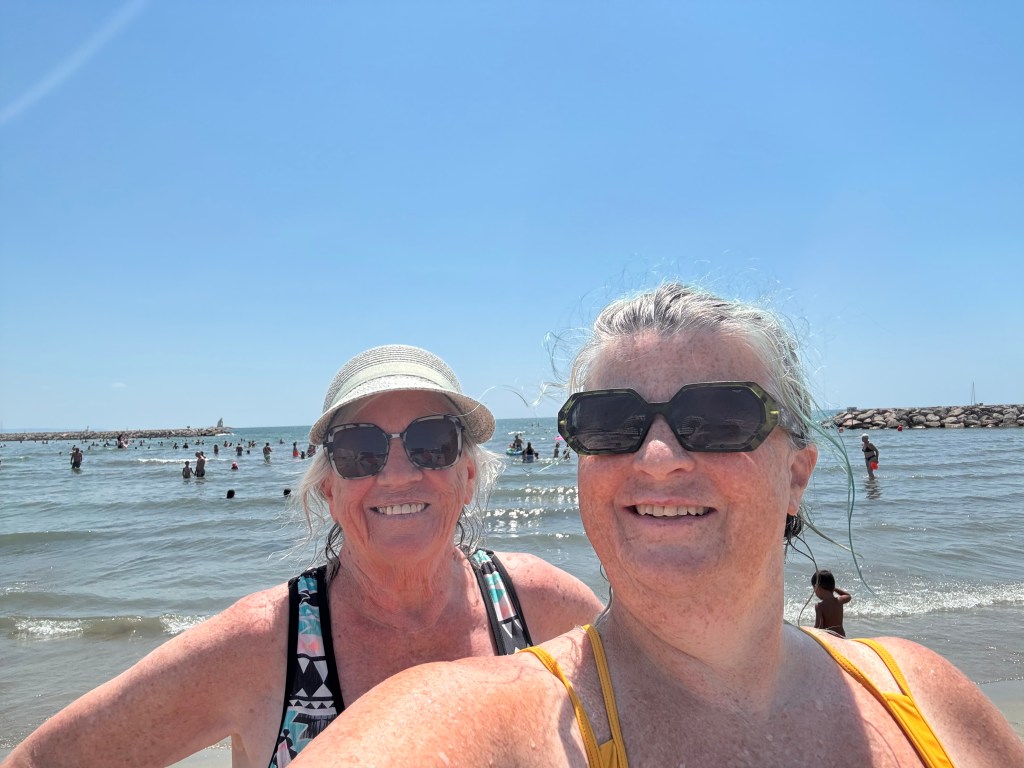
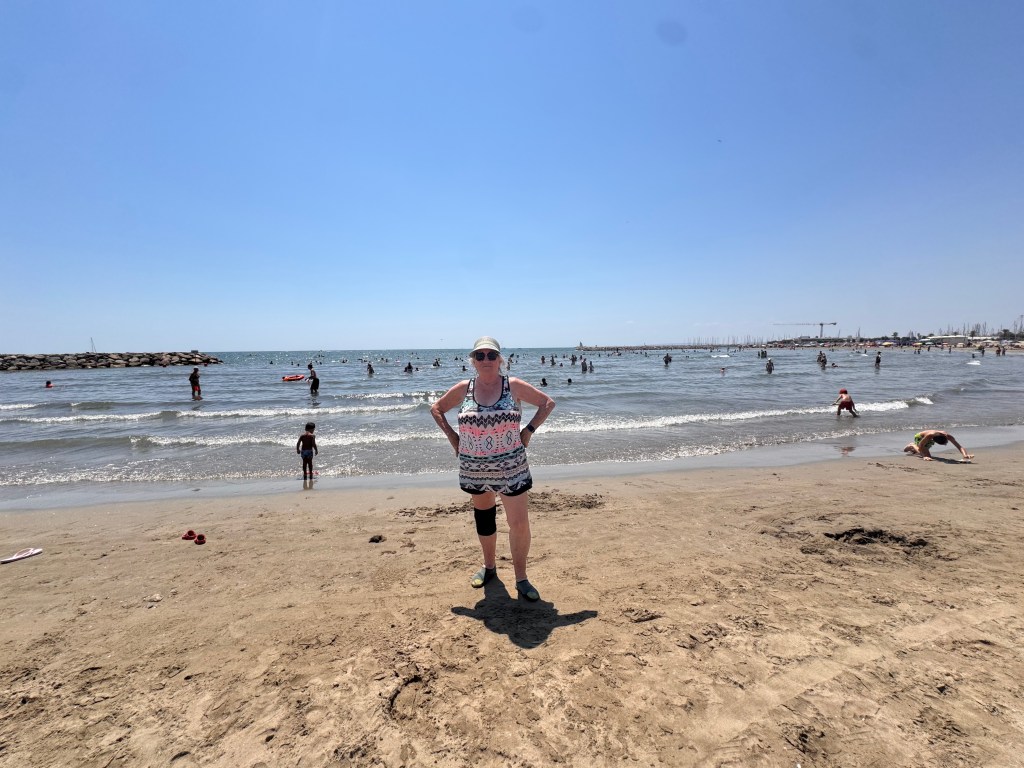
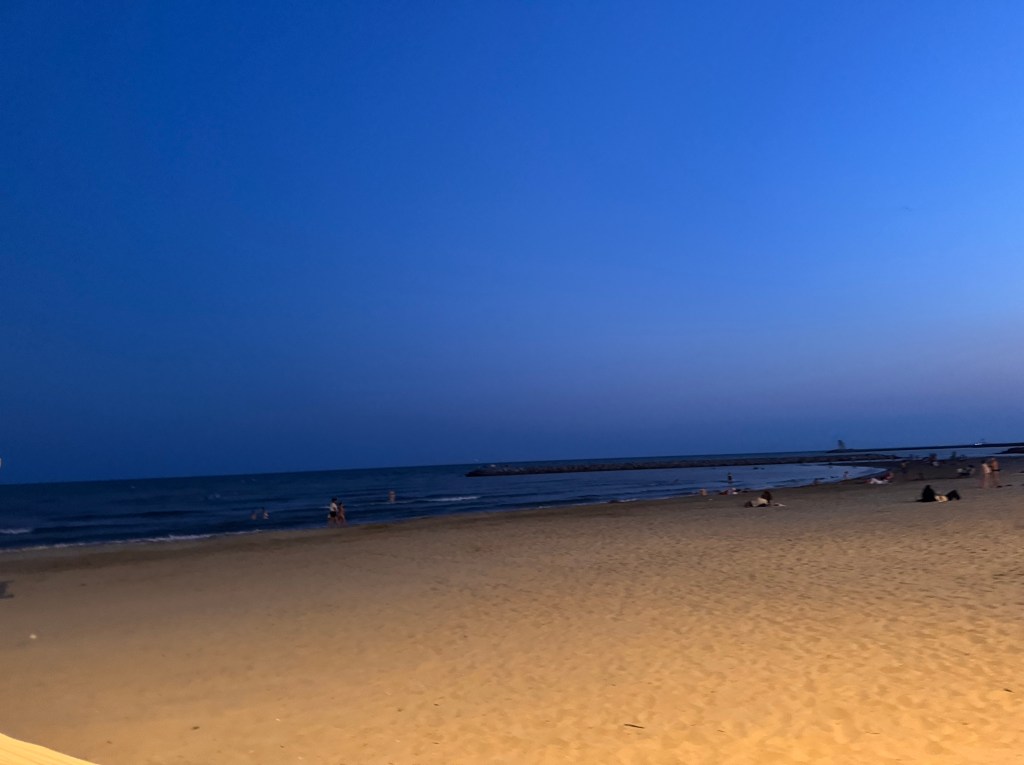
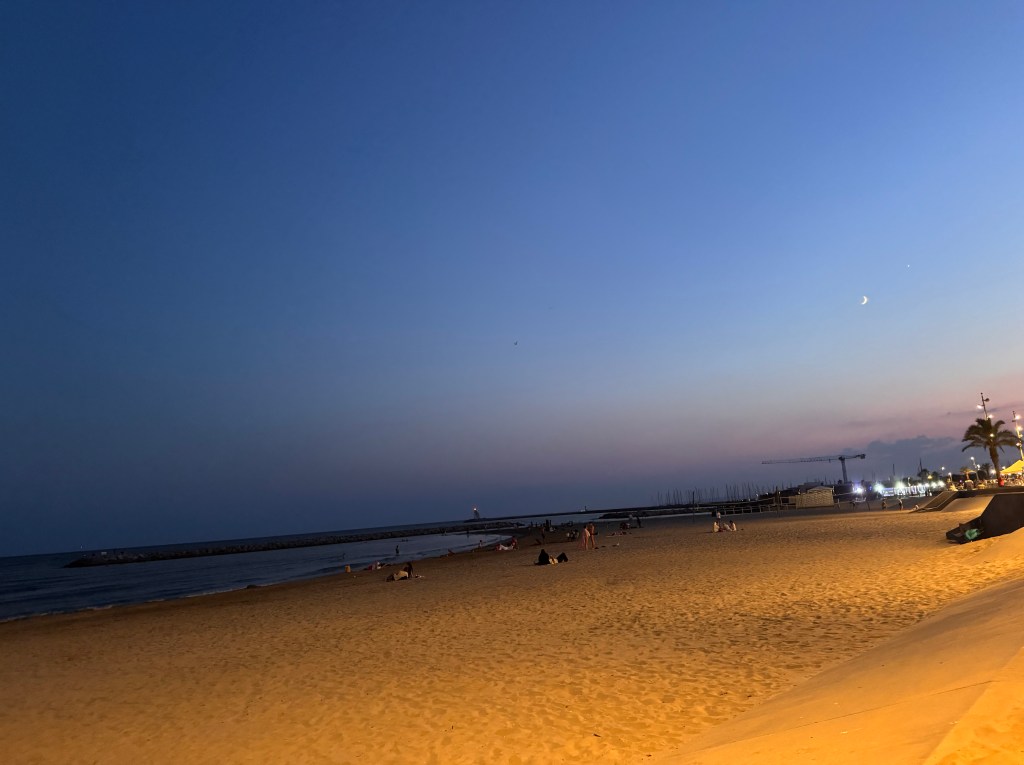
Knowing it would be our last full day in La Grande-Motte, we decided to head to the beach a little earlier before the afternoon heat became overwhelming.

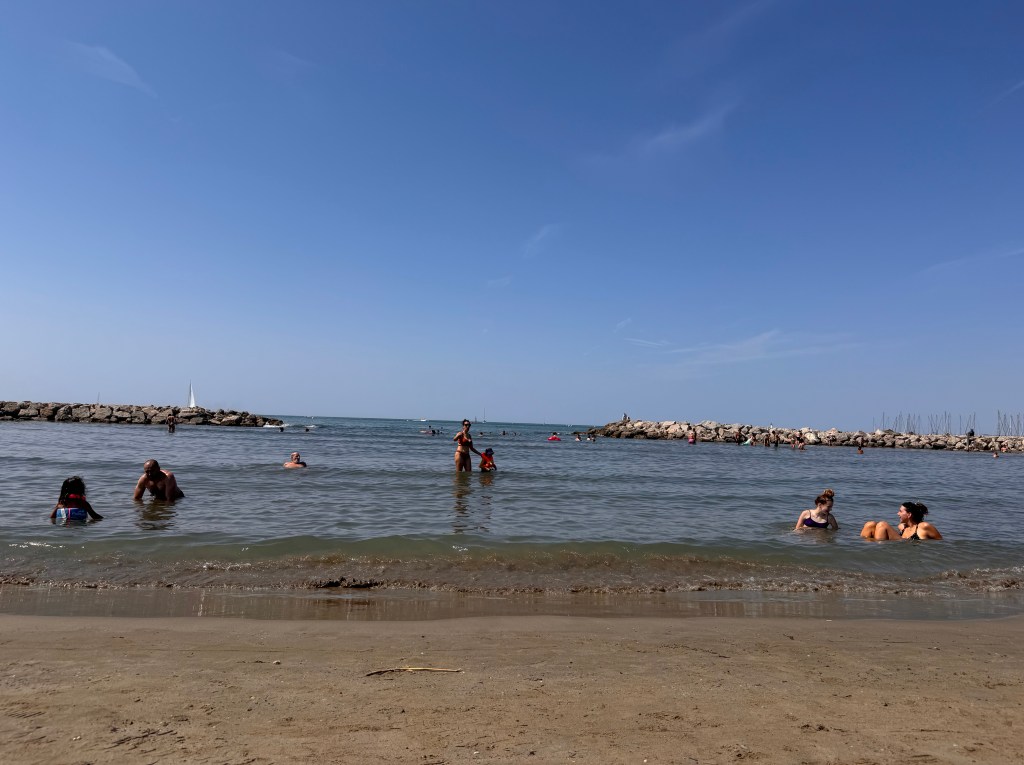
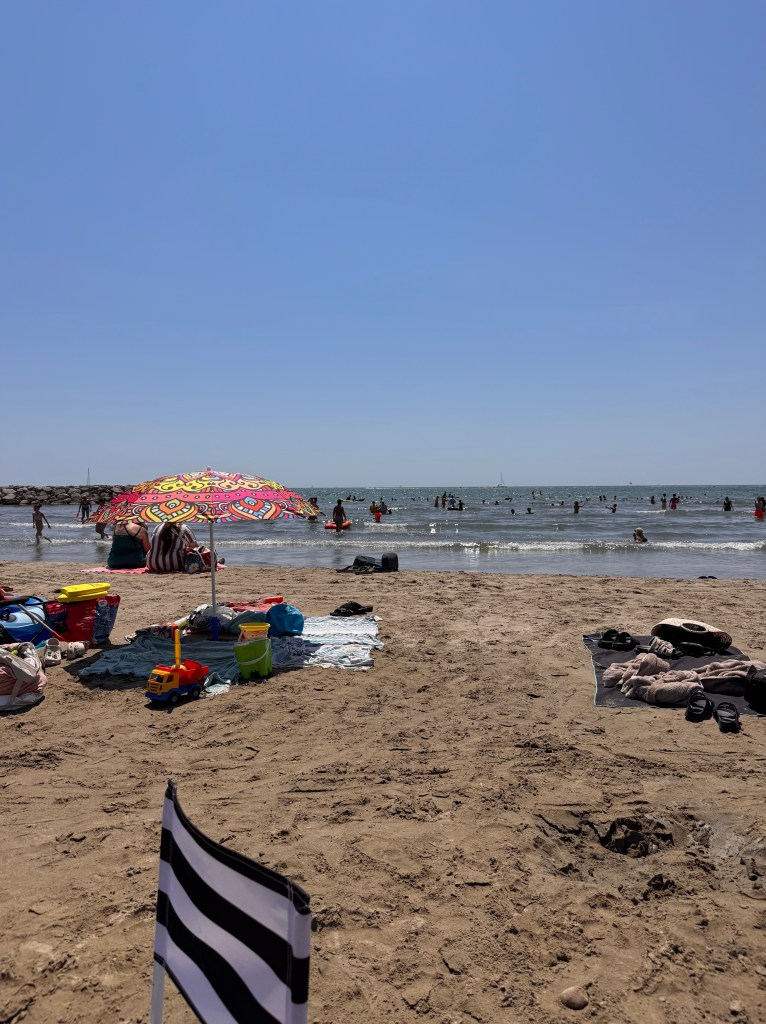
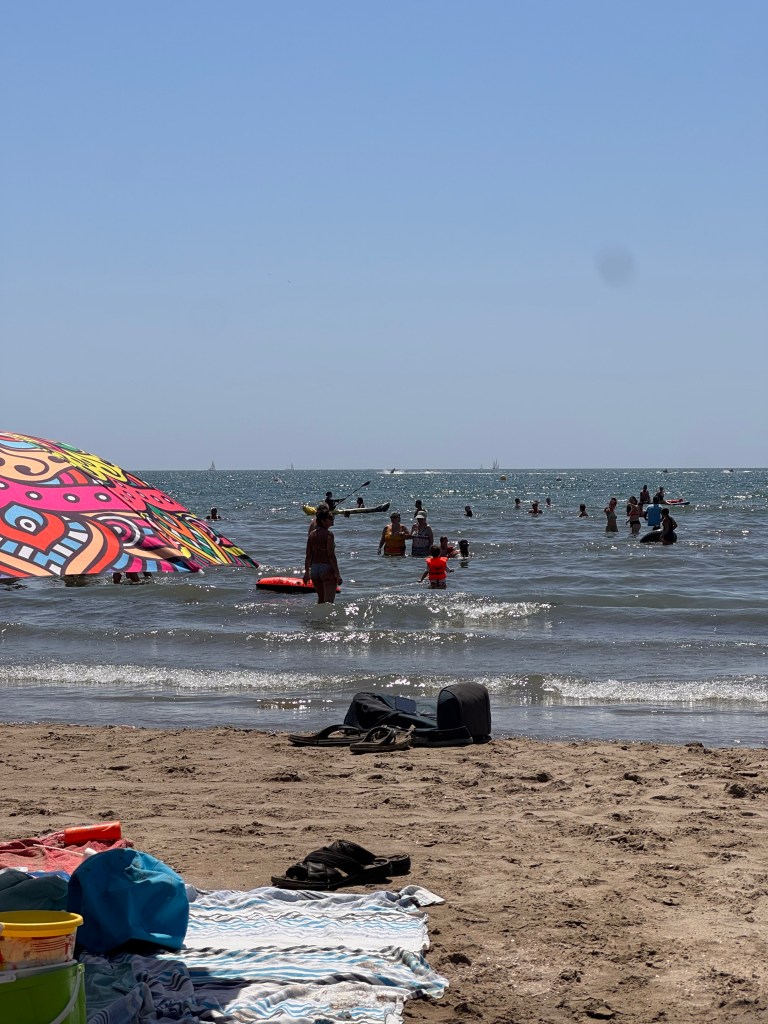
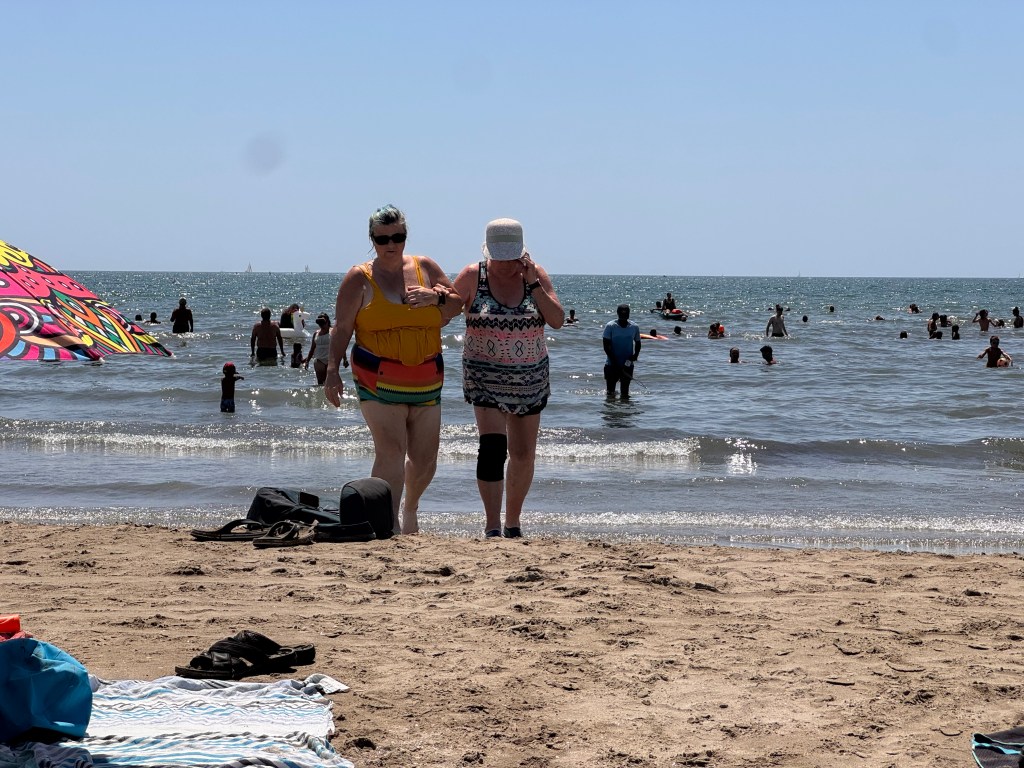
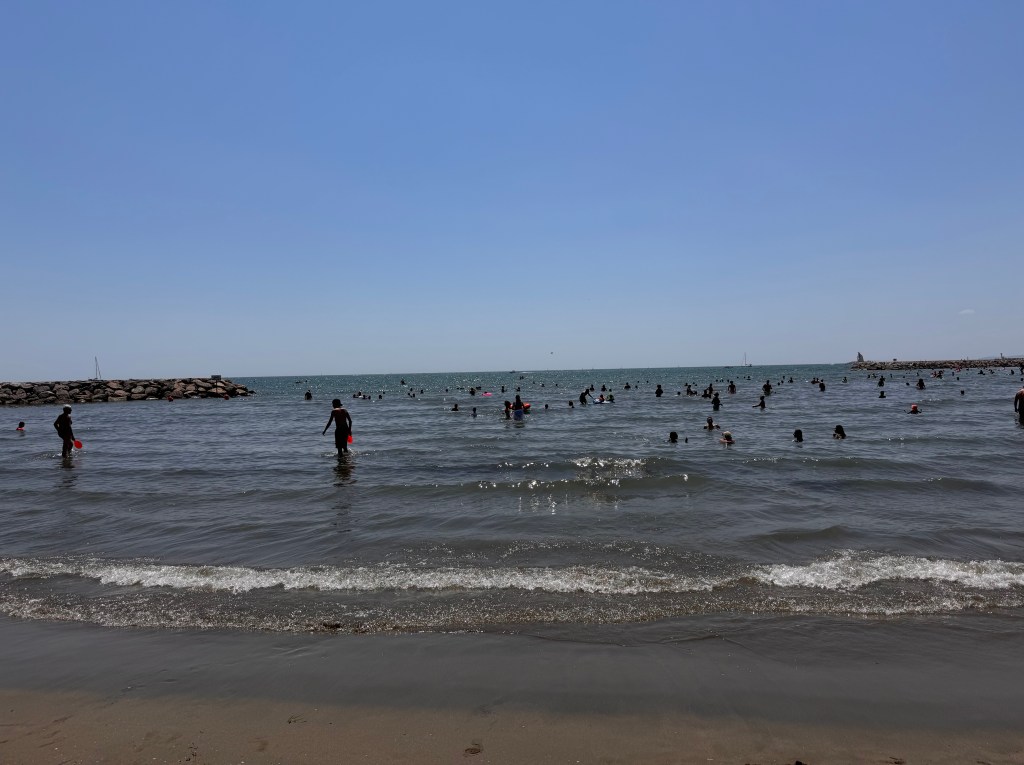
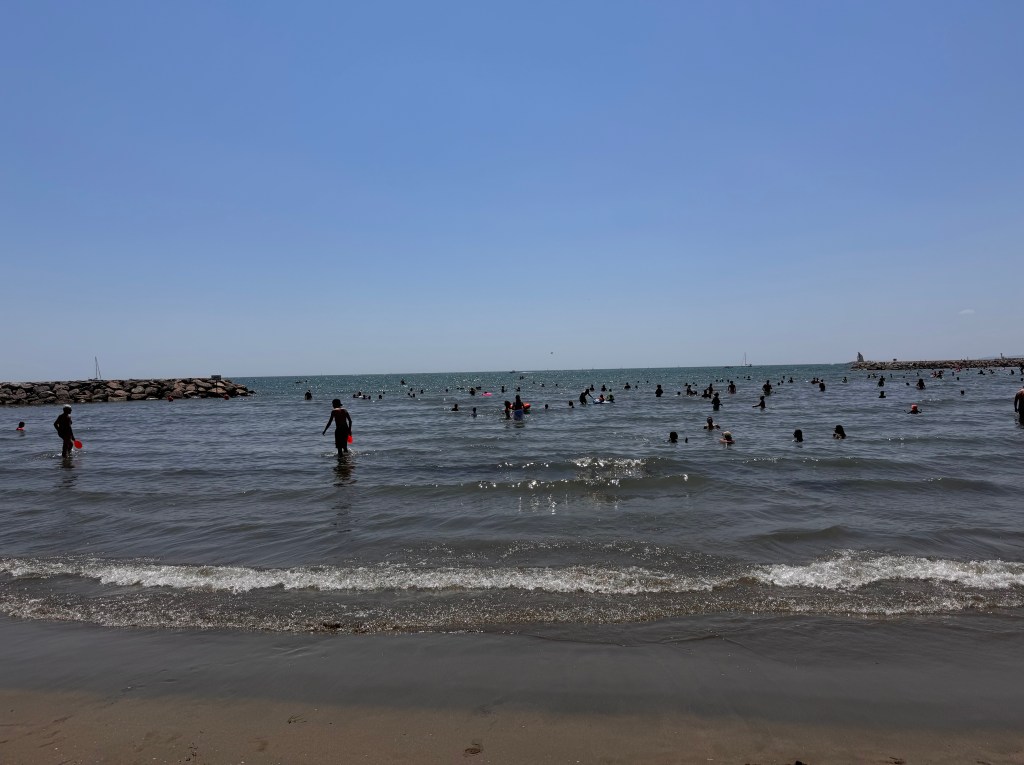
The waves and uneven sand had made Mom’s knee more sore over the previous couple of days, so we agreed to take things a little easier. Instead of returning to the deeper bay, we went back to the wonderfully shallow beach where the water stretched far from shore.

It turned out to be the perfect choice.

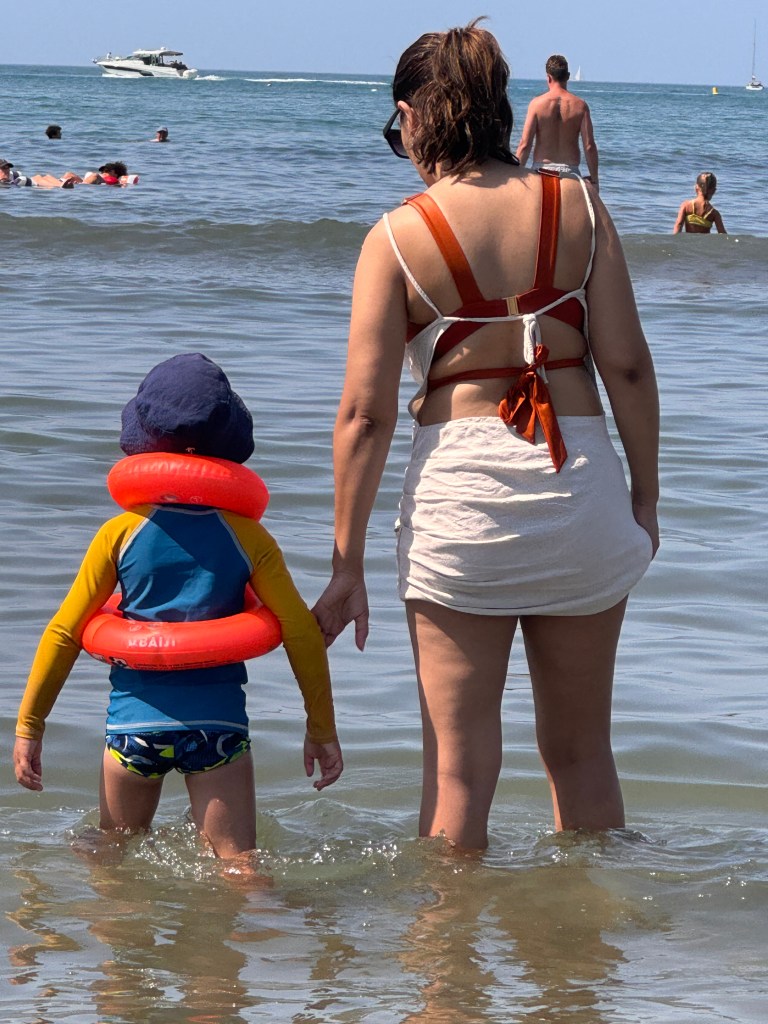
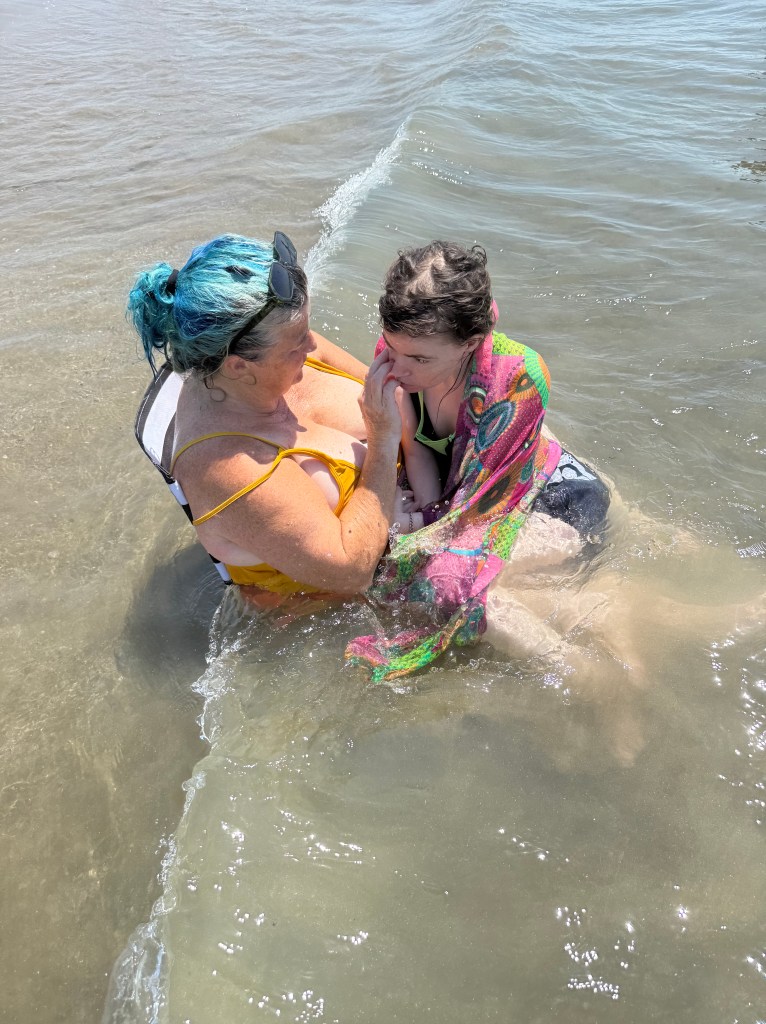
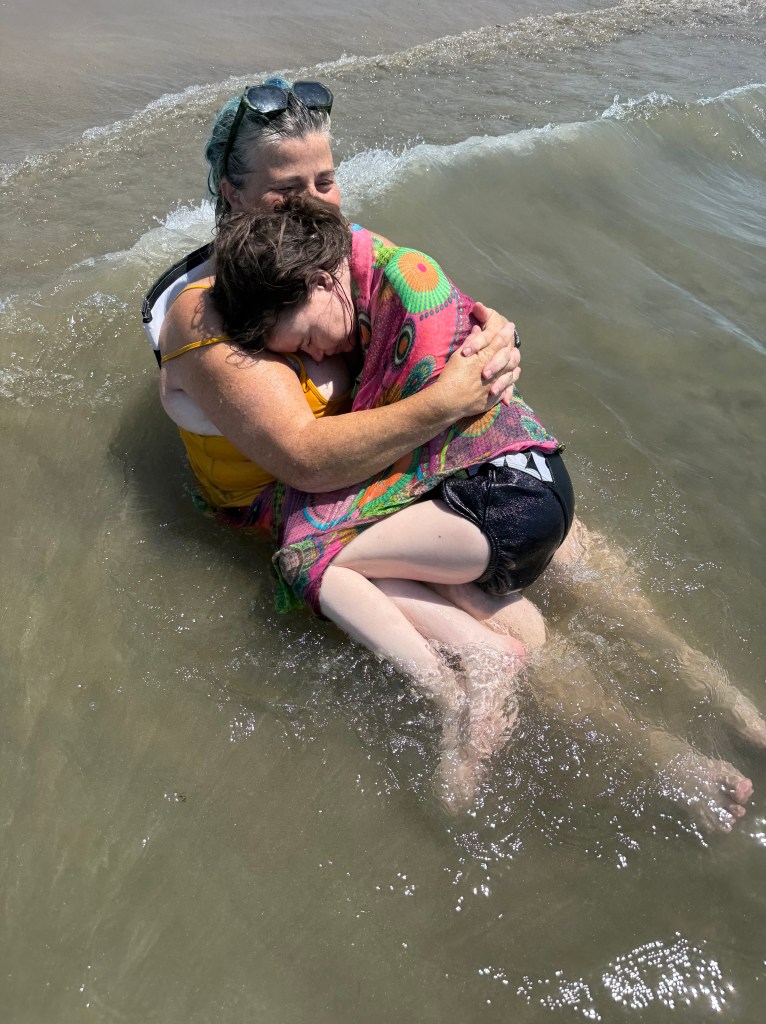
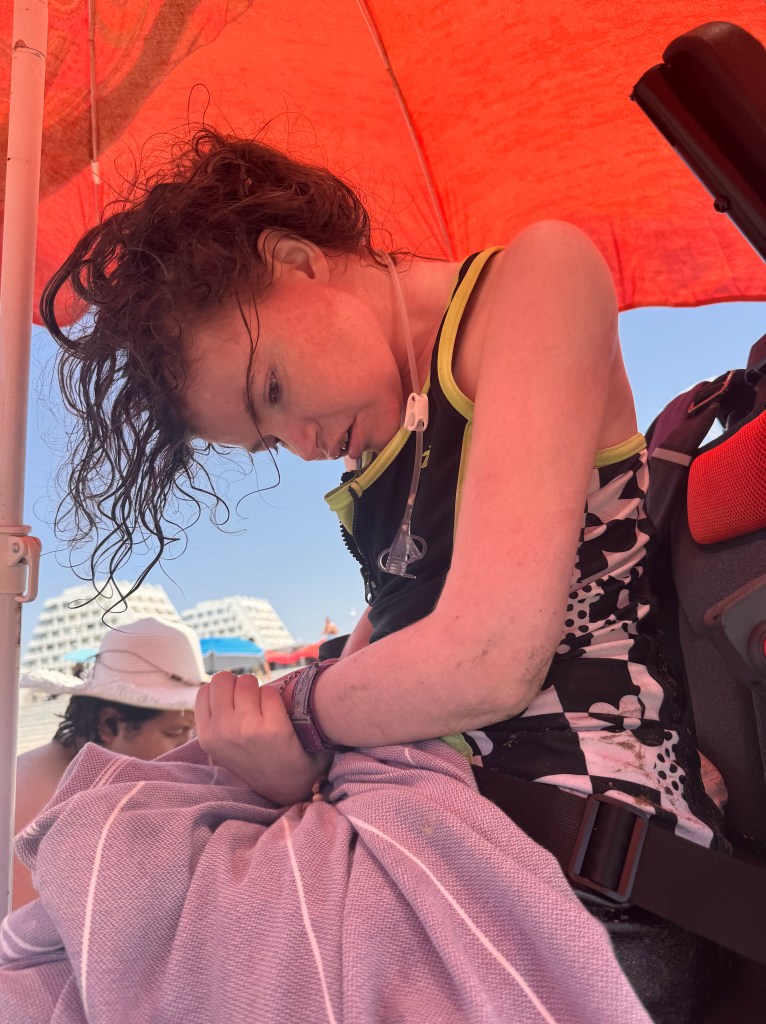
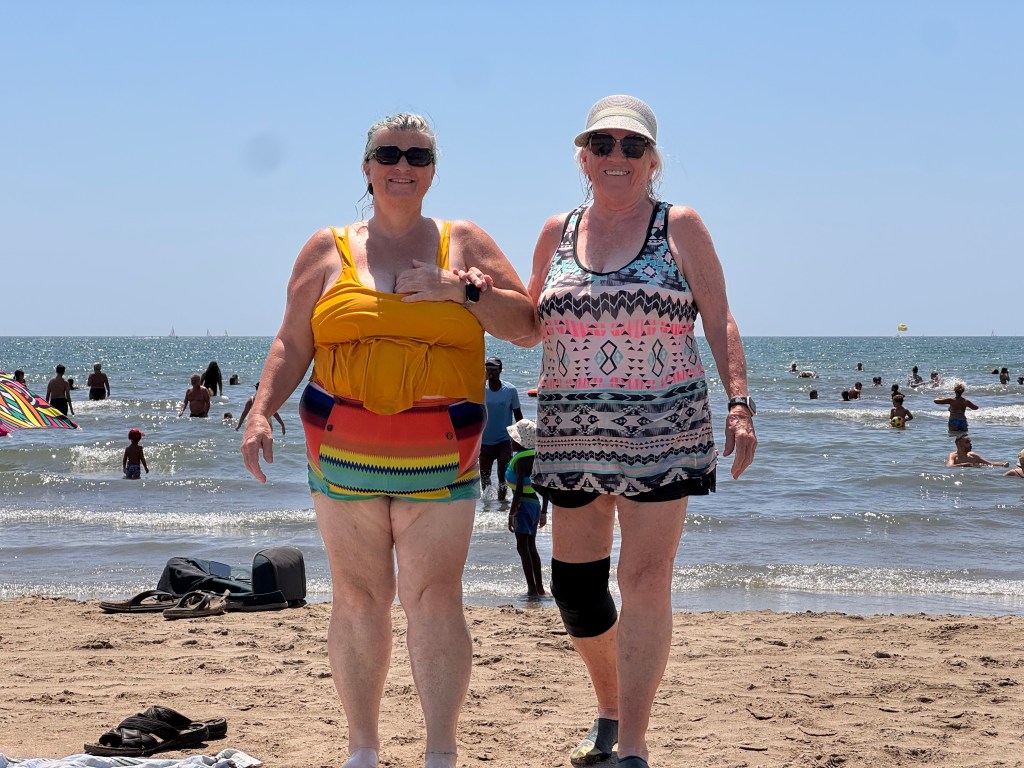
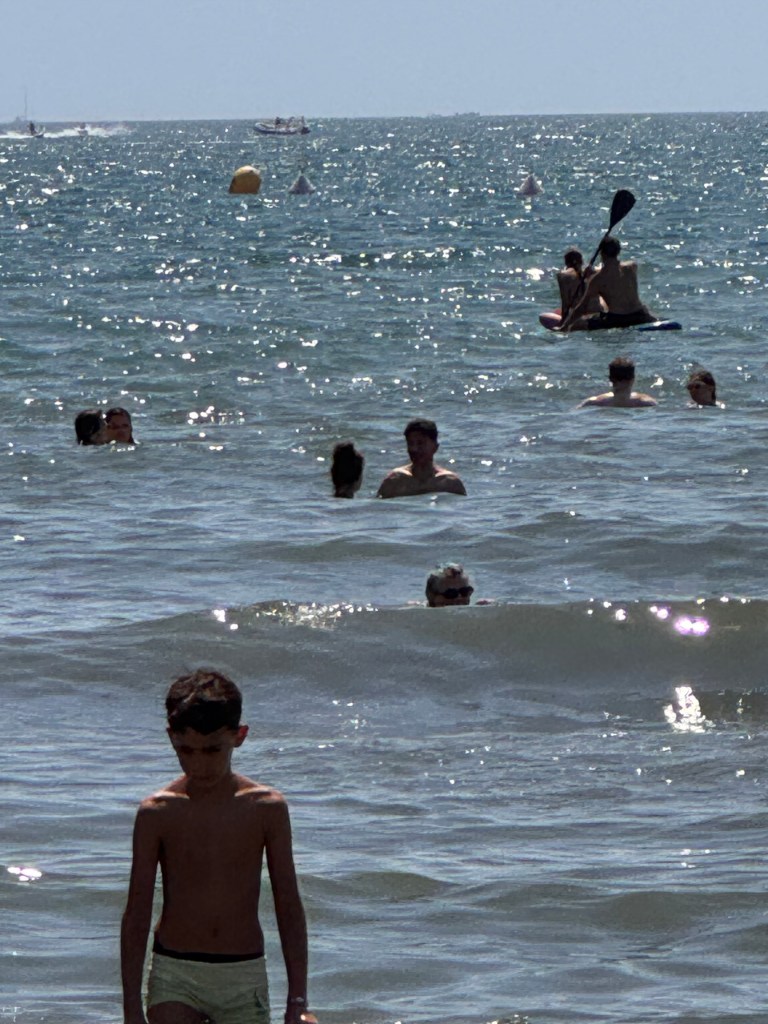
Kiya settled happily into her beach chair with the gentle waves washing over her legs, completely content to splash, play, and enjoy the Mediterranean. Watching her smile was all any of us needed.

I spent much of the morning simply floating in the sea.

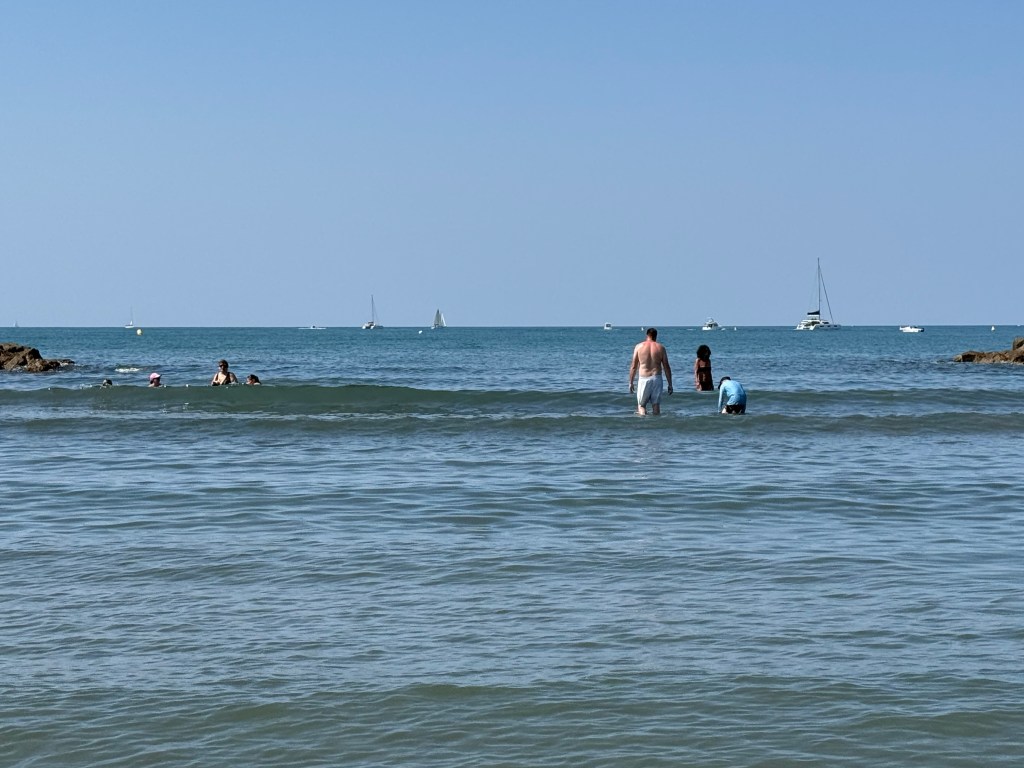
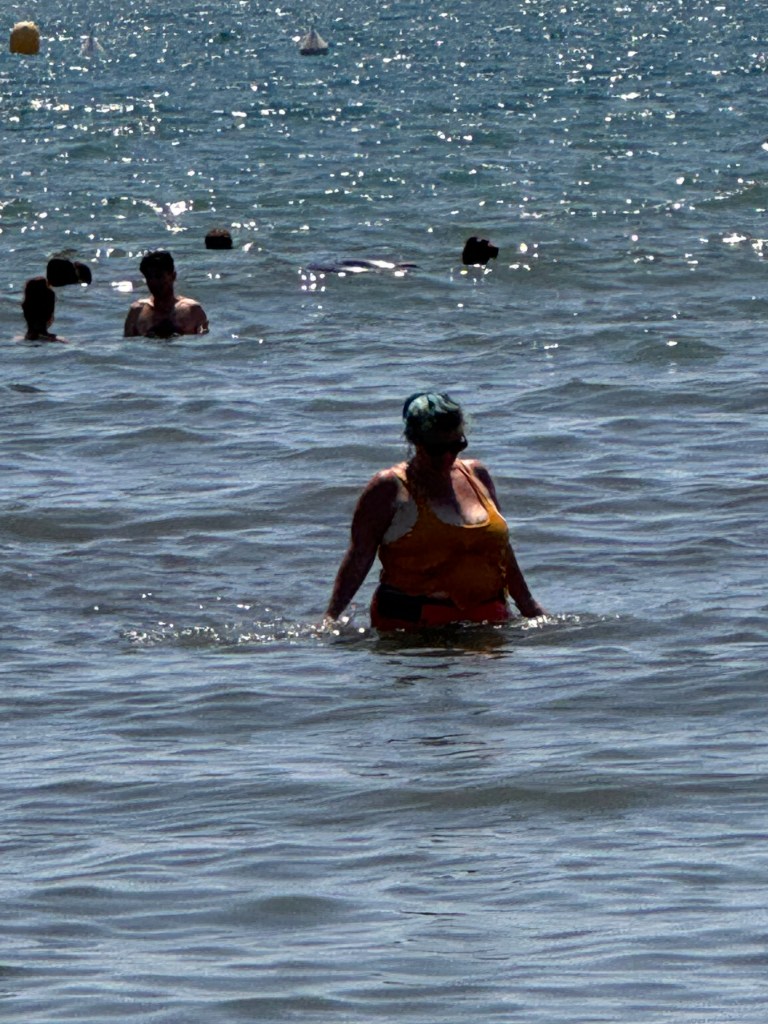
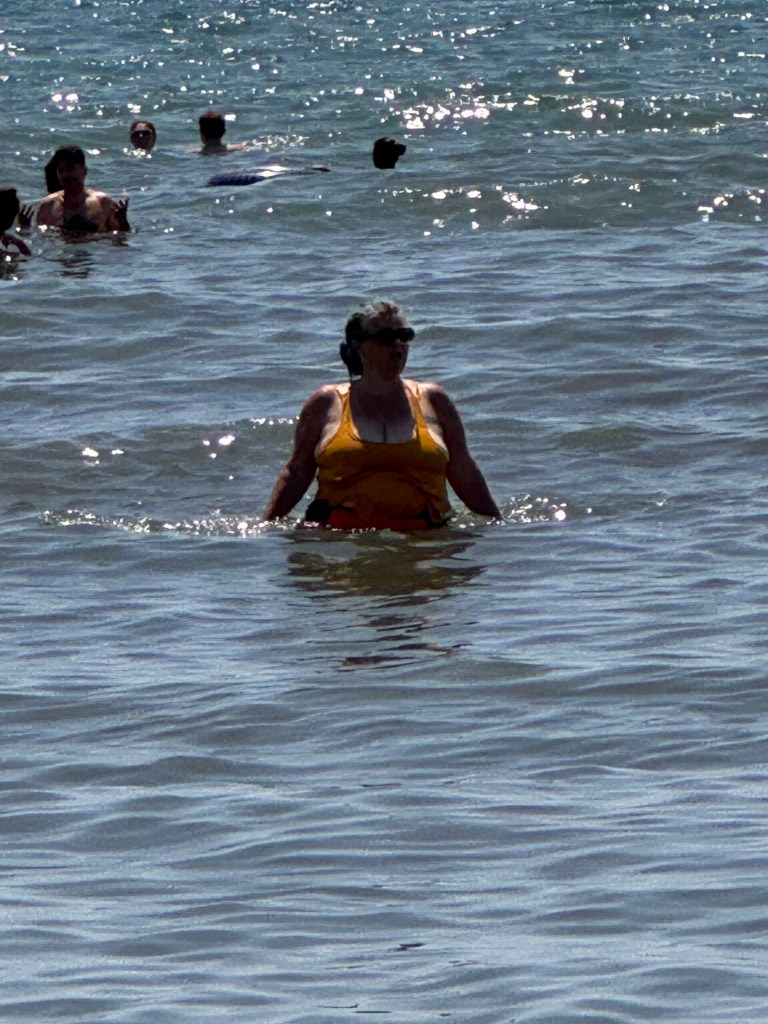
One thing that surprised me was just how salty the Mediterranean was. The water made you incredibly buoyant, and it felt almost effortless to float with the gentle rhythm of the waves. It was peaceful, relaxing, and exactly what I needed after weeks of constant sightseeing.

Gabe, however, had reached his limit with sand.

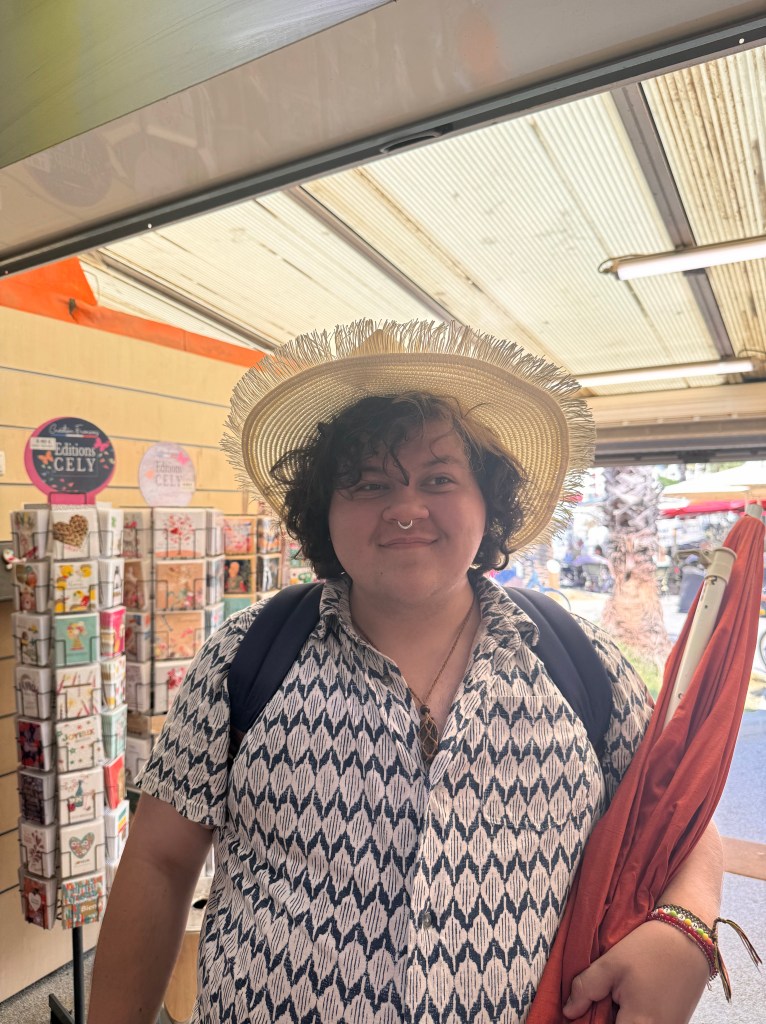
Fine Mediterranean sand has an amazing ability to get absolutely everywhere, and after several beach days he decided he’d had enough. While we relaxed by the water, he set off to explore town, browse the shops, and pick up a few souvenirs to take home.

Eventually the midday sun reminded us it was time to head back.

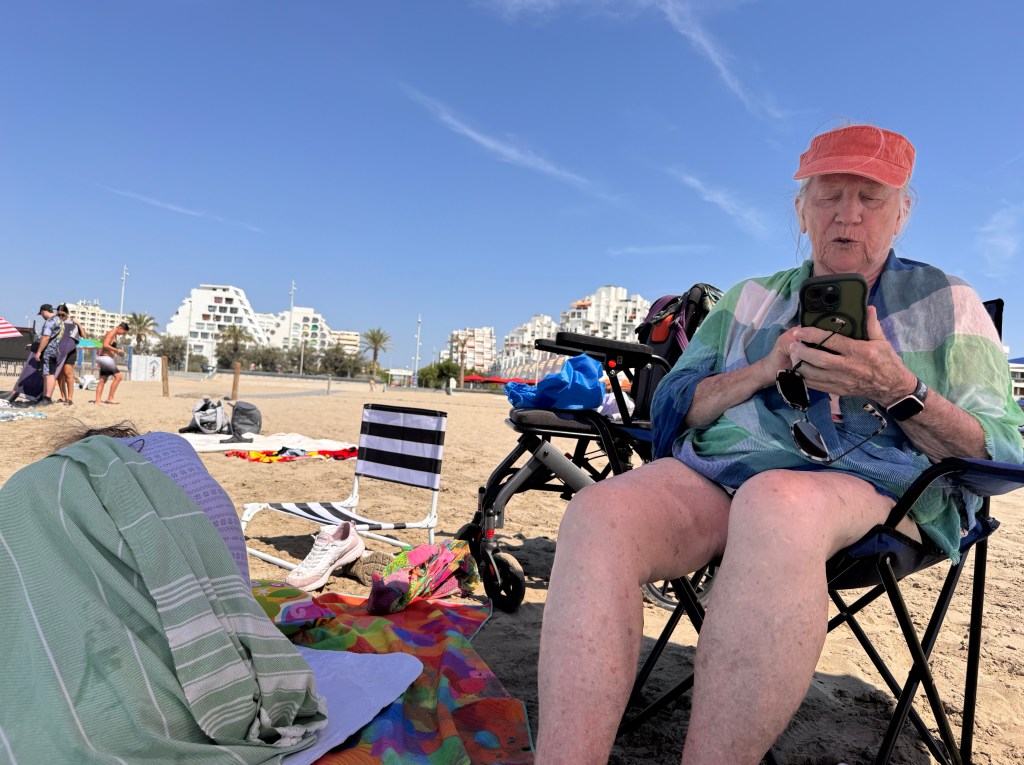
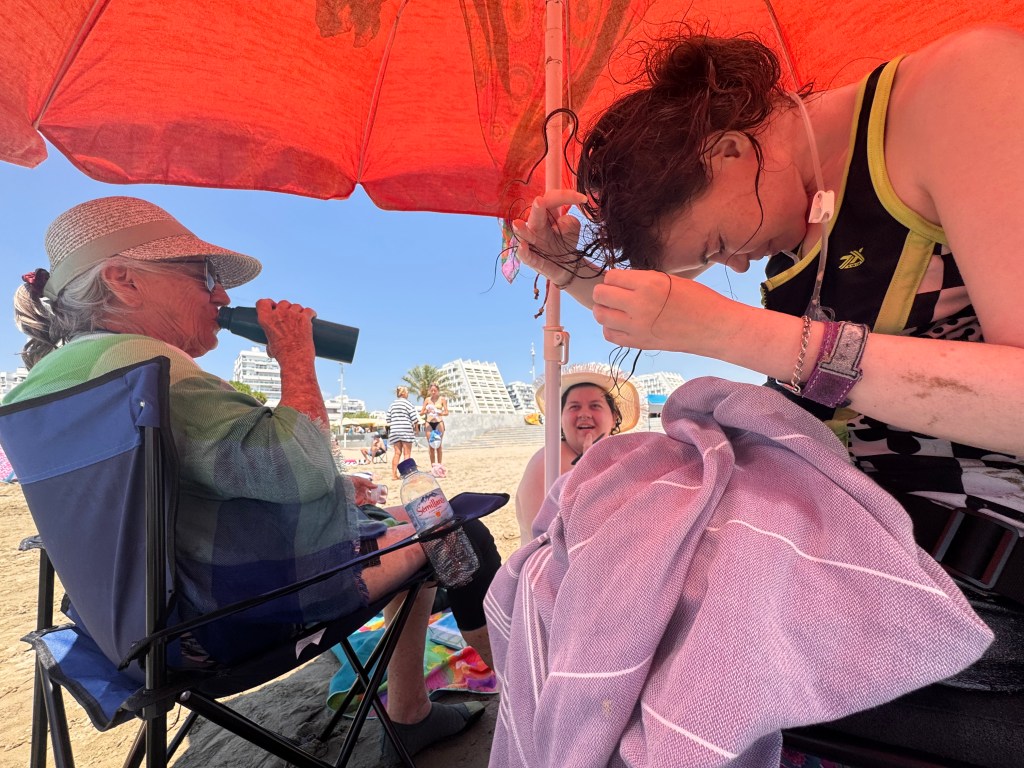
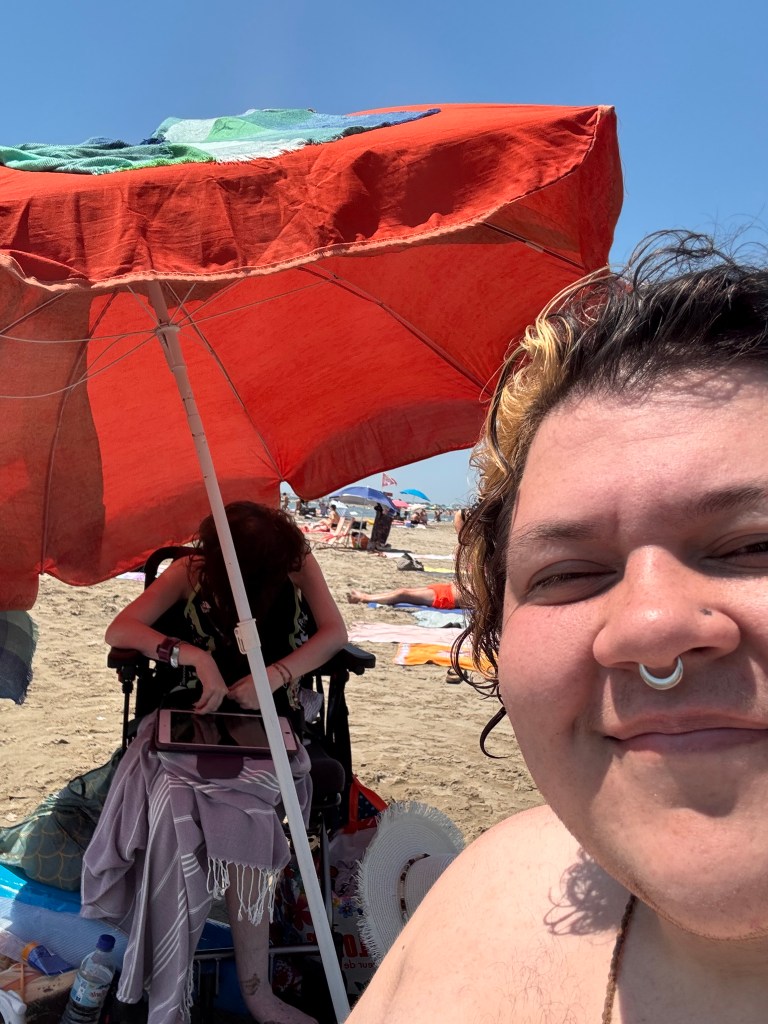
The heat along the Mediterranean was relentless. Even sitting under the beach umbrella, we could feel the sun draining our energy. We became diligent about applying sunscreen throughout the day, especially for Kiya, making sure she stayed protected from the intense southern French sunshine.

Back at the apartment it was the now-familiar routine: shake as much sand off as possible, head straight for the shower, rinse out swimsuits, and enjoy a little time in the wonderfully cool air conditioning while escaping the hottest part of the afternoon.

That evening we enjoyed one last dinner together before returning to the apartment to pack our suitcases.

Our wonderful driver would be picking us up the next morning to take us to the train station, and another chapter of our European adventure would begin.

Looking back, La Grande-Motte was exactly what we needed.

After weeks of museums, castles, trains, and miles upon miles of walking, it offered us a chance to slow down. We traded sightseeing for sunshine, beaches, and long evenings along the boardwalk. It was peaceful, relaxed, and refreshingly different from the larger cities we had visited.

The Mediterranean sun was certainly exhausting—far more intense than we had expected—but the slower pace, beautiful beaches, warm sea, and precious time spent together made it the perfect place to catch our breath before continuing on to the final leg of our journey.

Sunshine, Sand, and Slowing Down in La Grande-Motte

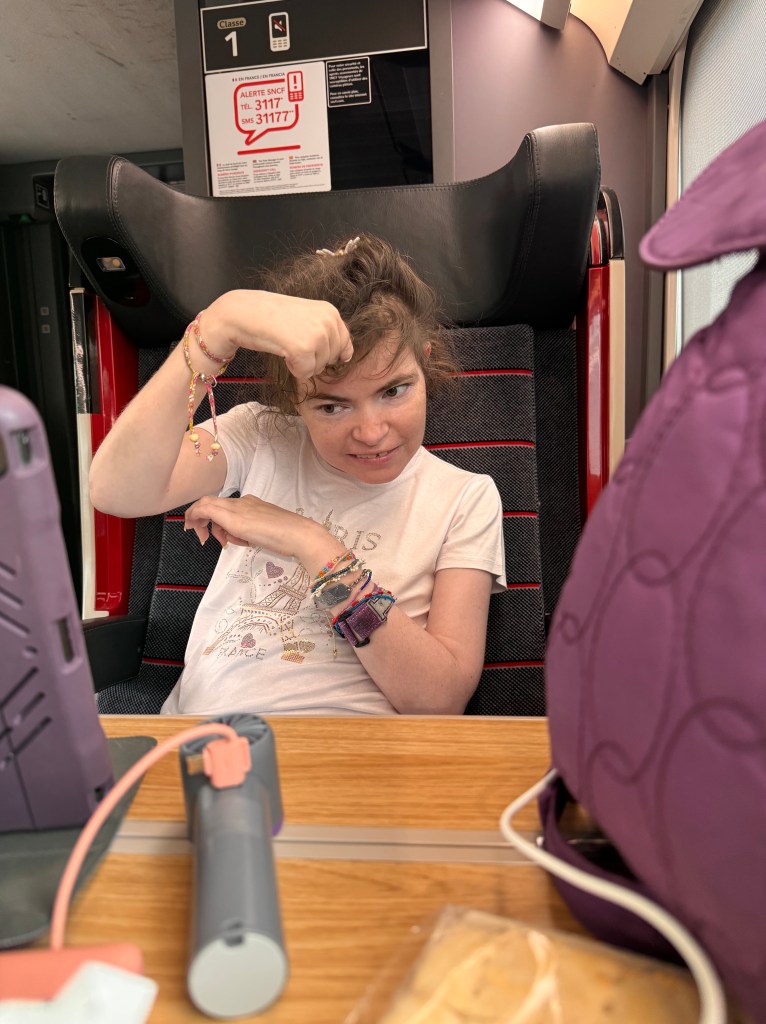
After our incredible time in Paris, we boarded the train for La Grande-Motte in southern France. The ride itself was wonderful. We picked up lunch from the café car and spent the journey watching the scenery change from the bustling city to vineyards, rolling countryside, and eventually the Mediterranean coast.

Our arrival, however, came with a bit of unexpected drama.

As soon as we stepped off the train, we were given a lecture by one of the station employees. We were told we had brought too much luggage, that we hadn’t waited for assistance to leave the train, and that railway workers shouldn’t have to move heavy suitcases.

I politely—but firmly—explained that I hadn’t asked anyone to move our luggage. I was perfectly capable of handling it myself and had been doing exactly that. We eventually agreed to disagree and went our separate ways.

Thankfully, the rest of the day only got better.

Our driver was absolutely wonderful. He not only drove us to our apartment, but spoke with the owners to determine the best place to unload our luggage. Then he carried everything upstairs and helped us get settled before wishing us a wonderful stay.

When we opened the apartment door, we couldn’t stop smiling.

It was beautiful.

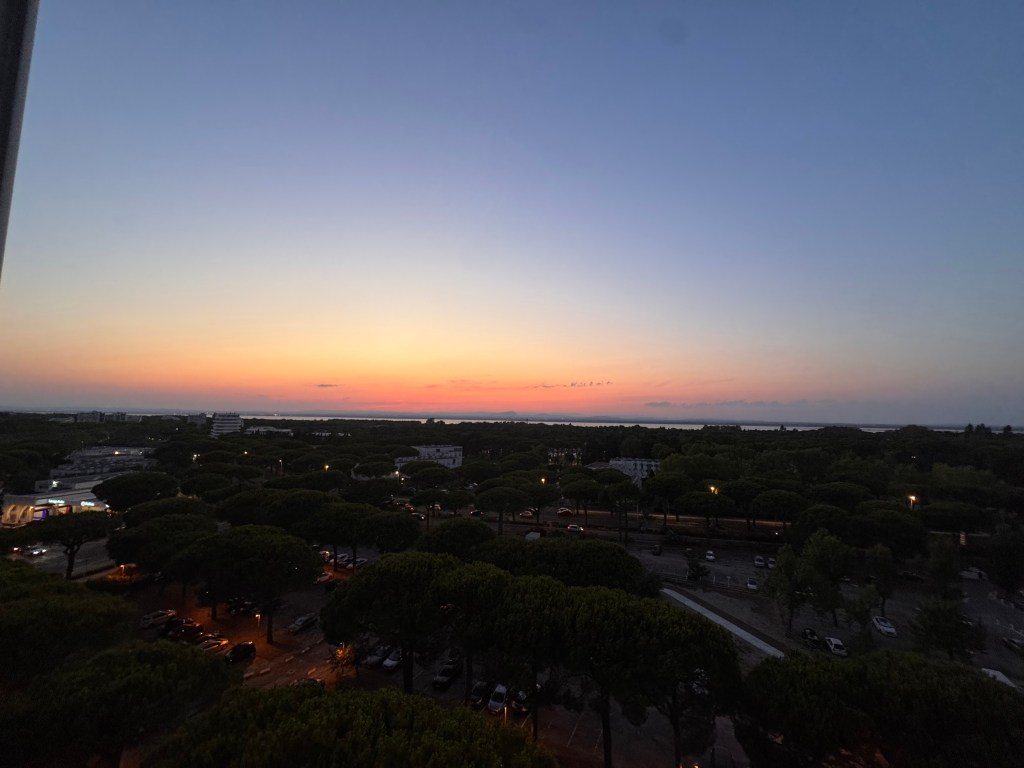
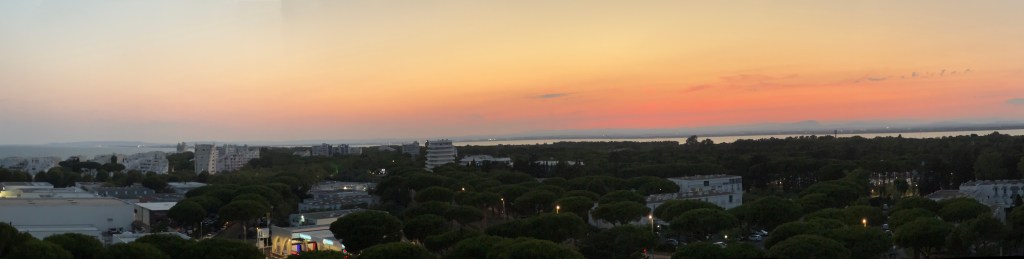
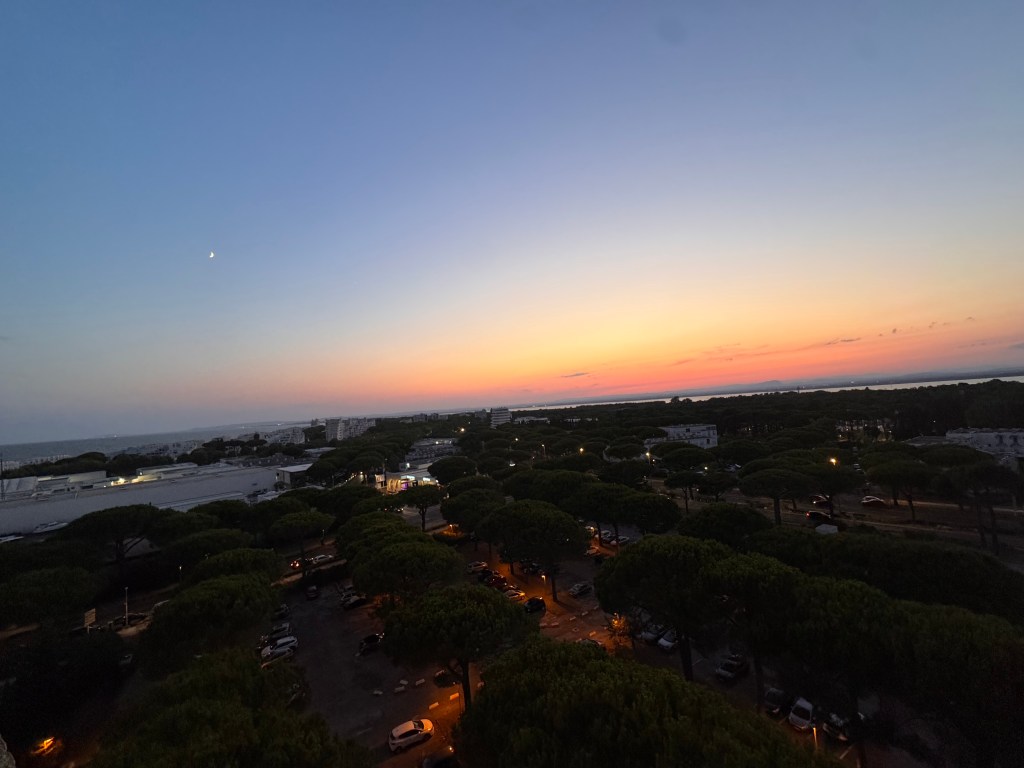
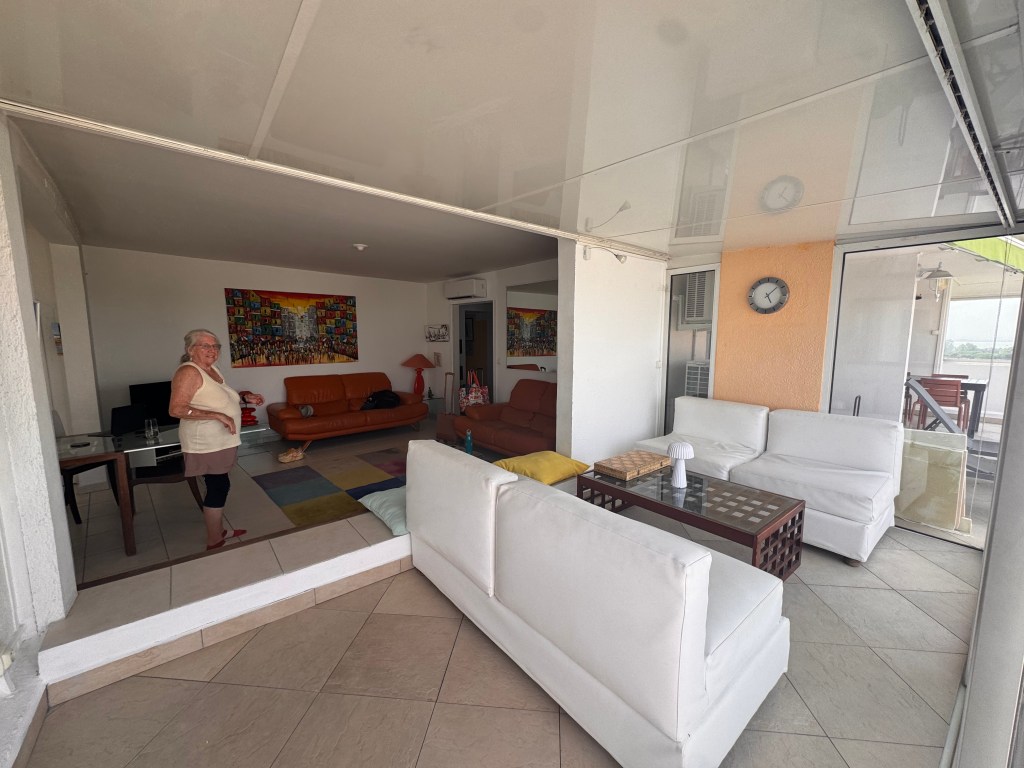
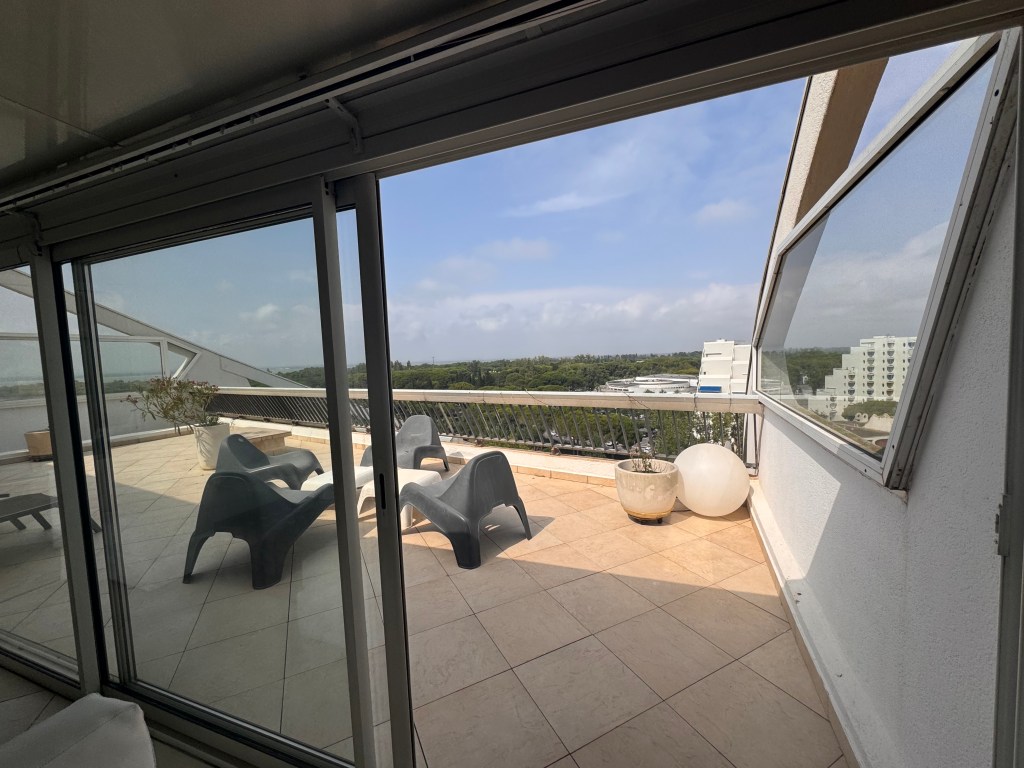
Even better, it was wonderfully cool after the summer heat we had been experiencing. The balcony overlooked the Mediterranean, and the view was absolutely breathtaking. It instantly felt like a place where we could slow down, relax, and simply enjoy being together.

Unfortunately, my faithful suitcase had finally reached the end of its journey. Somewhere between Paris and La Grande-Motte, two of its wheels broke completely off. It had survived airports, train stations, cobblestone streets, and countless miles of walking, but it had finally given up.

Our gracious host, Marie, came to the rescue. She helped me find a nearby store that sold luggage, something that wasn’t necessarily easy in a smaller seaside town.

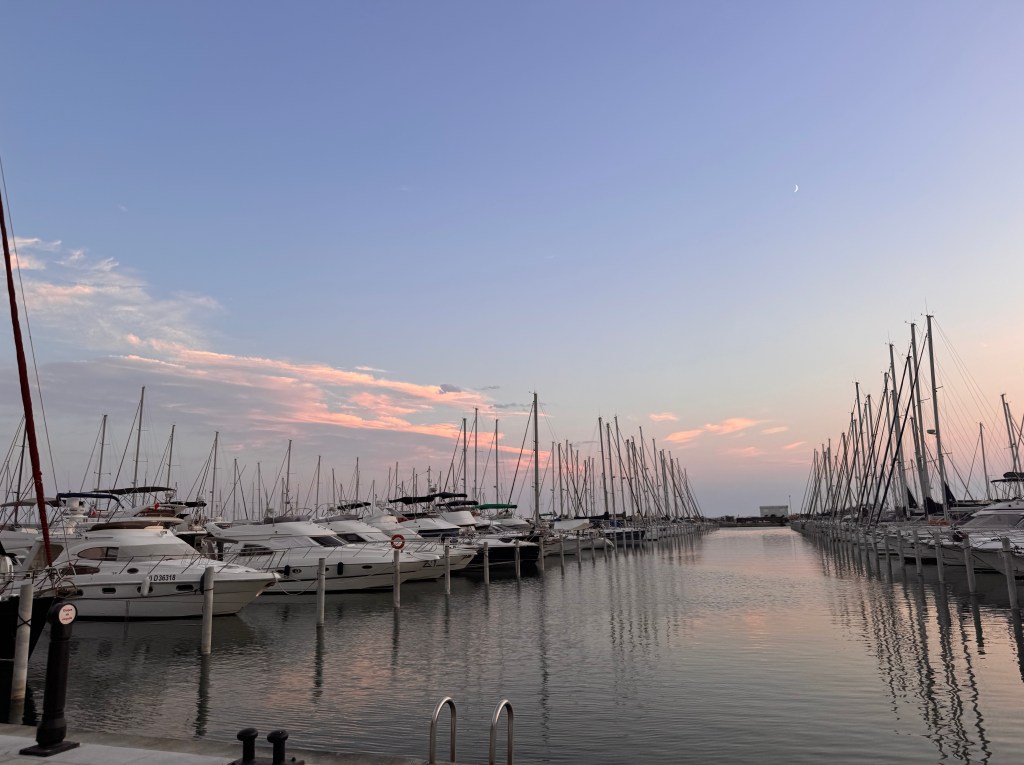
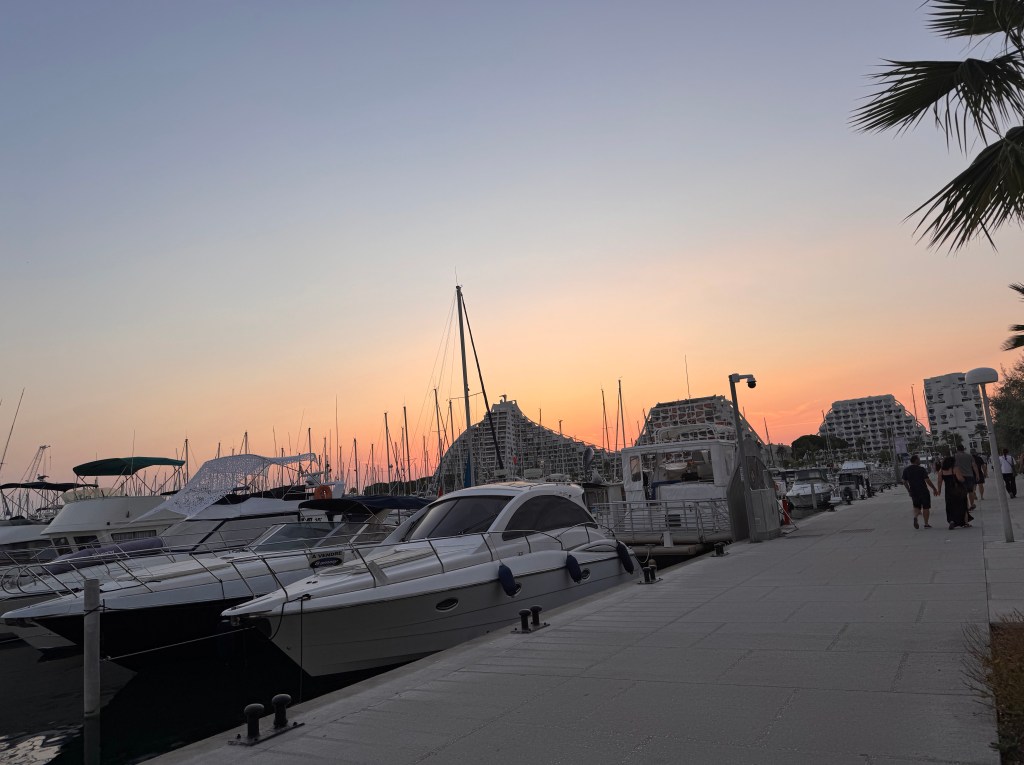
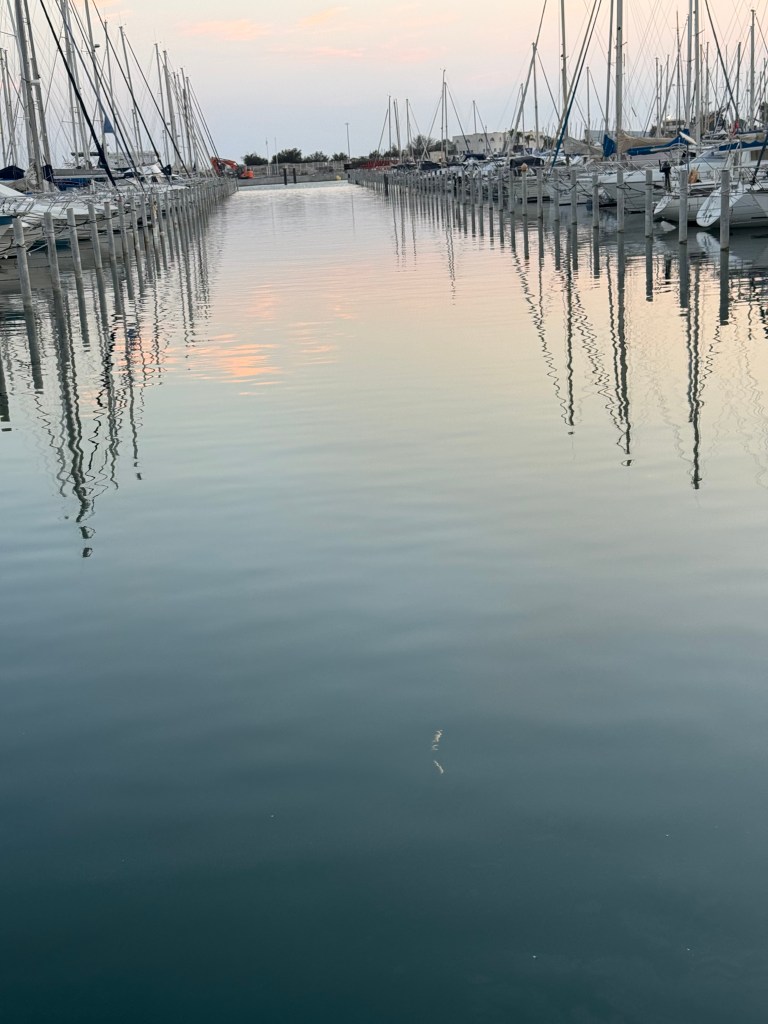
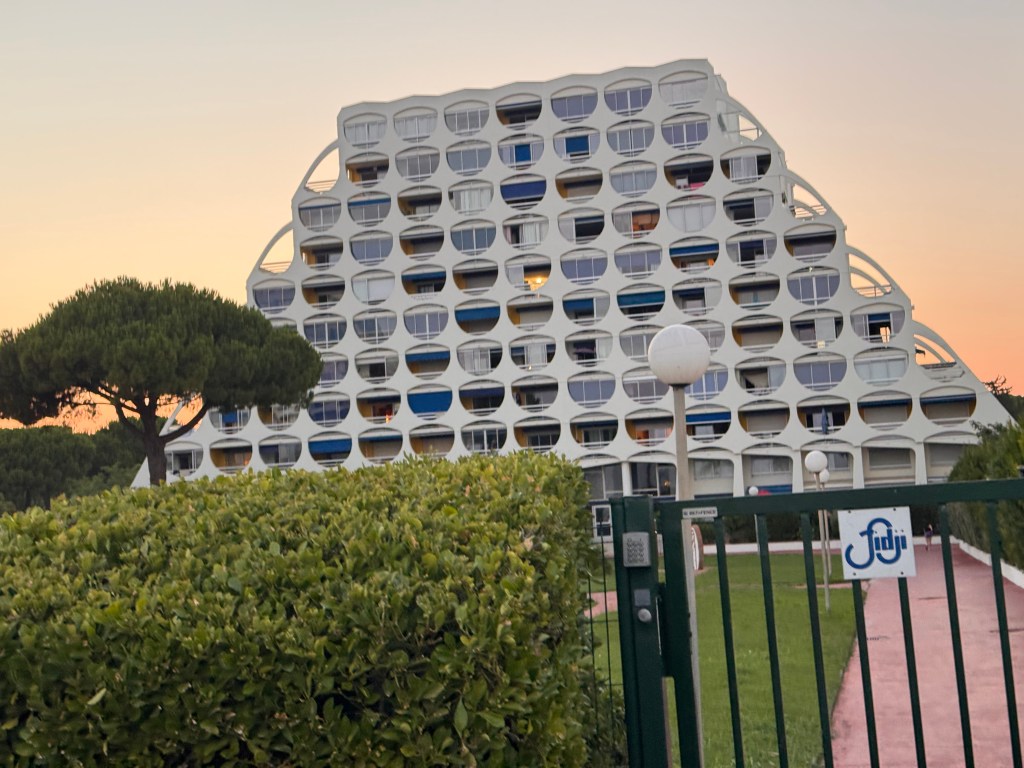
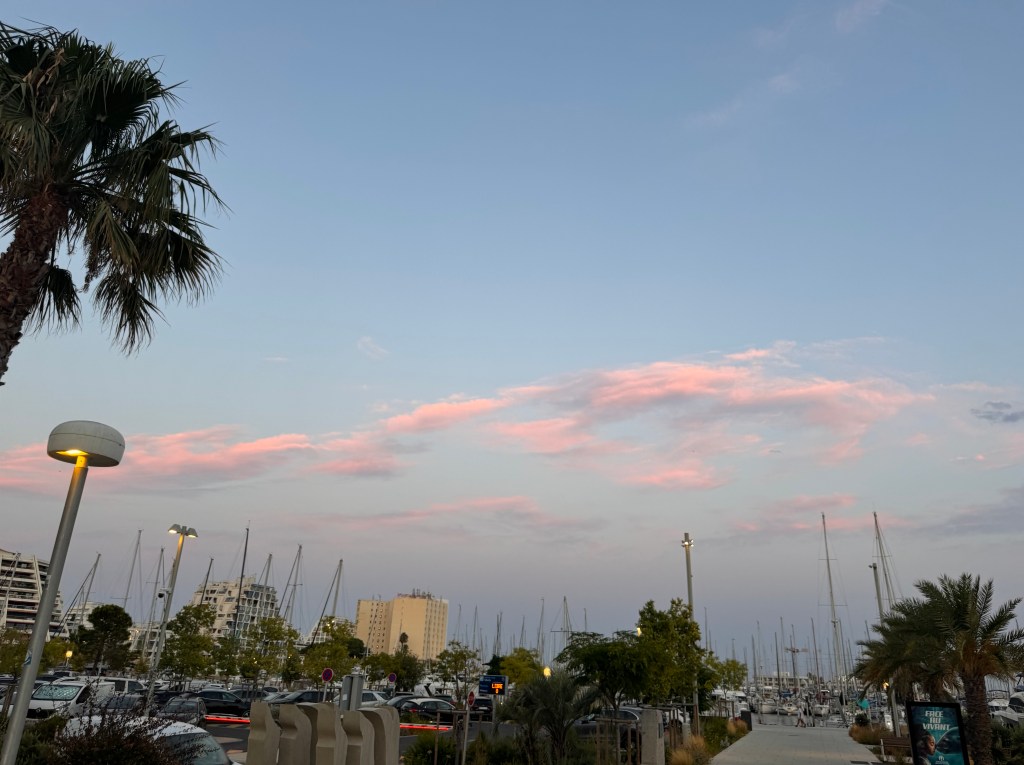
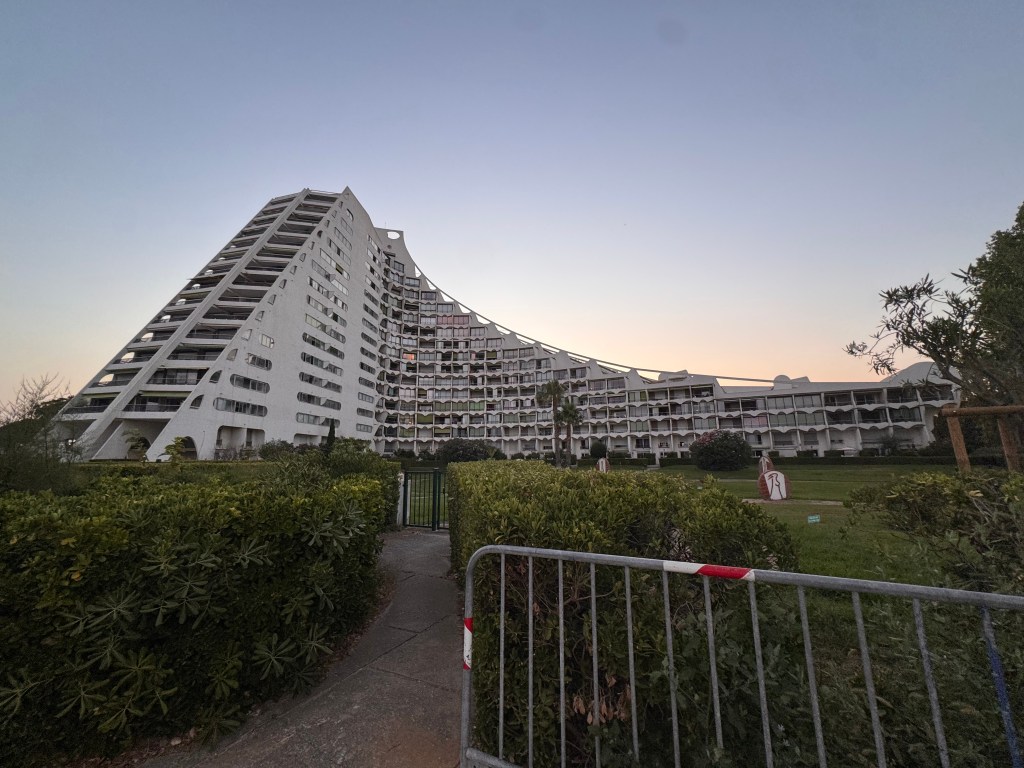
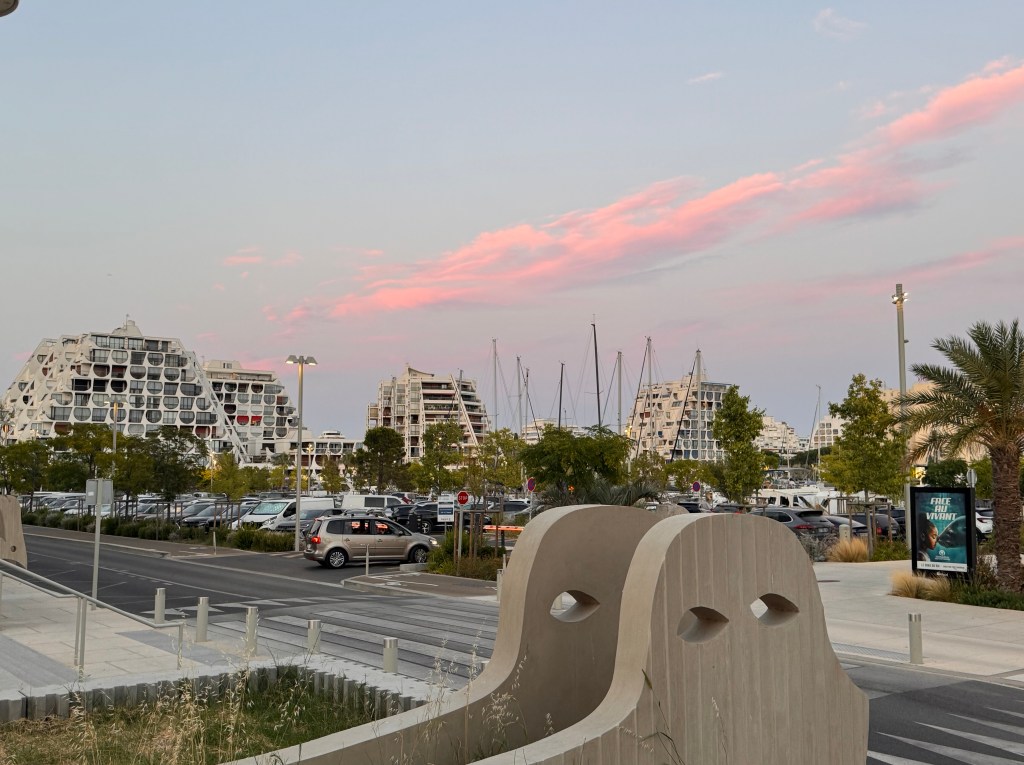
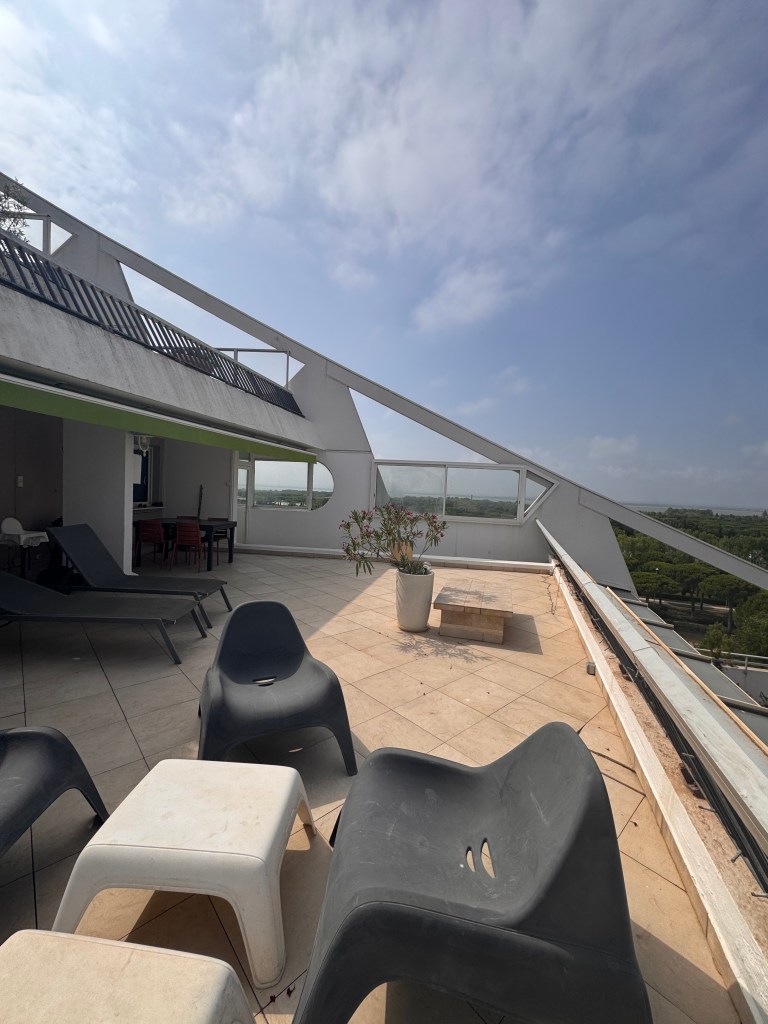
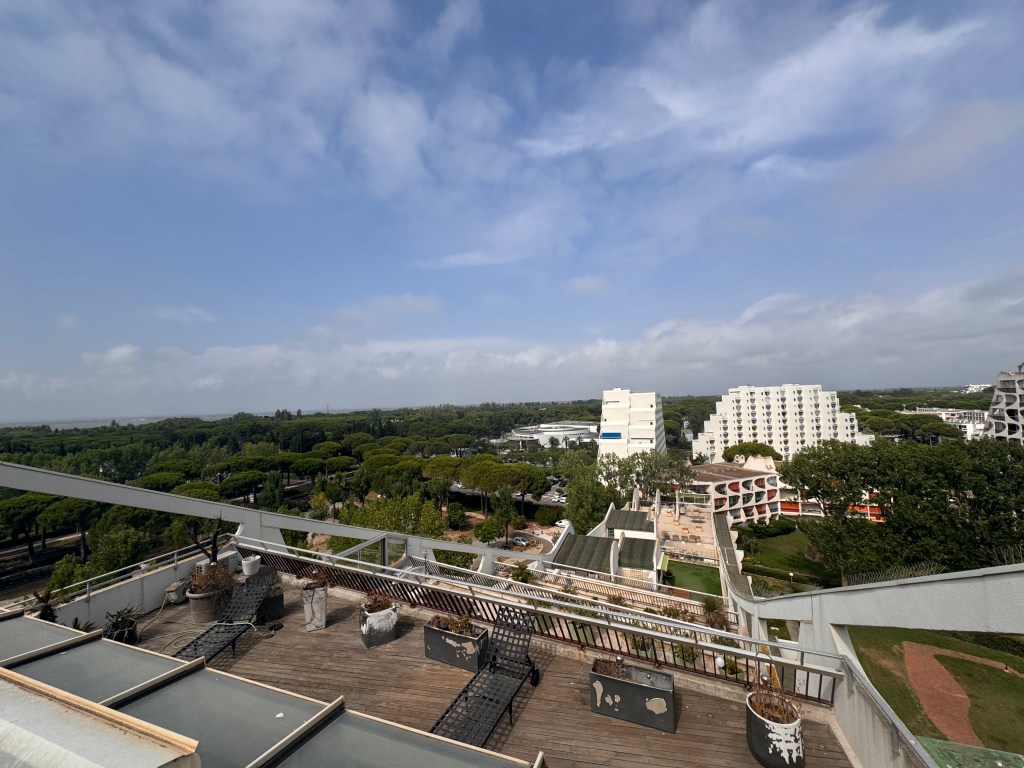
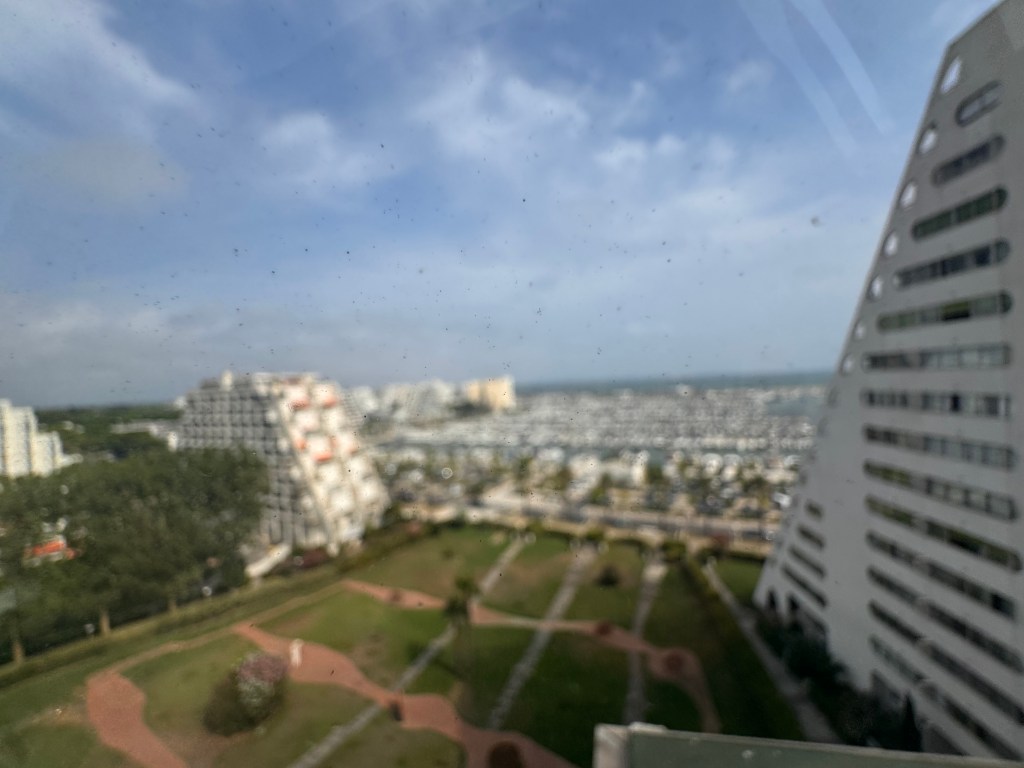
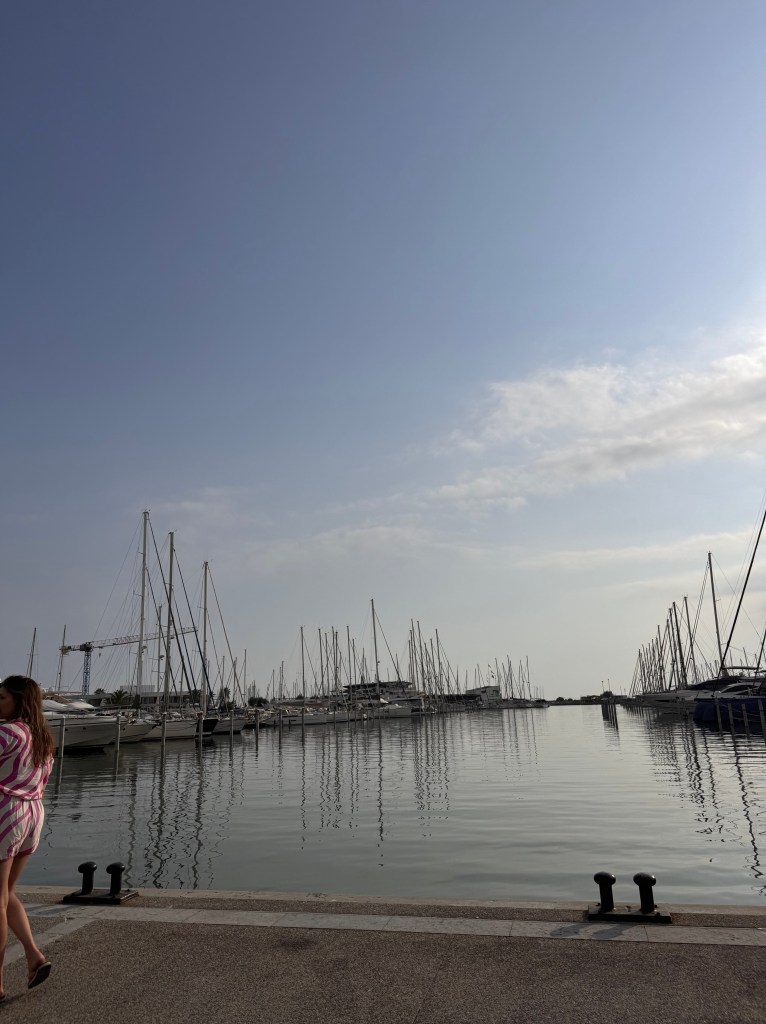
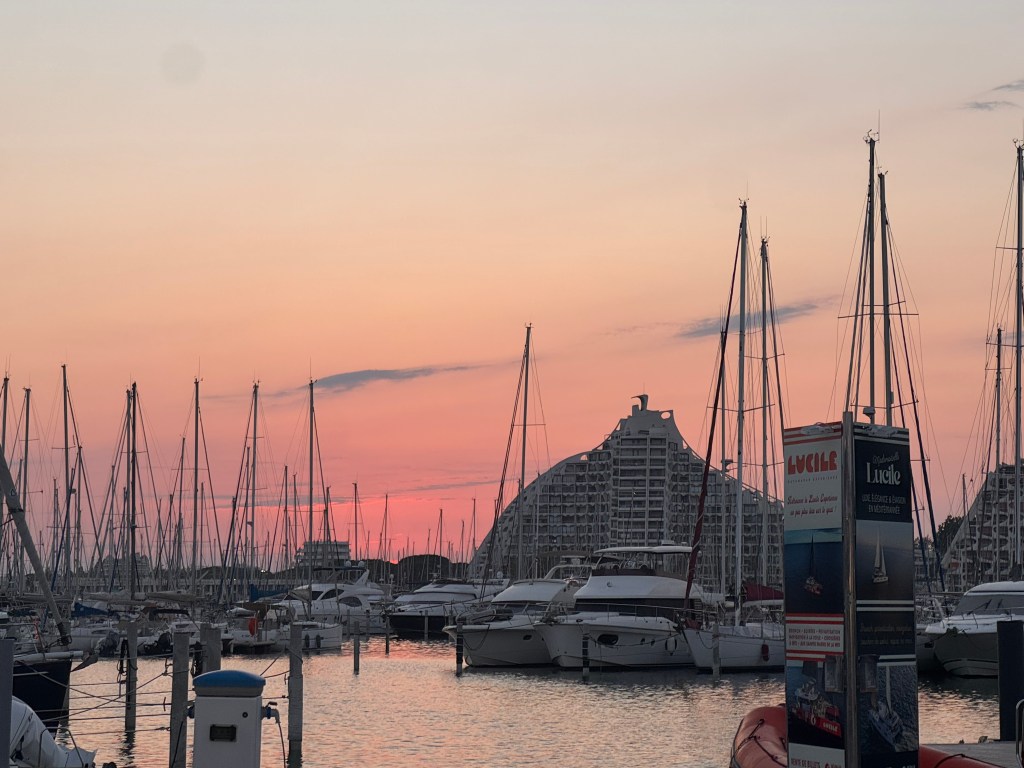
La Grande-Motte couldn’t have been more different from Paris. If Paris is like New York City, then La Grande-Motte reminded me of spending summer at Flathead Lake back home. It has a relaxed atmosphere where everyone seems to slow down and enjoy life. The town is known for its unique pyramid-shaped apartment buildings, designed in the 1960s to resemble modern sandcastles rising above the coastline. Wide walking paths, palm trees, marinas, and miles of sandy beaches give it an entirely different feel from the historic cities we had been visiting.

While shopping for my new suitcase, I wandered through several little boutiques. I found Kiya a bright yellow top with matching pants, along with an adorable shorts romper.

As many of you already know…

She absolutely loved the yellow outfit.

She wore it for the next four days straight.

I also discovered the cutest little grocery store. It couldn’t have been much bigger than our living room and kitchen at home, but somehow it had everything we needed. Before heading back to the apartment, I stopped at a neighborhood pizza shop and picked up dinner.

That first evening we simply sat on the balcony, enjoyed the view, and appreciated having nowhere we absolutely had to be.

It was exactly what we needed.

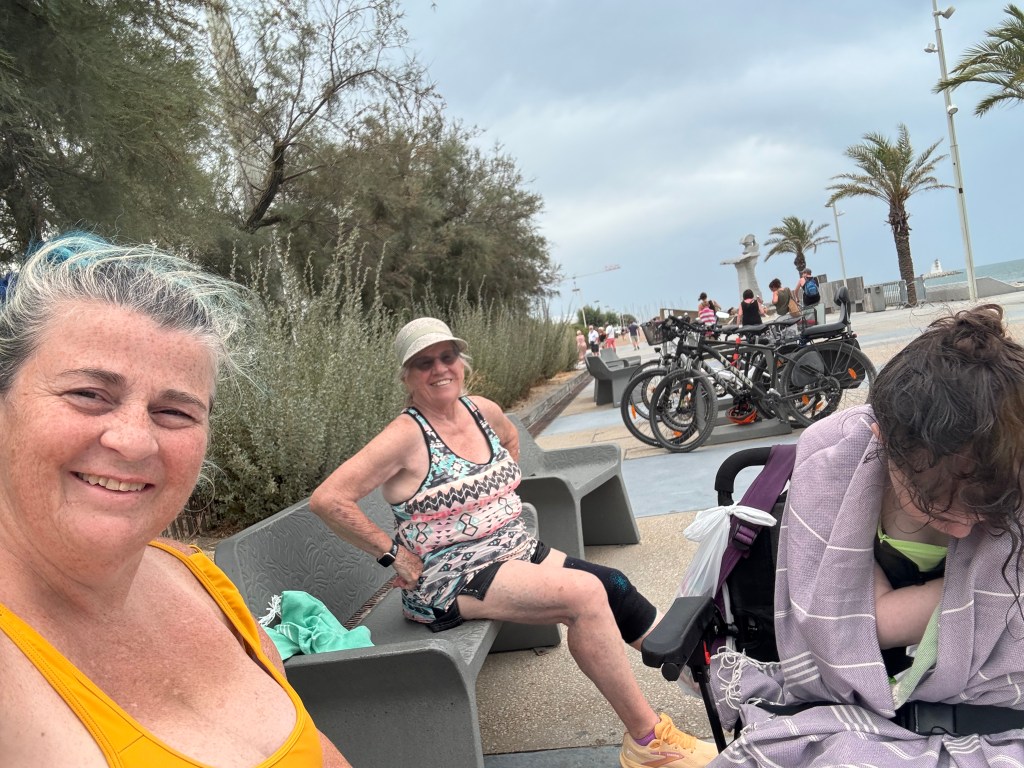
The following morning, the three of us wandered through town and made our way to the beach. Small shops lined nearly every street, making it impossible not to stop and browse. We found a boutique with dresses that actually fit both Mom and me—a rare enough occurrence that we each bought one.

Eventually we reached the beach.

Kiya immediately settled into the shallow water, happily splashing and playing. The bay was incredibly gradual. I could walk nearly twenty feet from shore, and the water still wasn’t above my upper thighs. The day was one of the few overcast ones we experienced during our trip, making the water feel just a little chilly, but it was still beautiful.

On our walk back we found both a bakery and a wonderful little sorbet shop. Somehow Europe always seems to know exactly when you need ice cream.

We couldn’t stay out too long because someone very special was arriving.

Our son, Gabe, was flying in to spend a few days with us.

We returned to the apartment and decided to wait outside rather than risk missing him. Five minutes later, there he was, walking toward us.

It was so wonderful to see him.

After getting him settled into the apartment and catching up on everything that had happened since we left Montana, we headed down to the boardwalk for dinner. We found a terrific restaurant overlooking the beach, enjoyed a leisurely meal together, and then called it an early night.

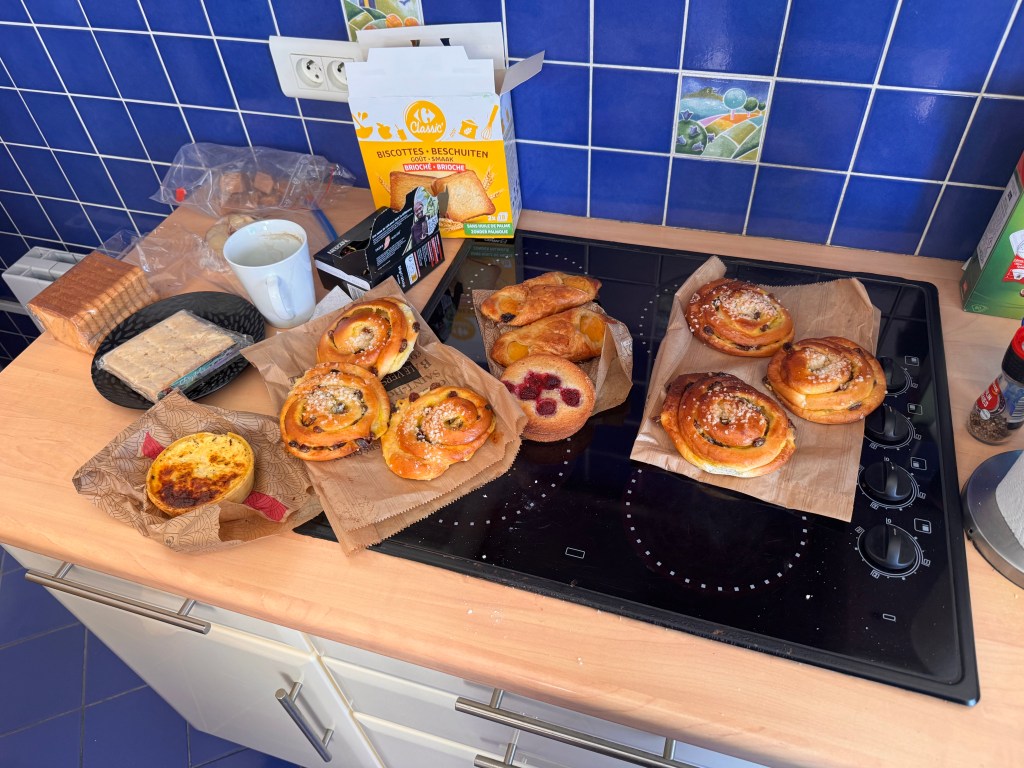
The next morning Mom walked down to the neighborhood bakery and returned with fresh pastries for breakfast.

Then it was time for another beach day.

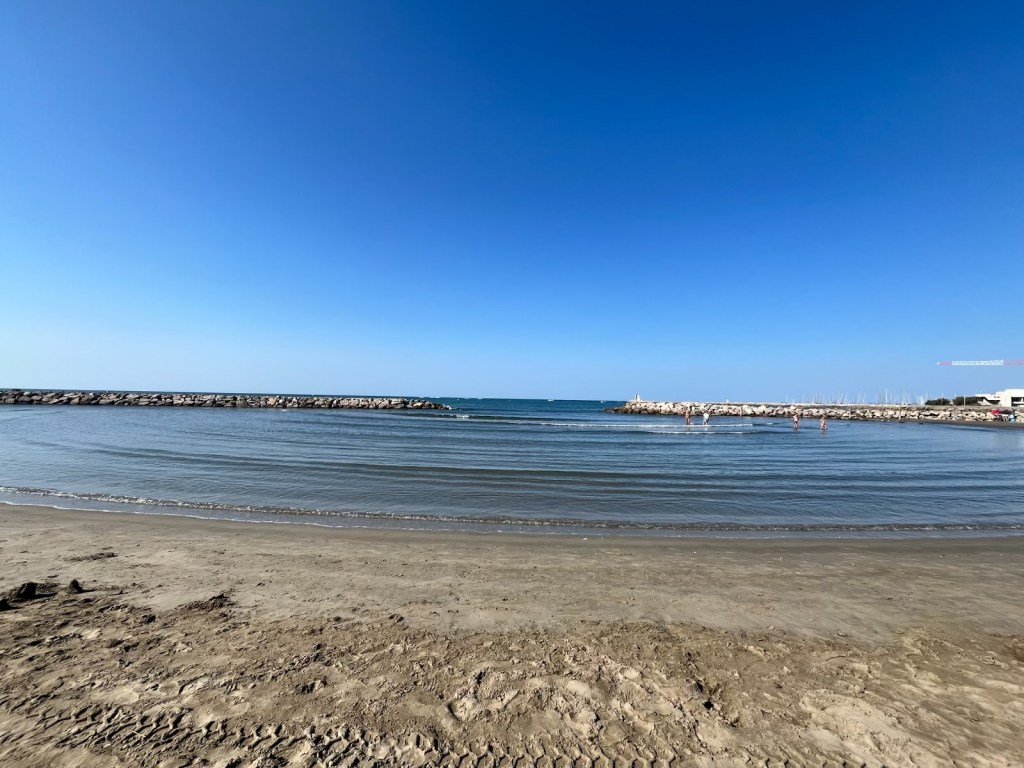
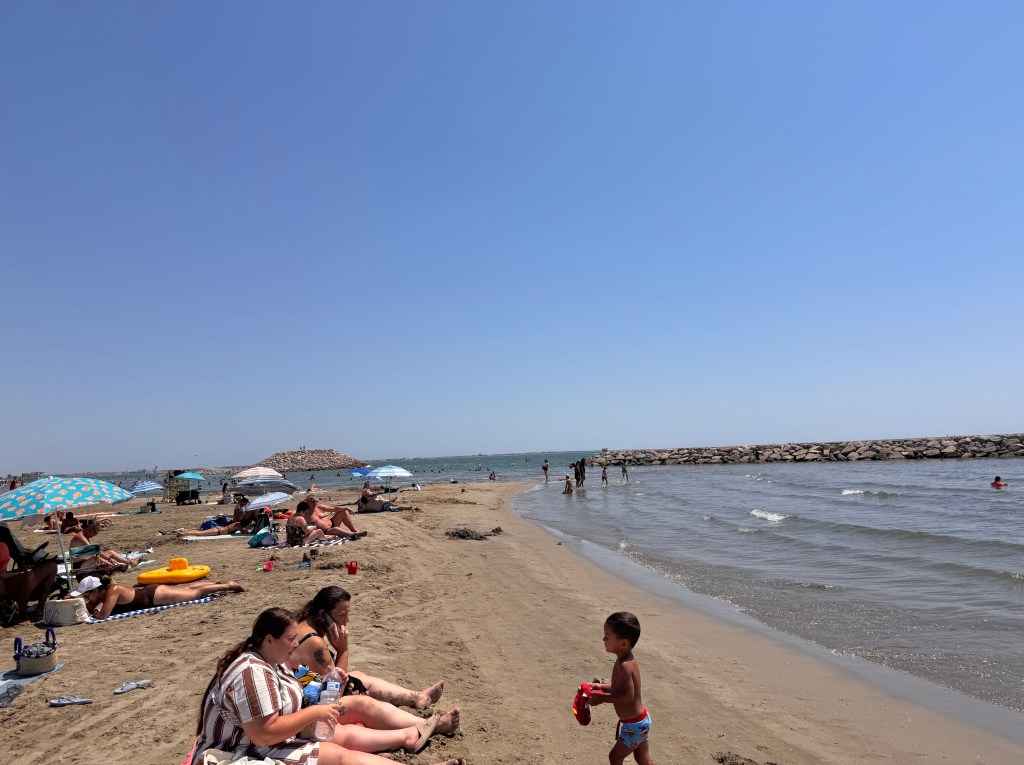
This time we explored a neighboring bay, and the water was noticeably warmer. Once again, the shoreline stretched far into the sea. You could walk a surprising distance before the water finally reached shoulder height.

We spent several wonderful hours swimming, floating, and simply enjoying the Mediterranean.

Earlier that morning I had purchased a few beach chairs, and thankfully our apartment came equipped with a large beach umbrella. Together they made for a perfect setup.

The sand, however, was unlike anything I had experienced before.

It was unbelievably fine.

It found its way into everything.

By the time we returned to the apartment, all of us practically had to strip down outside before heading straight for the shower. Swimsuits immediately went into the wash while we escaped into the wonderful air conditioning during the hottest part of the afternoon.

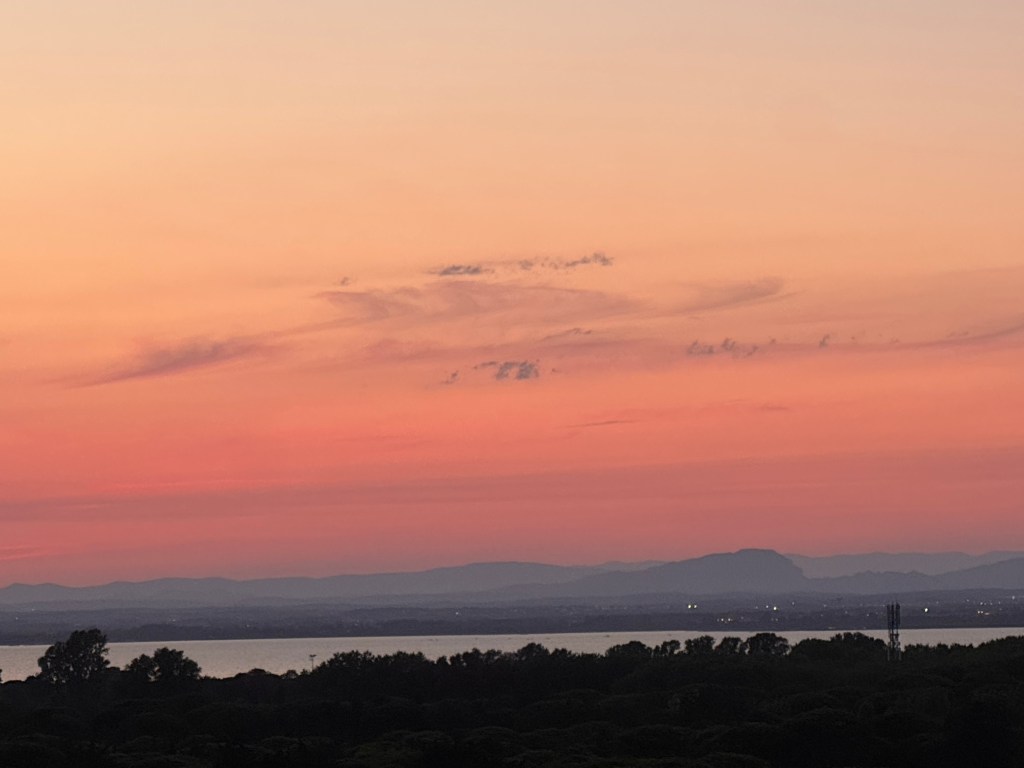
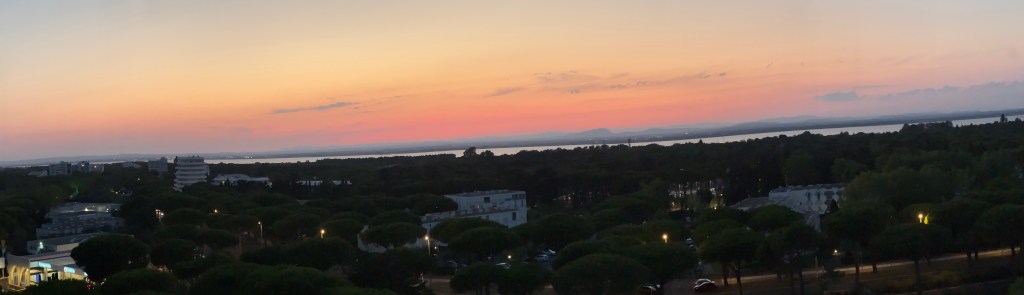
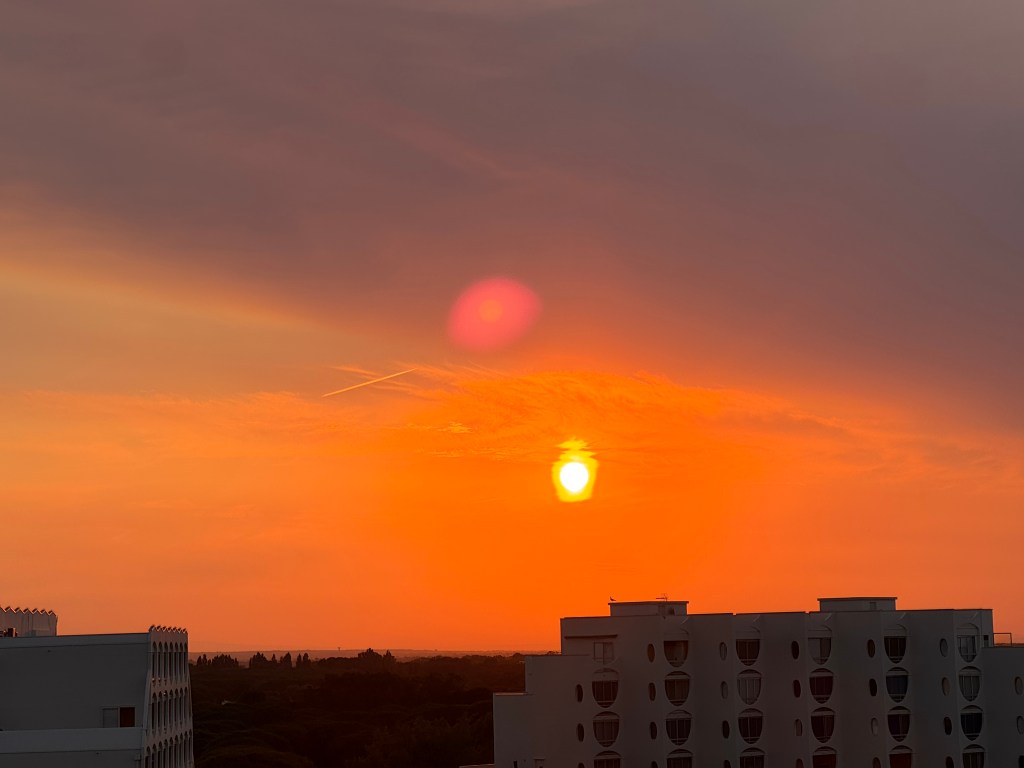
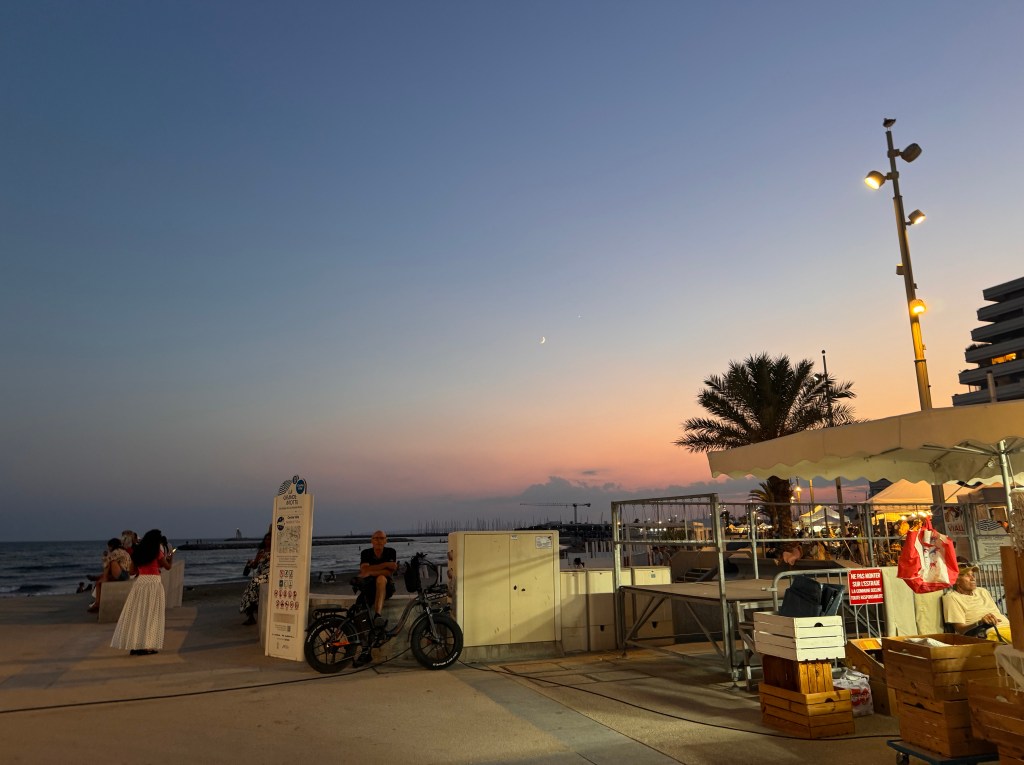
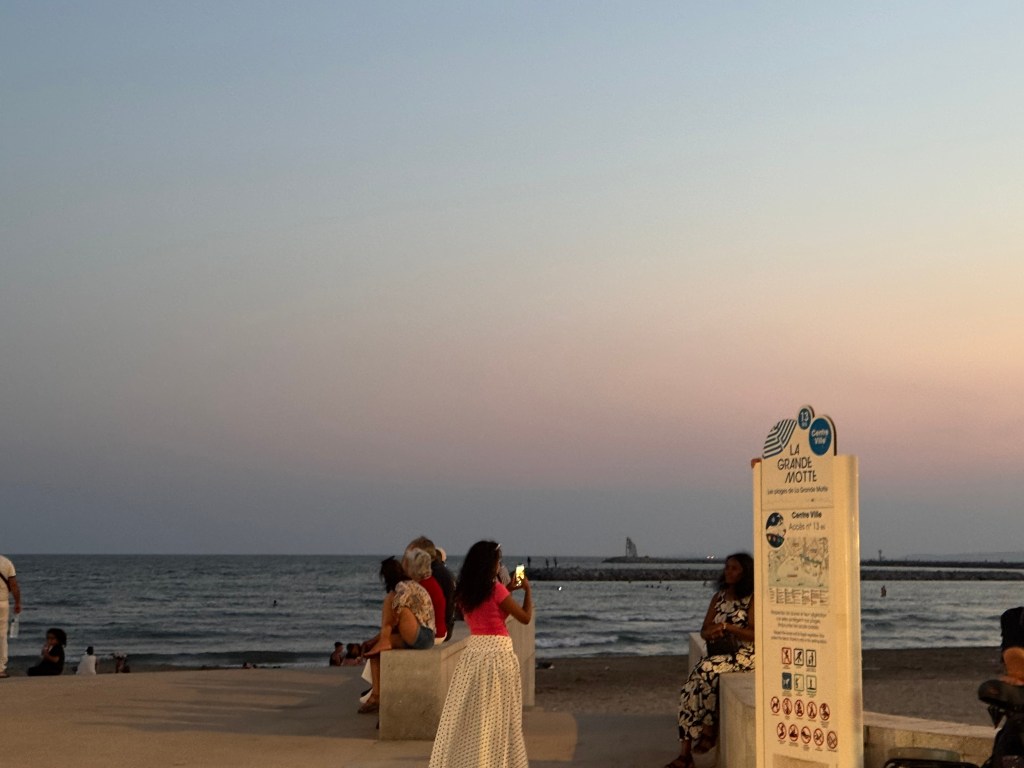
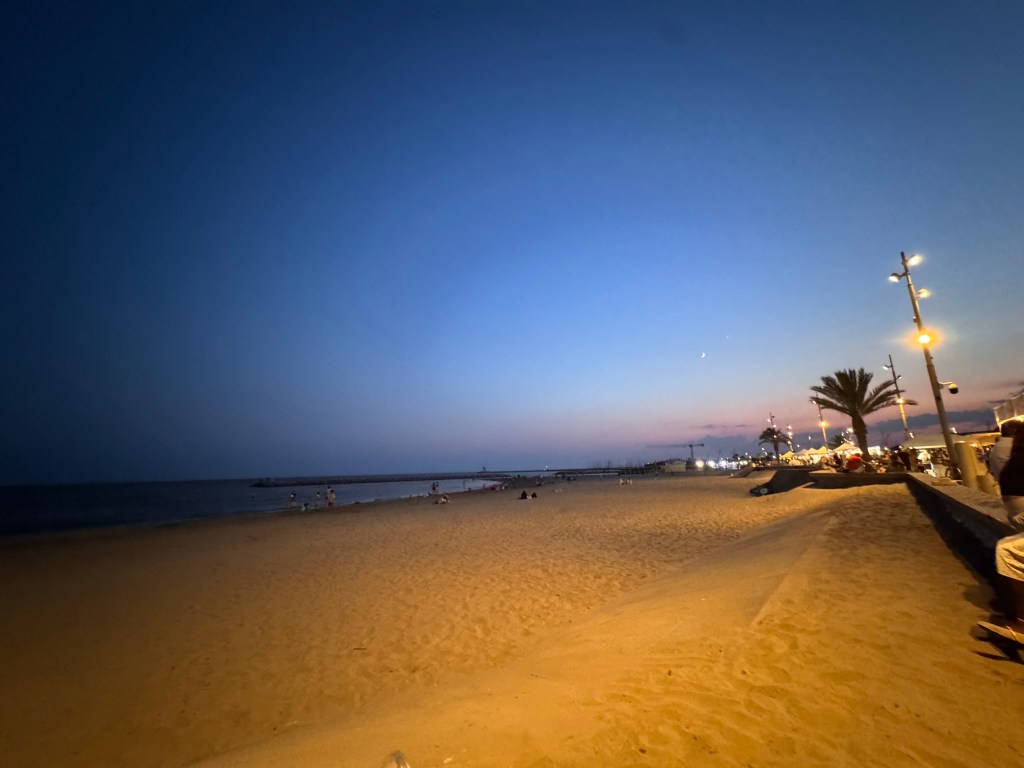
Later that evening Gabe wanted to walk along the beach at sunset.

We happily joined him.

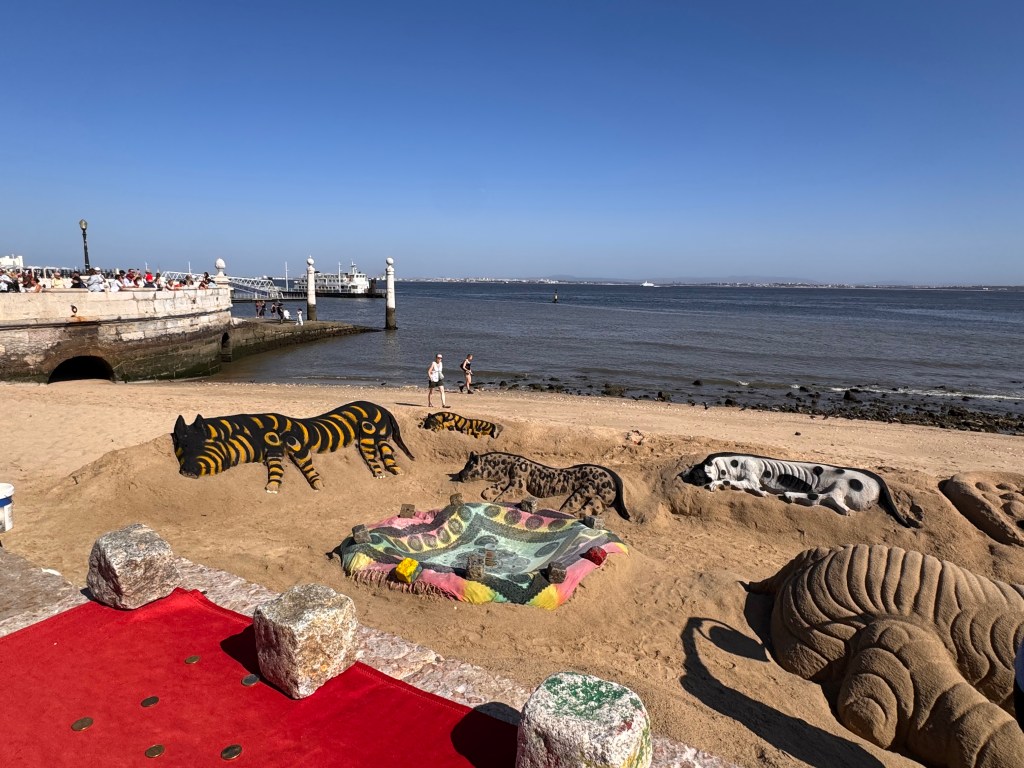
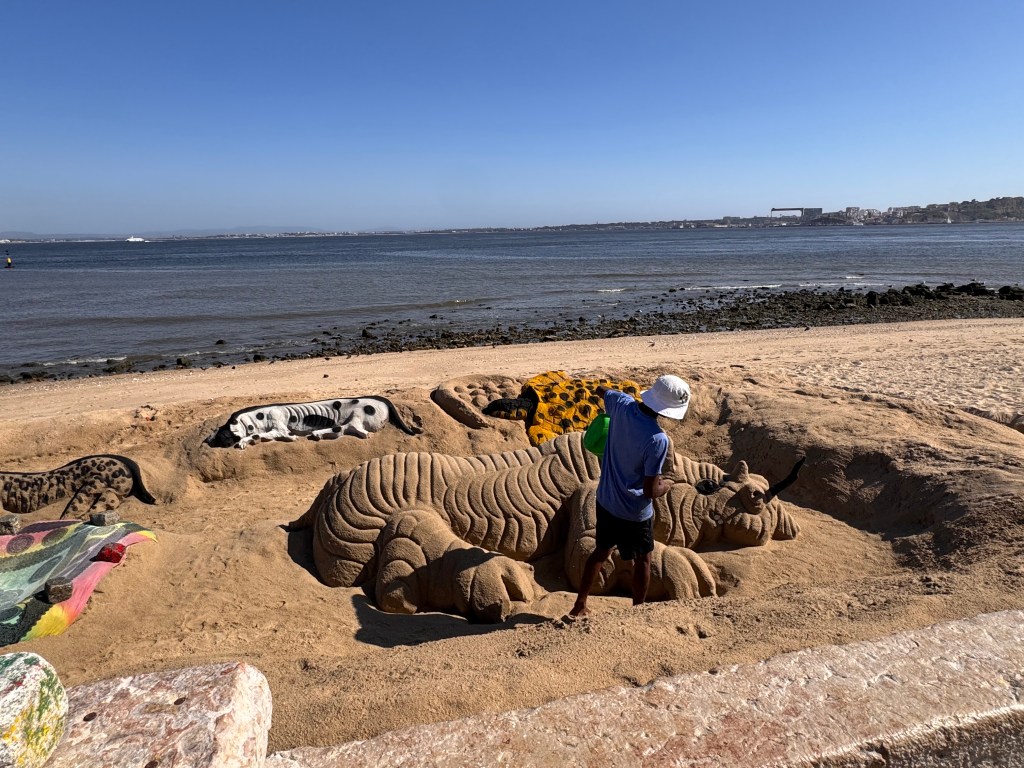
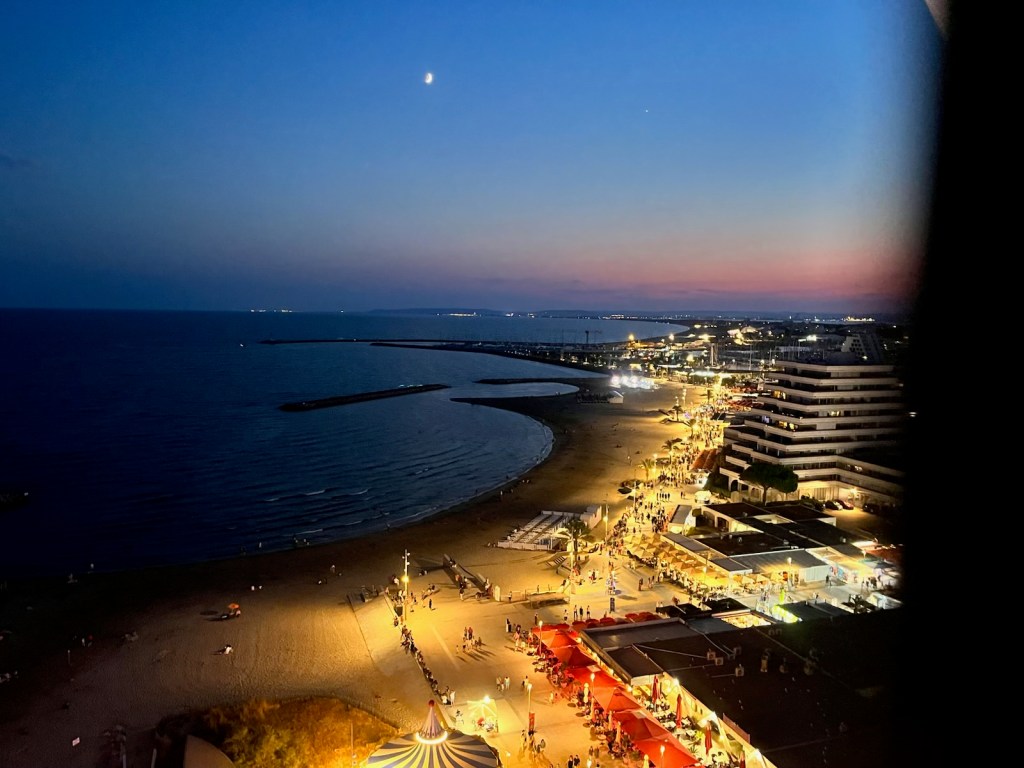
As darkness settled in, the entire boardwalk transformed into a bustling evening craft market. Booth after booth featured handmade jewelry, artwork, clothing, pottery, soaps, and local crafts. Gabe wanted to continue working on some beach-inspired artwork he had started earlier, while I wandered from booth to booth admiring the incredible talents of the local artists.

Eventually we made our way back to our beautiful apartment, grateful once again for the cool air conditioning, the peaceful view, and another unforgettable day on the Mediterranean.

Bastille Day and the Masterpieces of the Musée d’Orsay

The next morning we all allowed ourselves to sleep in a little. After several busy days of sightseeing, it felt good not to rush.

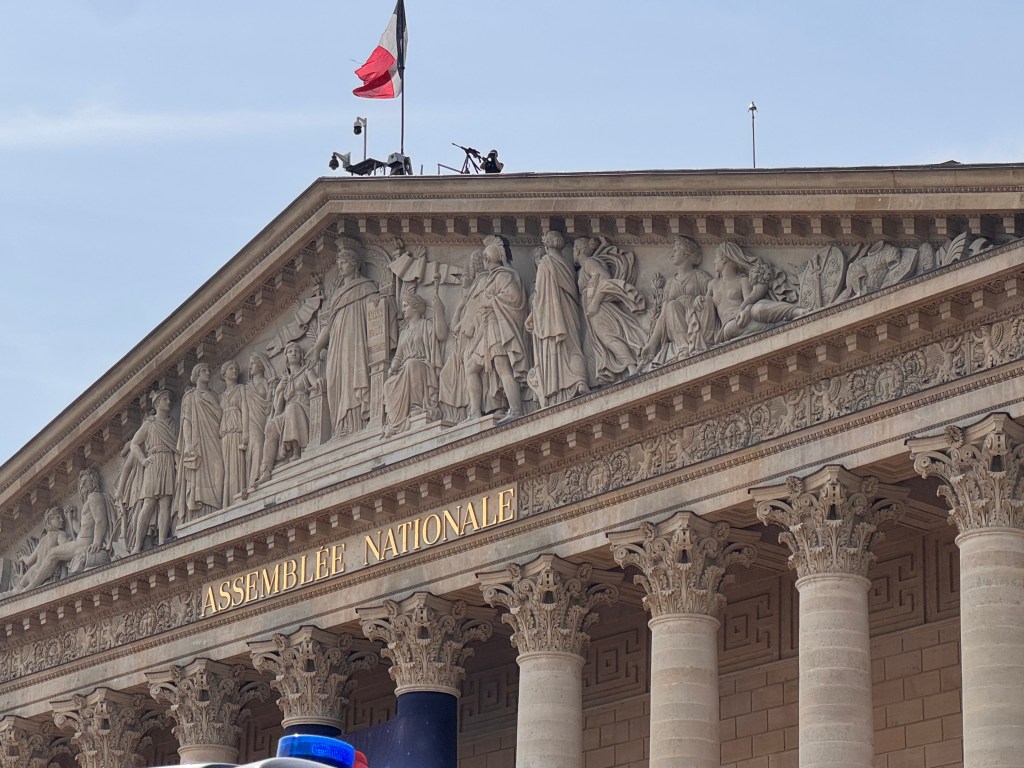
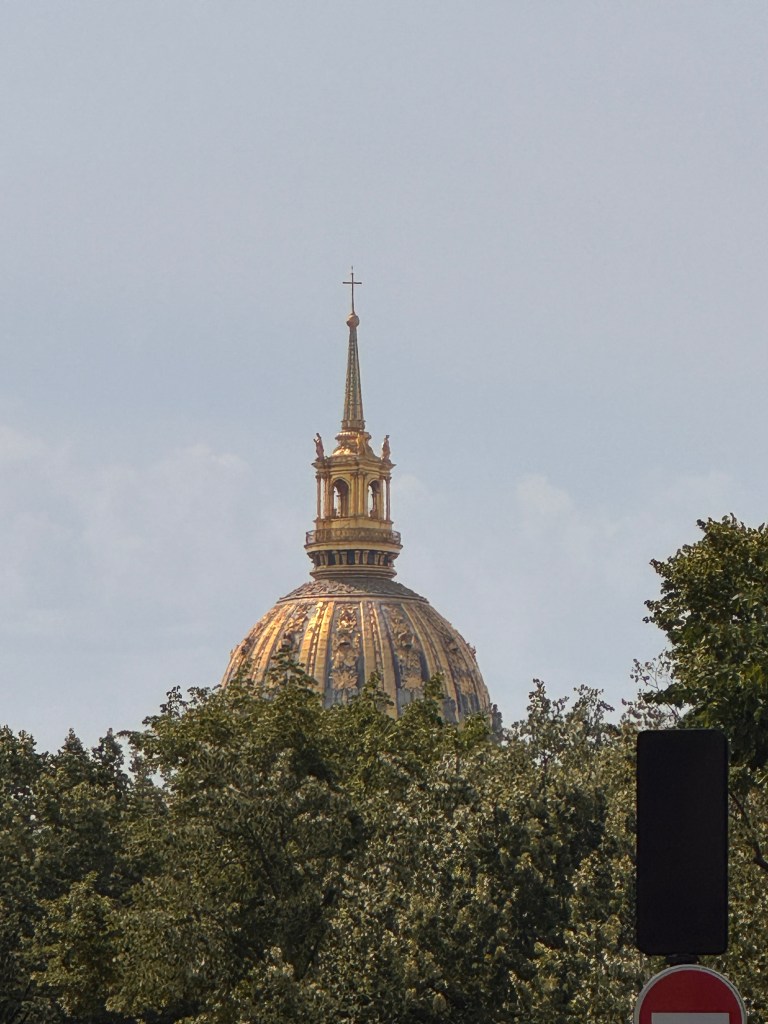
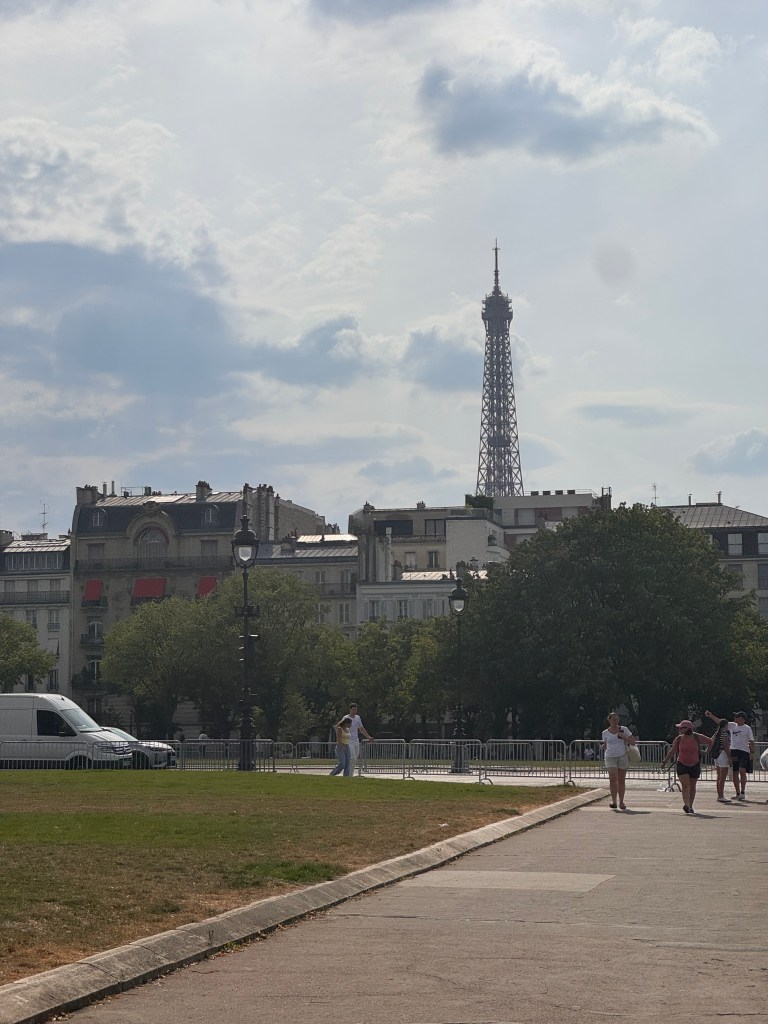
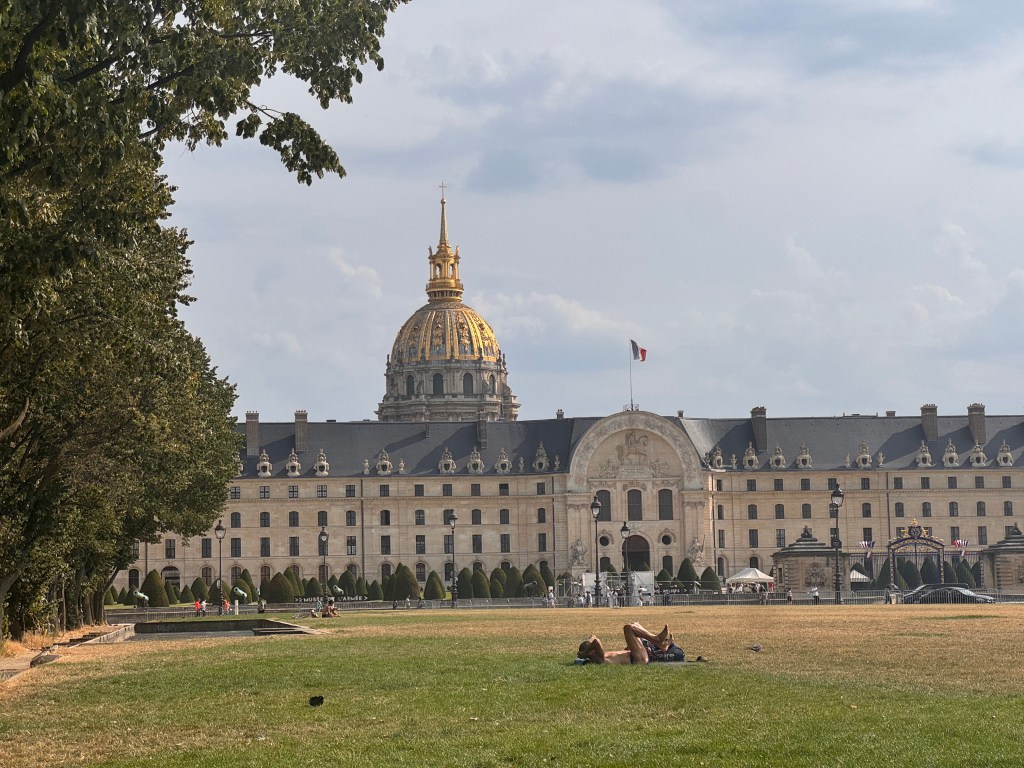
We headed out on foot toward the Musée d’Orsay, walking through the beautiful Esplanade des Invalides. Stretching between the Seine River and the Hôtel des Invalides, the wide lawns and tree-lined walkways offered wonderful views of one of Paris’s most historic landmarks. Originally commissioned by King Louis XIV in the 1600s as a hospital and retirement home for wounded soldiers, Les Invalides is now home to several military museums and Napoleon Bonaparte’s magnificent tomb beneath its golden dome.

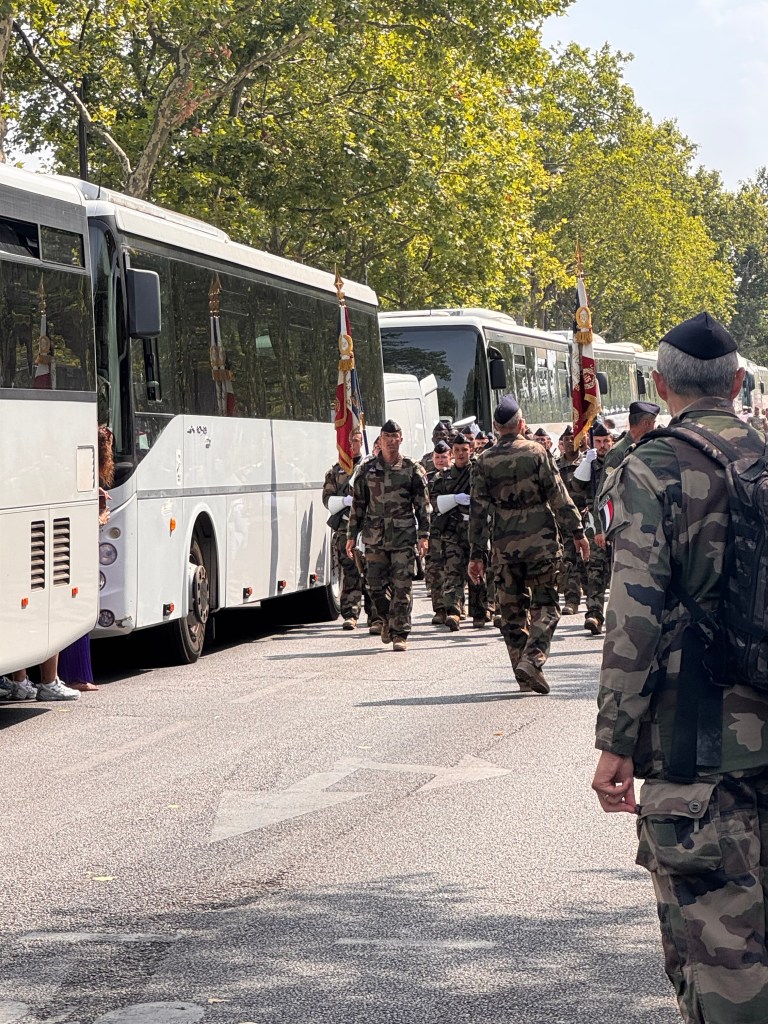
As we walked, we realized we had unknowingly found ourselves along part of the Bastille Day festivities.

What incredible timing!

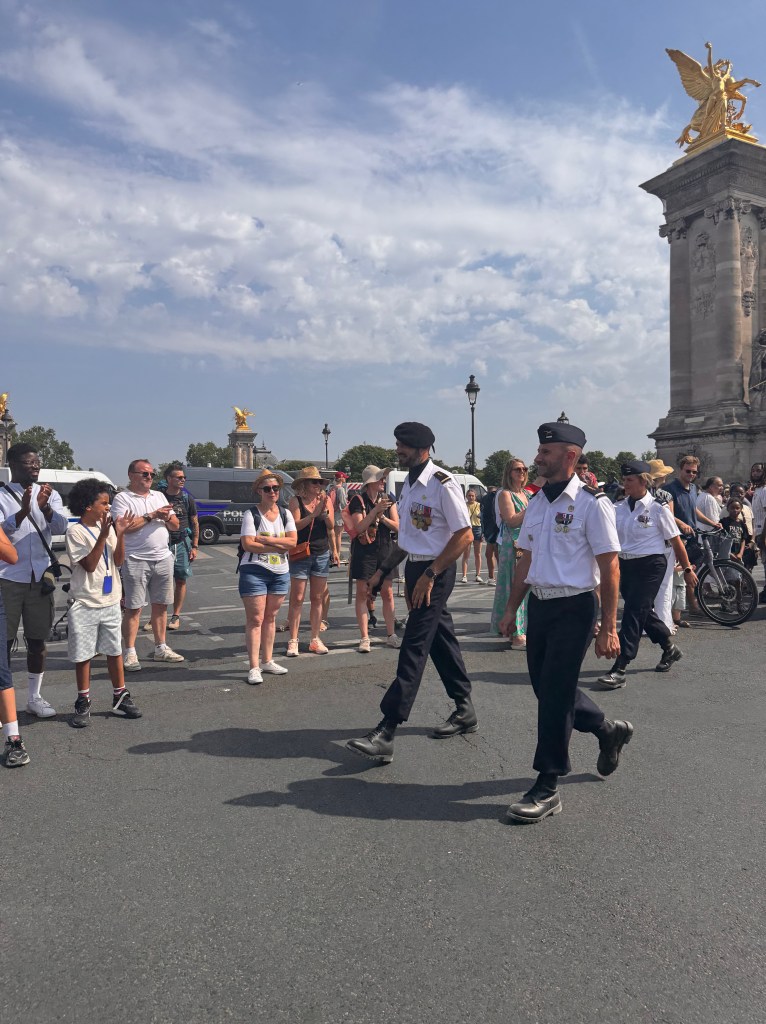
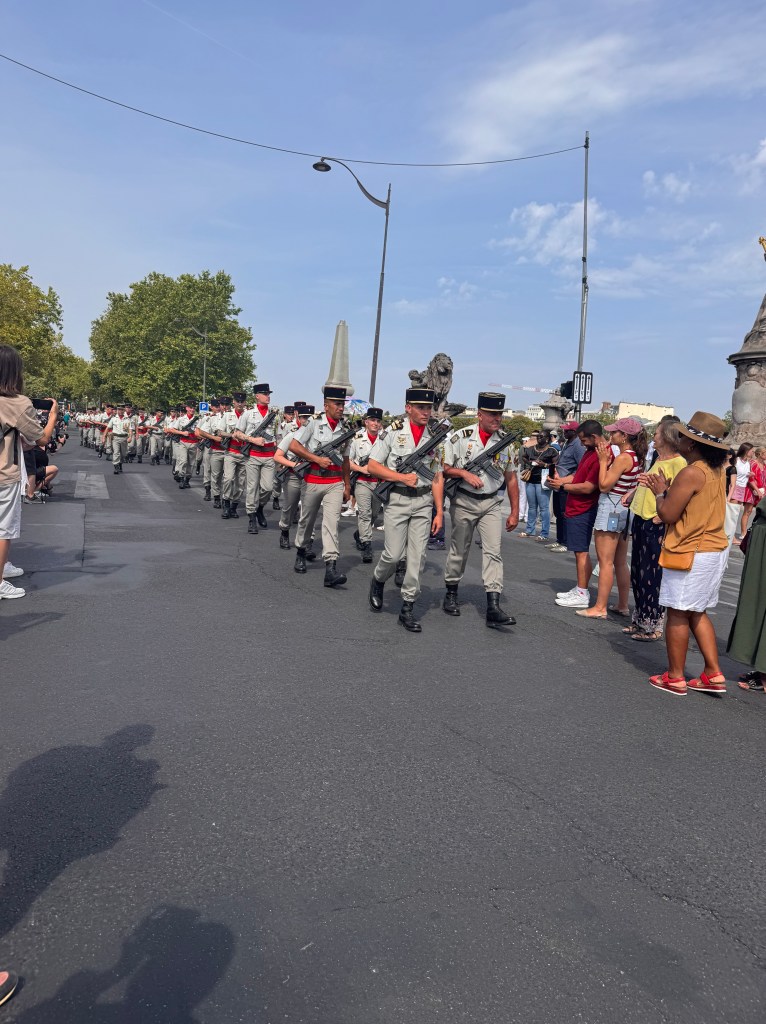
Bastille Day, celebrated every July 14, commemorates the storming of the Bastille prison in 1789, one of the defining moments of the French Revolution. Today it serves as France’s national holiday and is marked by one of the world’s largest military parades.

This year’s celebration was especially significant. Nearly 6,700 troops, 98 aircraft, 31 helicopters, and more than 300 military vehicles participated in what was reported to be the largest Bastille Day parade ever held. France also highlighted its solidarity with its allies, welcoming Ukraine’s president as the guest of honor while showcasing its commitment to European security.

It was exciting to watch units from across the French Armed Forces marching through Paris. We saw soldiers, military vehicles, helicopters overhead, and aircraft flying as part of the celebration. While watching, one of the commanders walked over and presented us with a commemorative patch from Base Aérienne 702 (BA 702) at Avord.

The patch featured a fire-breathing dragon, a symbol traditionally representing strength, determination, and formidable power. BA 702 is one of France’s most important Air and Space Force bases and plays a key role in the country’s strategic defense. Receiving the patch completely by surprise made it an unexpected souvenir that will always remind us of spending Bastille Day in Paris.

Eventually we continued our walk to the Musée d’Orsay.

Although our timed tickets were for 9:00 a.m. and we were running a little behind, the staff welcomed us without any difficulty.

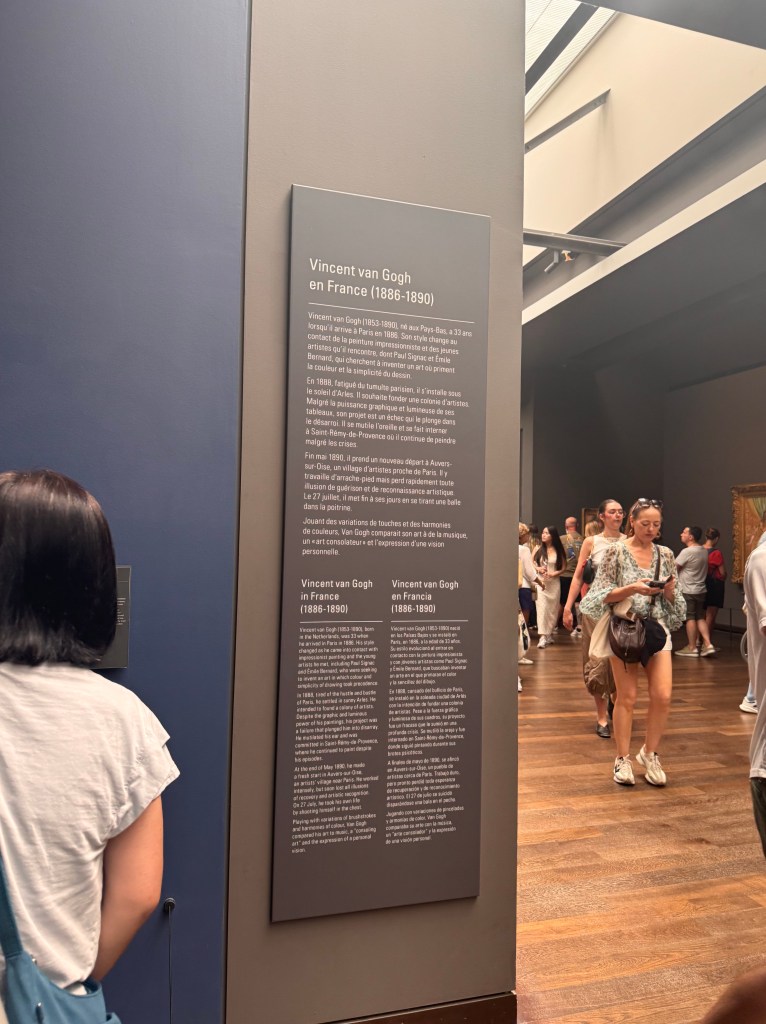
The Musée d’Orsay quickly became one of my favorite museums of the entire trip.

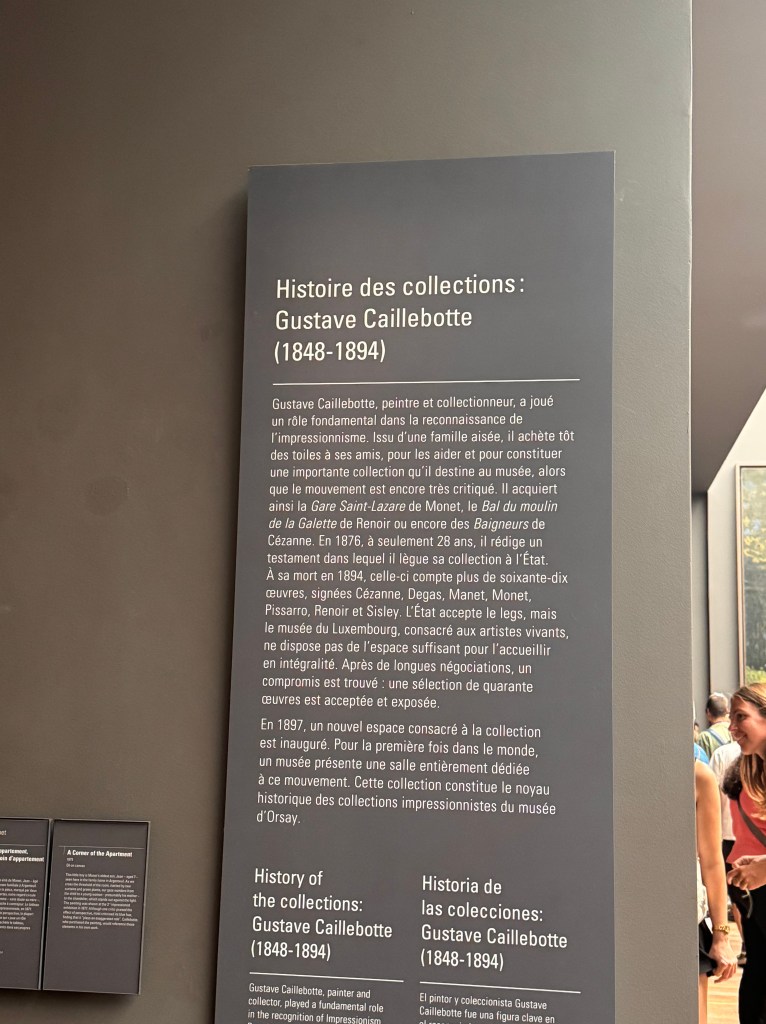
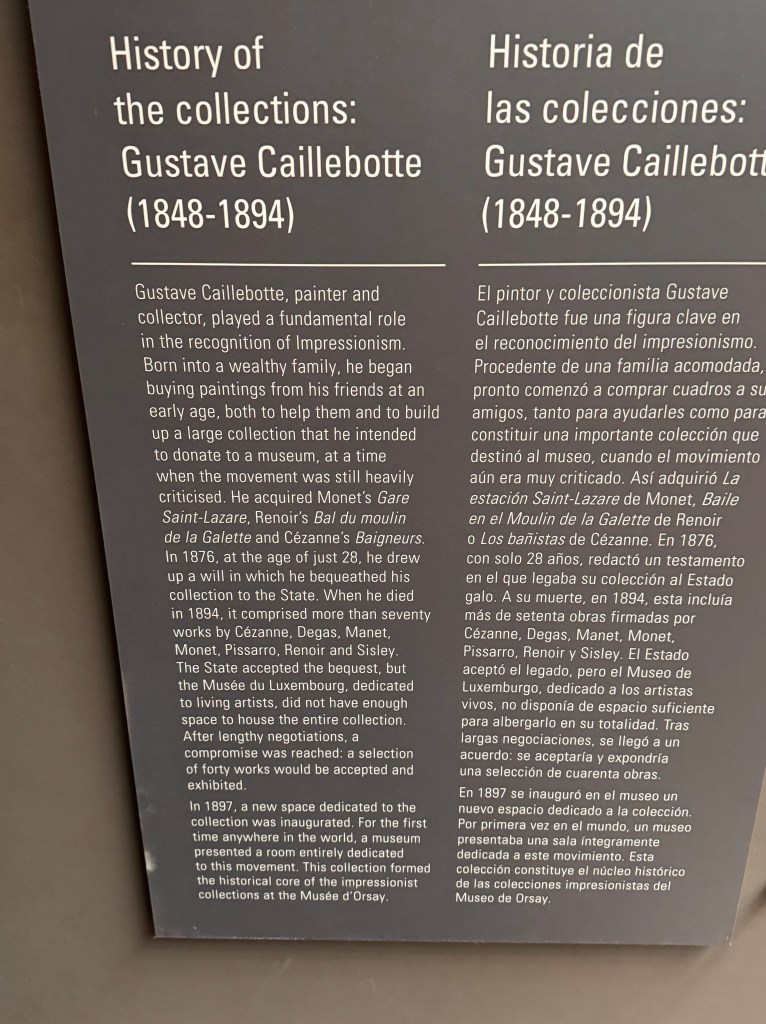
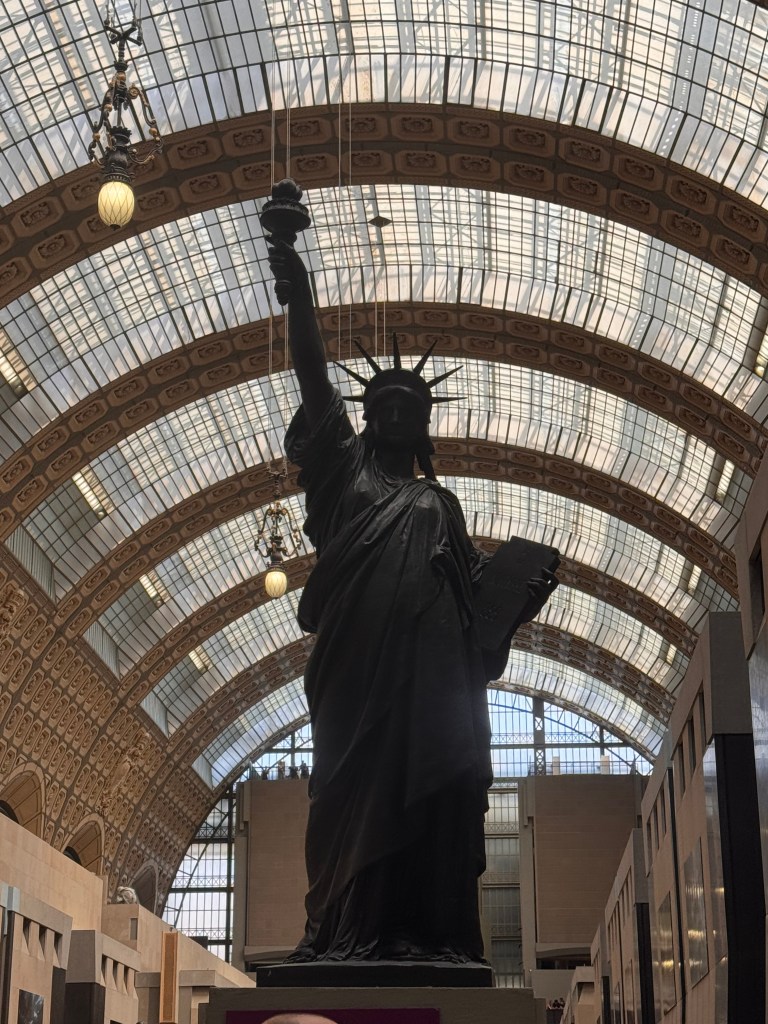
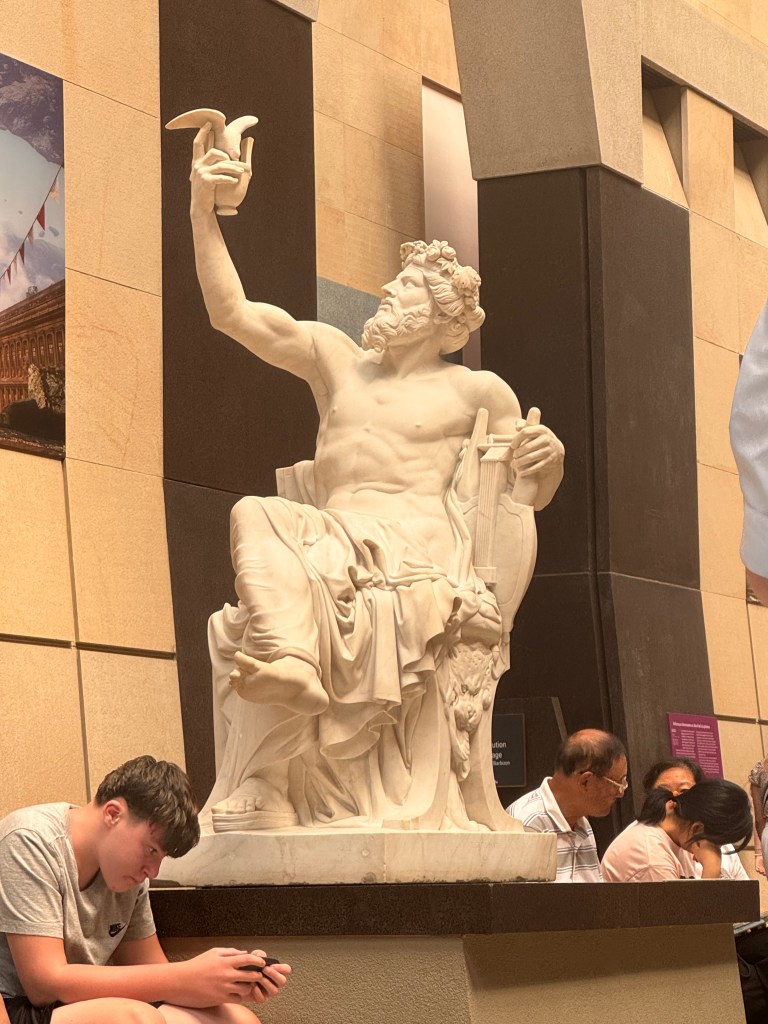
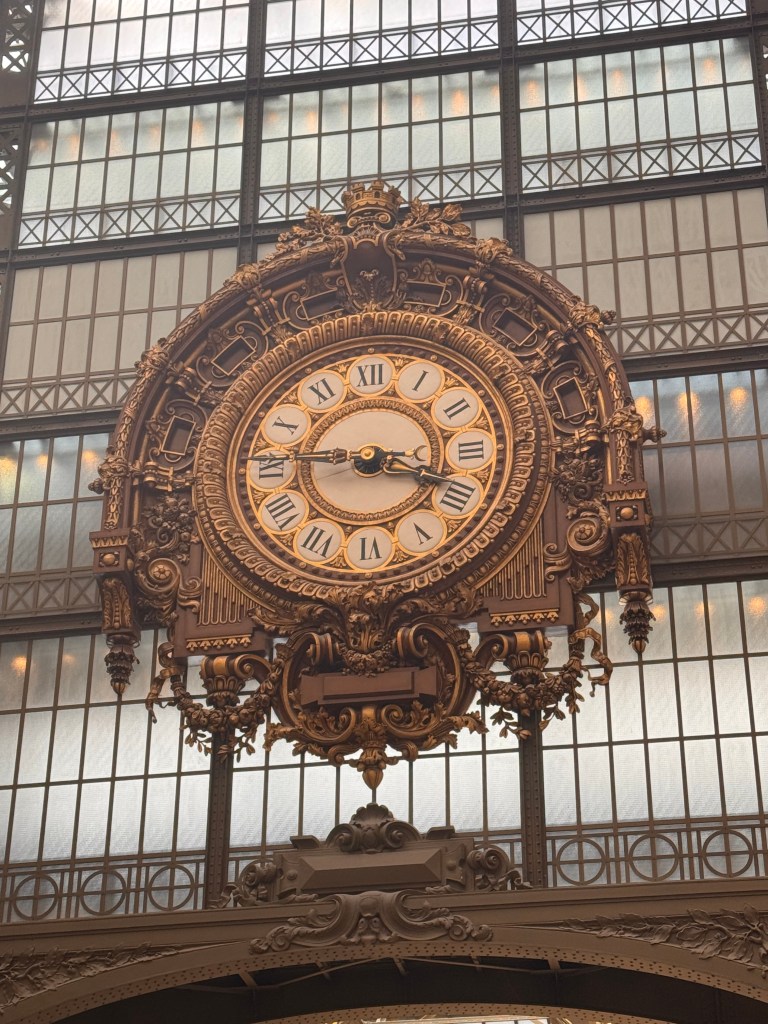
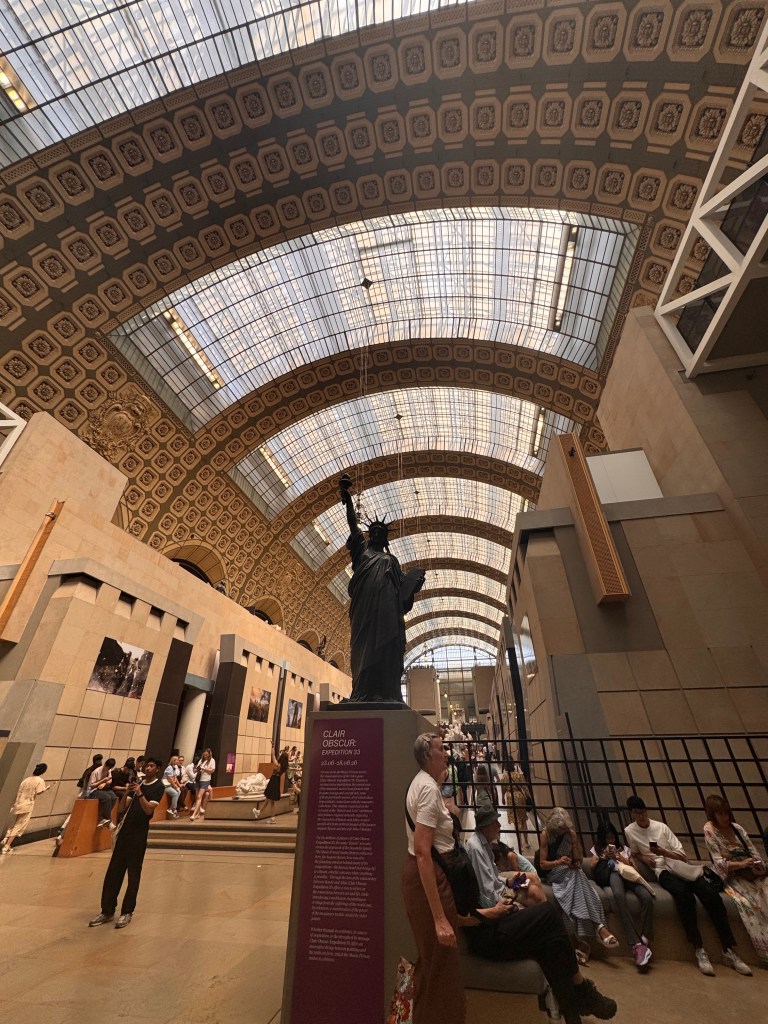
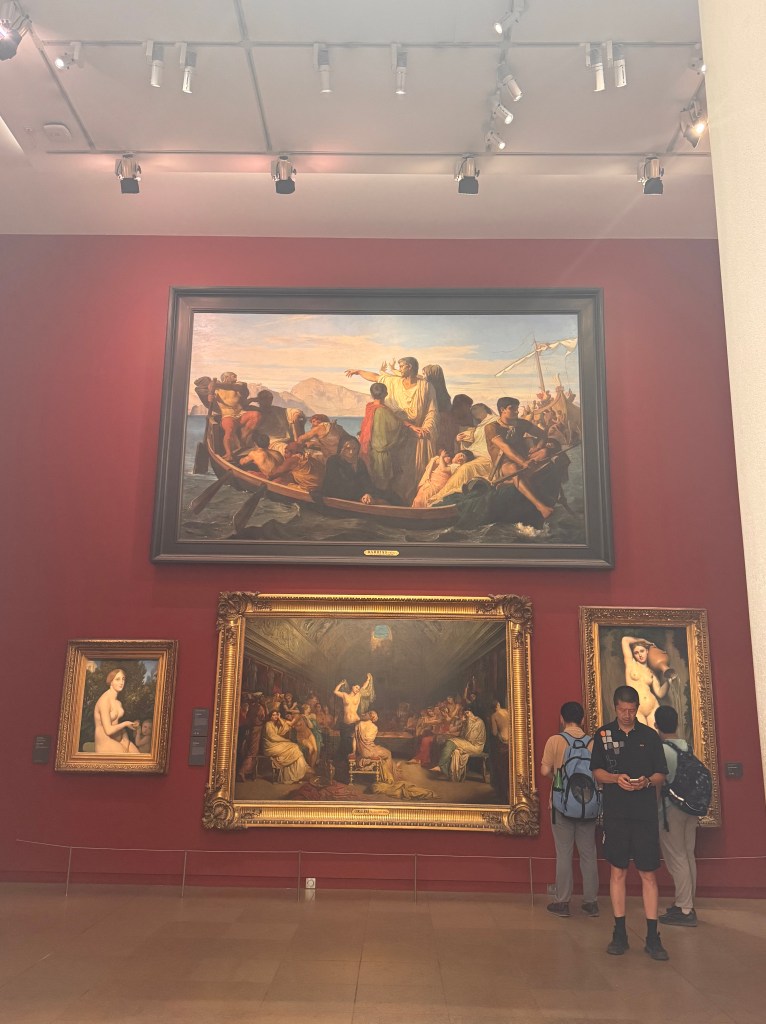
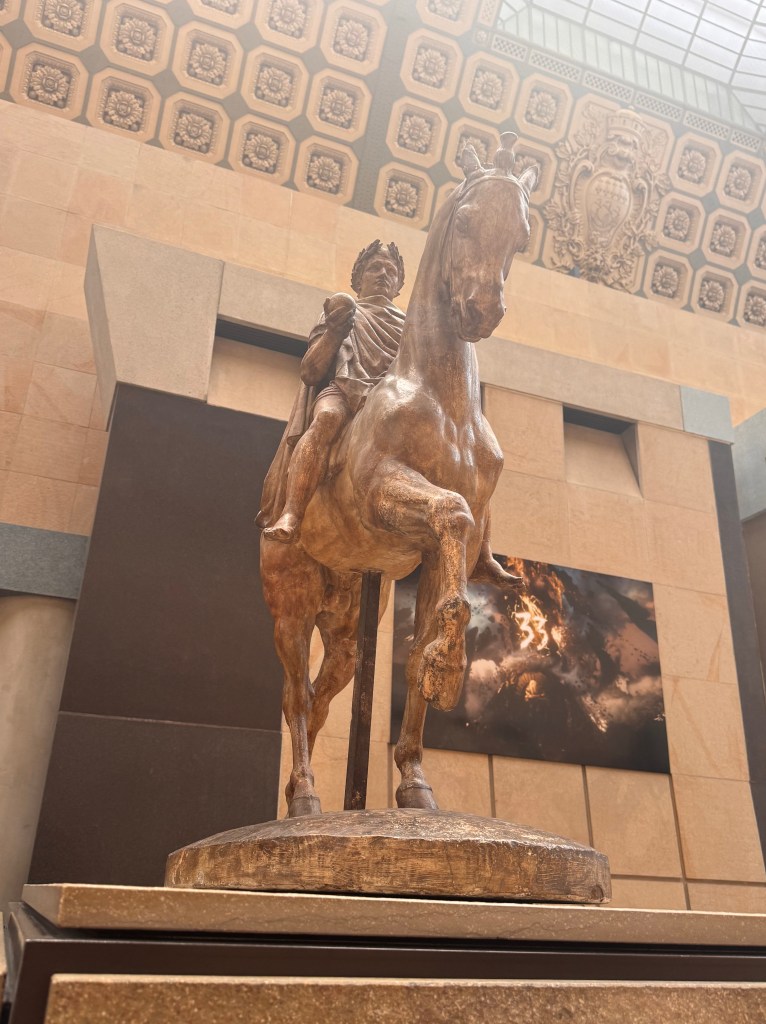
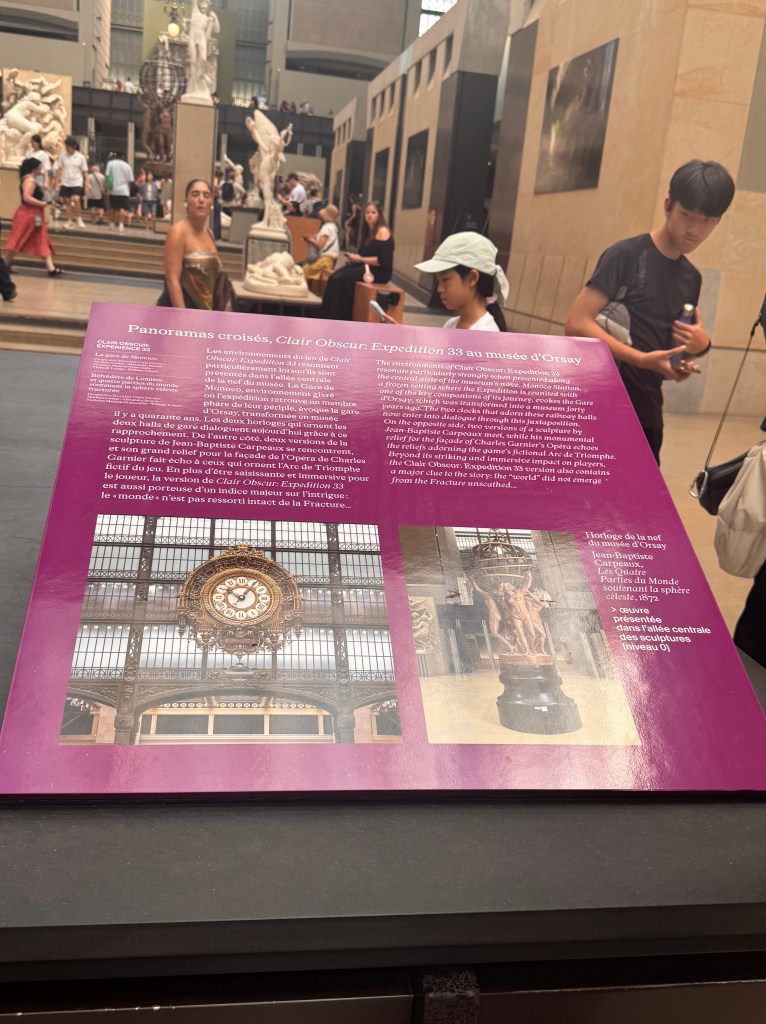
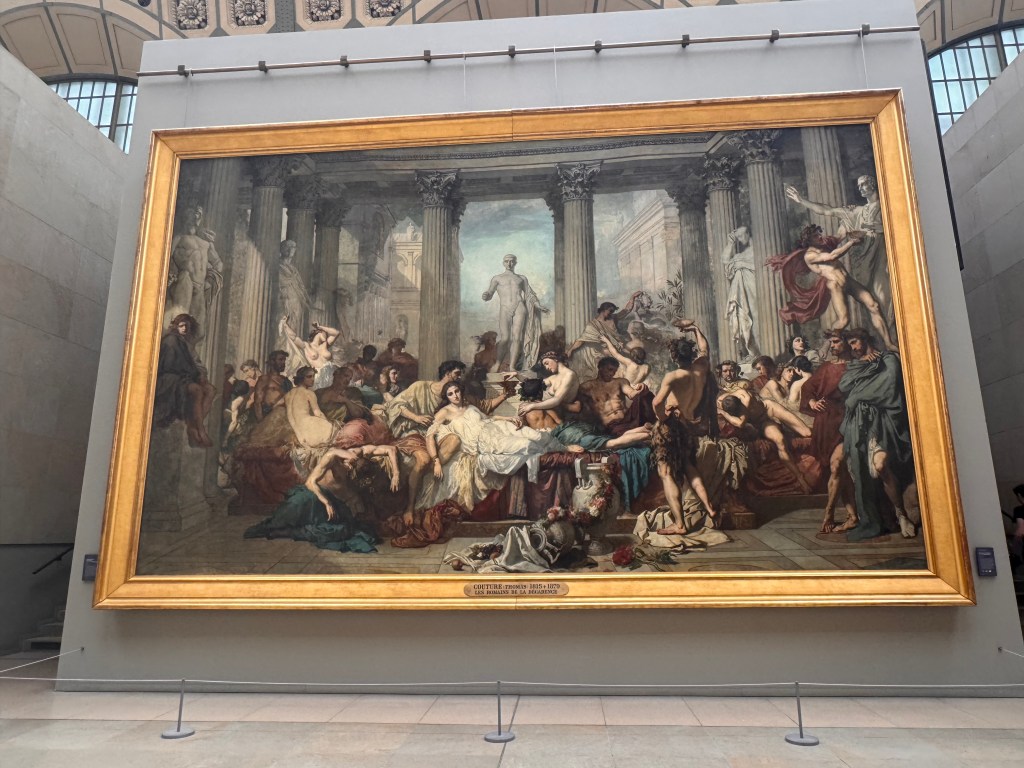
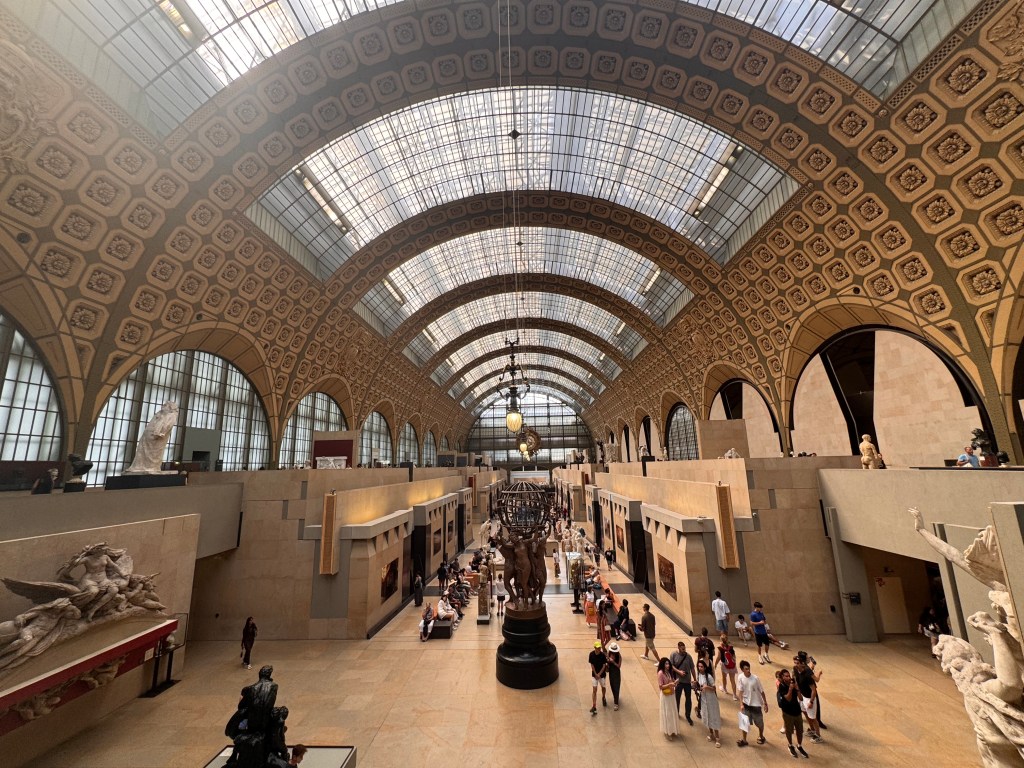
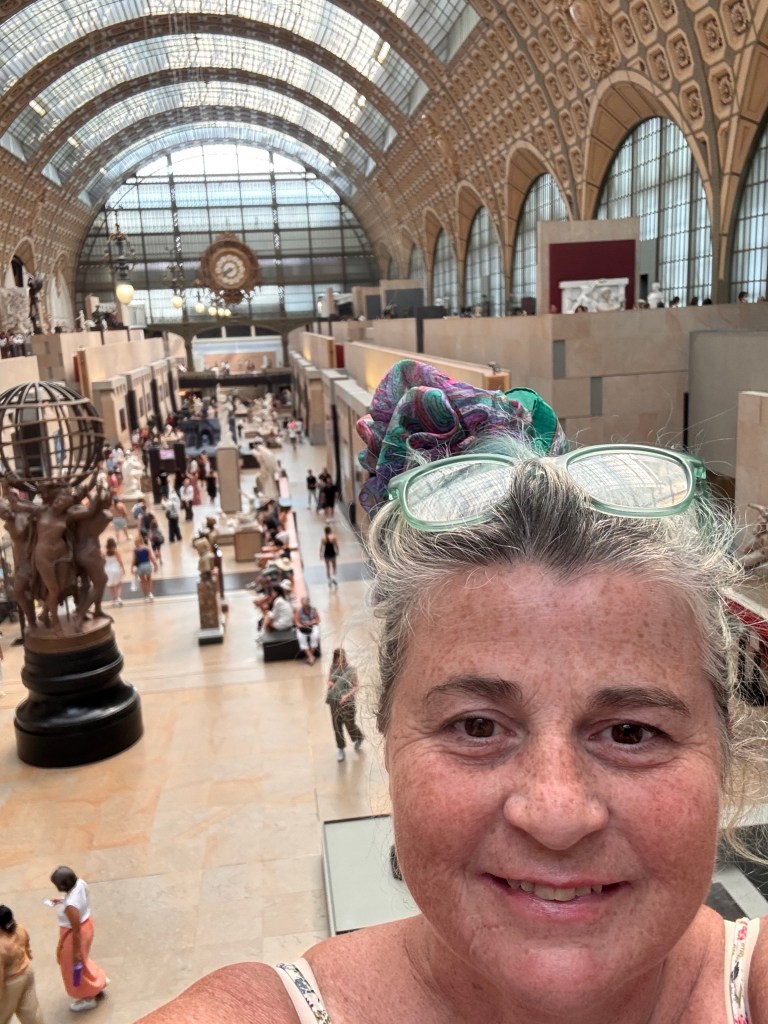
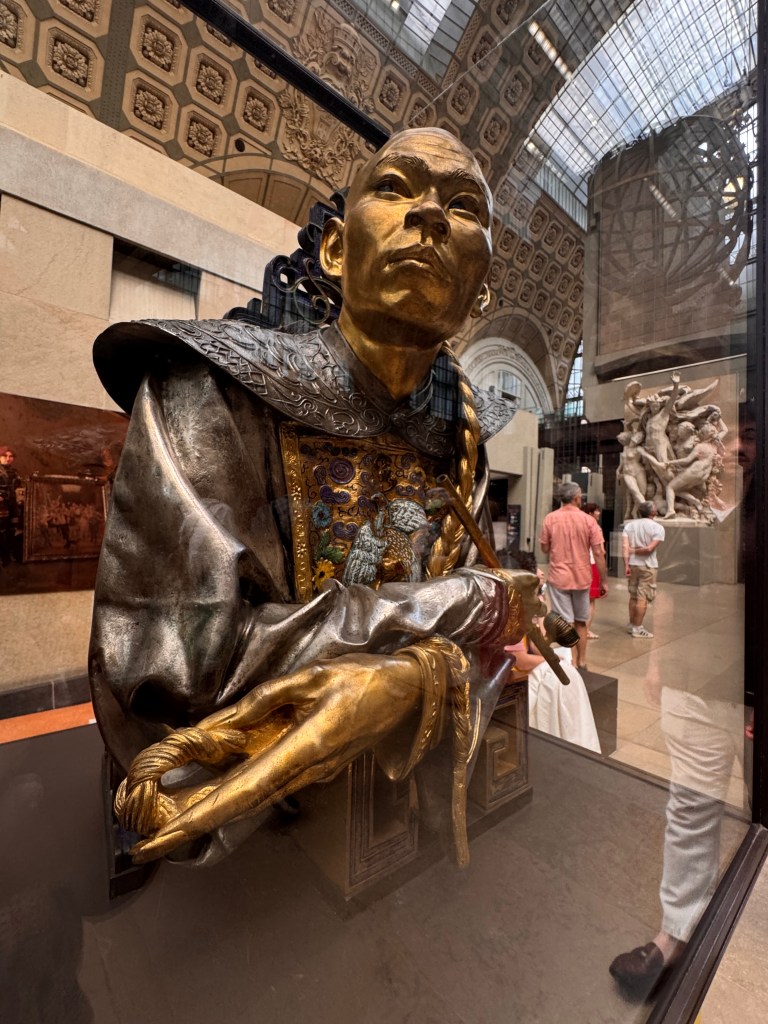
Housed inside the beautifully restored Gare d’Orsay railway station, built for the 1900 World’s Fair, the museum itself is a masterpiece. The soaring glass roof, enormous clock faces, and grand Beaux-Arts architecture are almost as impressive as the artwork hanging on the walls.

Its collection focuses primarily on the artistic revolution of the late 19th century, and room after room was filled with masterpieces.

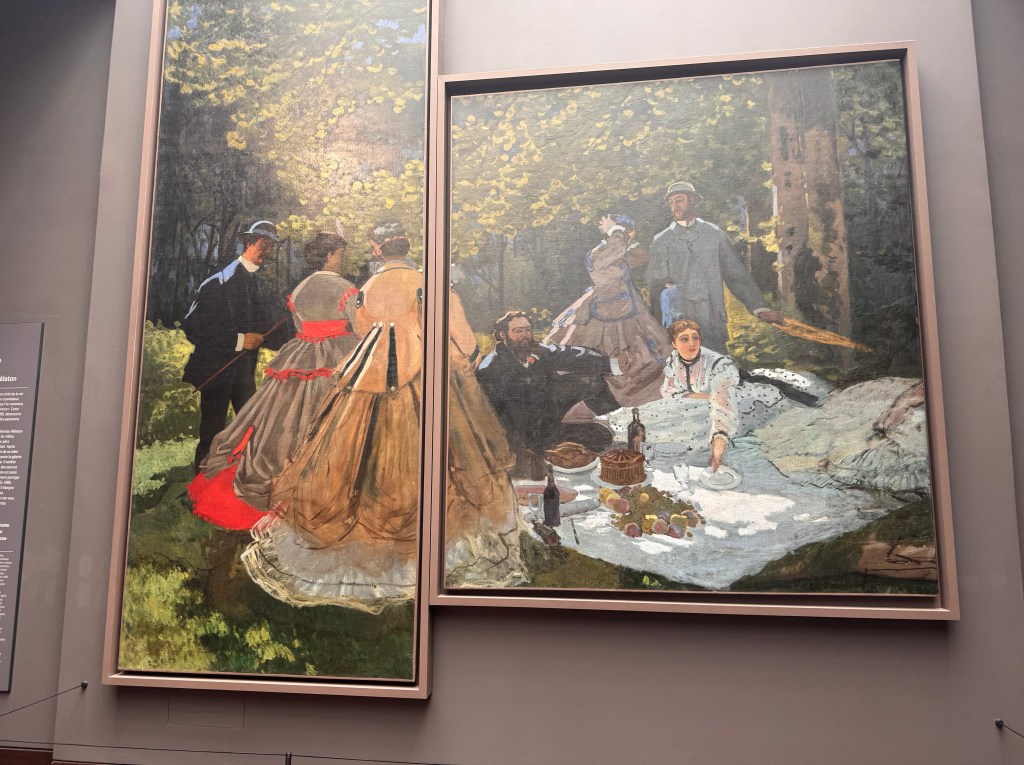
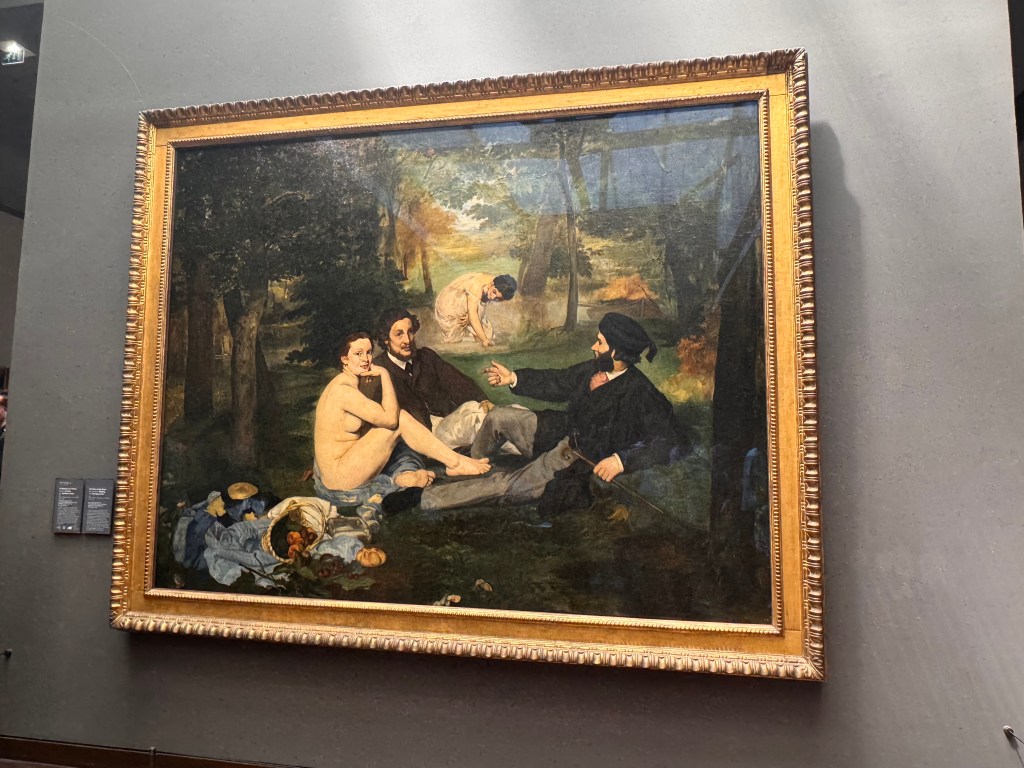
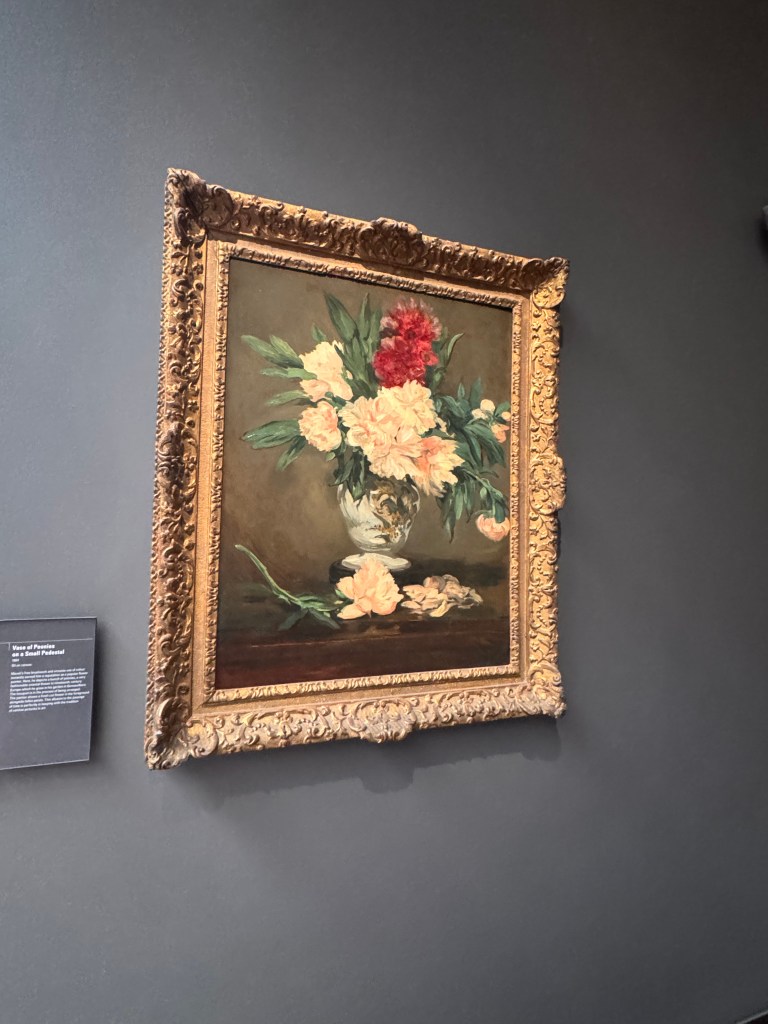
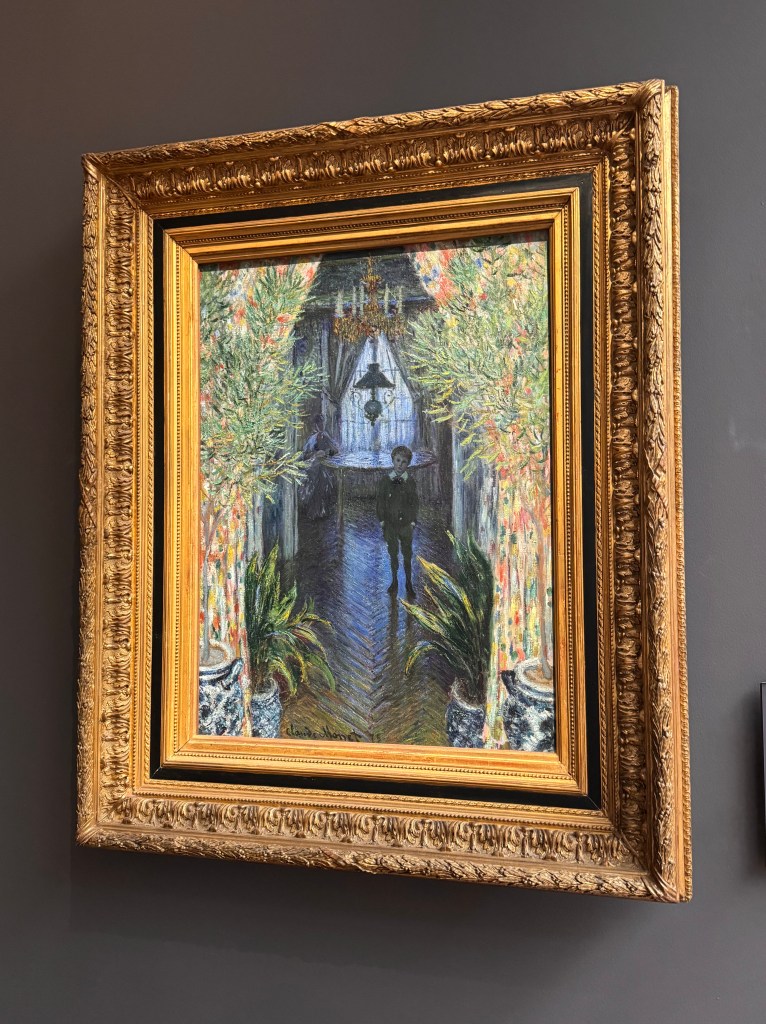
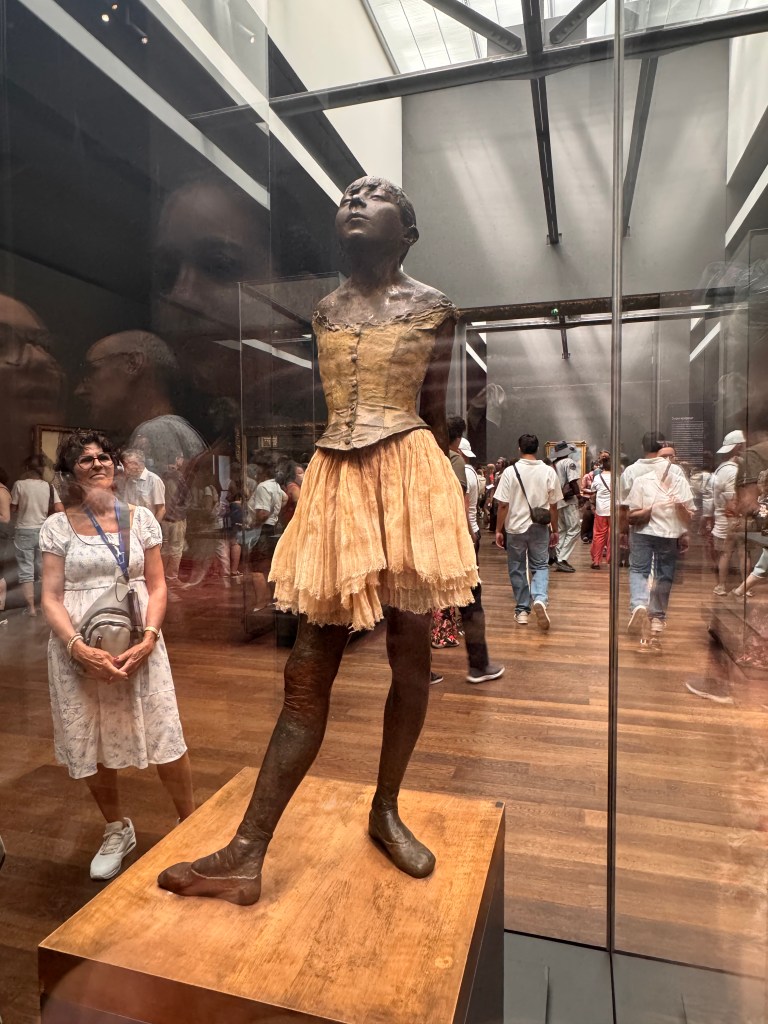
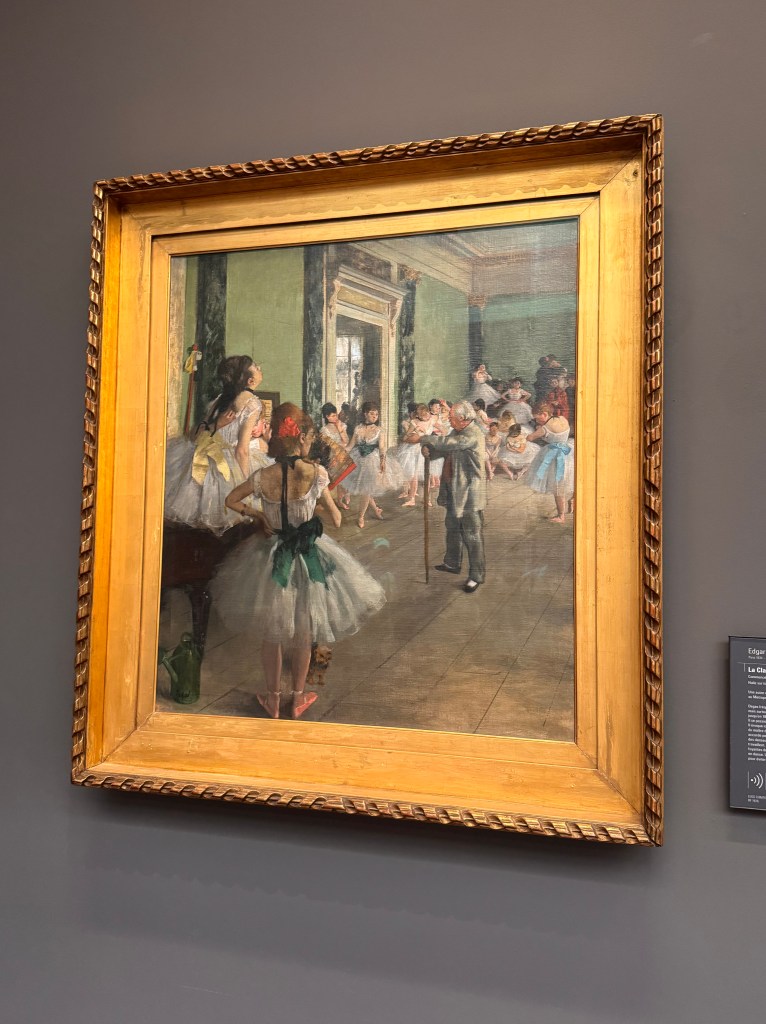
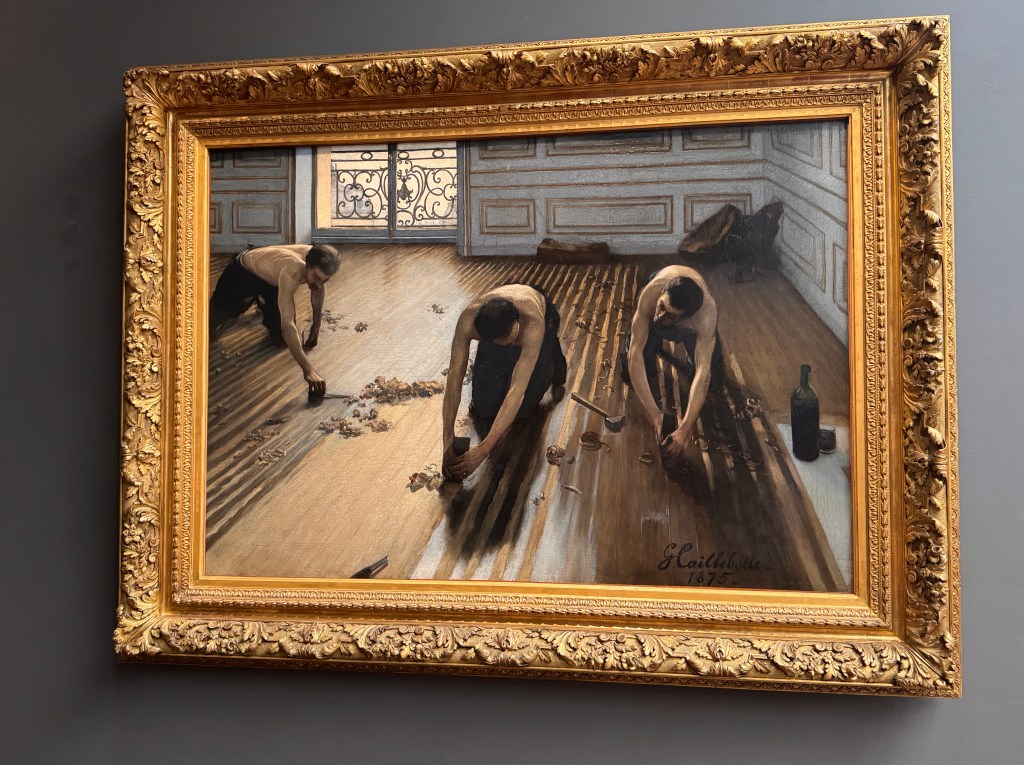
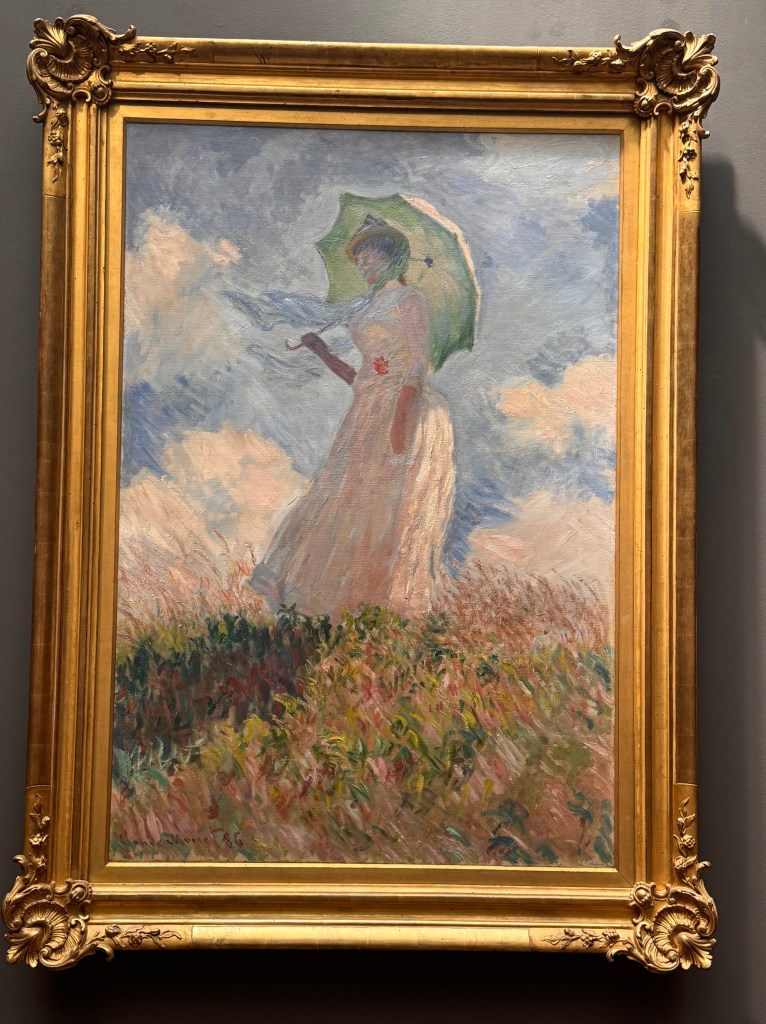
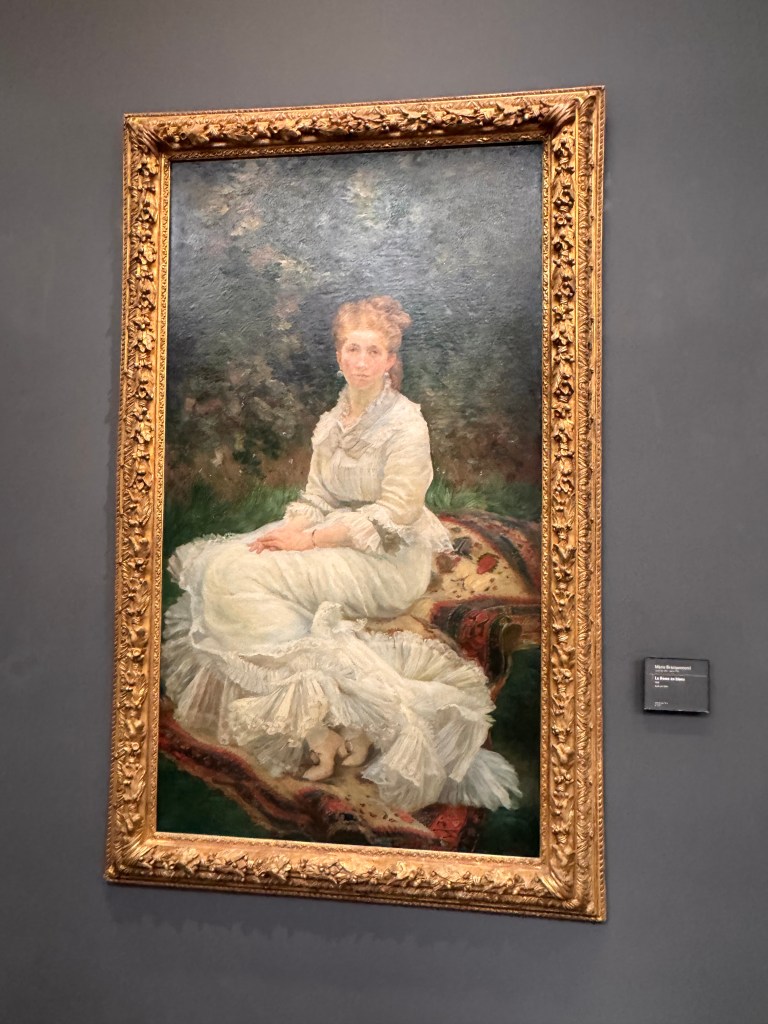
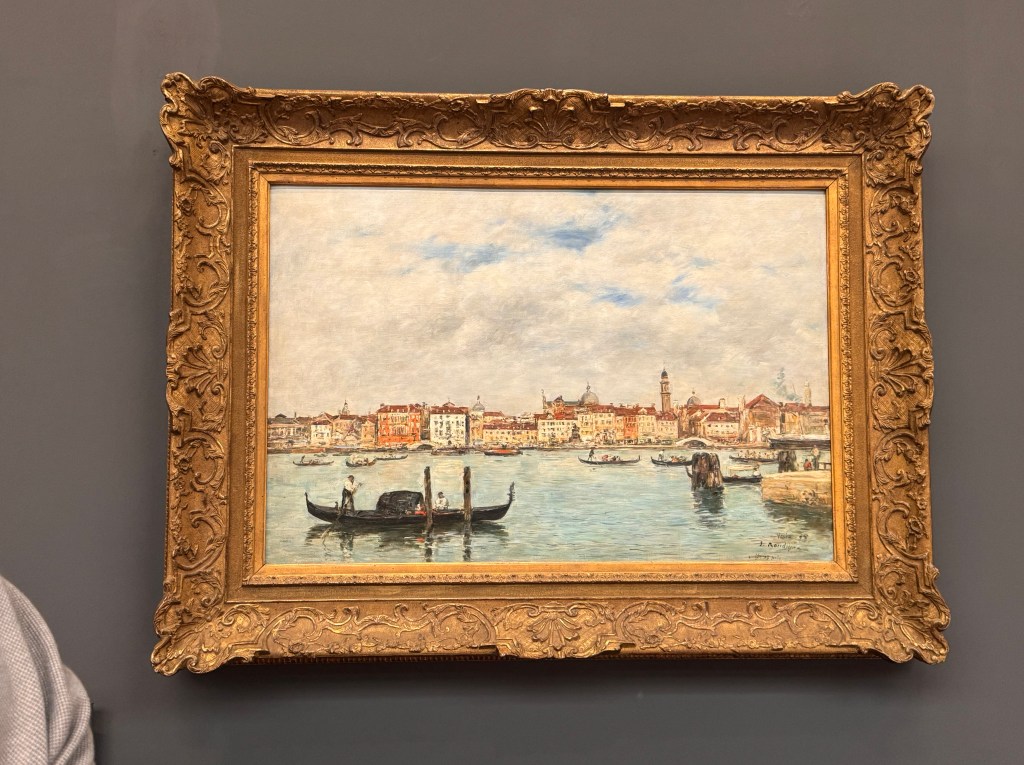
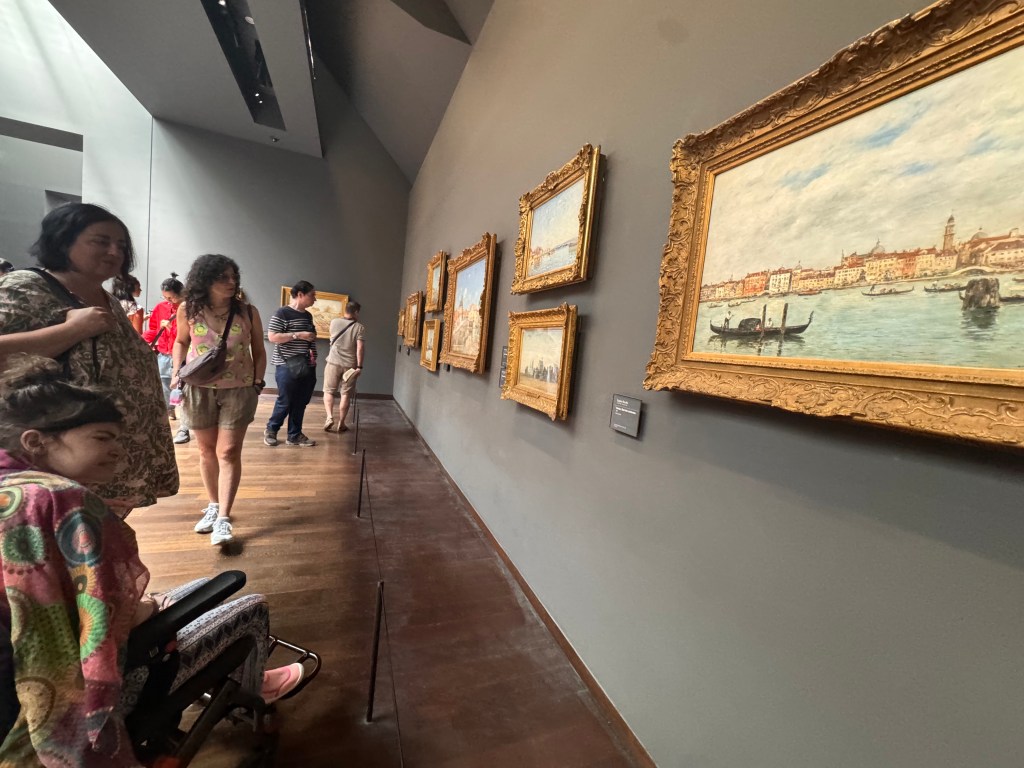
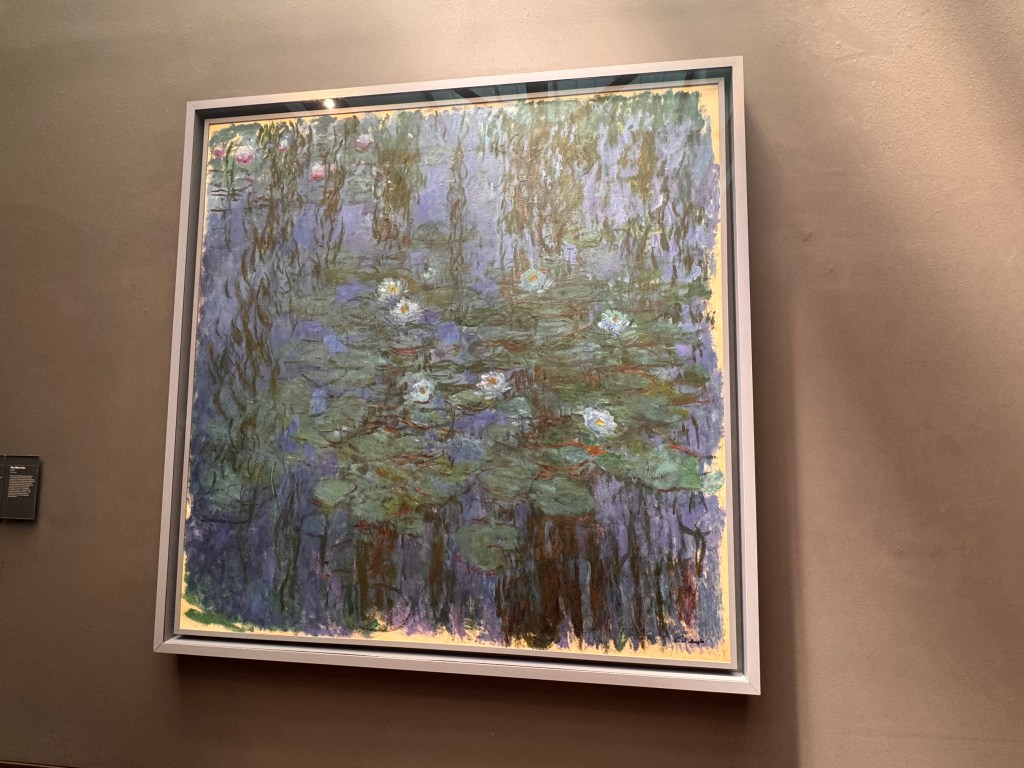
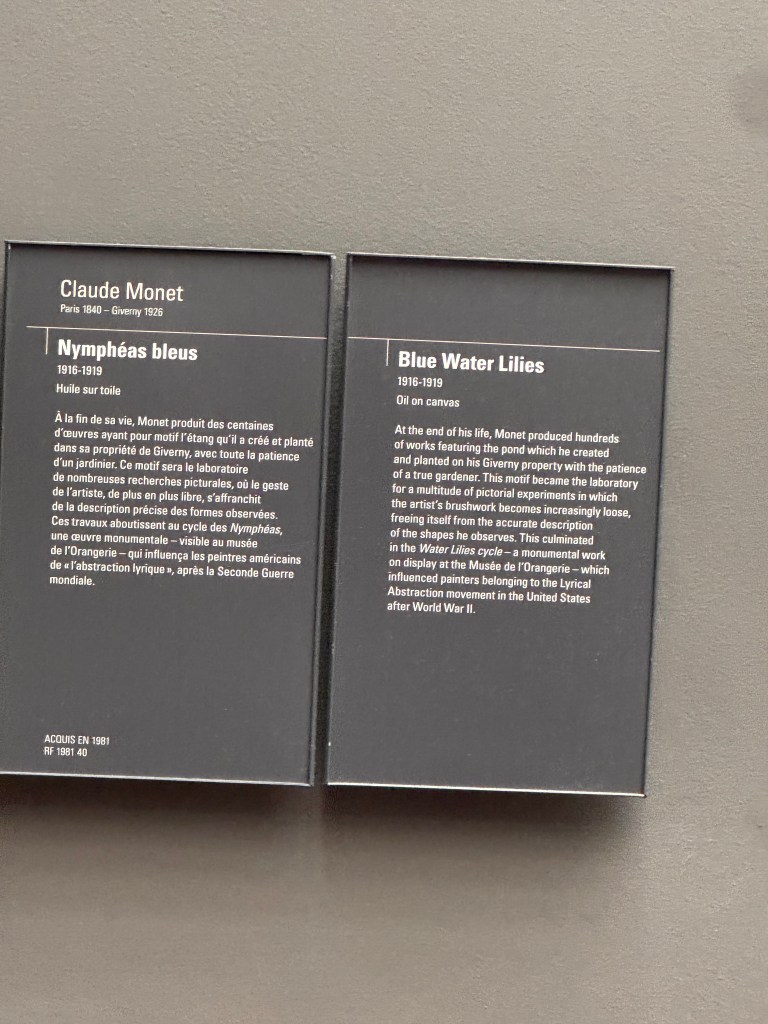
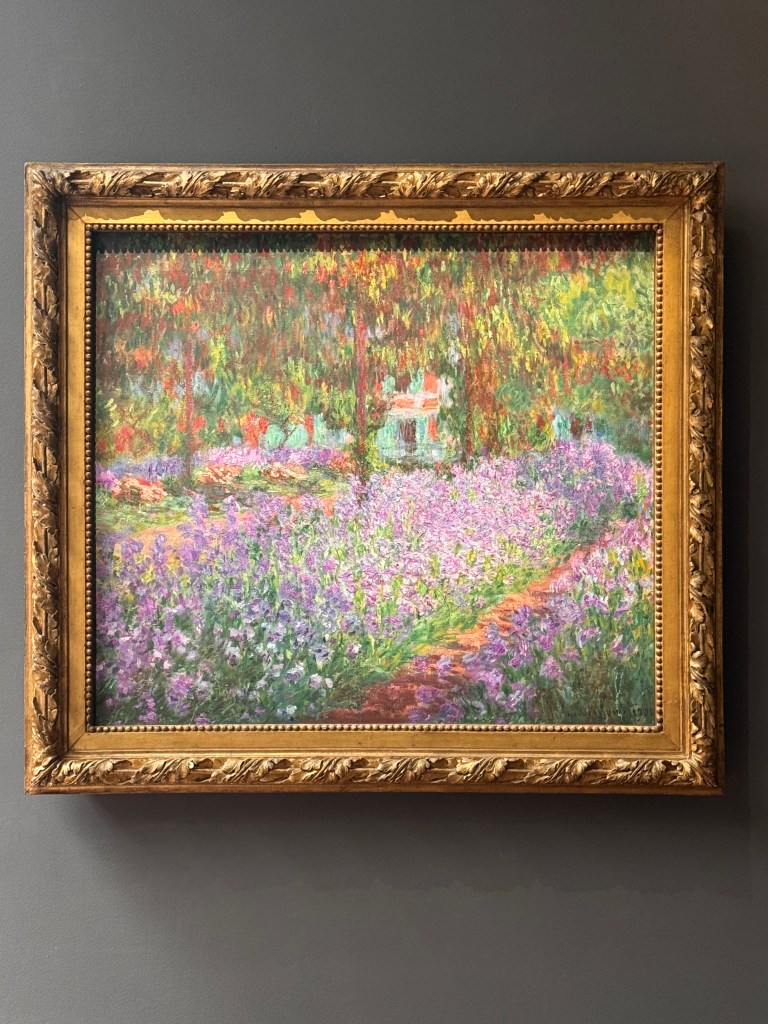
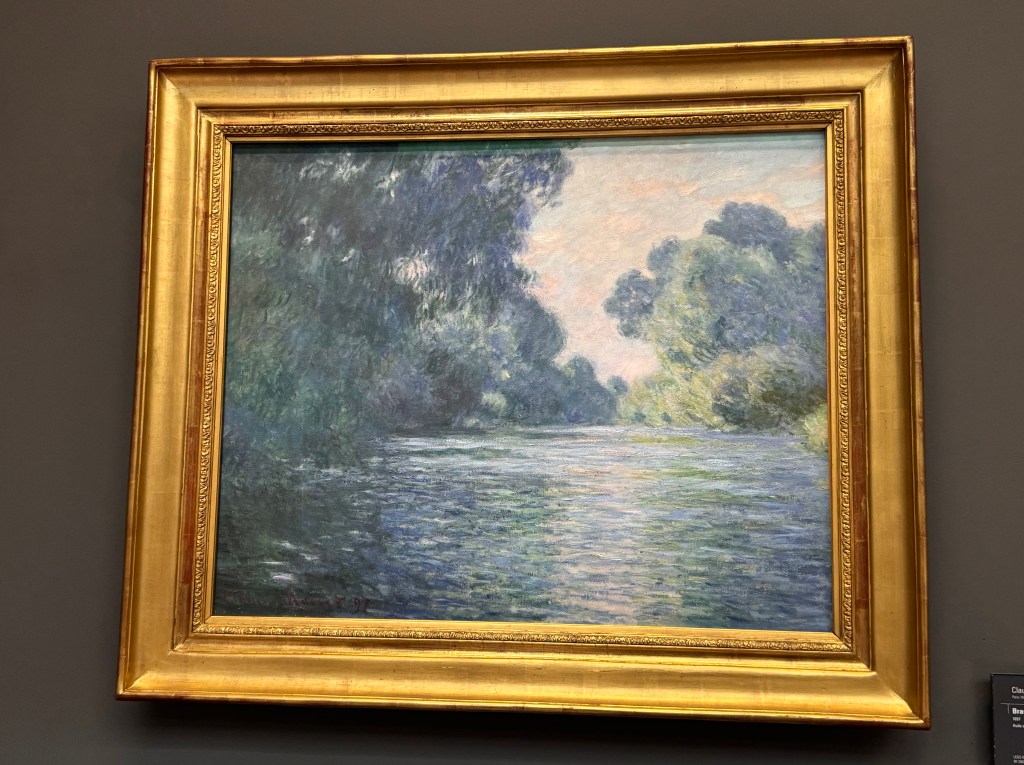
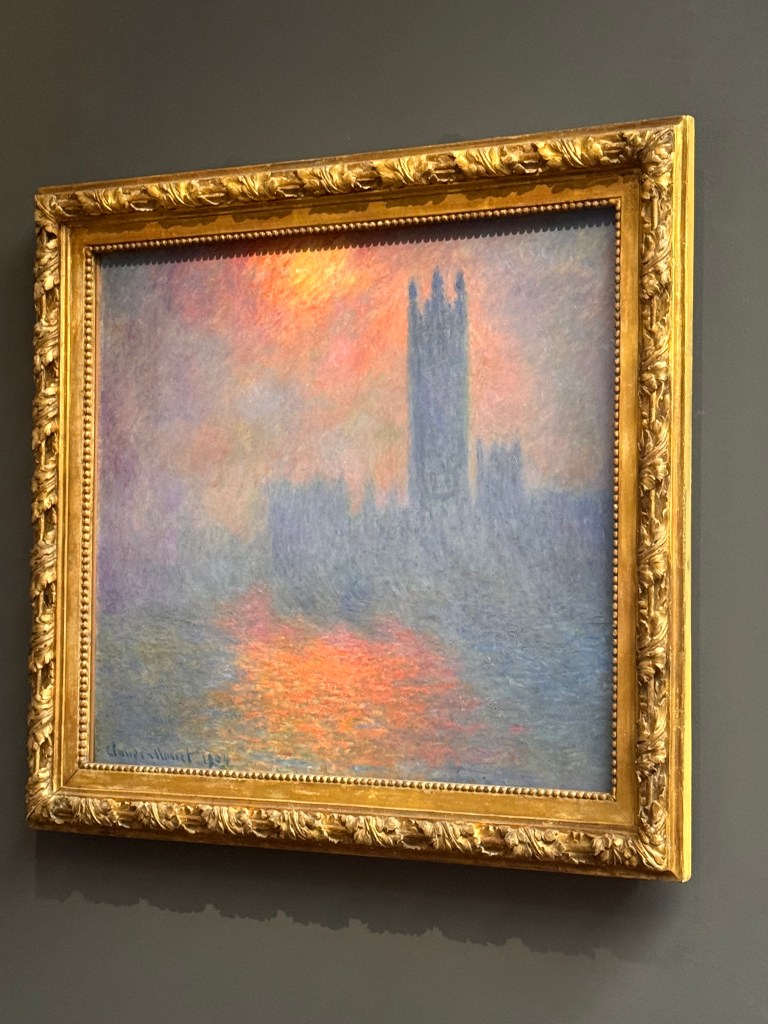
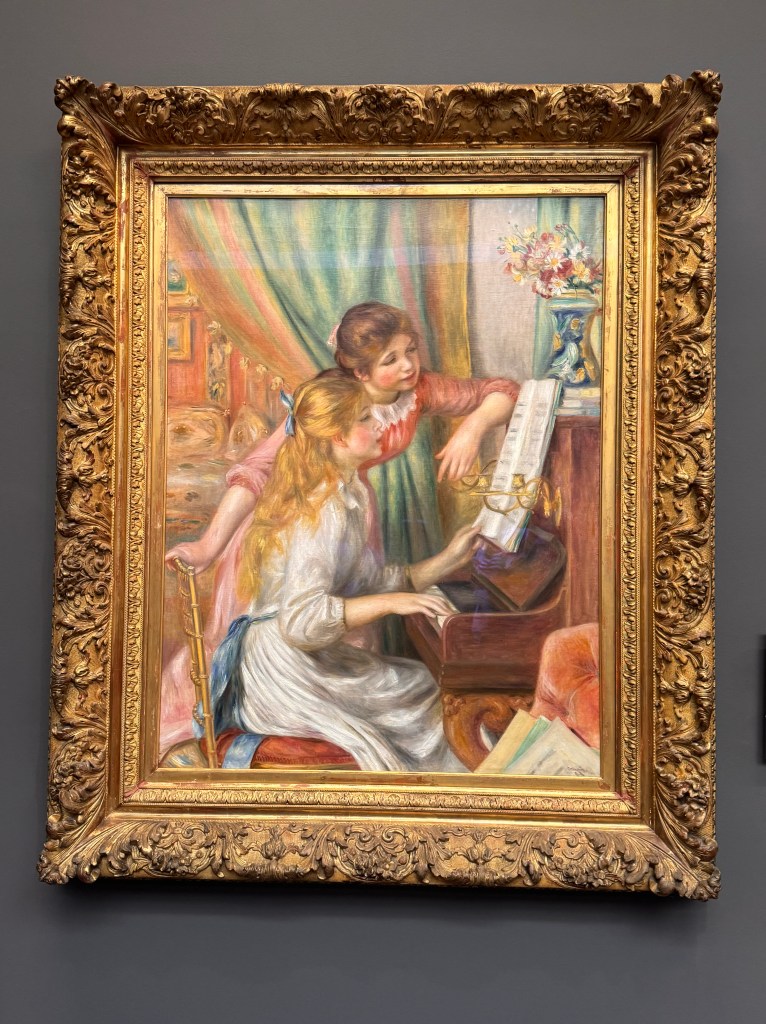
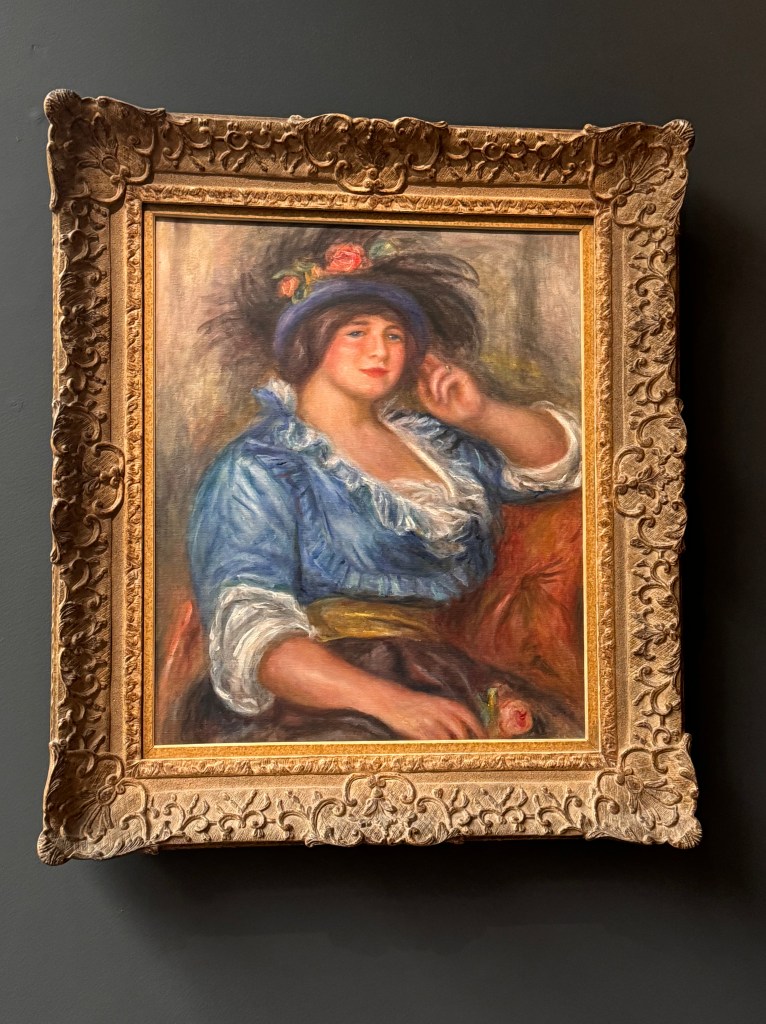
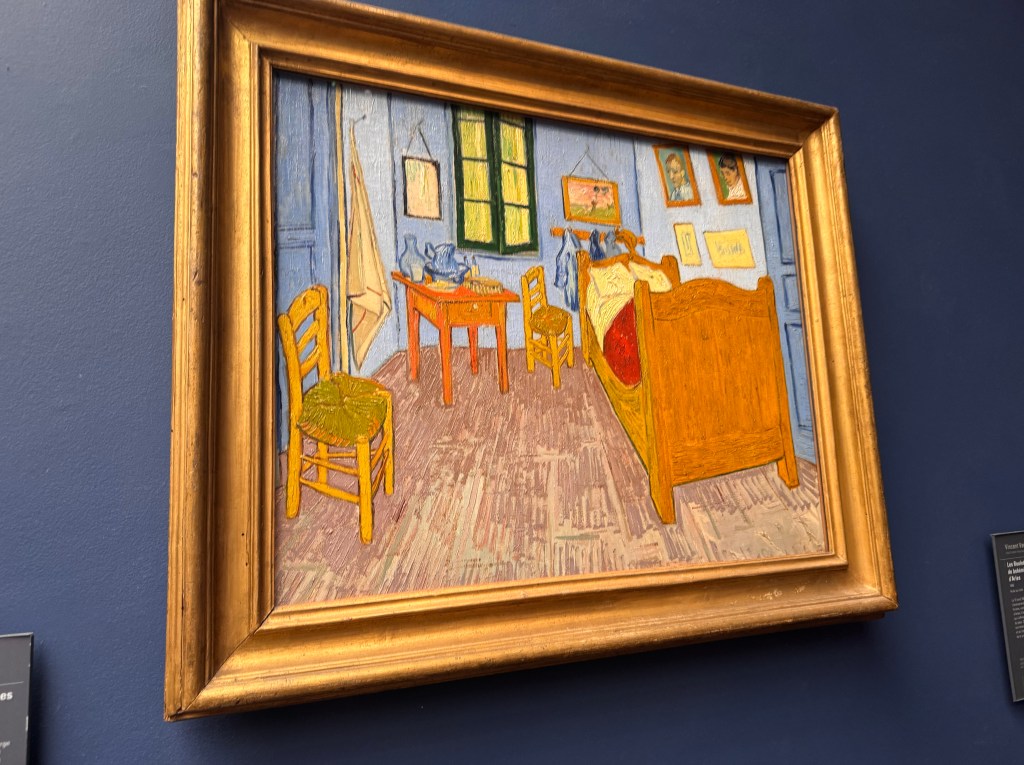
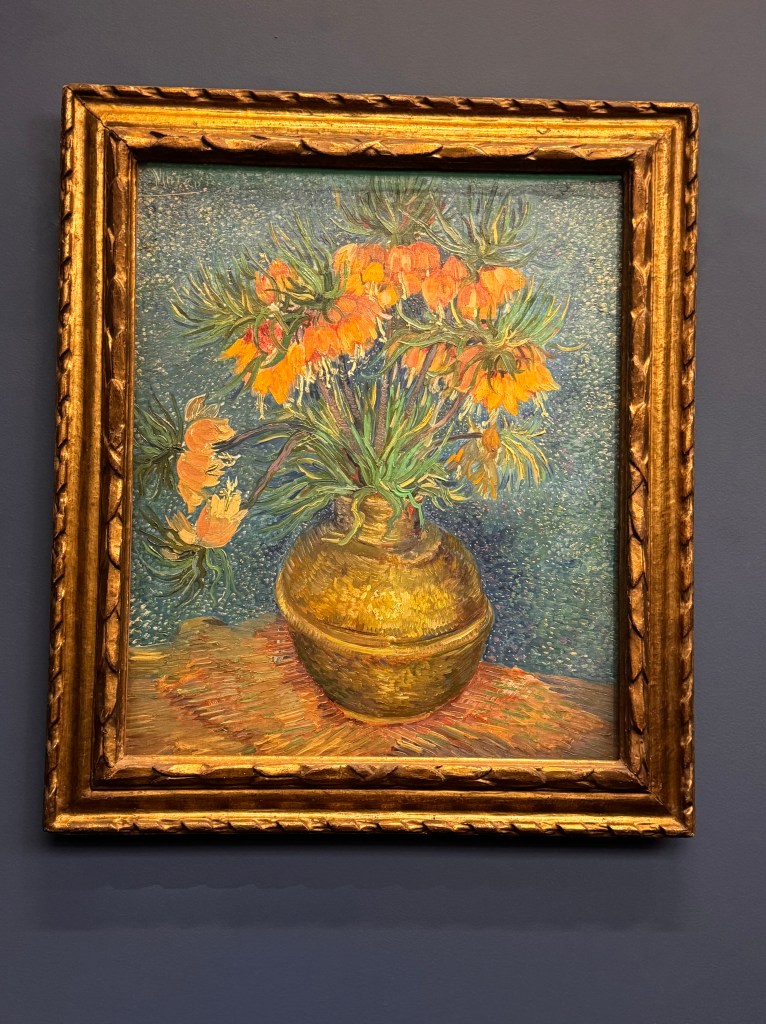
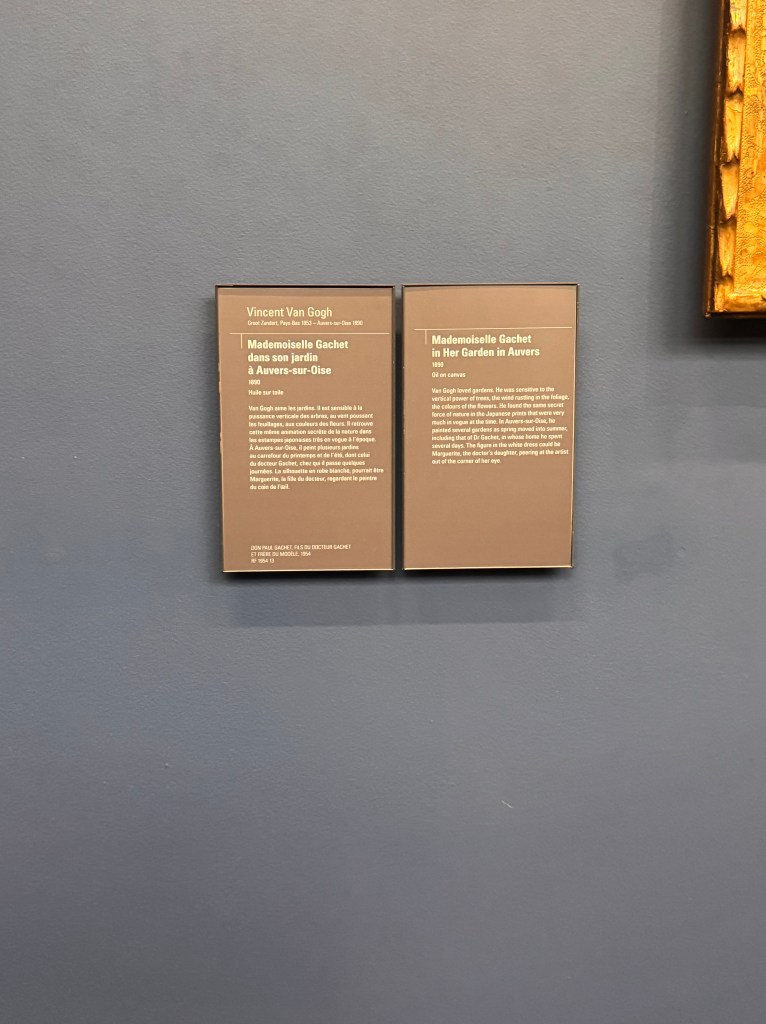
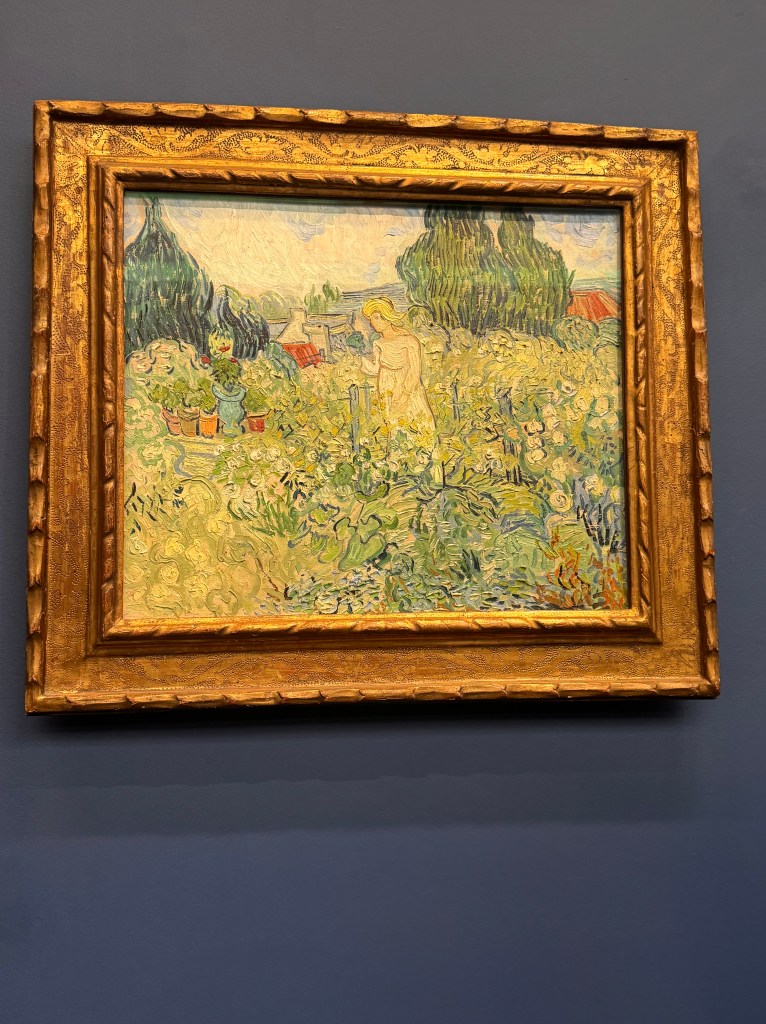
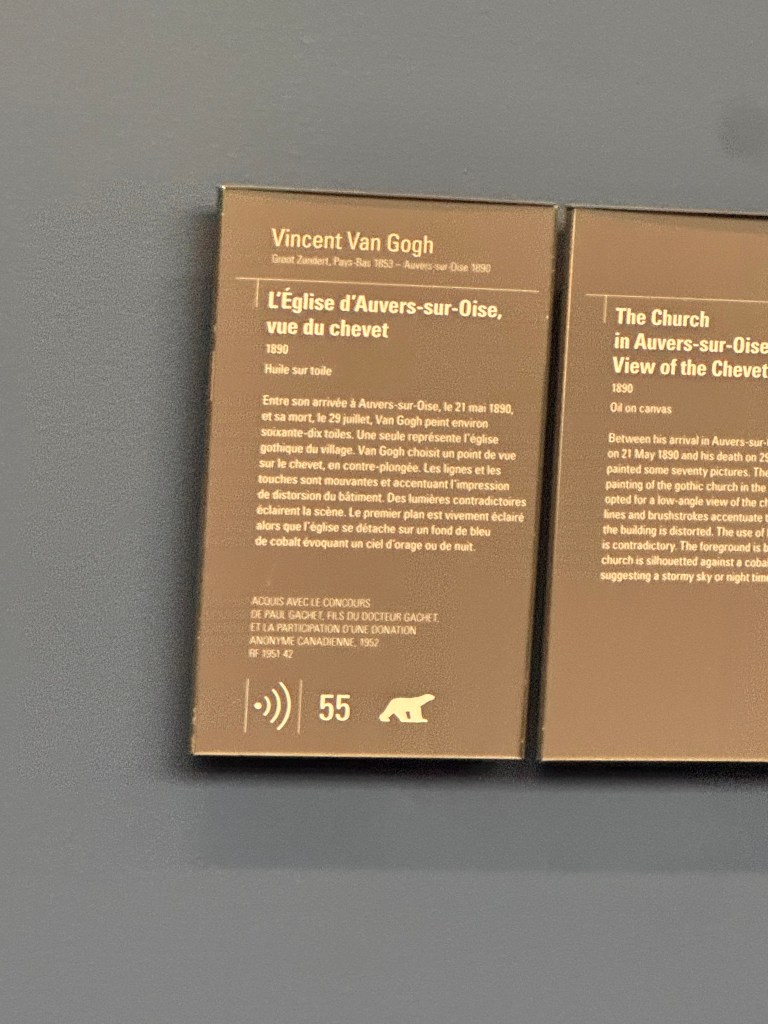
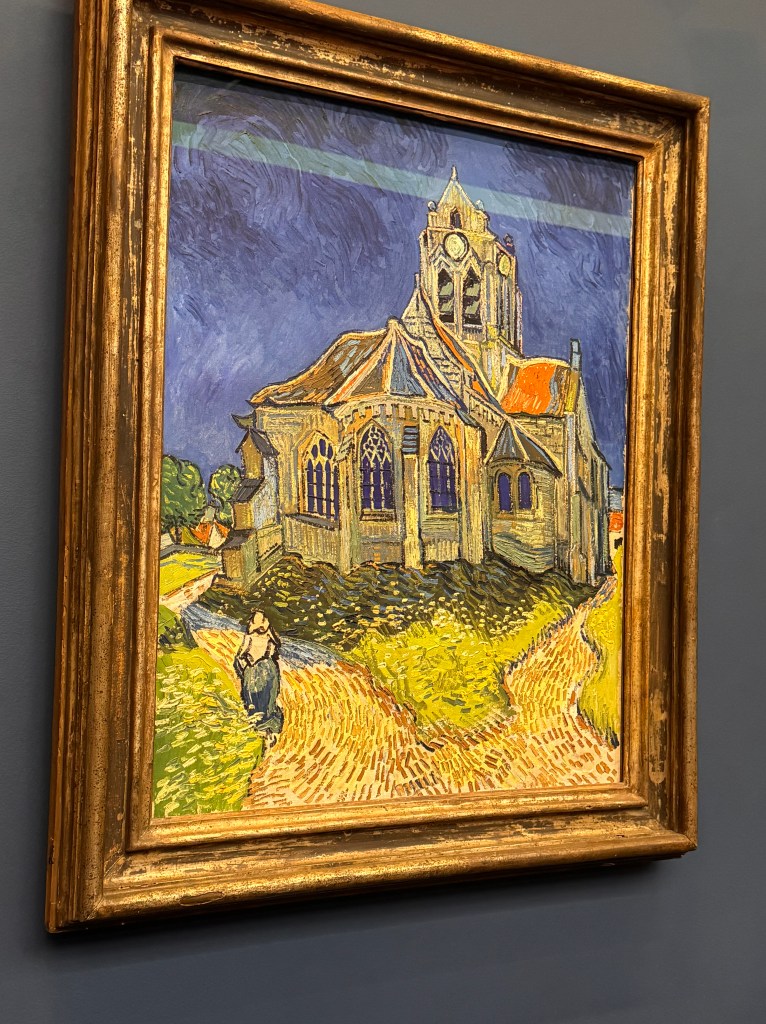
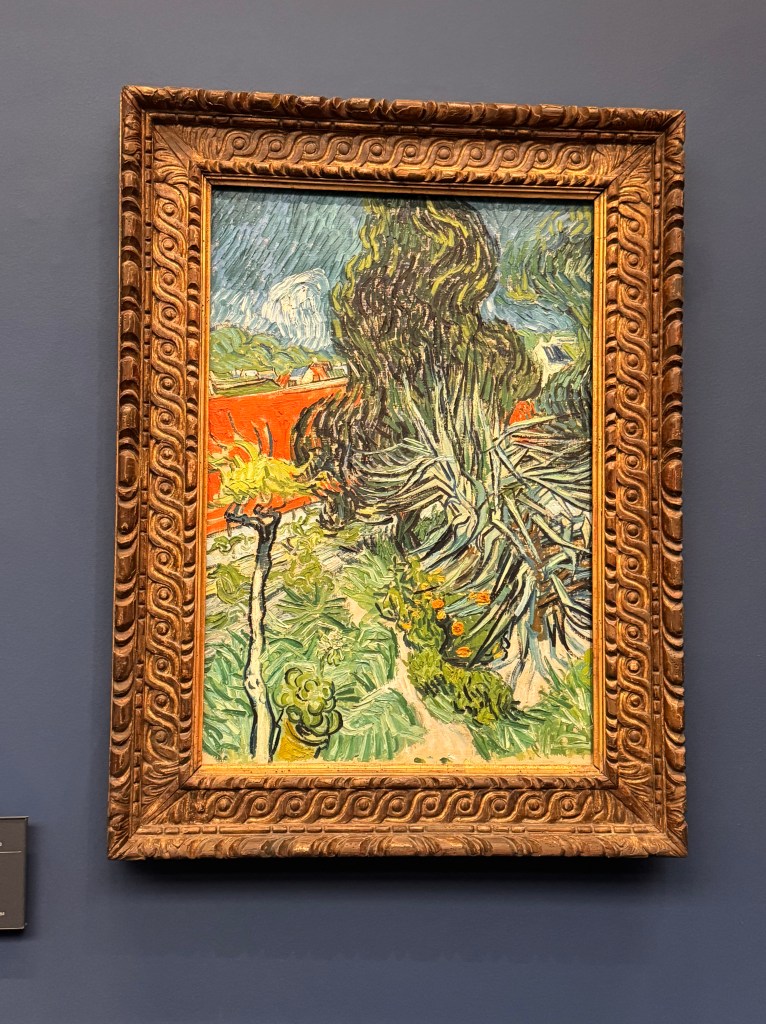
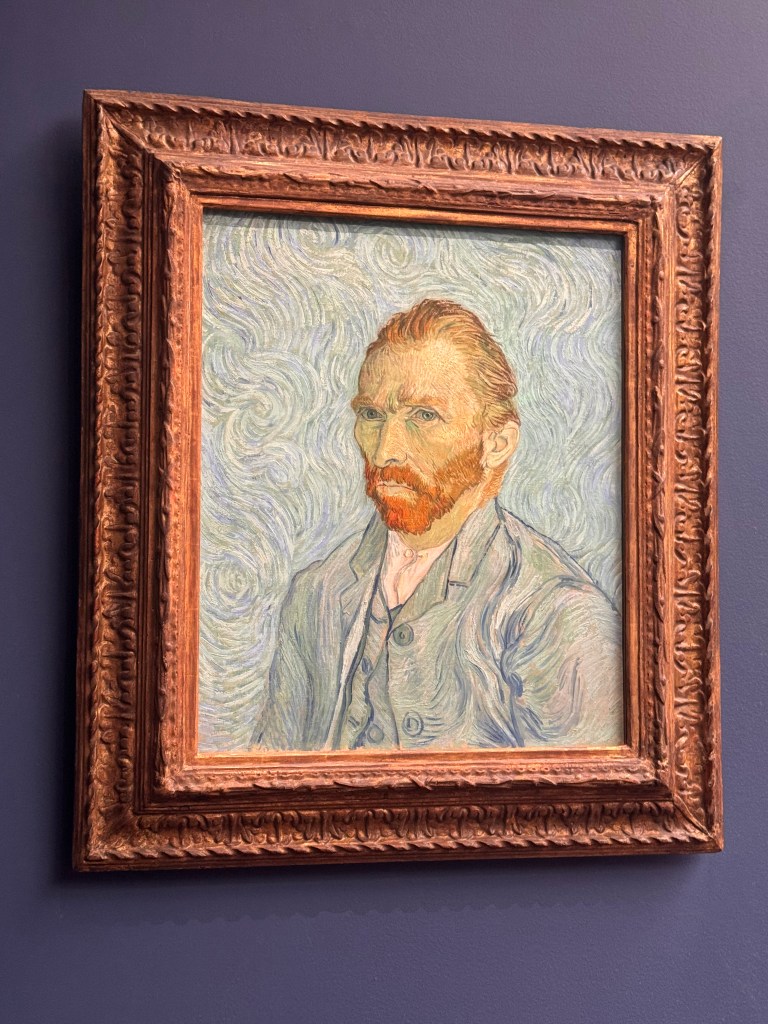
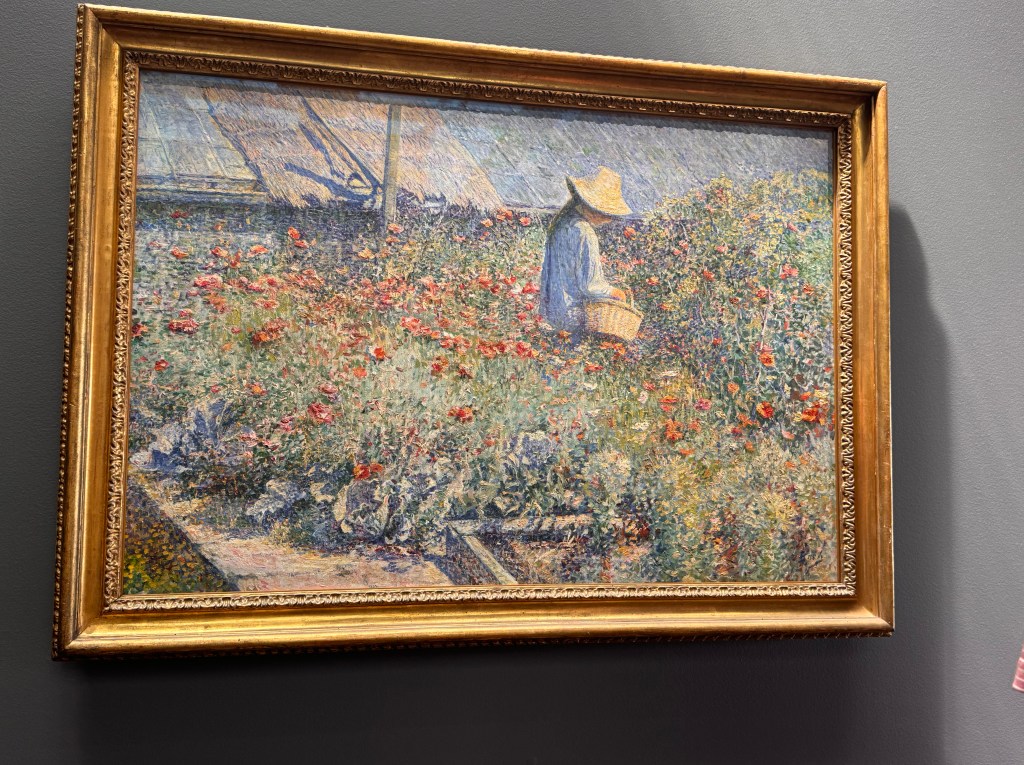
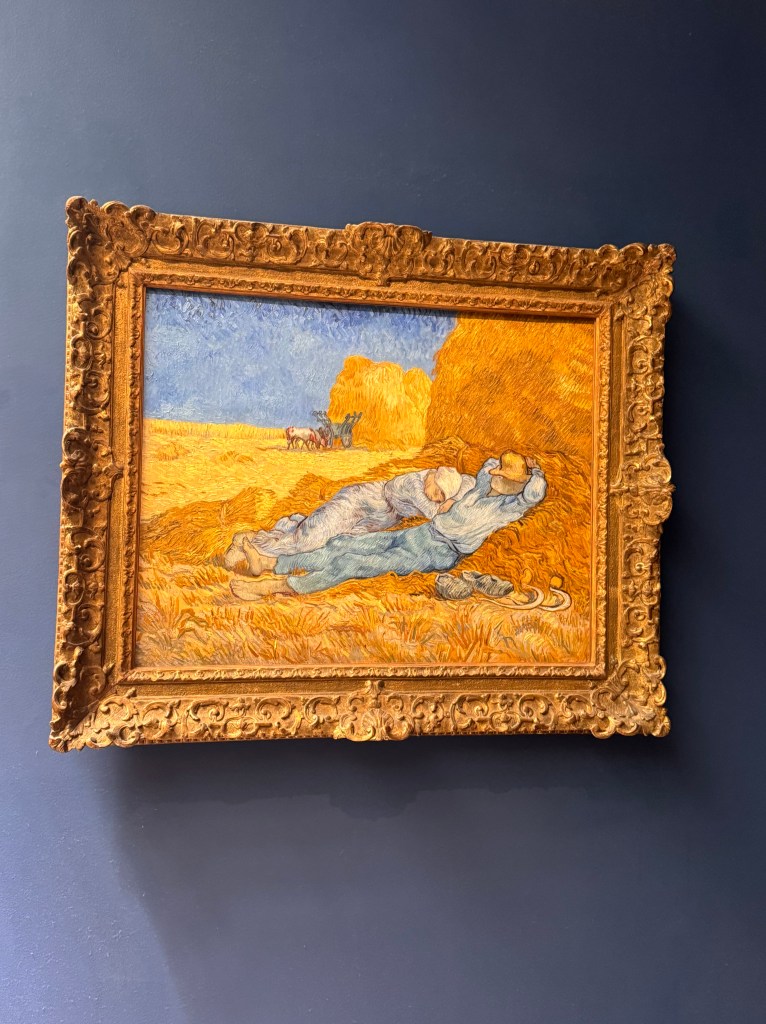
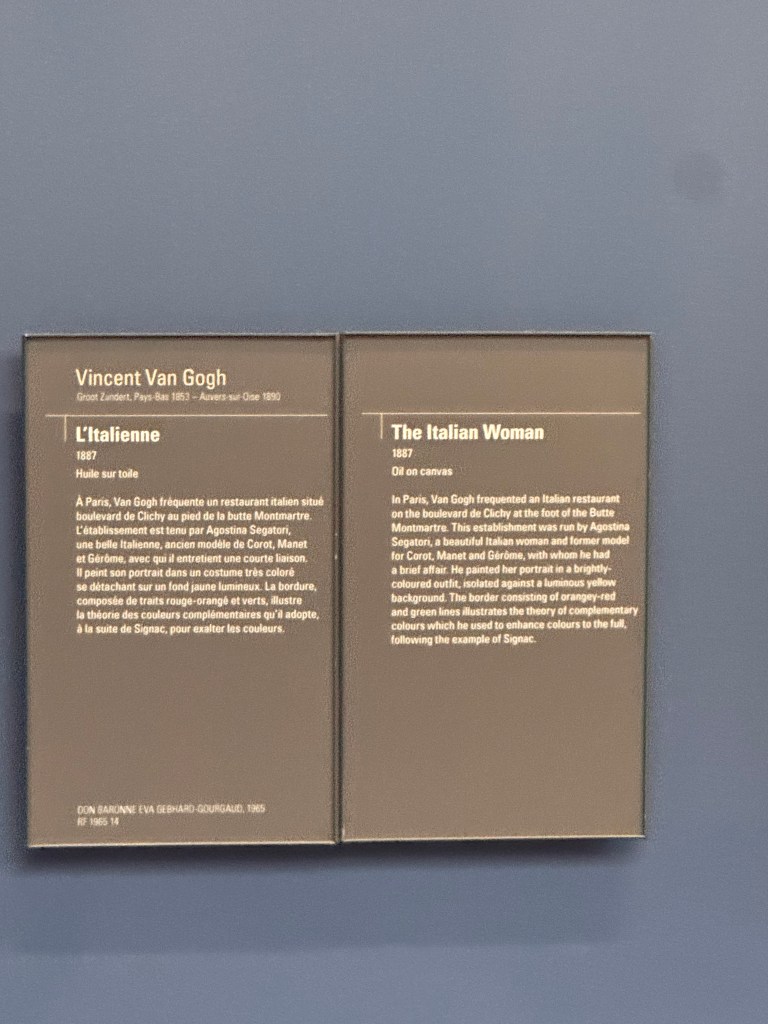
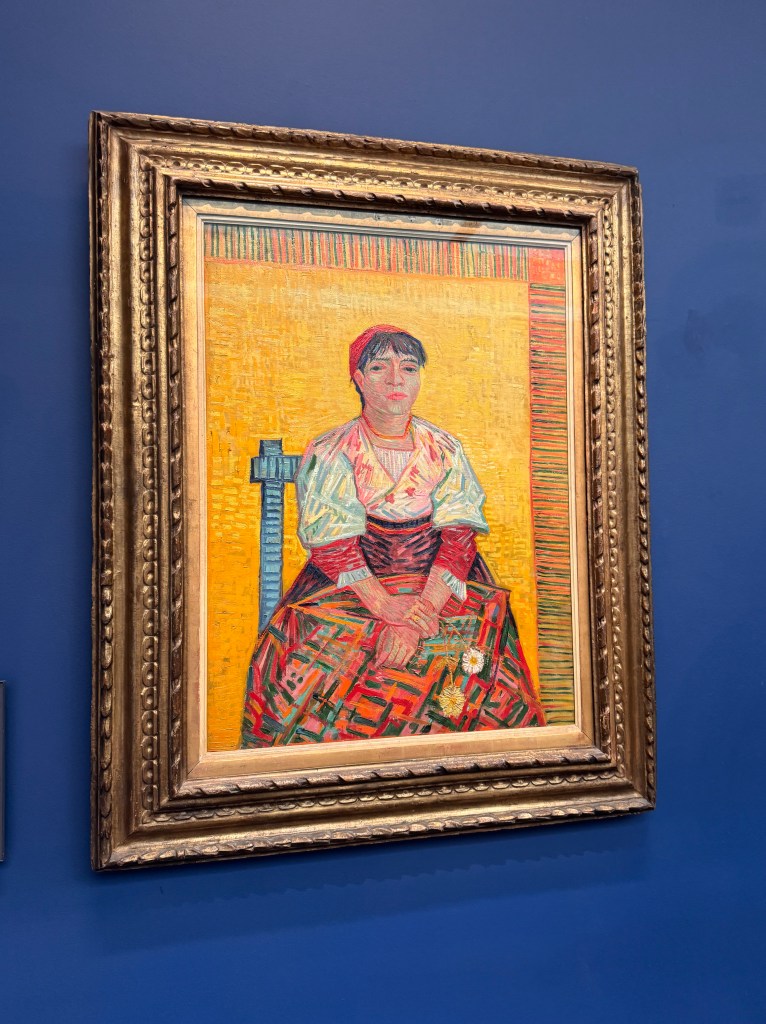
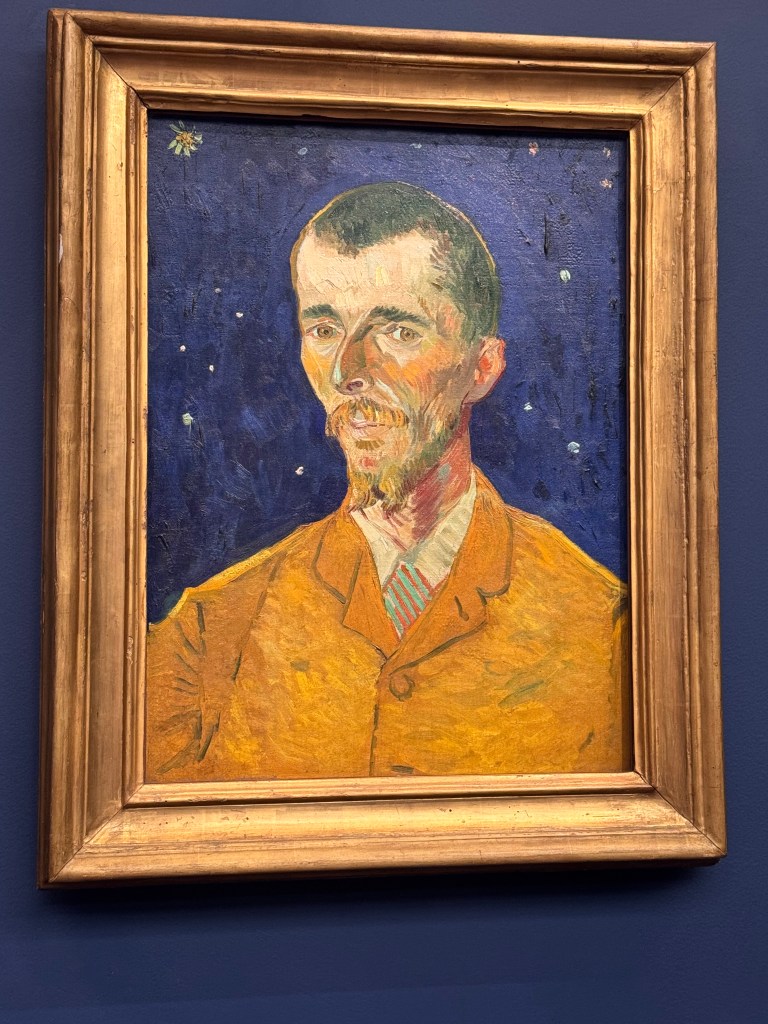
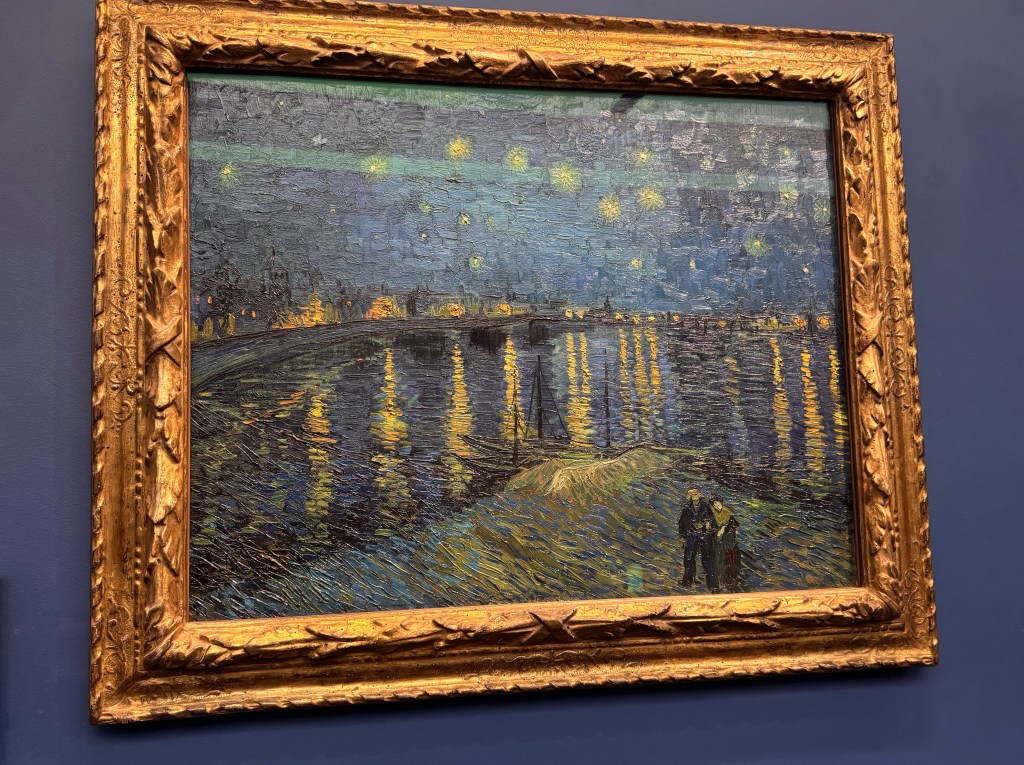
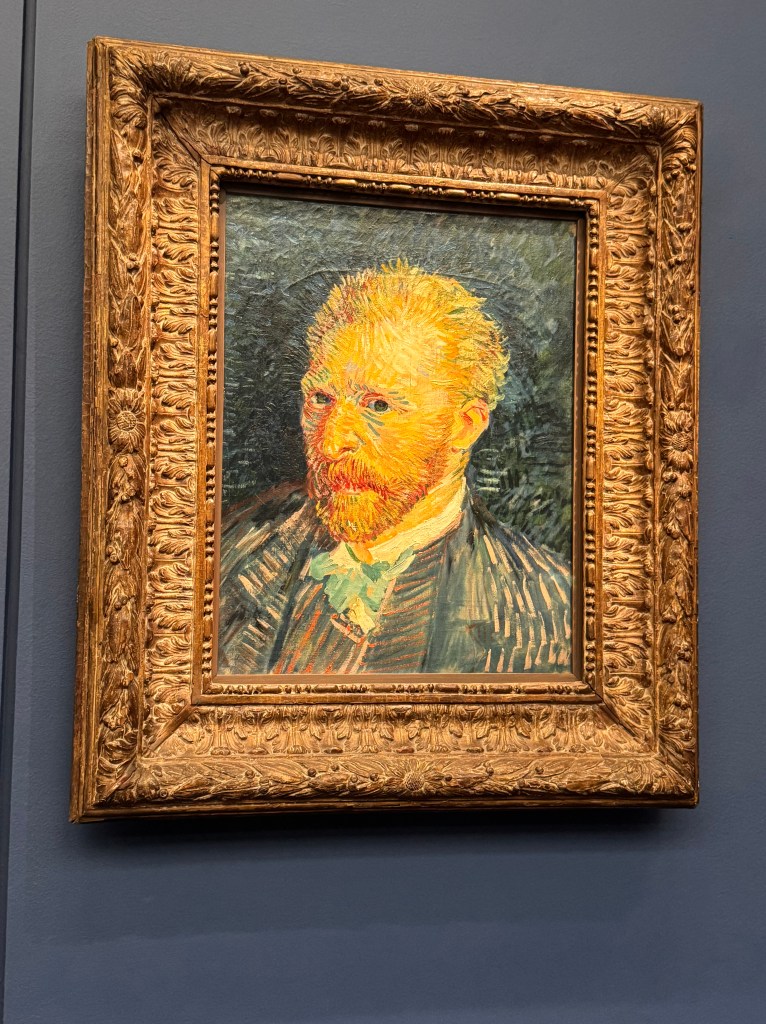
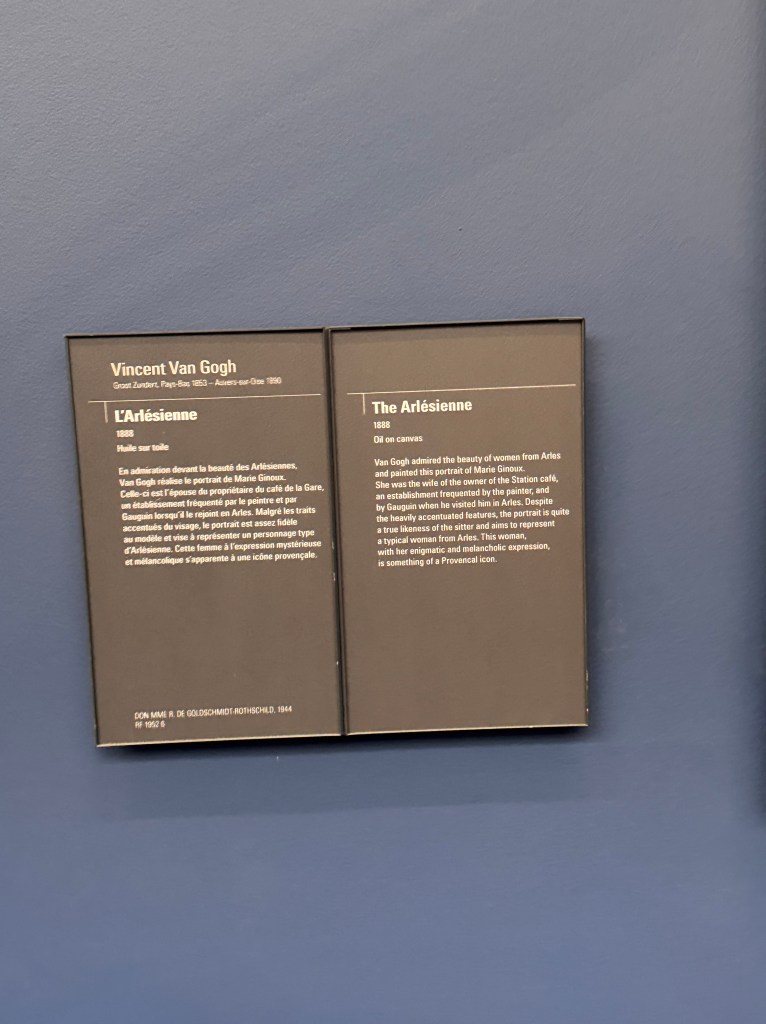
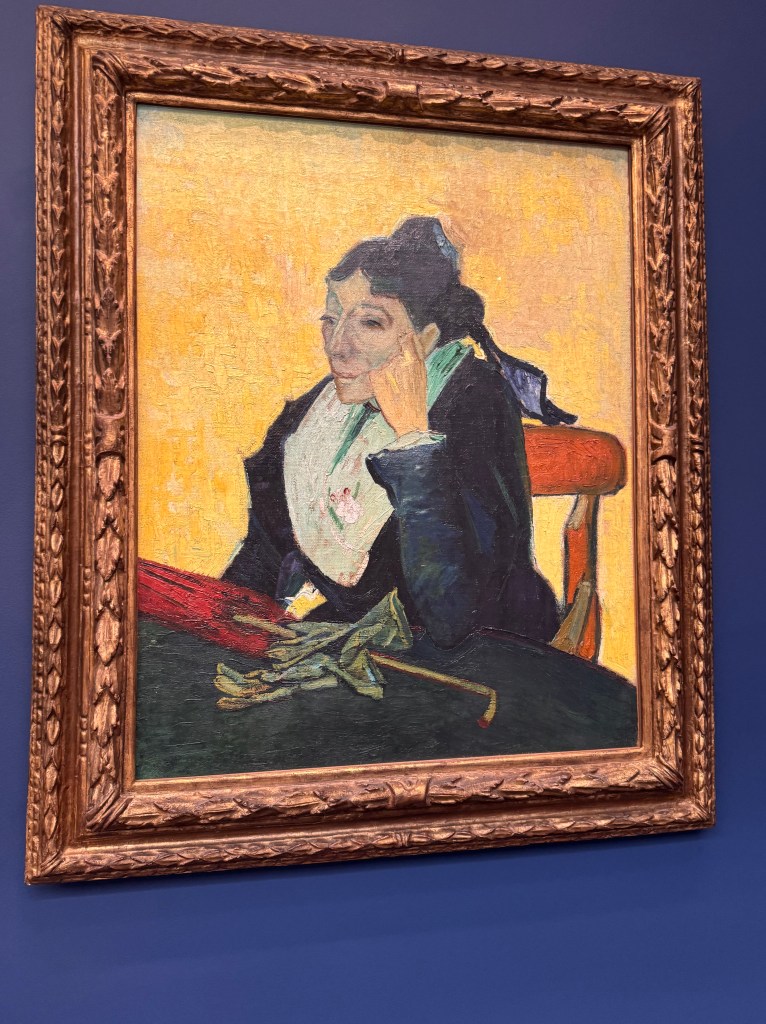
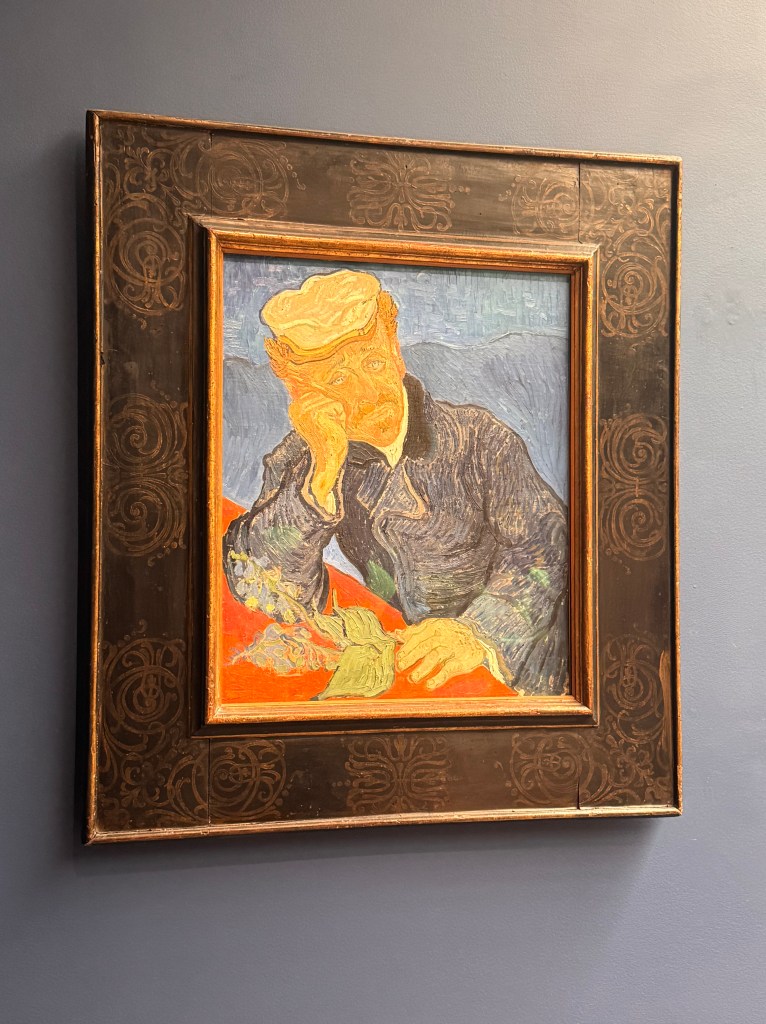
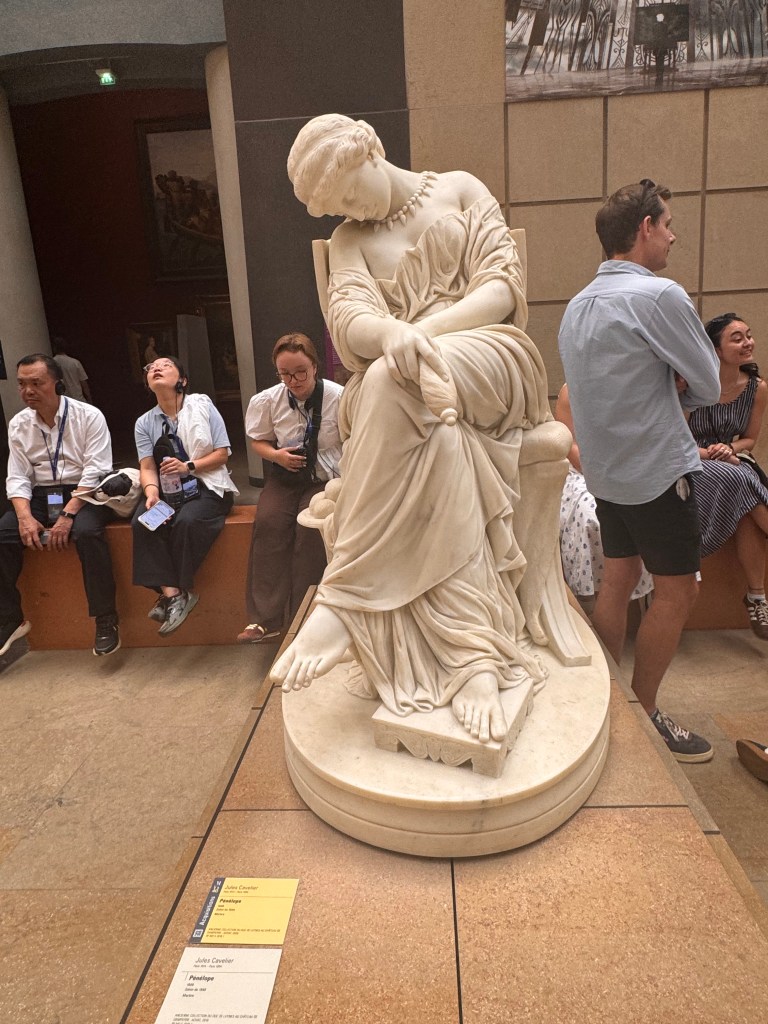
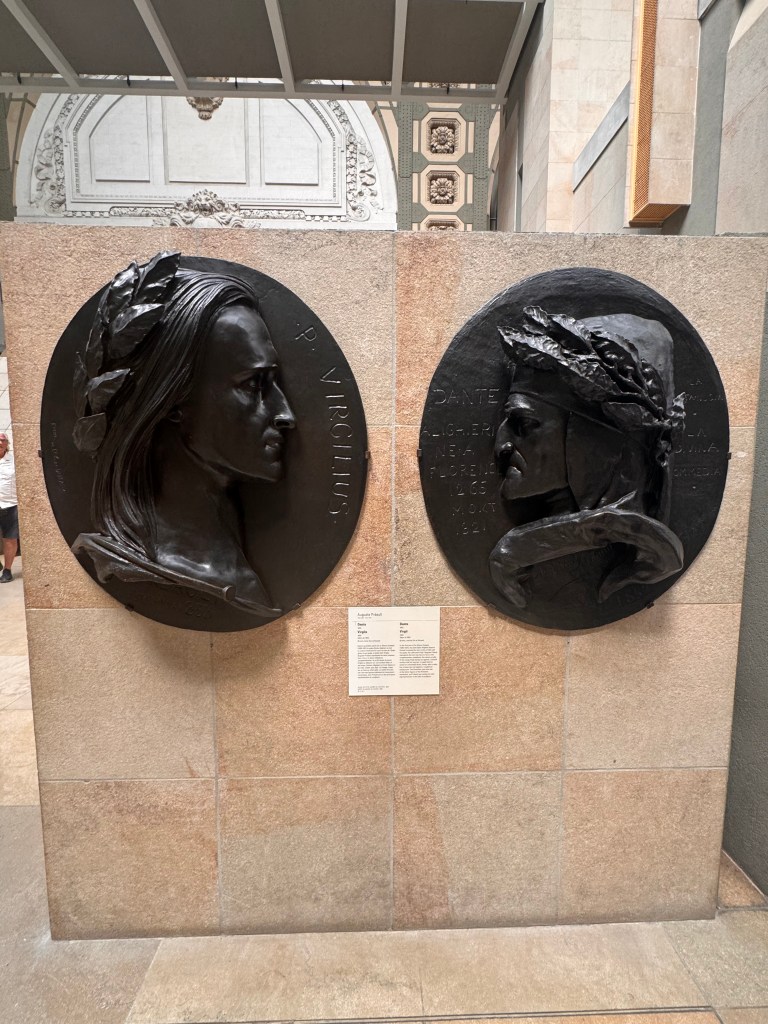
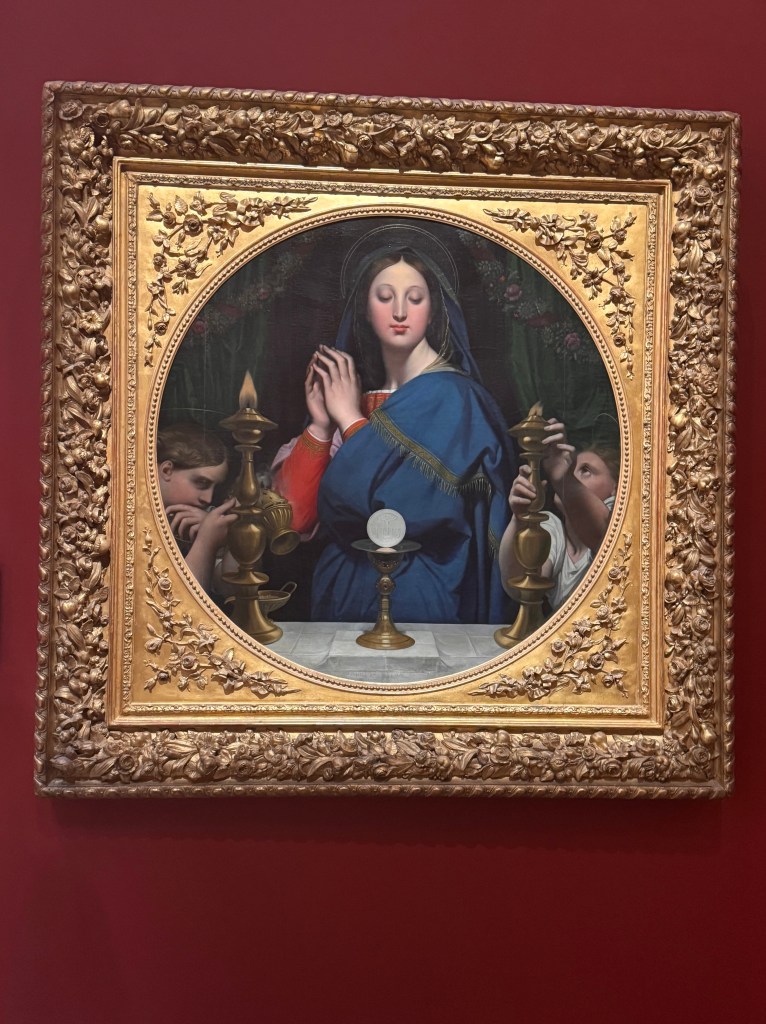
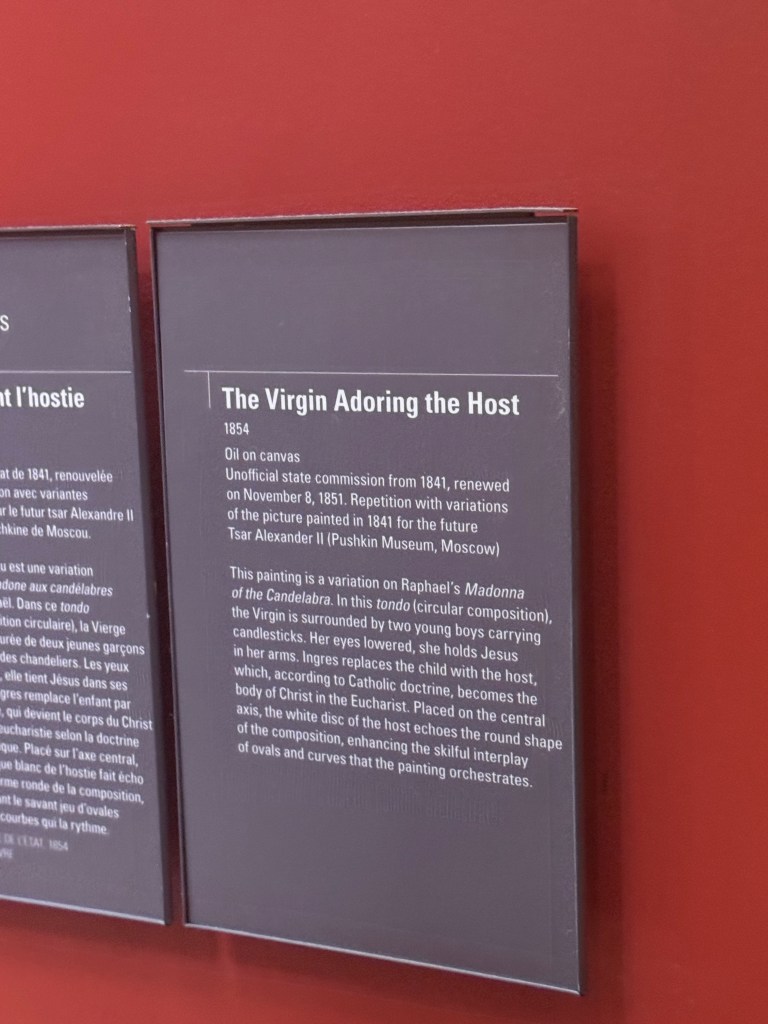
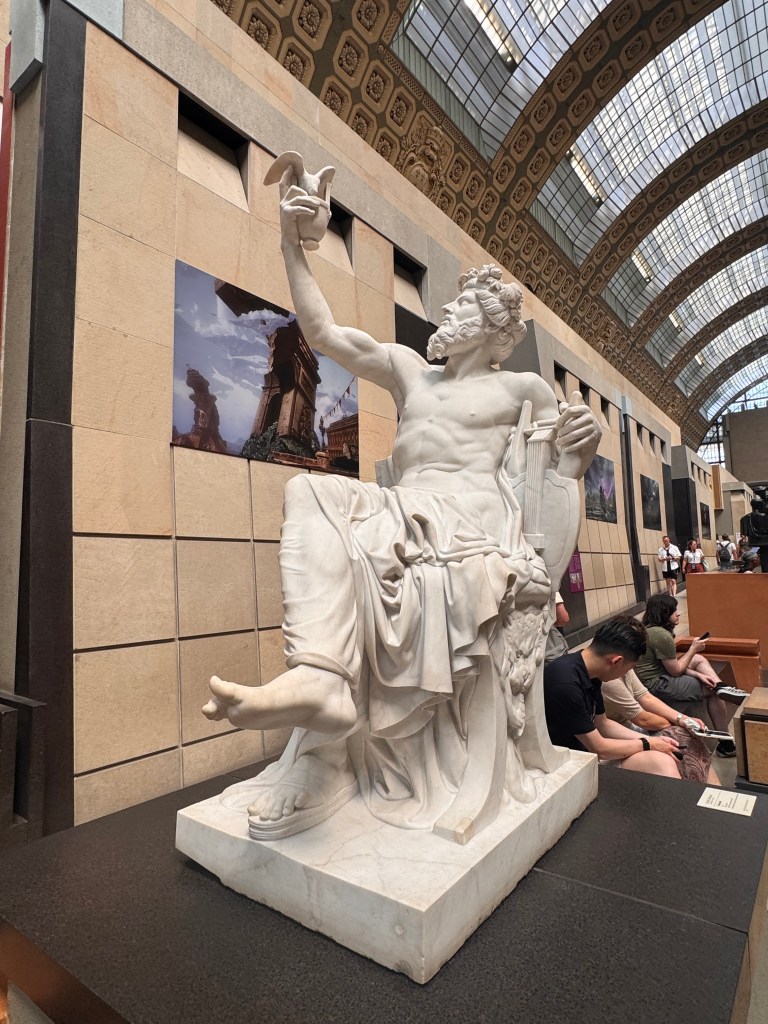
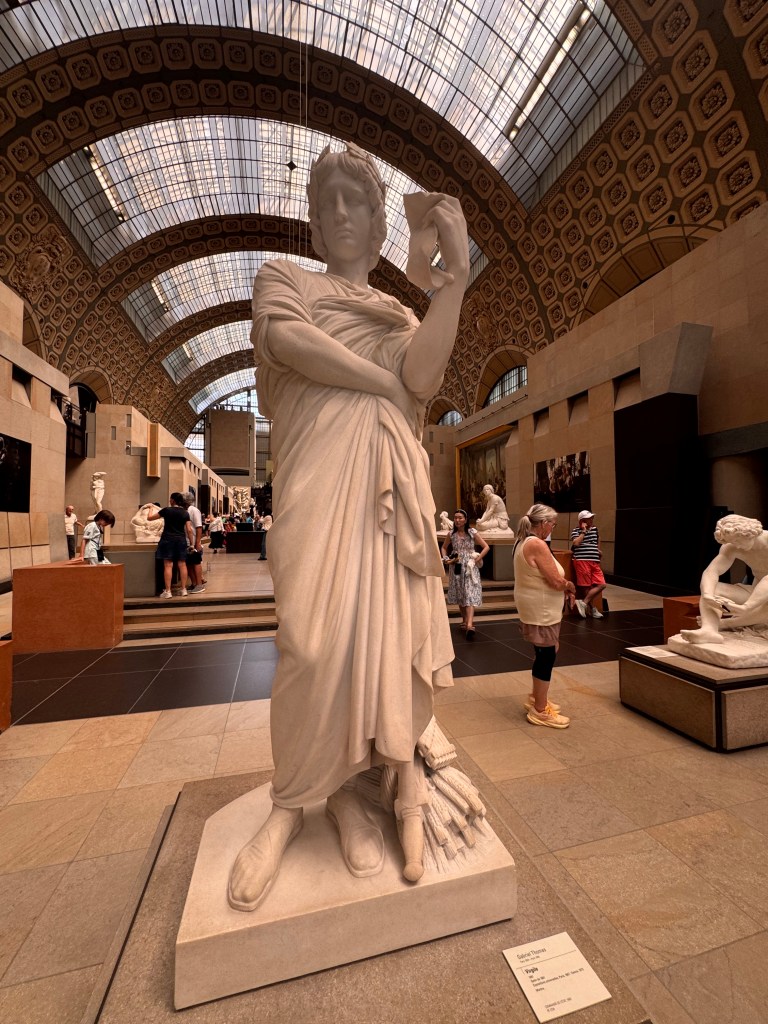
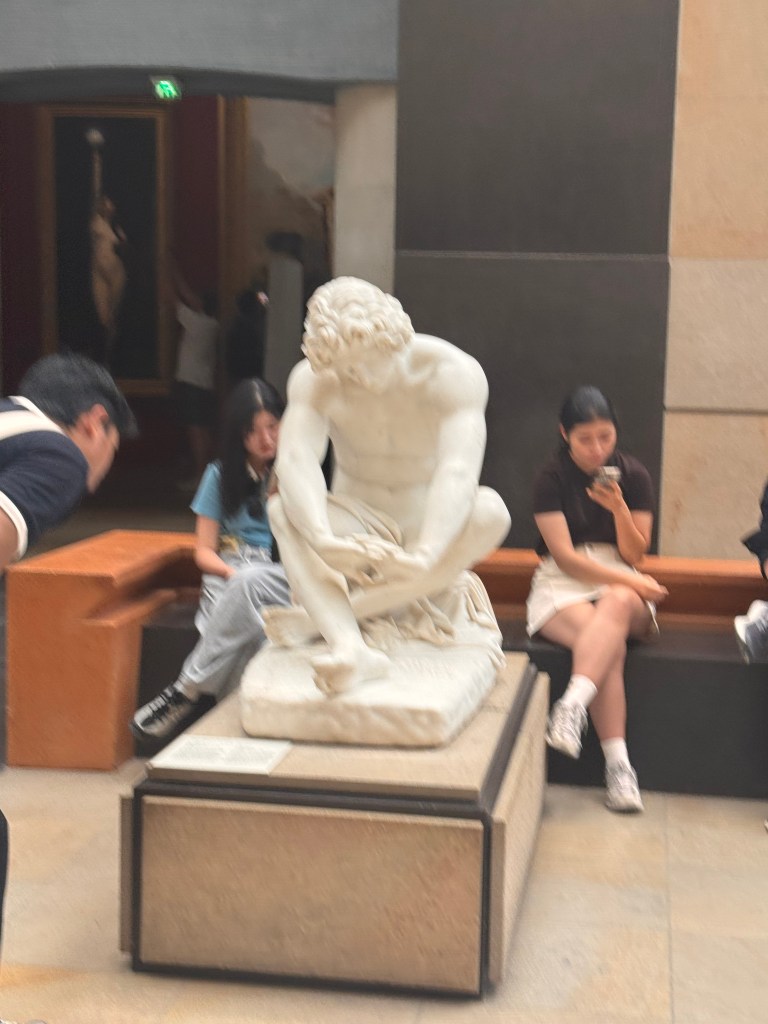
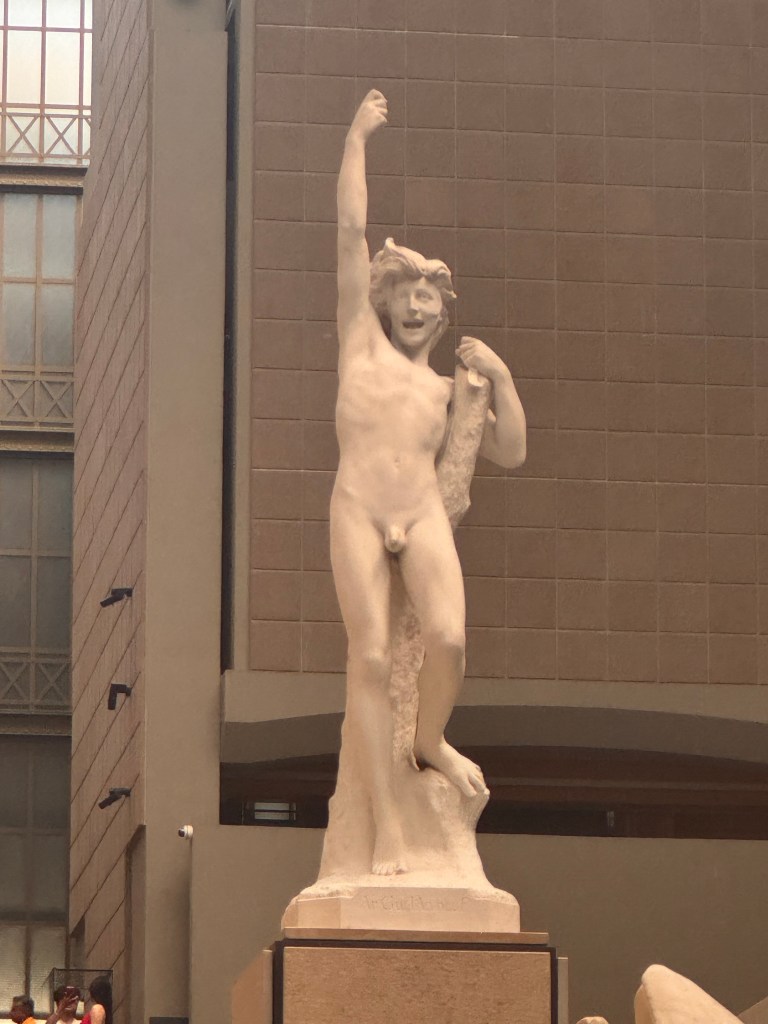
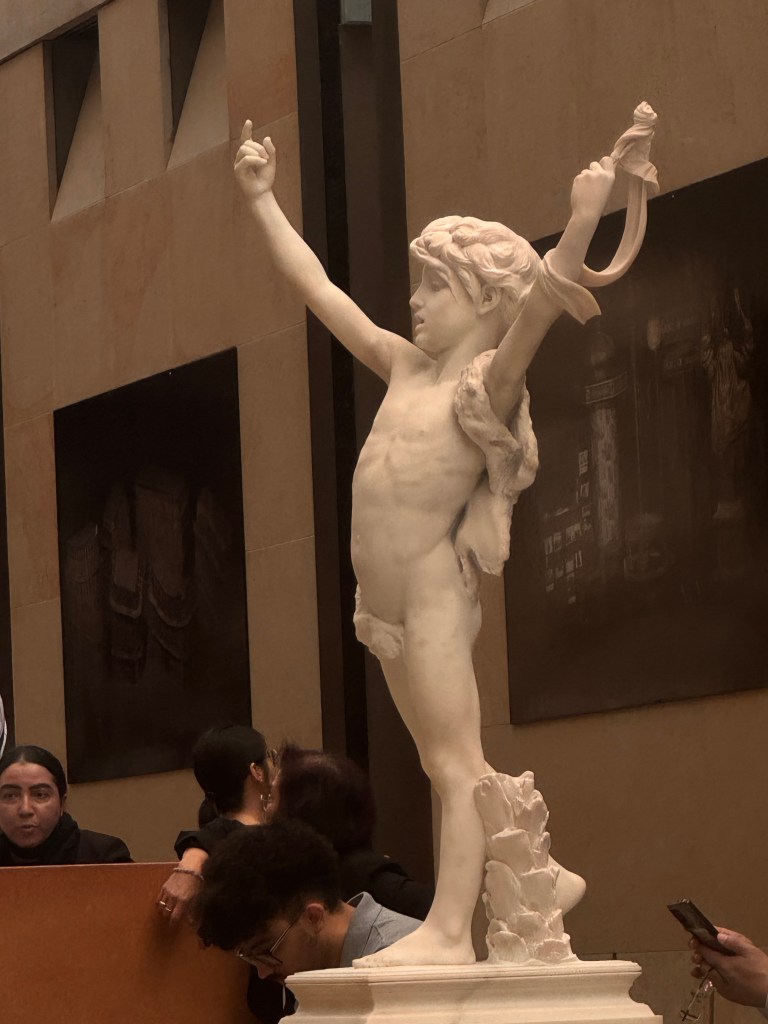
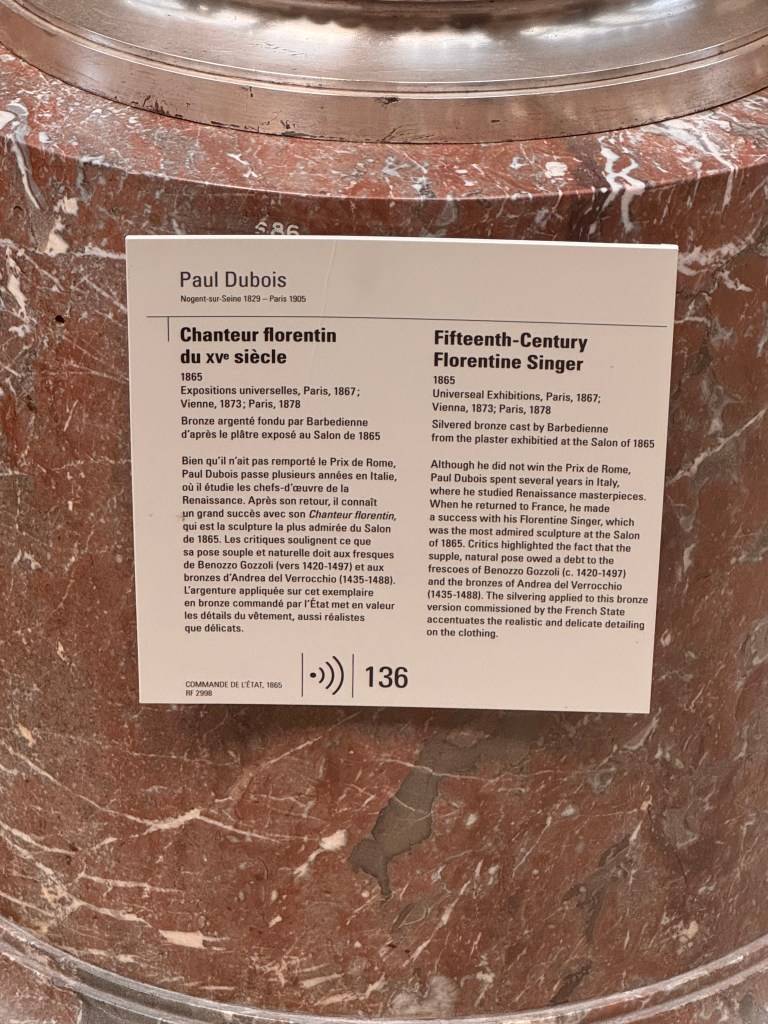
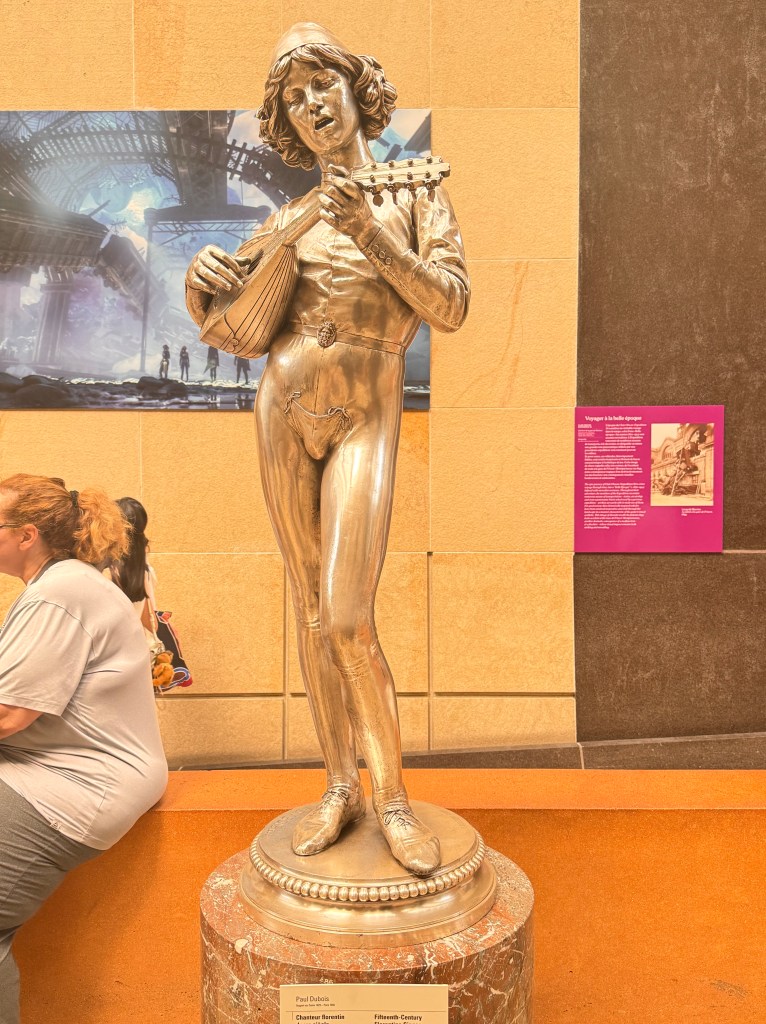
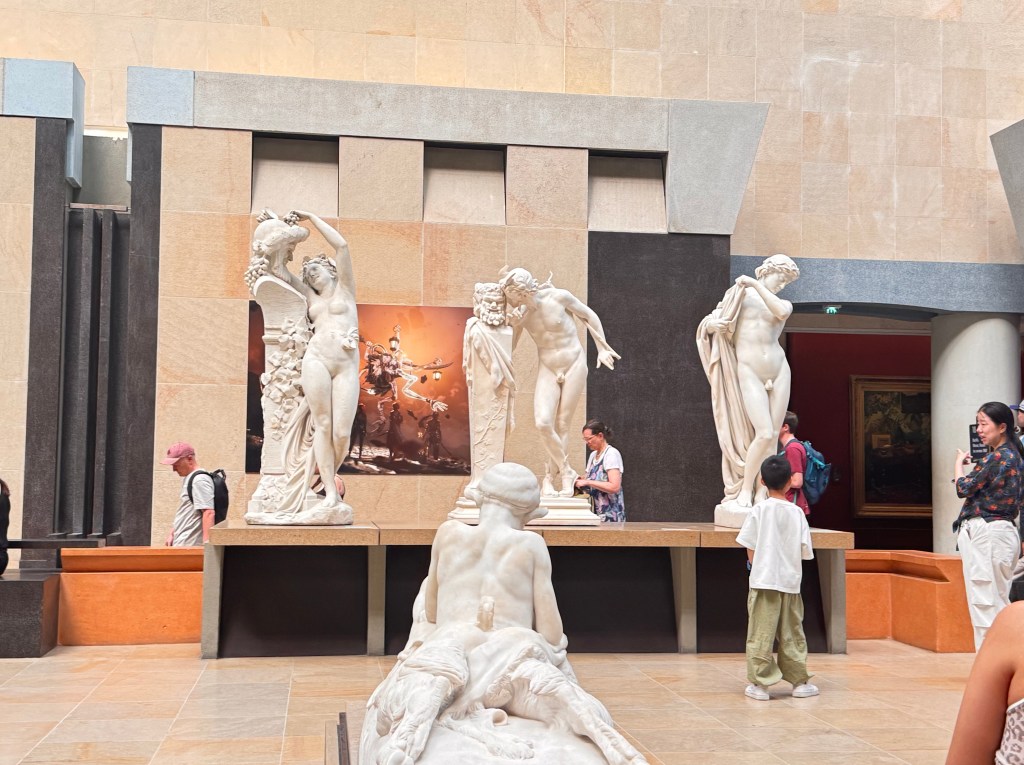
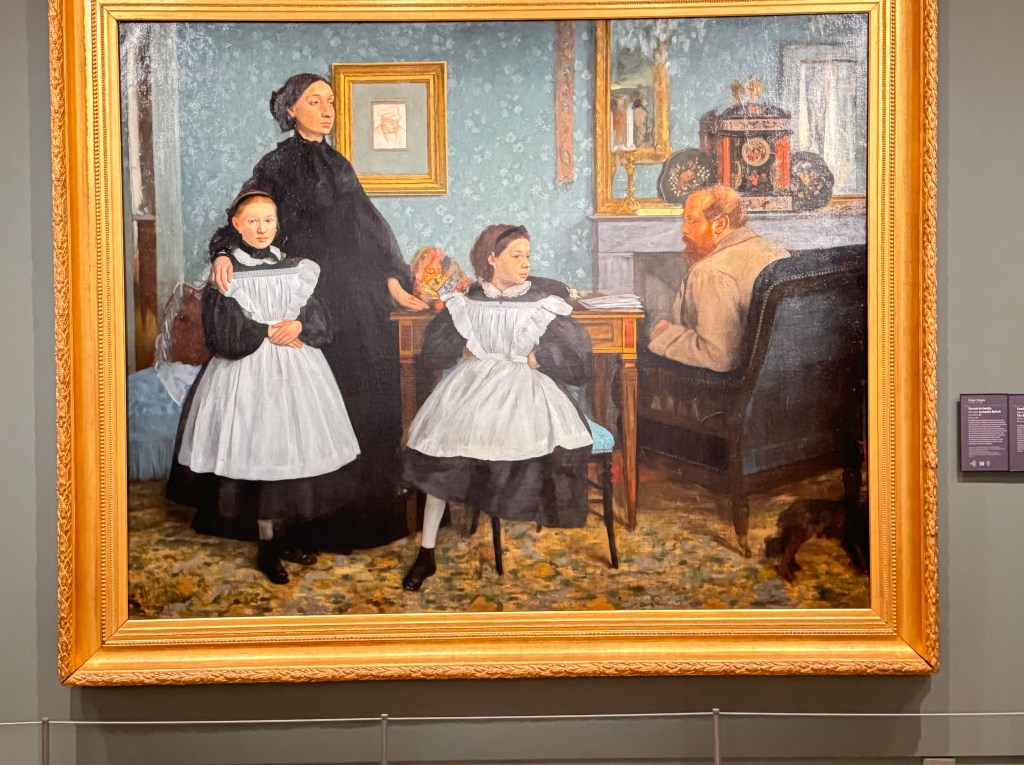
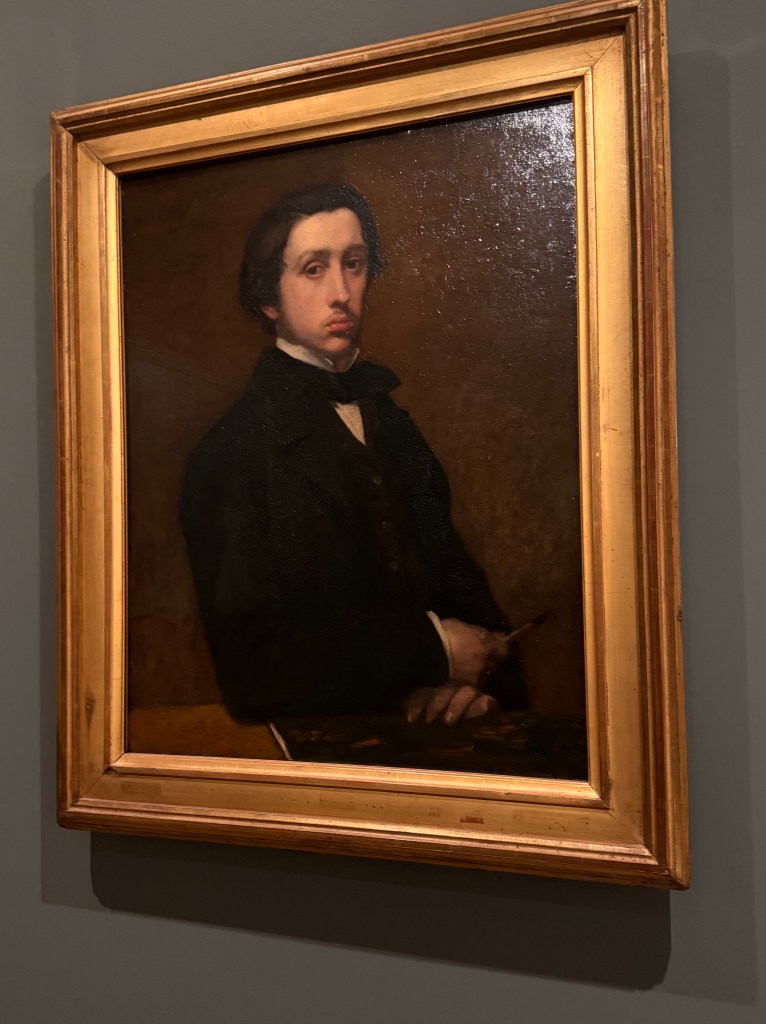
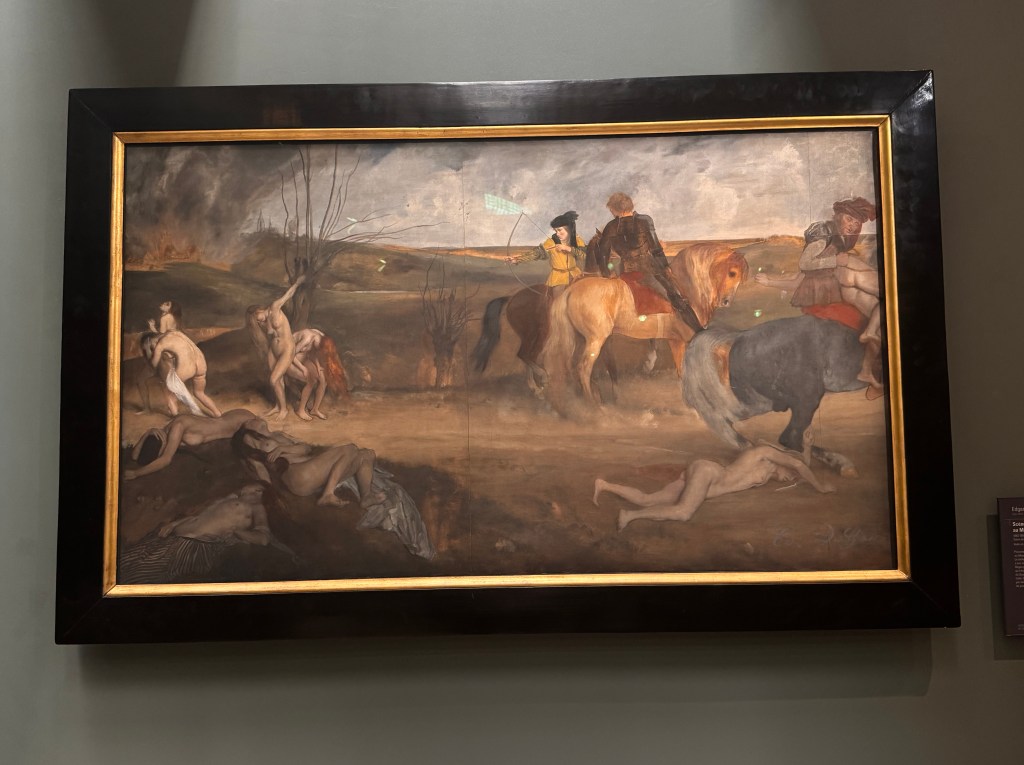
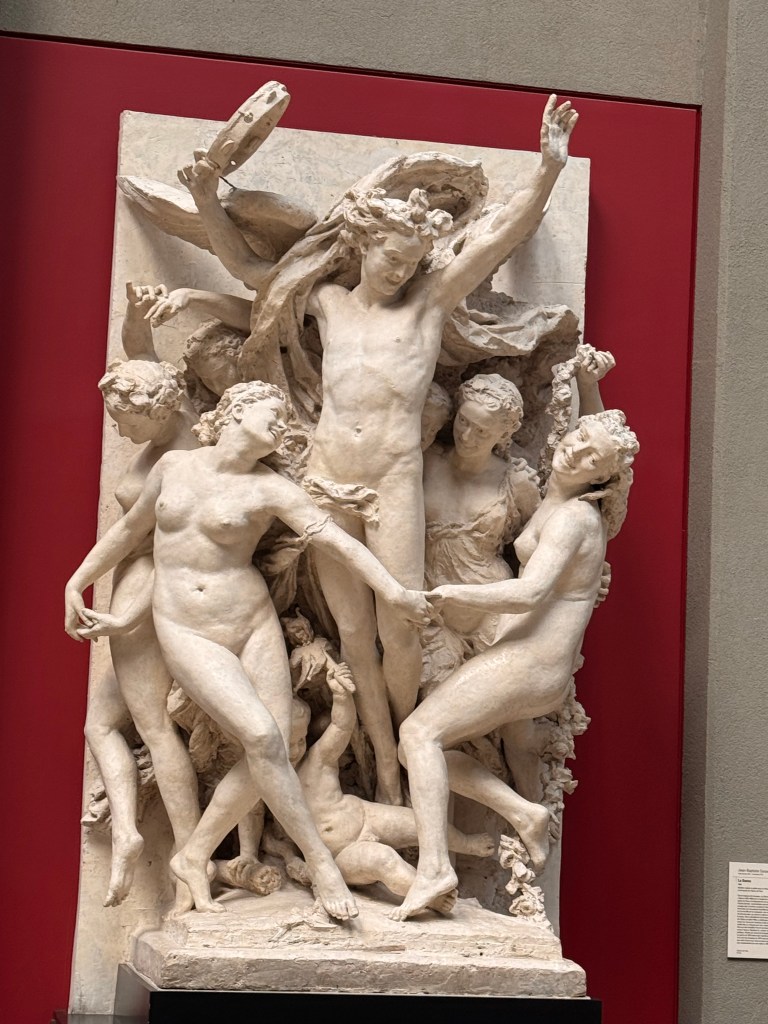
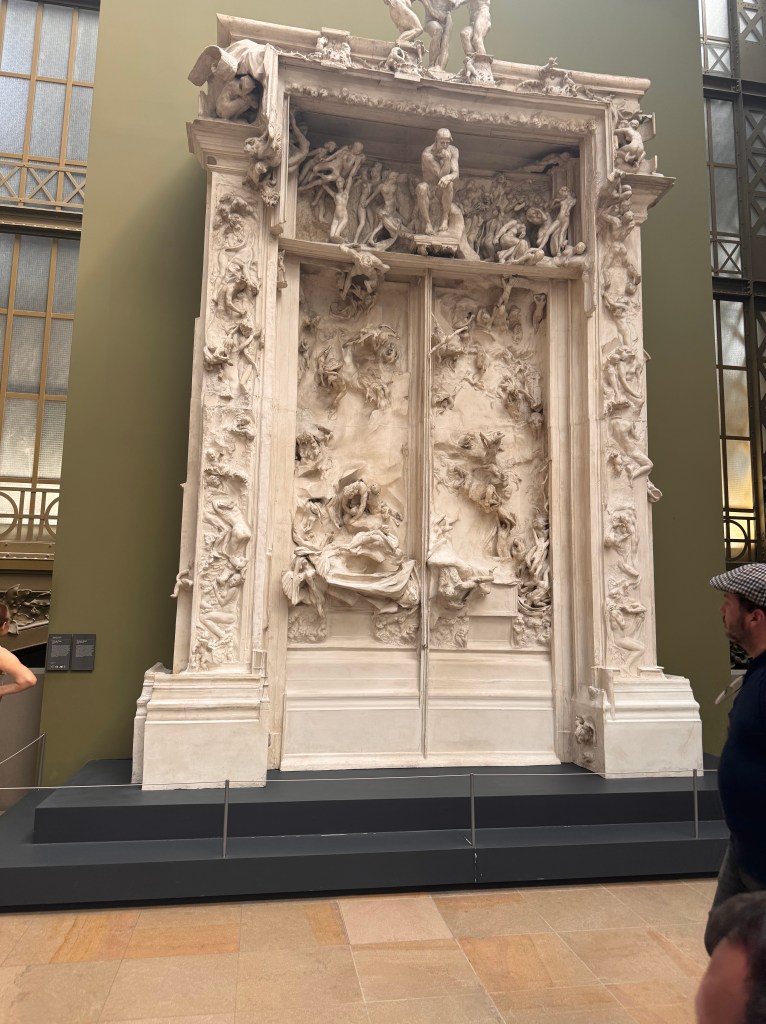
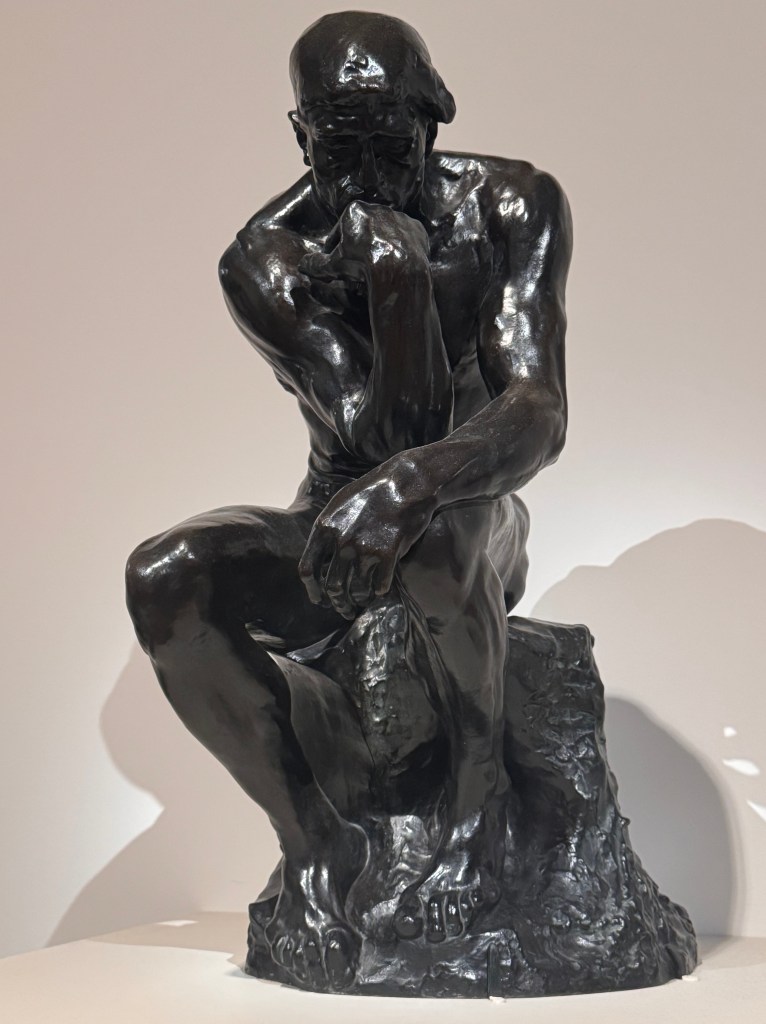
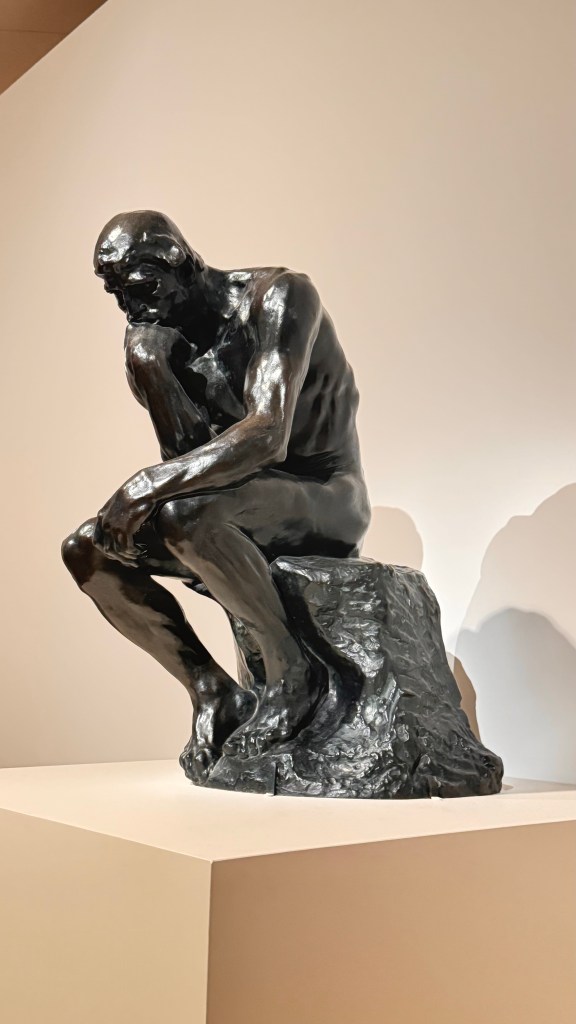
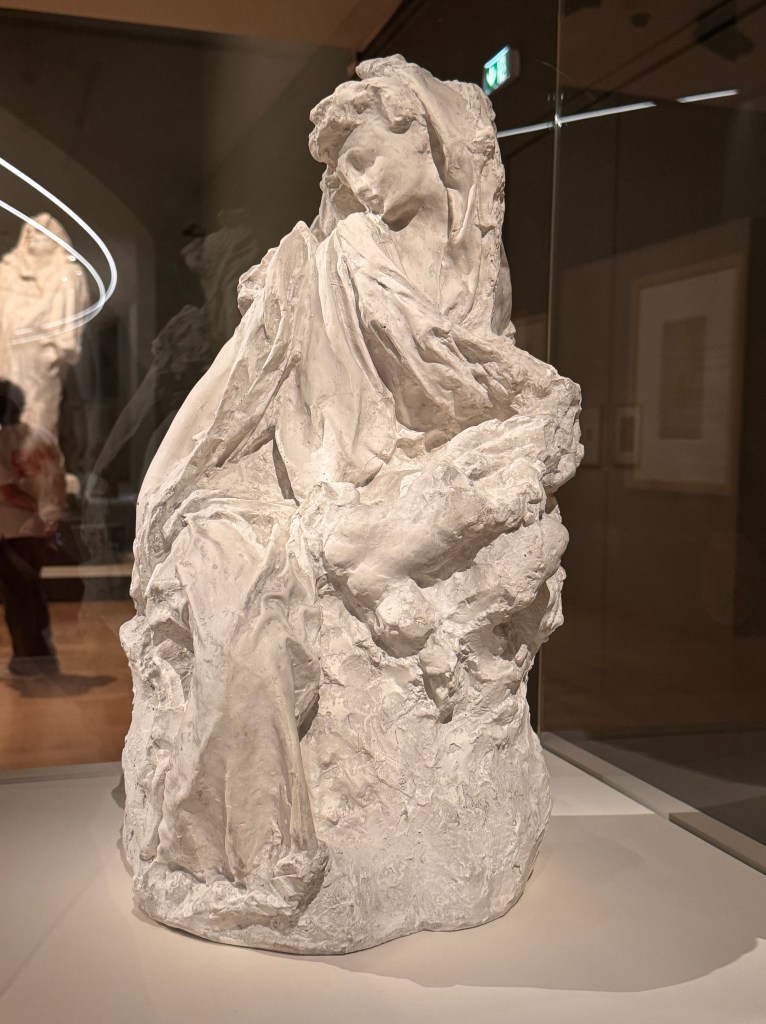
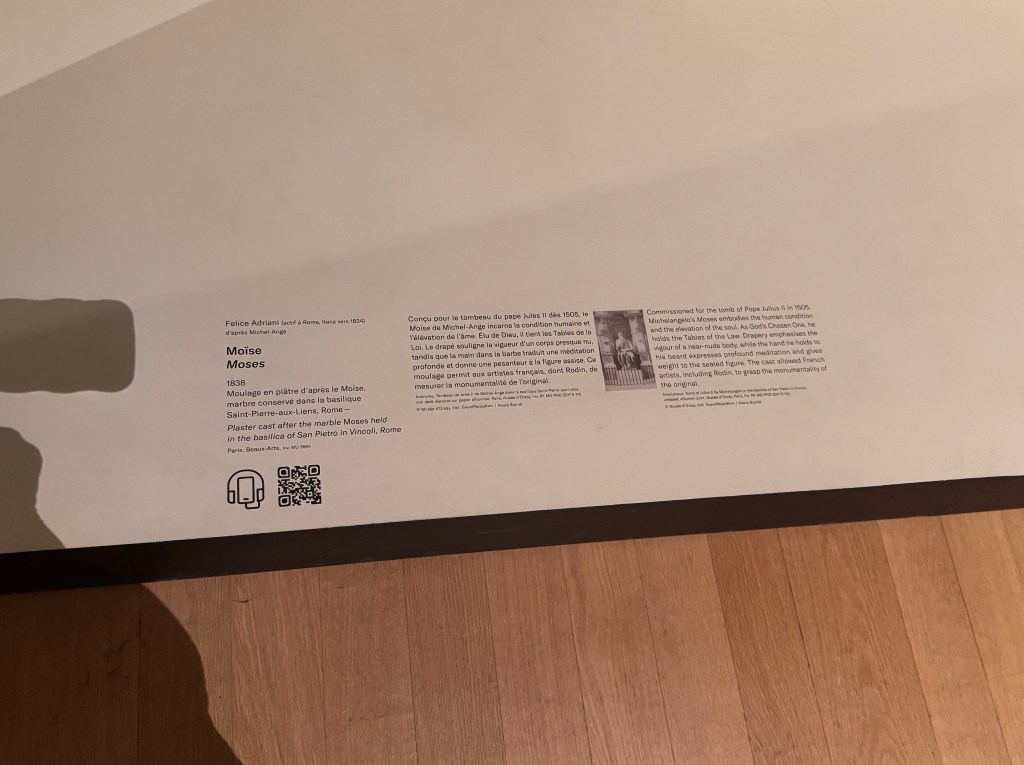
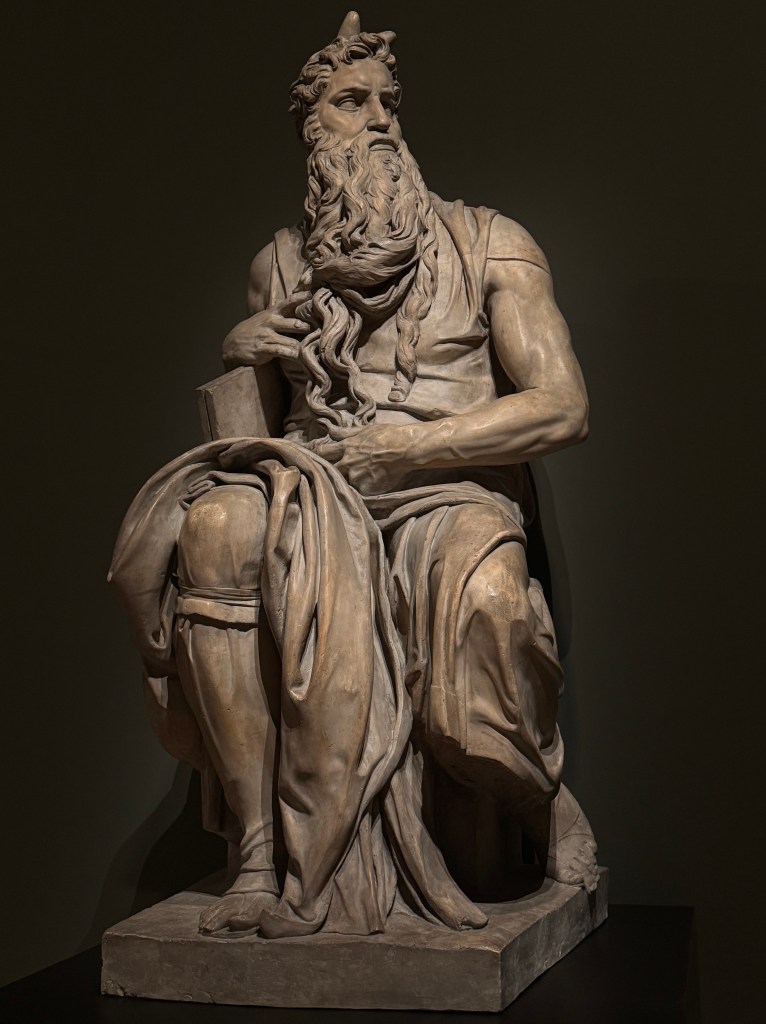
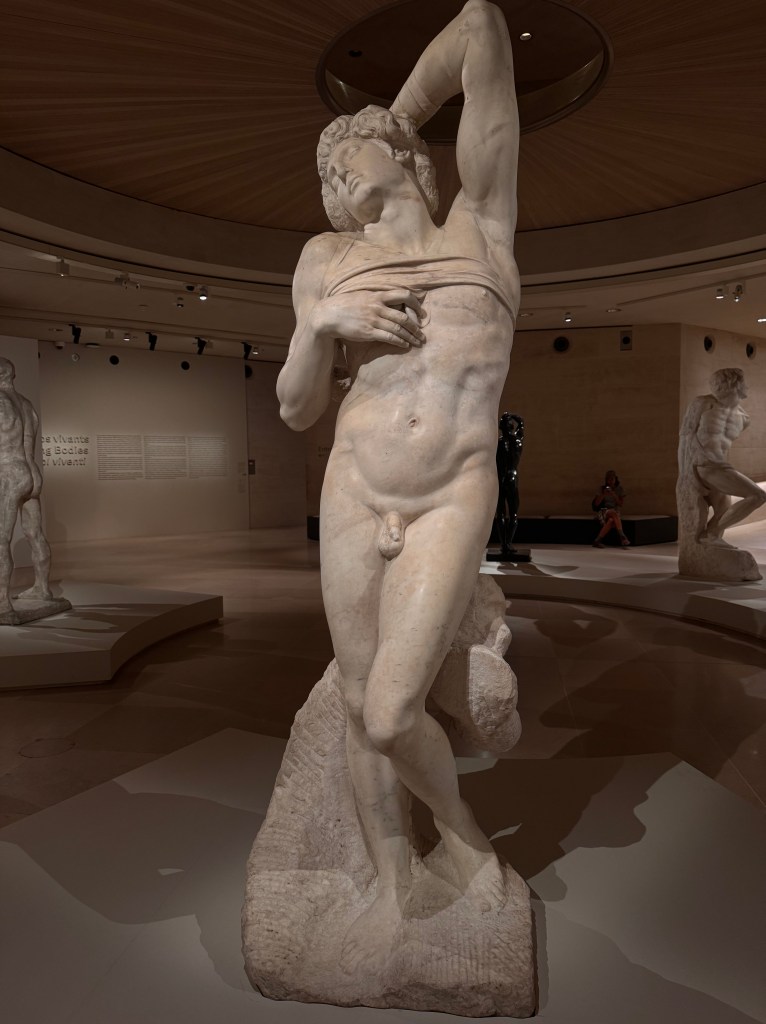
We stood before paintings by Van Gogh, Monet, Renoir, Degas, Cézanne, and countless other artists whose works I had only ever seen in books. The museum’s sculpture galleries were equally breathtaking, filled with marble and bronze masterpieces displayed in beautifully lit open spaces.

Everywhere we turned there seemed to be another world-famous painting waiting around the next corner.

We wandered through gallery after gallery until closing time at 4:00 p.m.

Alan would have been so proud of us for staying until they practically had to usher us out!

After another full day of exploring, we walked back to our apartment, still trying to work through the ongoing issues with GuestReady and VRBO. Unfortunately, the apartment never really improved, and it remained one of the few disappointments of our entire European adventure.

Dinner that evening was simple but perfect.

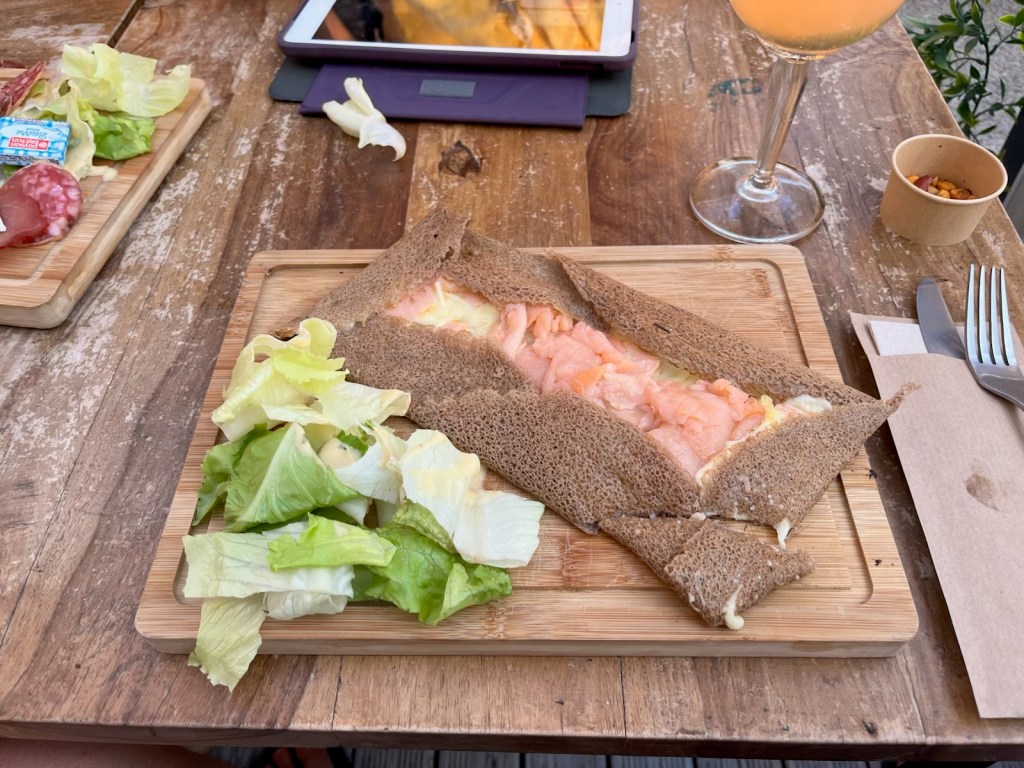
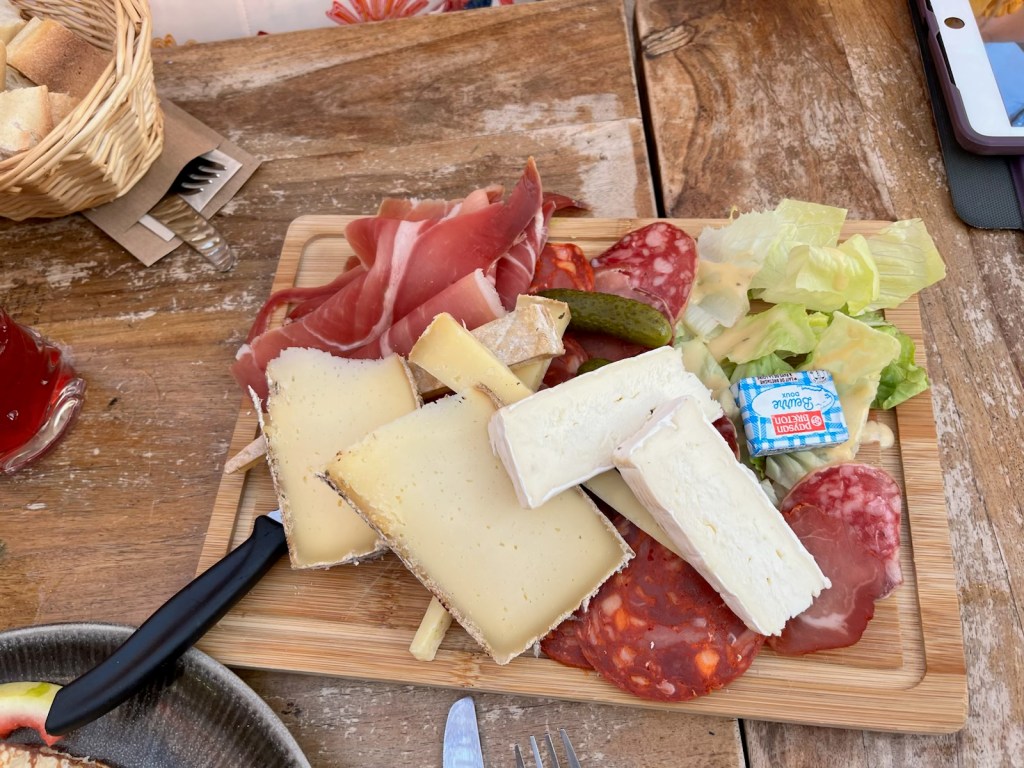
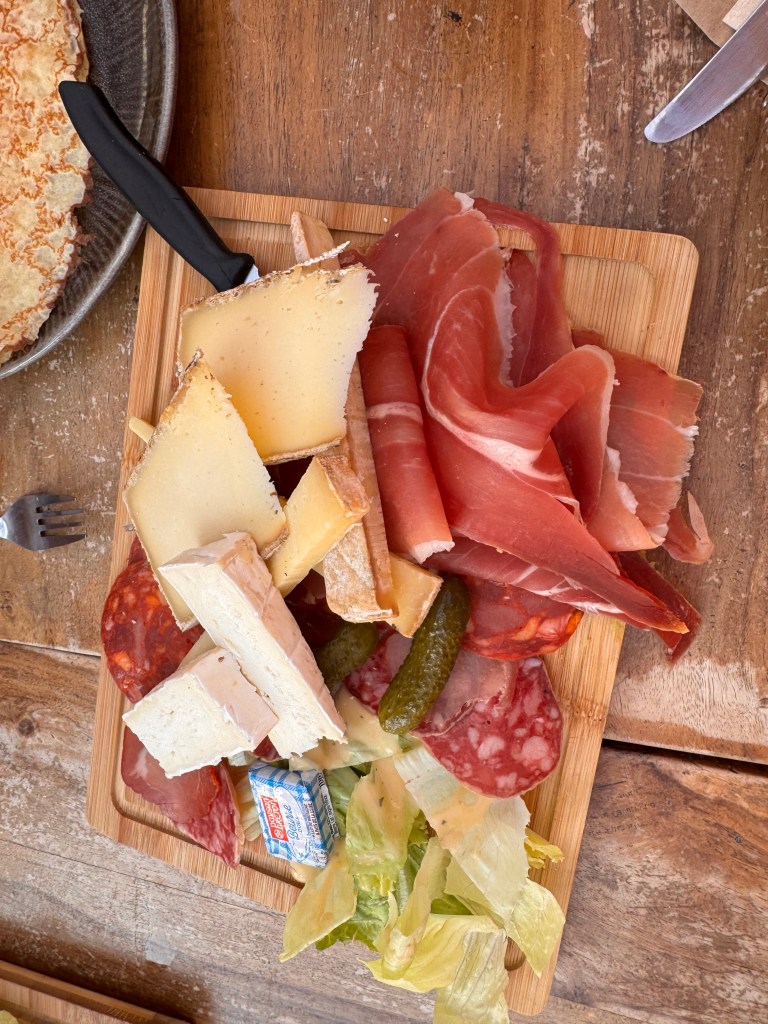
We finished the leftovers from our delicious meat and cheese board, paired them with some incredibly sweet French nectarines, and enjoyed a quiet evening together.

Then it was time to repack our suitcases once again.

The next morning, our wonderful driver Nesrine would be picking us up to take us to the train station as we said goodbye to Paris and began the next chapter of our journey—heading south to the Mediterranean and the beautiful seaside town of La Grande-Motte.

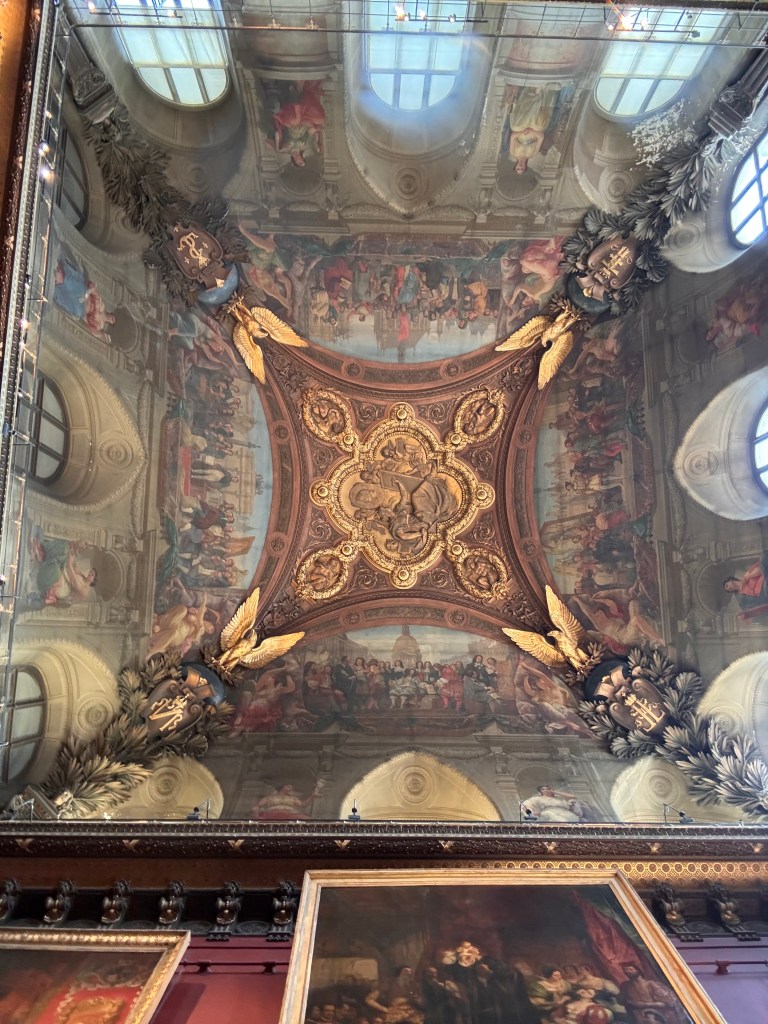
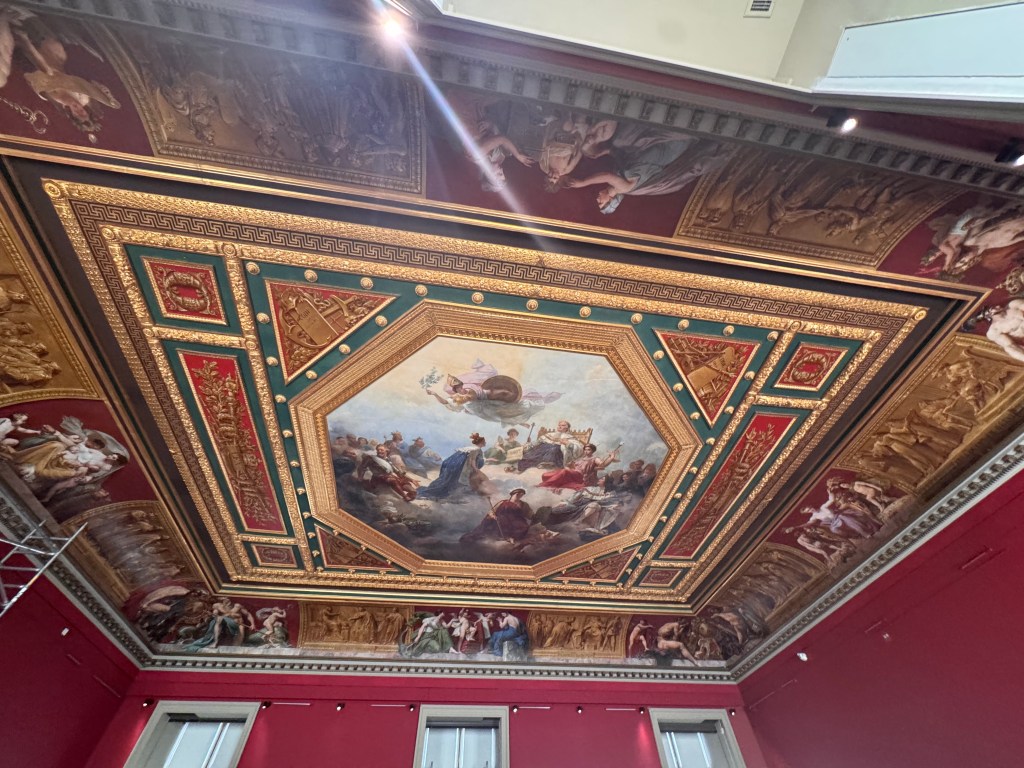
The Louvre, Mona Lisa, and Rodin

Our next adventure was one I had been looking forward to for years—the Louvre.

The day didn’t exactly start smoothly. We had arranged for a taxi, but instead of pulling up where we were waiting, the driver parked somewhere else and expected us to find him. With a 9:00 a.m. timed entry reservation, every minute mattered, and we were beginning to think we were going to miss it.

Fortunately, we arrived just in time. Once the staff saw Kiya’s transport chair, they graciously moved us to the front of the entry line, and within minutes we were inside the world’s largest art museum.

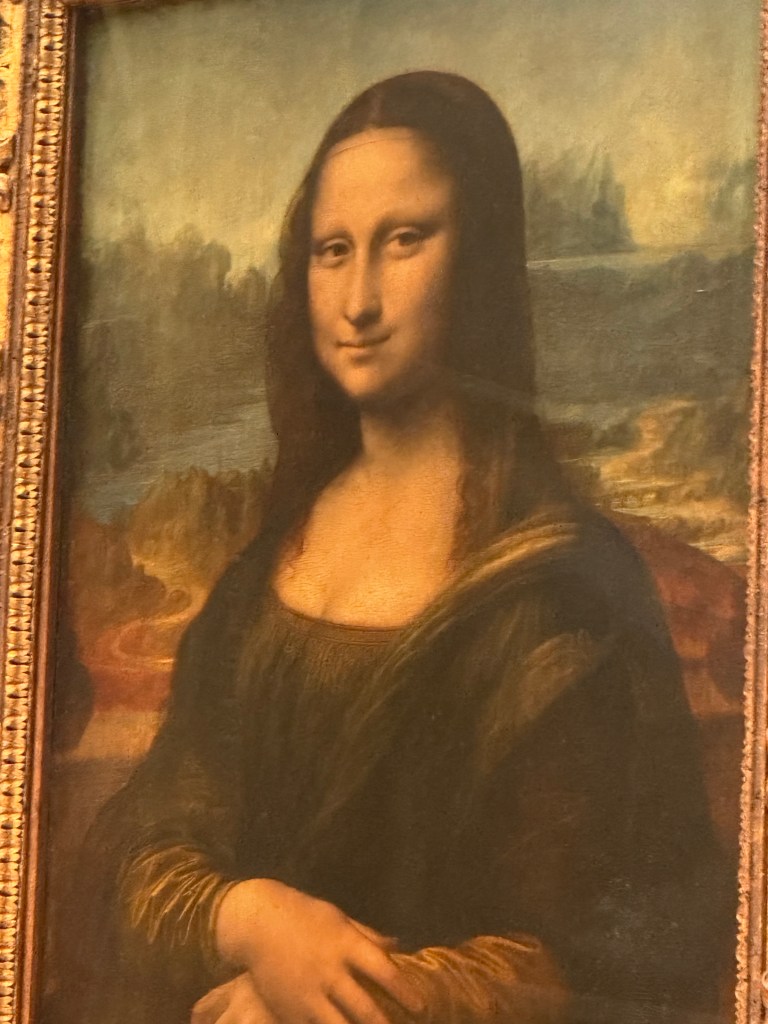
I had one goal to start the day—head straight to the Mona Lisa before the museum filled with visitors.

The Louvre is enormous, and it took a bit of navigating through elevators and long hallways before we finally reached her gallery. At first, we joined the regular line and slowly made our way toward the viewing area. Then Mom noticed a small sign indicating accessible access for wheelchair users.

As we made our way toward it, one of the attendants came over to meet us.

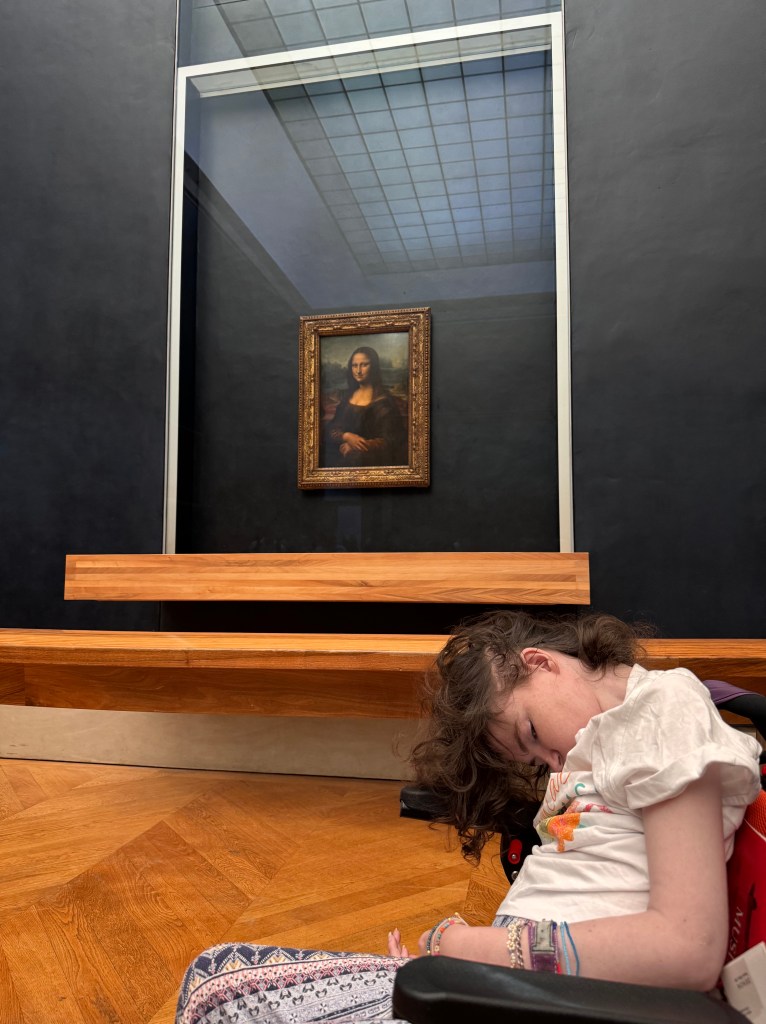
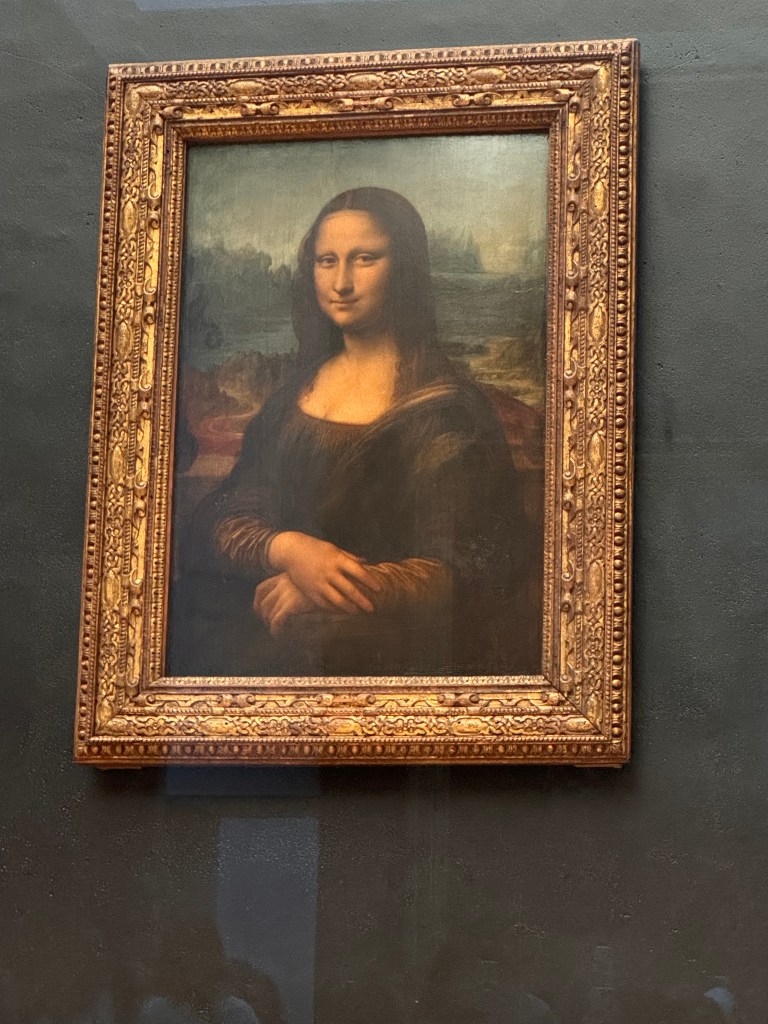
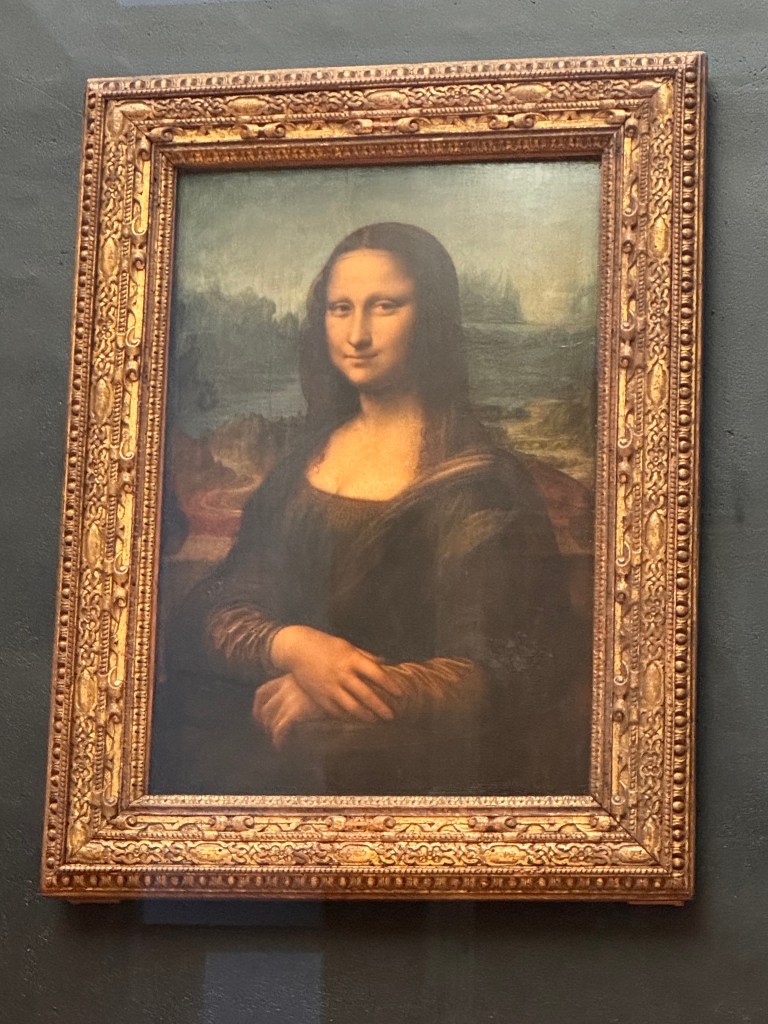
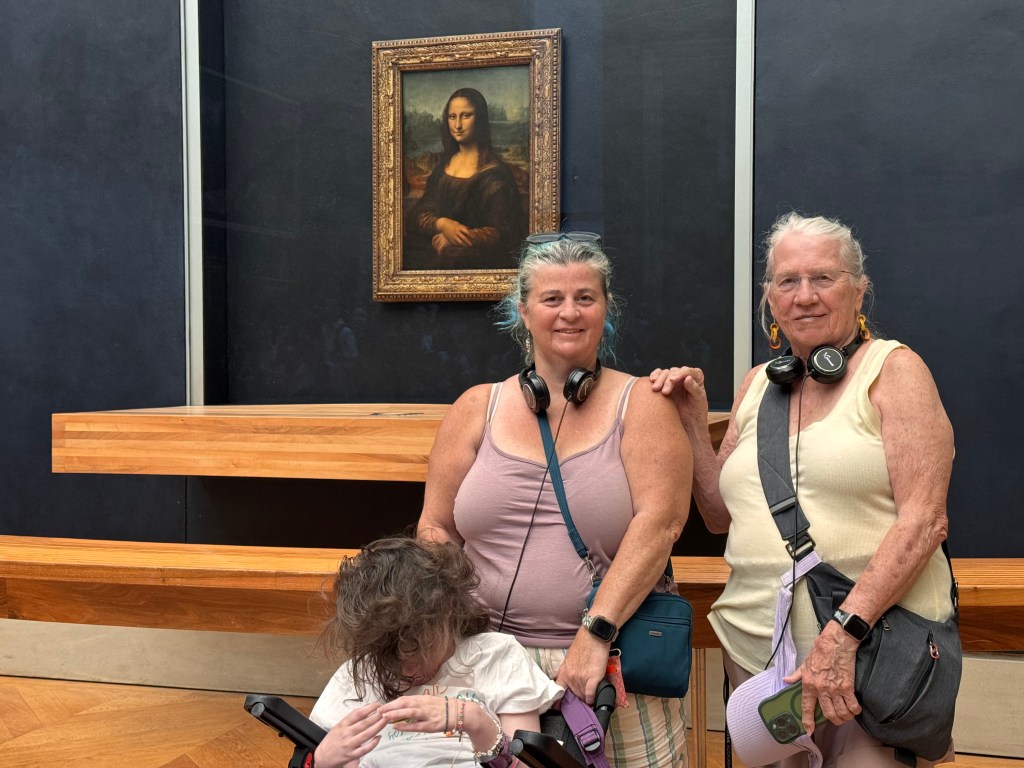
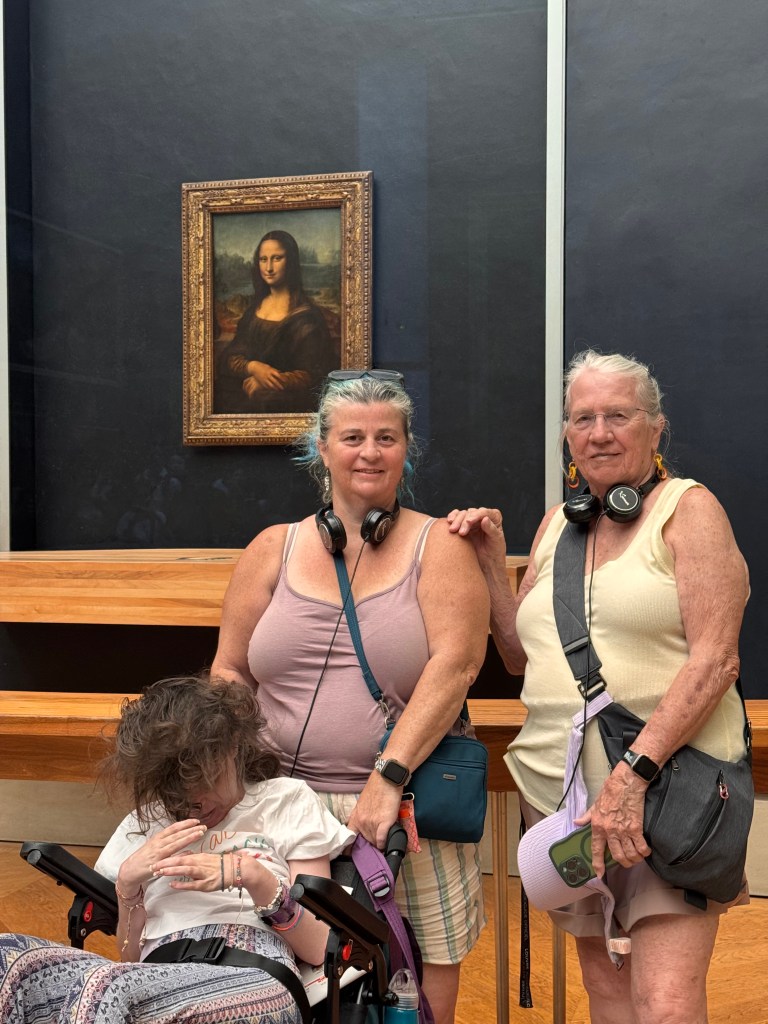
She smiled and led us around the crowds to the accessible viewing area, where we were able to stand only about five feet from Leonardo da Vinci’s Mona Lisa. Behind us, the general crowd was held back roughly fifteen feet from the painting.

The attendant told us to take all the time we wanted.

She even offered to take our family photos, making sure we had pictures together in front of one of the most famous paintings in the world. It was such a thoughtful act of kindness, and it transformed what could have been a stressful experience into one of the highlights of our trip.

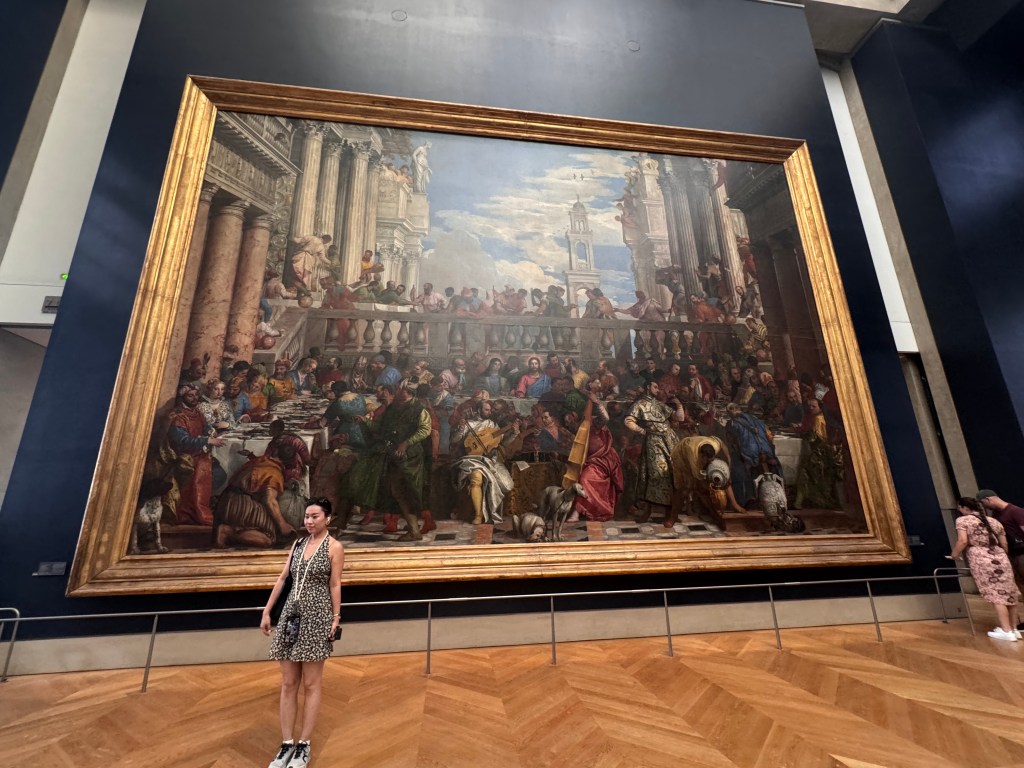
After spending time with the Mona Lisa, we wandered through gallery after gallery for the next several hours.

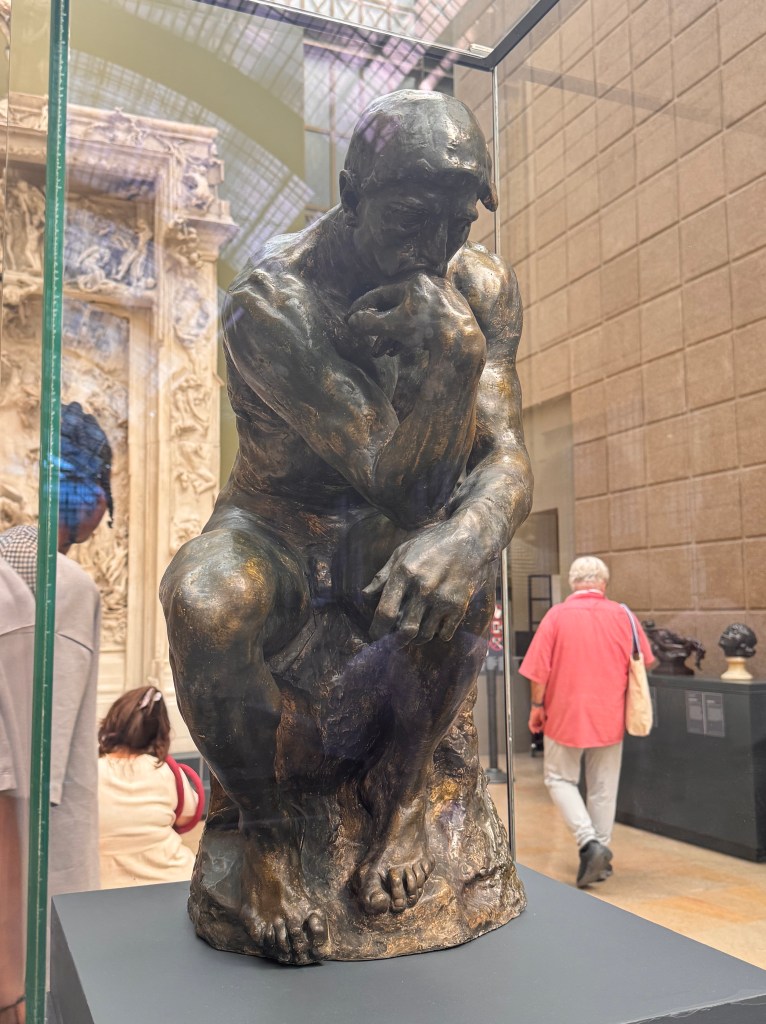
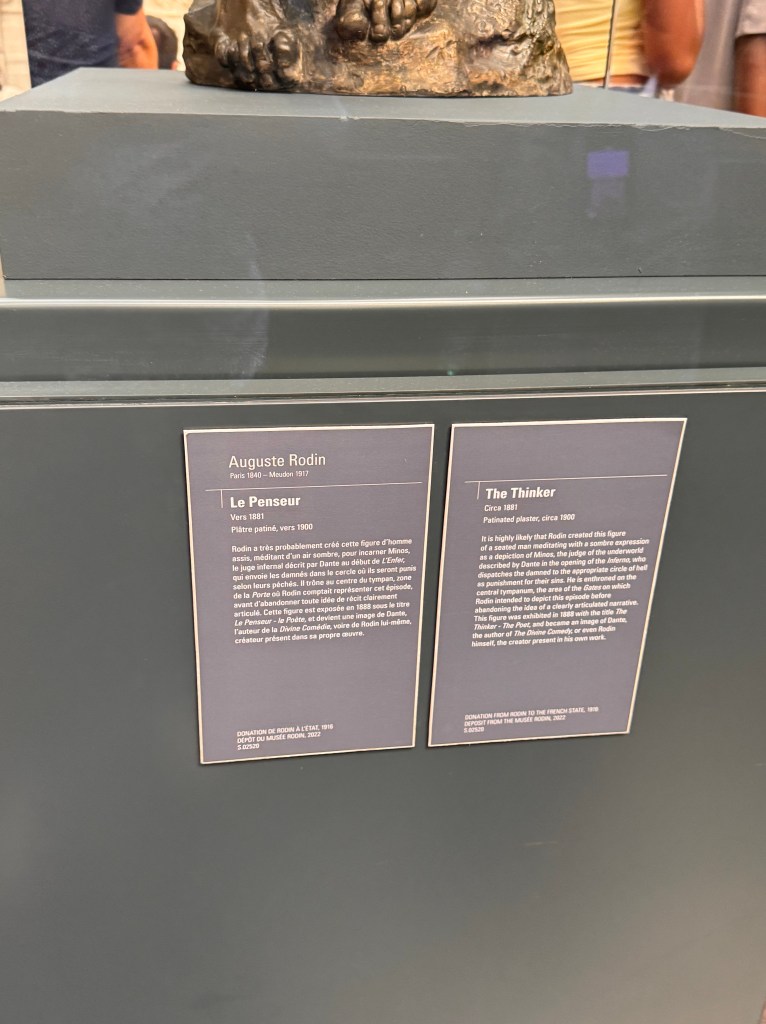
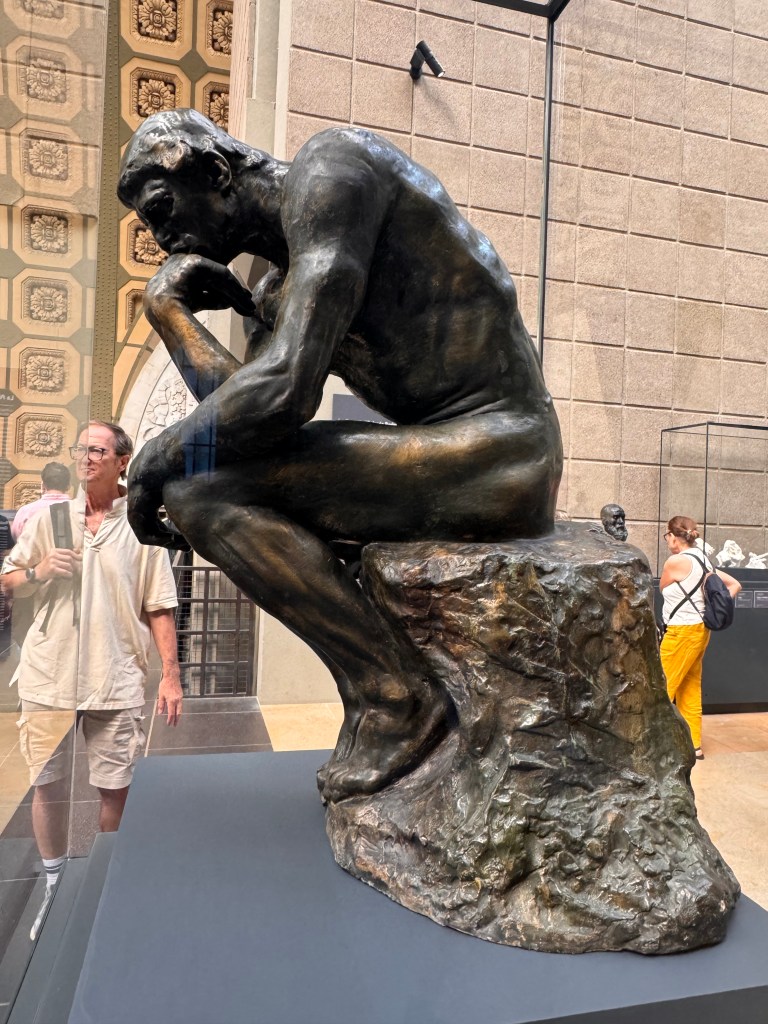
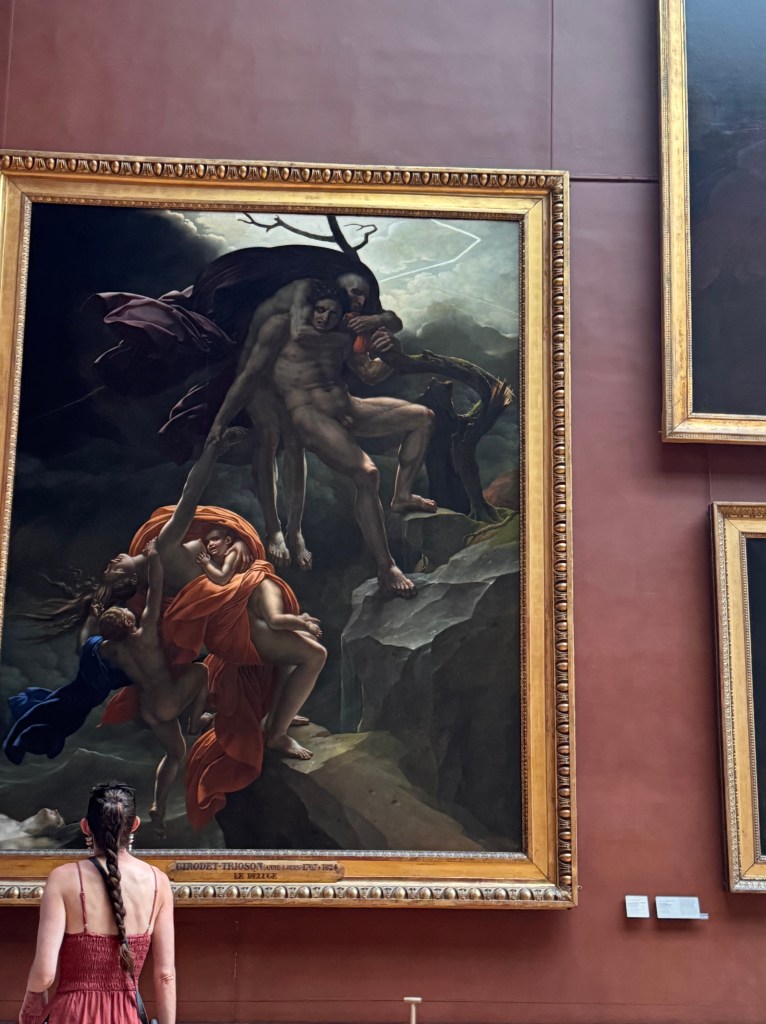
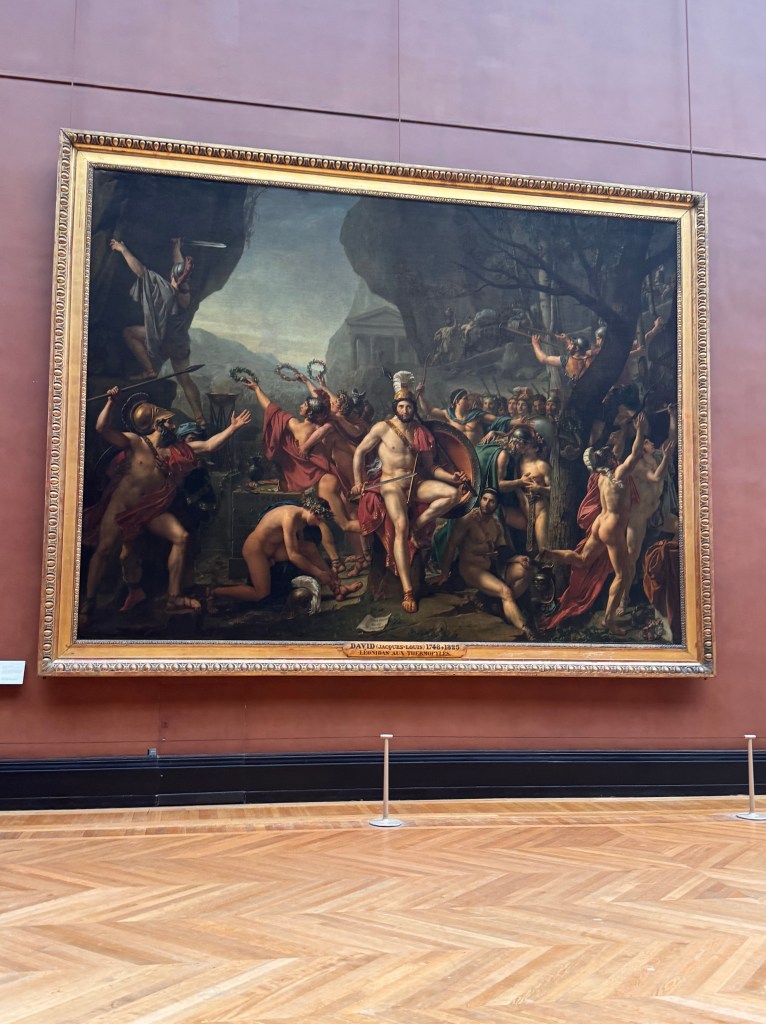
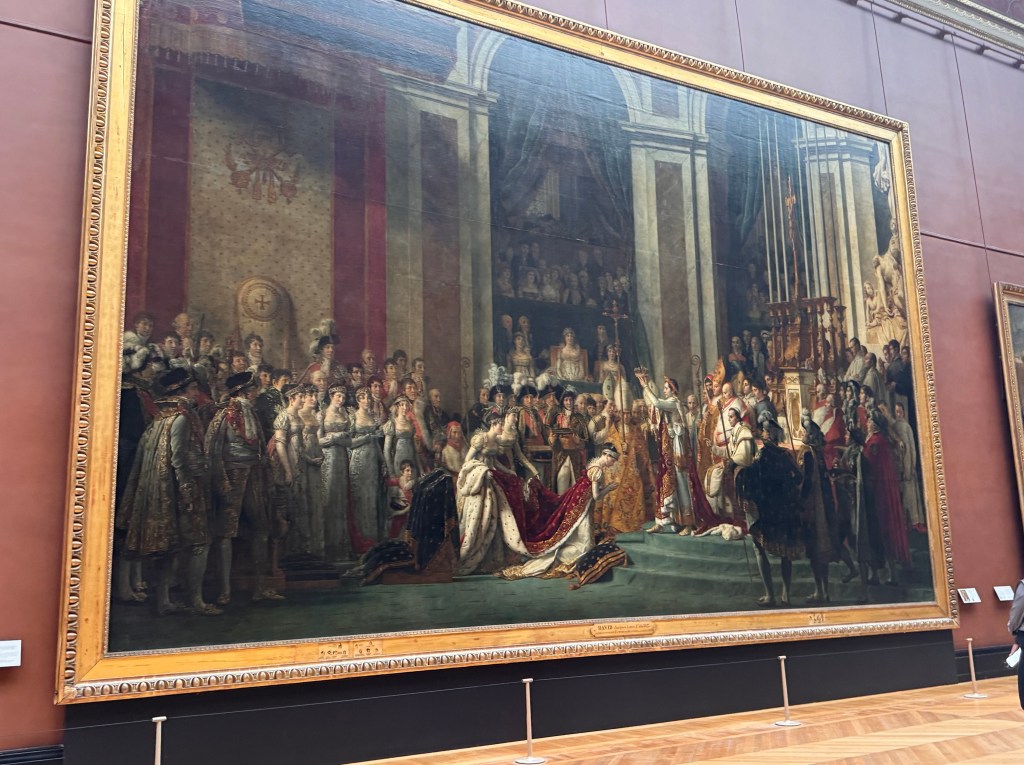
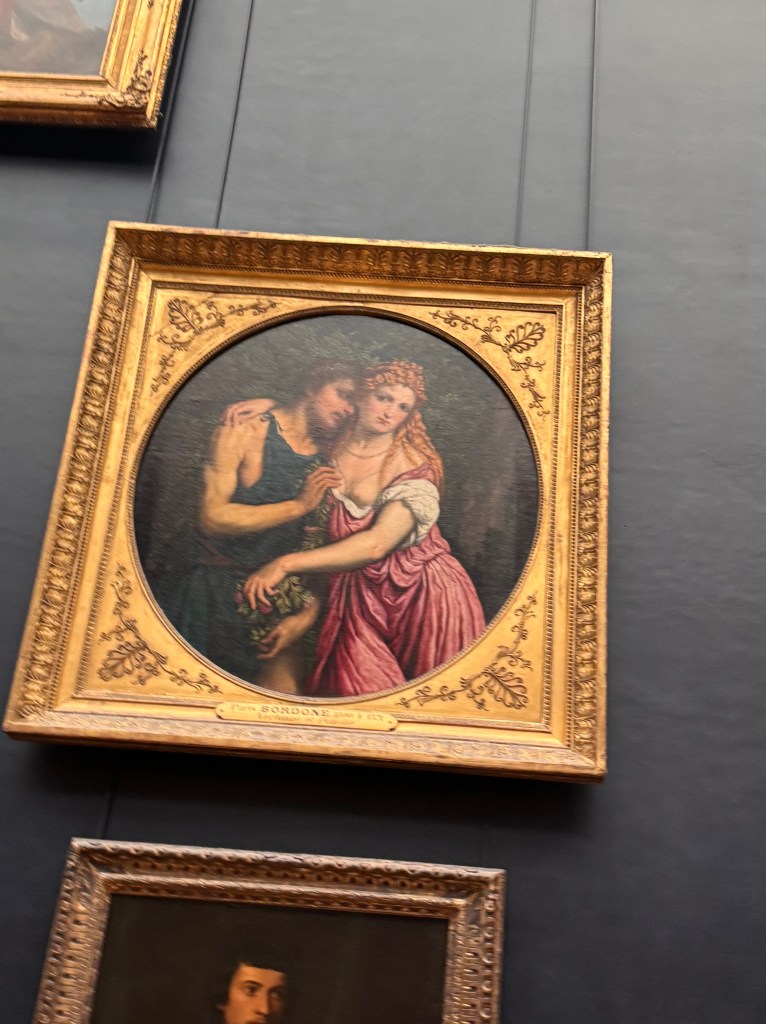
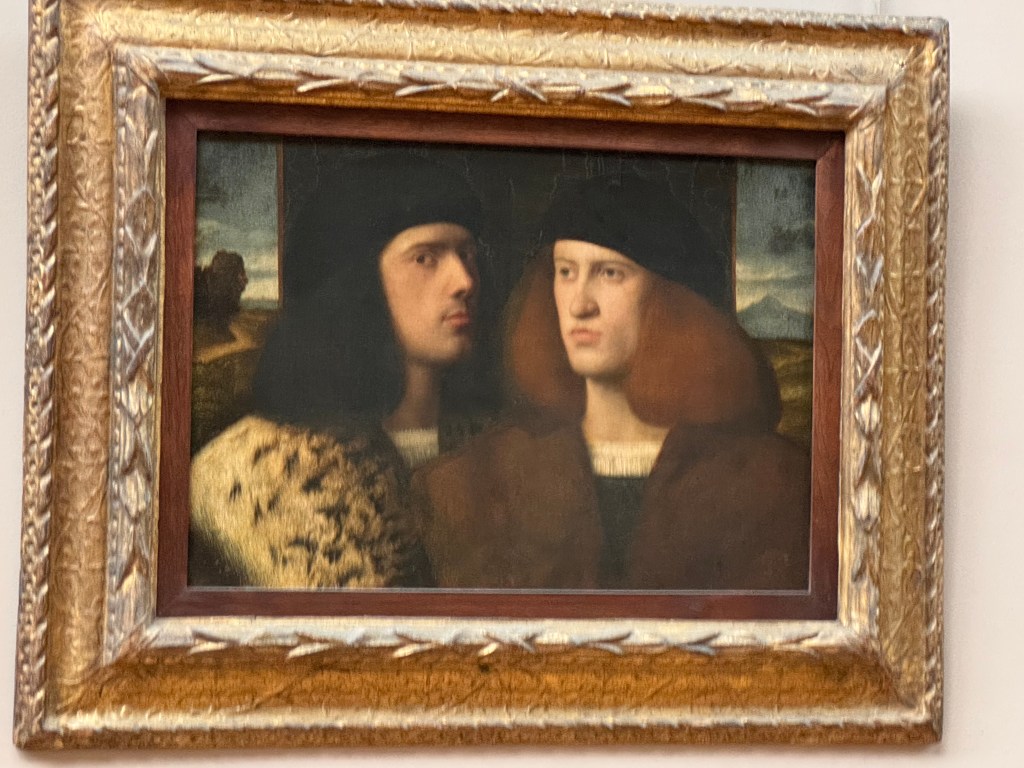
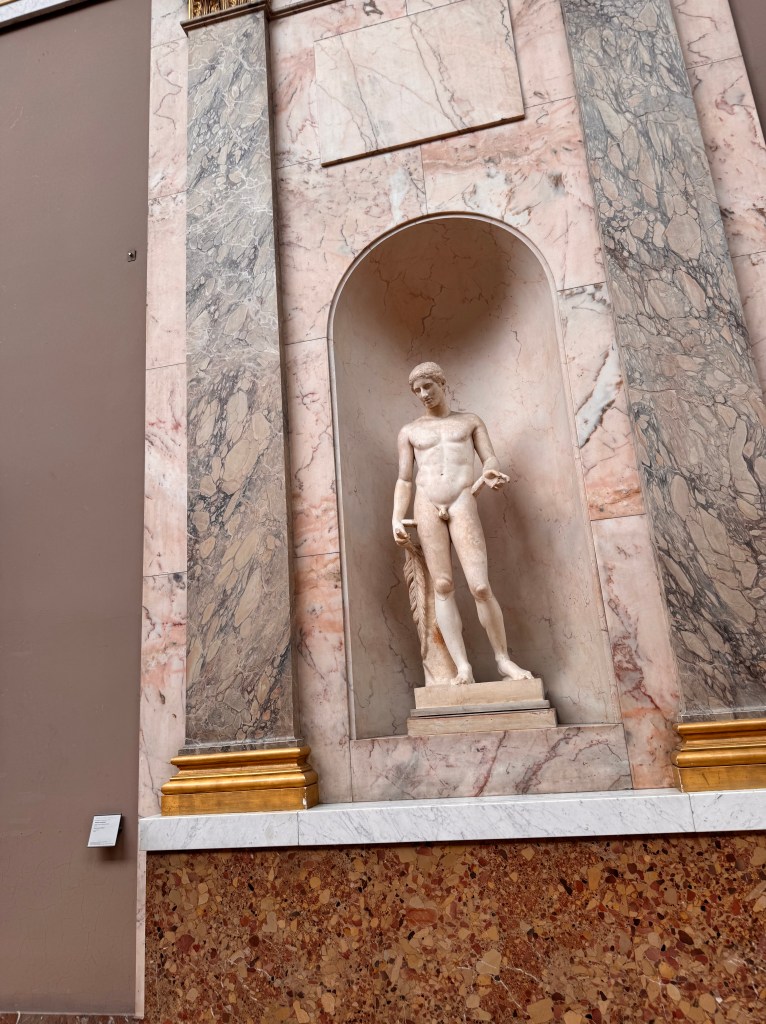
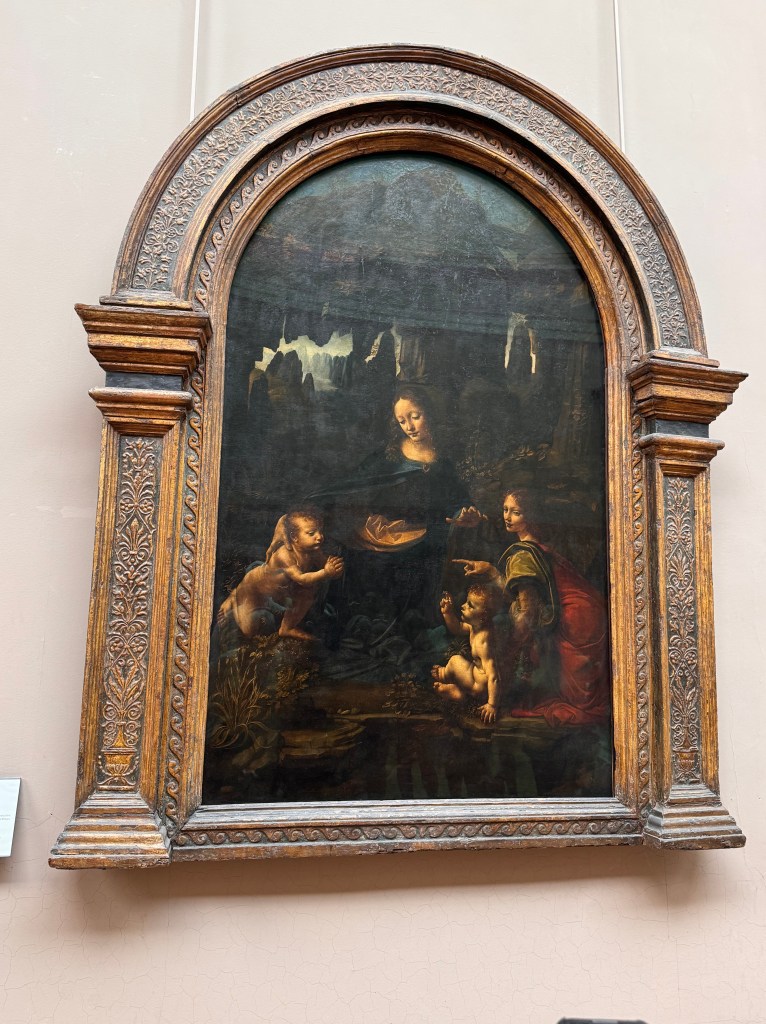
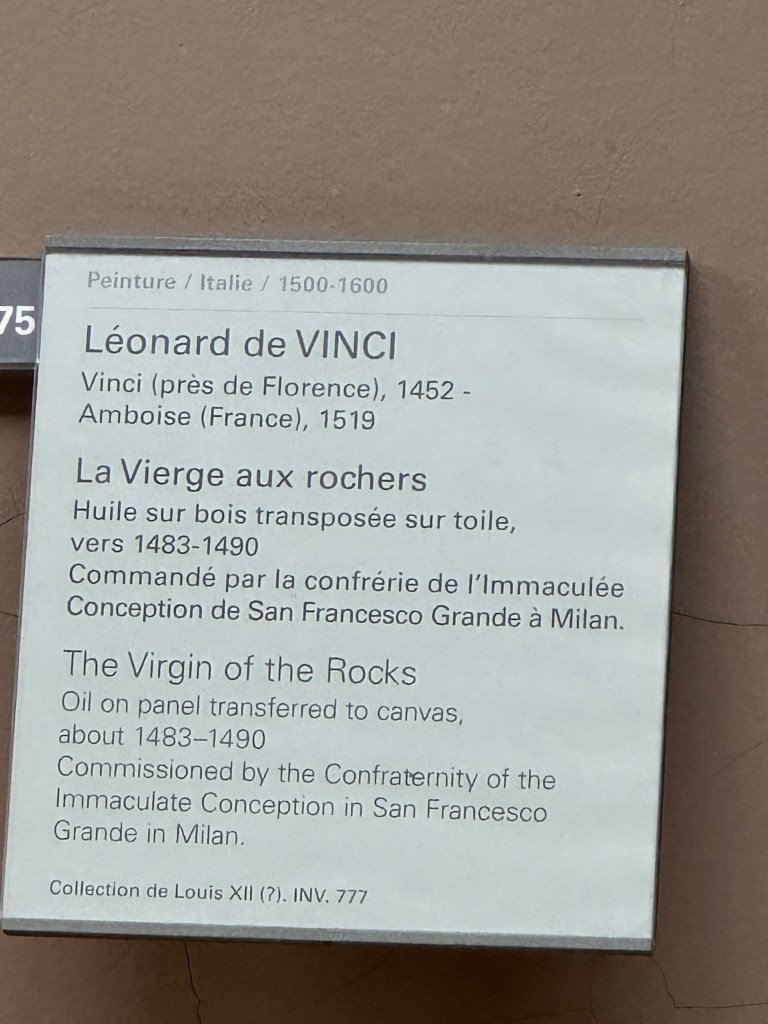
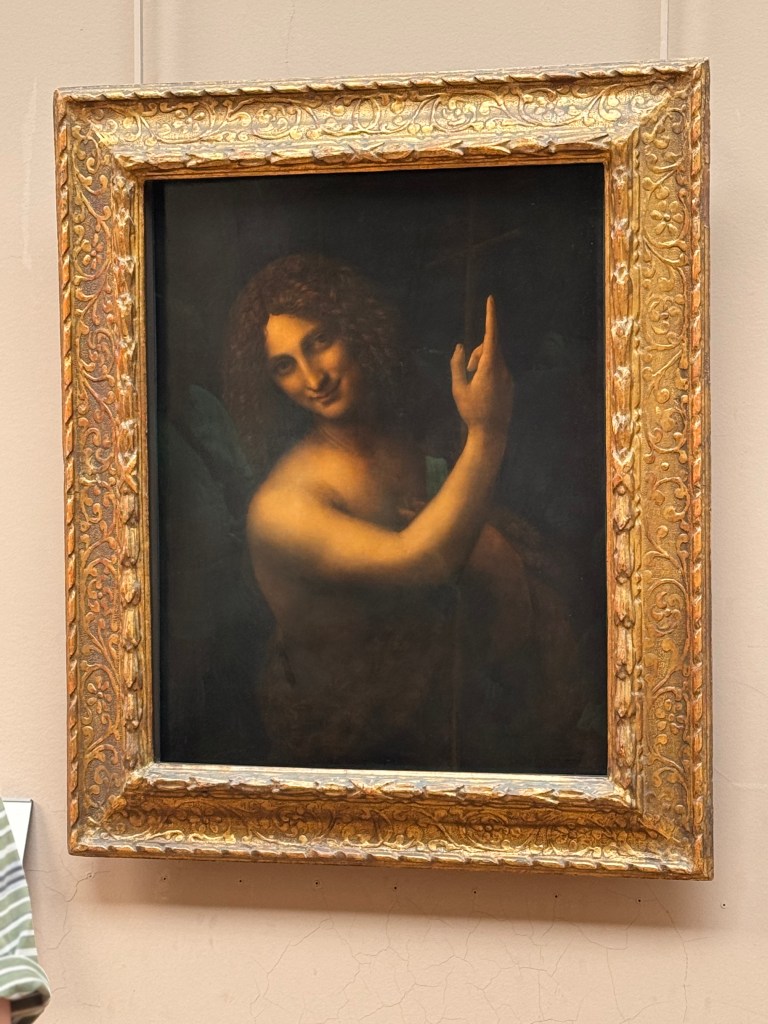
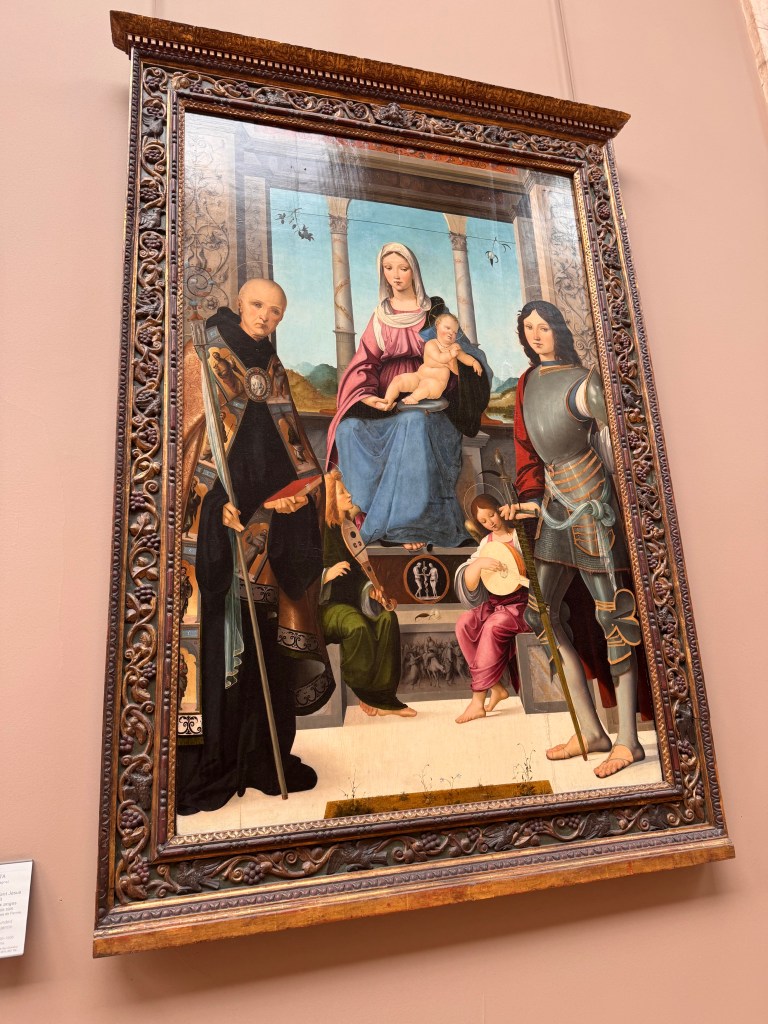
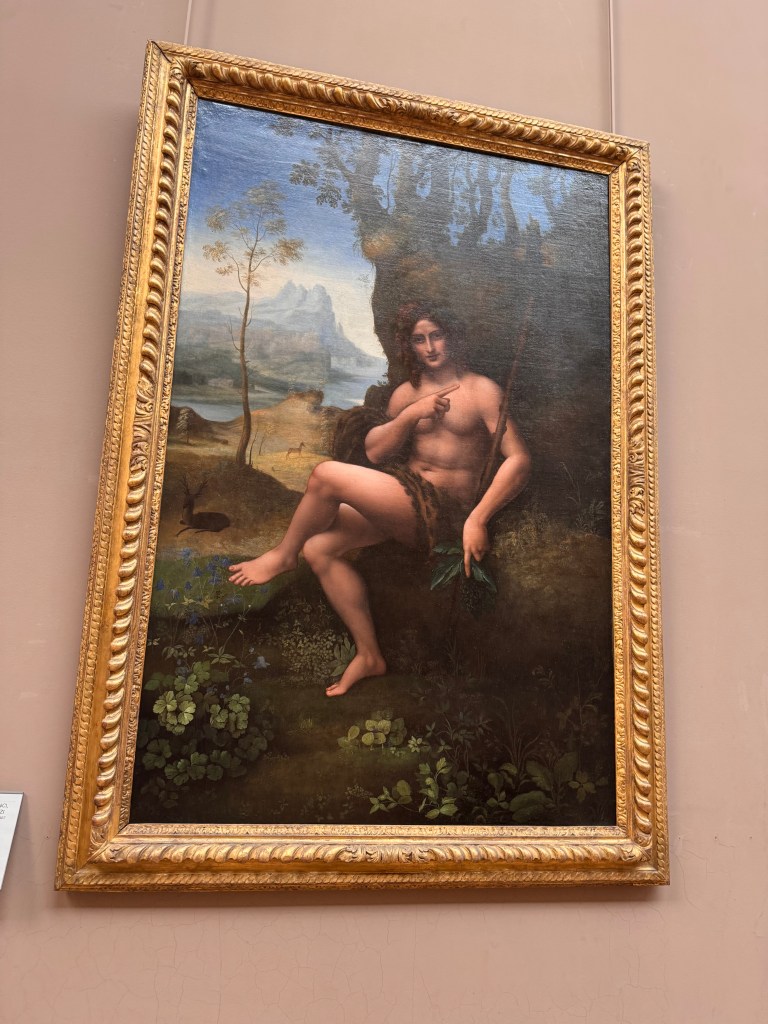
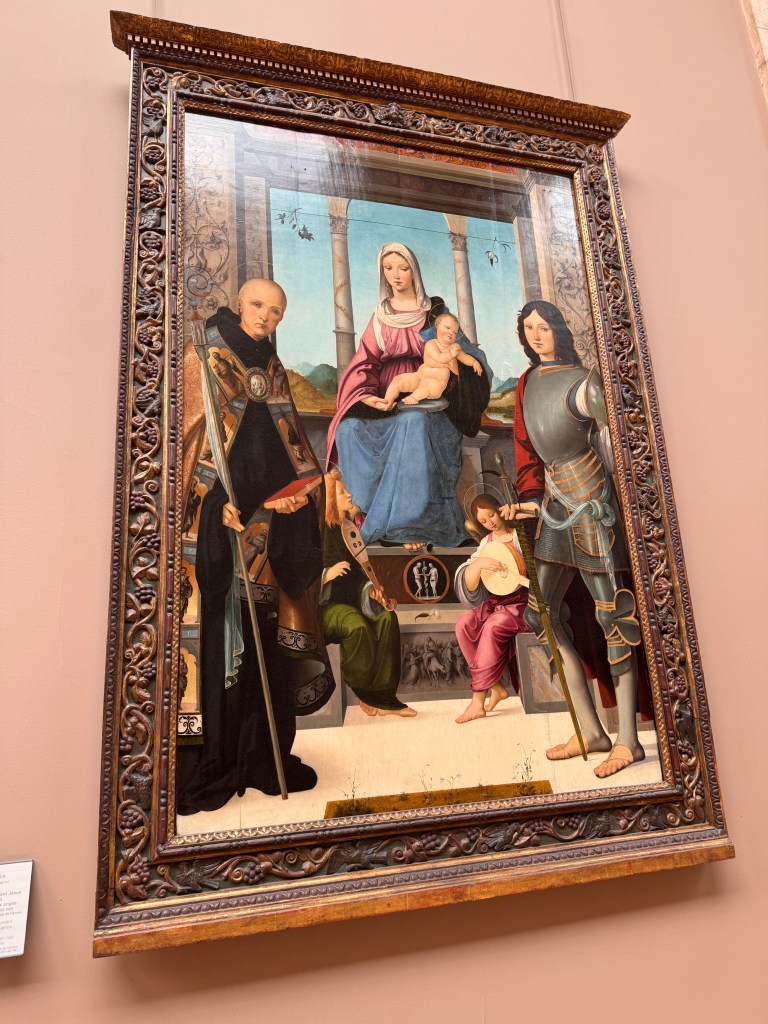
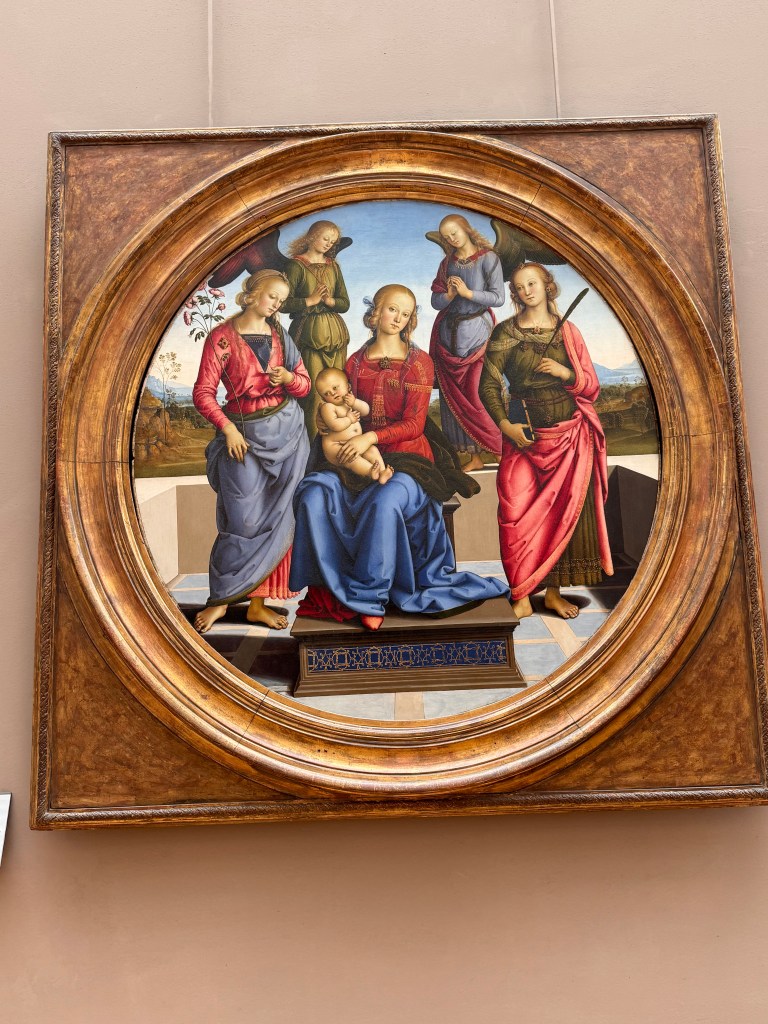
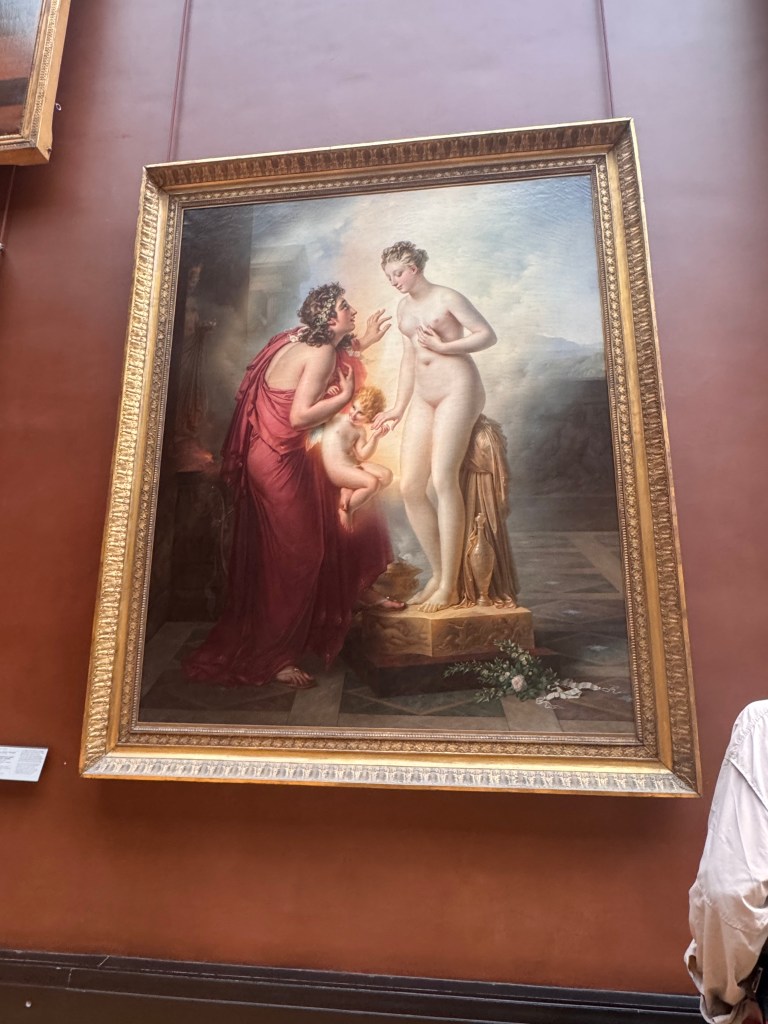
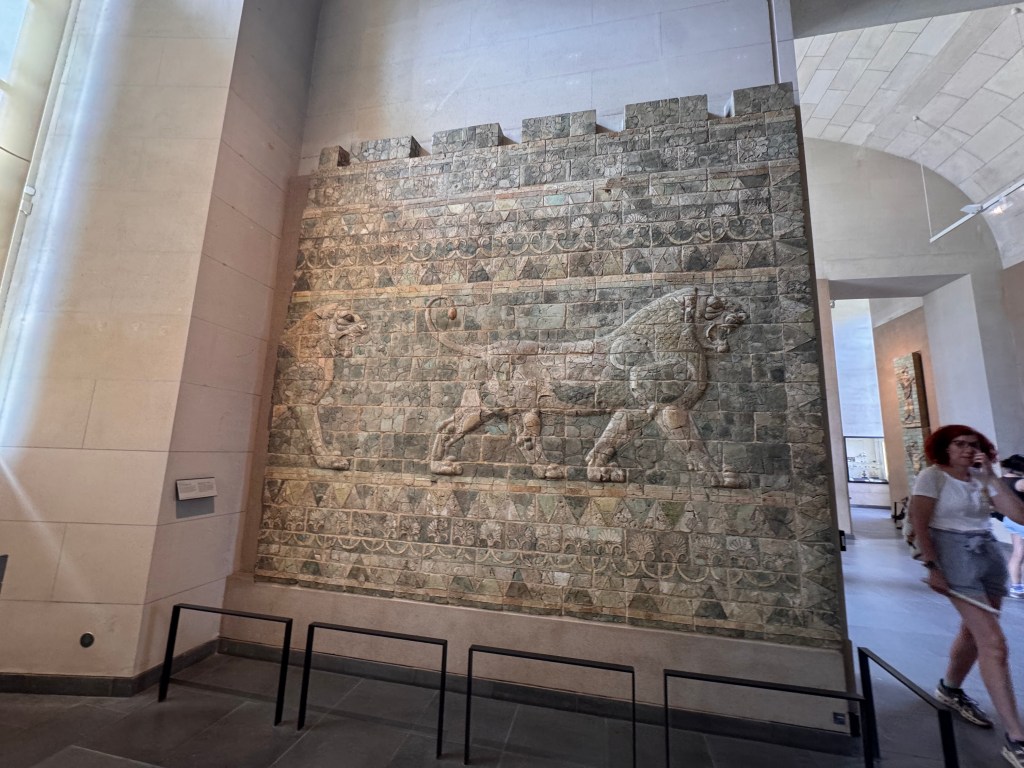
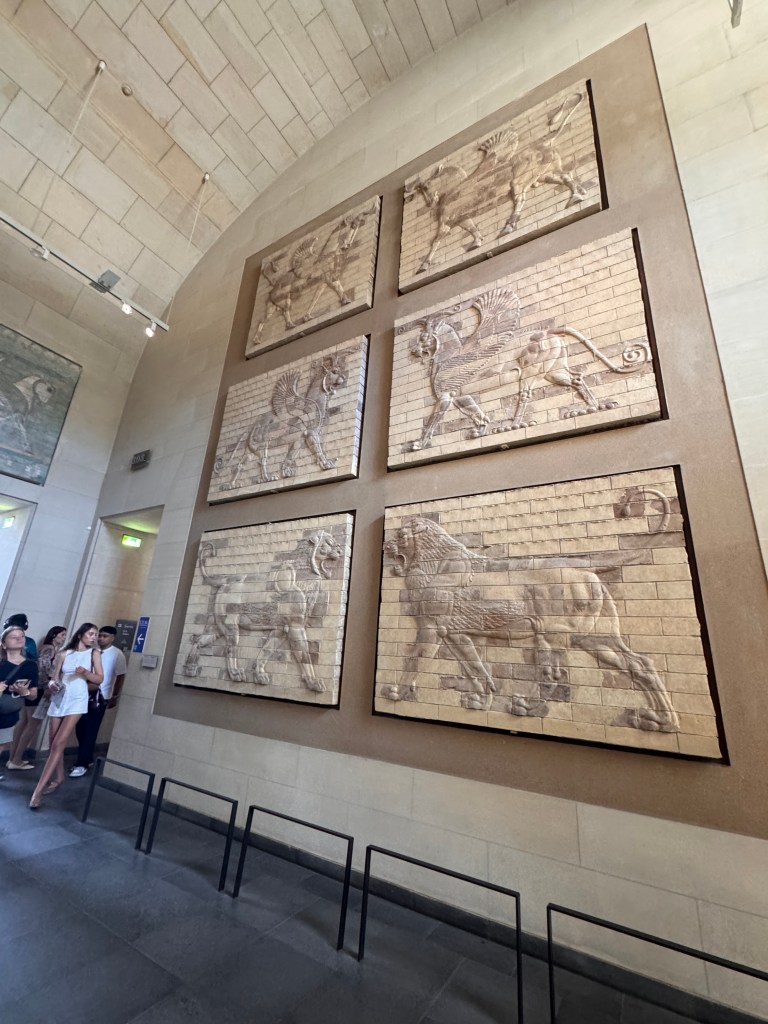
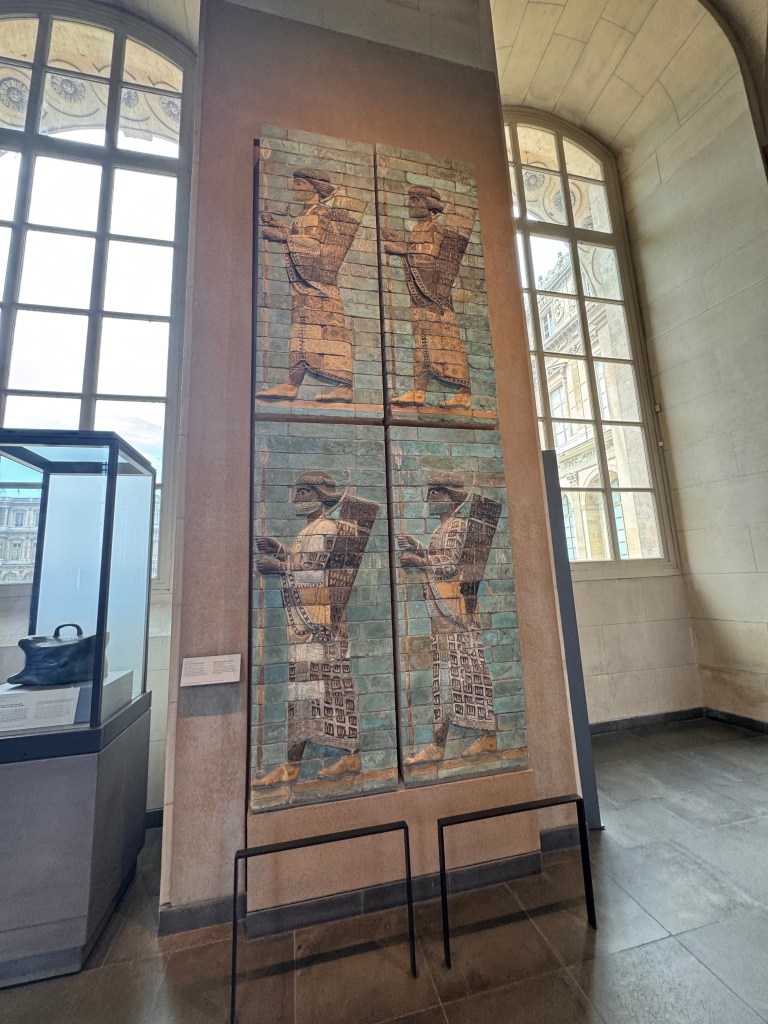
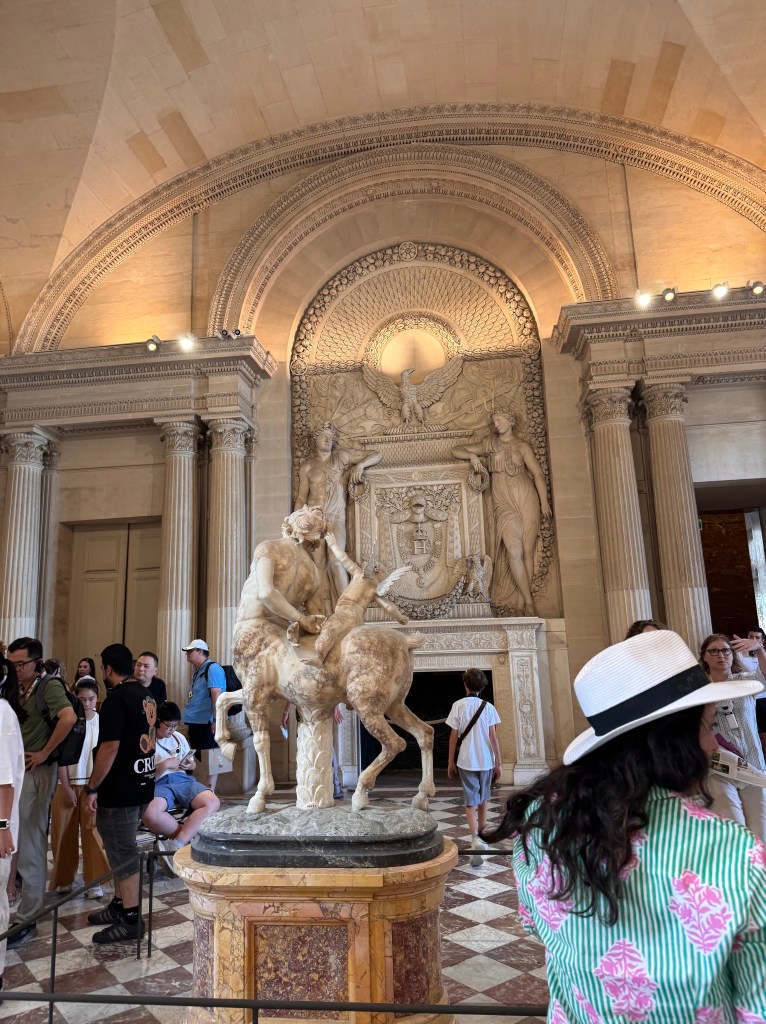
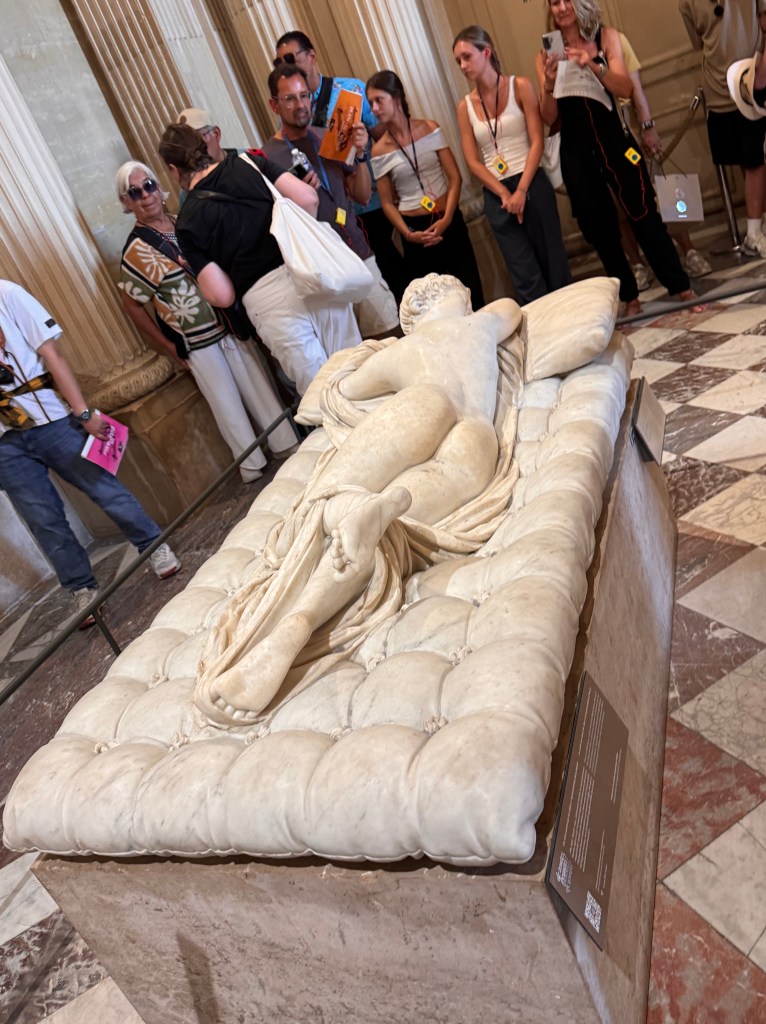
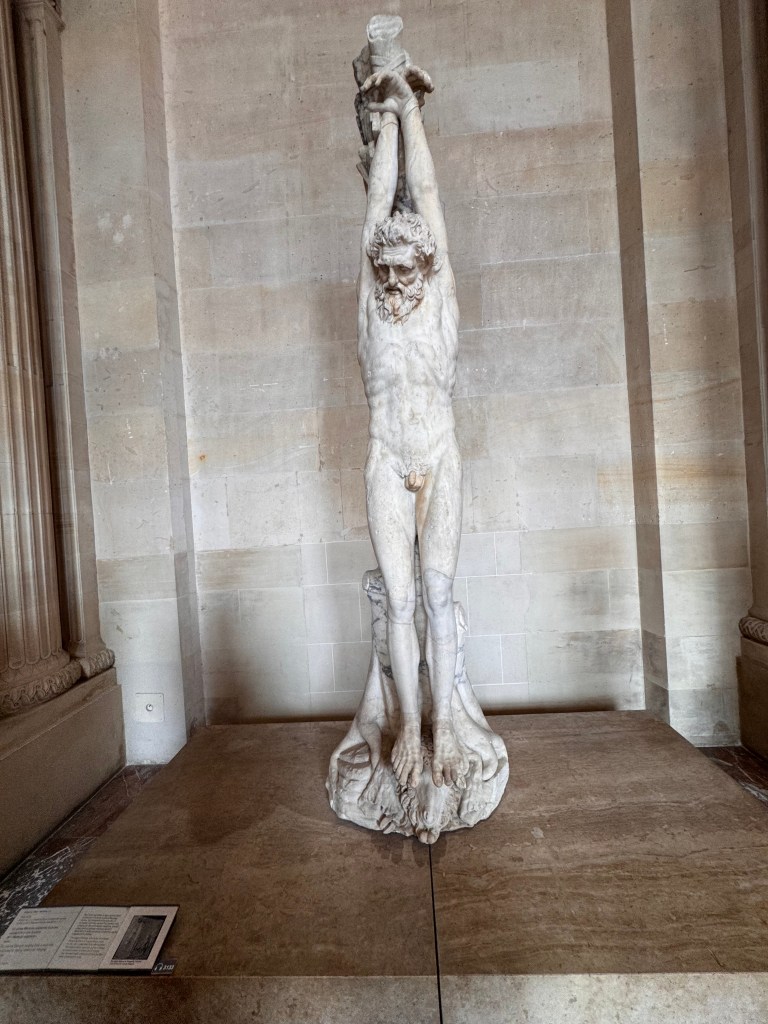
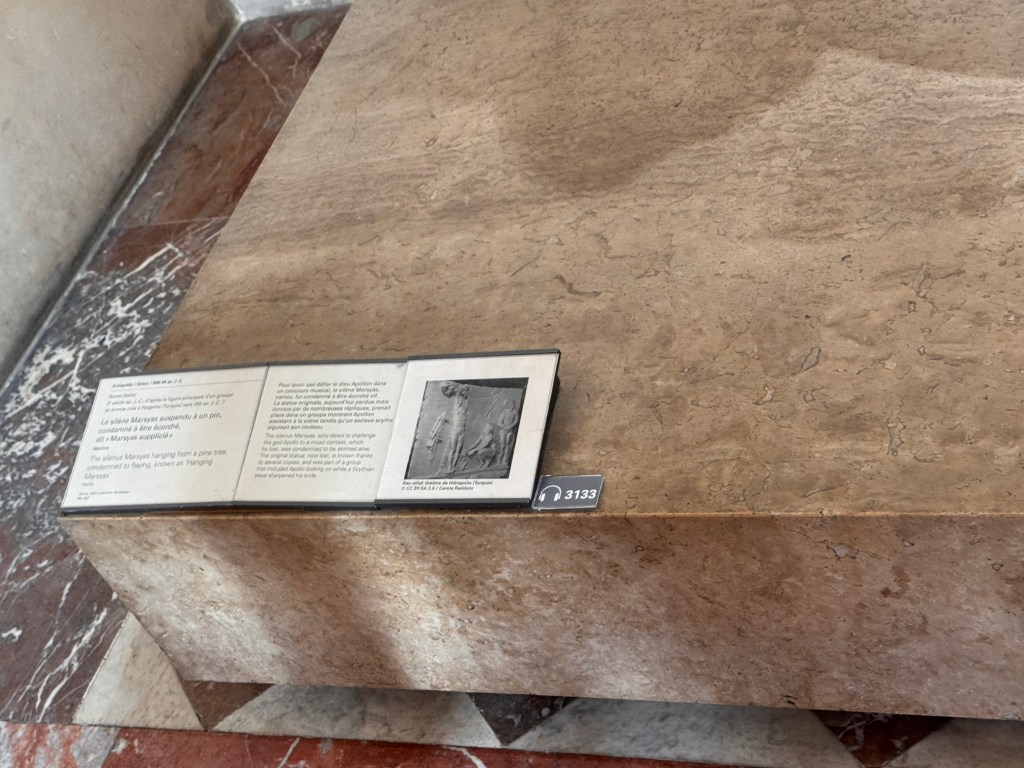
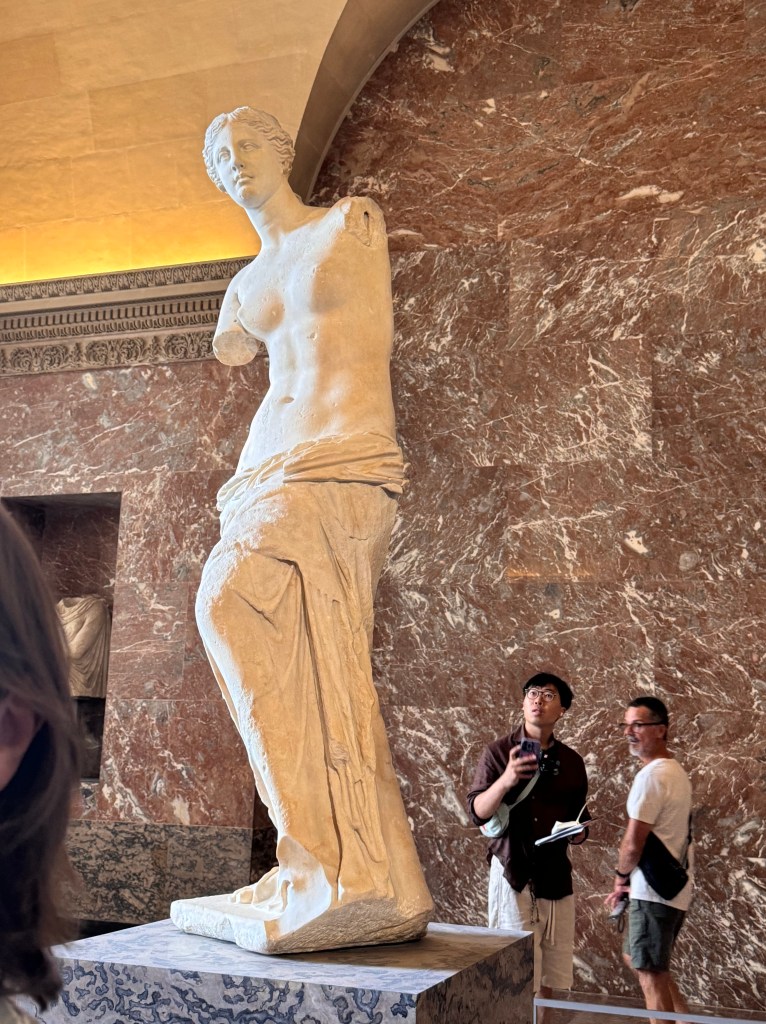
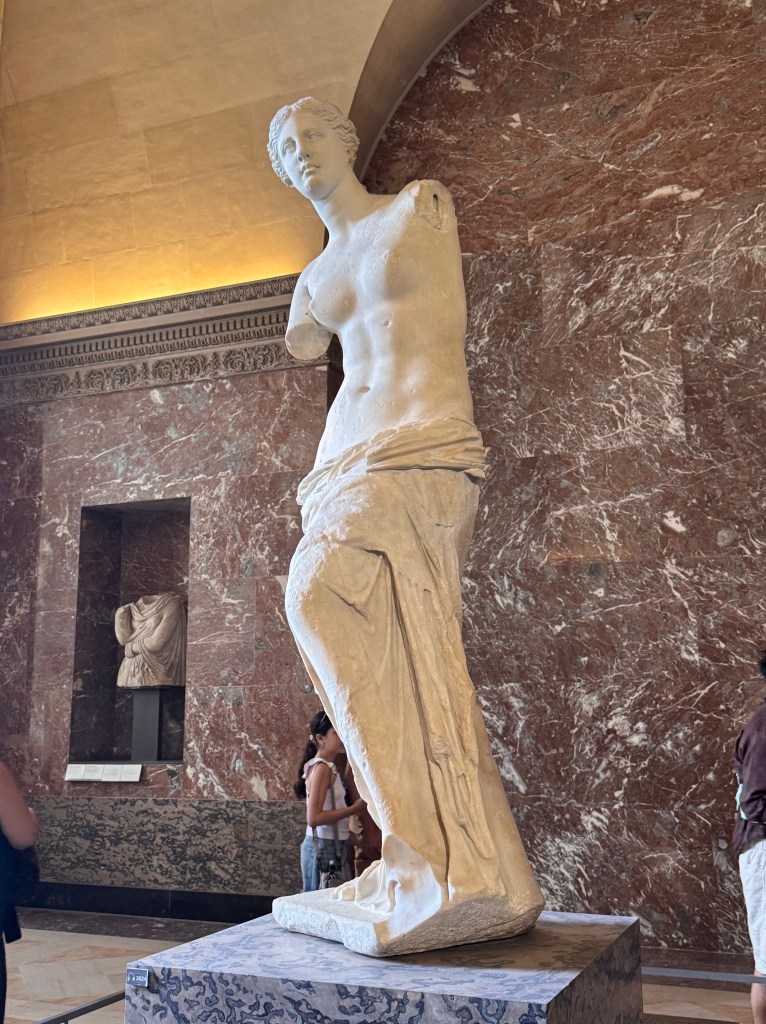
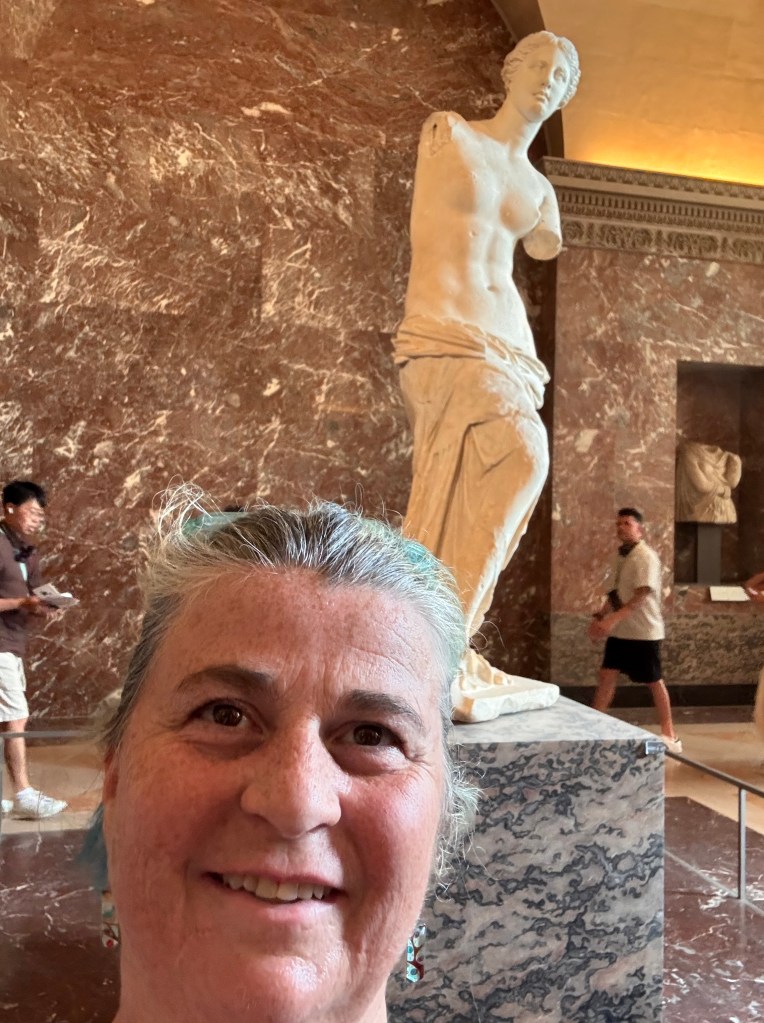
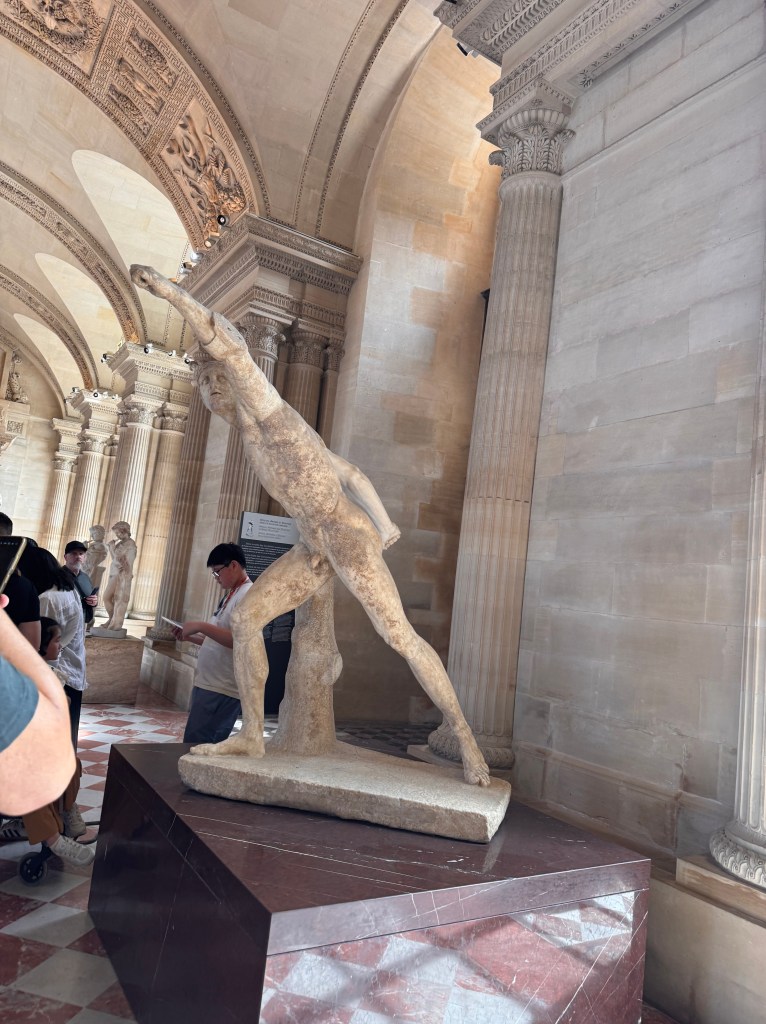
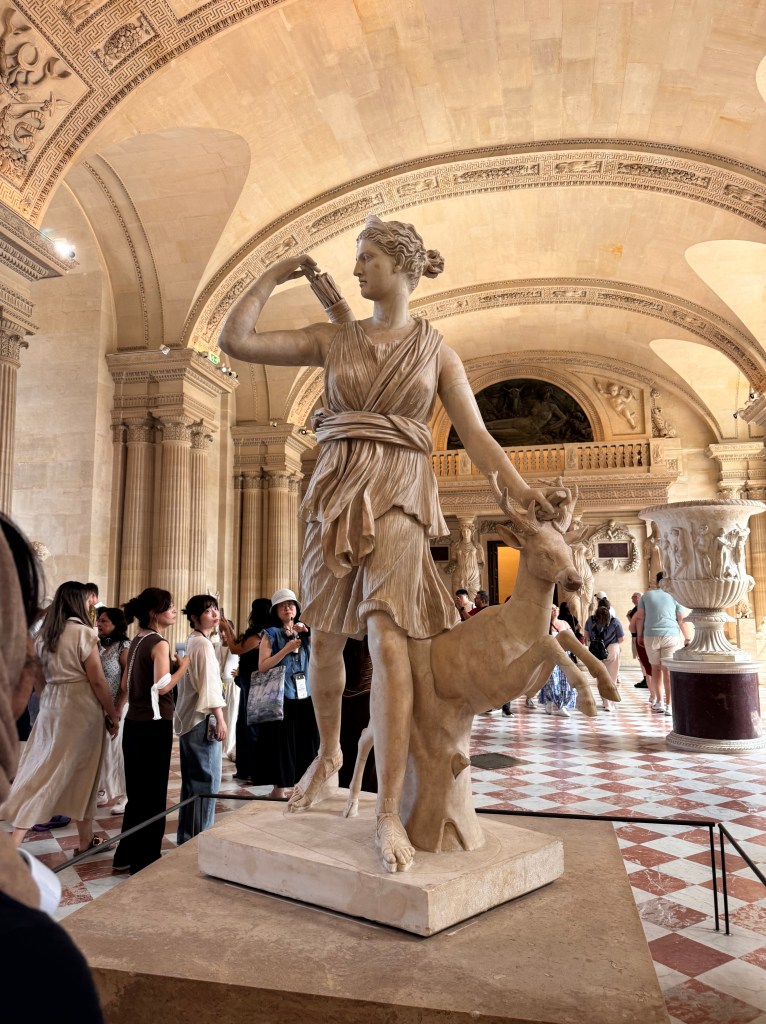
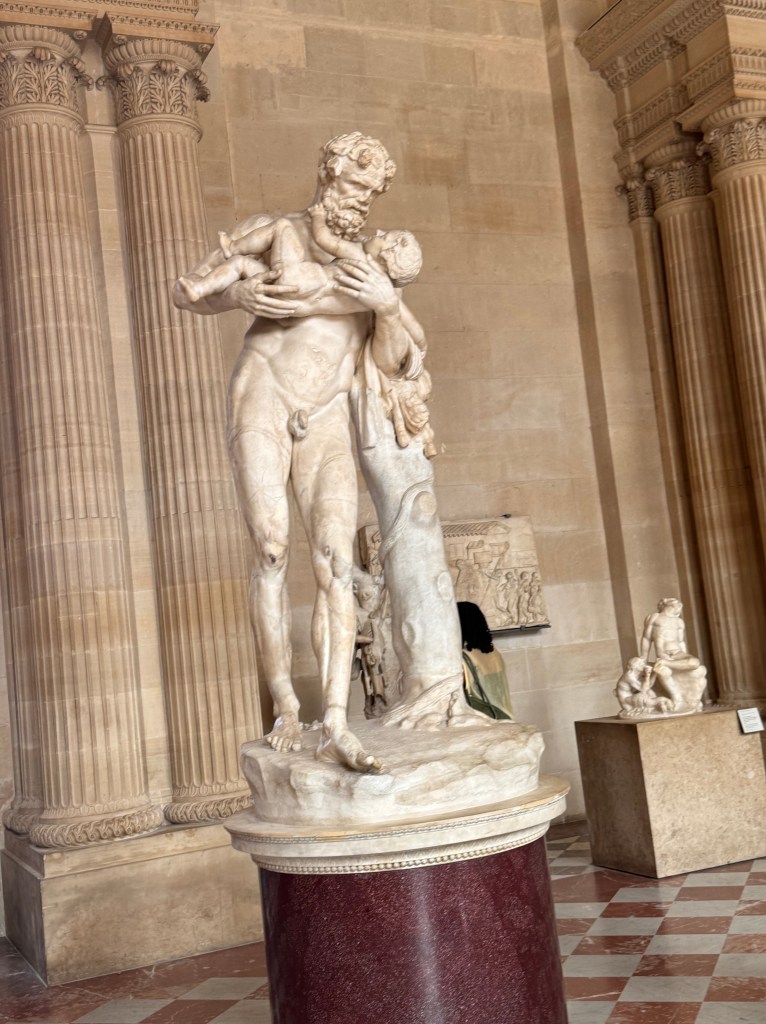
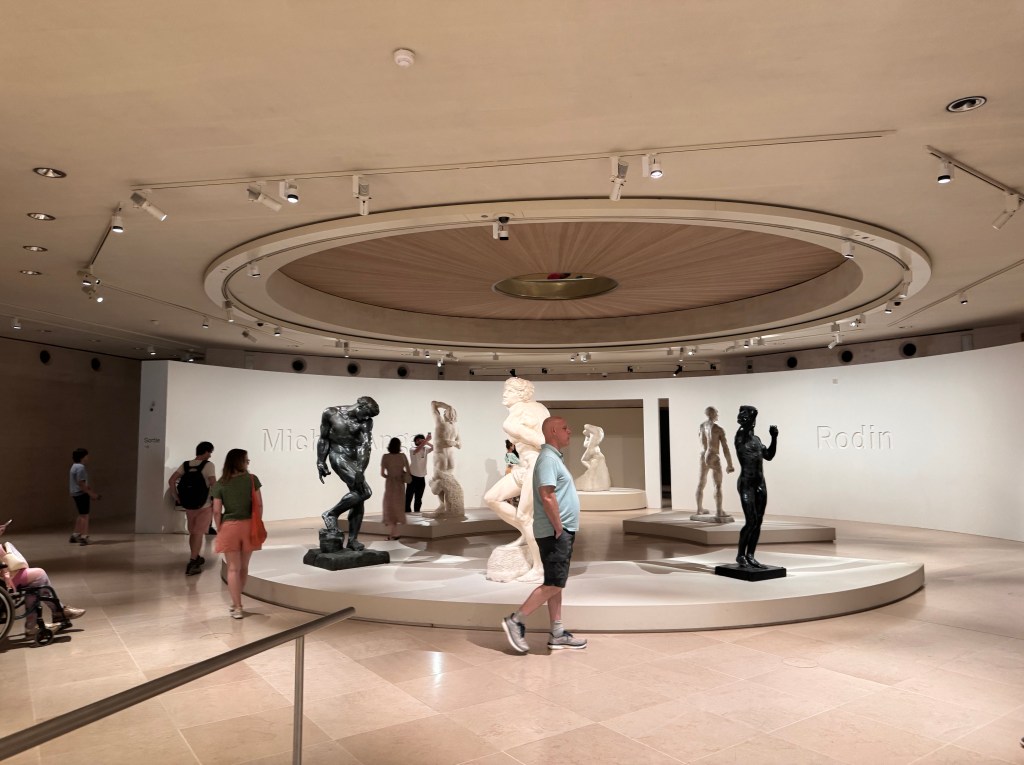
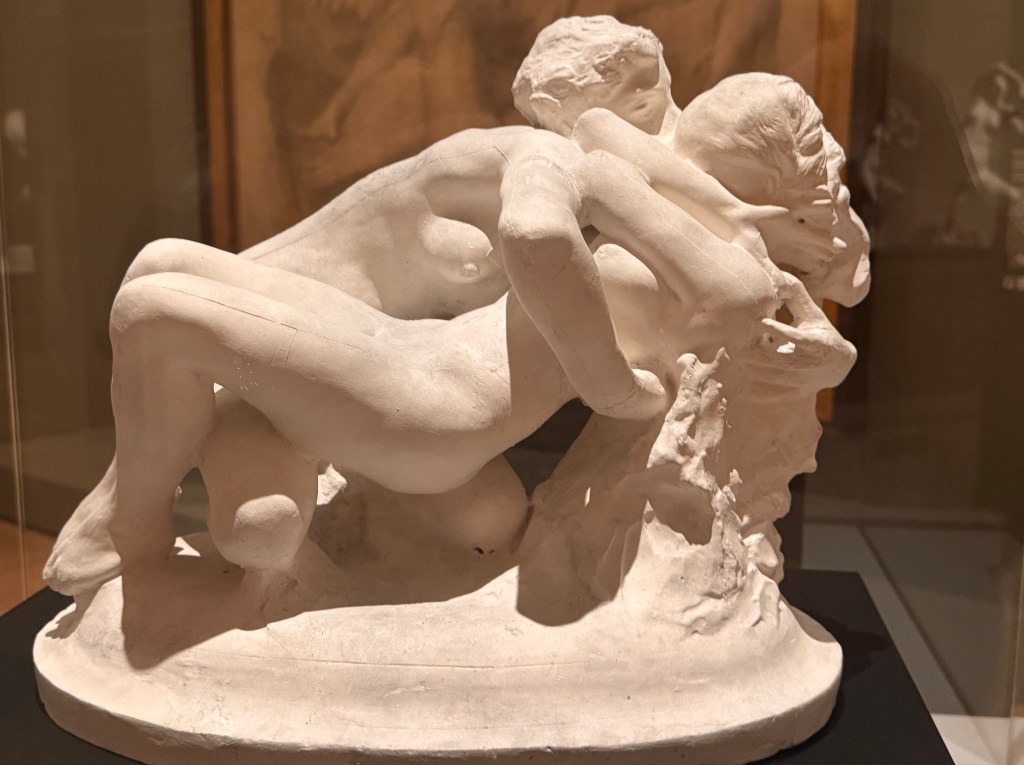
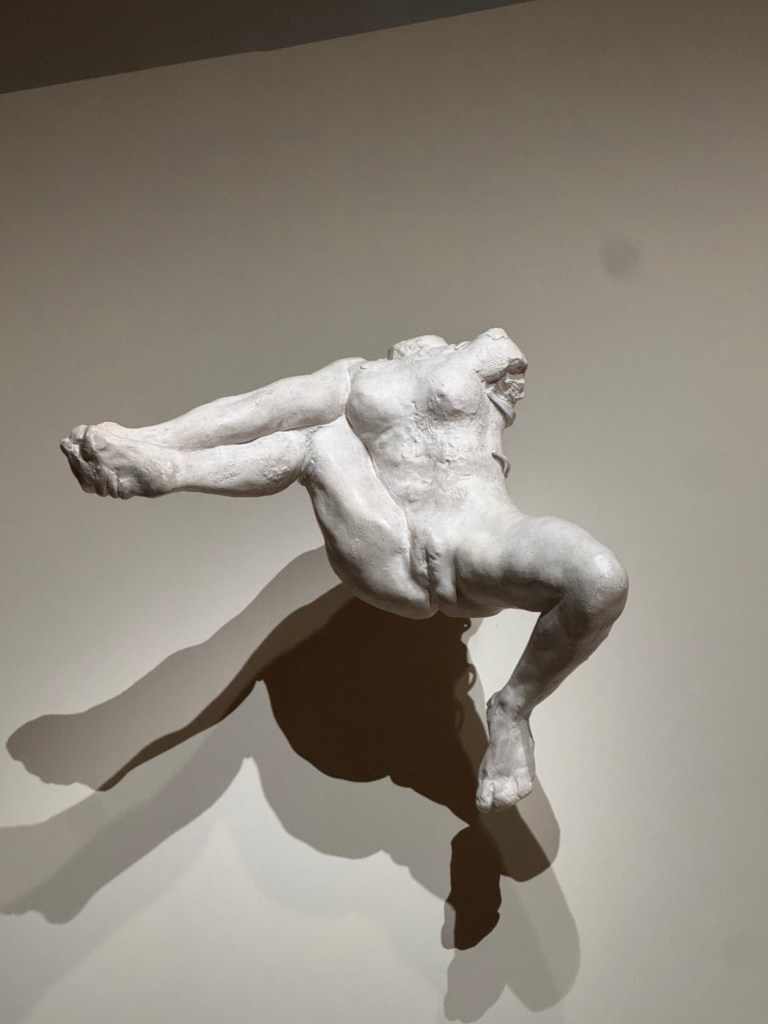
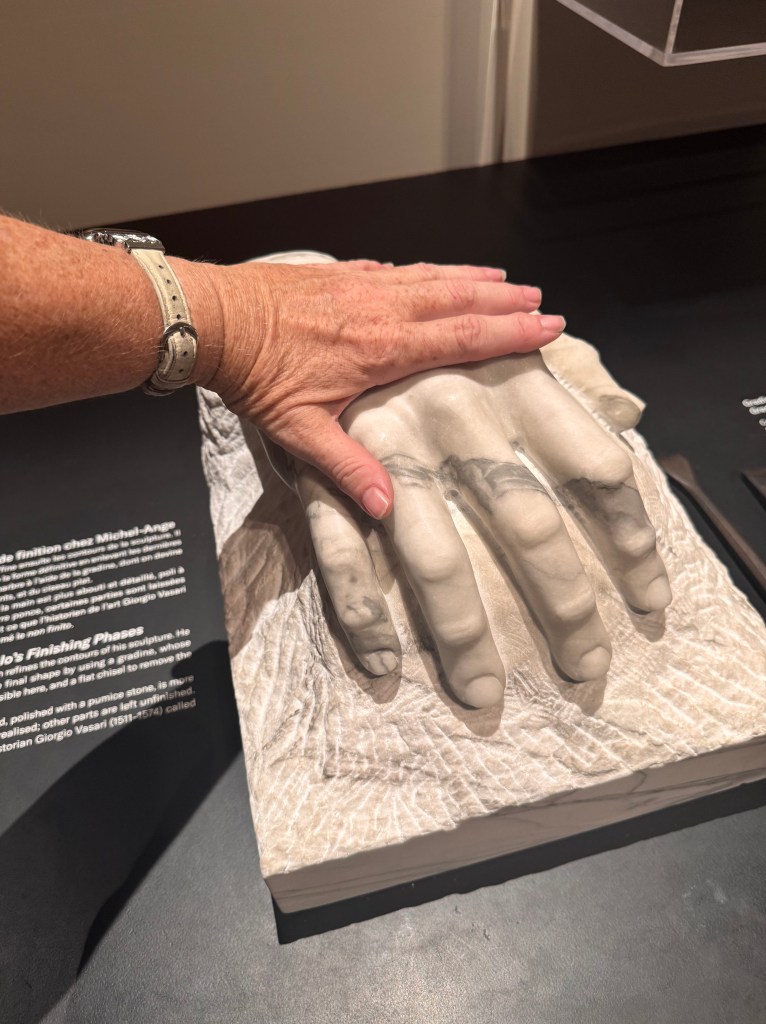
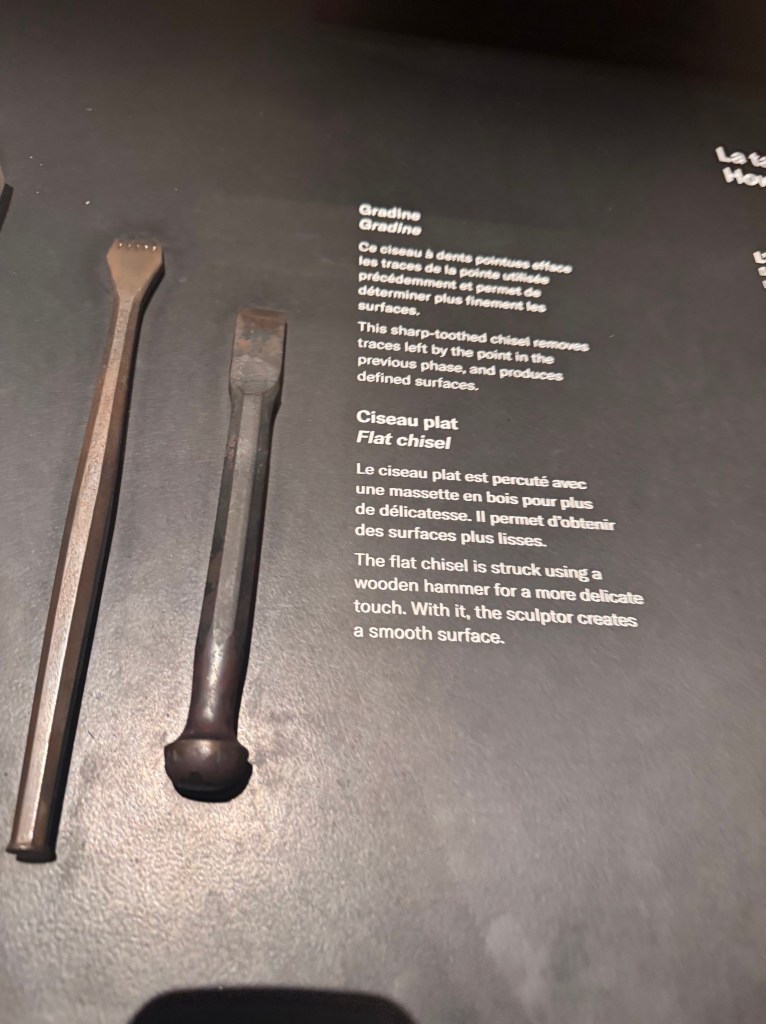
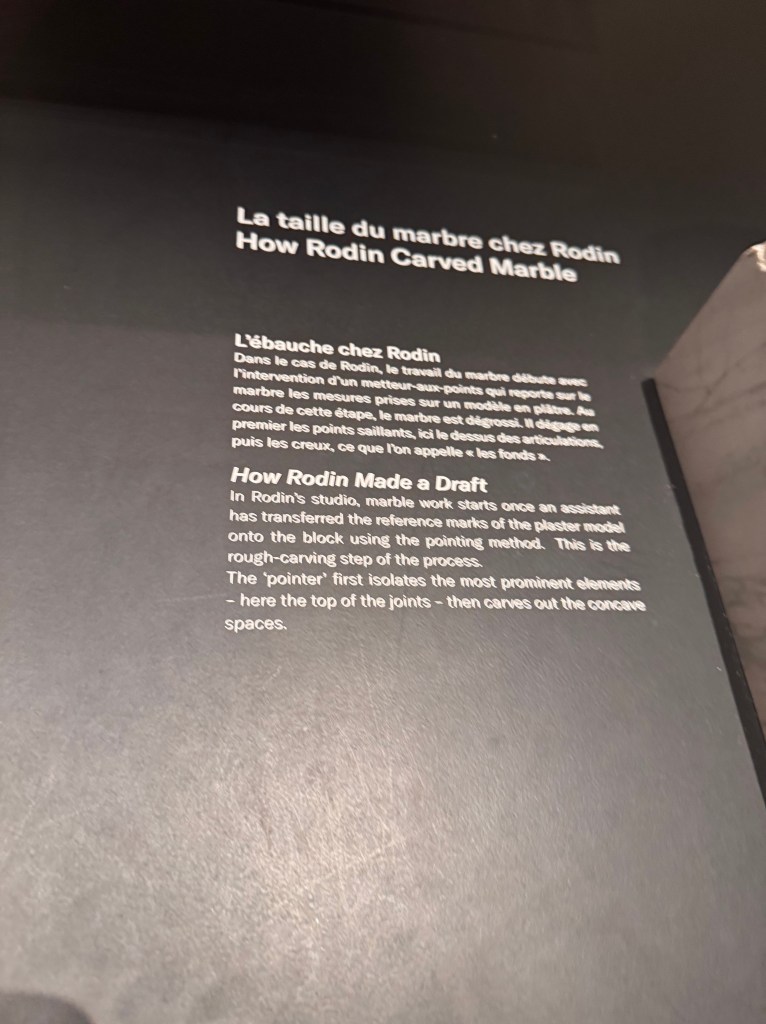
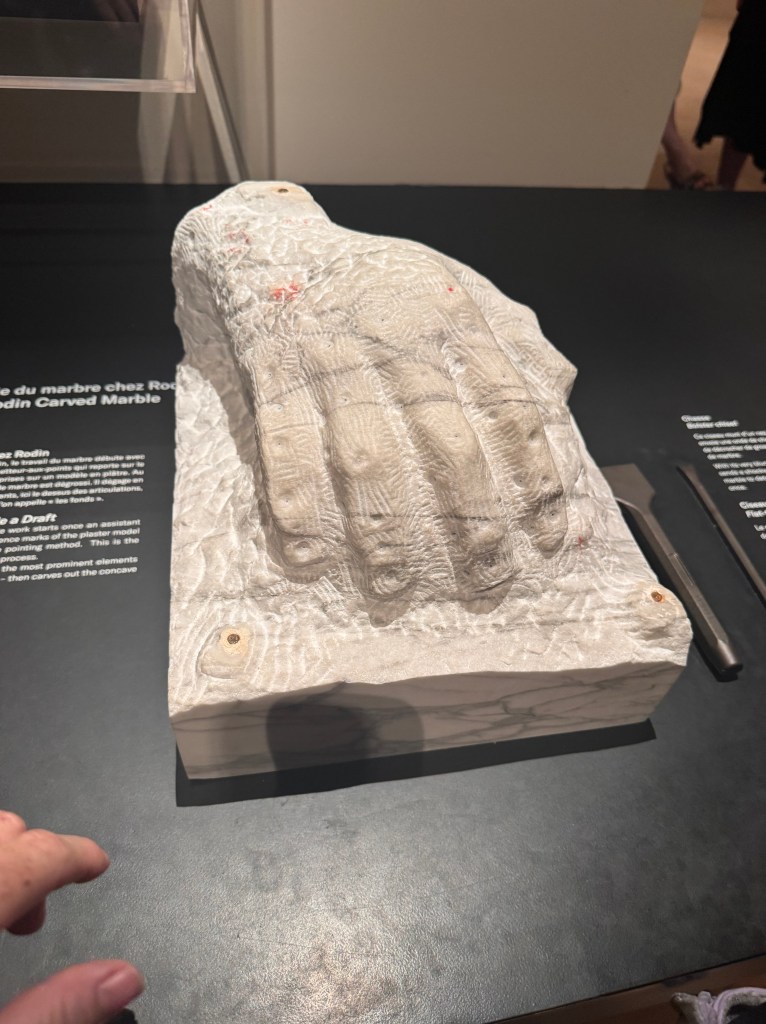
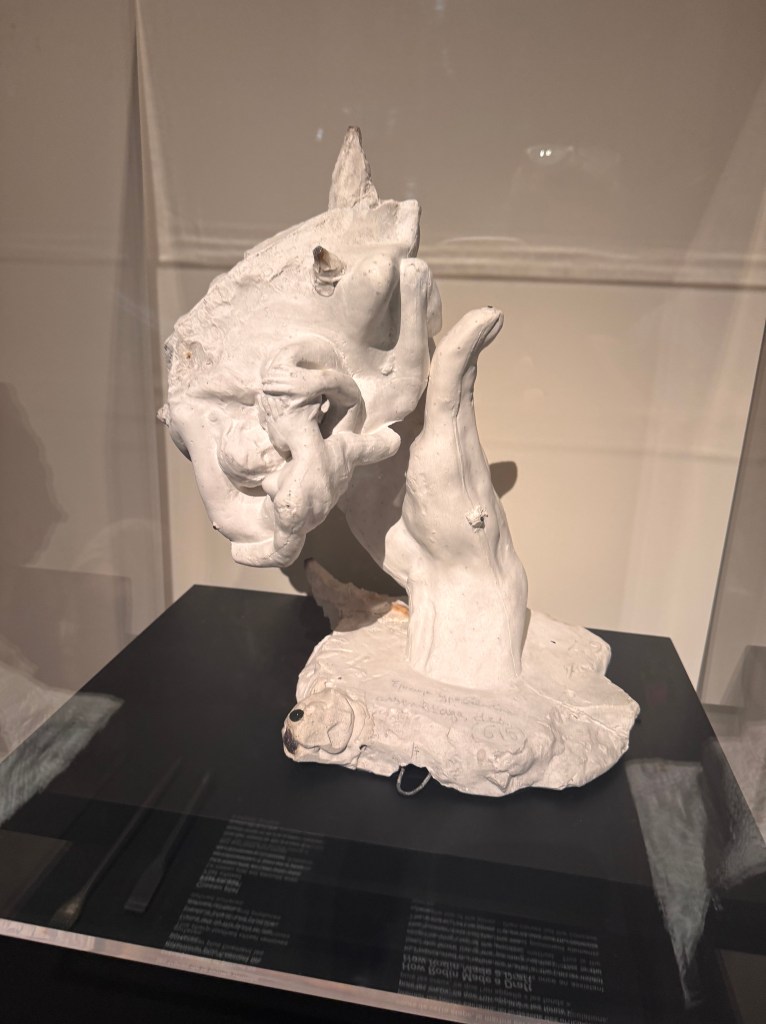
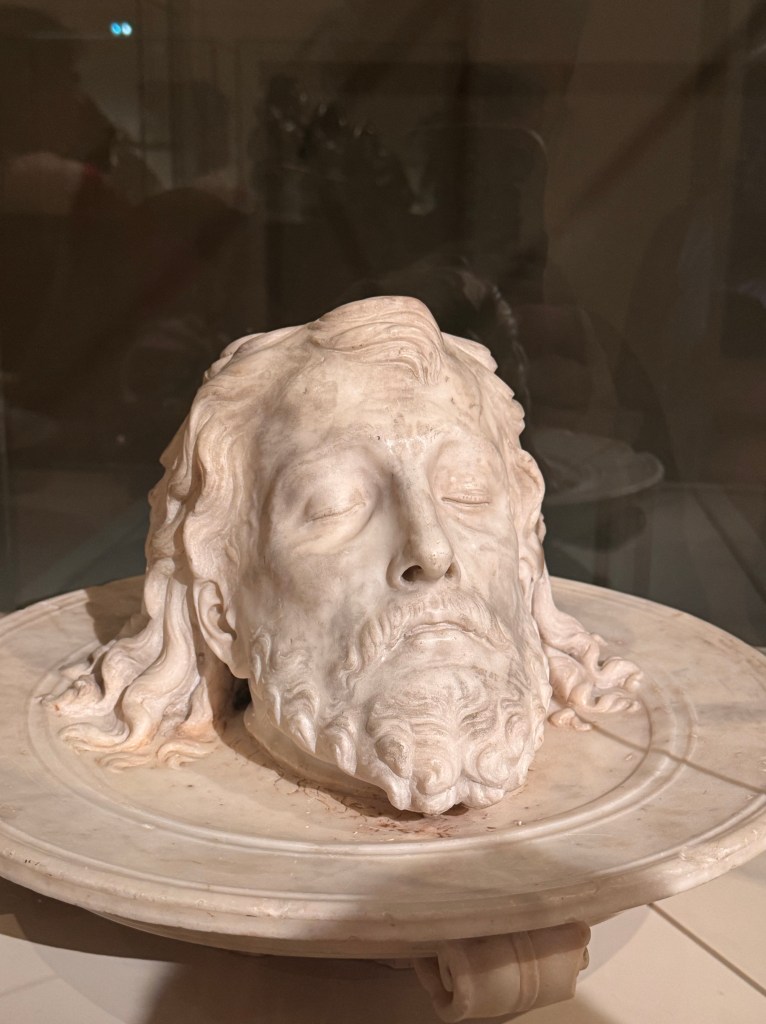
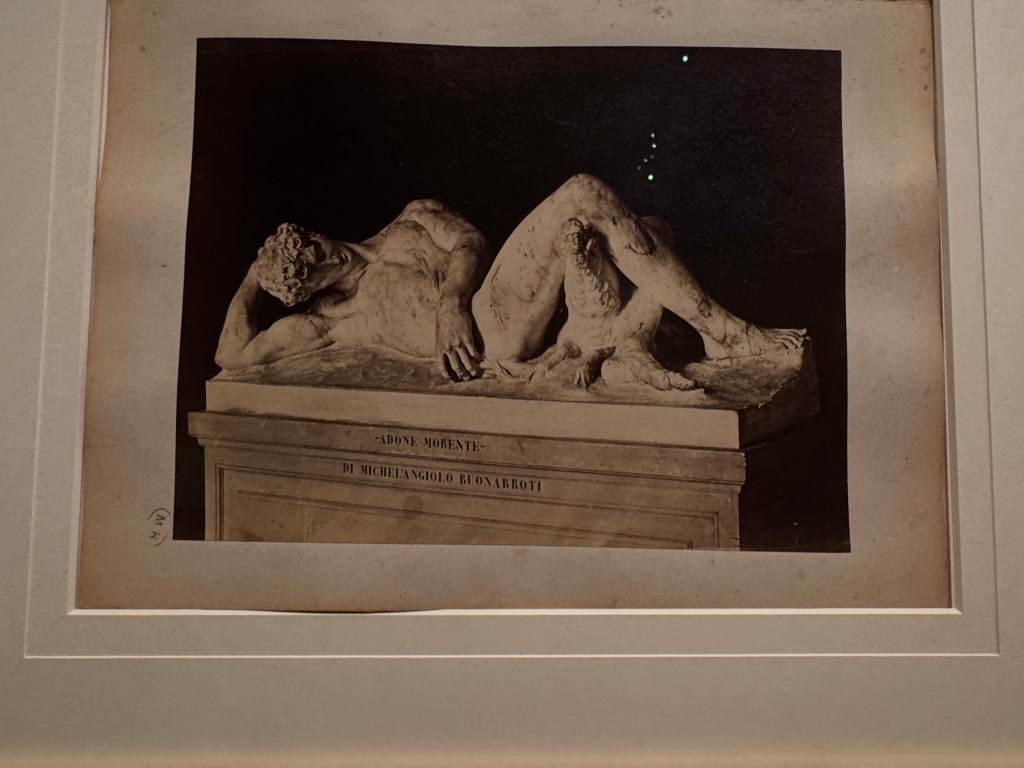
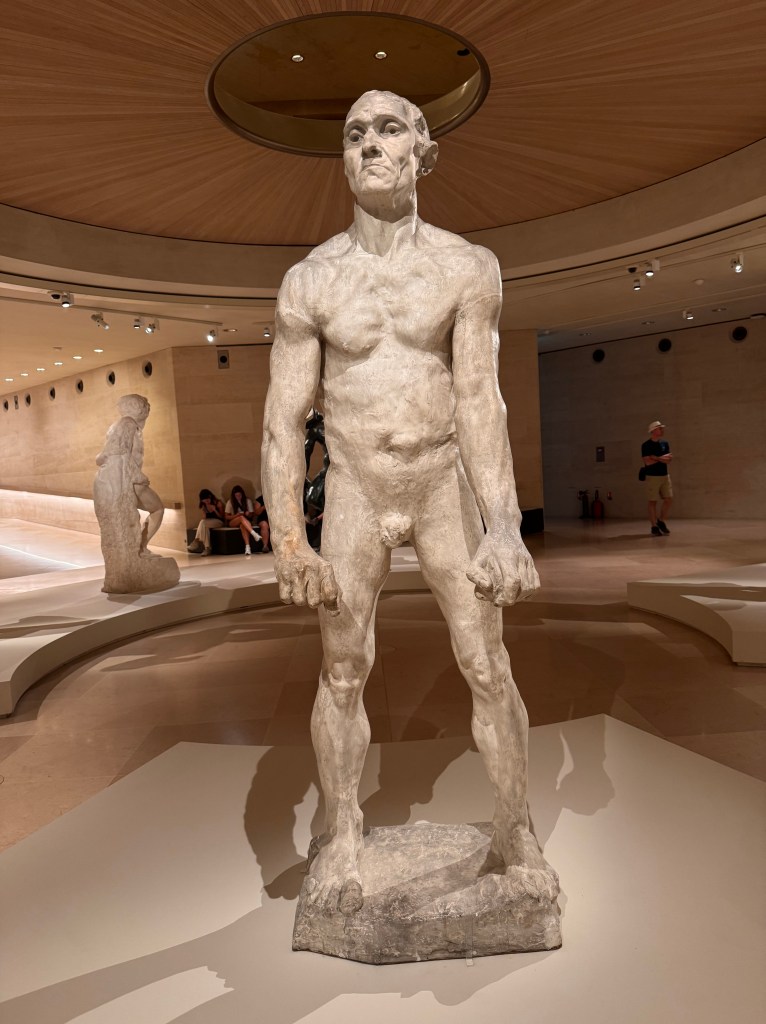
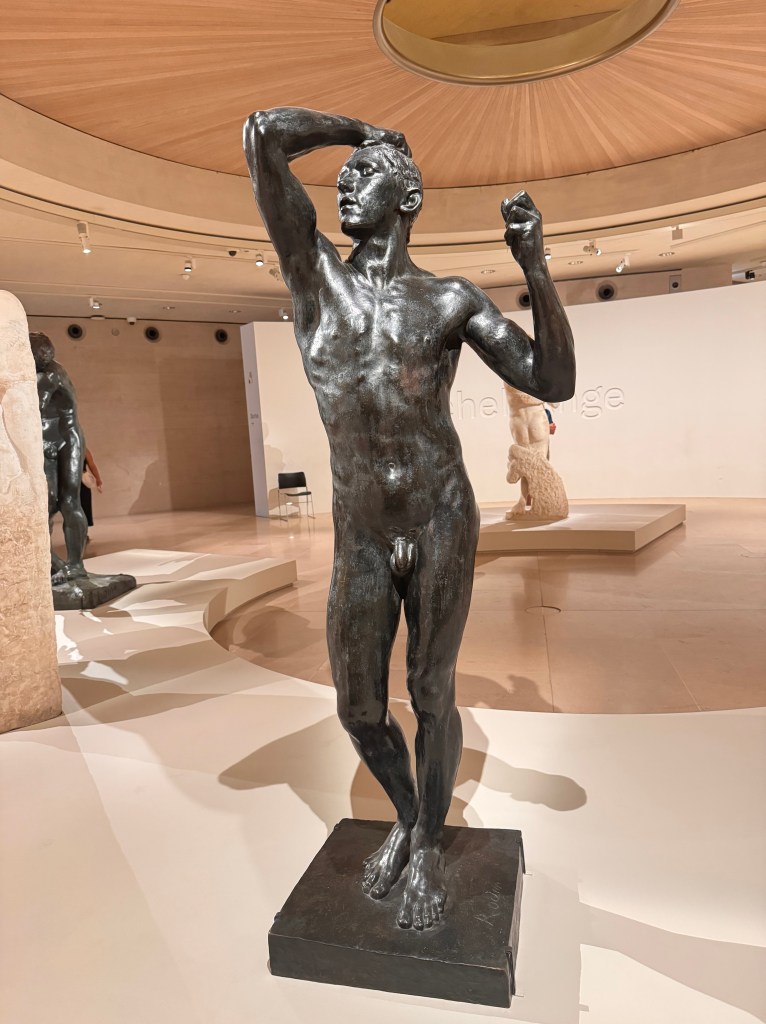
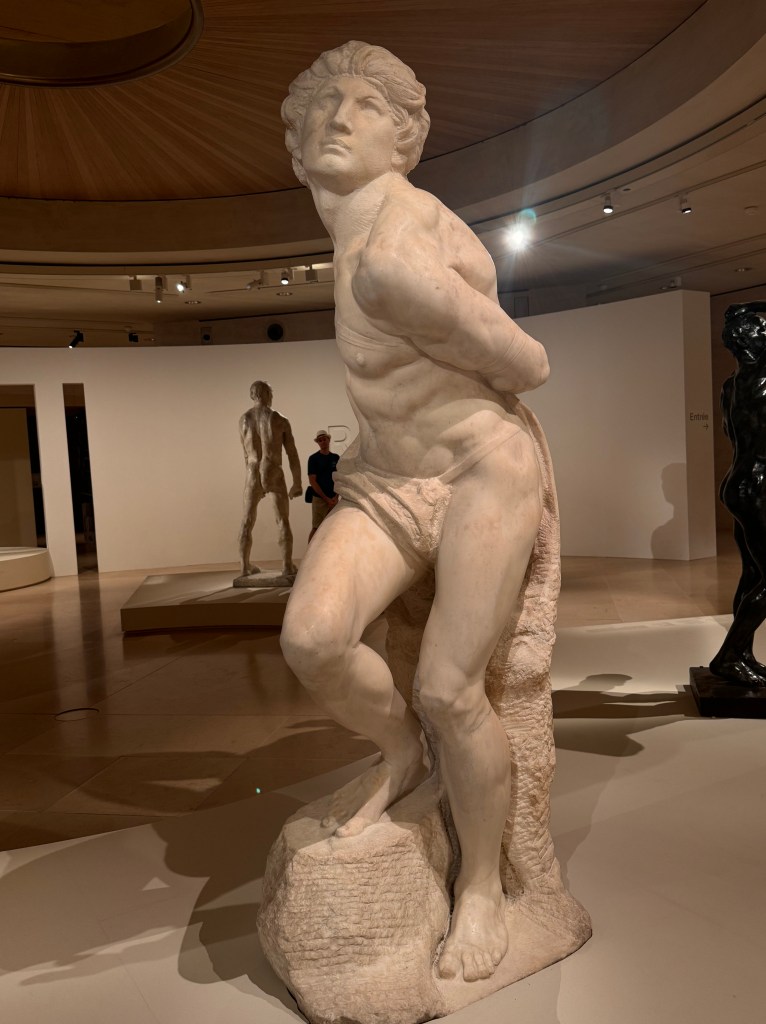
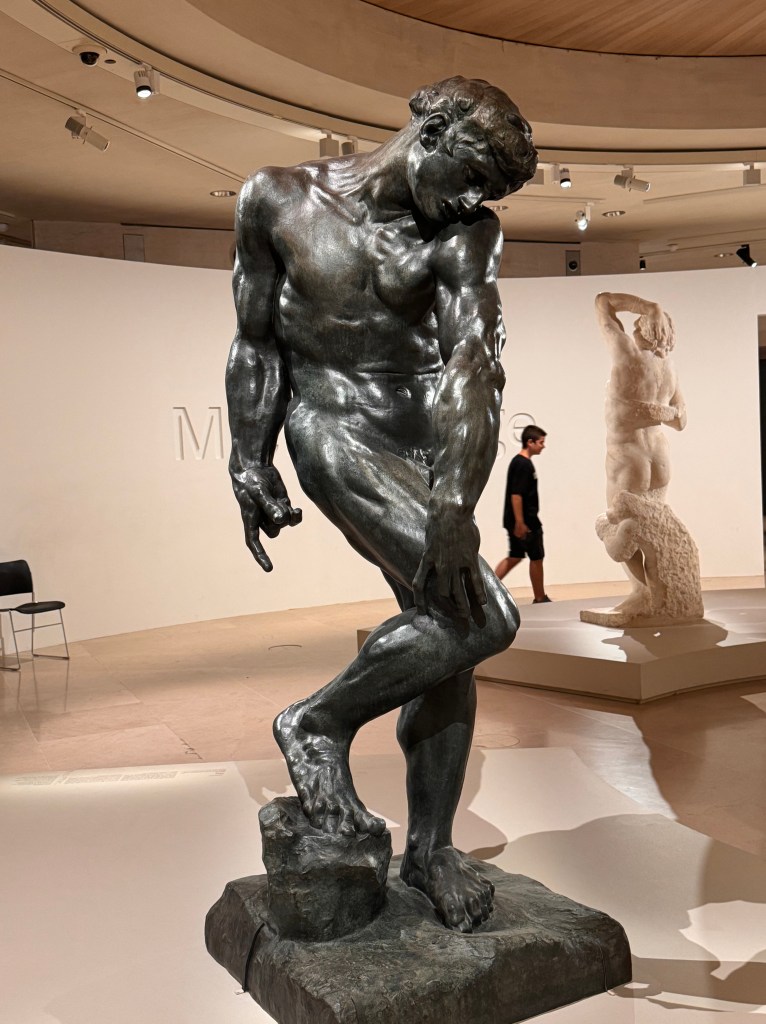
The Louvre is almost overwhelming in both its size and its collection. We searched for masterpieces by Michelangelo, admired works by Rodin, found paintings by Van Gogh, and eventually made our way to one of the museum’s most famous sculptures—the Venus de Milo.

Finding her turned into a bit of an adventure.

Several elevators had been shut down because of the extreme heat, so we found ourselves taking detours through different wings of the museum before finally arriving at the gallery. Like so much of the Louvre, the journey itself introduced us to countless unexpected works of art along the way.

The heat became such a concern that the Louvre announced it would close early at 4:00 p.m. to help protect both visitors and staff. We ended up being among the very last visitors to leave the museum that afternoon.

Before heading home, we wandered through the shops surrounding the Louvre and treated ourselves to refreshing sorbet—a perfect way to cool down after hours of walking through galleries.

Then another unexpected adventure began.

Rather than taking the underground passage, we tried to exit through one of the shopping areas, only to discover that the elevators we needed were no longer operating. We were told to return to the Louvre and use its elevators instead.

The security guards weren’t entirely convinced that was allowed.

After several conversations, they checked with the Louvre staff, who graciously welcomed us back inside.

Walking back into the museum after it had closed was one of the most surreal moments of our entire trip.

The galleries were silent.

The crowds were gone.

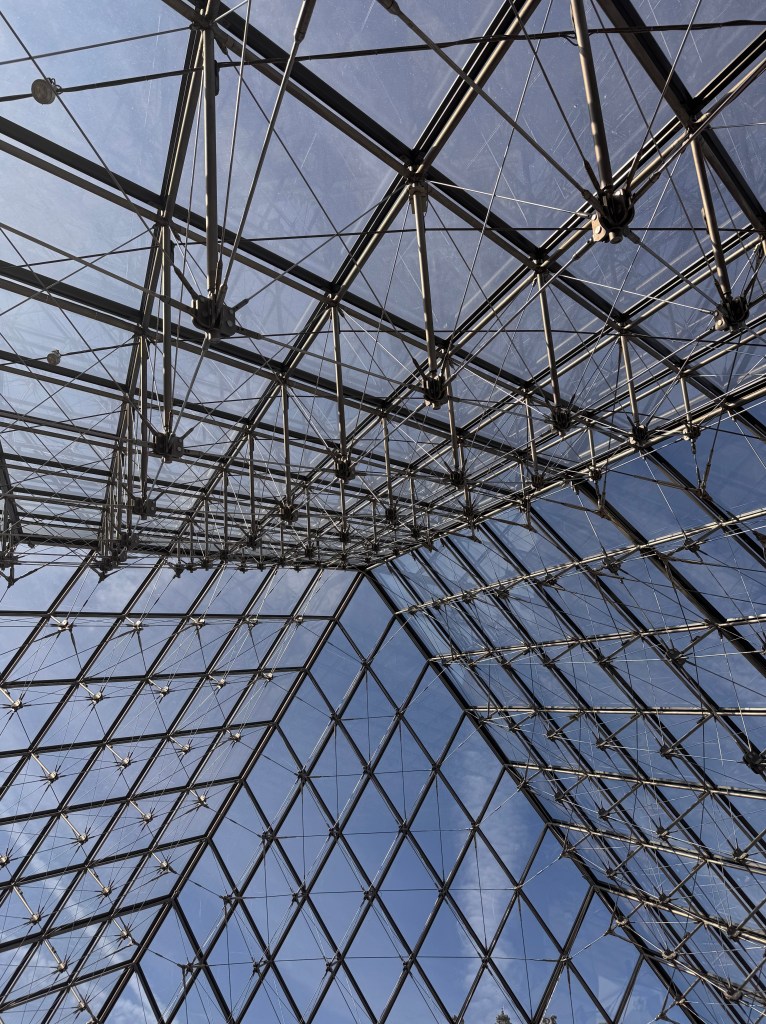
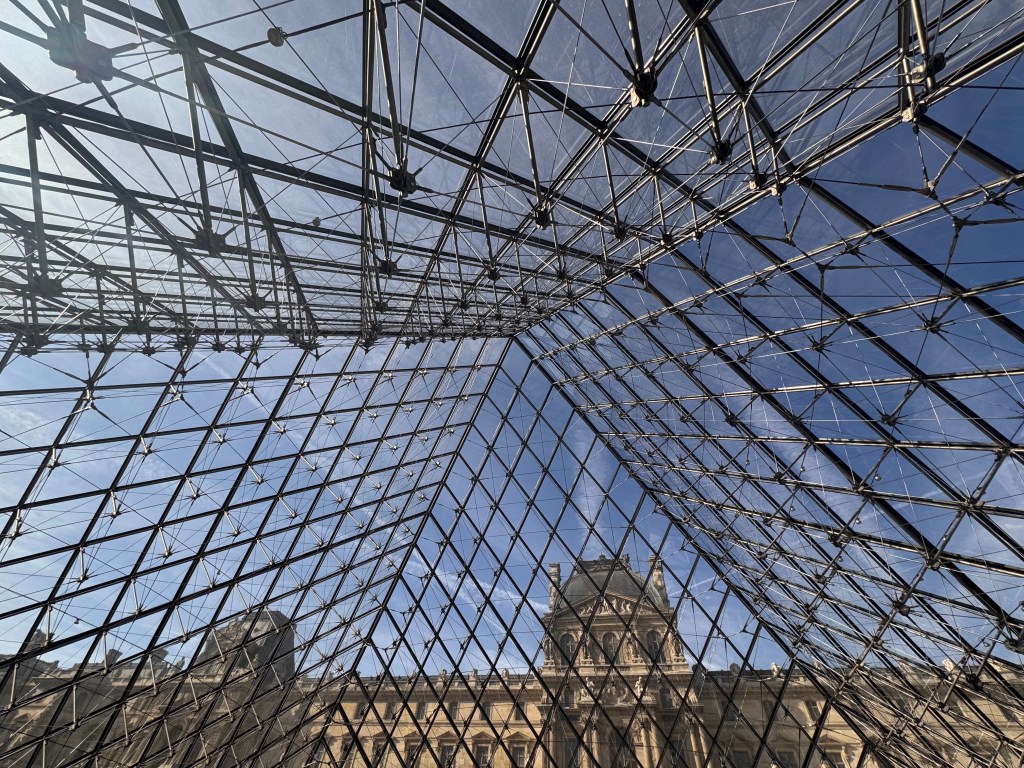
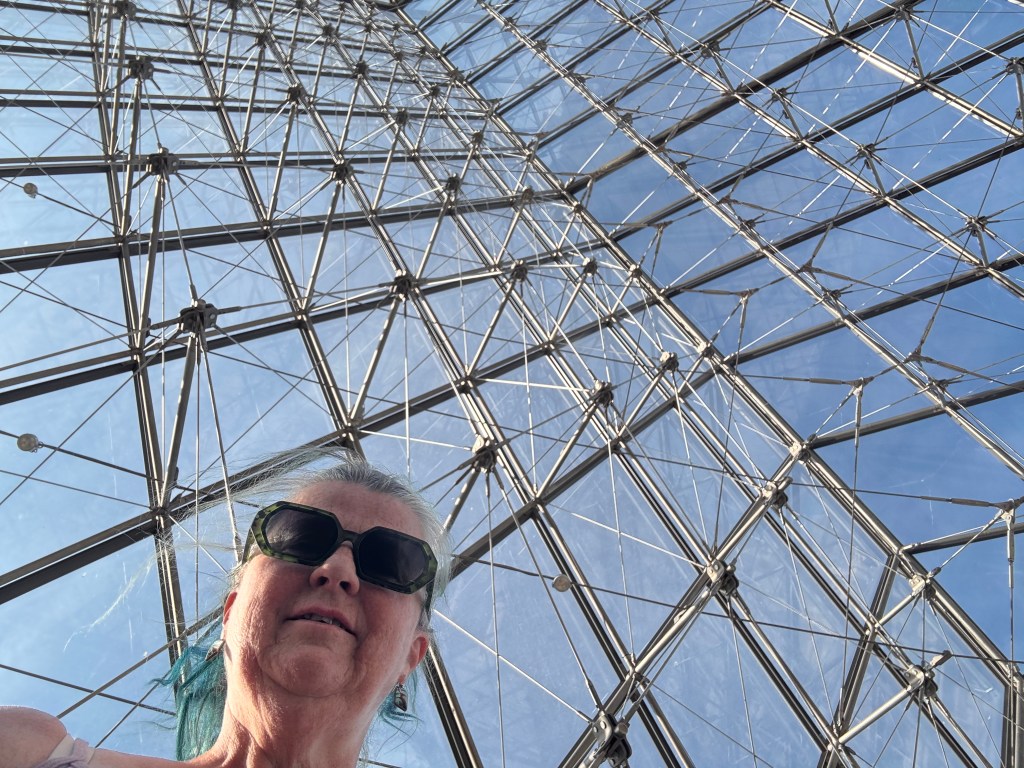
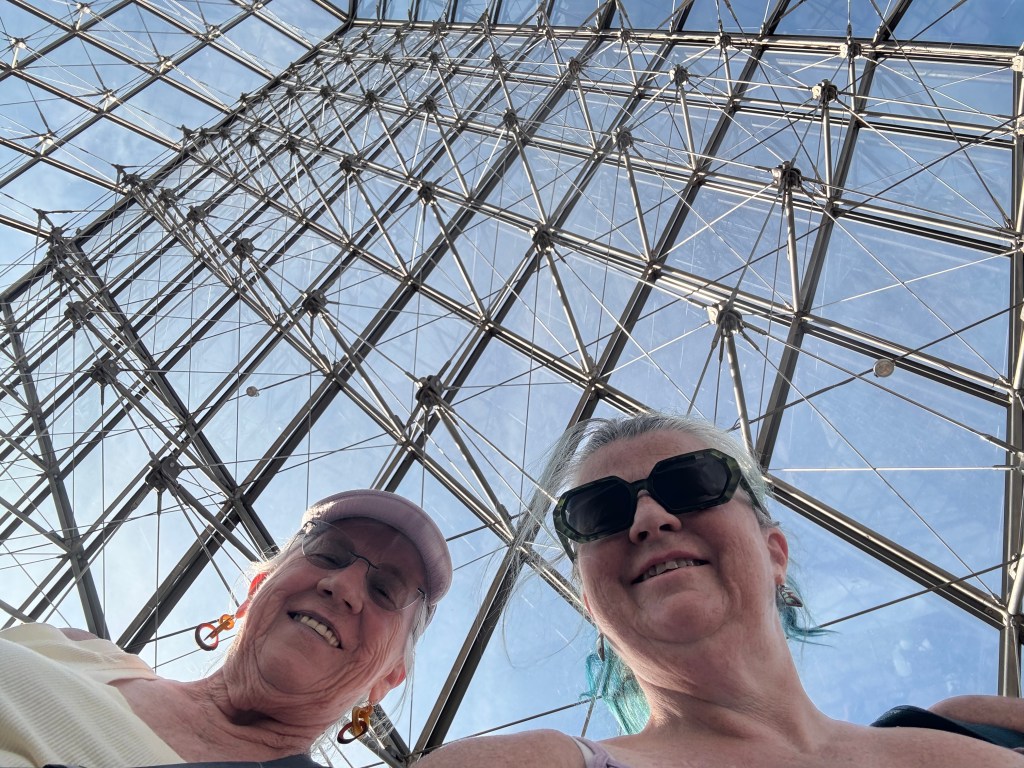
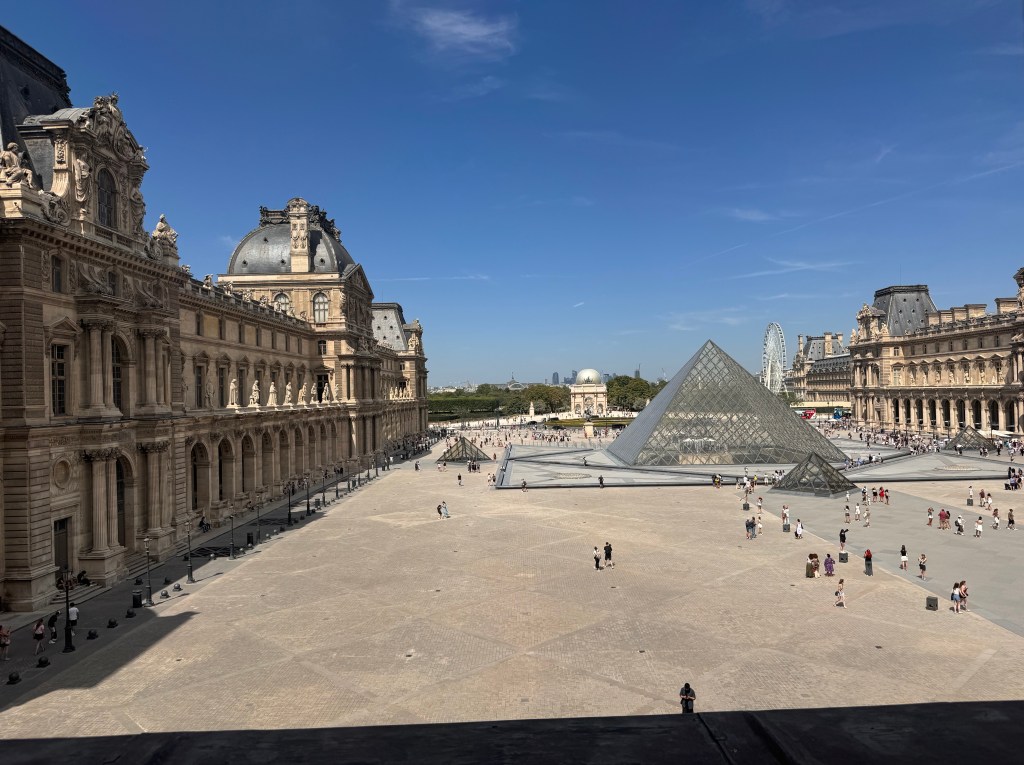
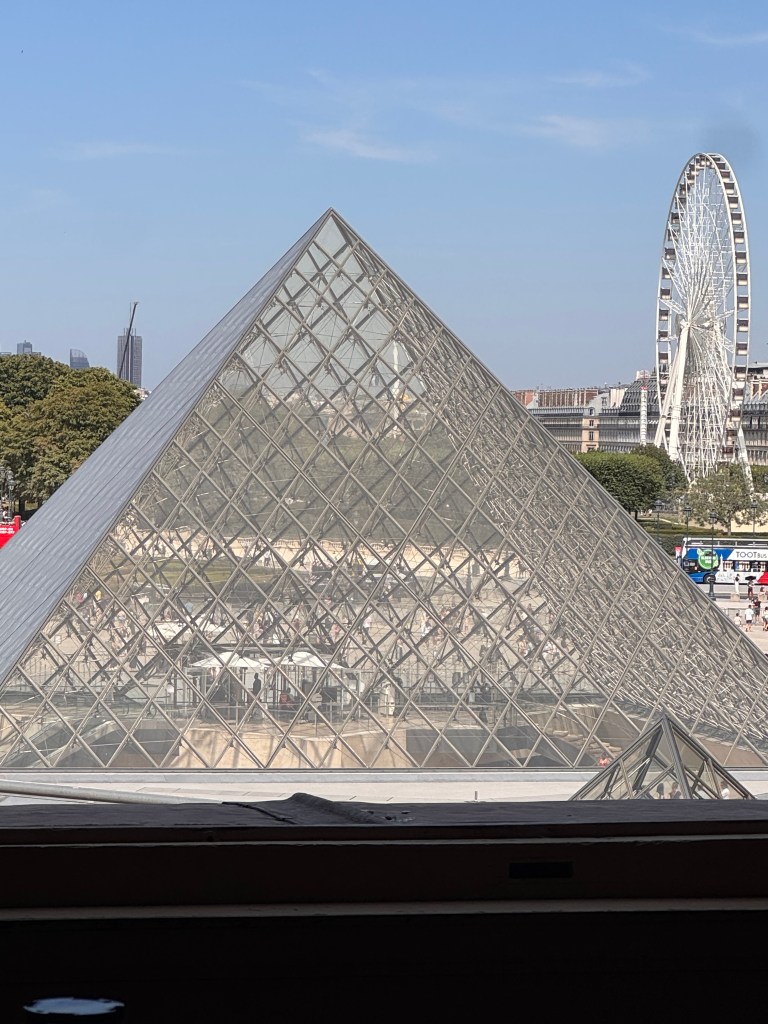
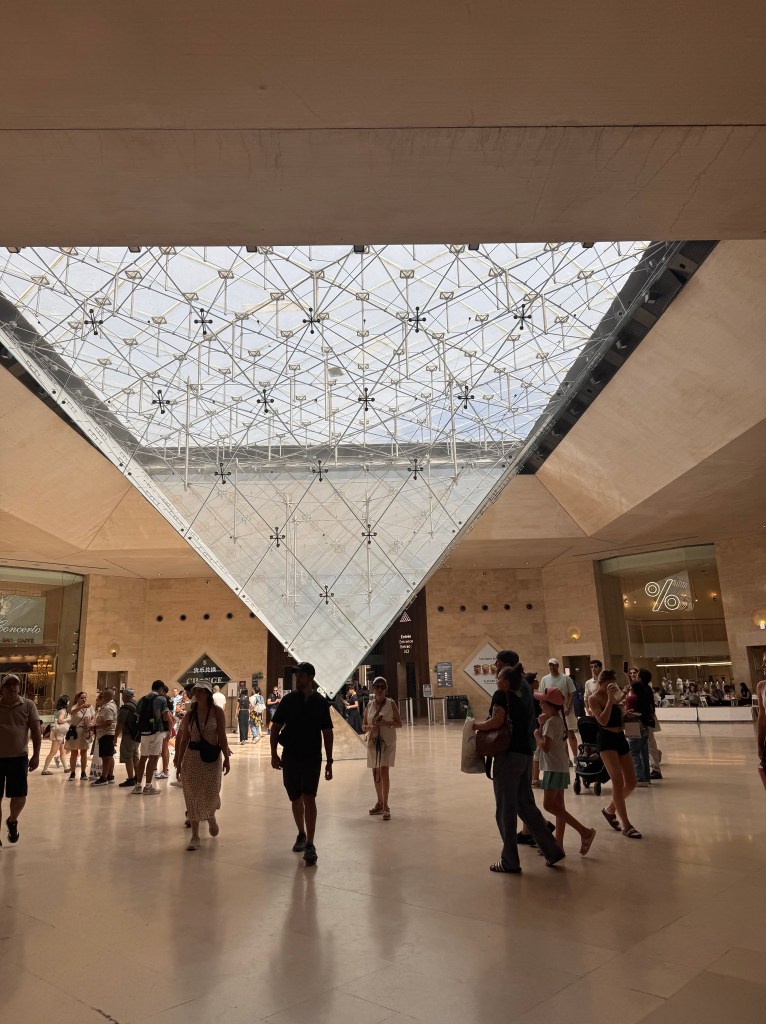
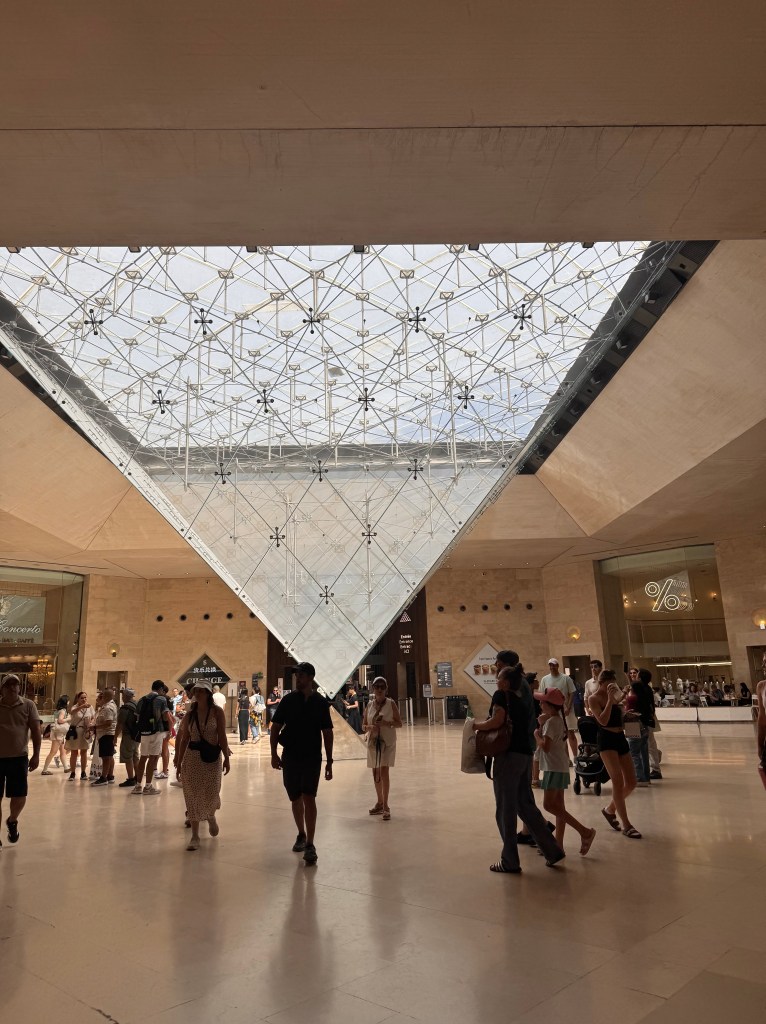
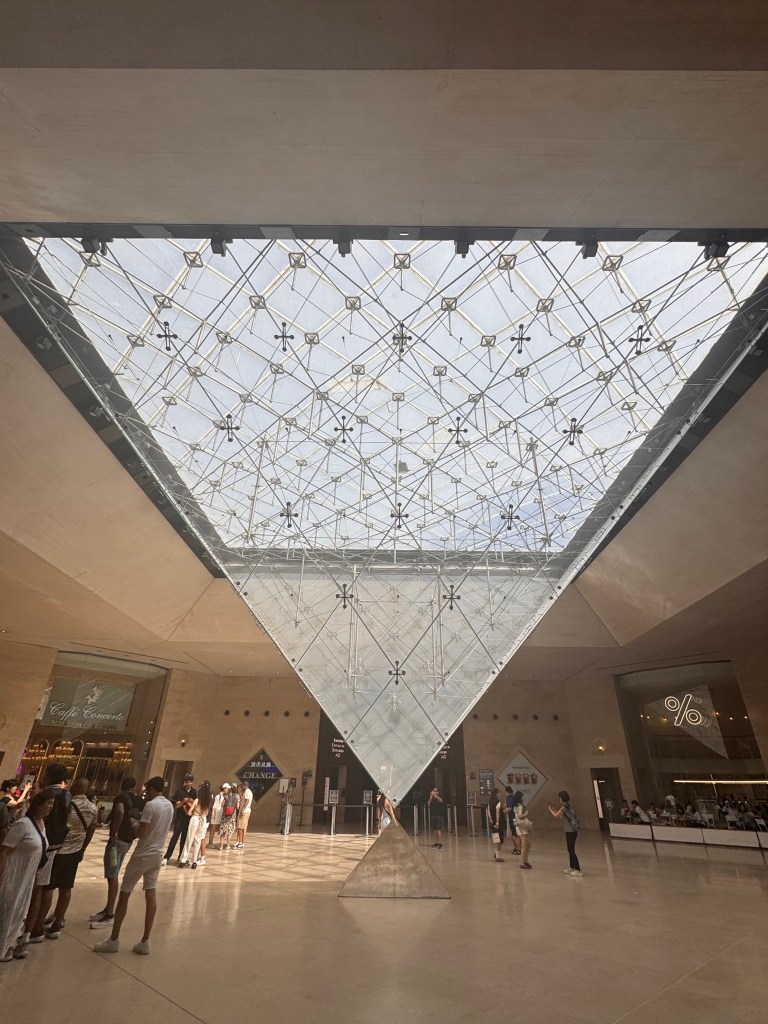
We rode the elevators back up beneath the famous glass pyramid, and for the first time all day there was no one around. Looking up through the pyramid without hundreds of tourists filling the space was something very few visitors ever experience. I was able to take some incredible photographs of the pyramid completely unobstructed—pictures that would have been impossible just an hour earlier.

Outside, we noticed quite a few disappointed visitors arriving for afternoon entry, unaware that the museum had already closed because of the extreme temperatures.

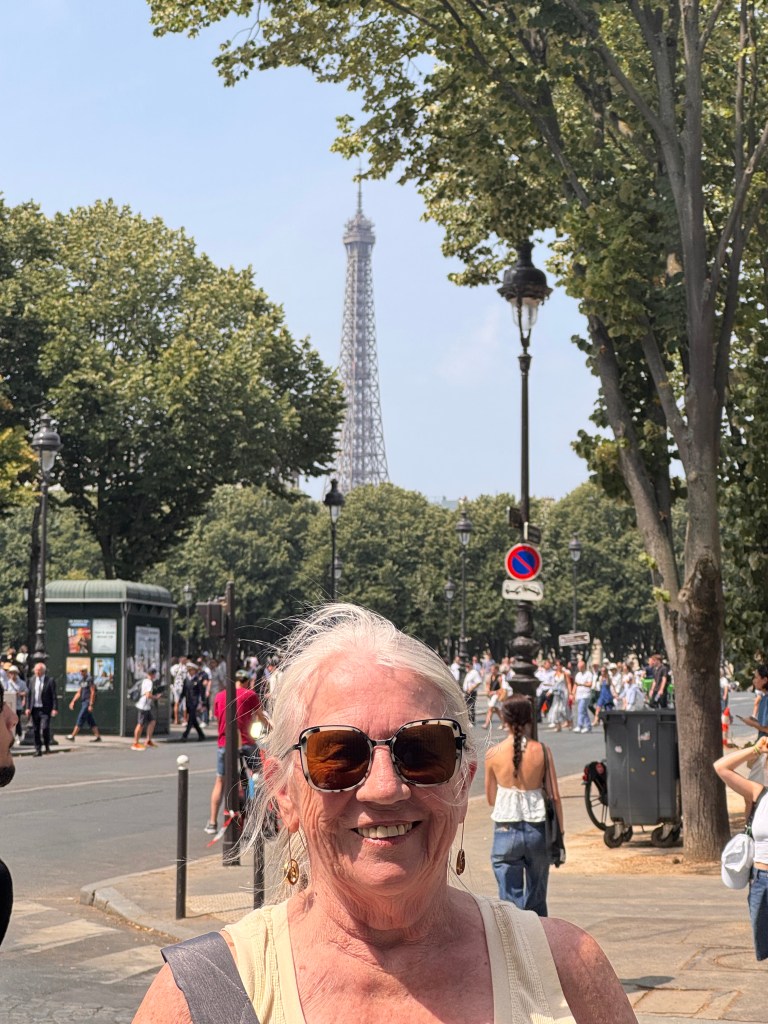
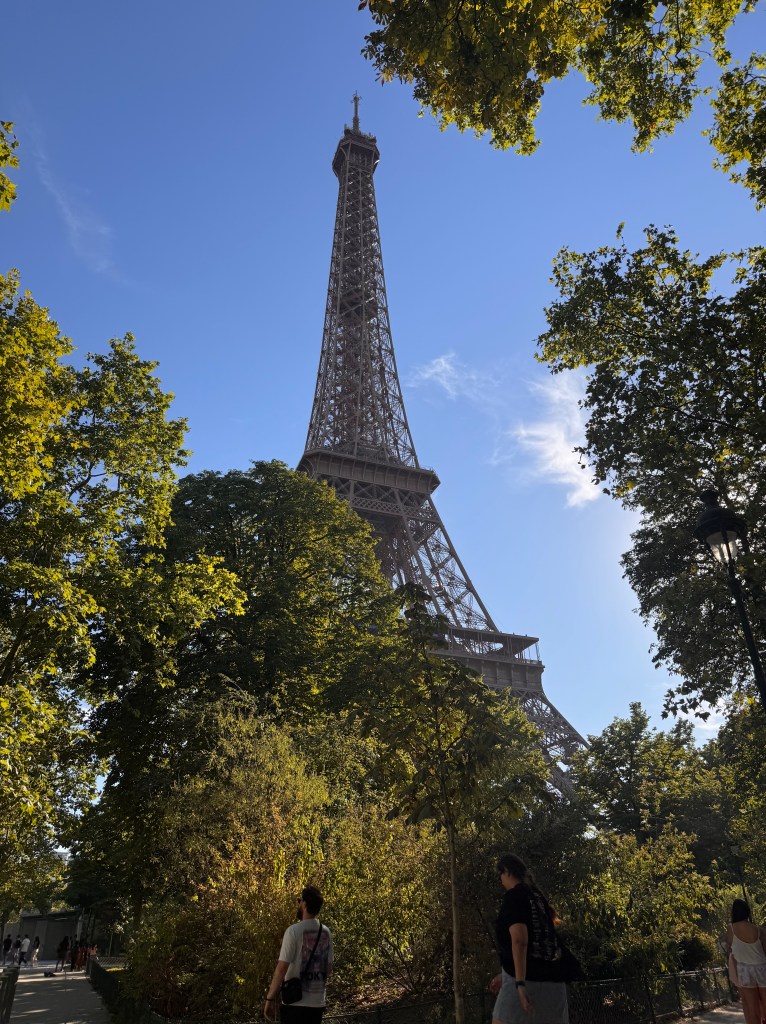
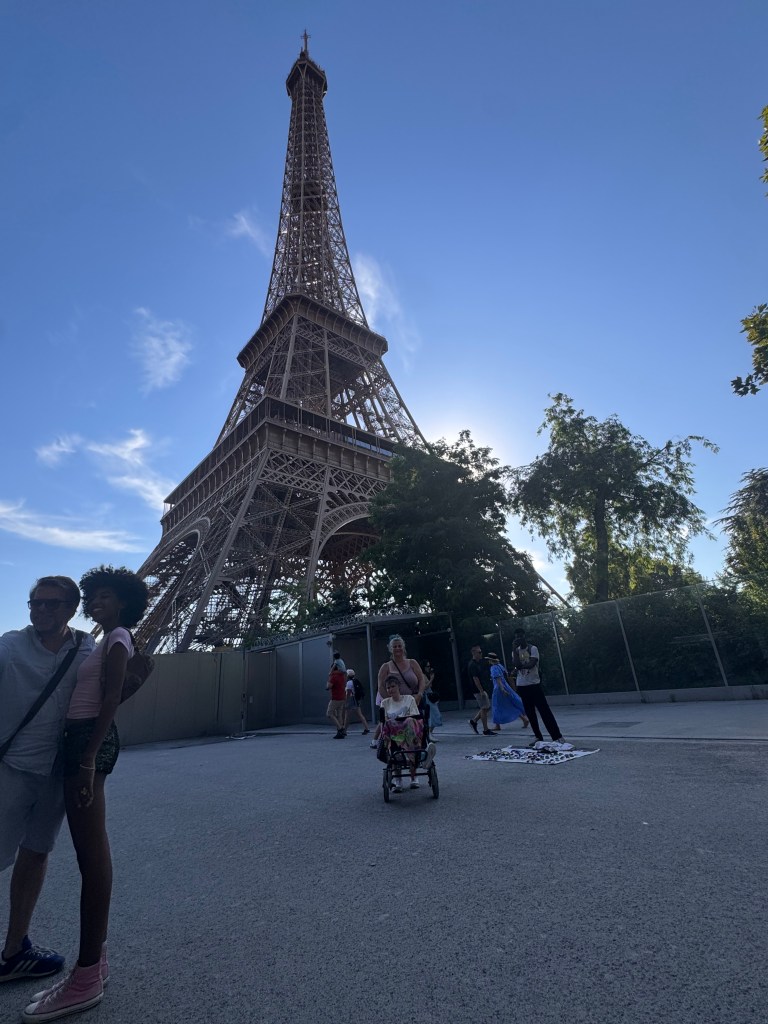
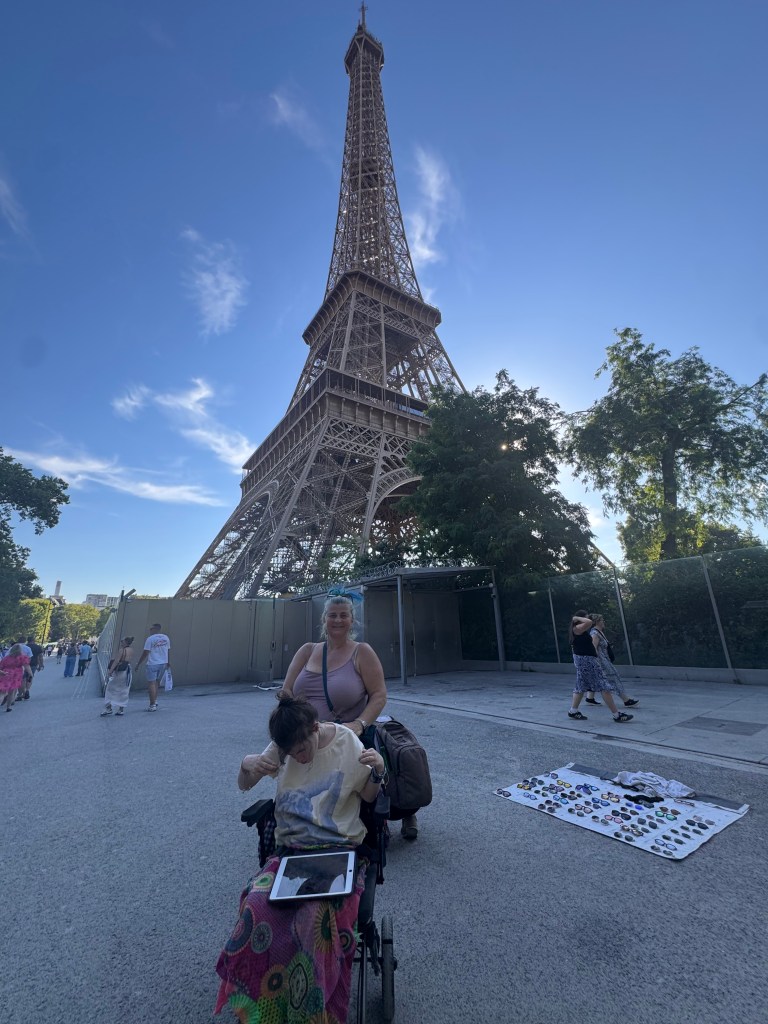
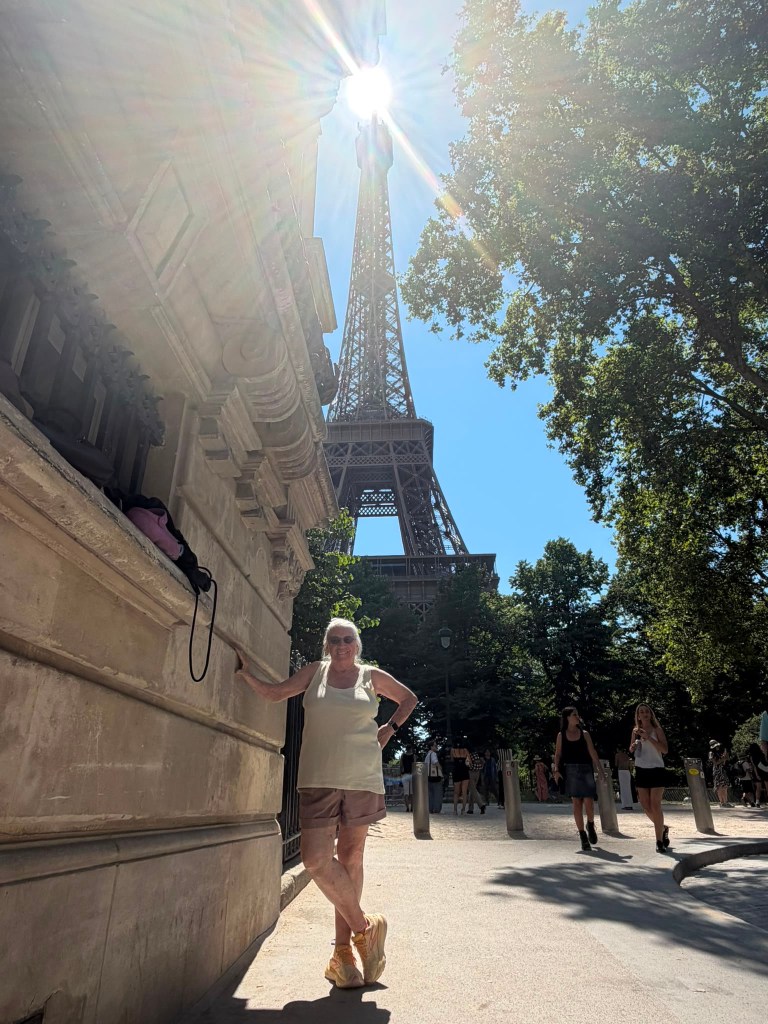
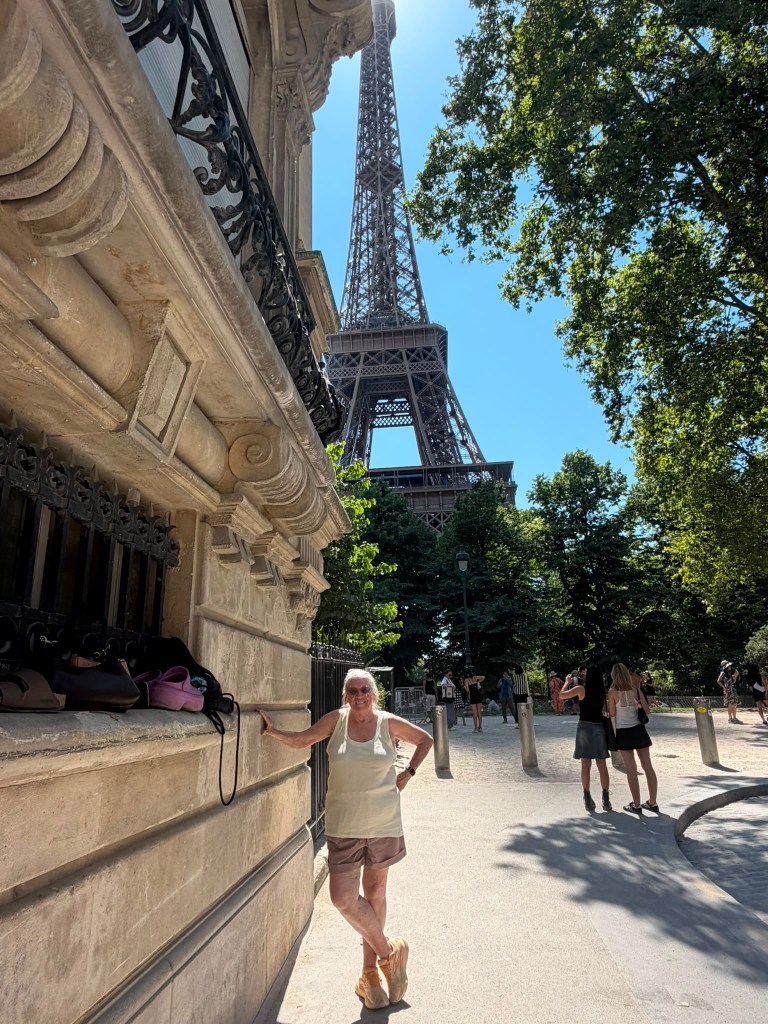
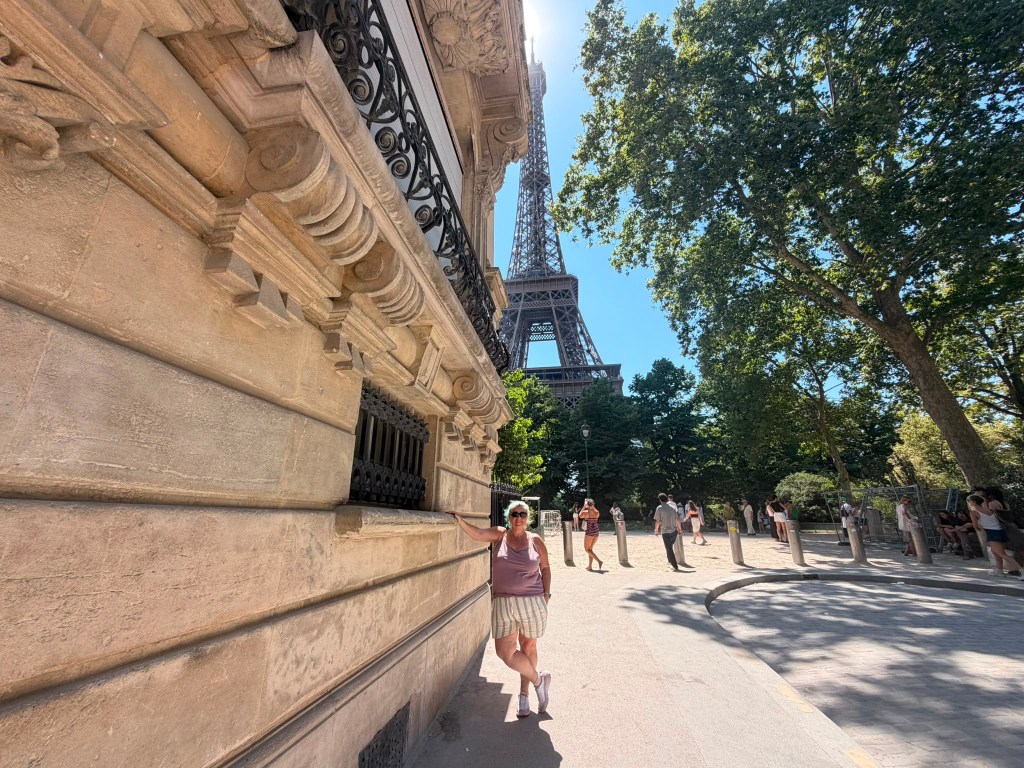
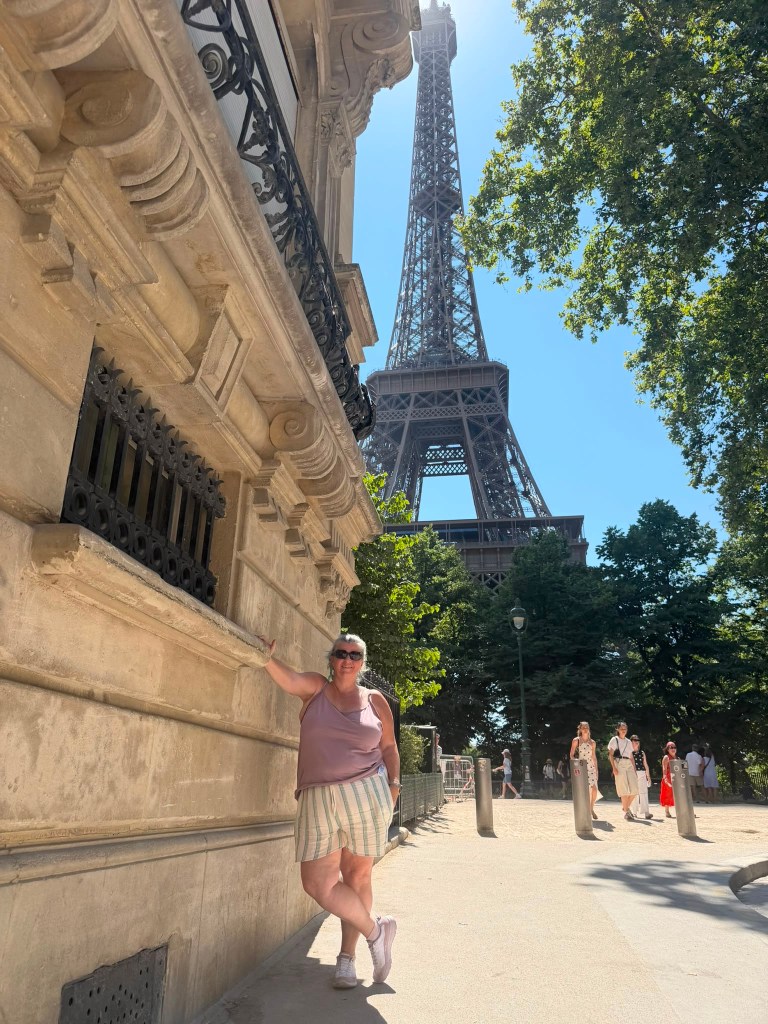
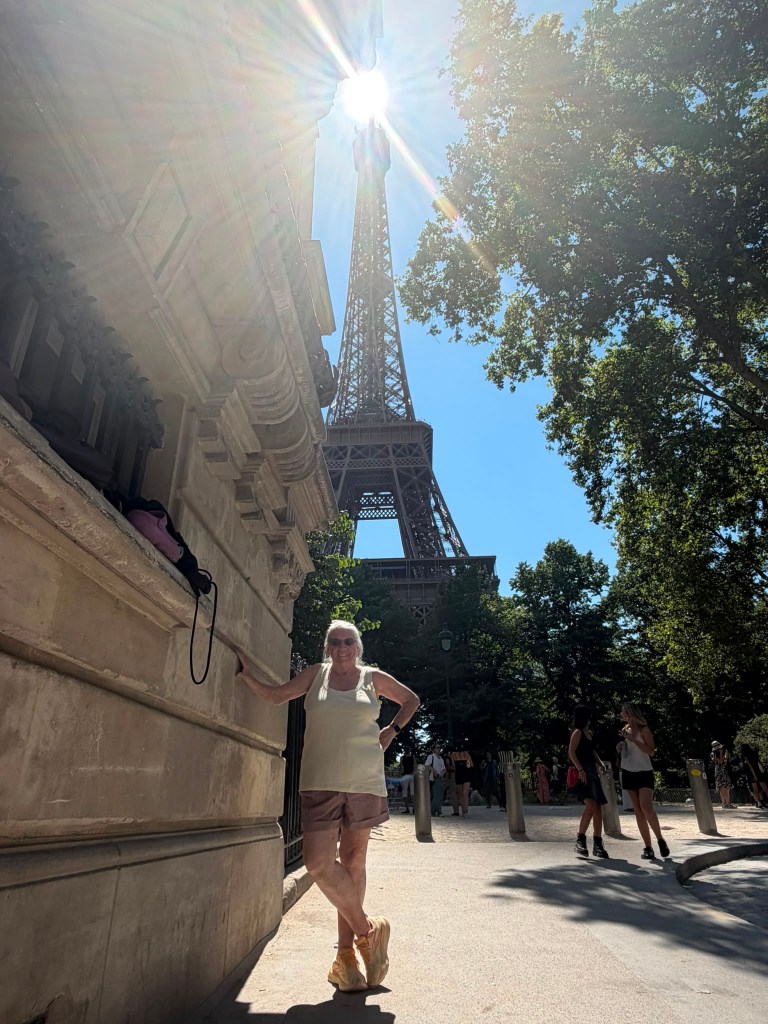
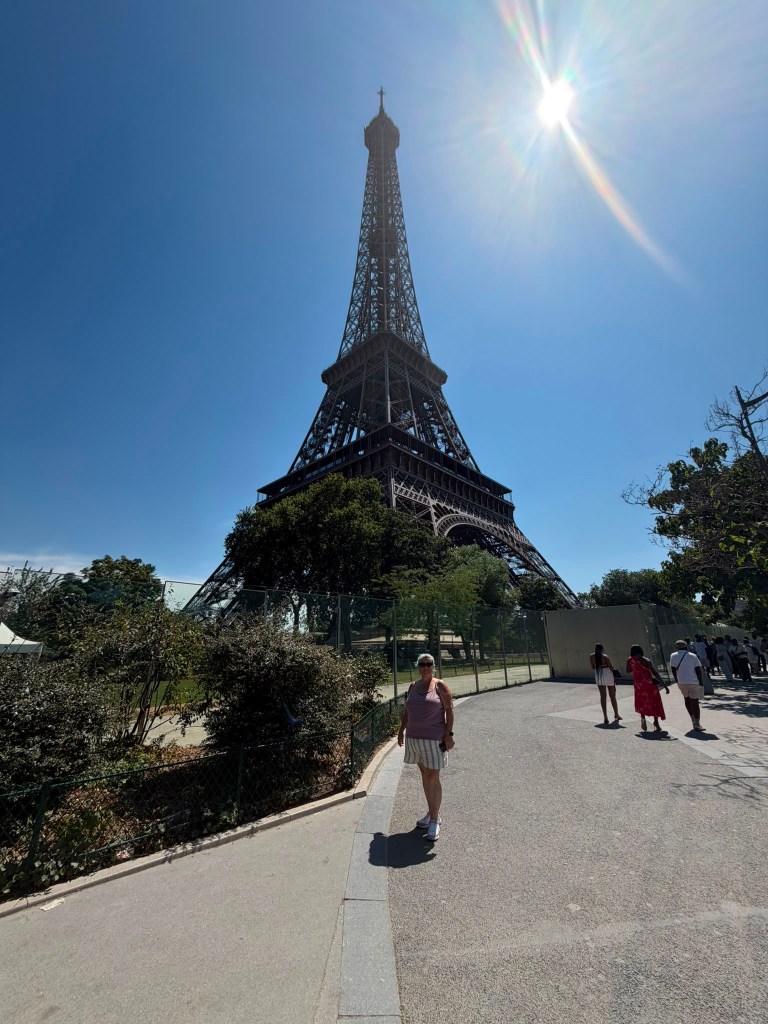
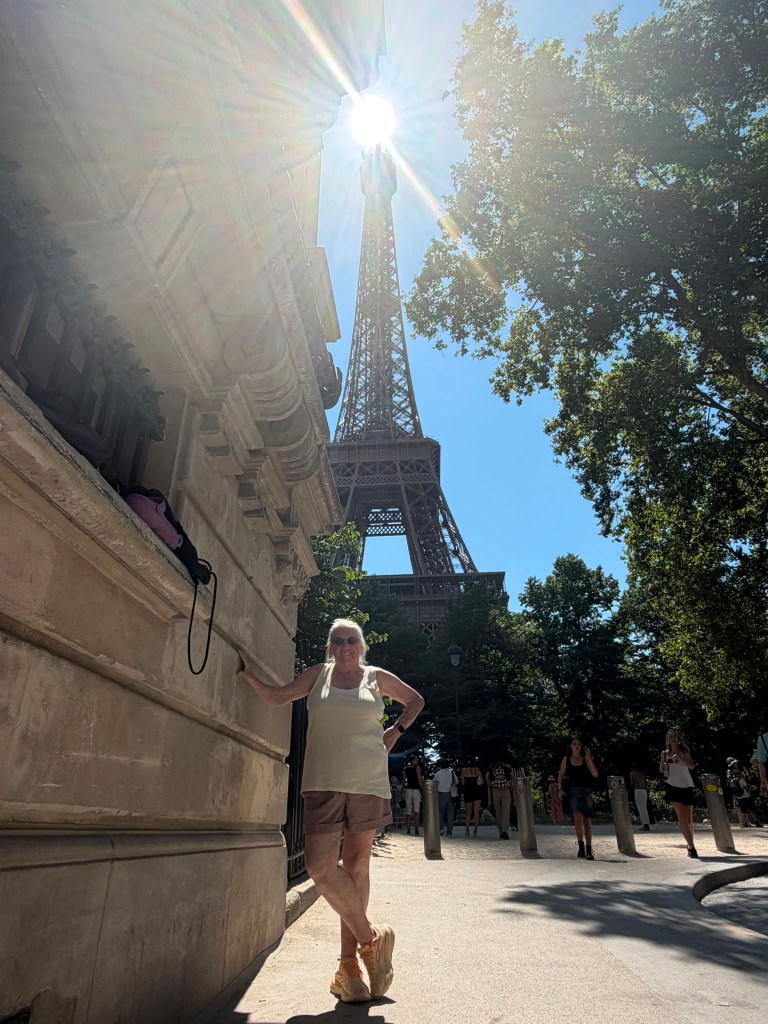
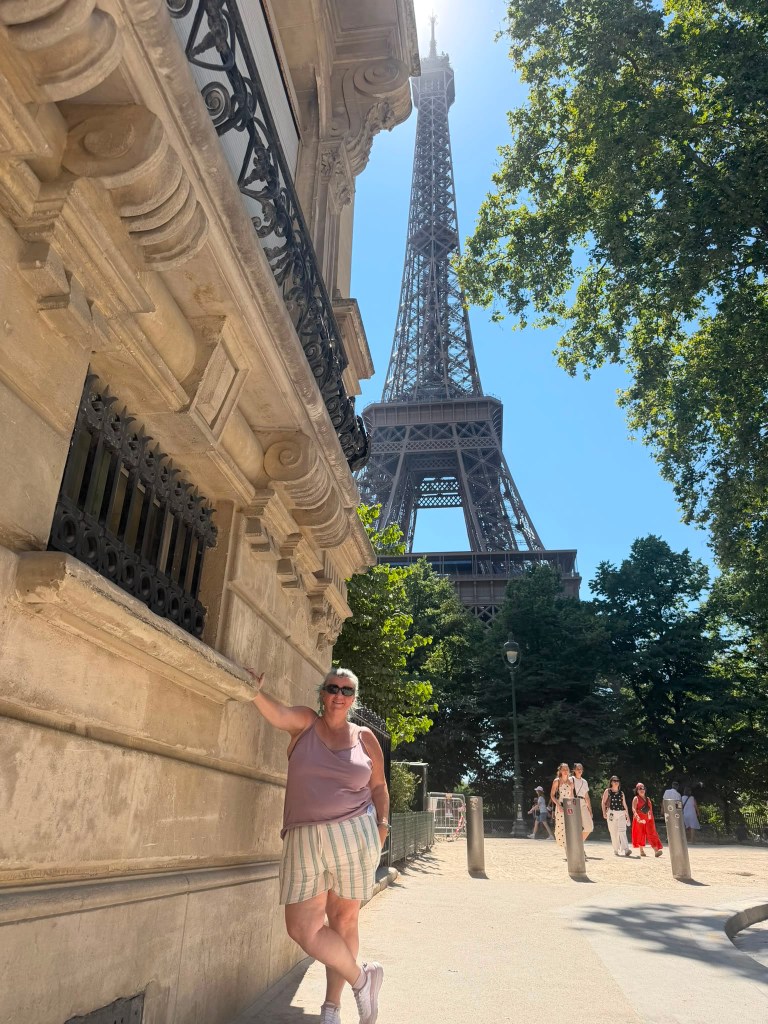
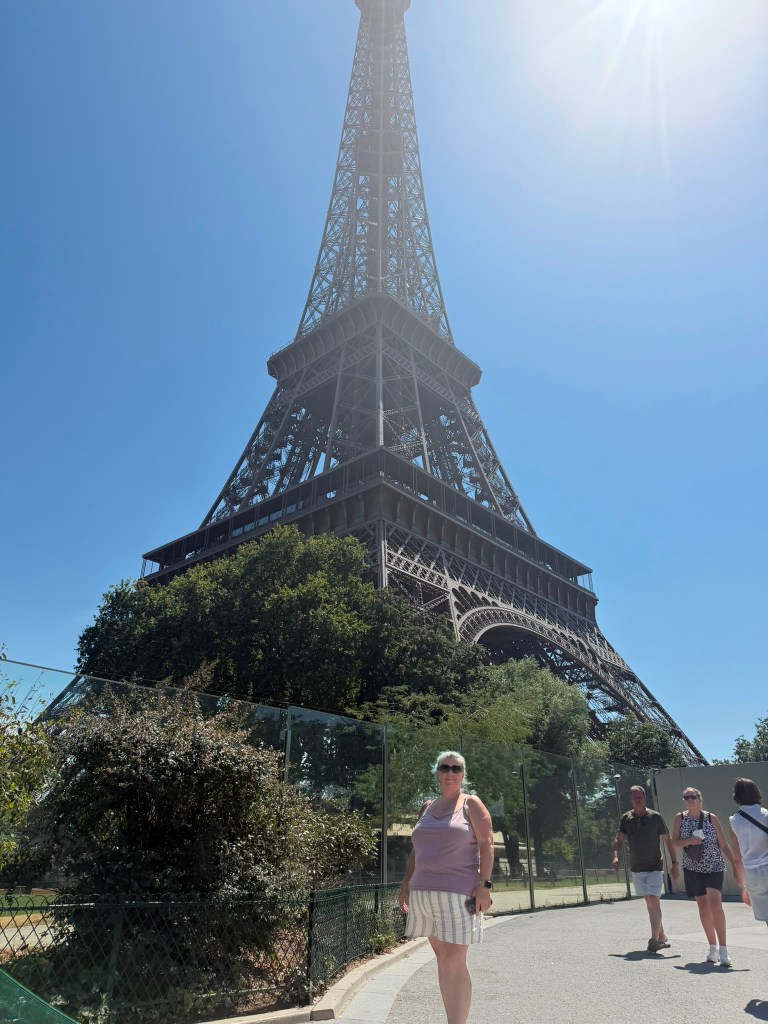
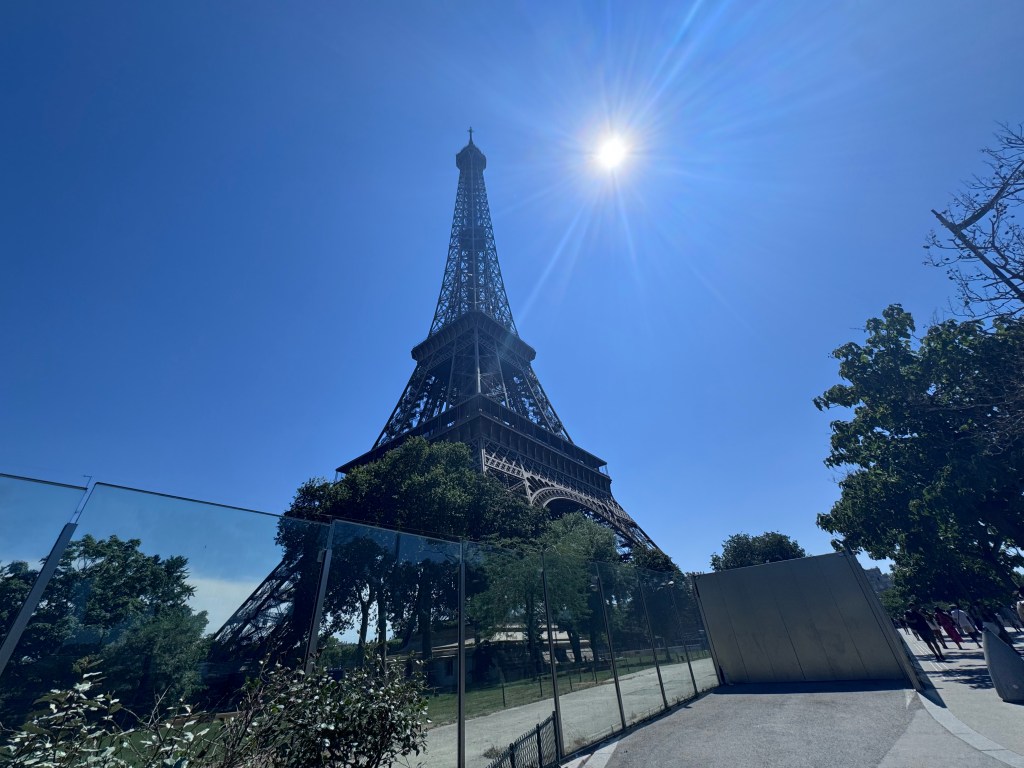
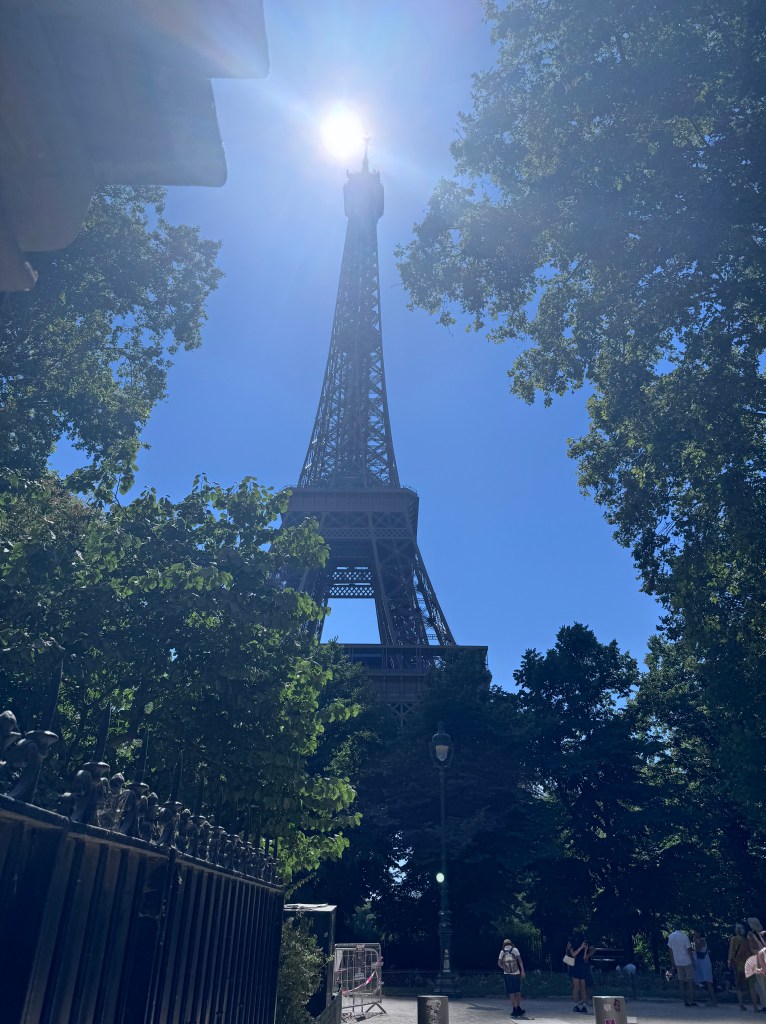
From there we began the long walk back toward our apartment, making our way via the Eiffel Tower. Along the way we found a restaurant just a short walk from its base and enjoyed dinner while admiring one of the world’s most recognizable landmarks. We took plenty of photographs, knowing that the following day the tower and surrounding area would be closed for Bastille Day celebrations and the evening fireworks.

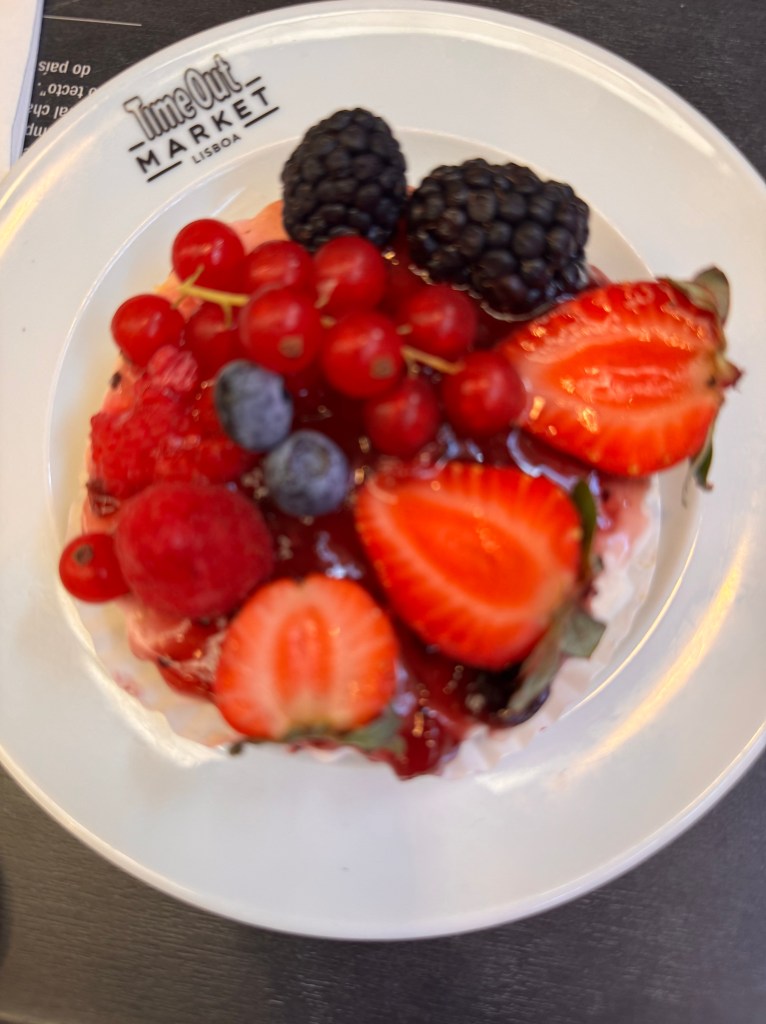
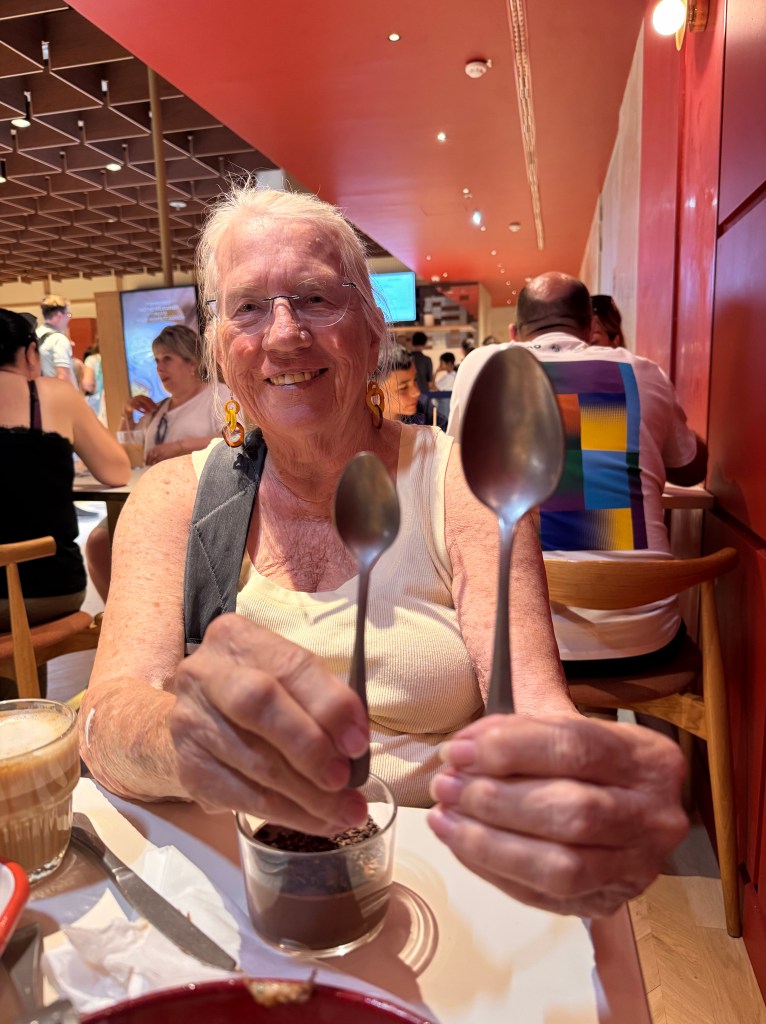
We decided we needed to eat a meal out and treat ourselves. There was a restaurant on the corner by our apartment. We walked in the door and almost walked right back out. All the wait staff was dress in fancy black suits and dresses. The place had mirrors and lighting everywhere. Everyone else is dressed in very nice dinner clothes. We stumble in hot sweaty and in our street clothes. They were so gracious and served us like we were in formal wear. We had an amazing meal and had a berry pavlova for desert. After dinner we continued our walk back to the apartment.

Unfortunately, our apartment remained the biggest disappointment of our stay in Paris. It stayed unbearably hot no matter what we tried, making it difficult to relax after long days of sightseeing. We found ourselves spending as little time there as possible, treating it simply as a place to sleep before heading back out to explore another corner of this remarkable city.

A Grand Welcome to Paris

After our wonderful time in Brussels, it was time to board the train for Paris.

Of course, no travel day would be complete without a little excitement.

We had several snafus trying to get a taxi to the train station and were convinced we had missed our train. Just when we were resigning ourselves to figuring out new tickets, I received an email saying our train had been delayed. Talk about relief!

The taxi driver was wonderful. Knowing we had a mountain of luggage and that the train station entrance was surrounded by uneven cobblestones, I asked if he could help us get everything closer to the door. He happily did, saving us a great deal of effort.

As it turned out, our train was delayed nearly 50 minutes. Then, just before boarding, the railway combined two completely full trains into one. It instantly became a mad dash for seats. Mom quickly found a set of seats while I loaded all of our luggage aboard. Had she not claimed them when she did, we would have been standing for the entire two-hour journey to Paris.

When we arrived, we were greeted by our wonderful driver and guide, Nesrine. Instead of simply taking us to our apartment, we had arranged for her to spend the afternoon showing us some of Paris’s most famous landmarks. Considering the oppressive summer heat, climbing into her wonderfully air-conditioned van felt like heaven.

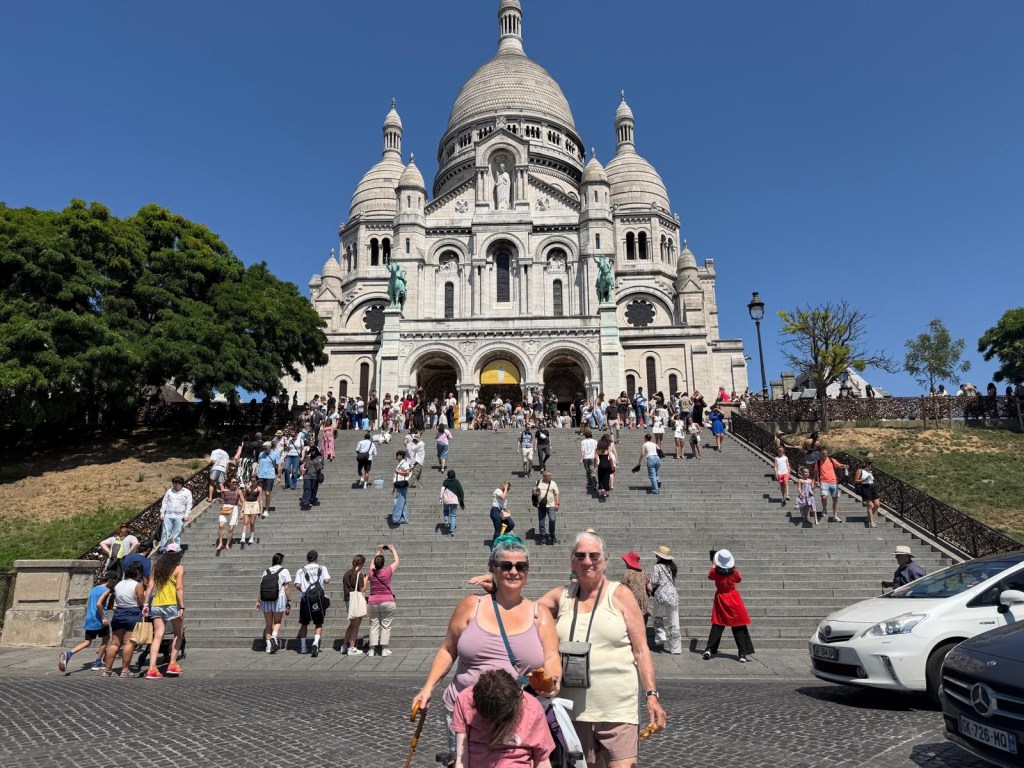
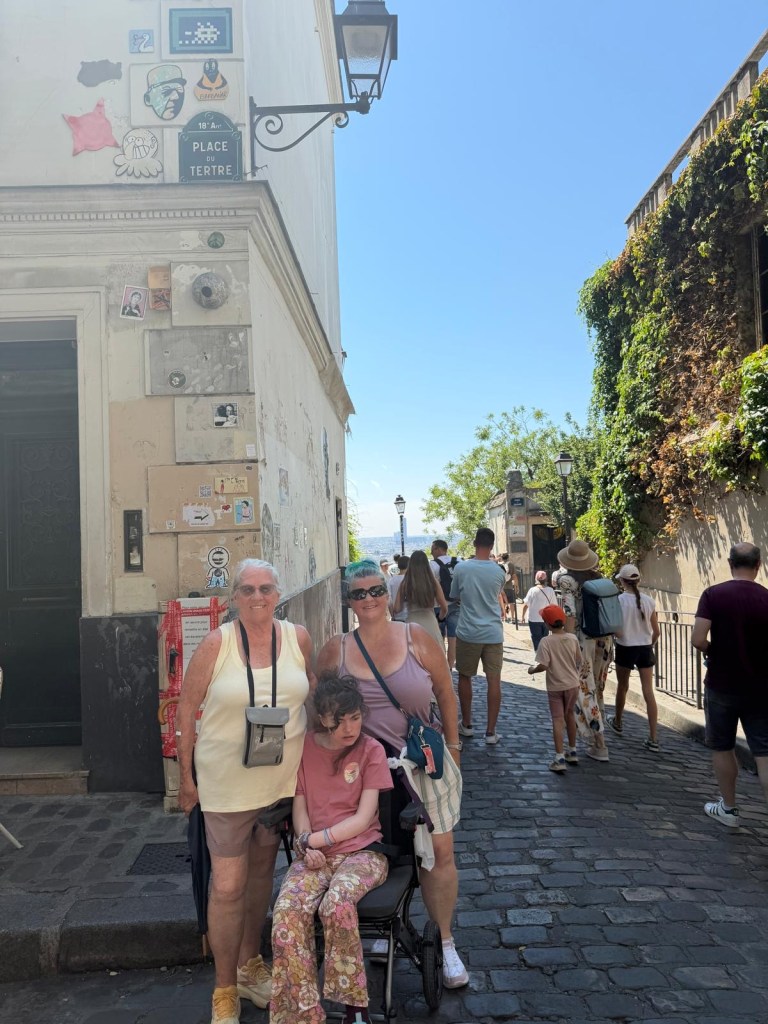
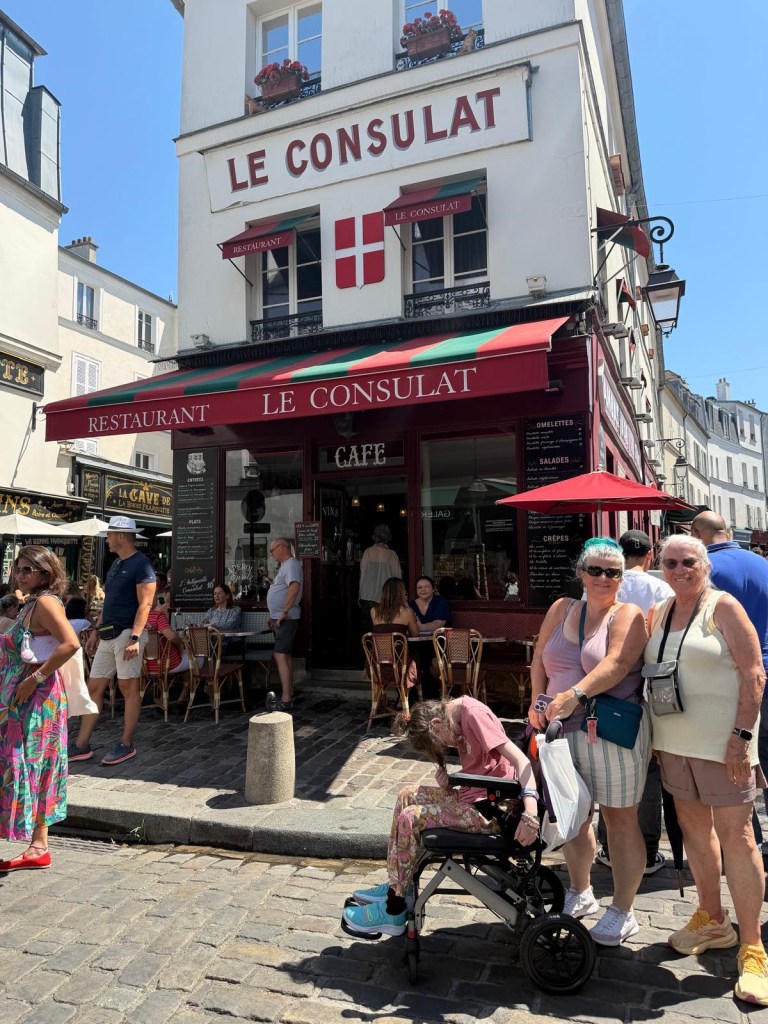
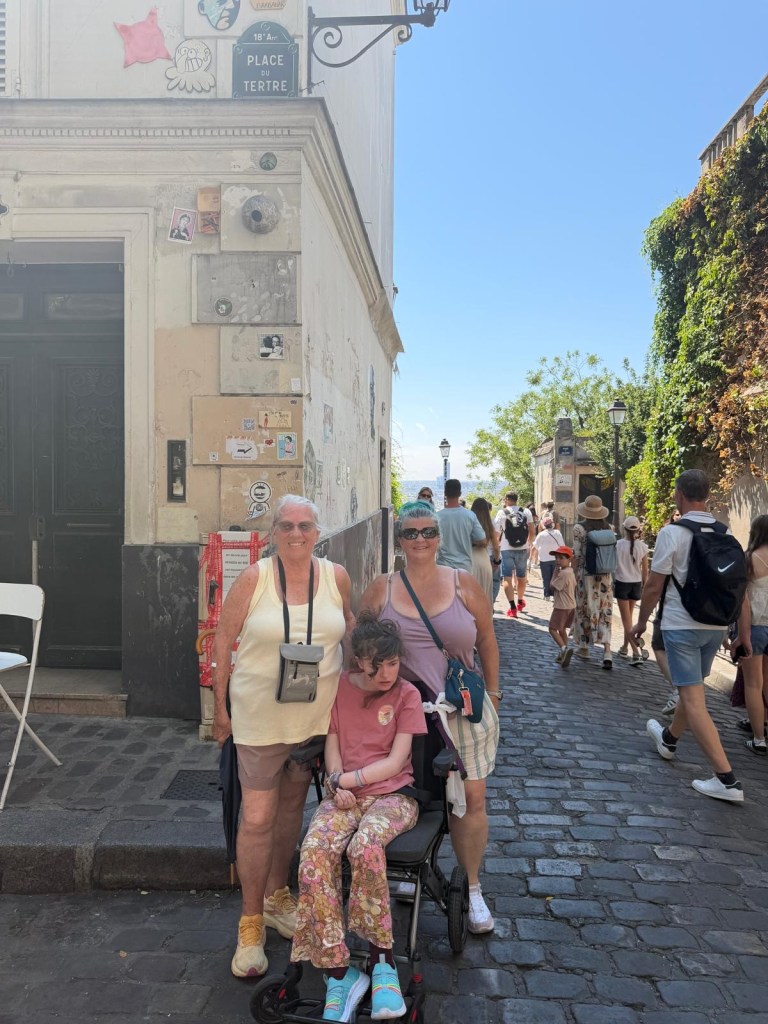
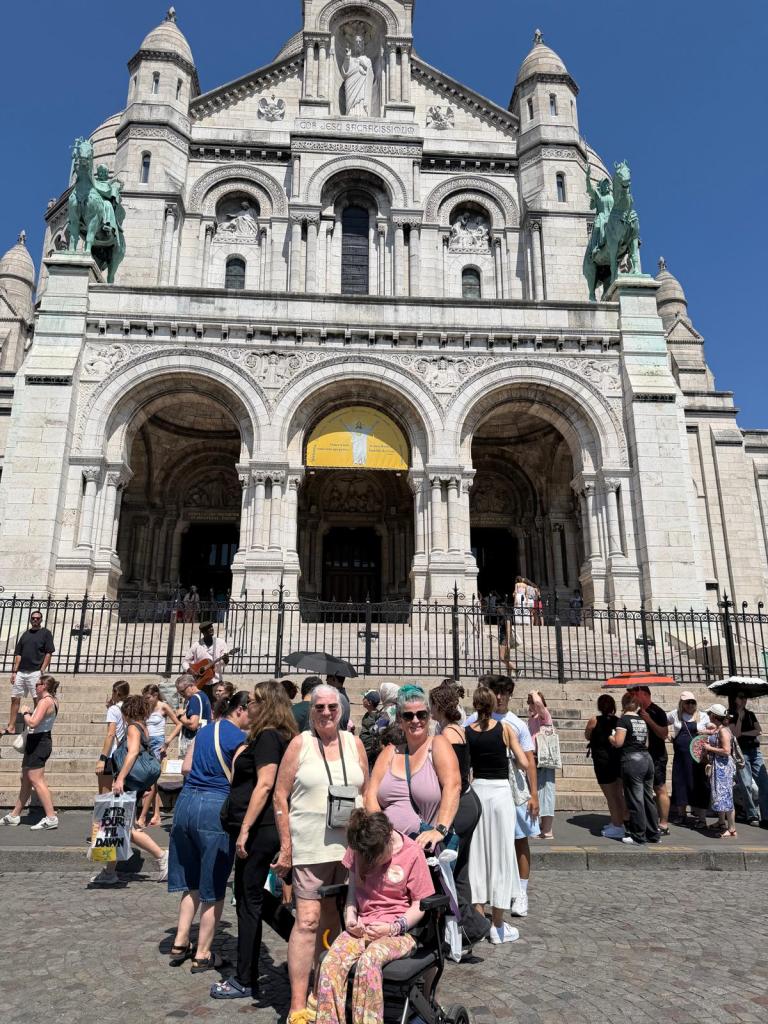
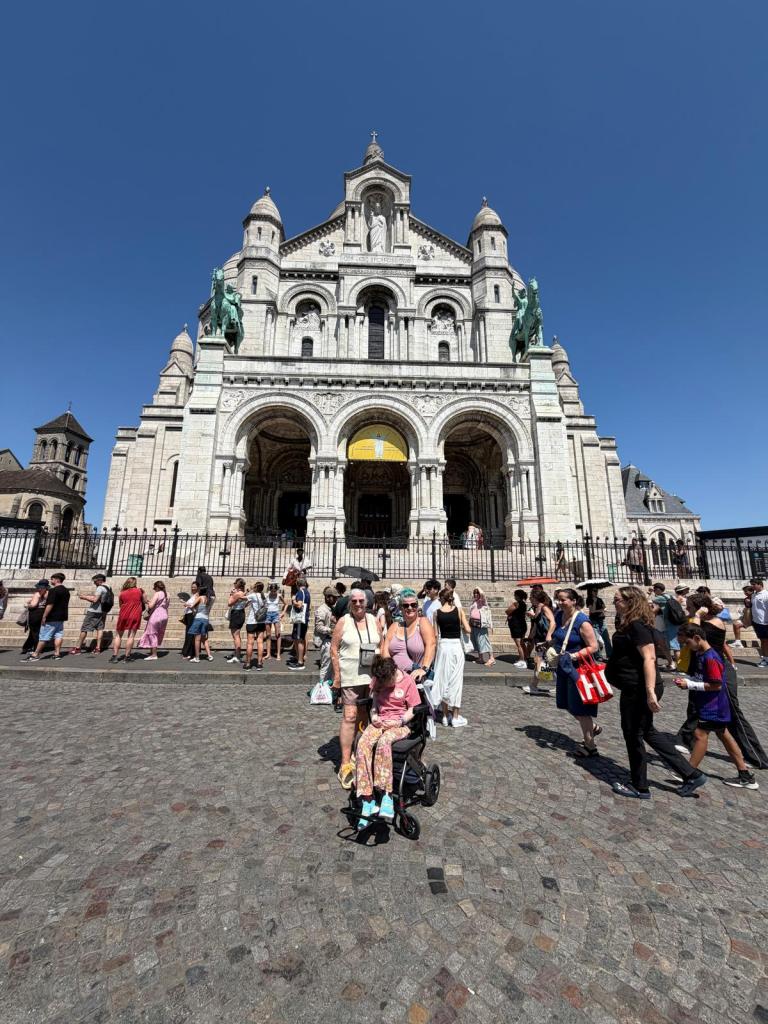
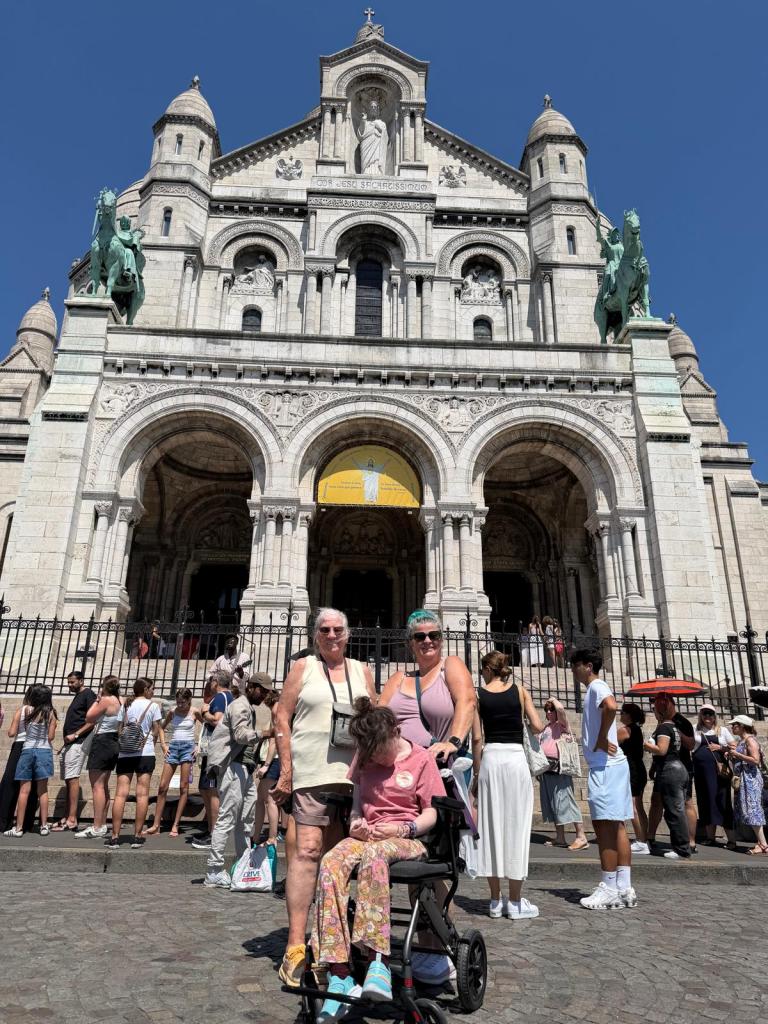
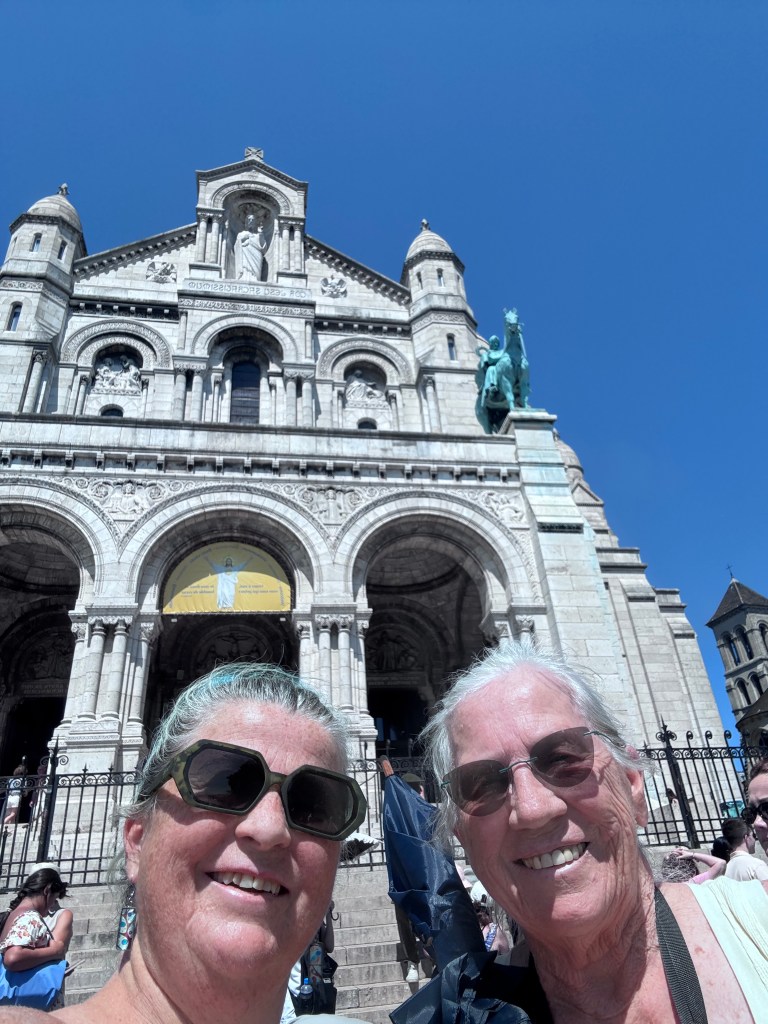
Our first stop was Montmartre.

I had hoped we would somehow make it to this famous hilltop neighborhood but wasn’t quite sure how we would manage it with Kiya and all of our transportation needs. Thanks to Nesrine, we didn’t have to worry about any of that.

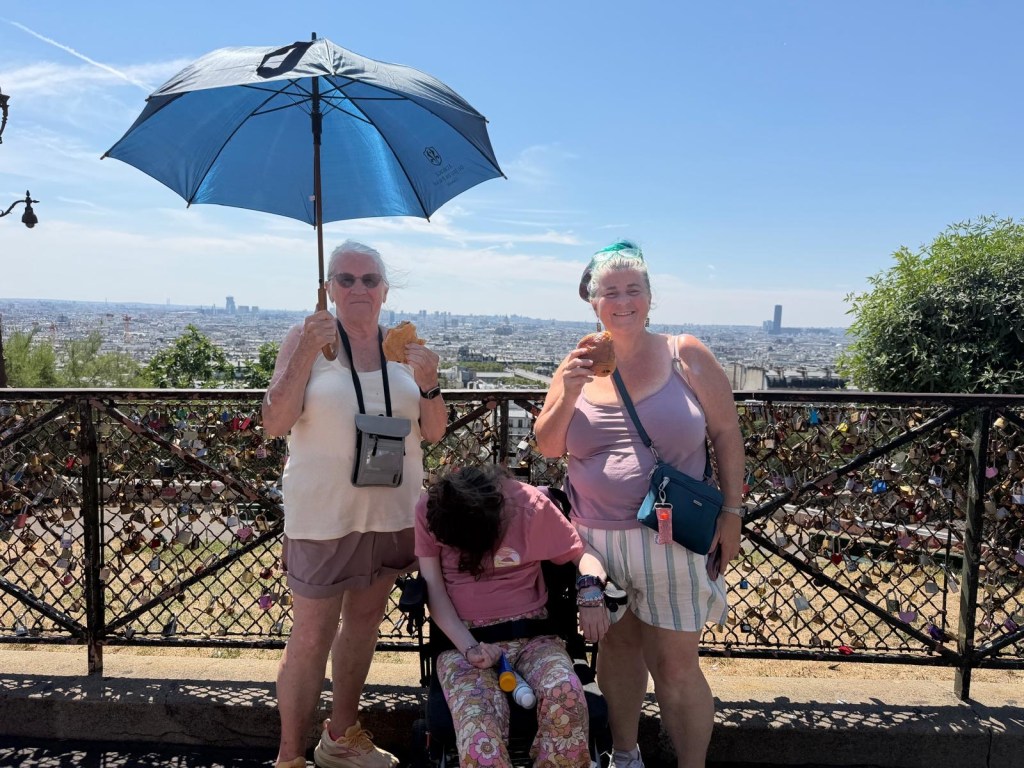
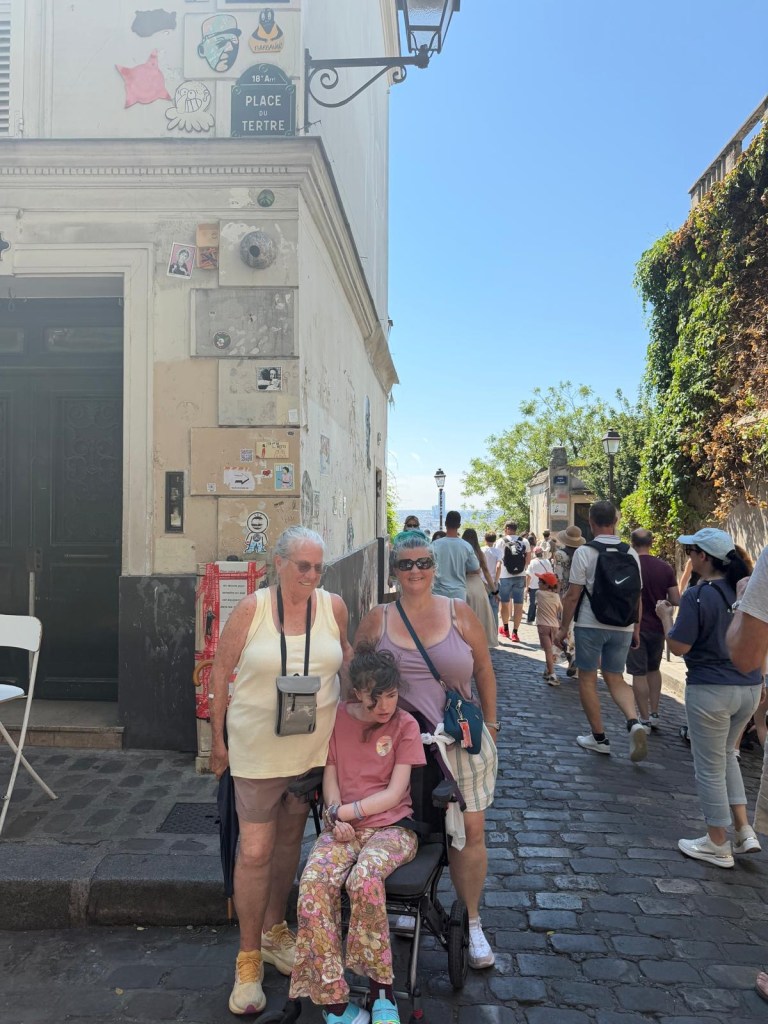
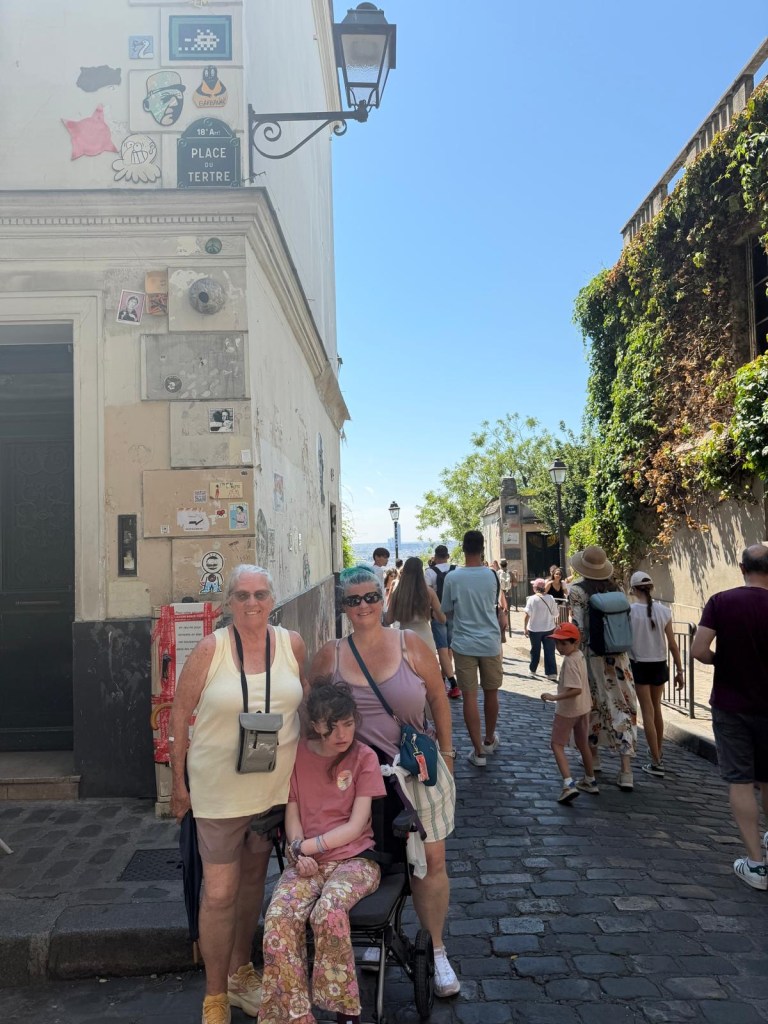
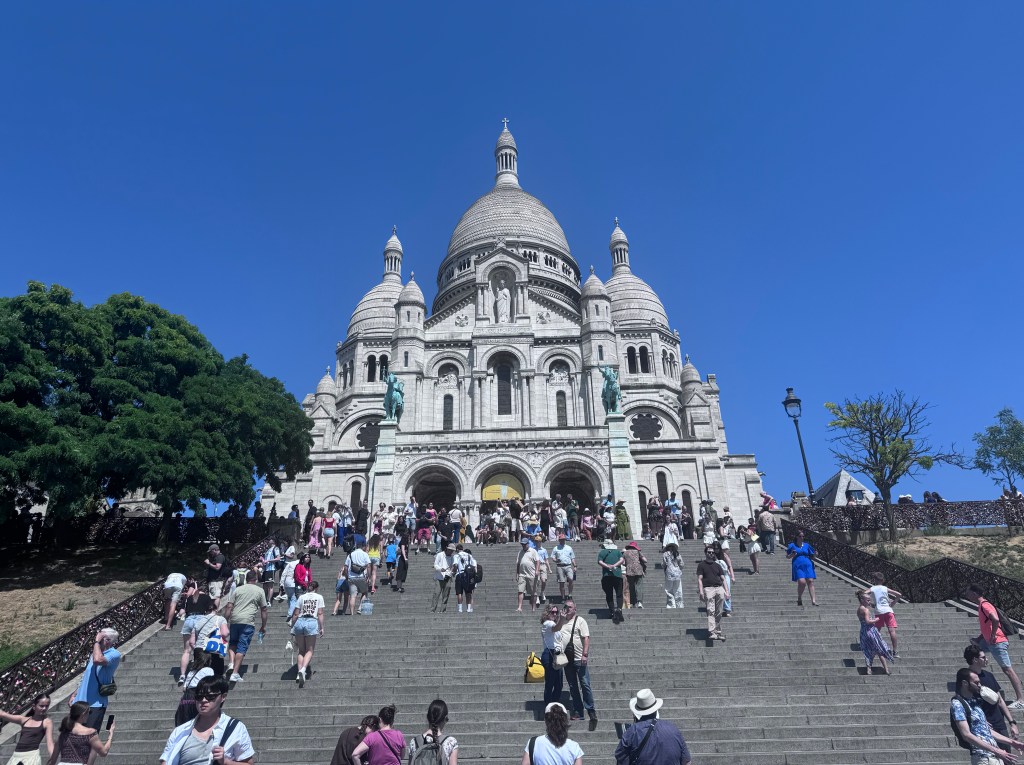
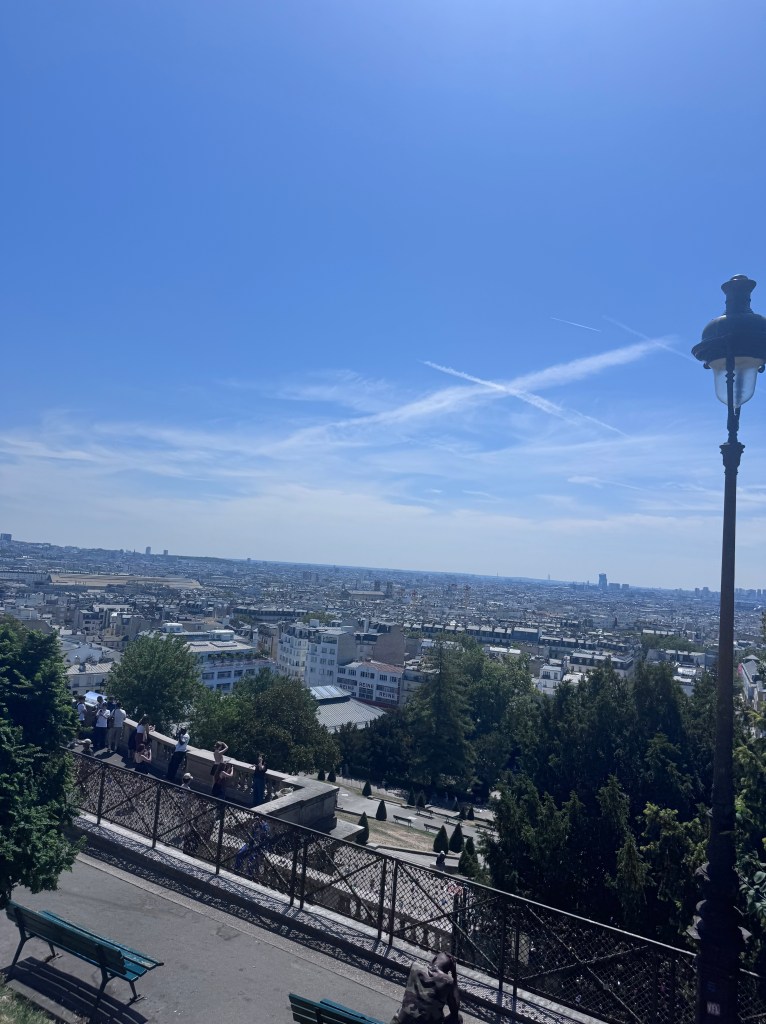
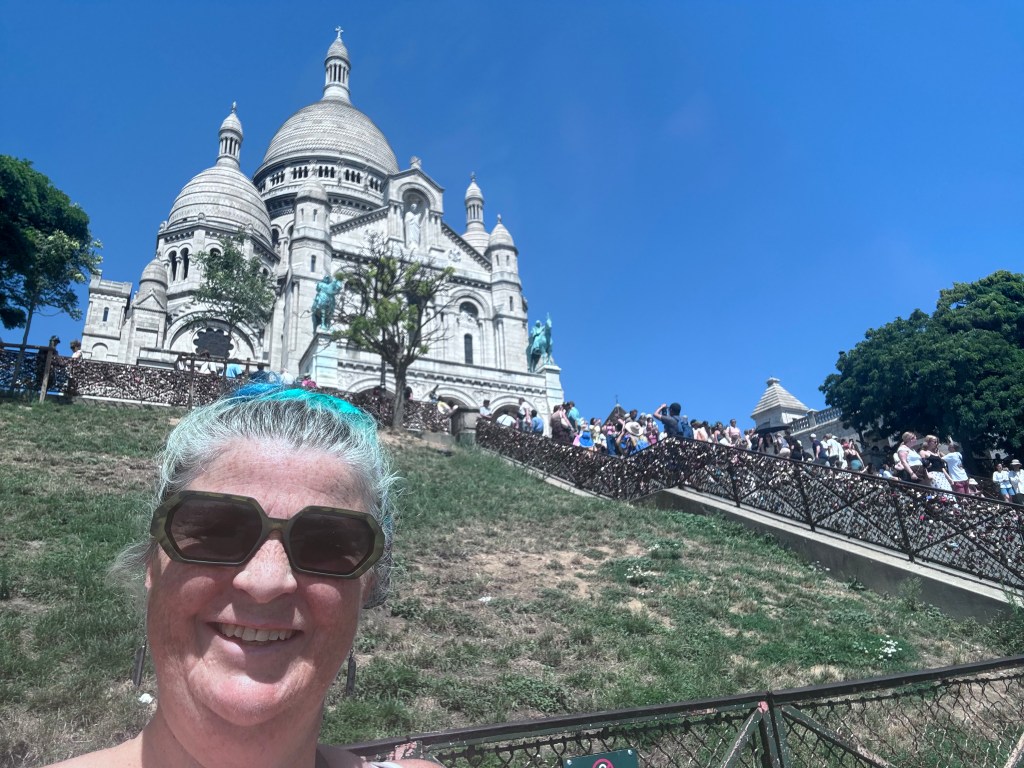
Montmartre has been the artistic heart of Paris for centuries, once home to famous painters such as Picasso, Renoir, and Van Gogh. Its winding cobblestone streets, cafés, artists painting portraits in the square, and panoramic views over Paris make it one of the city’s most beloved neighborhoods.

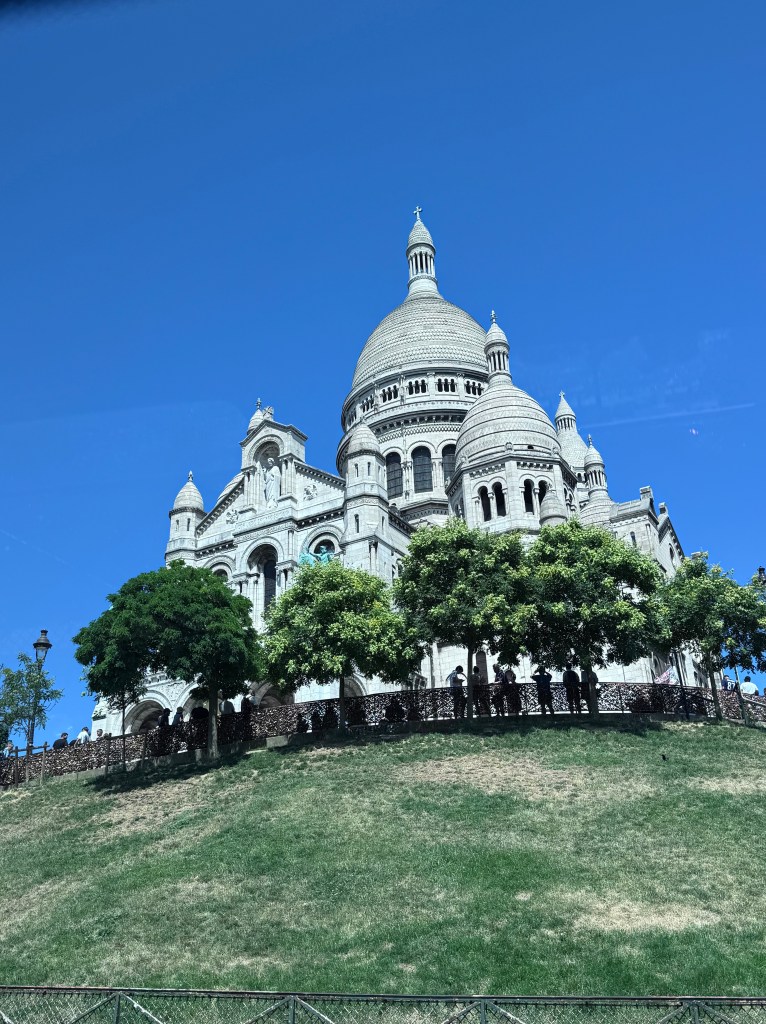
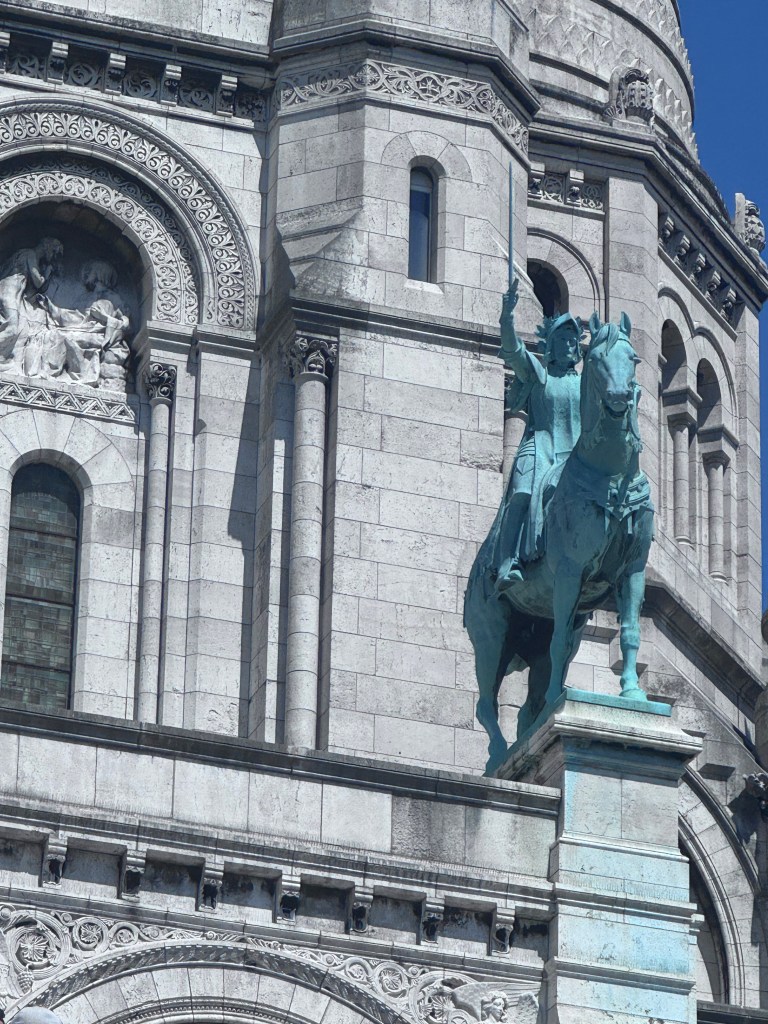
At the summit stands the magnificent Basilica of Sacré-Cœur. Construction began in 1875 and was completed in 1914. Built from a unique white travertine stone that actually becomes brighter over time, the basilica almost glows against the Paris skyline. Inside, one of the world’s largest mosaics depicts Christ in Majesty, and visitors from around the world come to admire both its beauty and its breathtaking views across the city.

One thing I particularly enjoyed was all of the outdoor cafés equipped with cooling mist systems. With temperatures soaring, the gentle mist made sitting outside surprisingly comfortable.

One fascinating thing we learned was about the guest rooms operated by the basilica. Pilgrims and visitors can stay overnight for a modest donation—far less than a typical Paris hotel. The accommodations are intentionally simple, often consisting of little more than a bed and basic furnishings, providing an affordable option for travelers and those seeking a quiet place for reflection in one of the world’s most expensive cities.

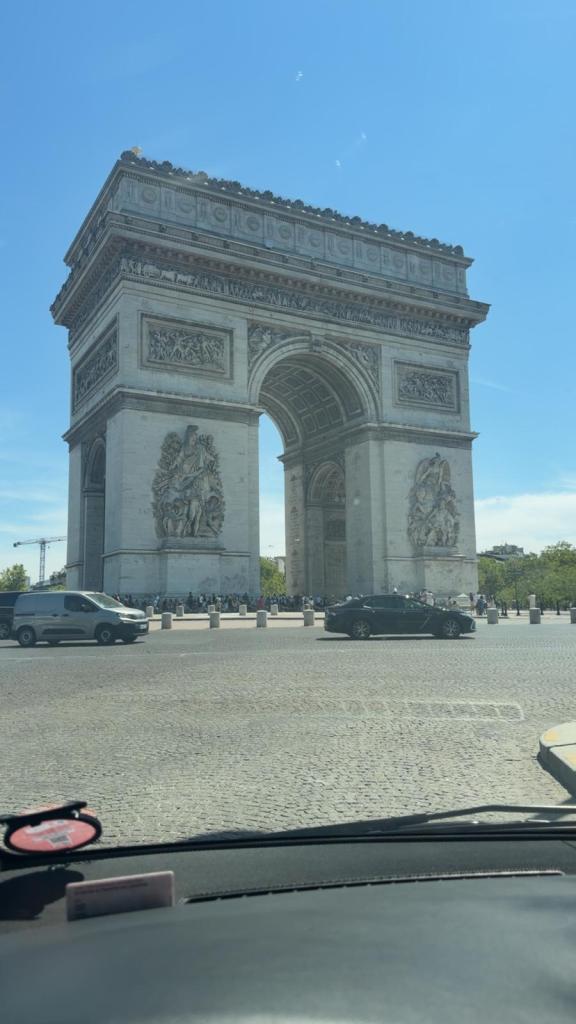
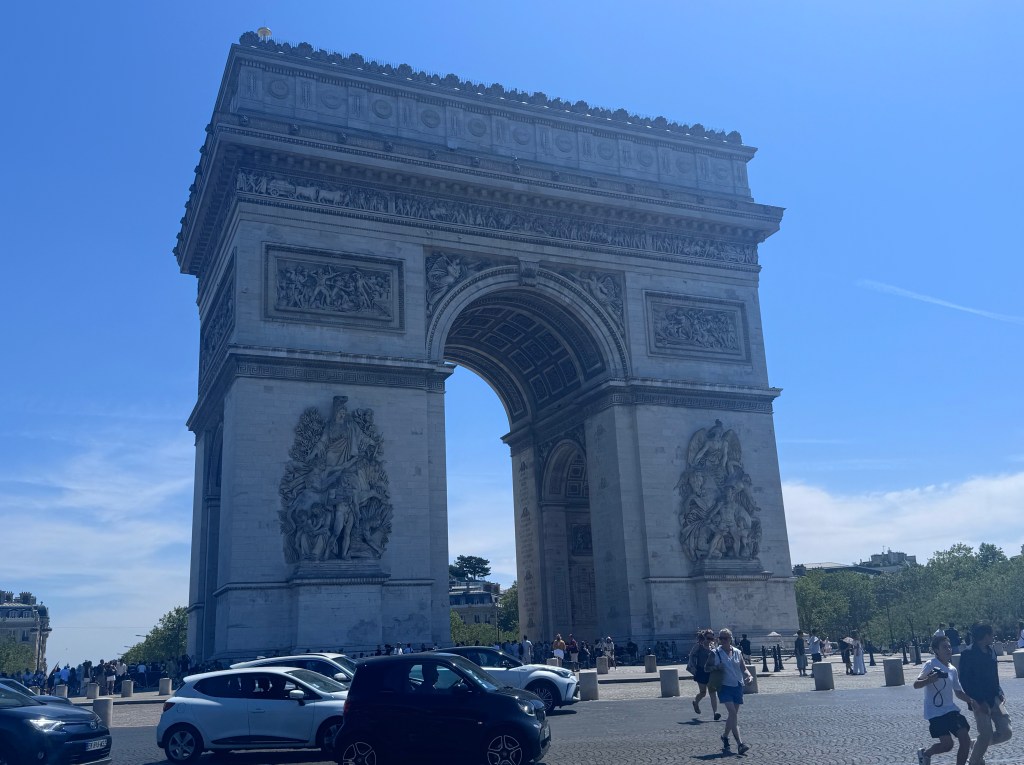
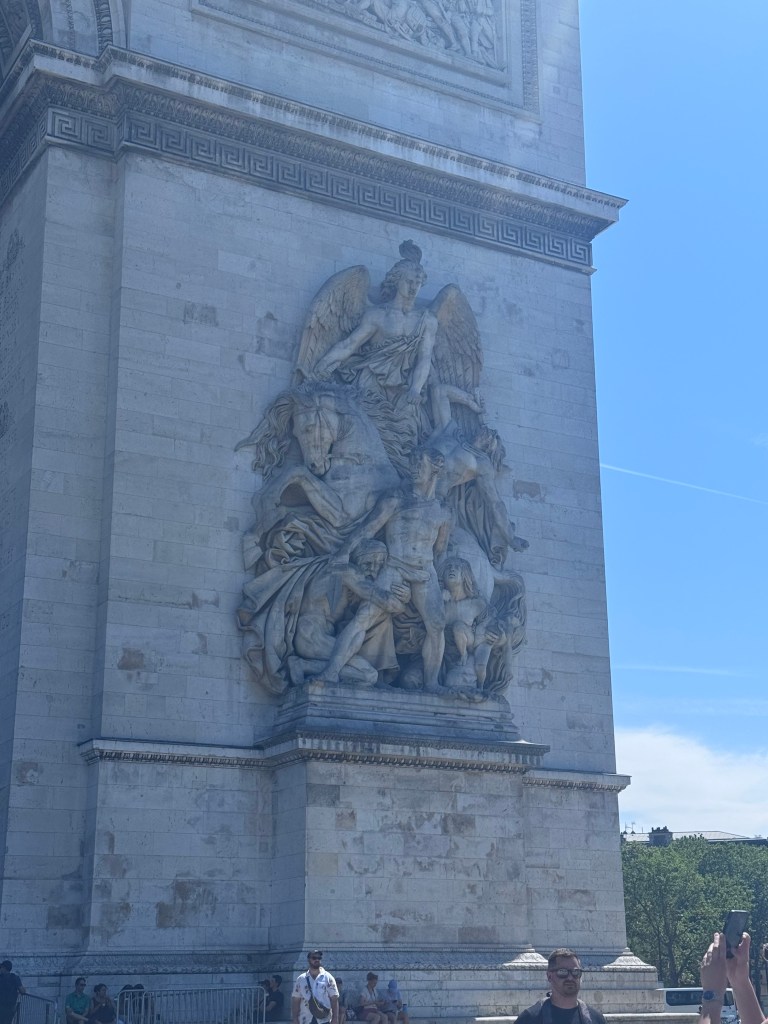
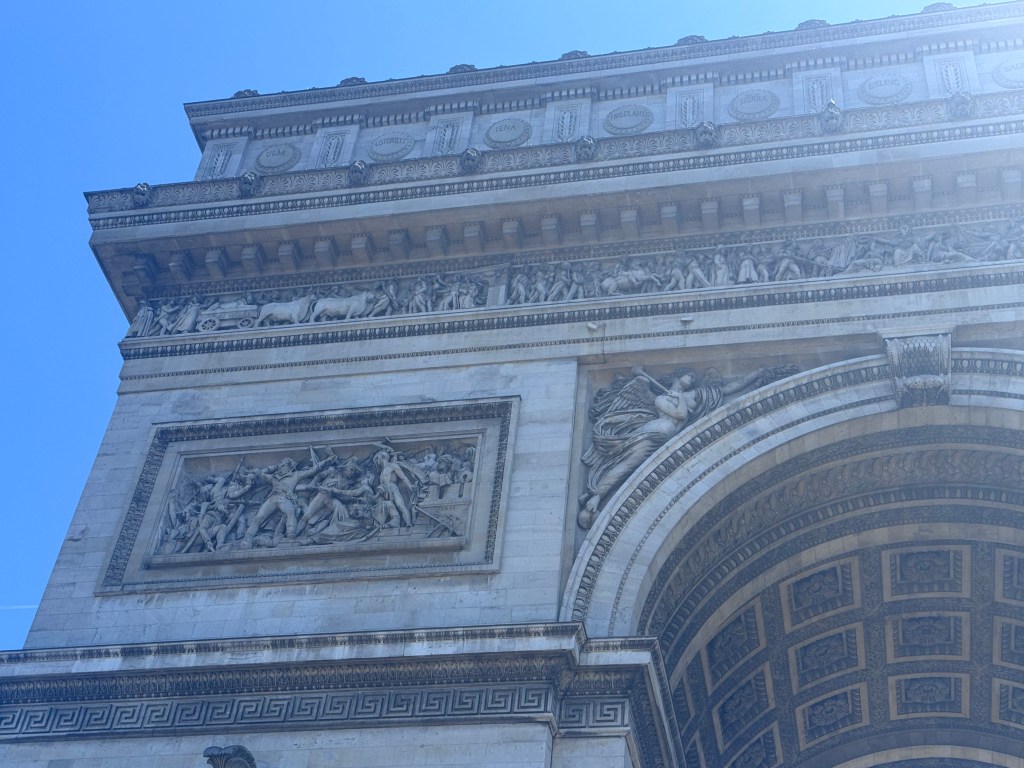
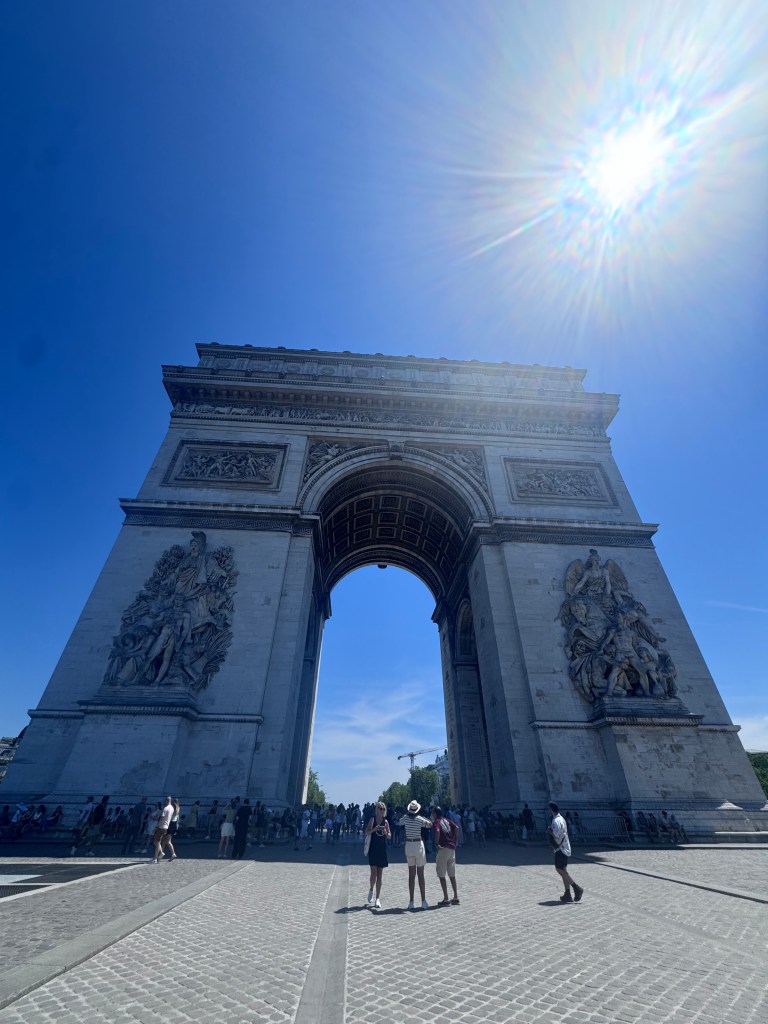
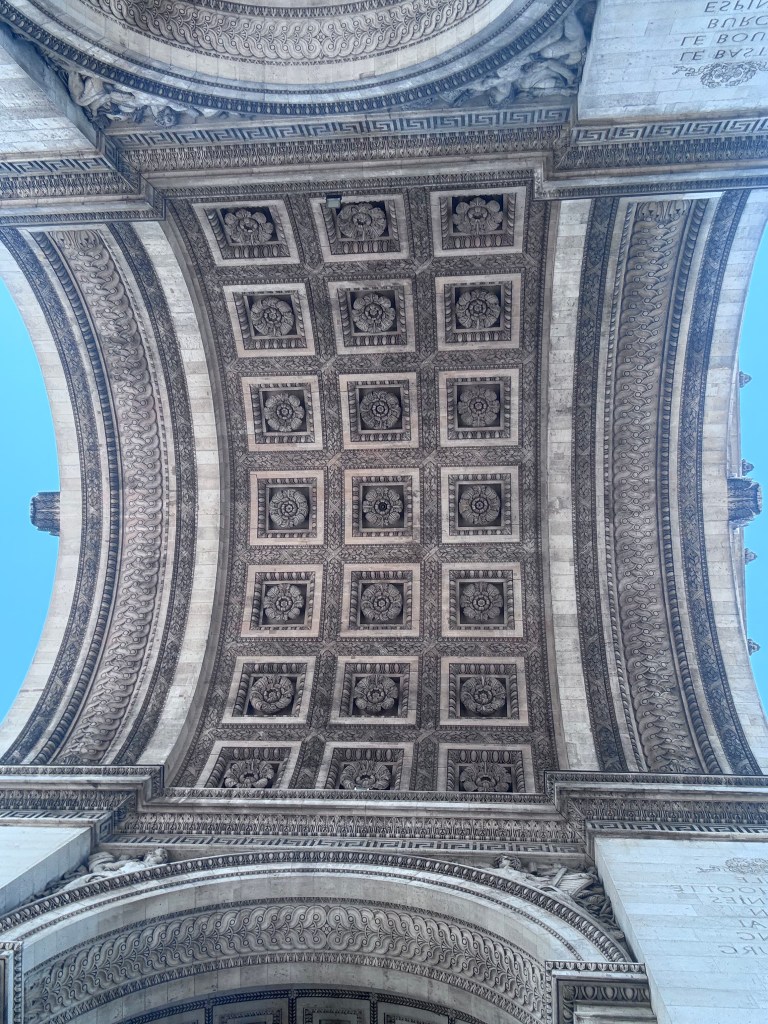
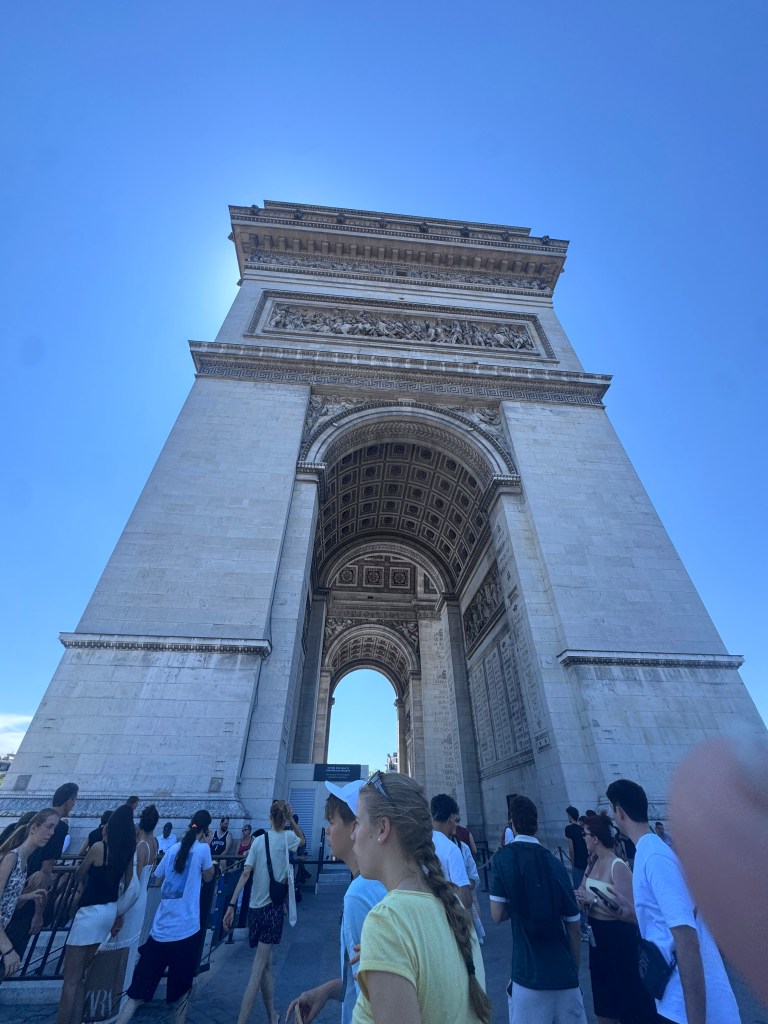
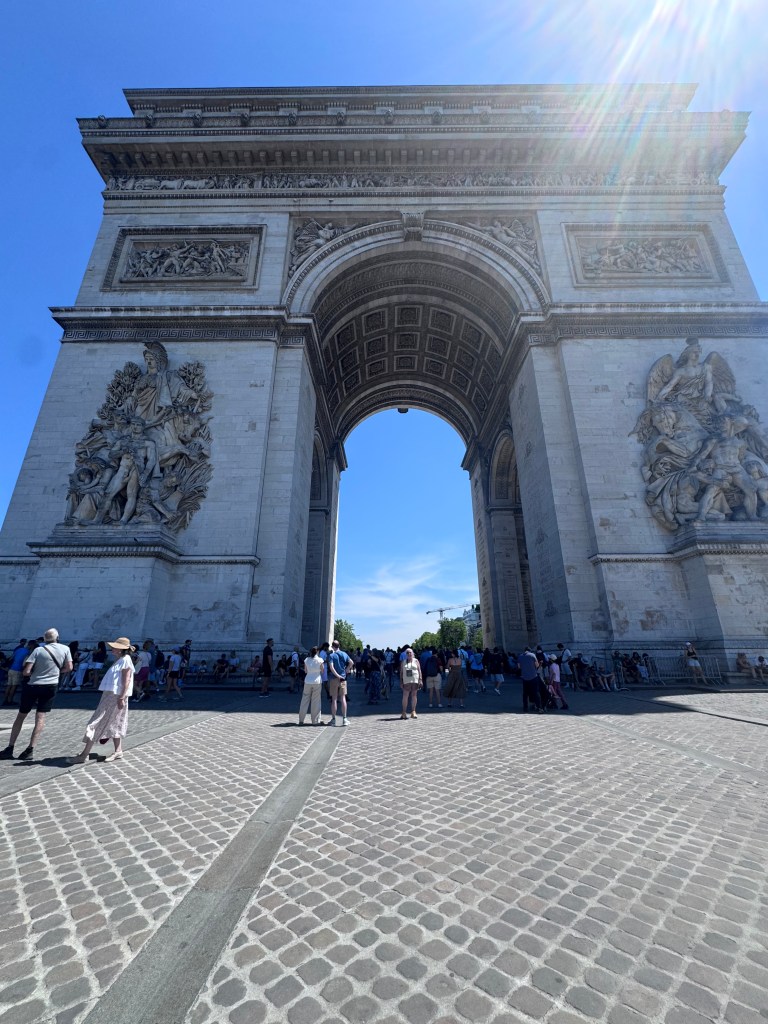
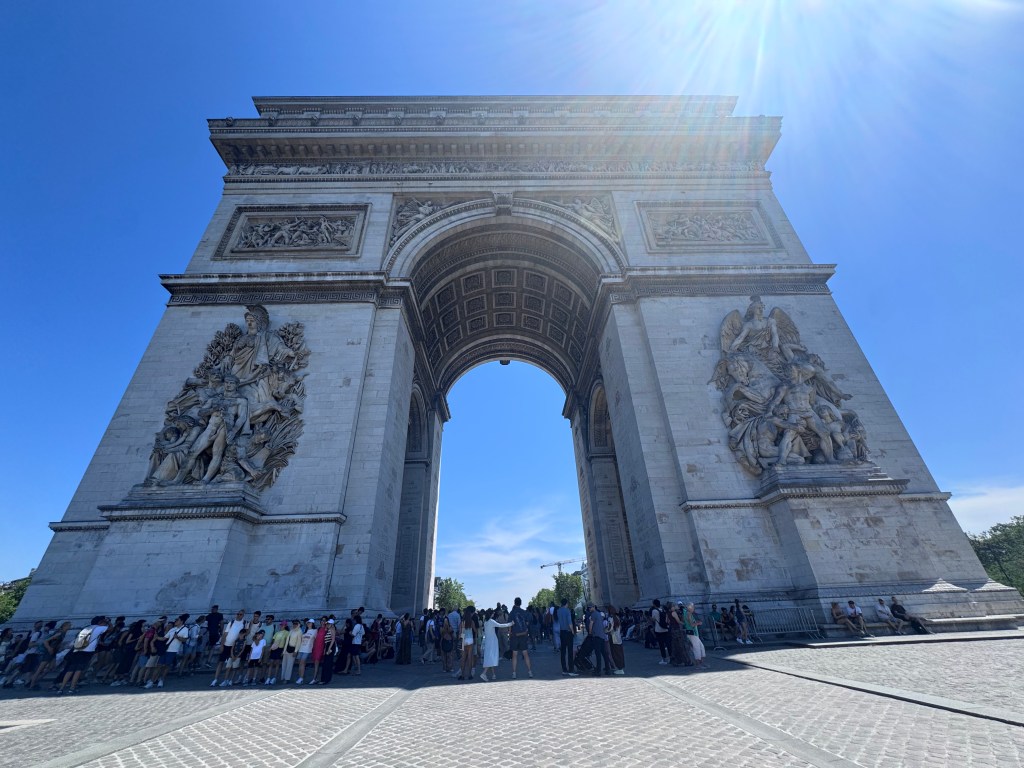
From there, Nesrine drove us to the Arc de Triomphe.

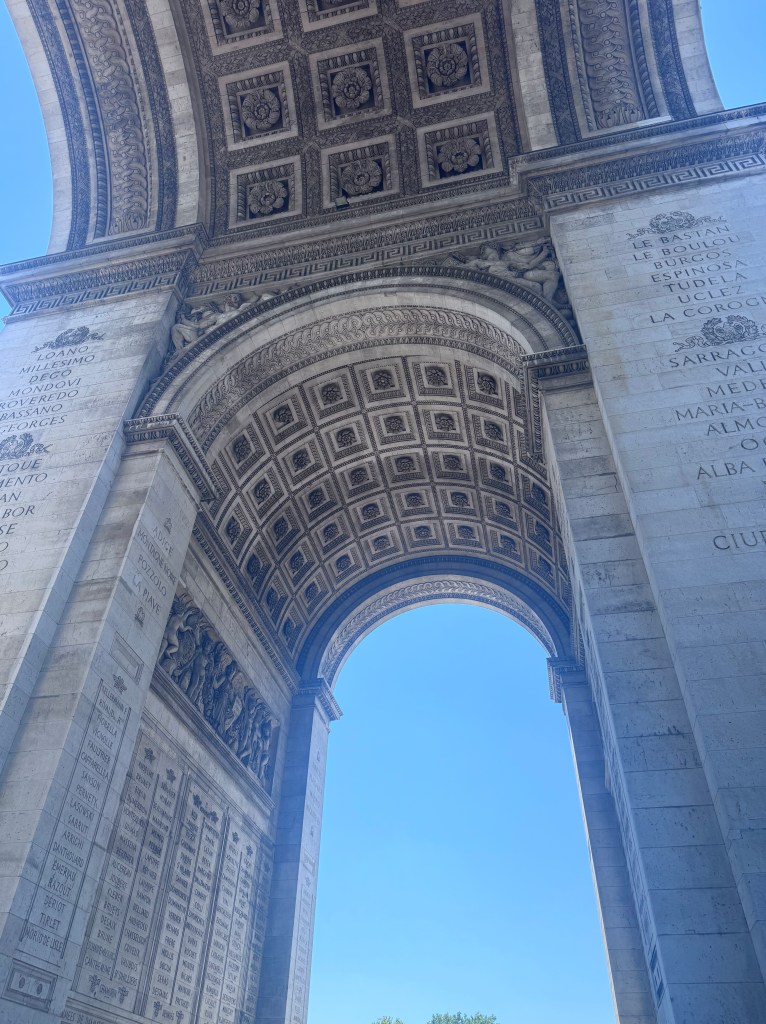
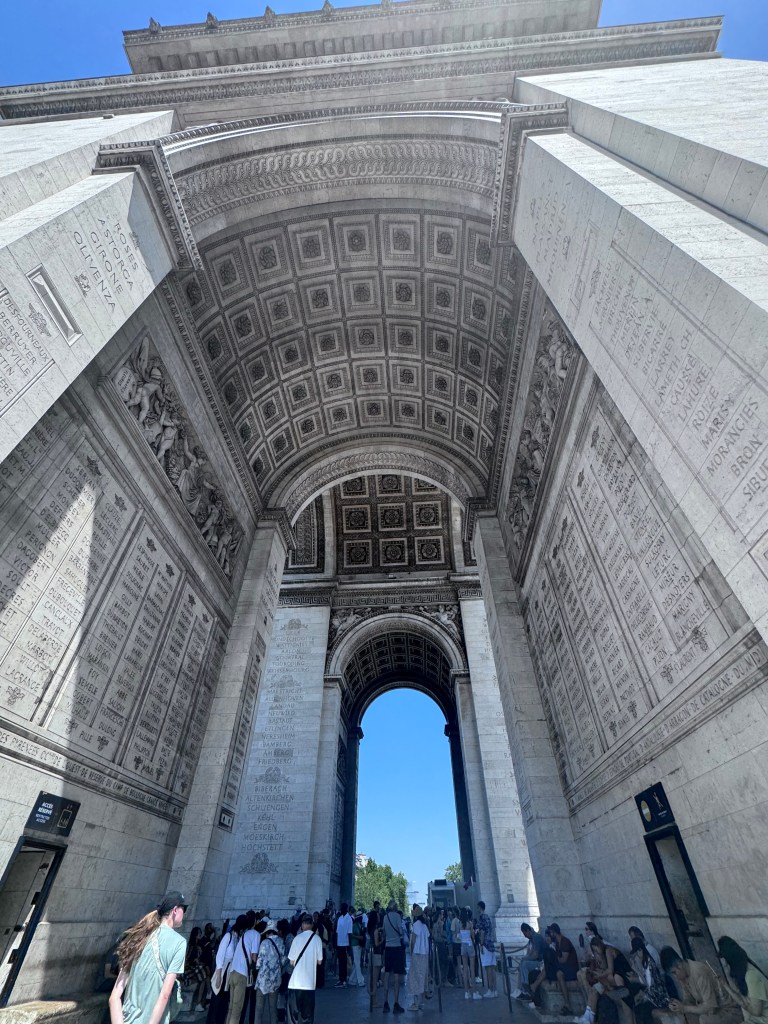
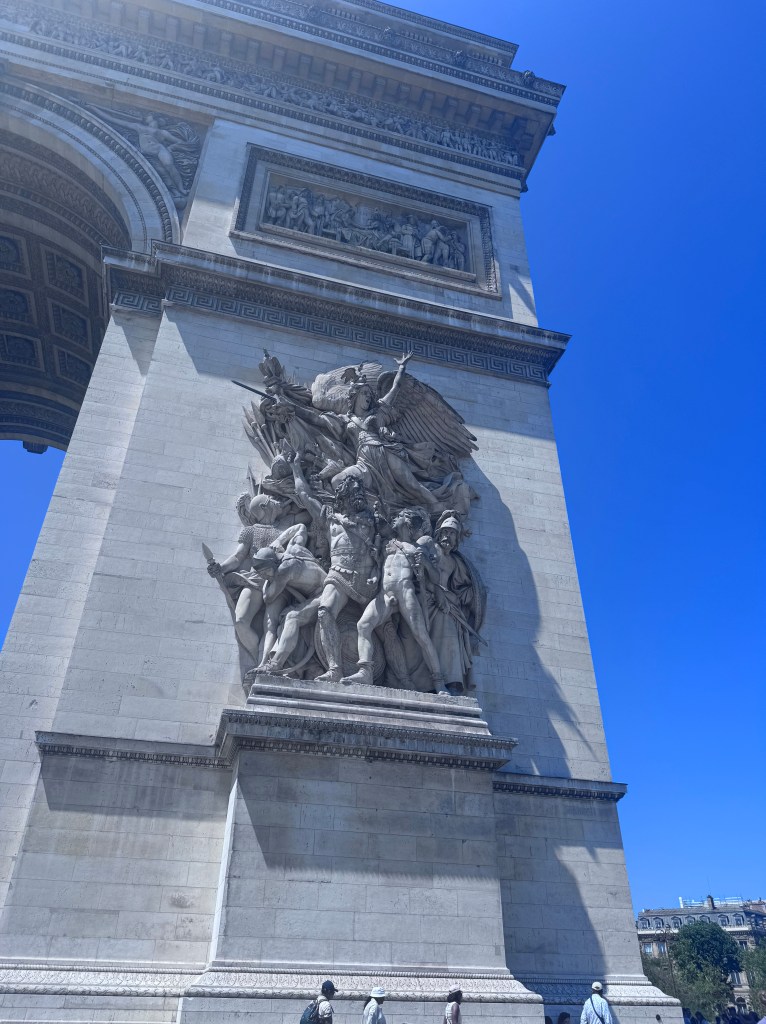
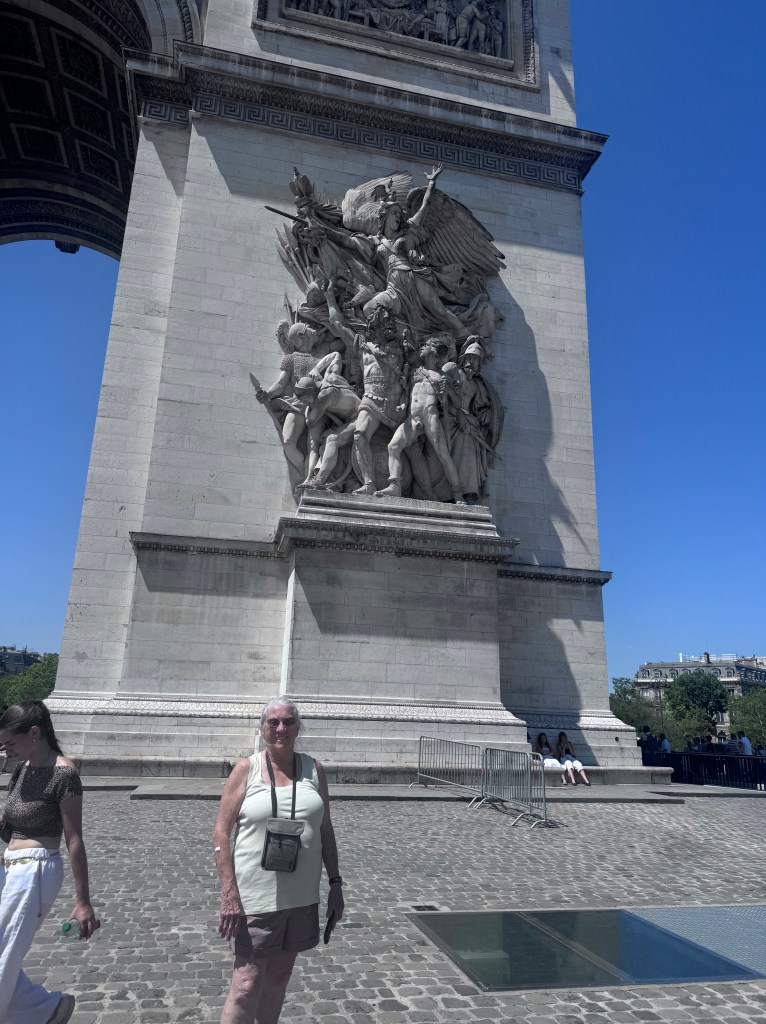
Pictures simply cannot prepare you for its size.

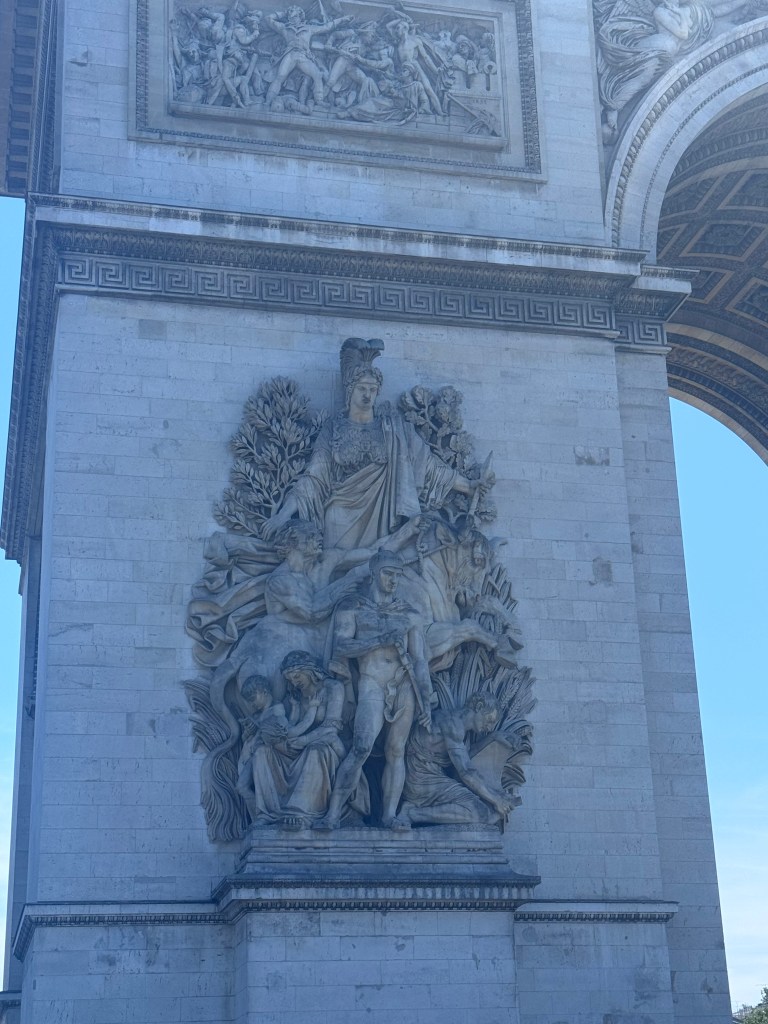
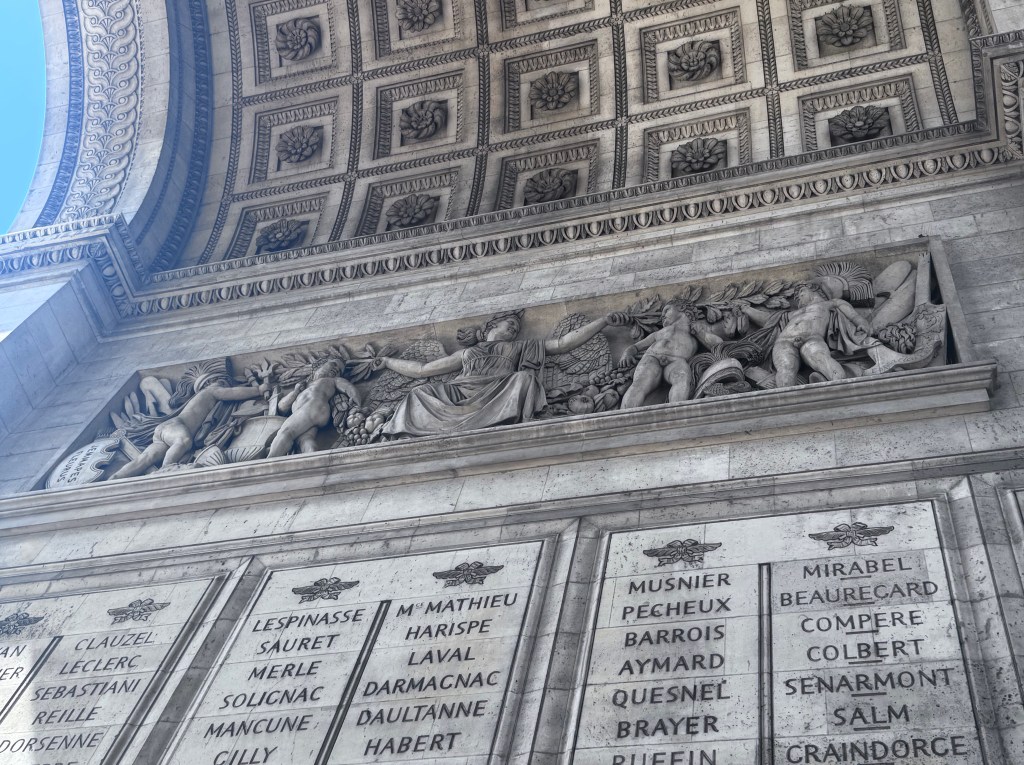
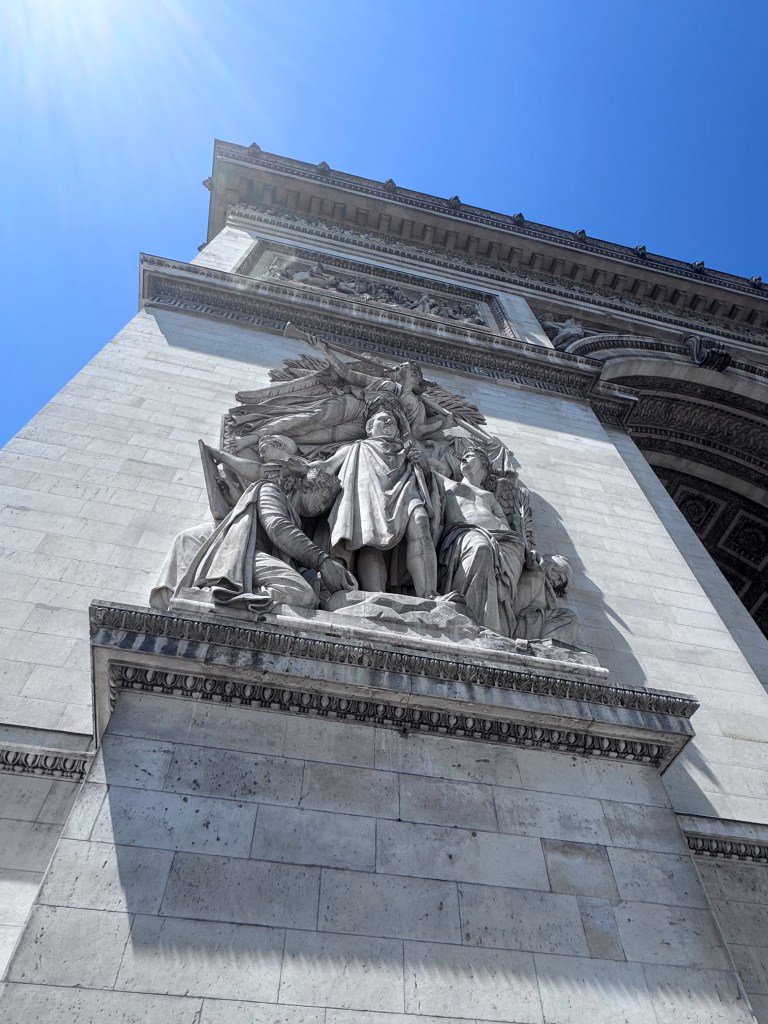
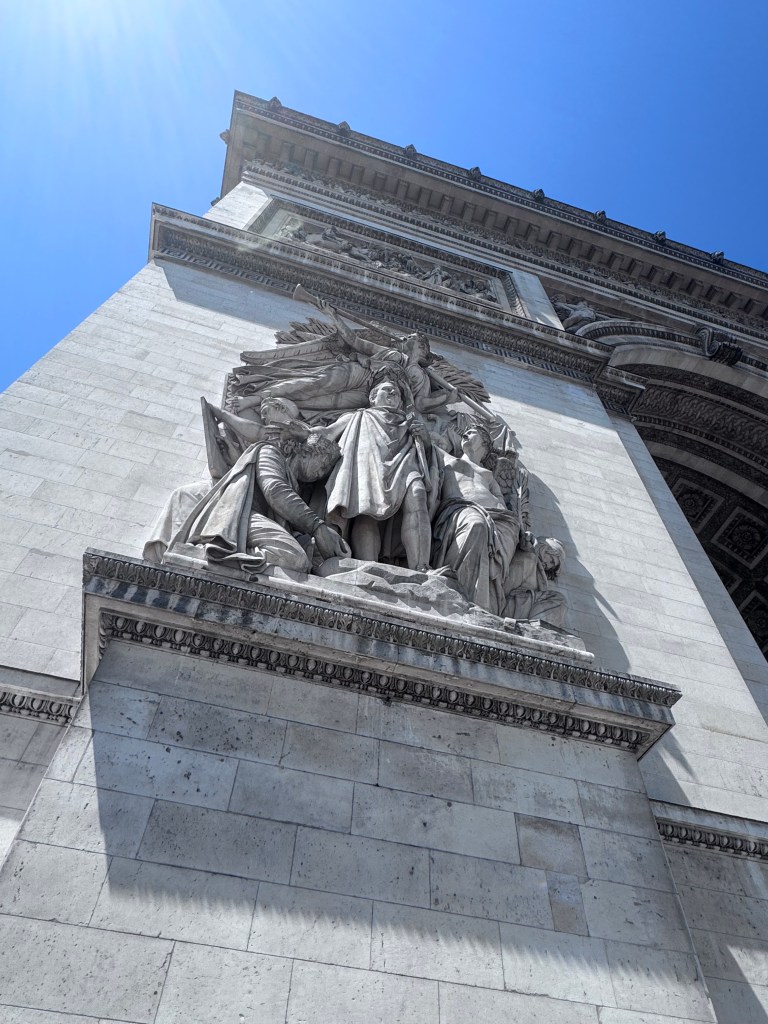
Commissioned by Napoleon in 1806 after his victory at Austerlitz, the monument honors those who fought and died for France during the French Revolutionary and Napoleonic Wars. The massive relief sculptures carved into each side depict scenes of courage, sacrifice, and victory, while the names of hundreds of French generals are engraved into the stone. Beneath the arch lies the Tomb of the Unknown Soldier from World War I, where the Eternal Flame has burned continuously since 1923 in remembrance of those who never returned home. Standing beneath the enormous vaulted ceiling and looking up at the intricate carvings was truly awe-inspiring.
The rest of the afternoon felt like a whirlwind tour of Paris.

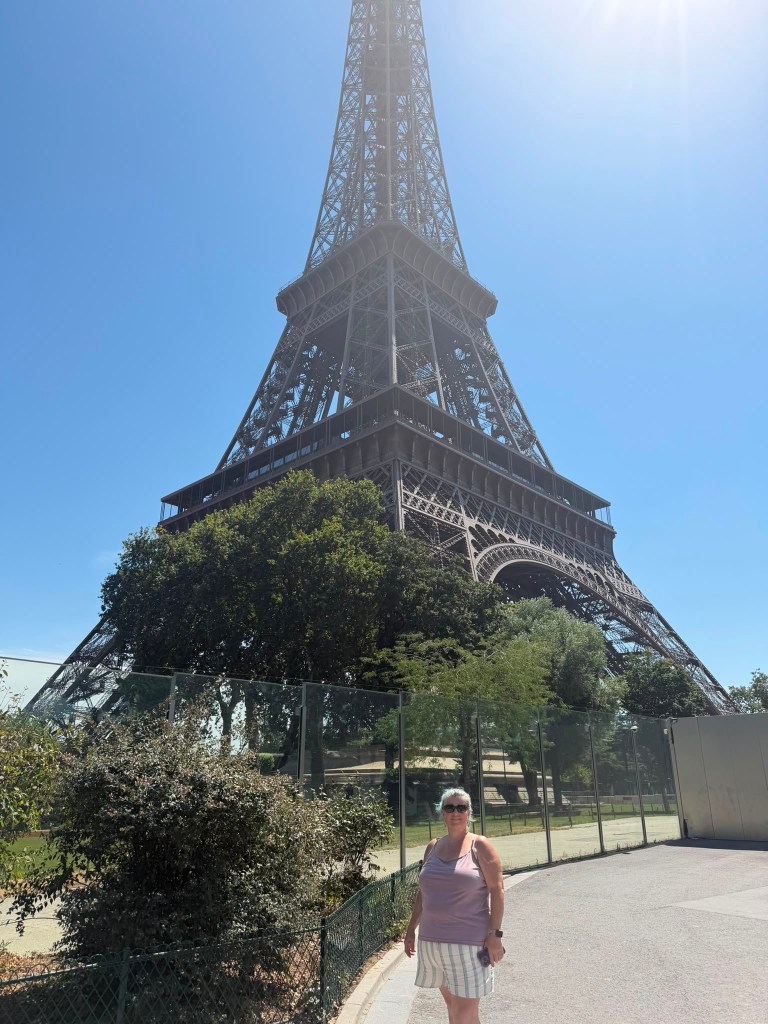
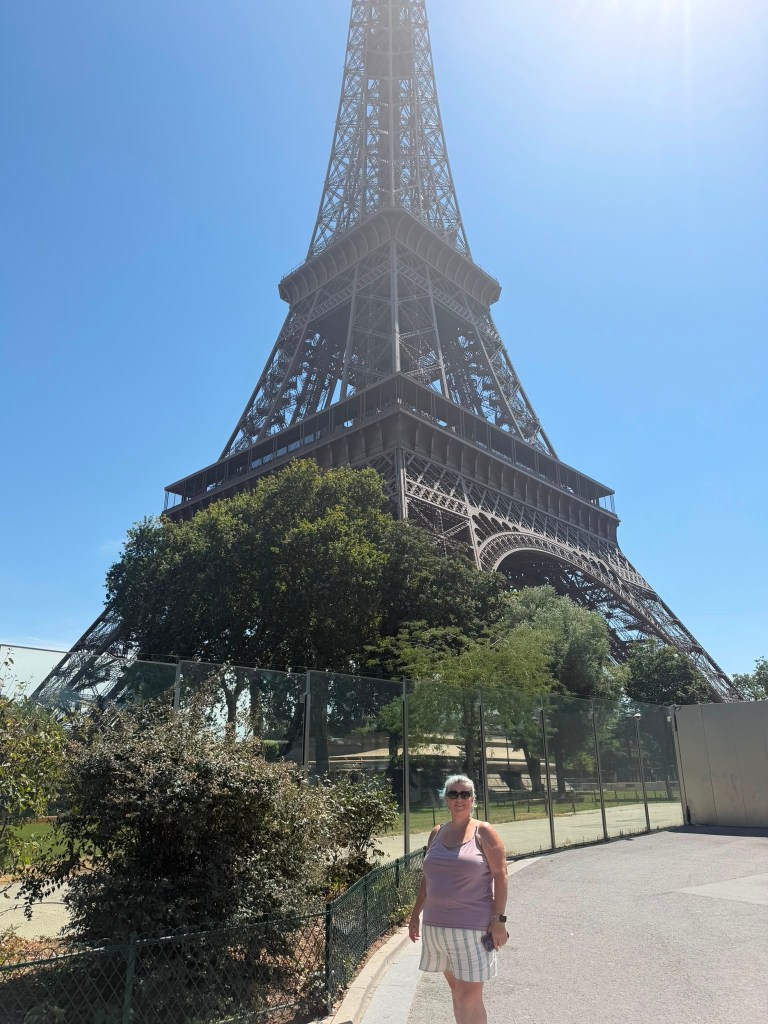
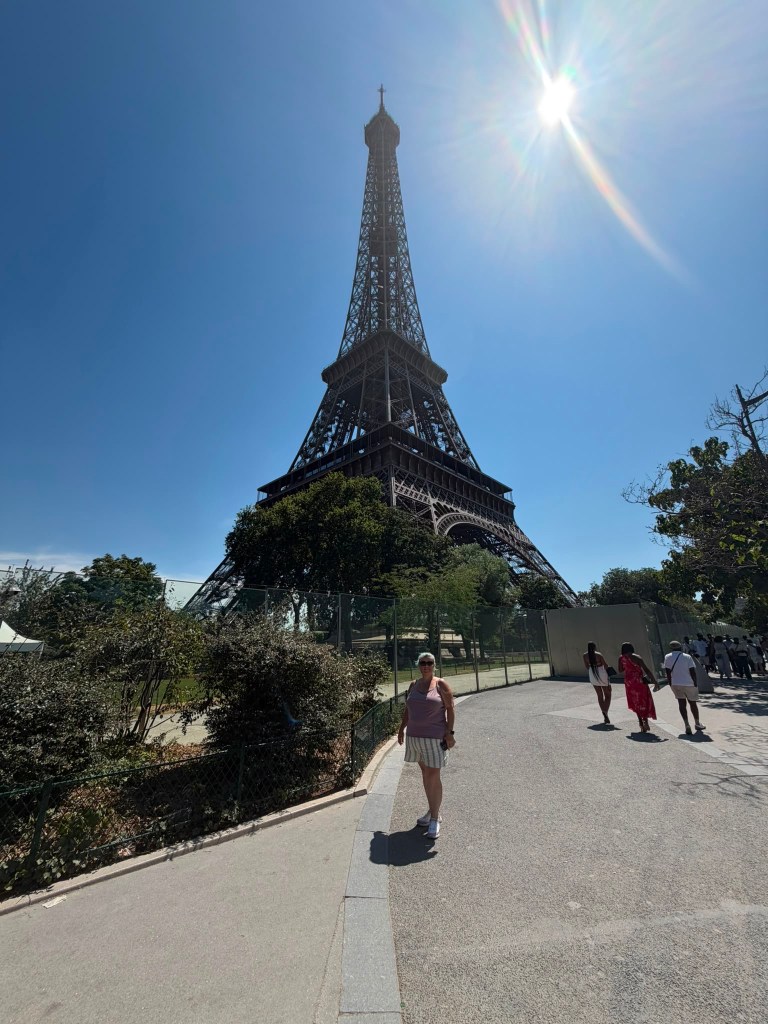
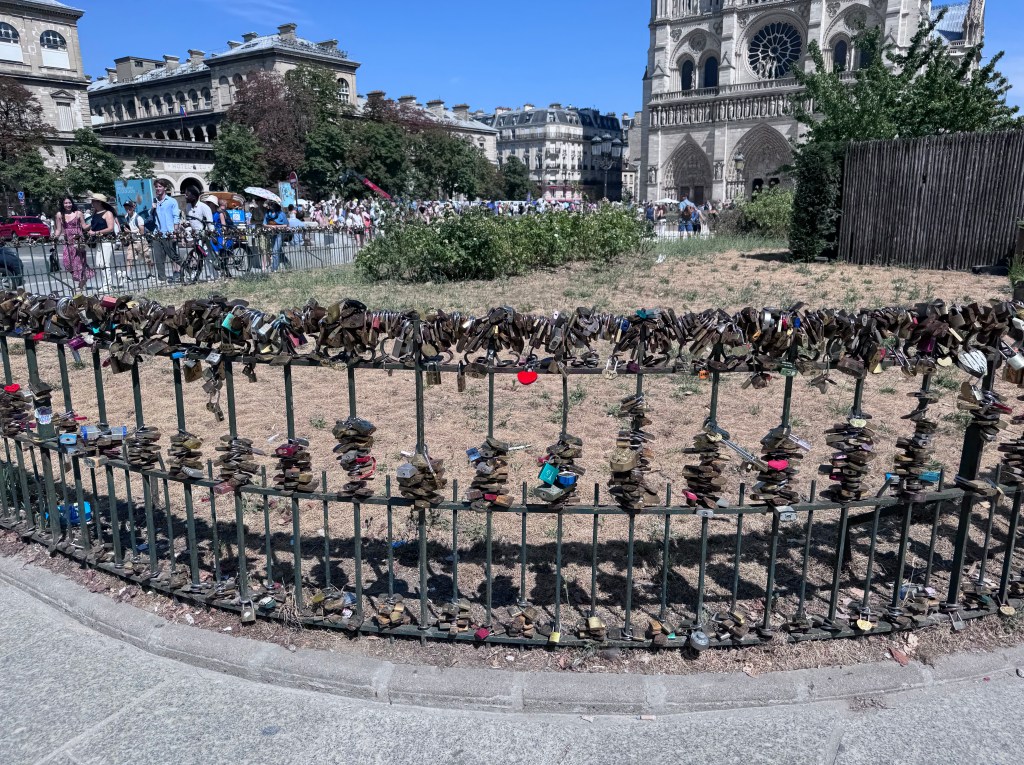
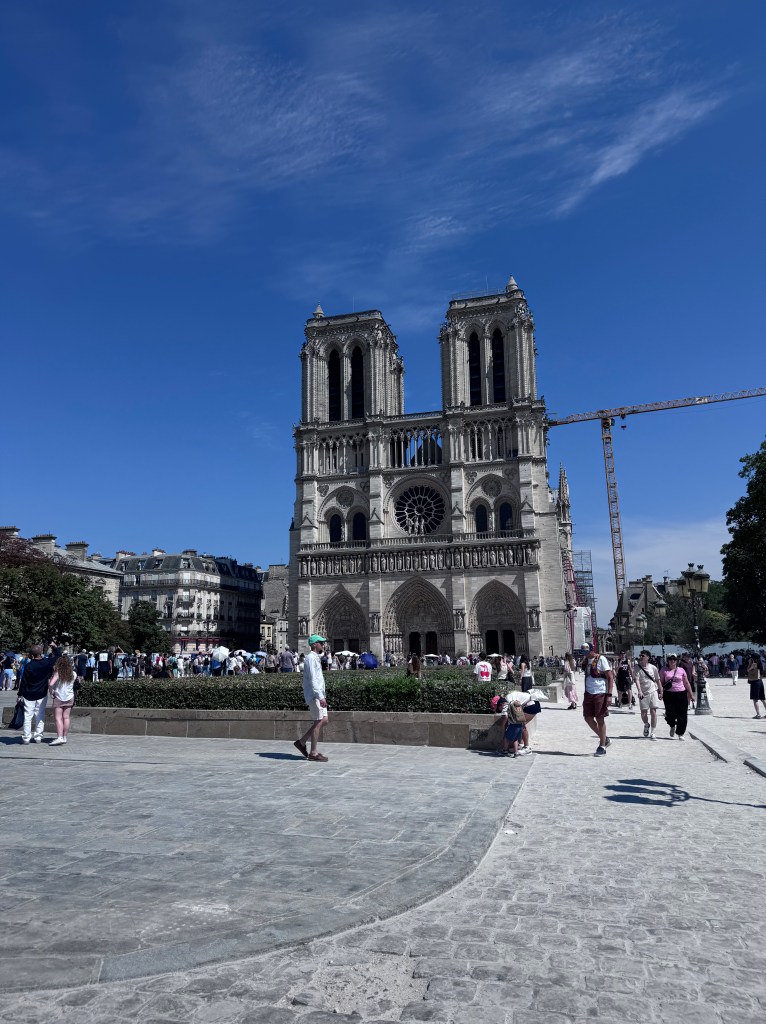
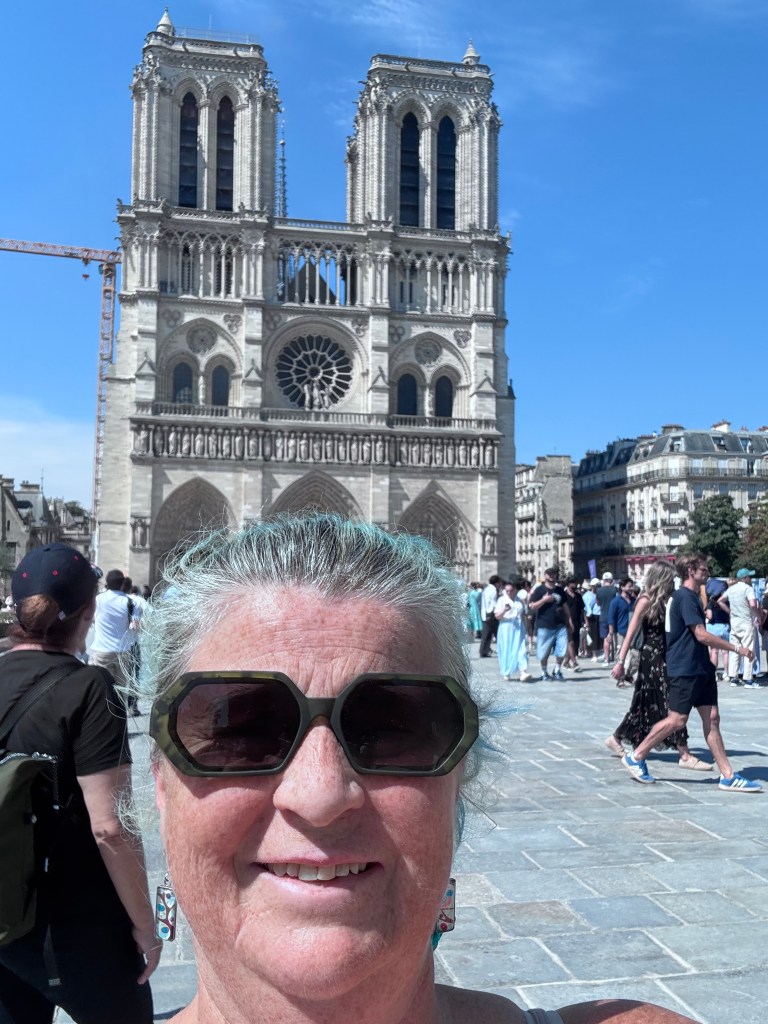
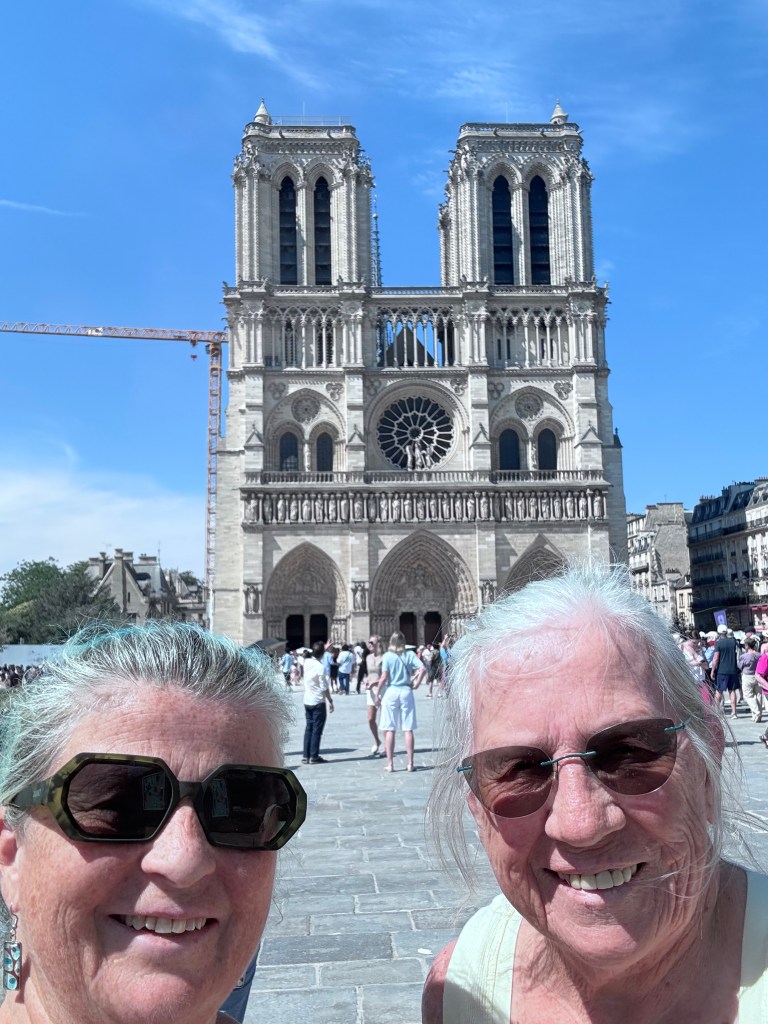
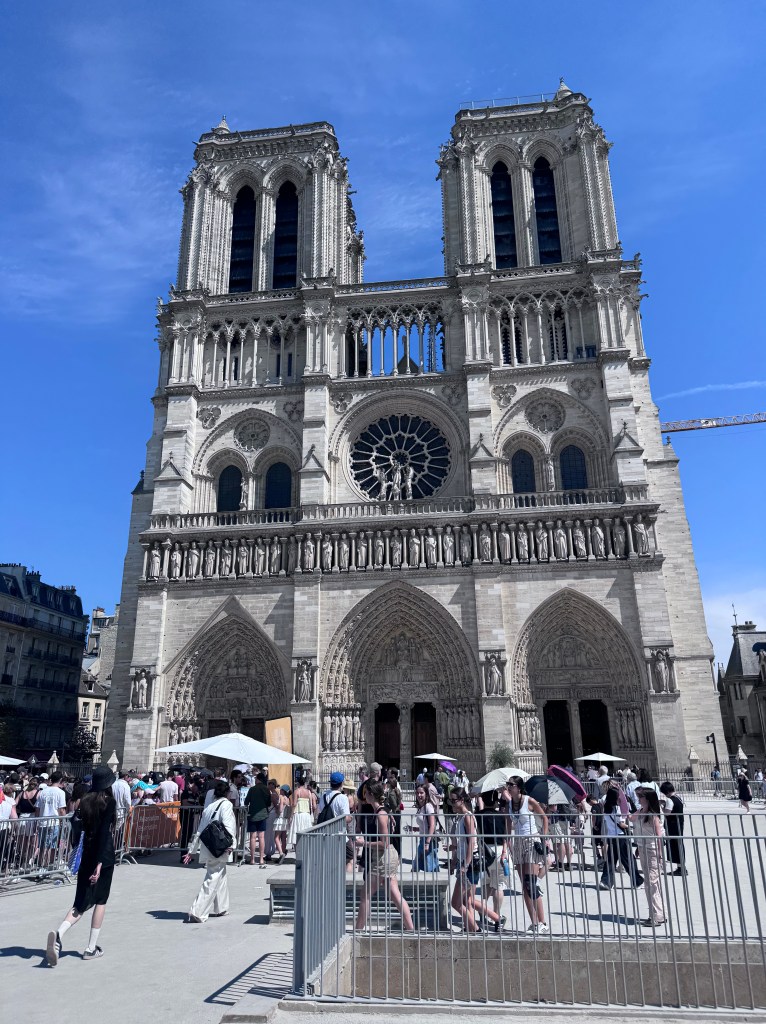
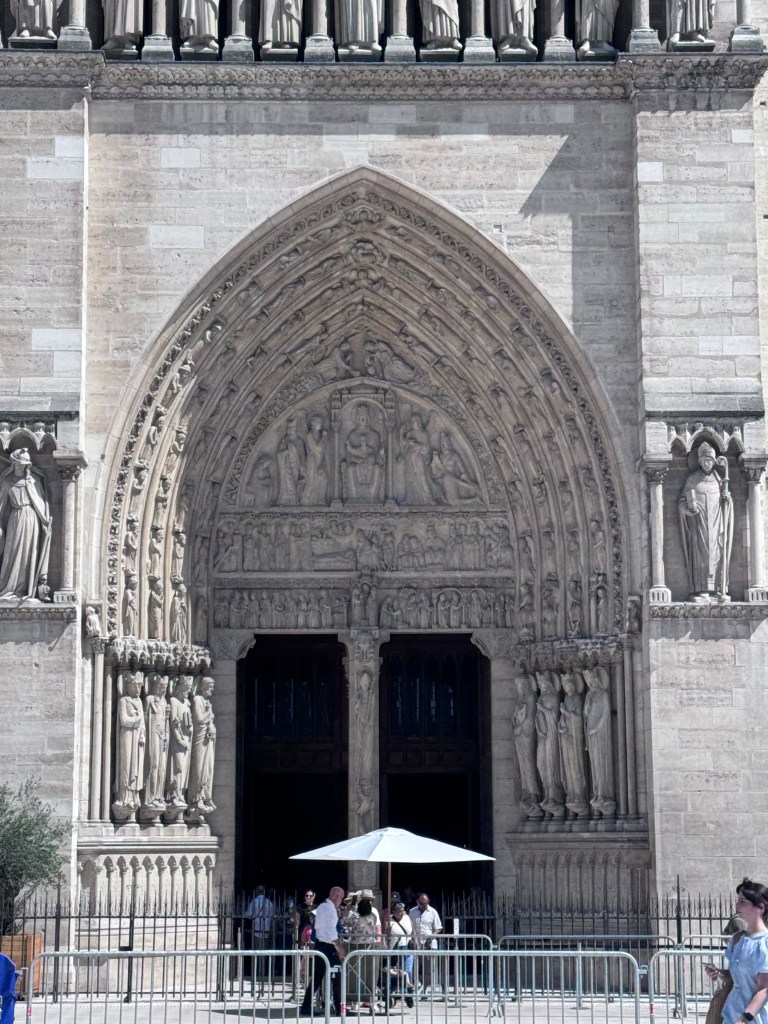
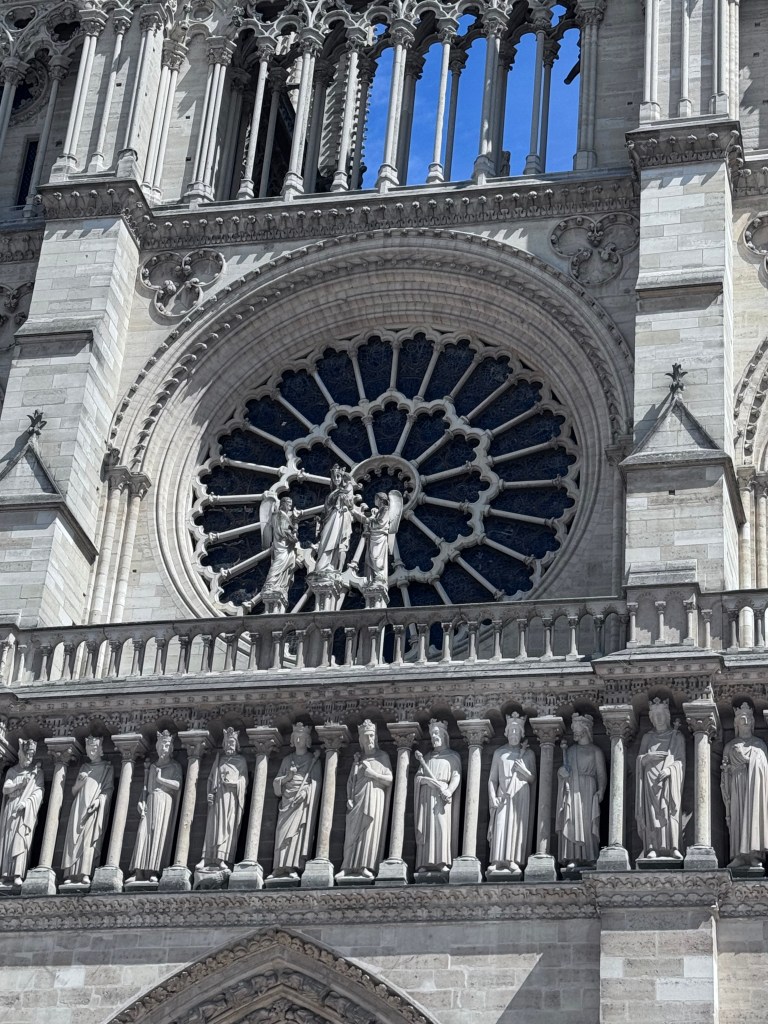
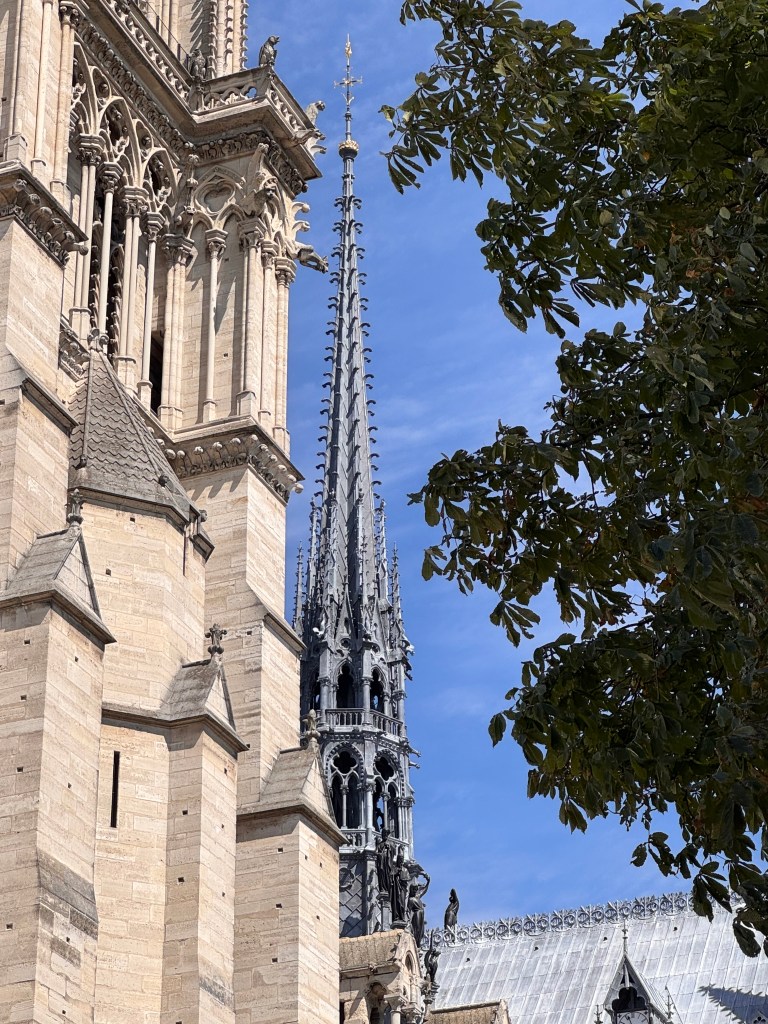
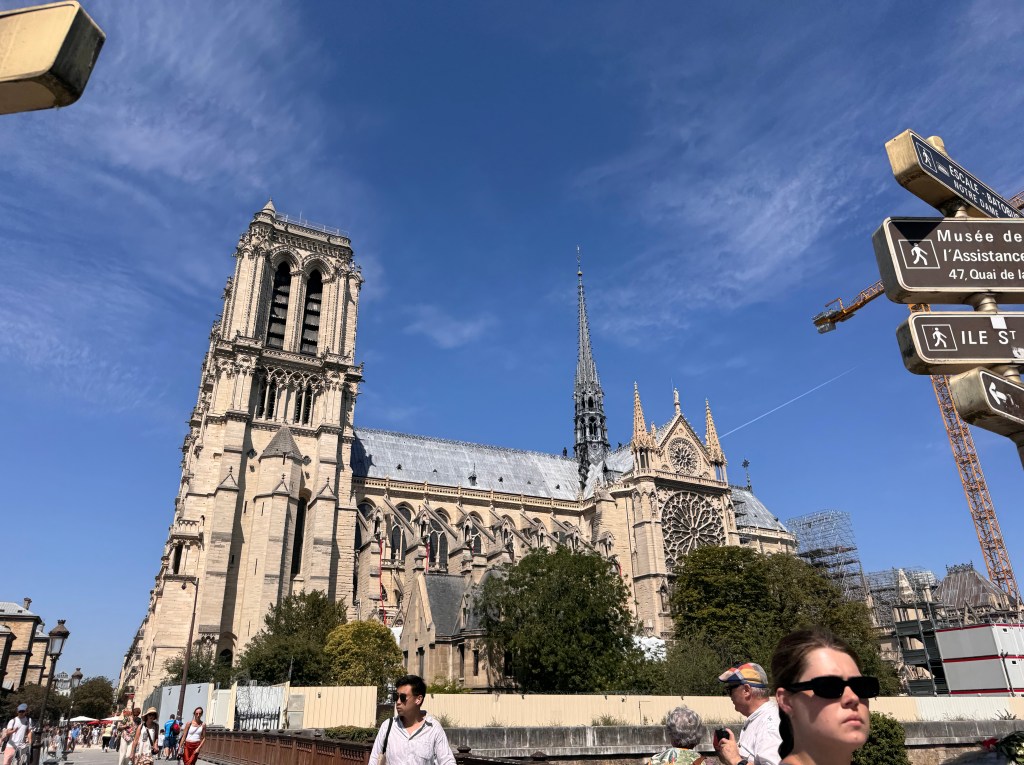
We admired the newly restored Notre-Dame Cathedral, whose stunning Gothic architecture once again dominates the Île de la Cité after years of restoration. We stopped at the Eiffel Tower, which somehow manages to be even more impressive in person than in photographs.

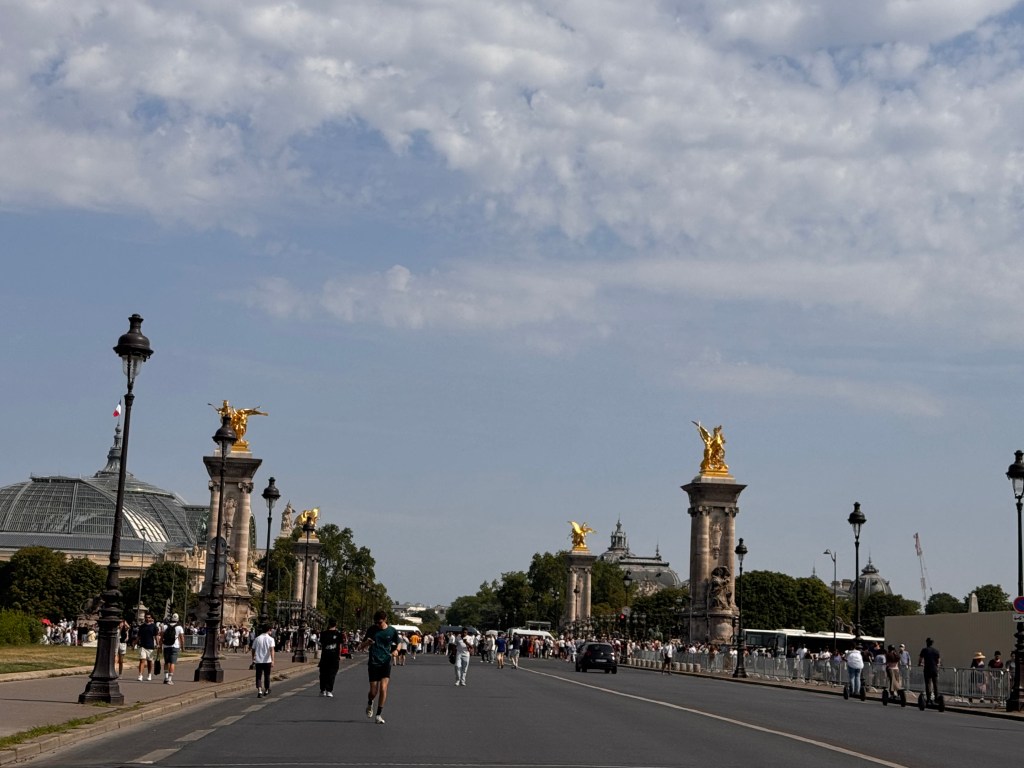
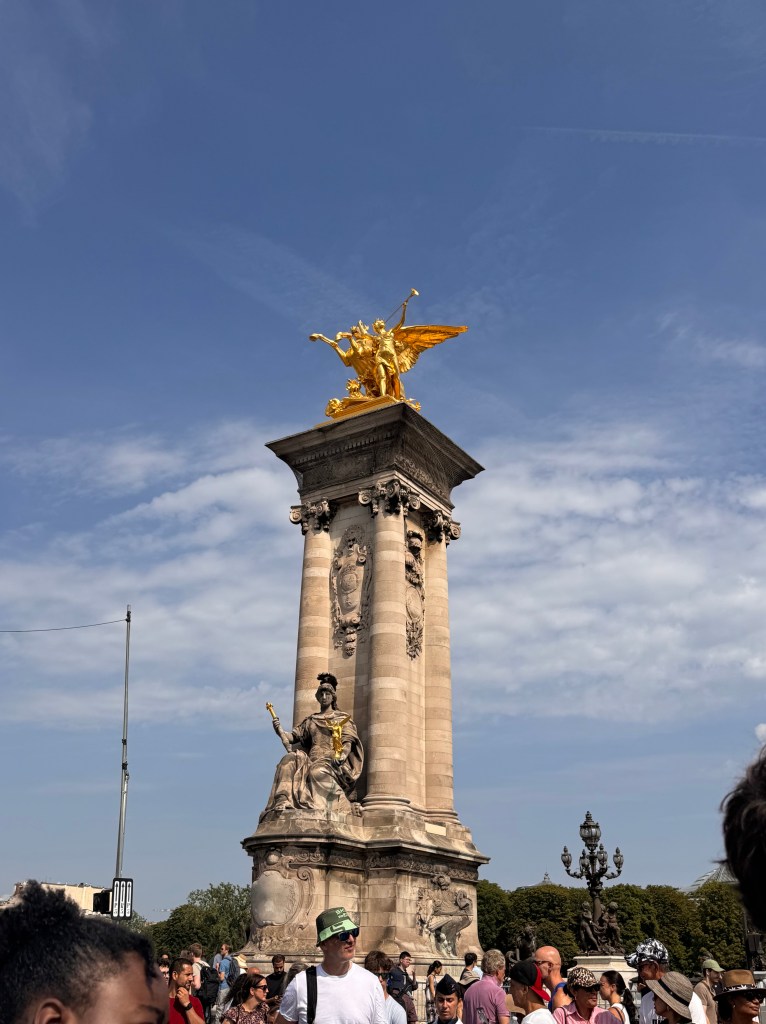
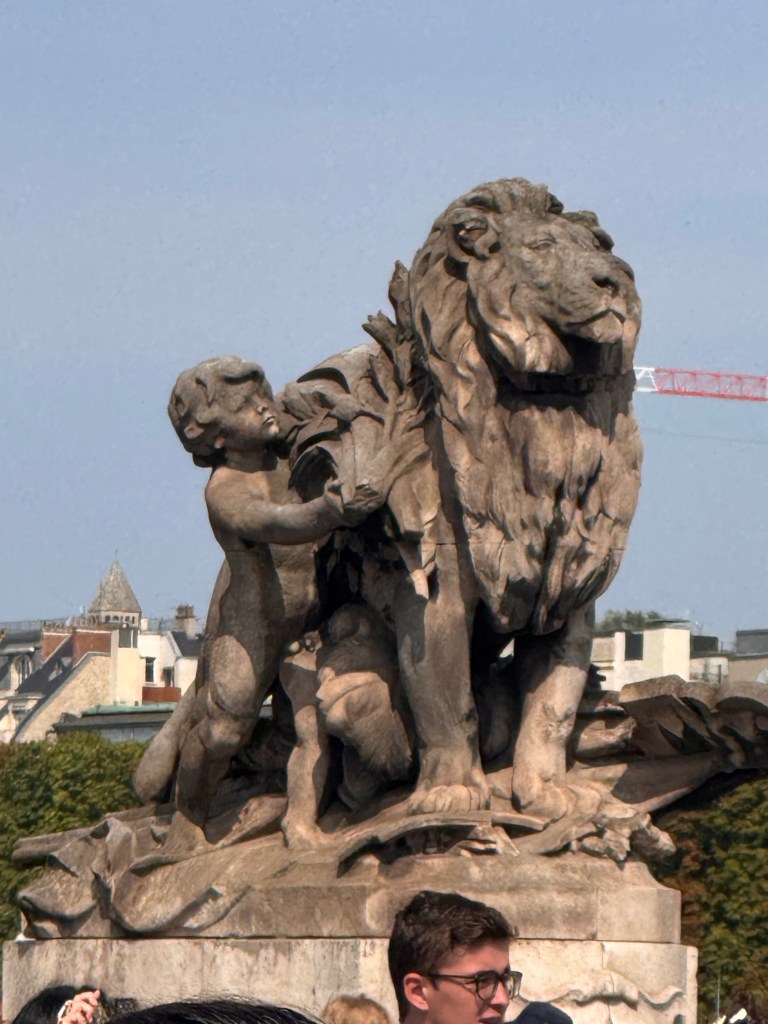
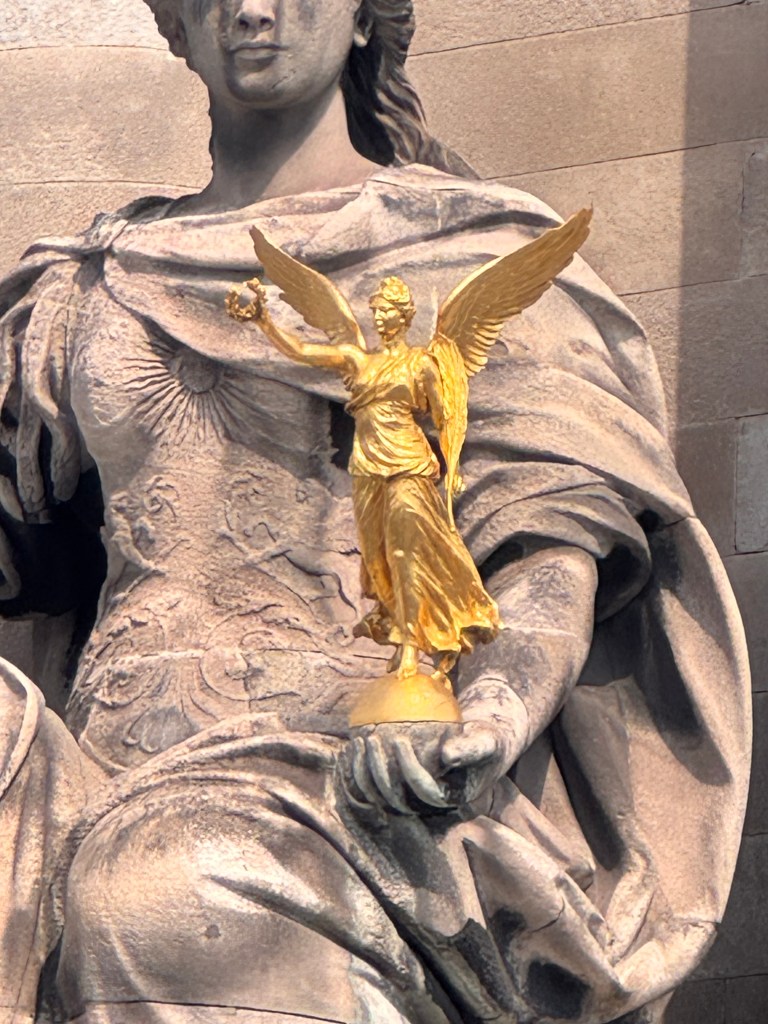
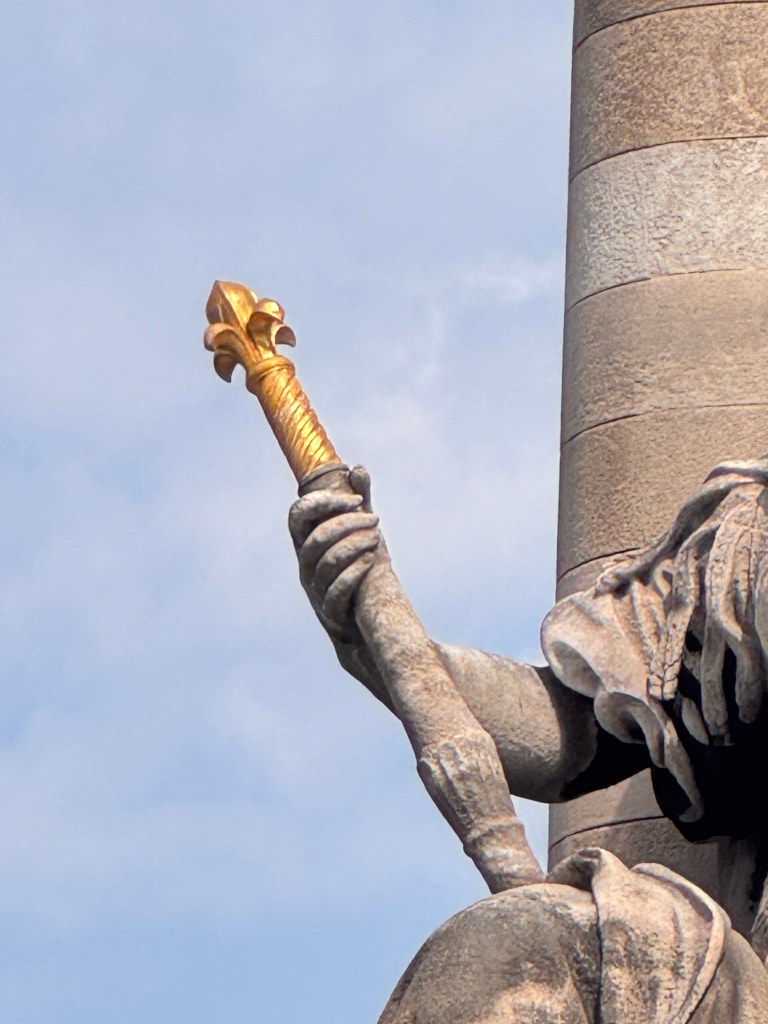
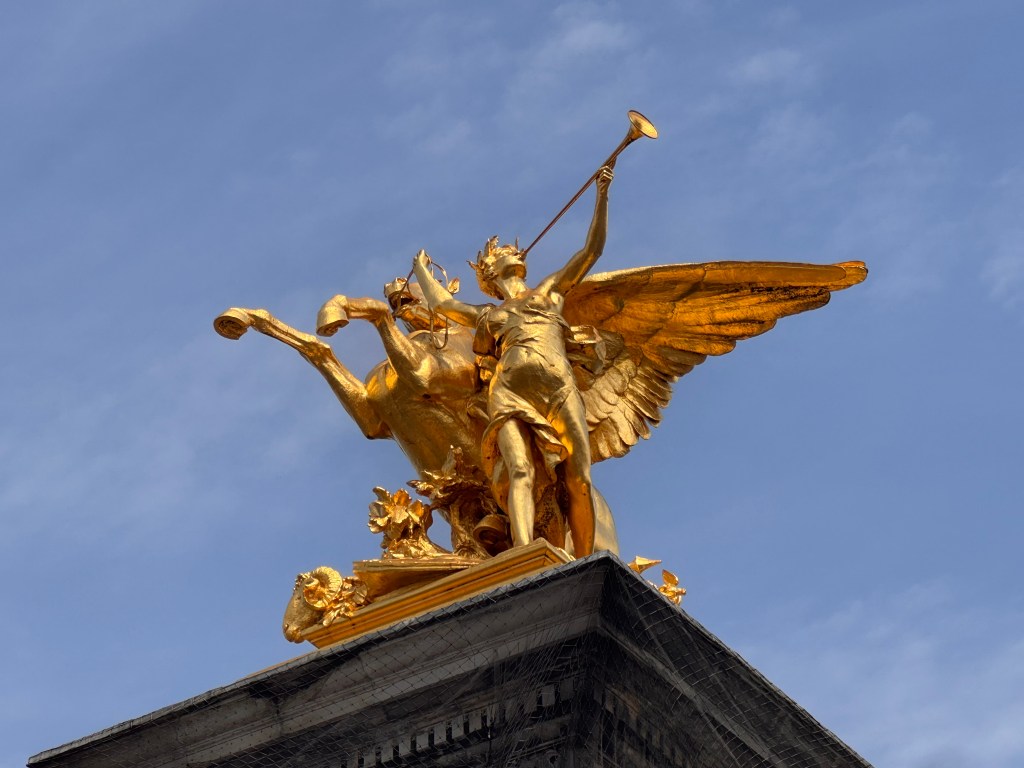
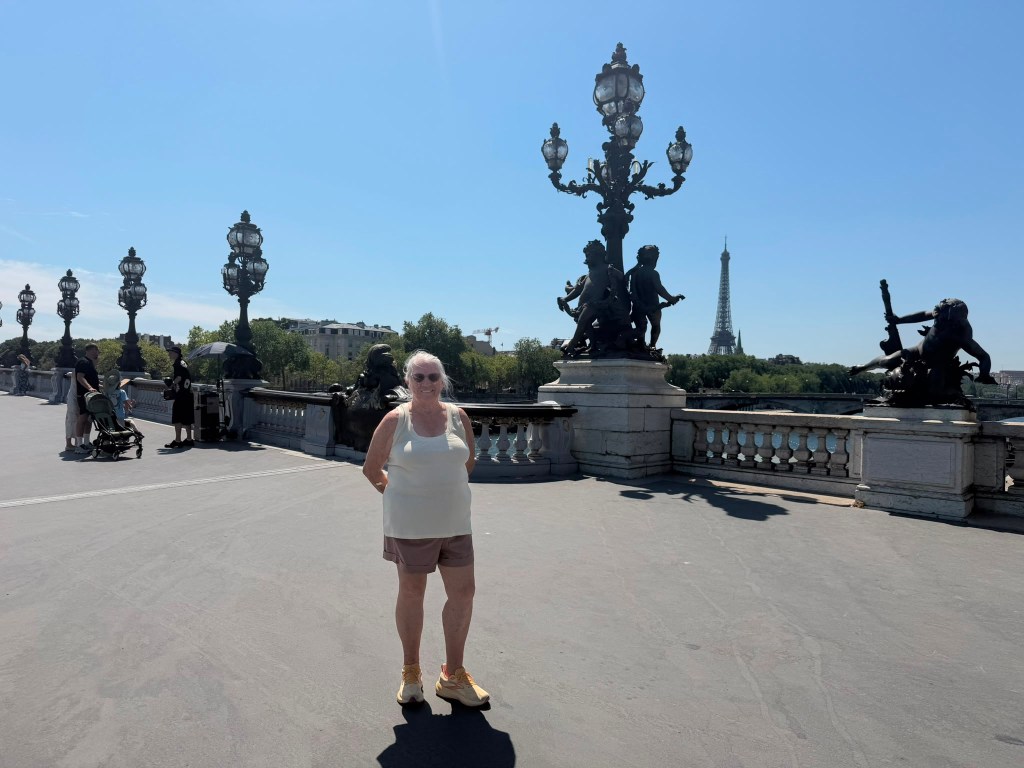
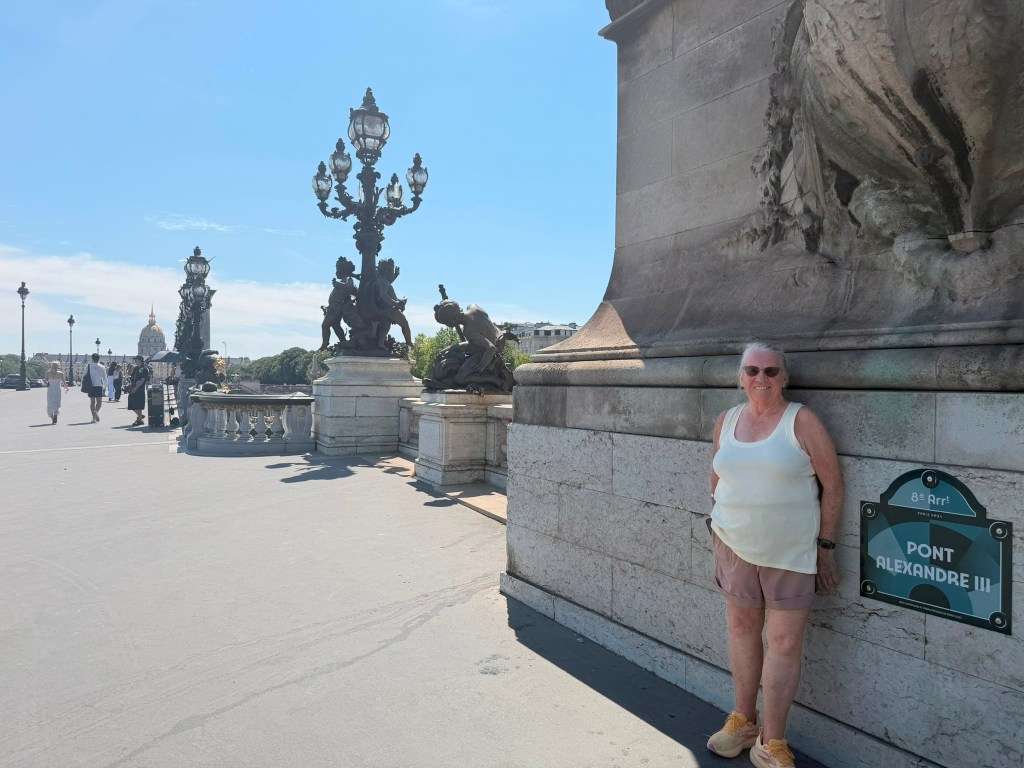
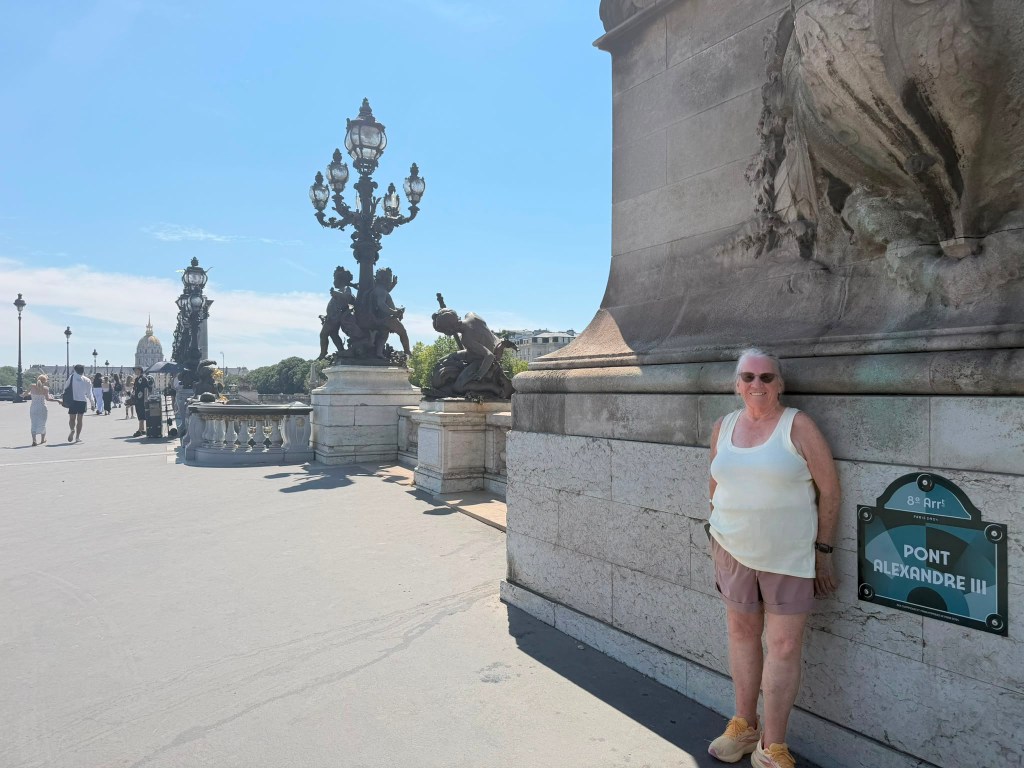
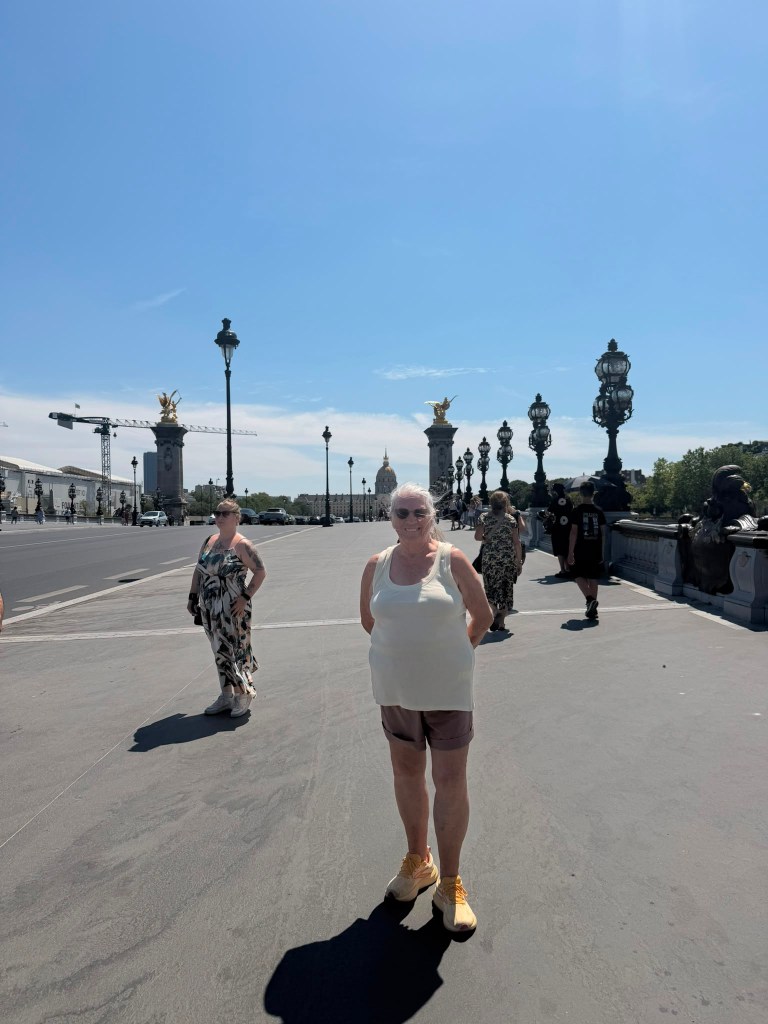
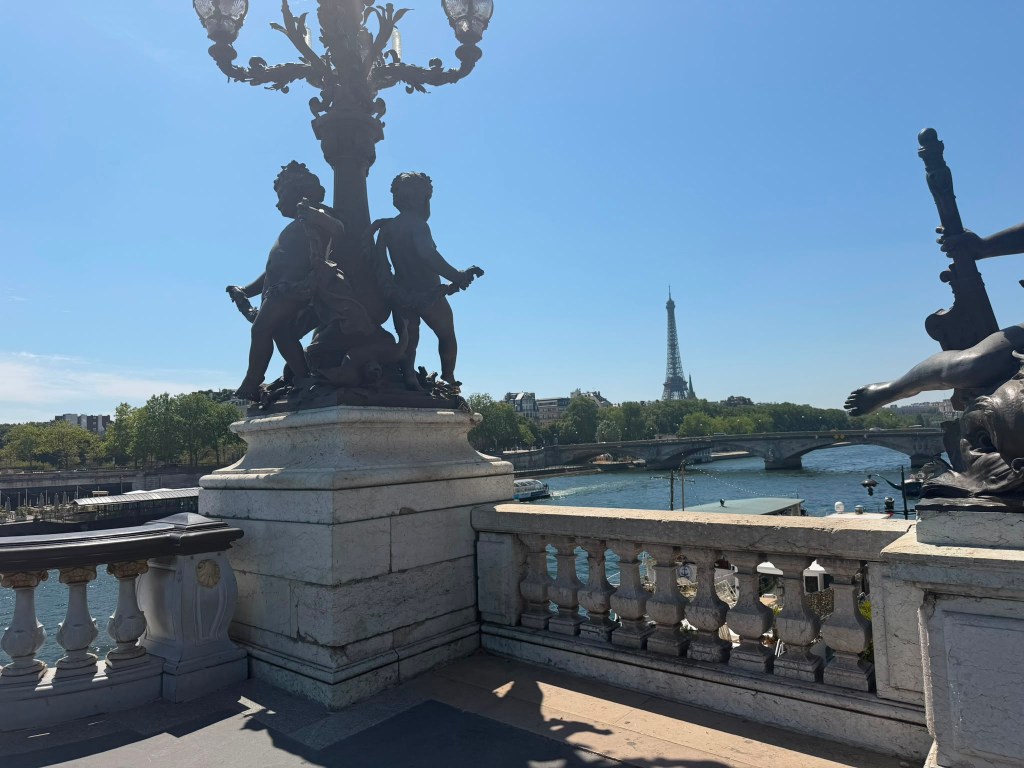
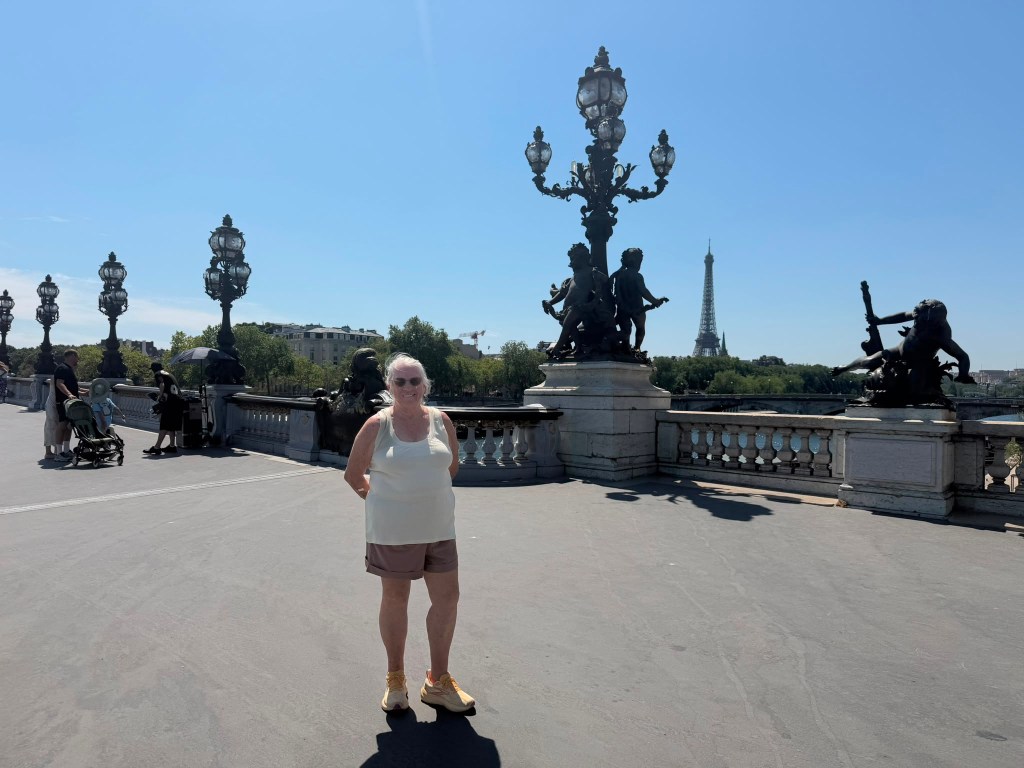
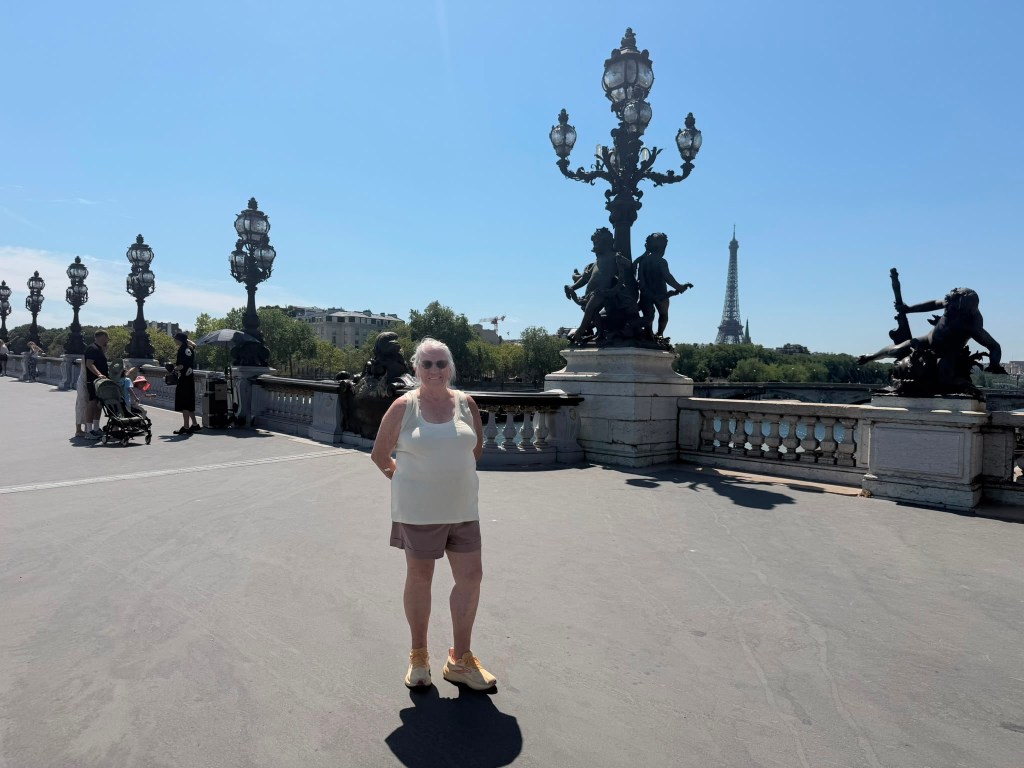
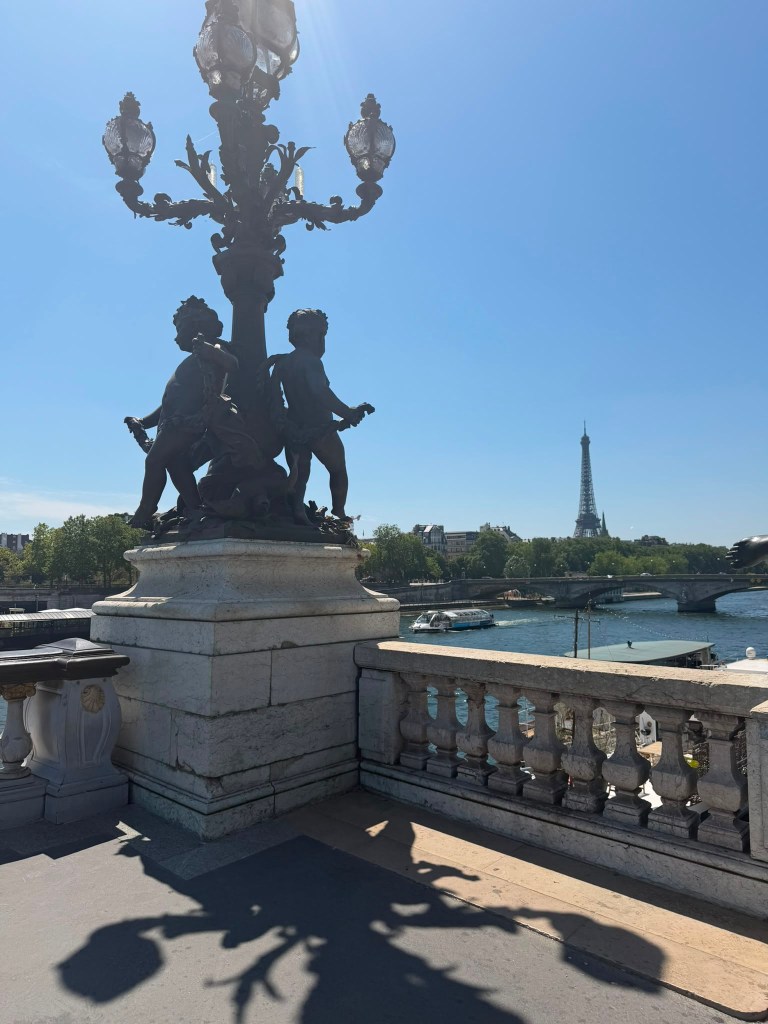
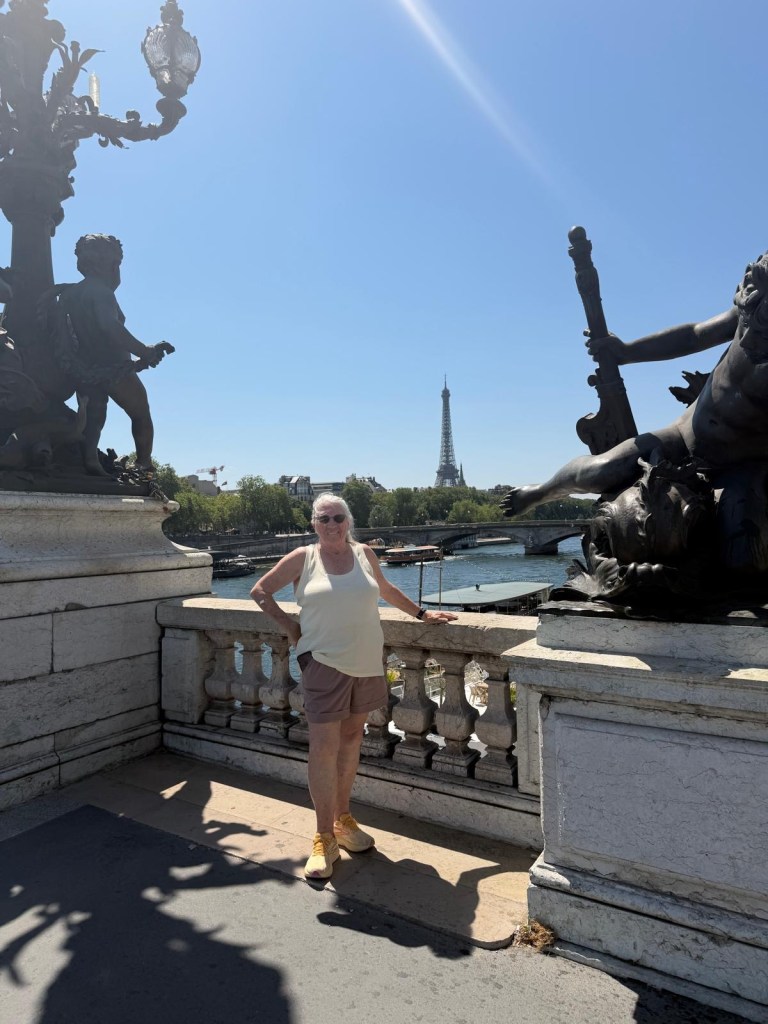
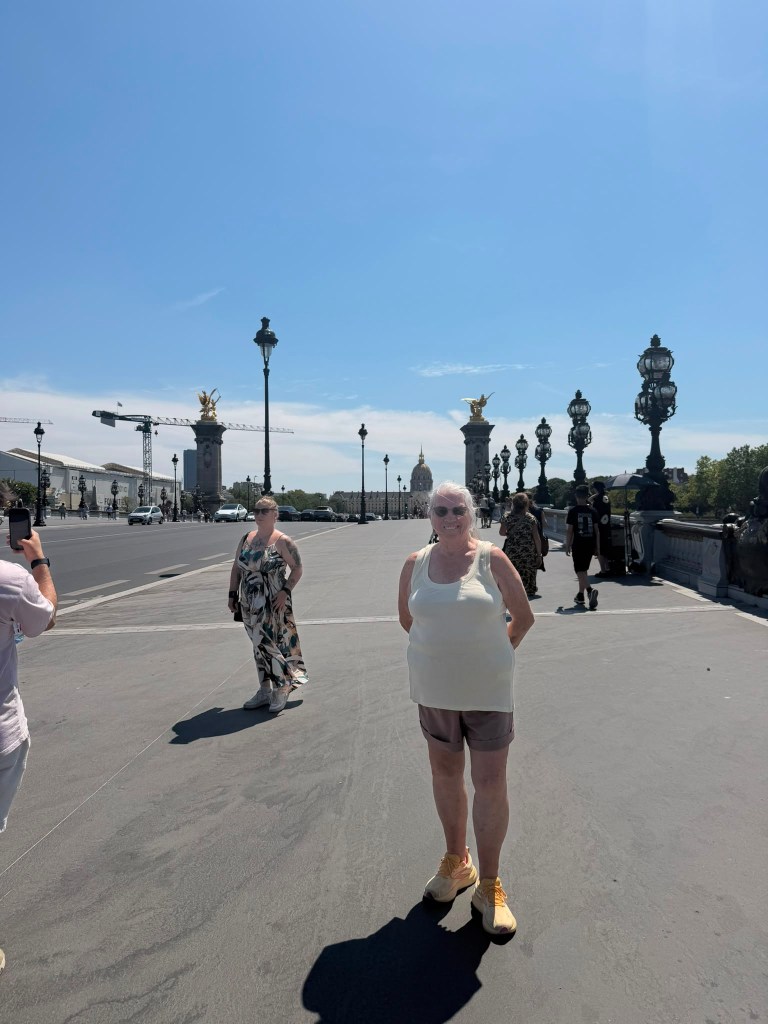
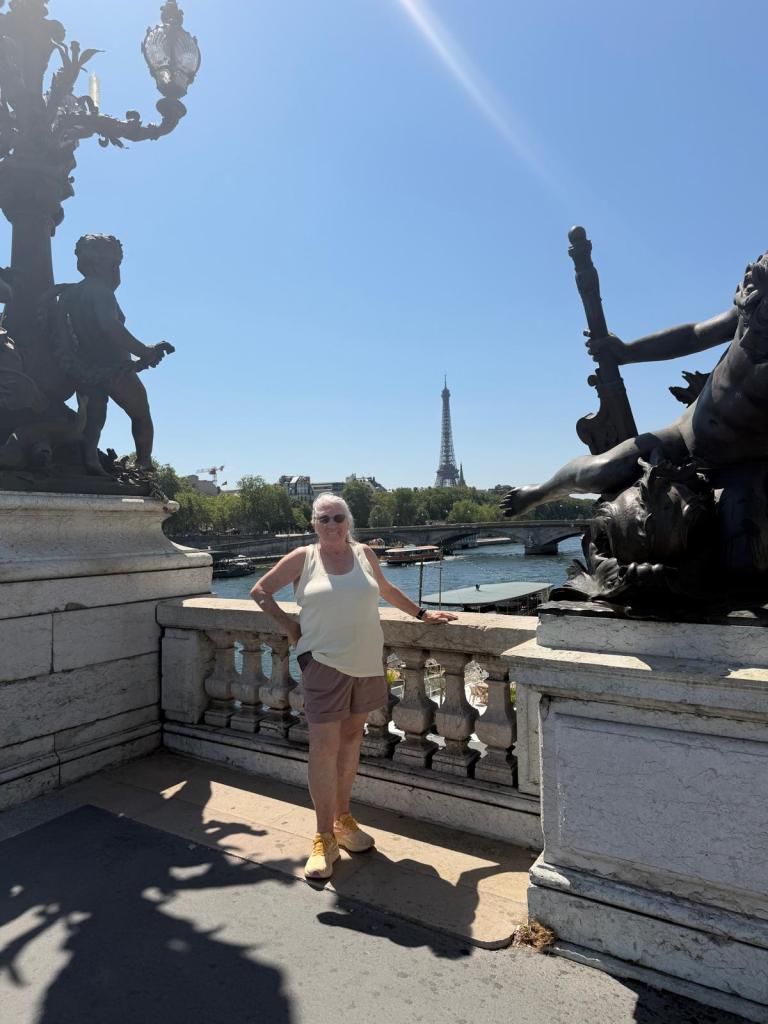
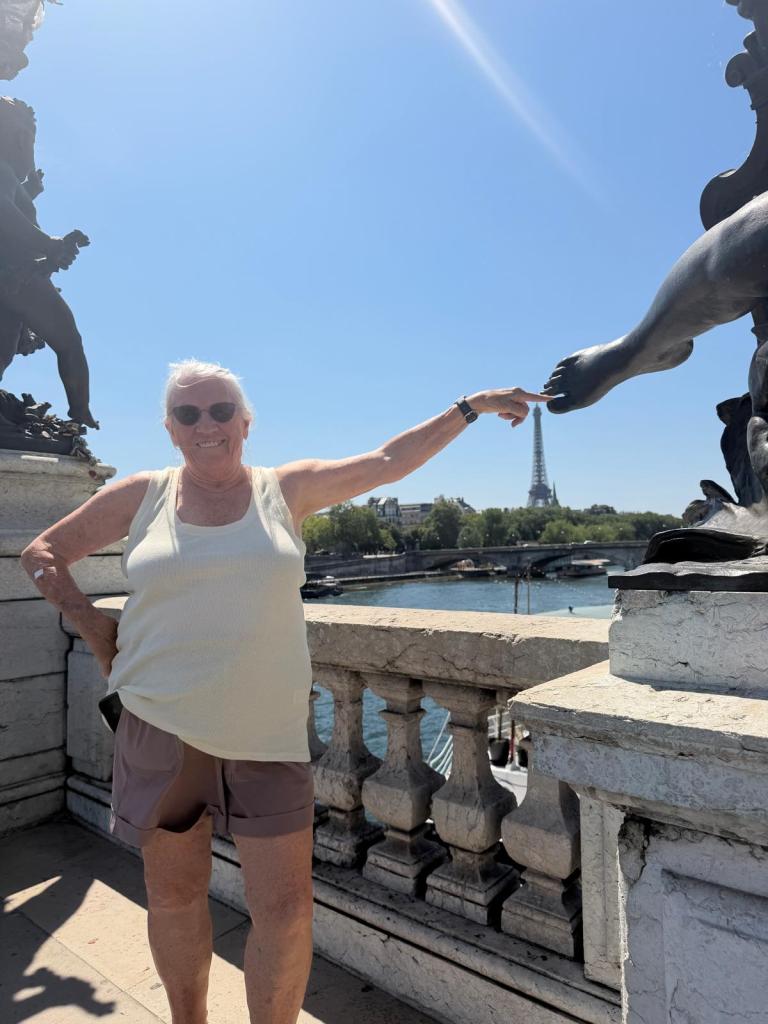
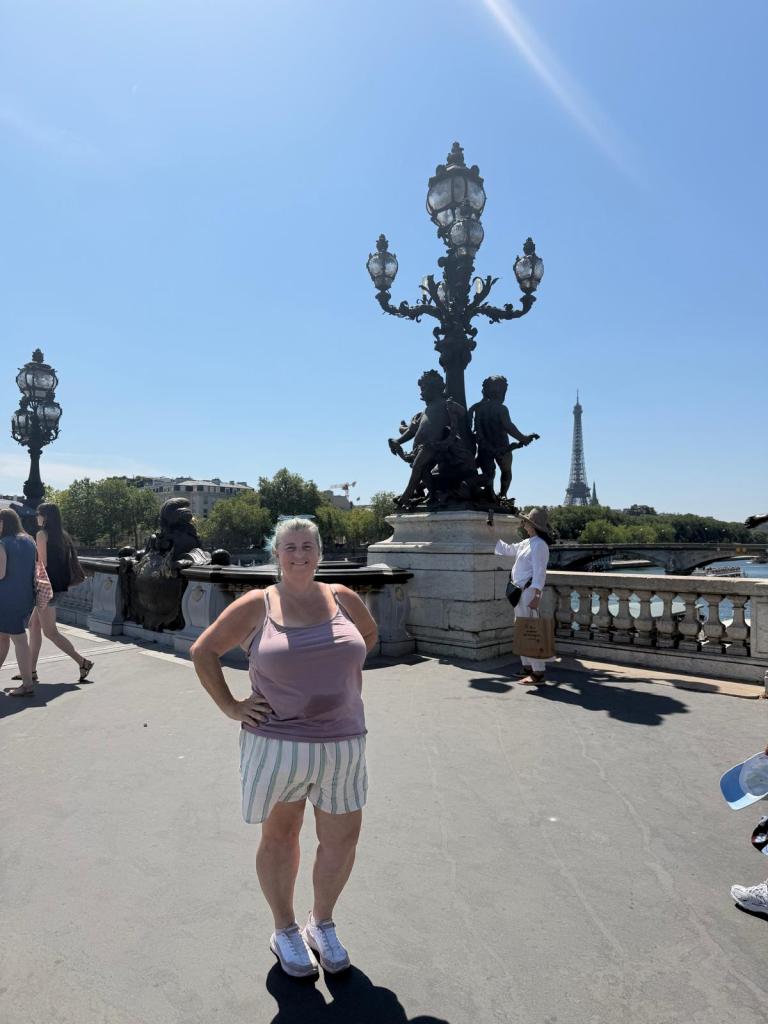
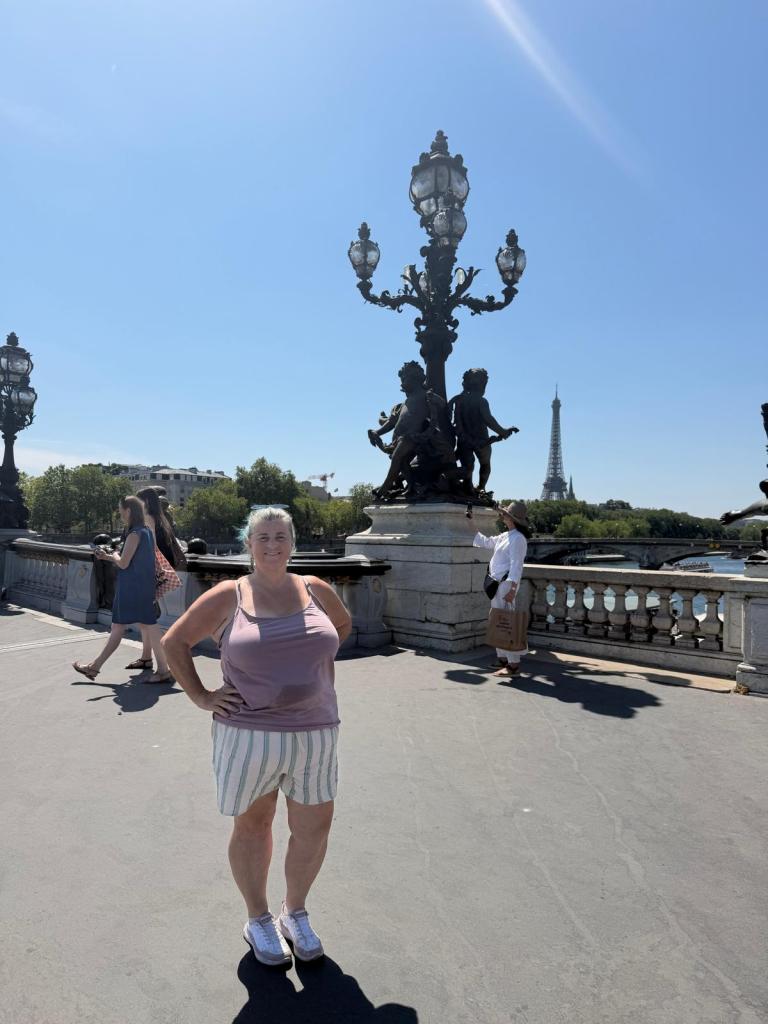
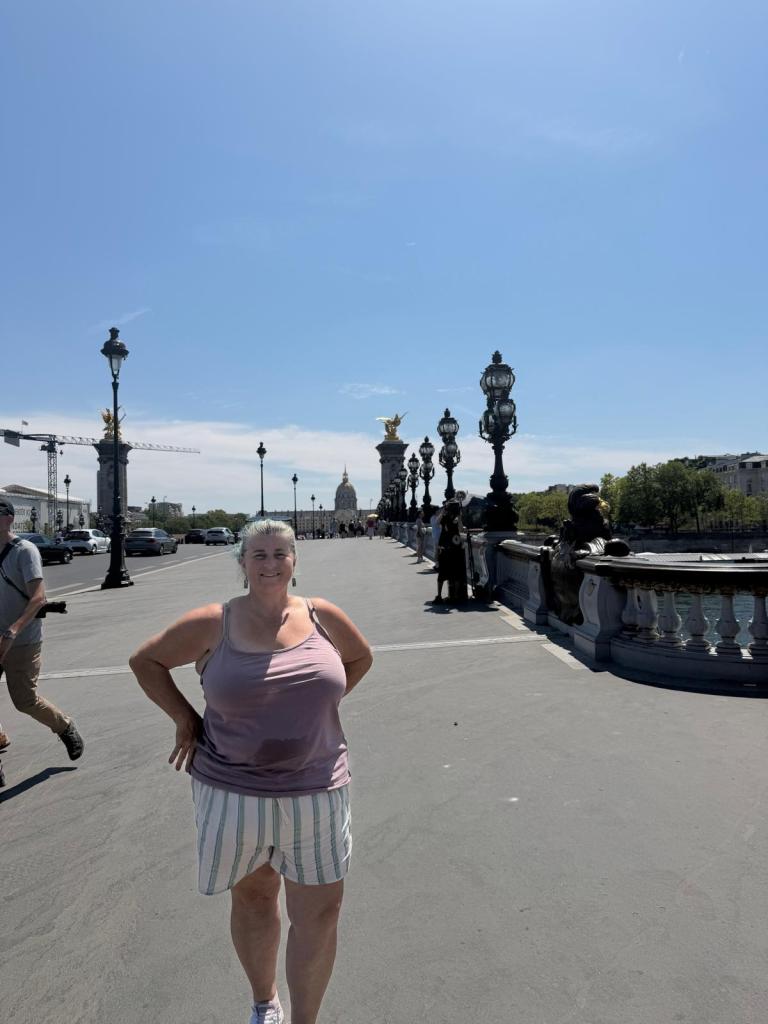
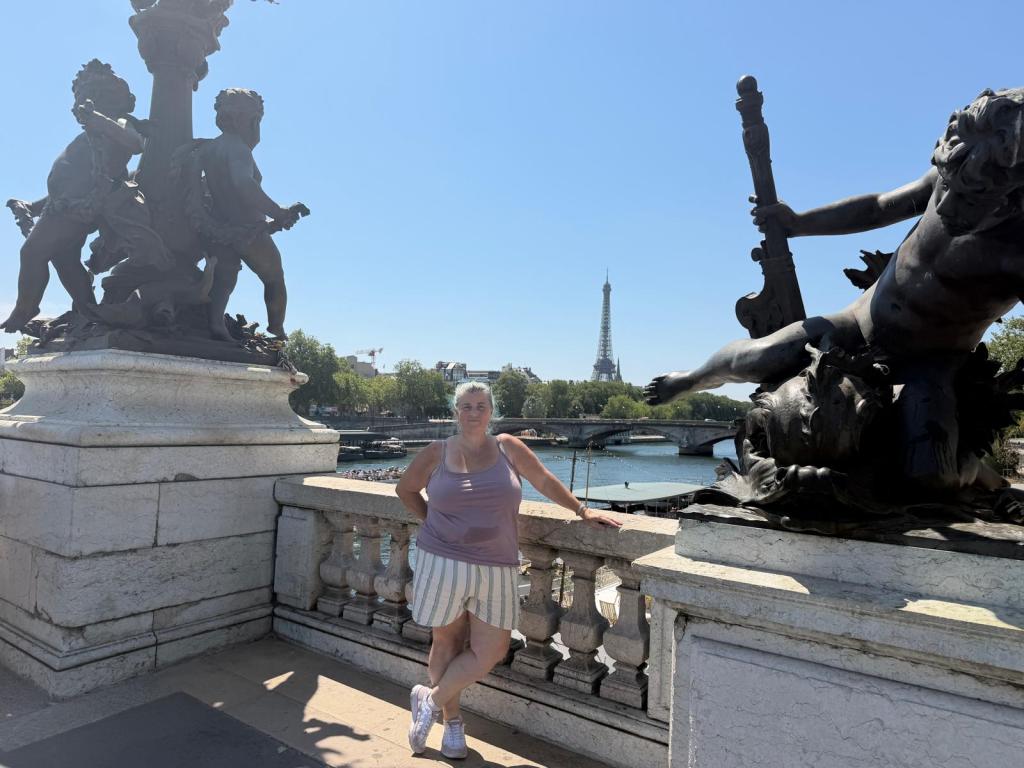
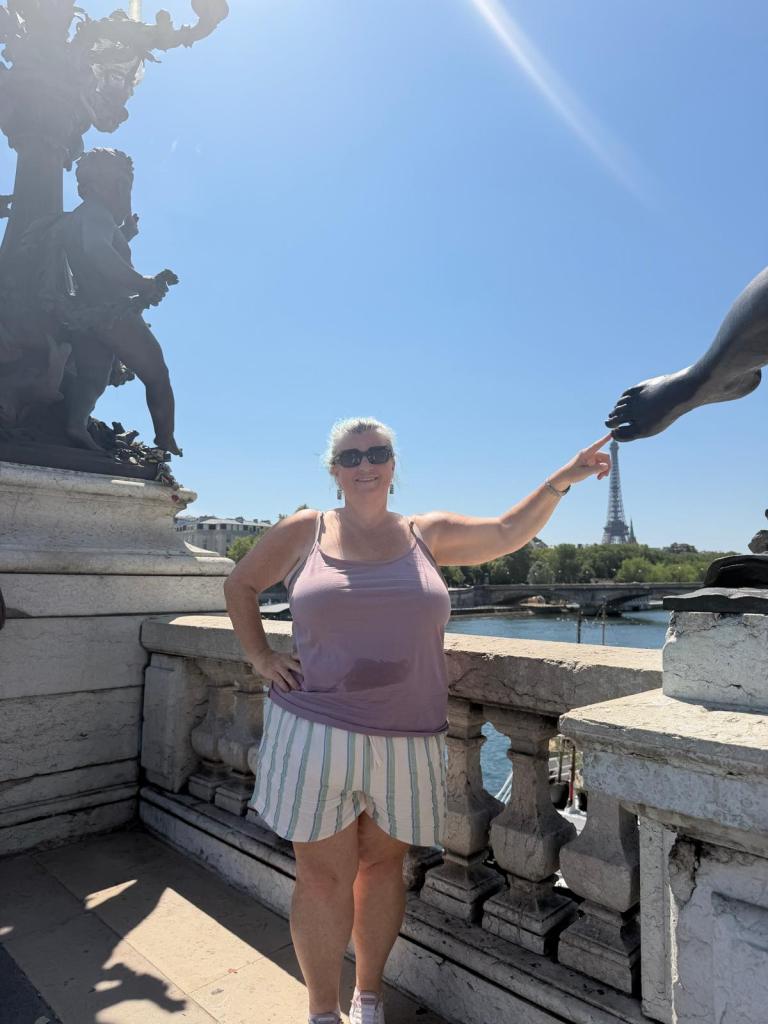
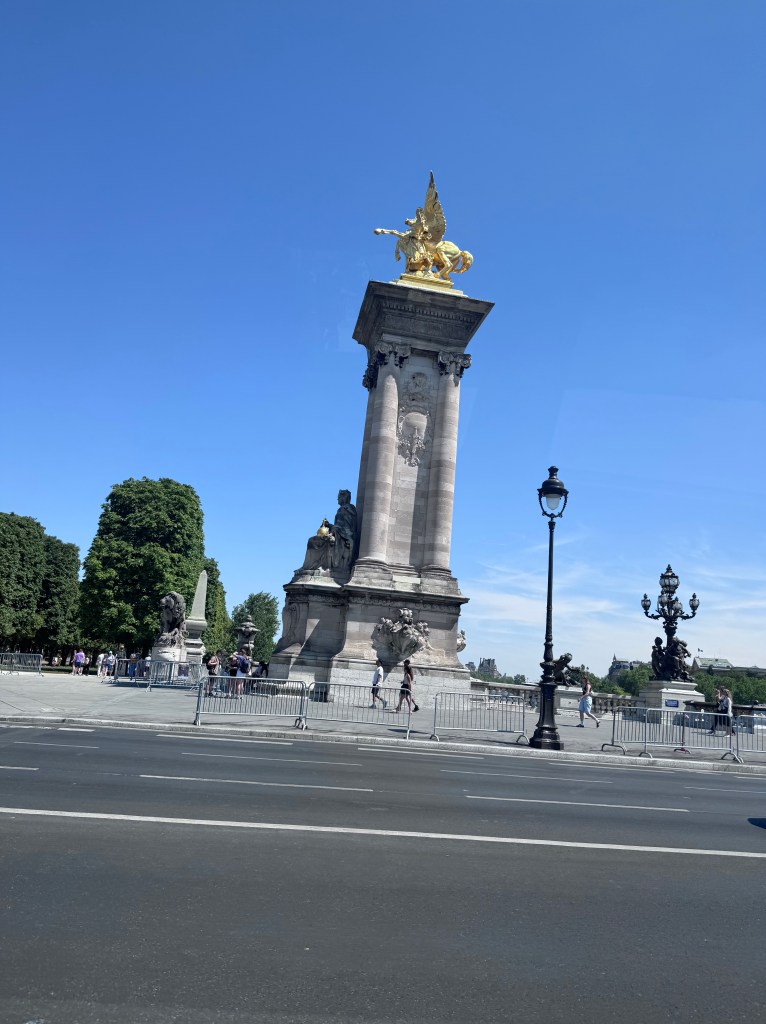
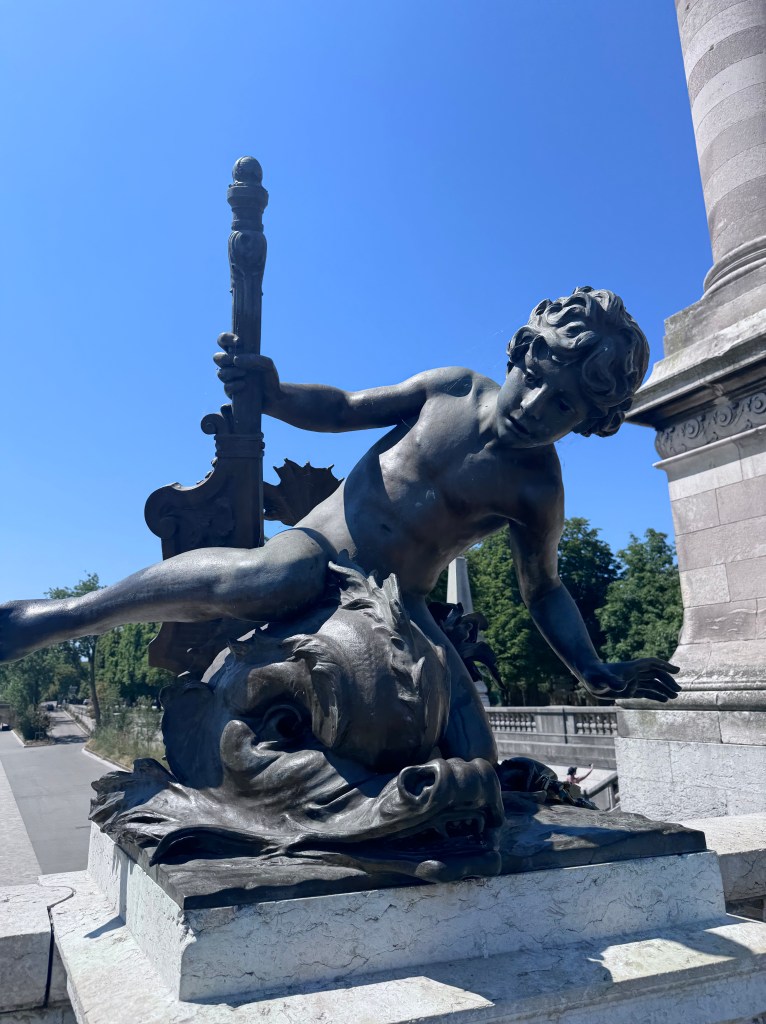
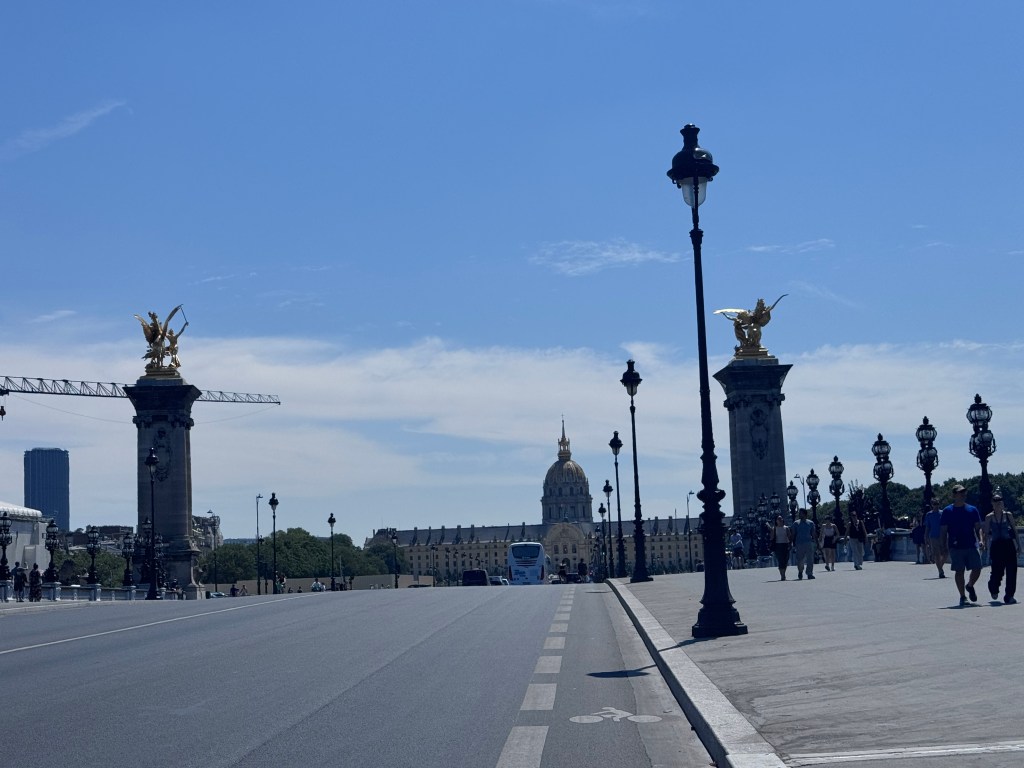
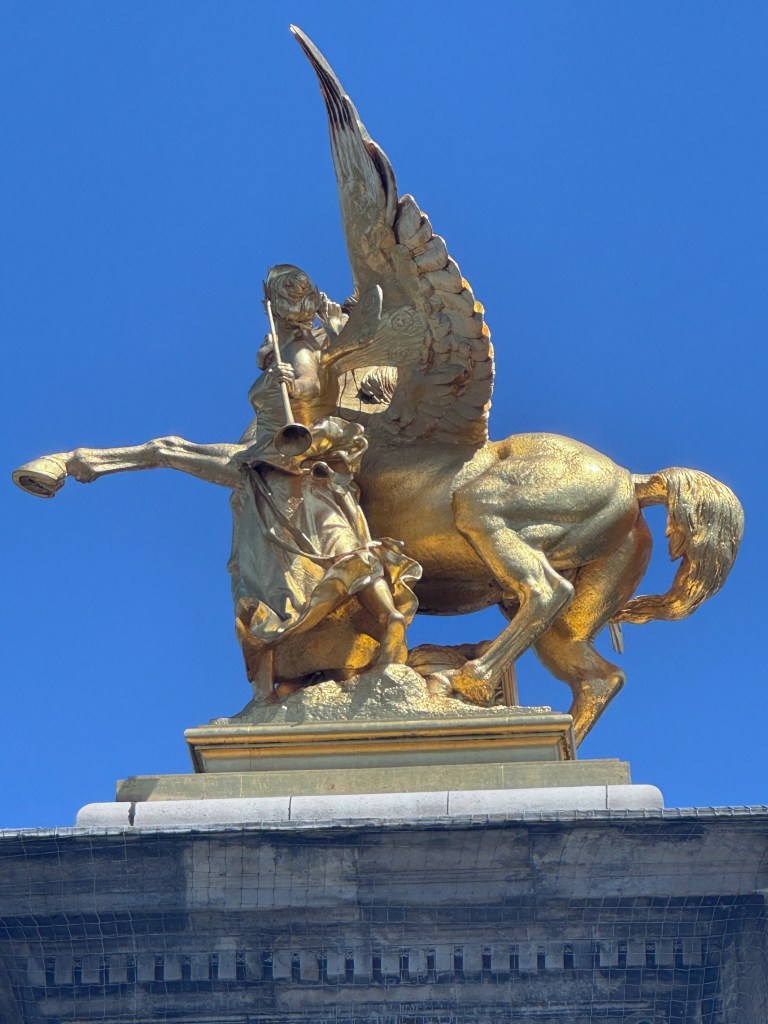
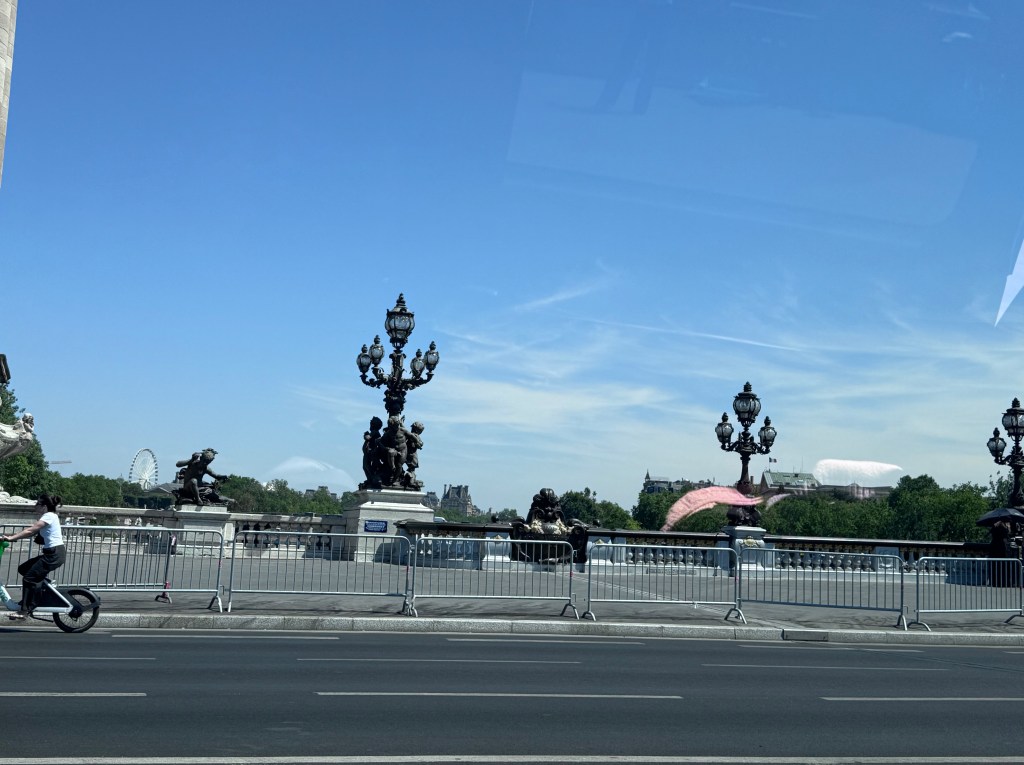
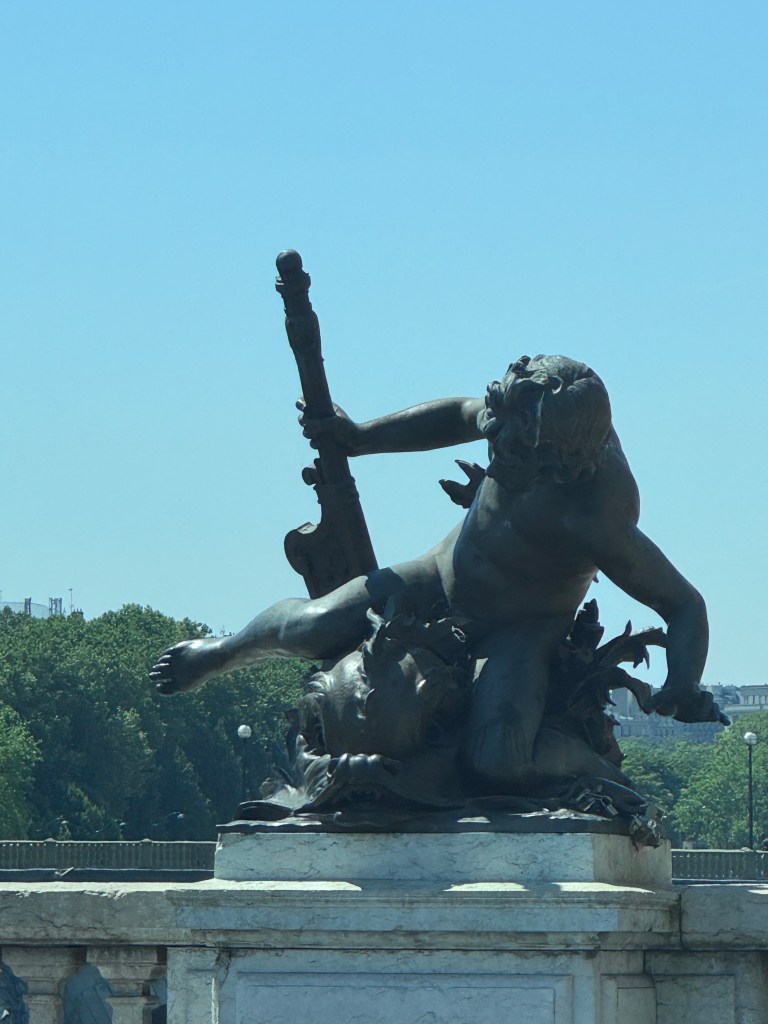
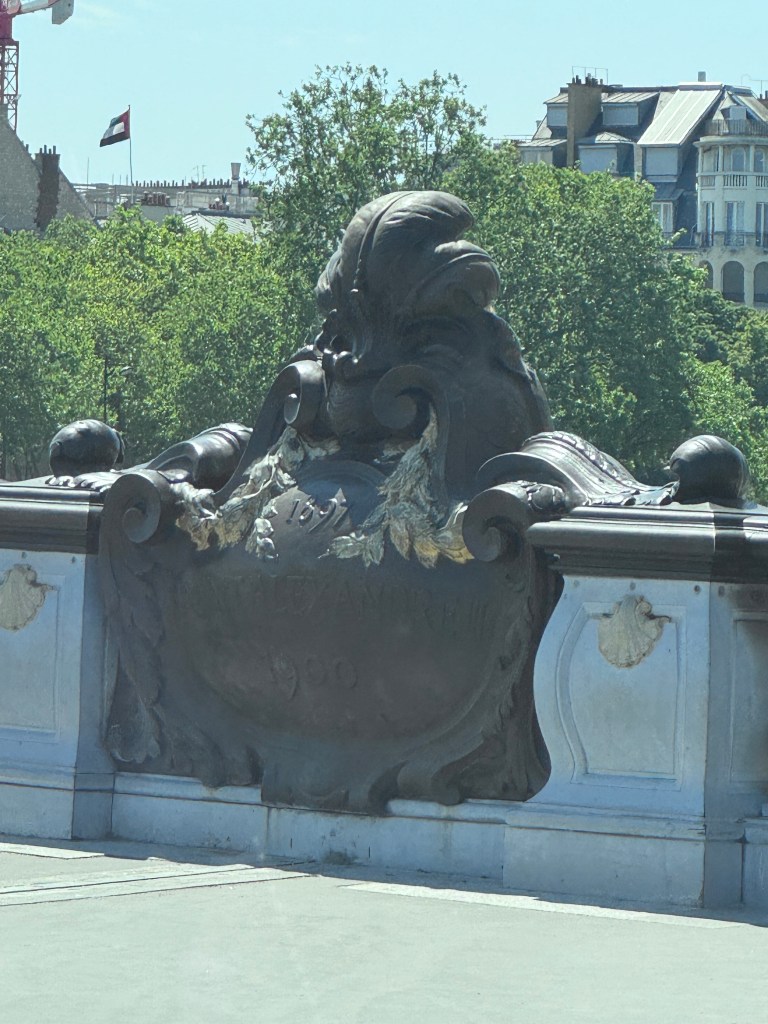
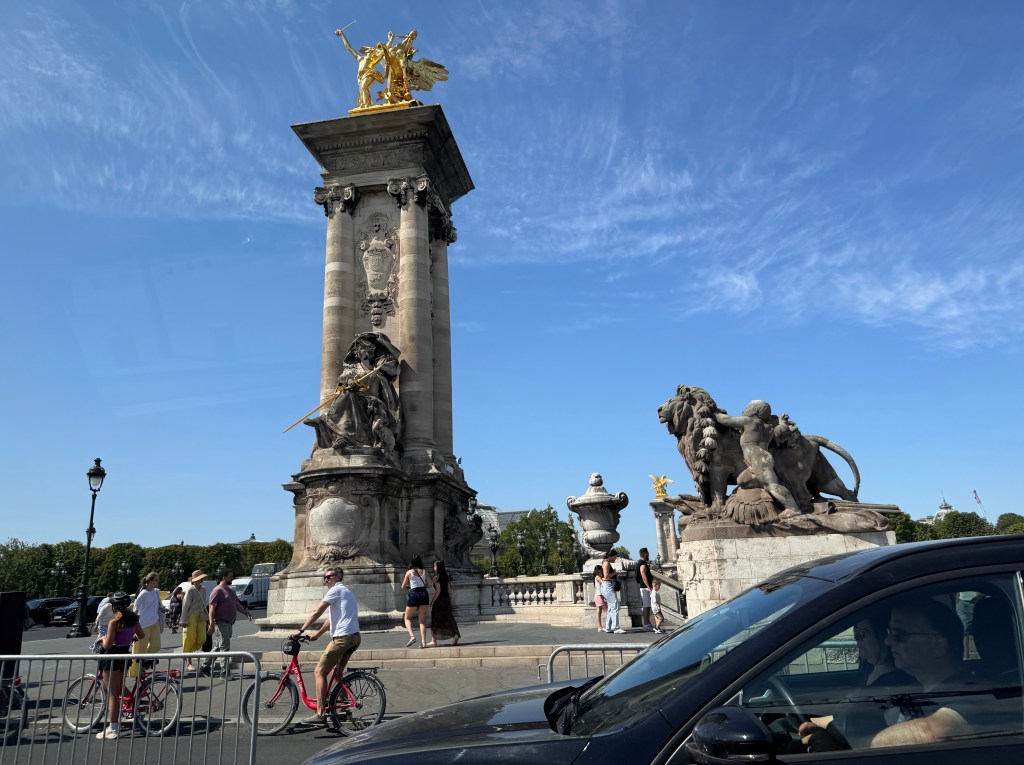
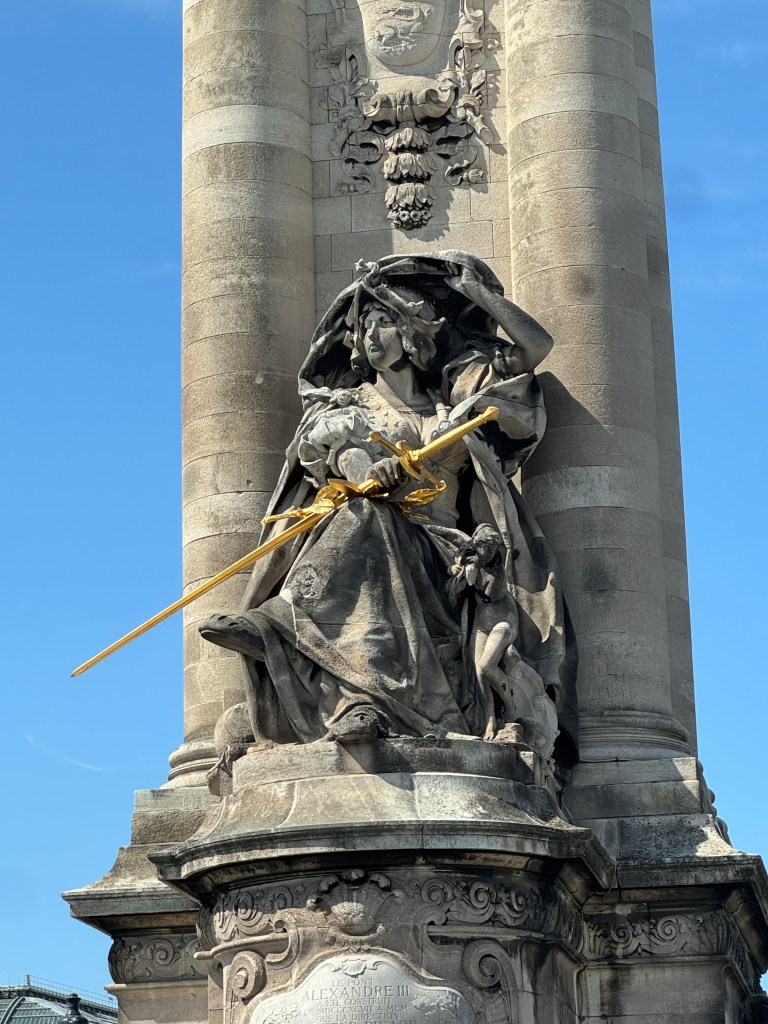
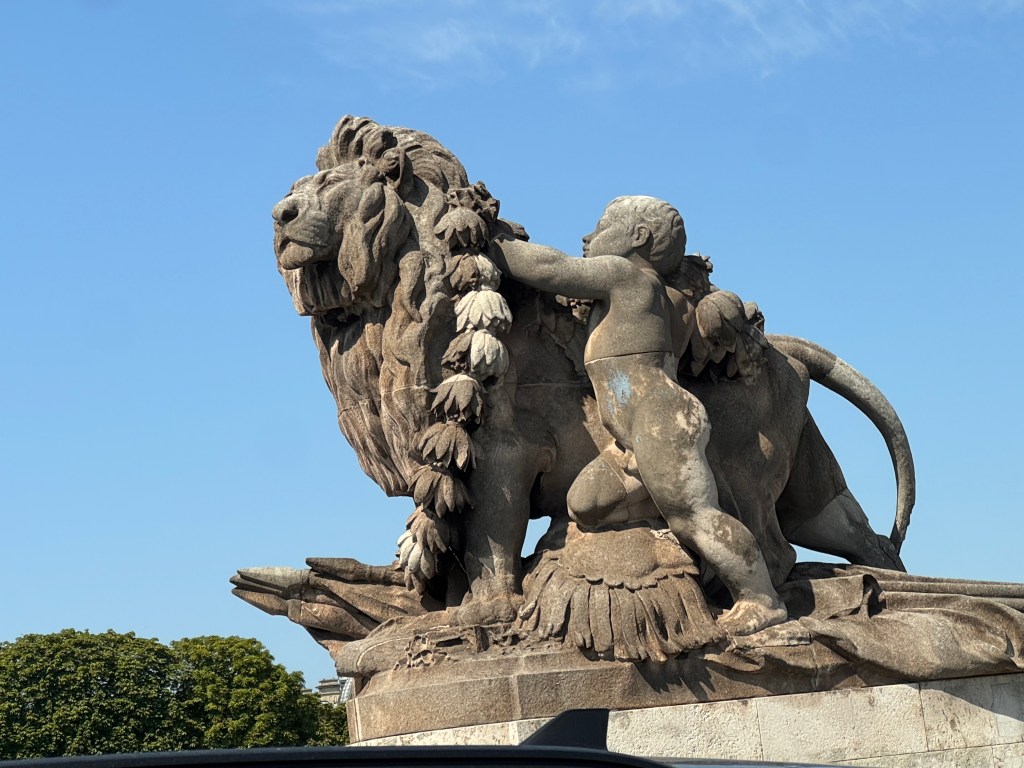
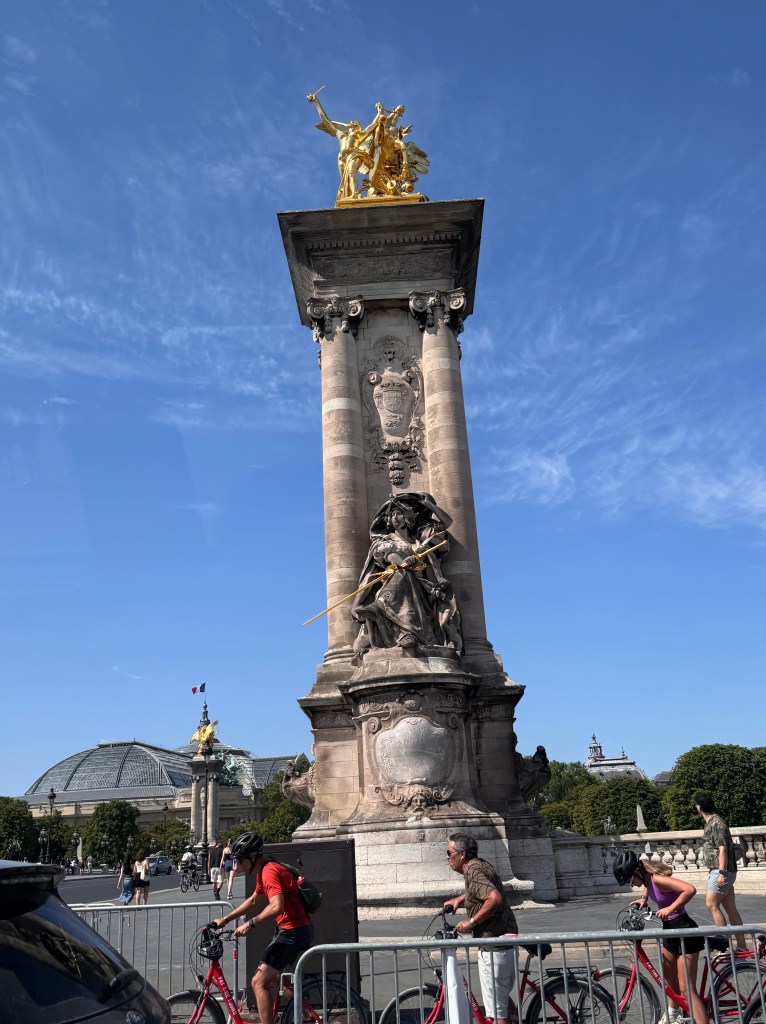
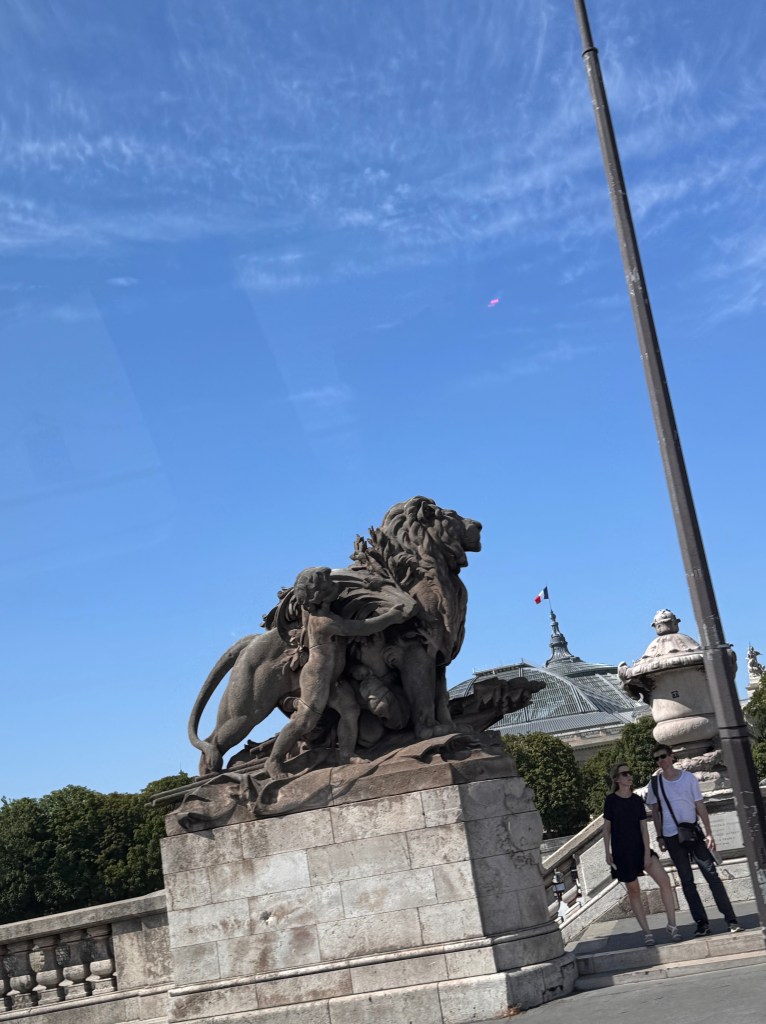
We crossed the beautiful Pont Alexandre III, often considered Paris’s most ornate bridge. Built for the 1900 World’s Fair, it is famous for its gilded winged horses, elaborate Art Nouveau lamps, and magnificent sculptures celebrating French art, science, commerce, and industry.

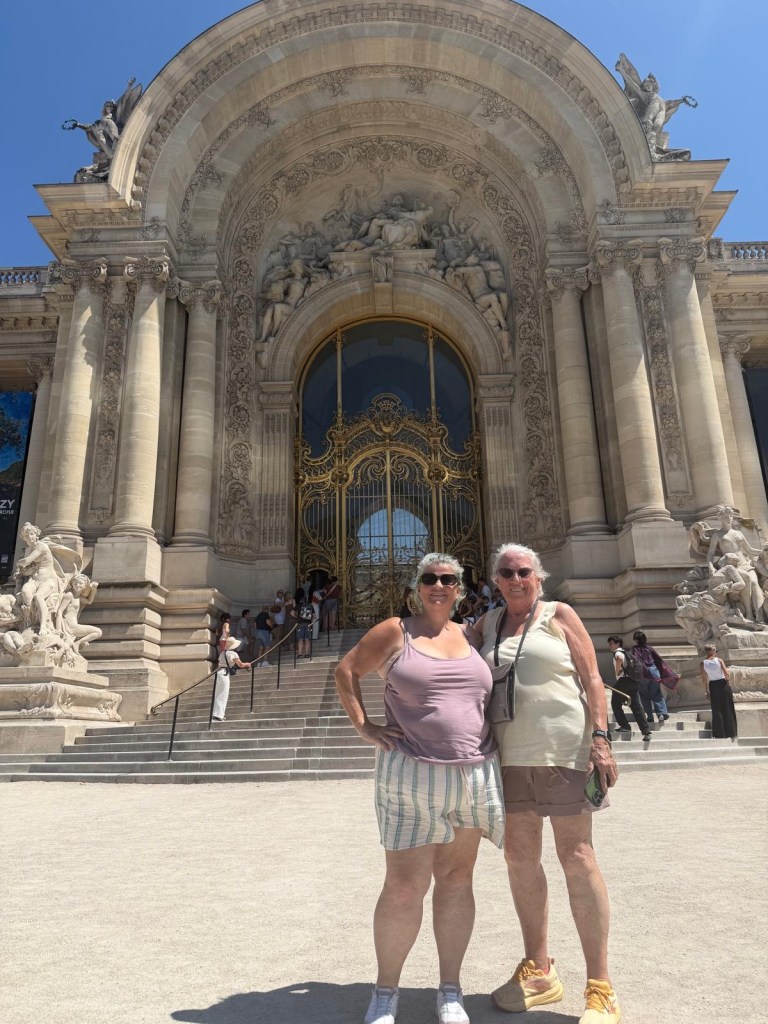
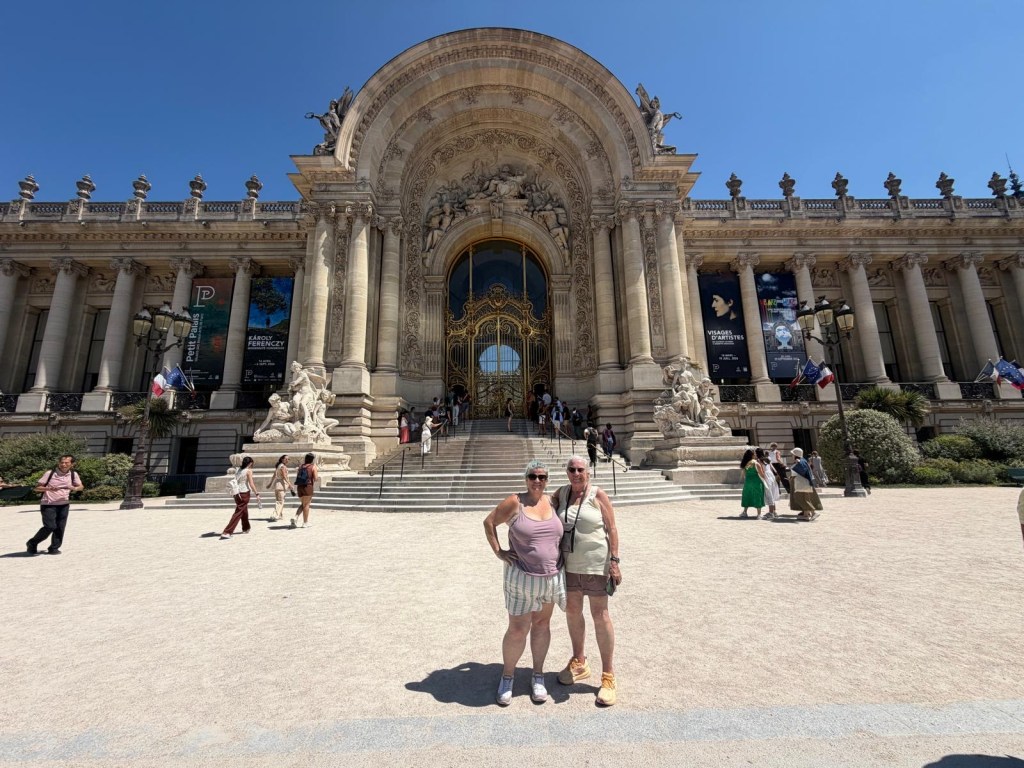
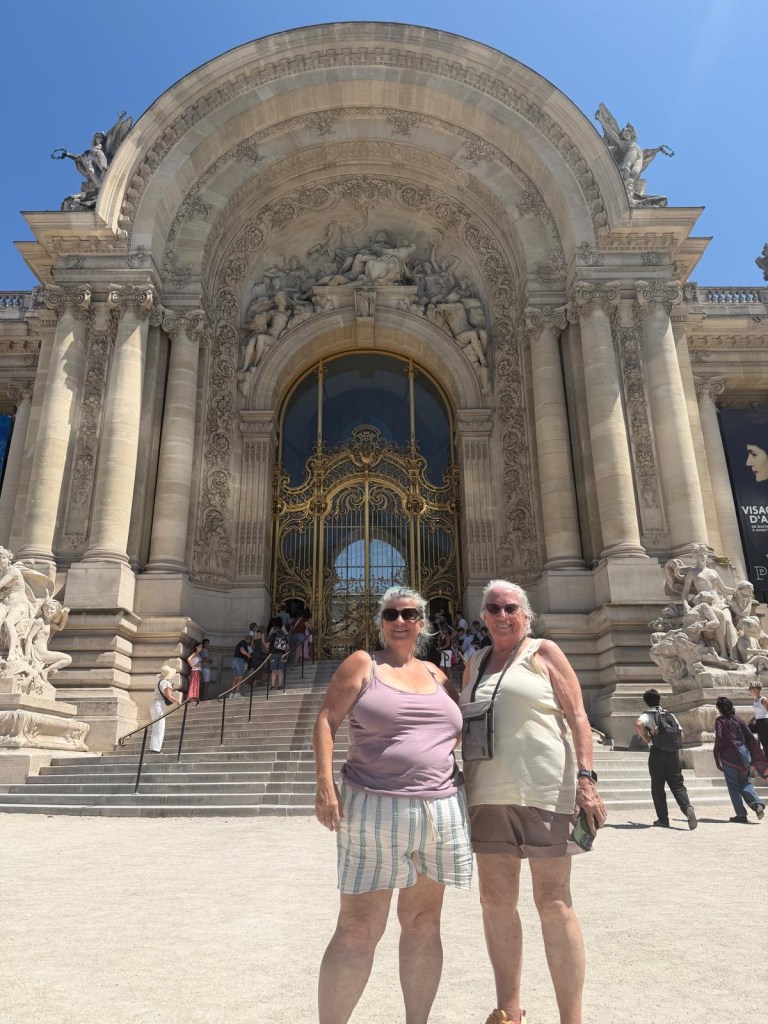
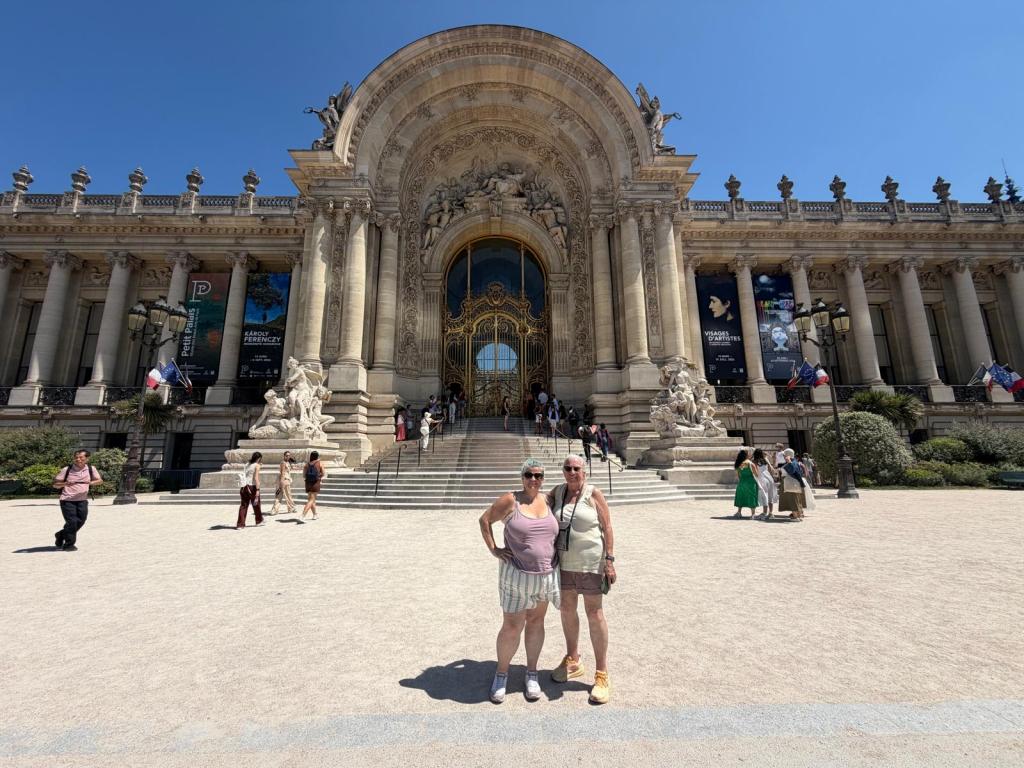
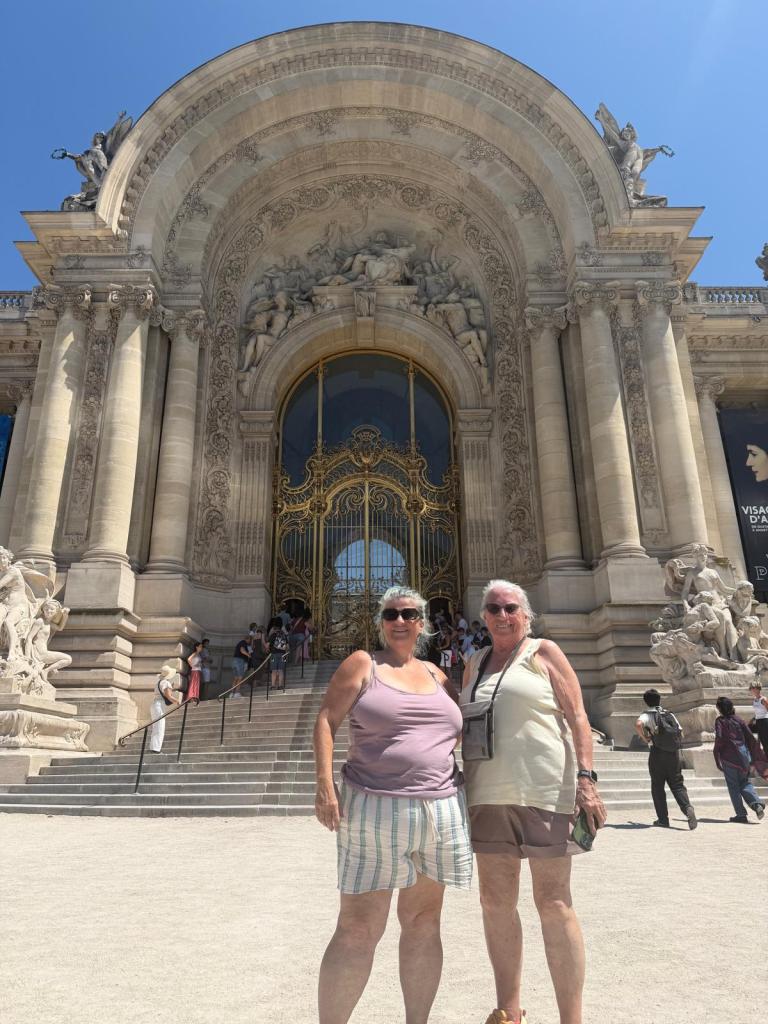
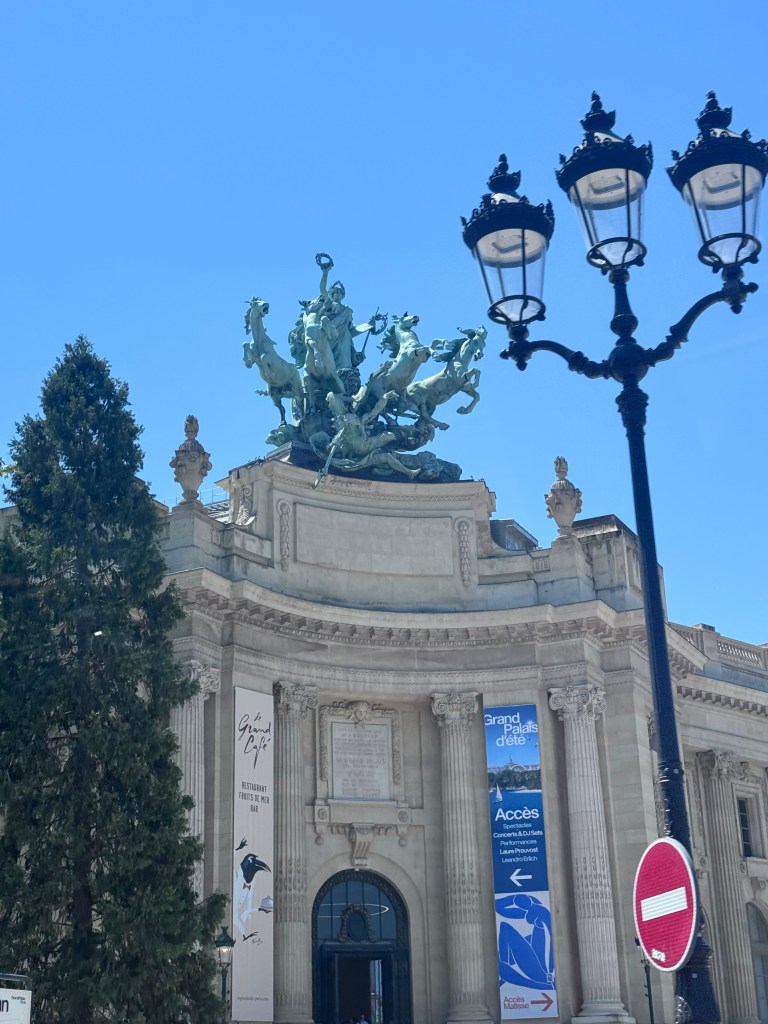
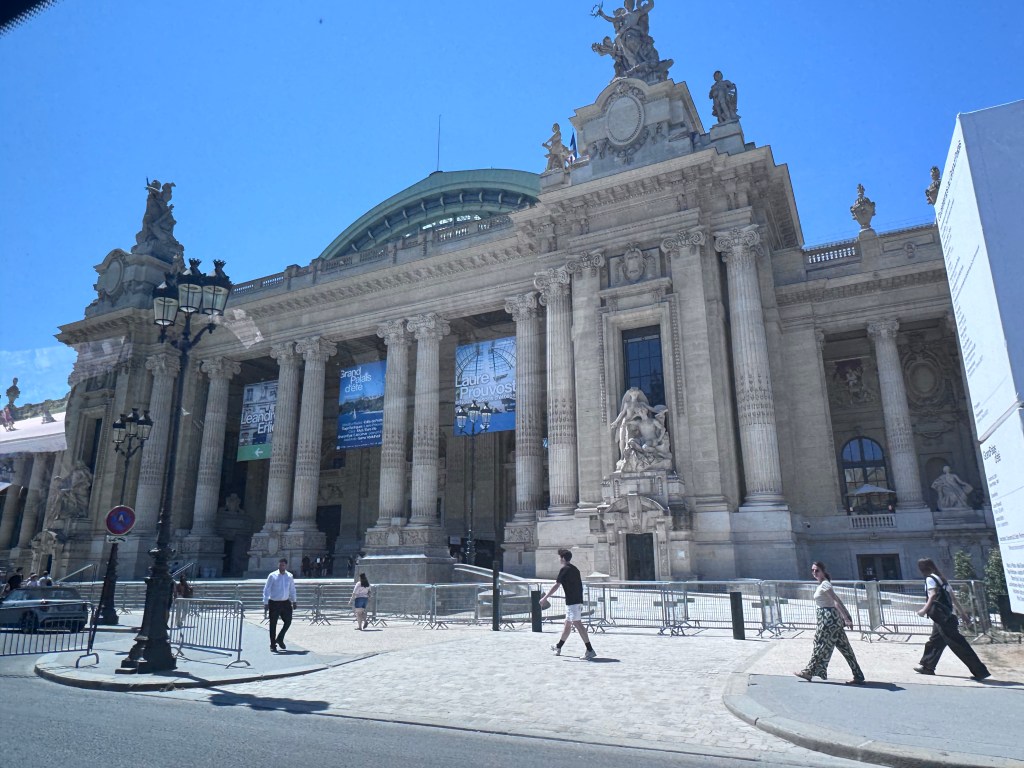
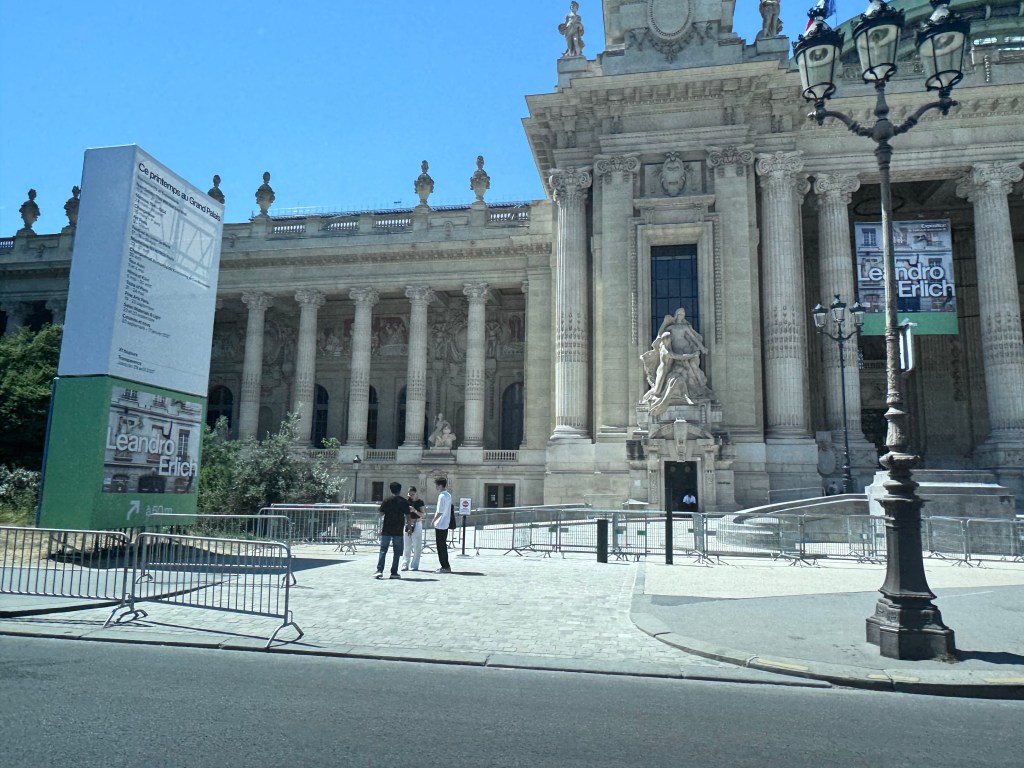
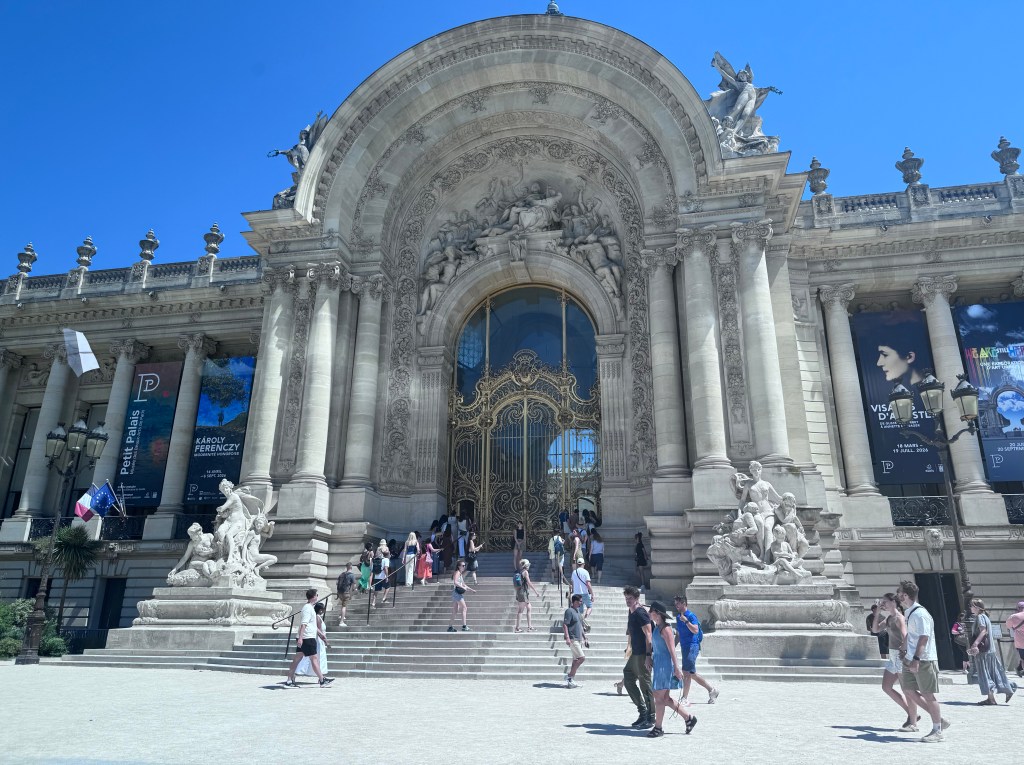
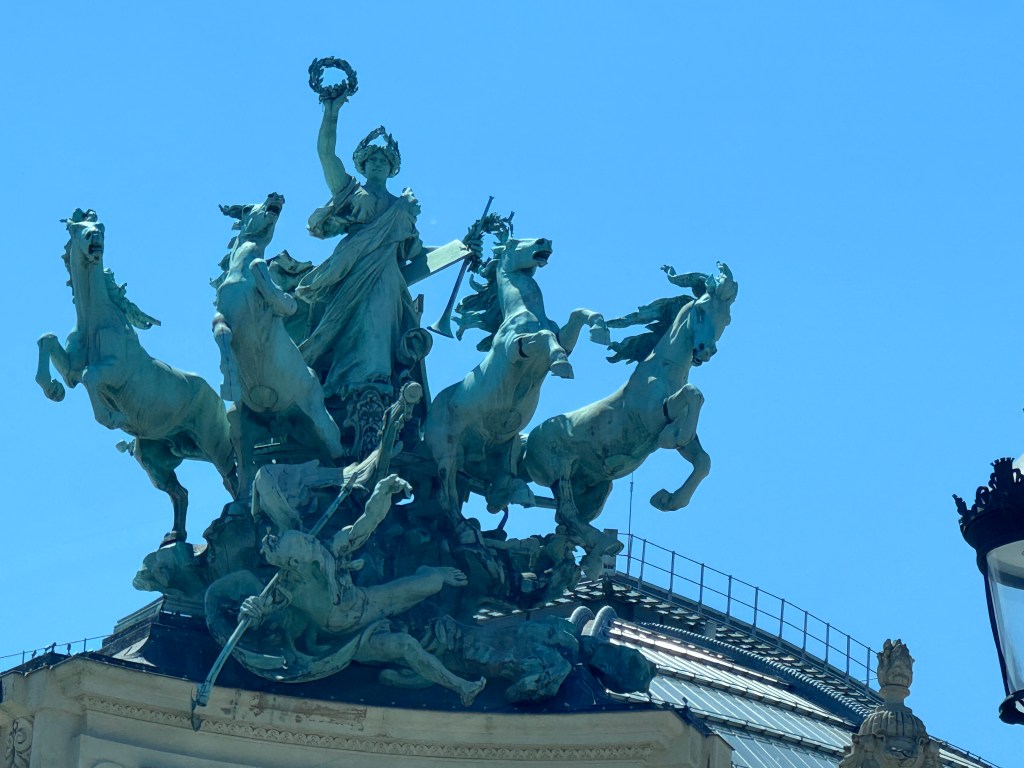
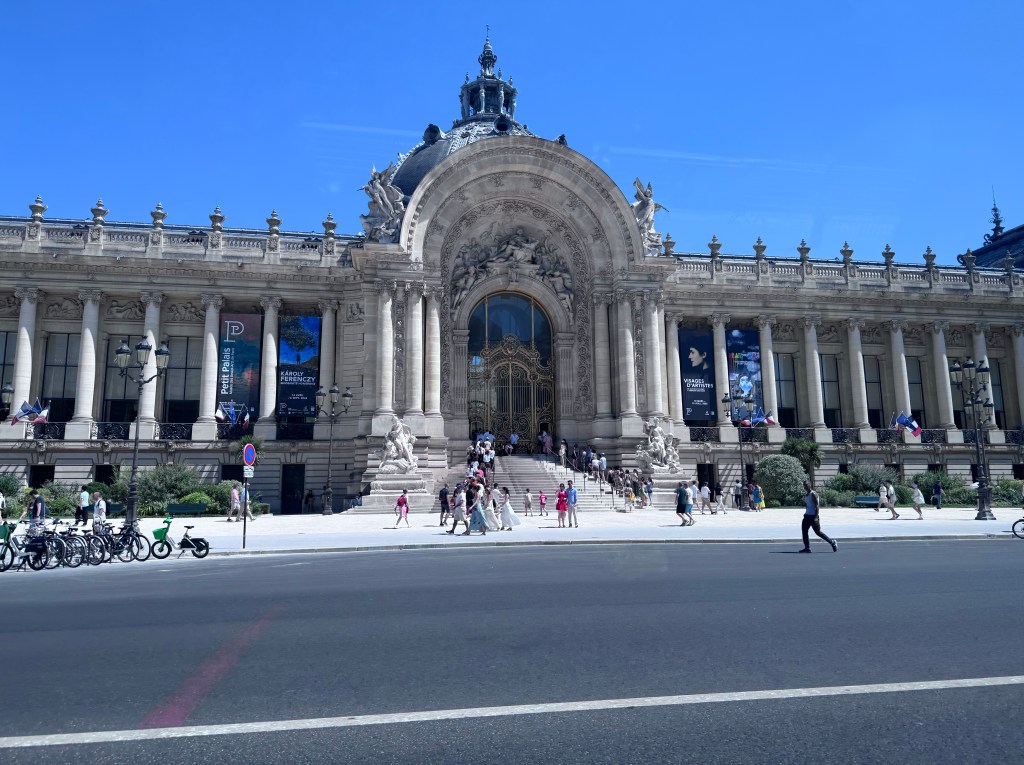
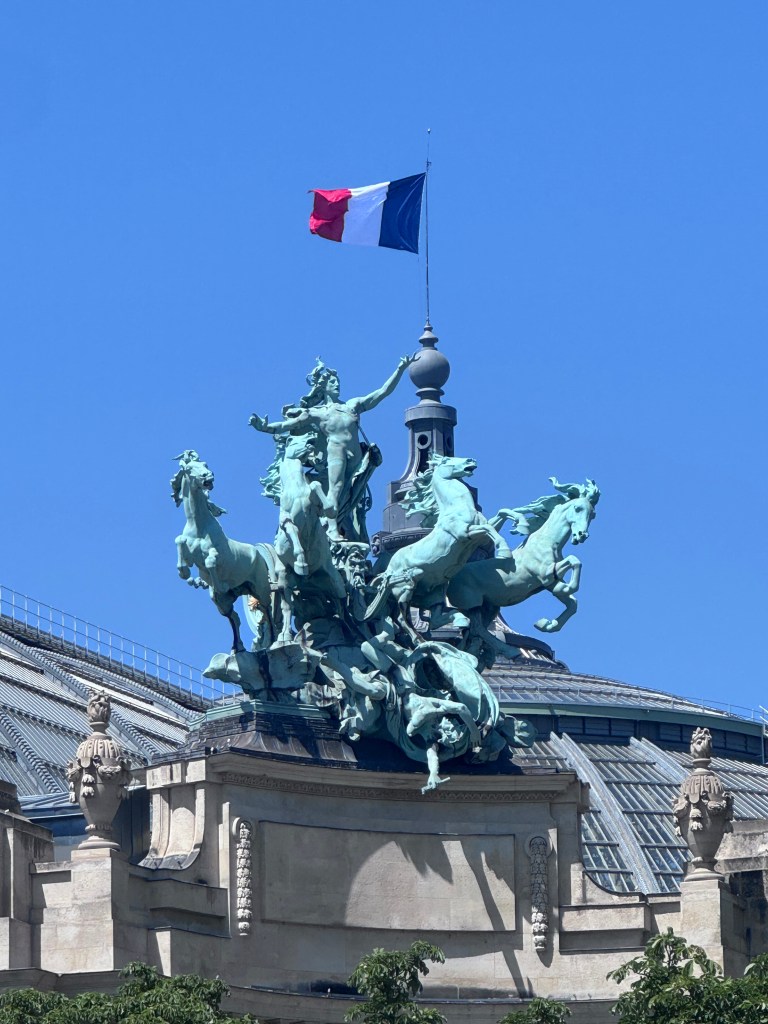
We also drove past both the Grand Palais and Petit Palais, two architectural masterpieces also built for the 1900 World’s Fair. Their magnificent glass roofs, grand columns, and richly decorated façades showcase the elegance of Paris during the Belle Époque.

Everywhere we looked there seemed to be another famous monument, another beautiful boulevard, or another breathtaking building. It was an incredible introduction to one of the world’s great cities.

Eventually Nesrine dropped us off at our VRBO.

Unfortunately, the apartment itself was a disappointment. It was extremely hot, and we quickly discovered there were several issues—including not having any toilet paper for three of our four days there. More on that adventure later.

After such a long day of travel and sightseeing, we were exhausted. Rather than heading back out into the heat, I ordered groceries and dinner through Uber Eats, and we settled in for the evening.

Despite the apartment’s shortcomings, our first afternoon in Paris had been unforgettable. Thanks to Nesrine, we had already fallen a little in love with the City of Light before we’d even unpacked our suitcases.

Brussels: Chocolate, Gold, and Grand Places

After leaving Amsterdam, which we absolutely loved—well, we definitely loved the cheese!—we headed south to Brussels. It was a short train ride, and before long we had arrived at our apartment just a block from the famous Grand Place.

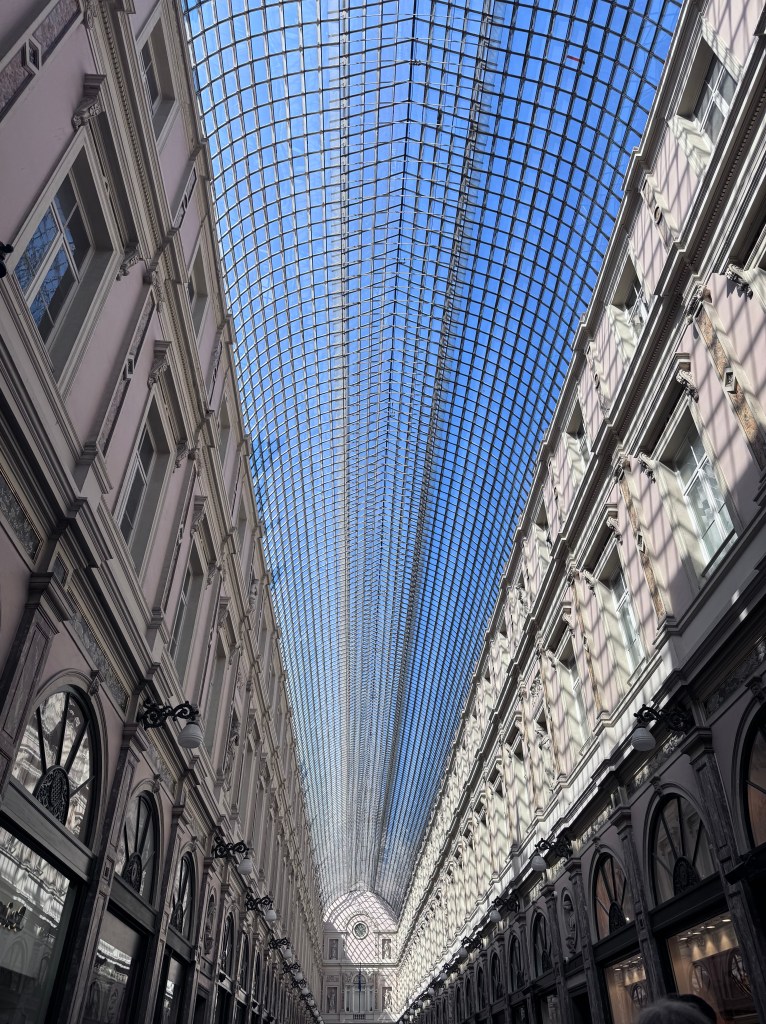
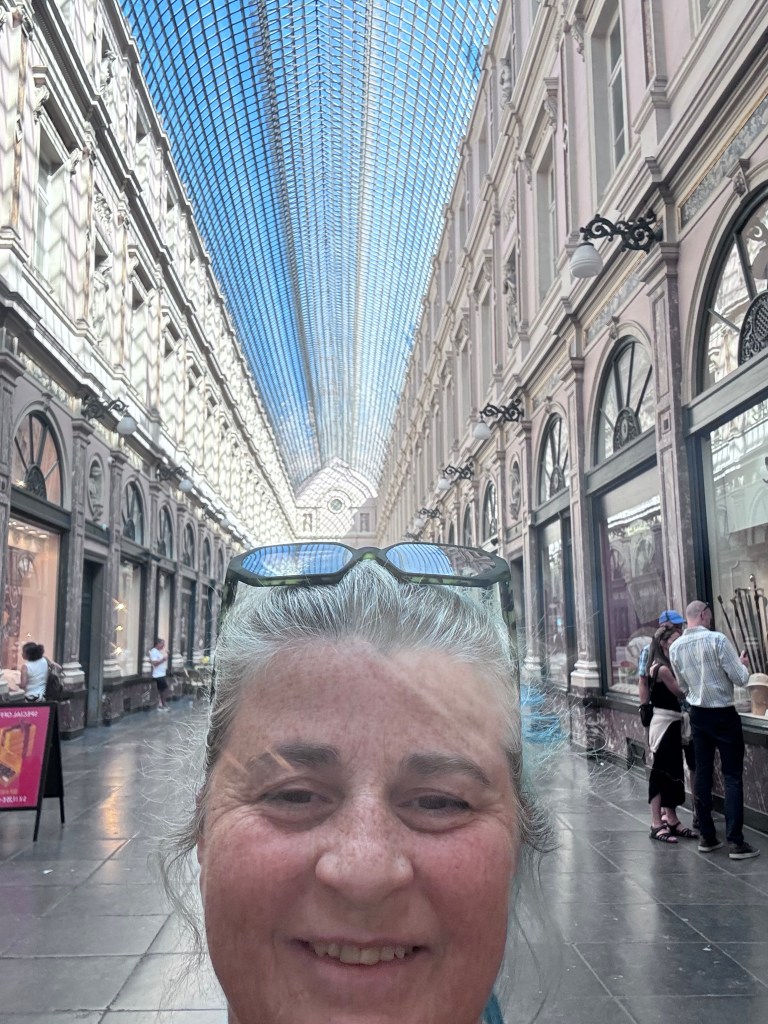
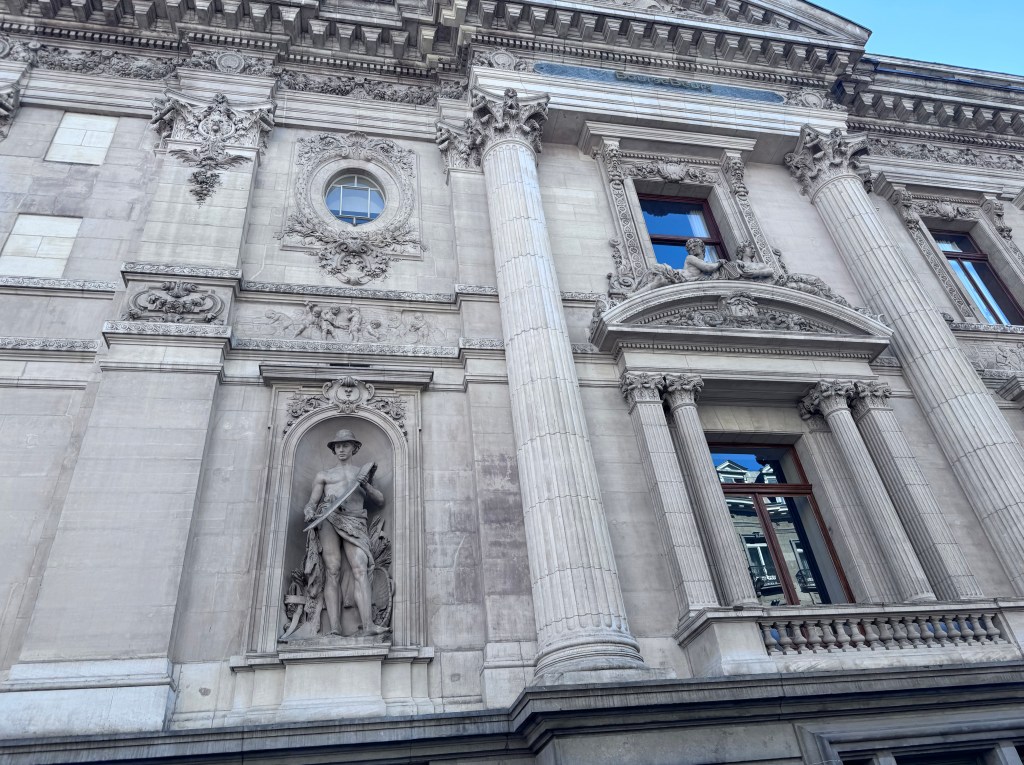
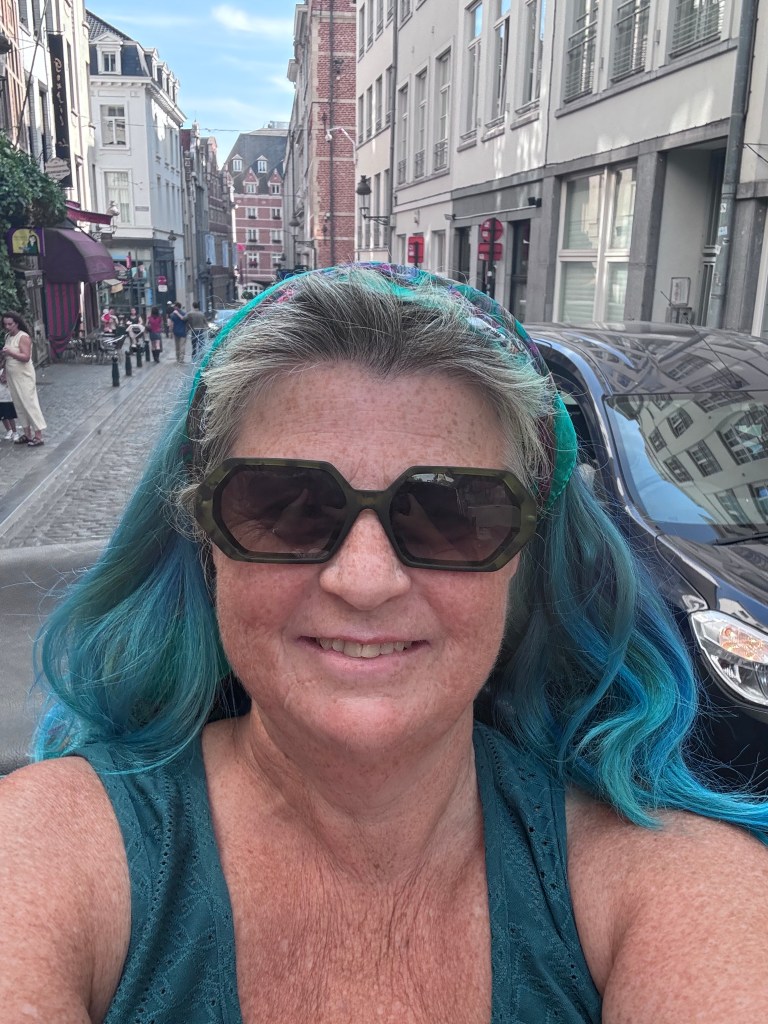
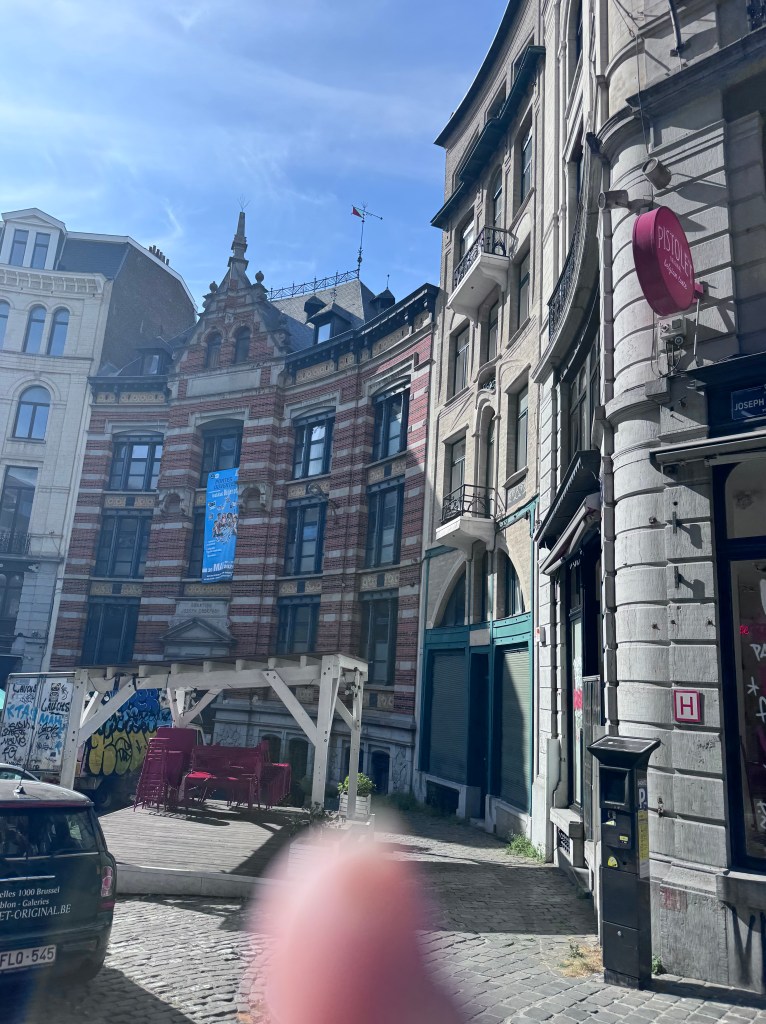
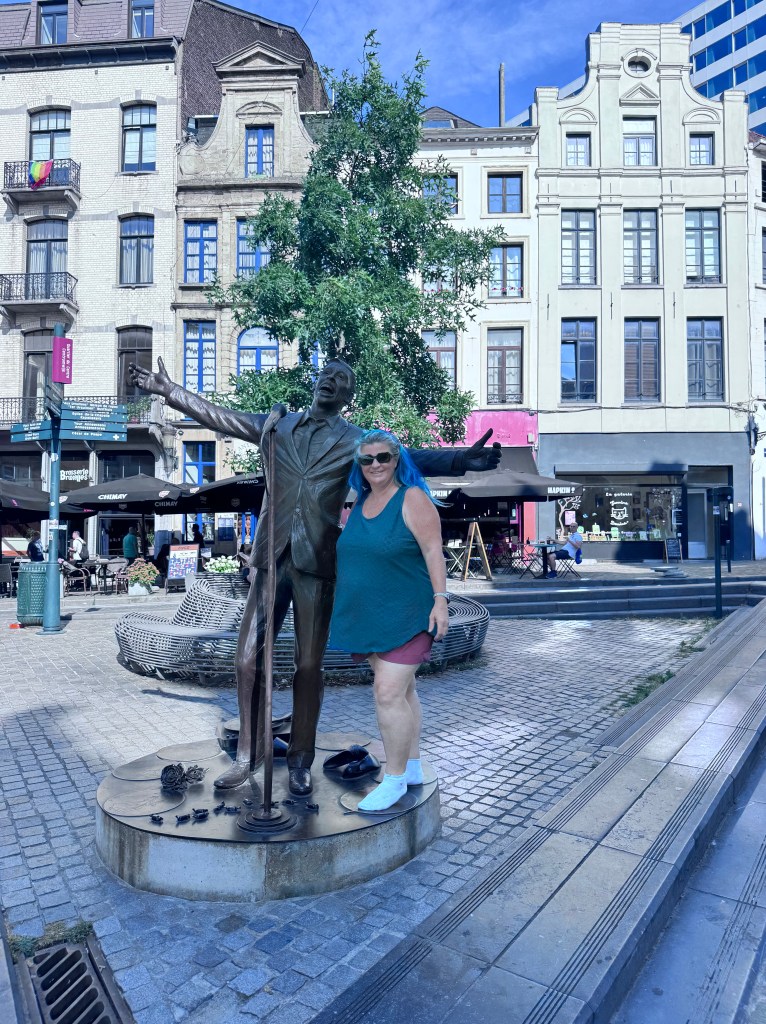
Once we got settled, we let Kiya take a well-earned nap while Mom rested. Since she was sleeping peacefully, I took about an hour to wander through the surrounding neighborhoods on my own. Brussels is a city that invites you to get wonderfully lost. The streets are narrow and packed tightly together, with every block lined by cafés, restaurants, chocolate shops, boutiques, and little alleyways that seem to hide even more treasures. Everywhere I turned there was another beautiful building or another shop calling me inside.

When Kiya woke up, we headed out for dinner, only to discover the apartment elevator had stopped working. Unfortunately, we were staying four flights up. We immediately contacted our host and hoped it would be repaired quickly.

Fortunately, getting Kiya downstairs wasn’t too difficult. Getting her back up those four flights afterward would have been another story entirely.

Mom walked to a restaurant just up the street and explained our predicament. She told them our granddaughter was essentially stranded because of the broken elevator. They couldn’t have been kinder. They prepared our meals to go and, while chatting with Mom, shared one of the best recommendations of our stay—they told us that the Royal Palace was open to visitors.

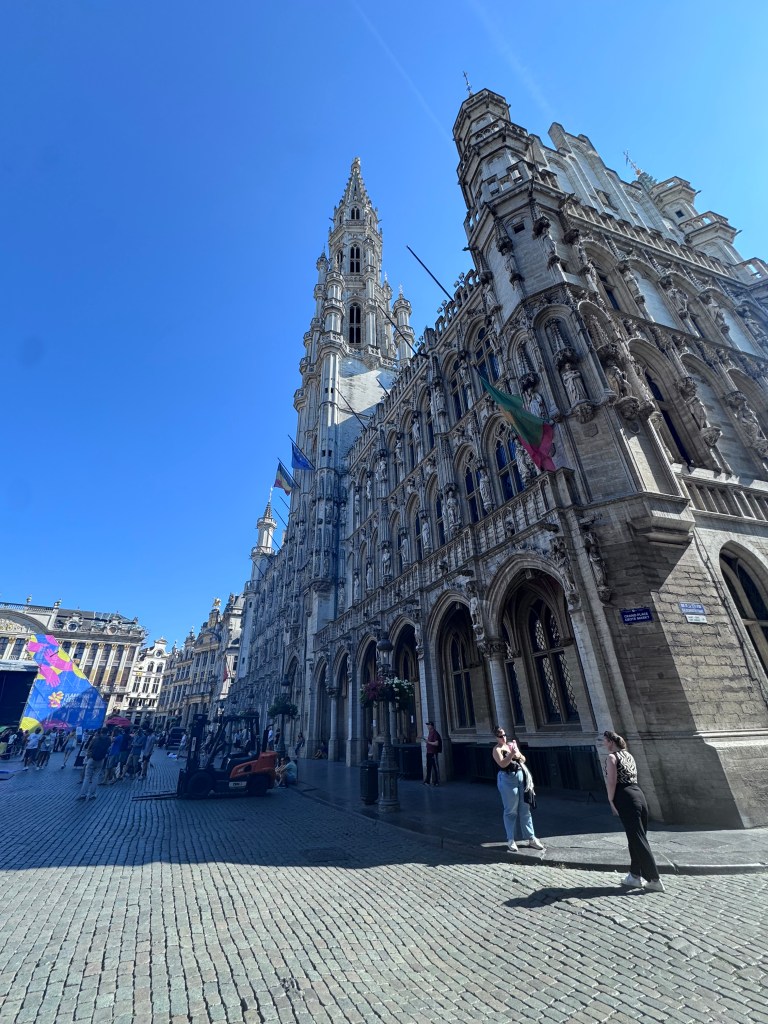
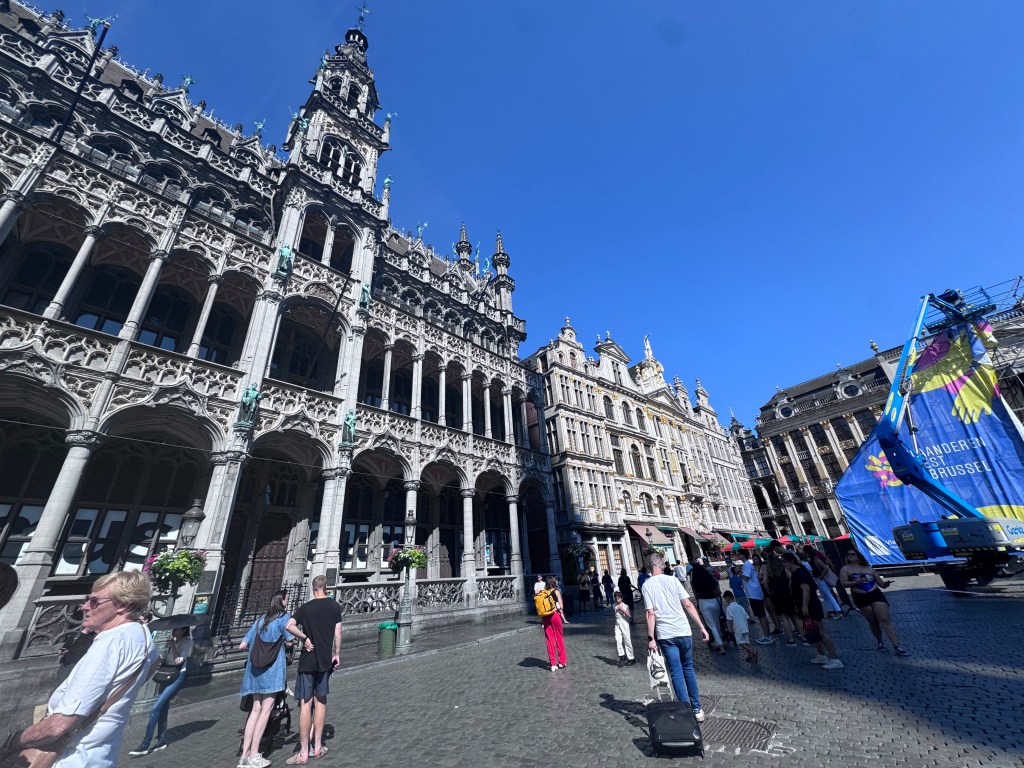
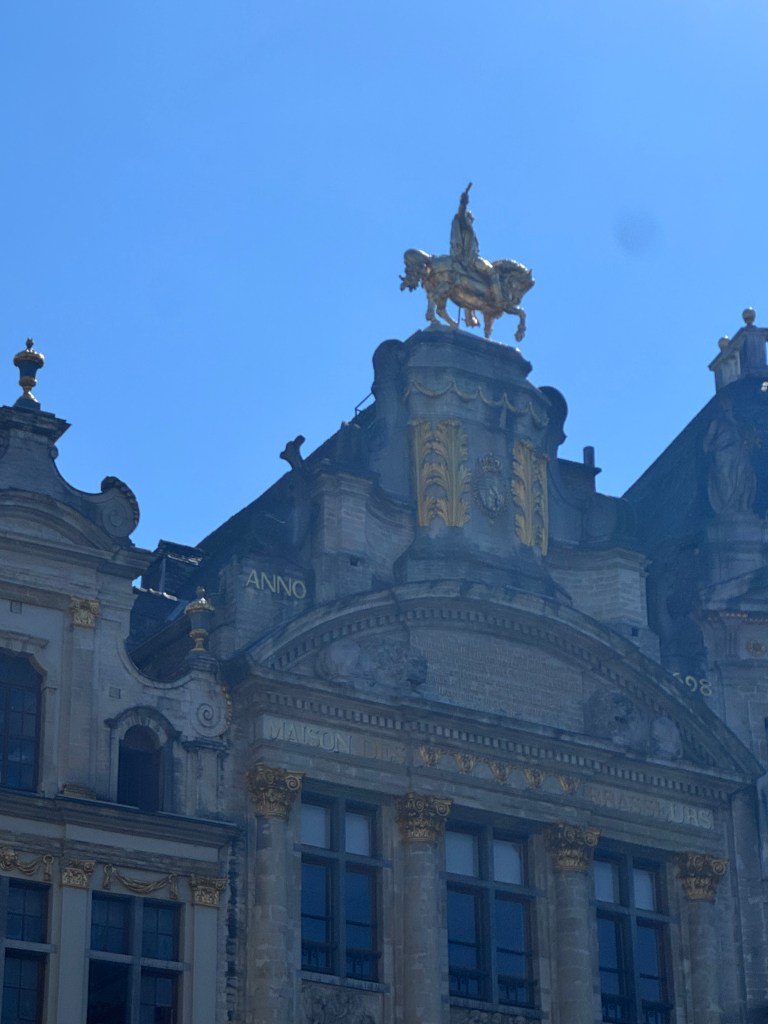
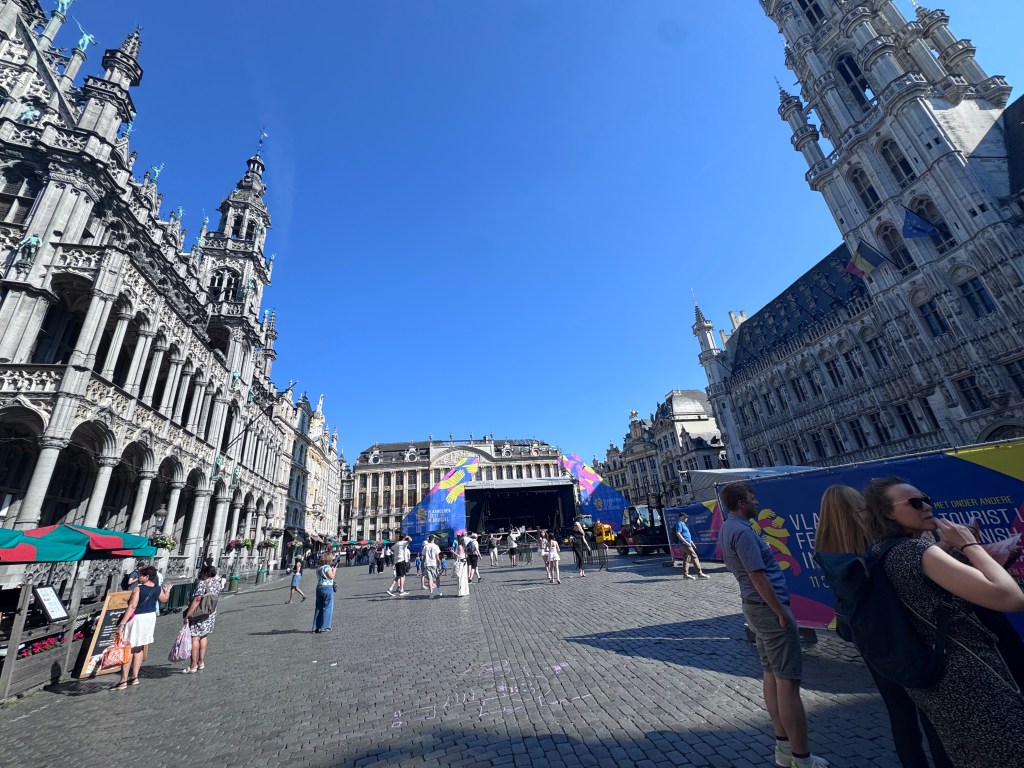
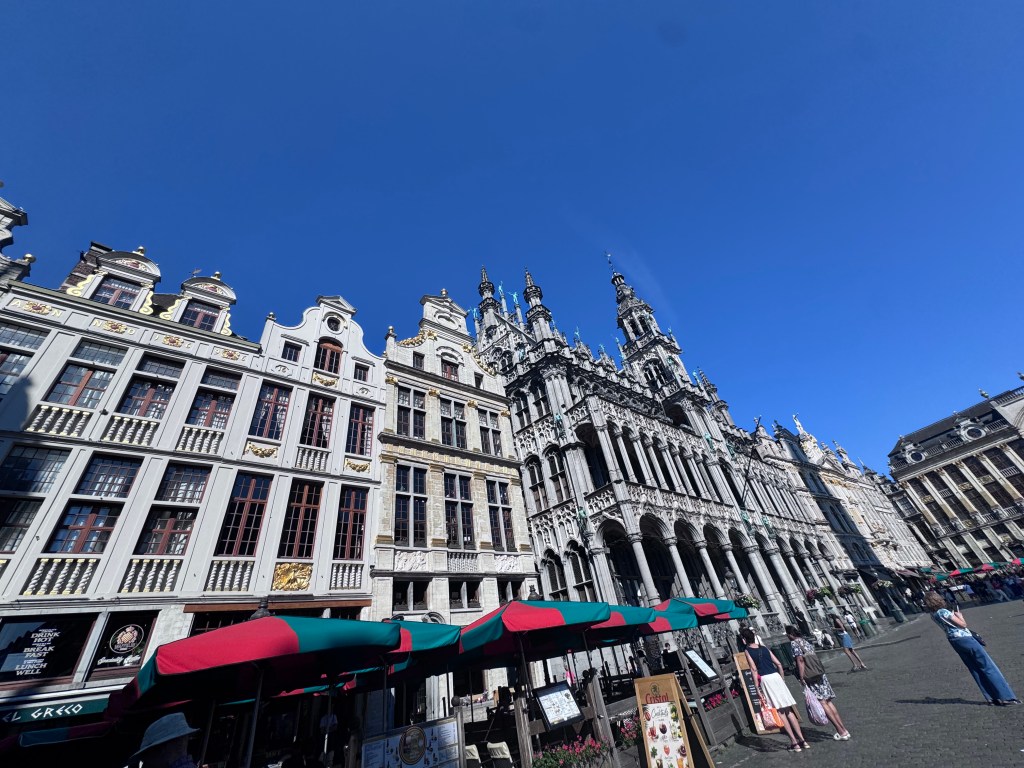
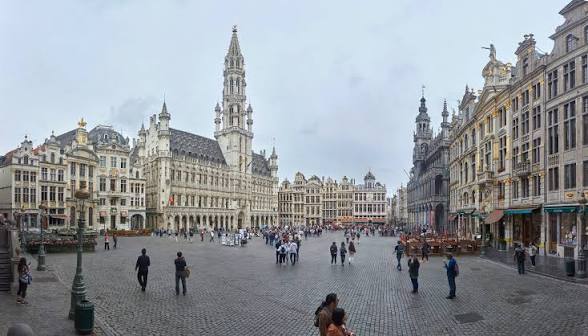
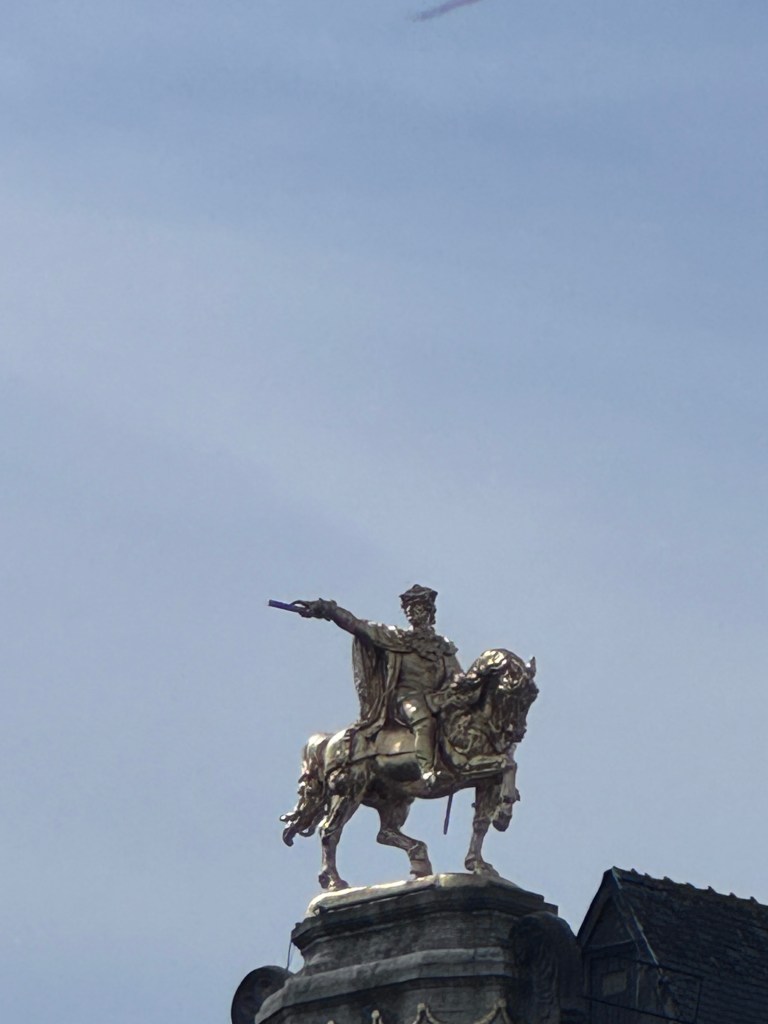
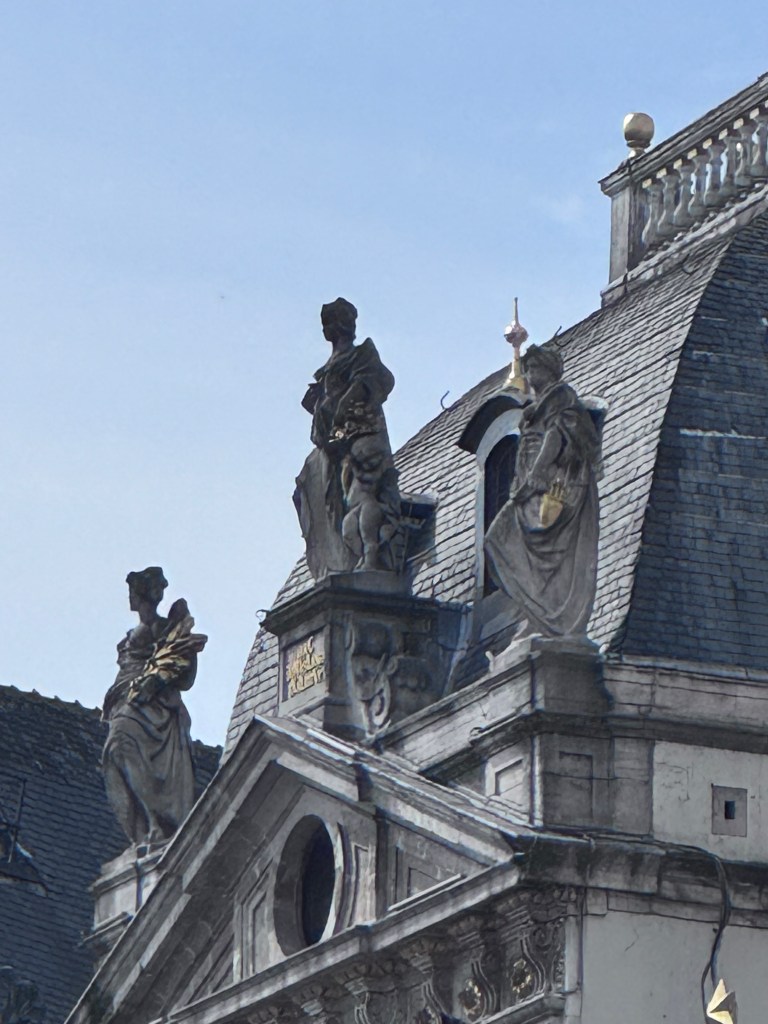
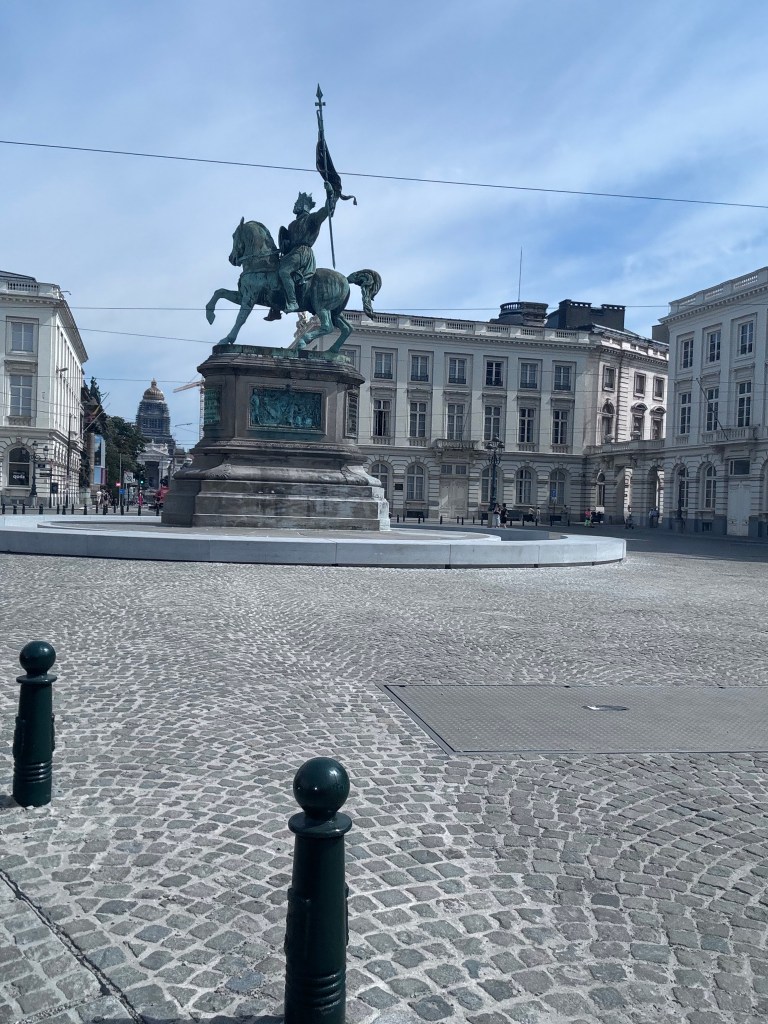
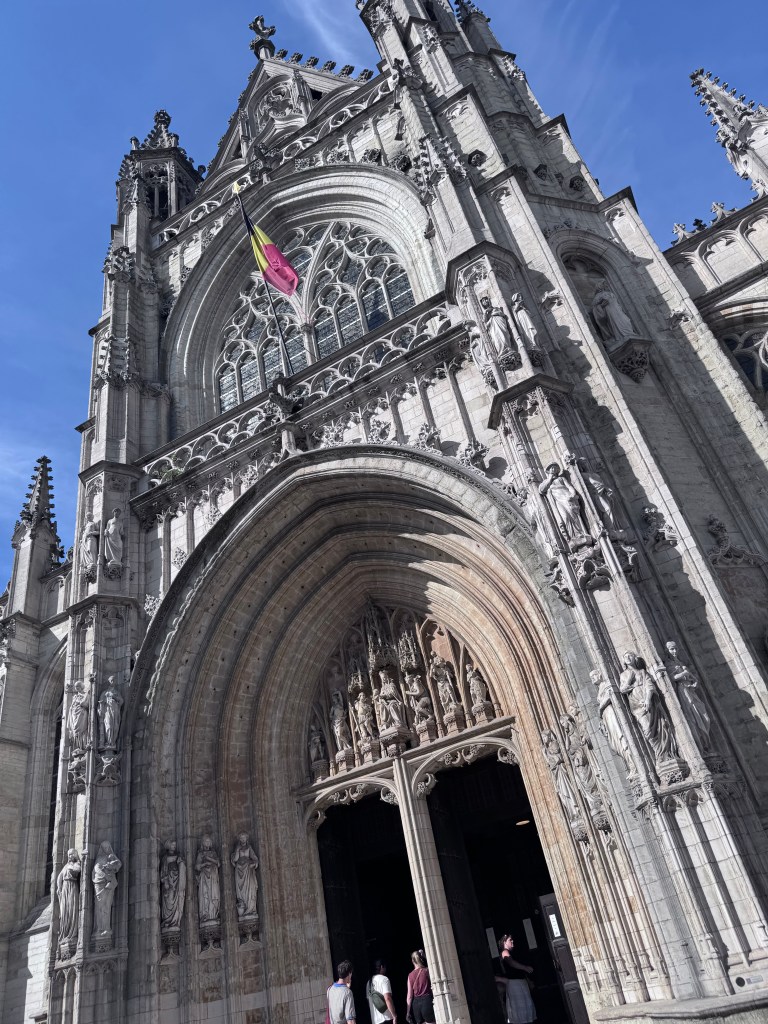
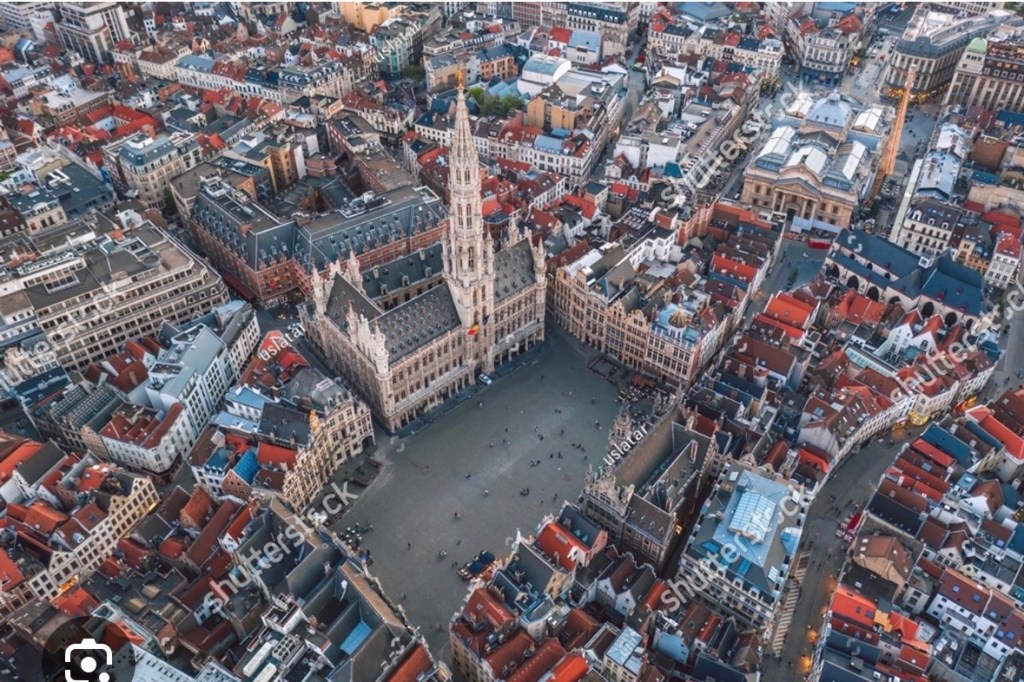
That evening we also wandered through the Grand Place. I had seen countless photographs before arriving, but nothing compares to standing there in person. Dating back to the 11th century, the Grand Place has been the heart of Brussels for nearly a thousand years and is recognized as a UNESCO World Heritage Site. It is surrounded by magnificent guildhalls whose richly decorated facades are covered in gold leaf, sculptures, and elaborate carvings. The Gothic Town Hall, with its soaring spire, dominates one side of the square, while the King’s House (Maison du Roi) stands opposite. As the evening light reflected off the gold detailing, the entire square seemed to glow. It is easily one of the most beautiful city squares we have visited anywhere in Europe.

The elevator, however, still wasn’t fixed when we returned to the apartment.

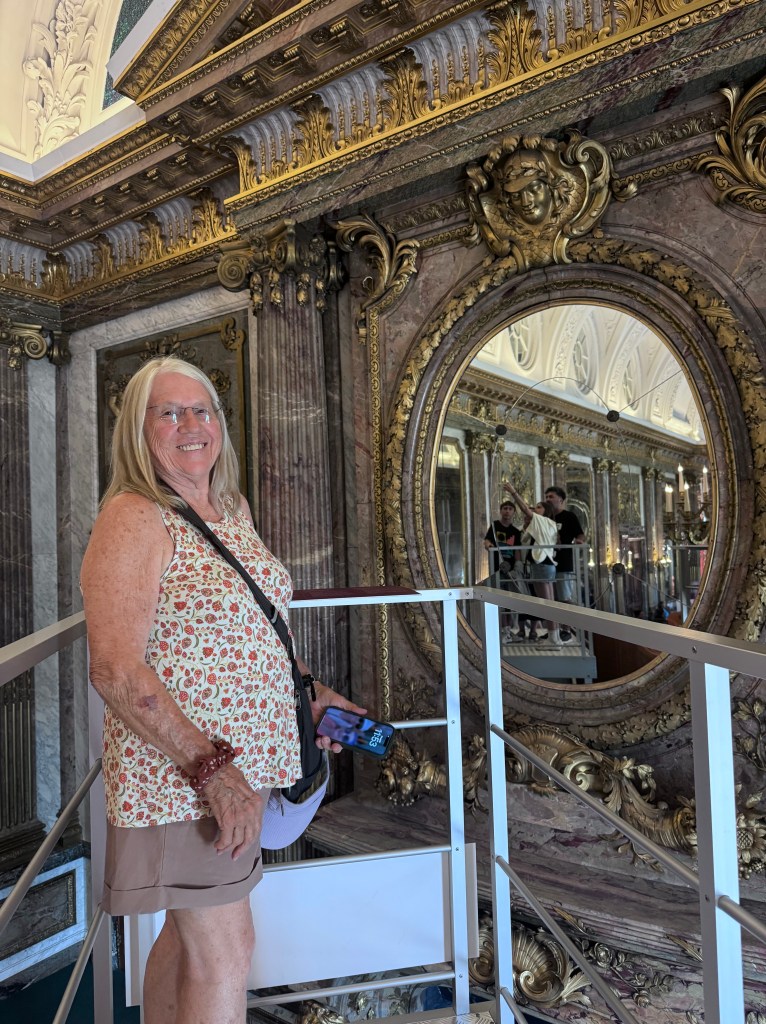
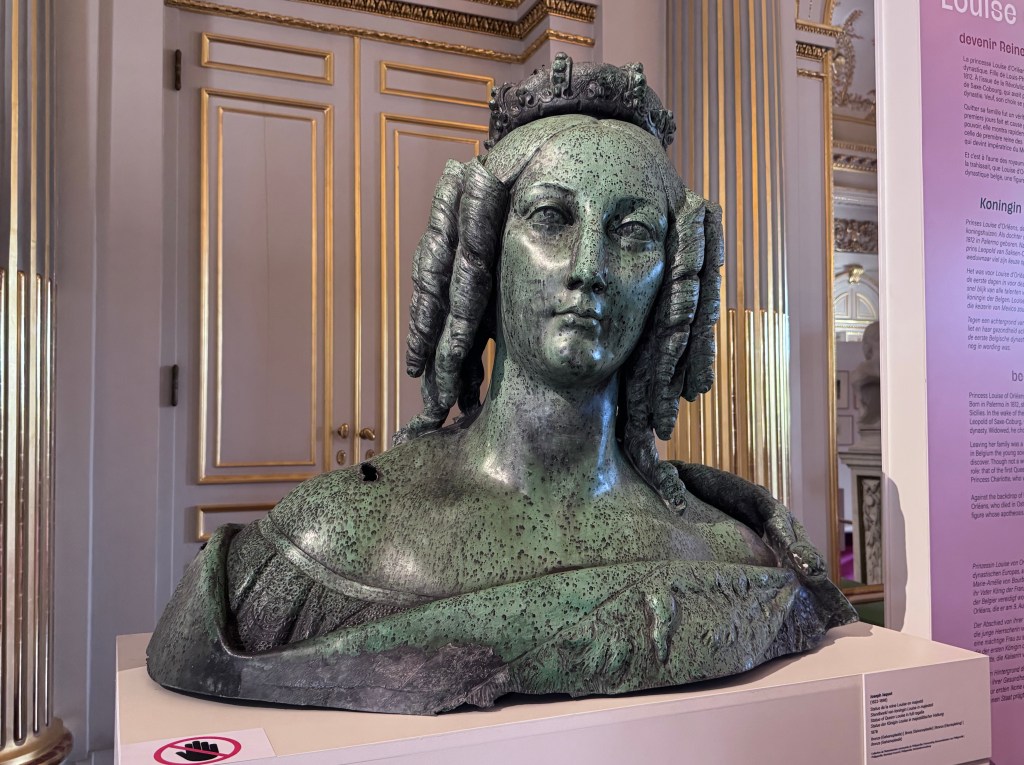
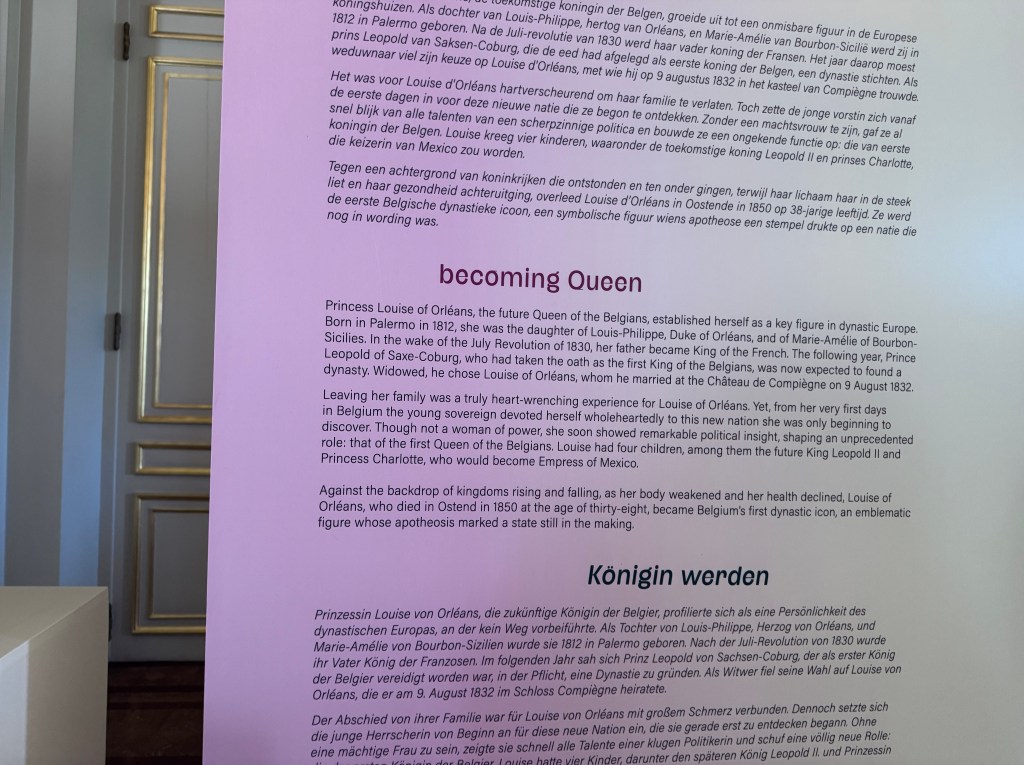
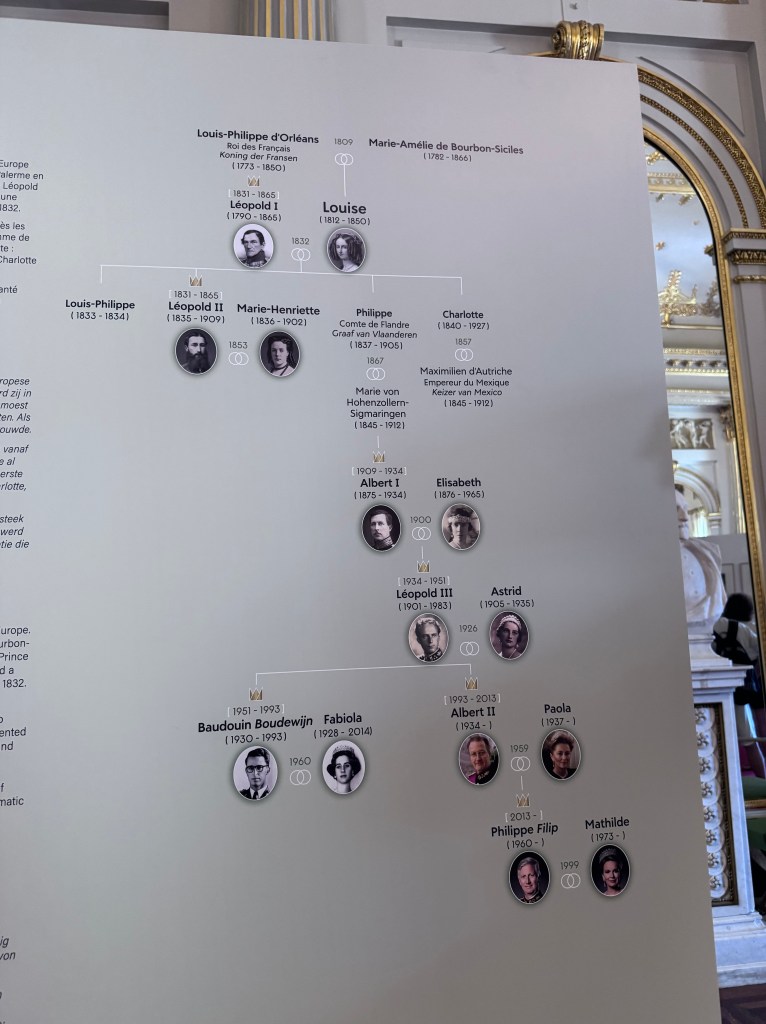
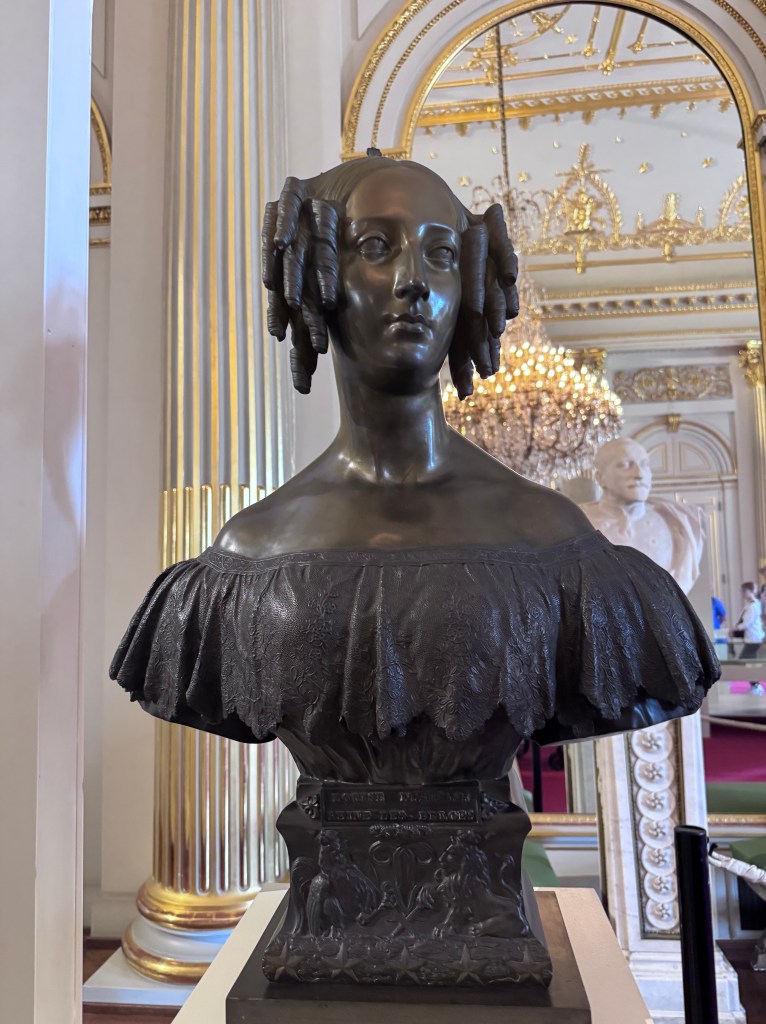
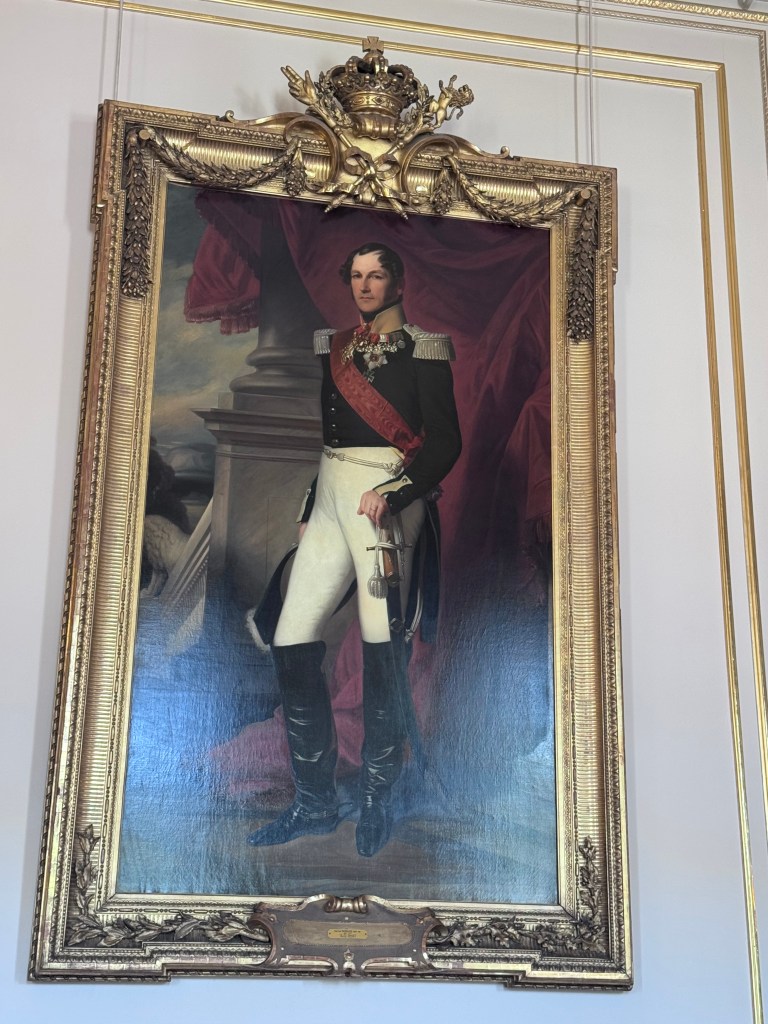
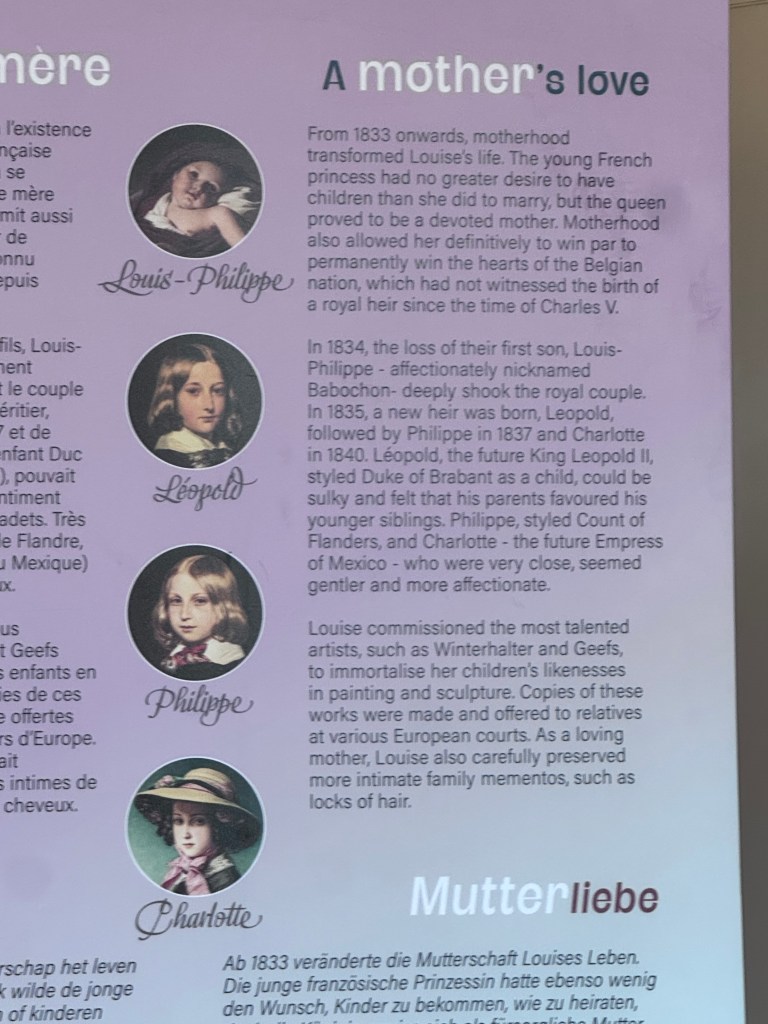
The next morning we took an Uber to the Royal Palace of Brussels. Each summer, after Belgium’s King and Queen leave for their summer residence, the palace opens its doors to the public for several weeks. Although it remains the King’s official administrative residence and is used for state ceremonies and official receptions, the royal family does not actually live there.

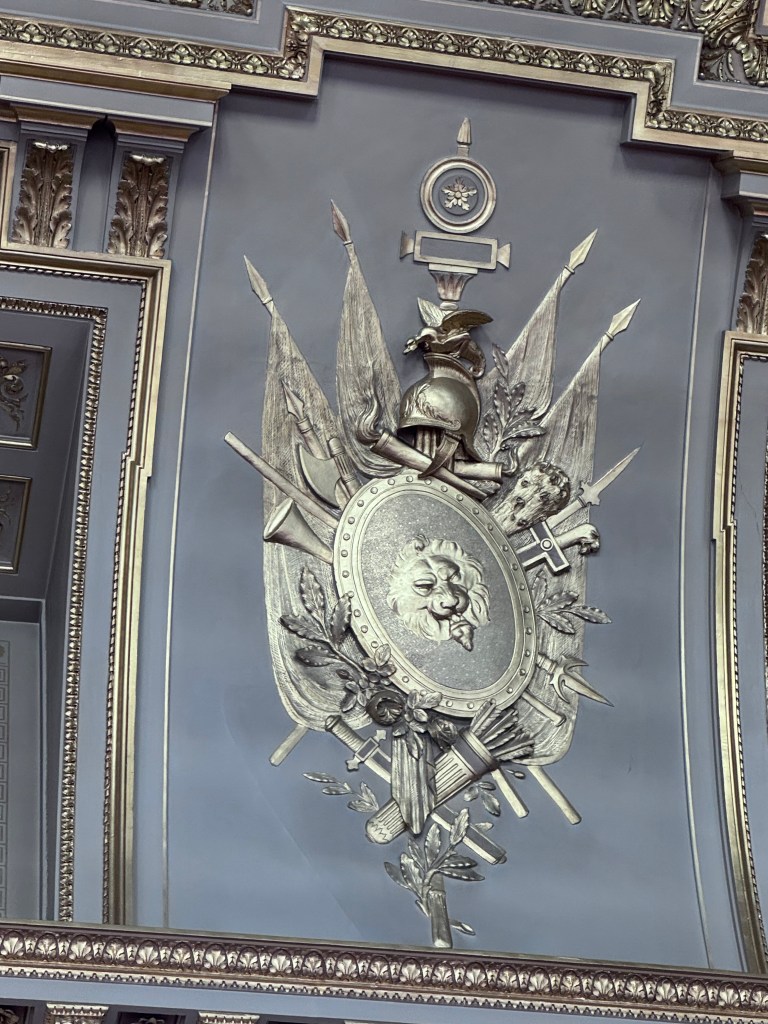
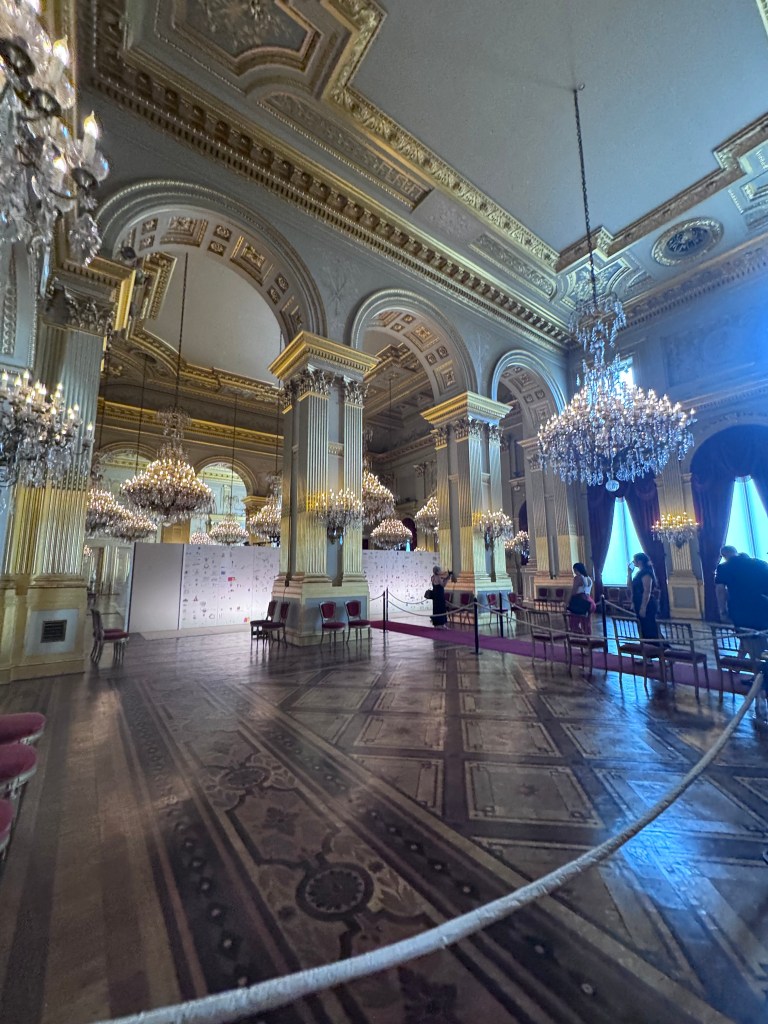
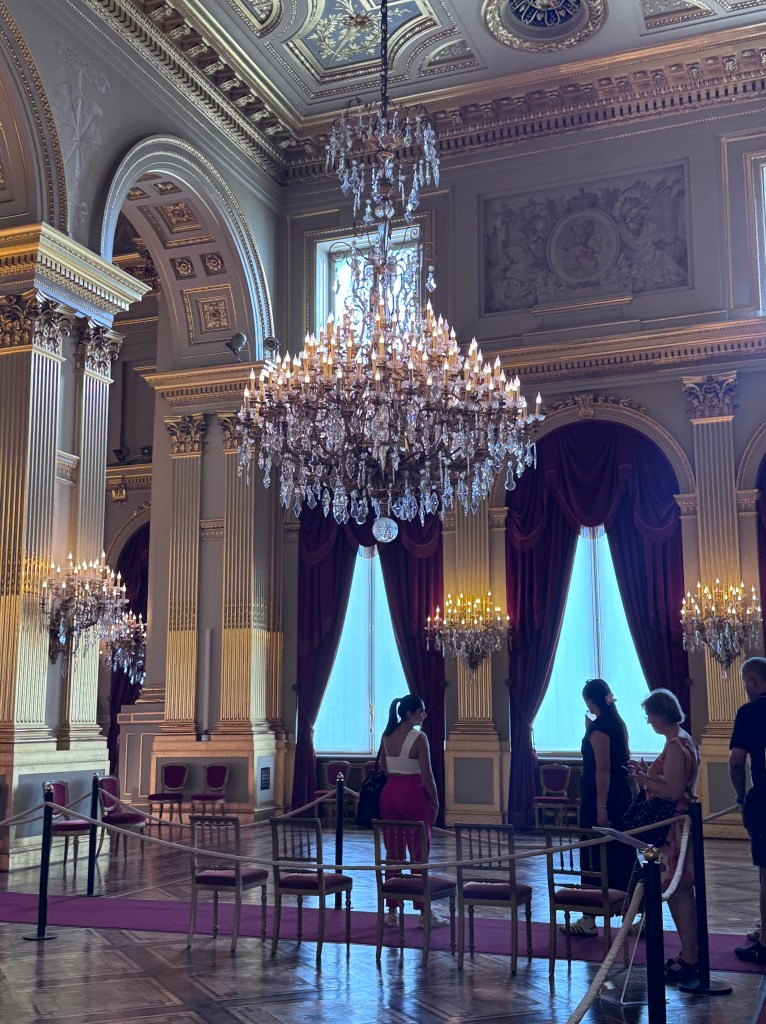
Walking through the palace was almost beyond comprehension.

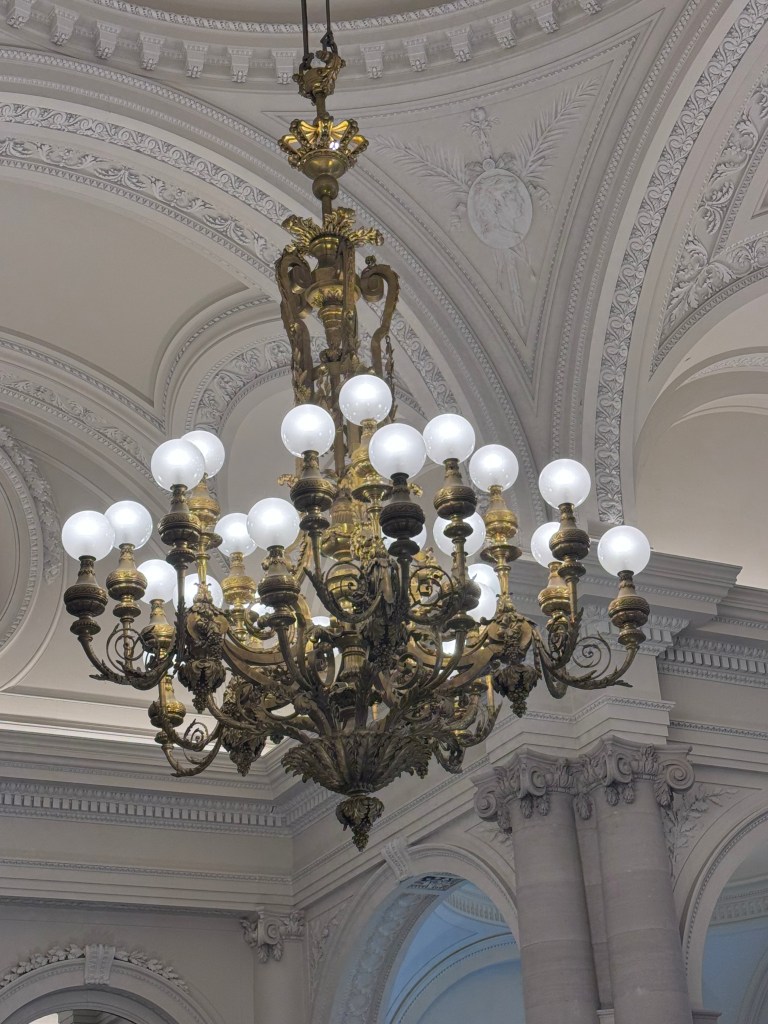
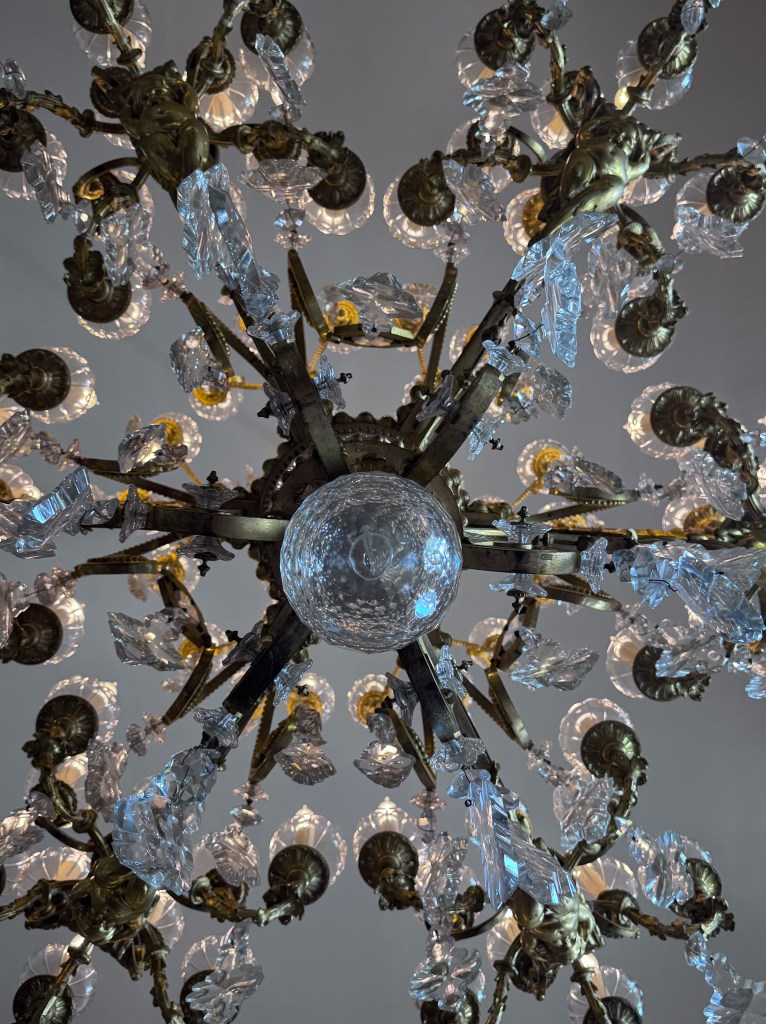
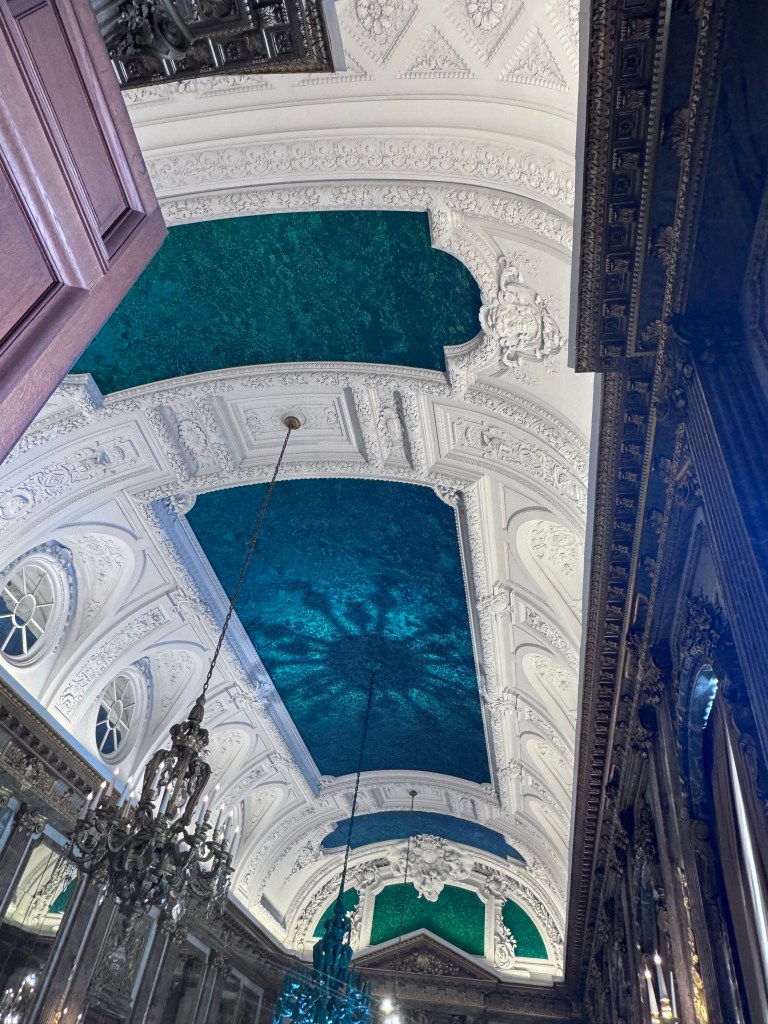
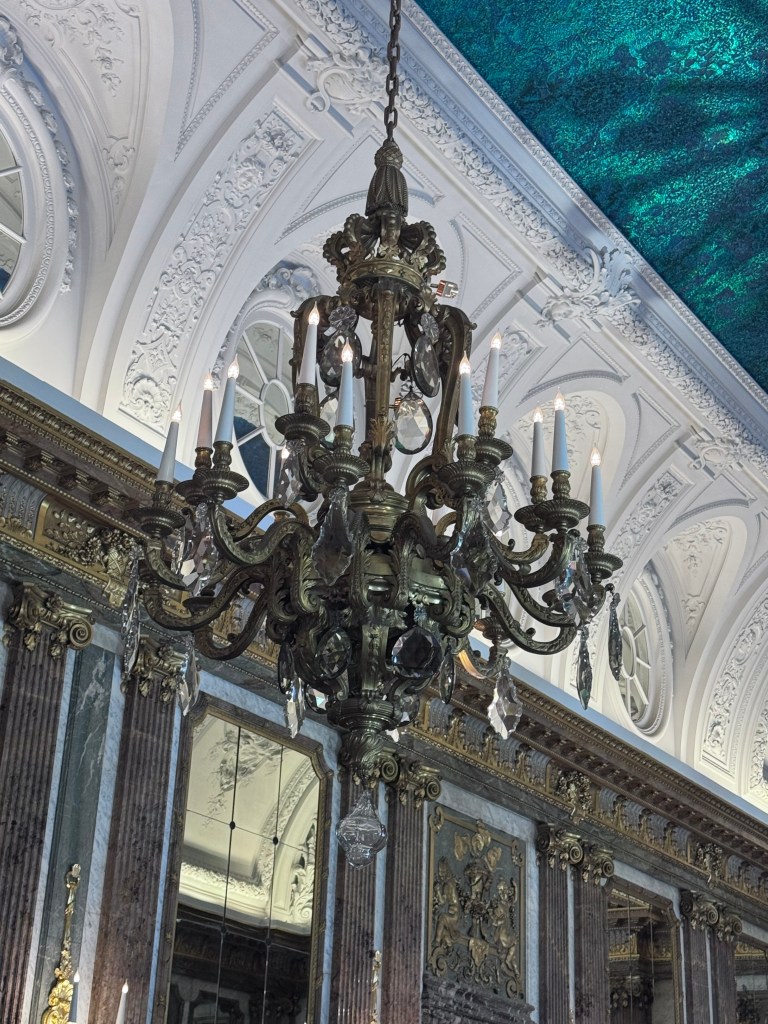
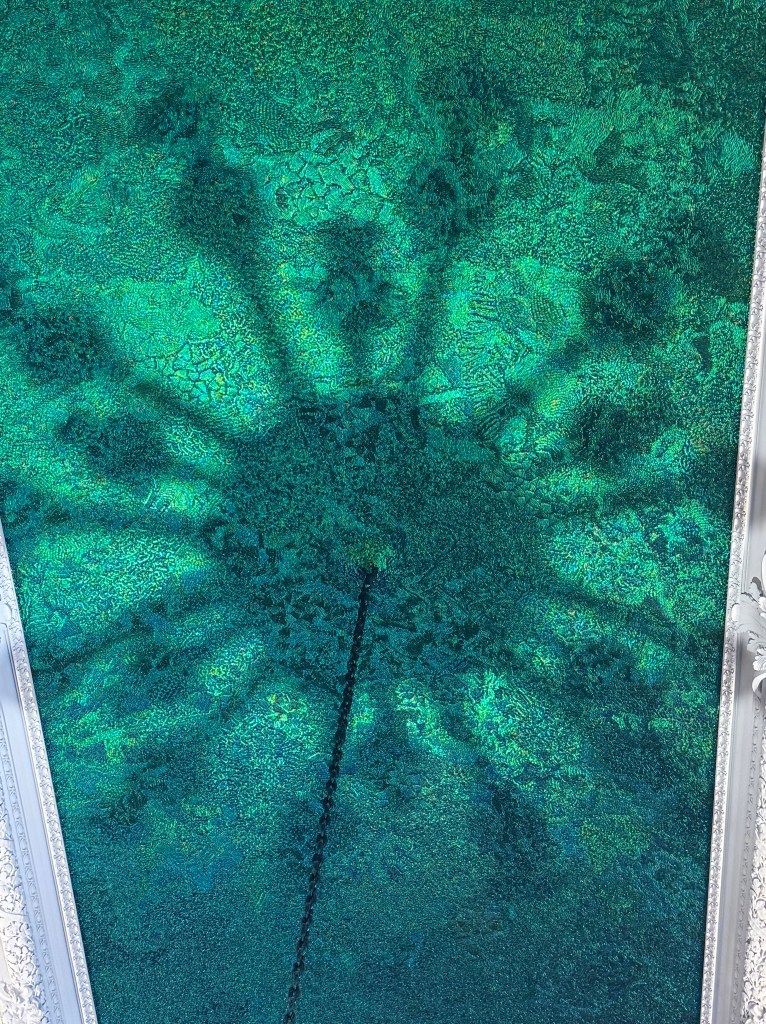
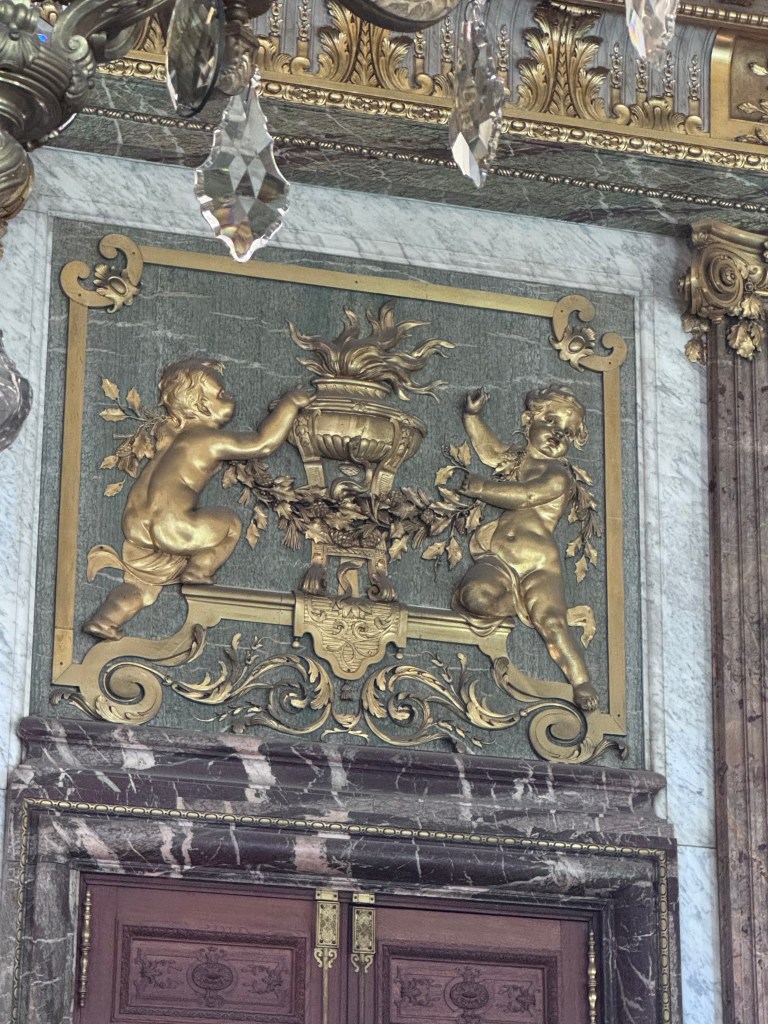
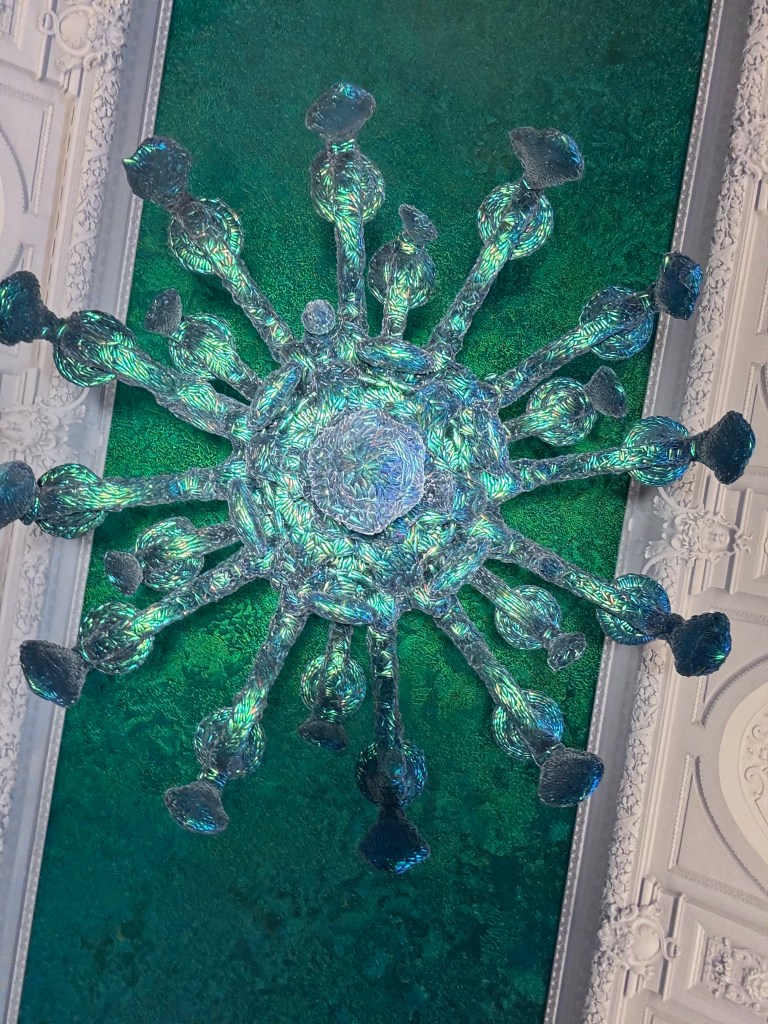
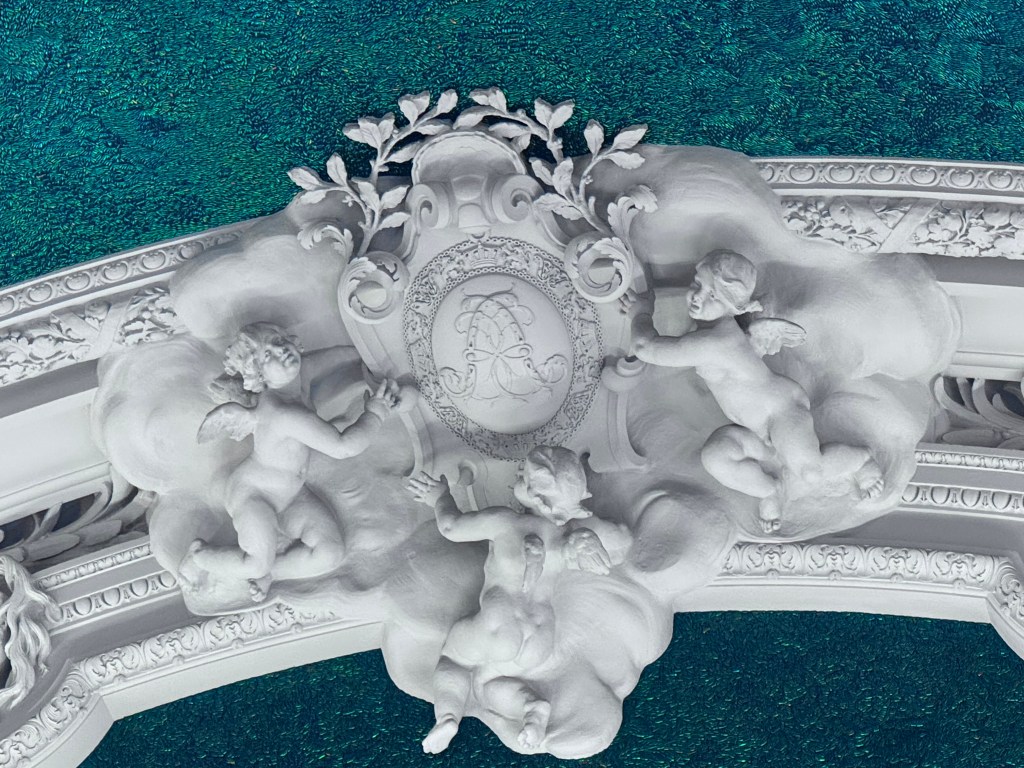
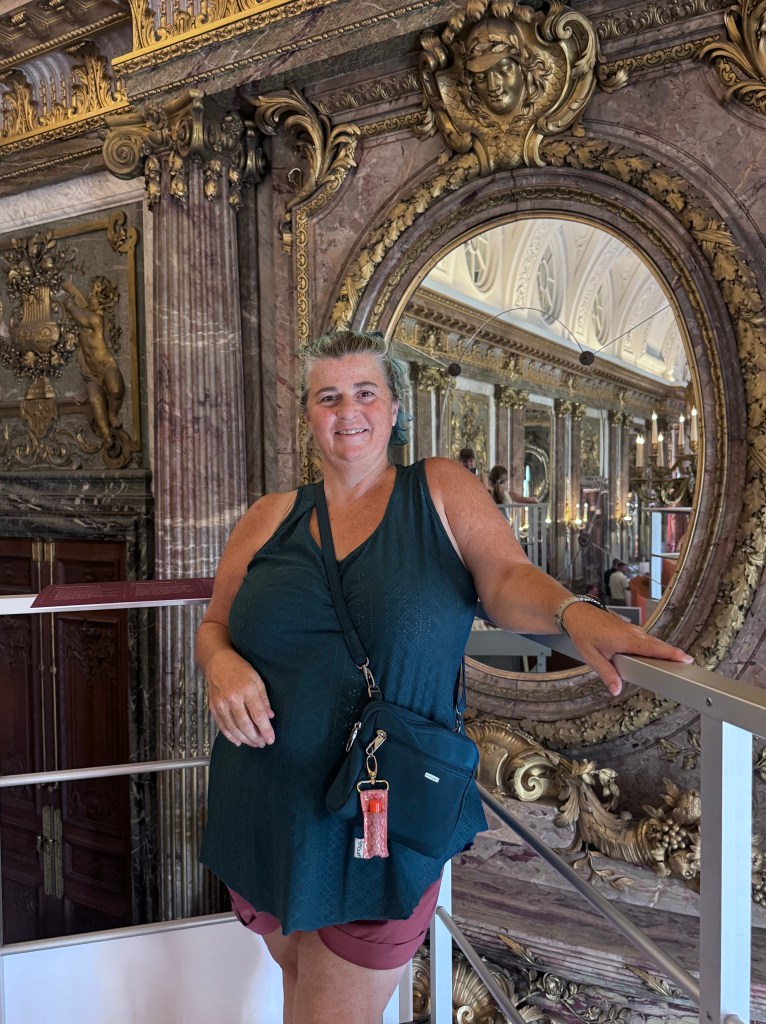
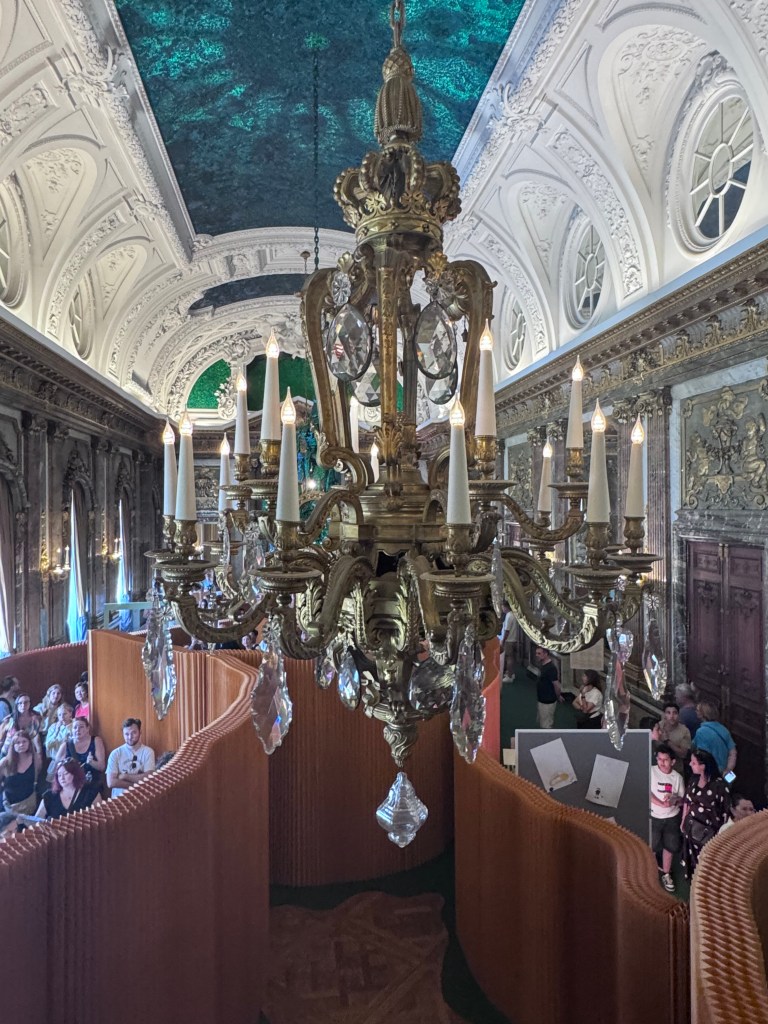
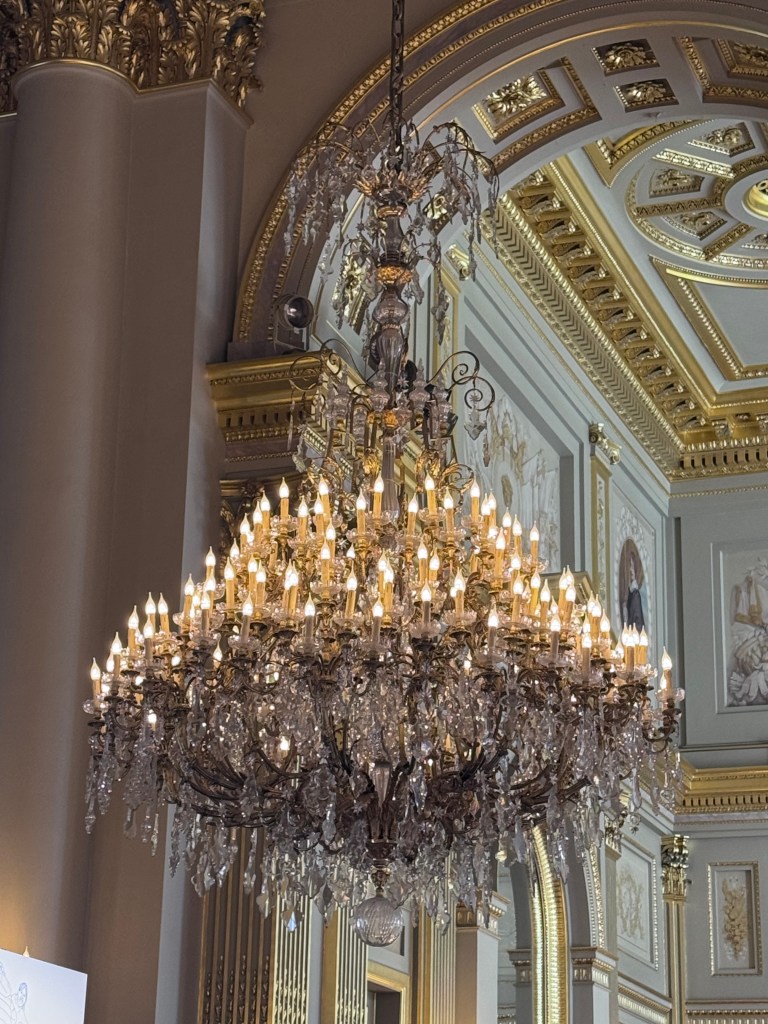
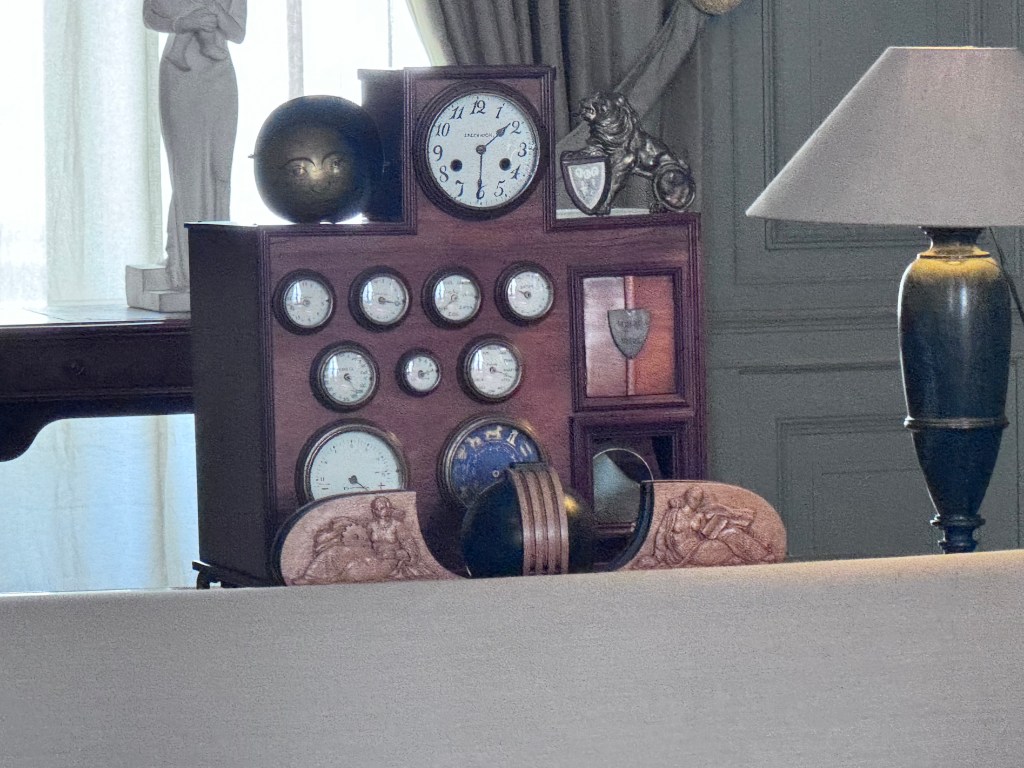
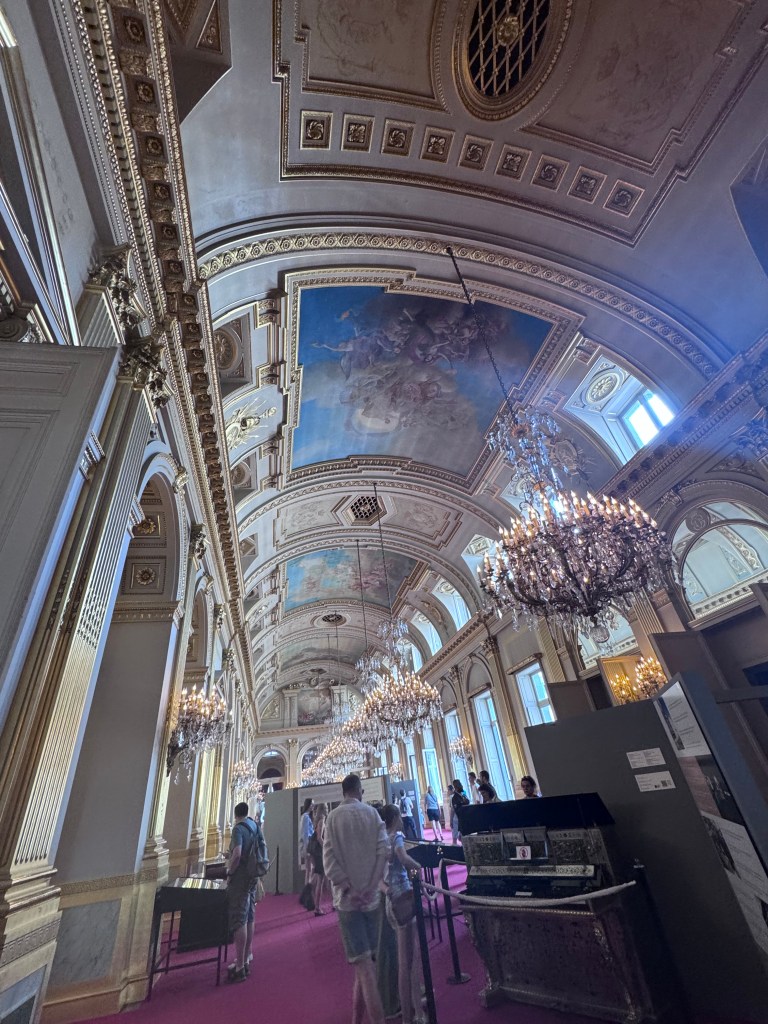
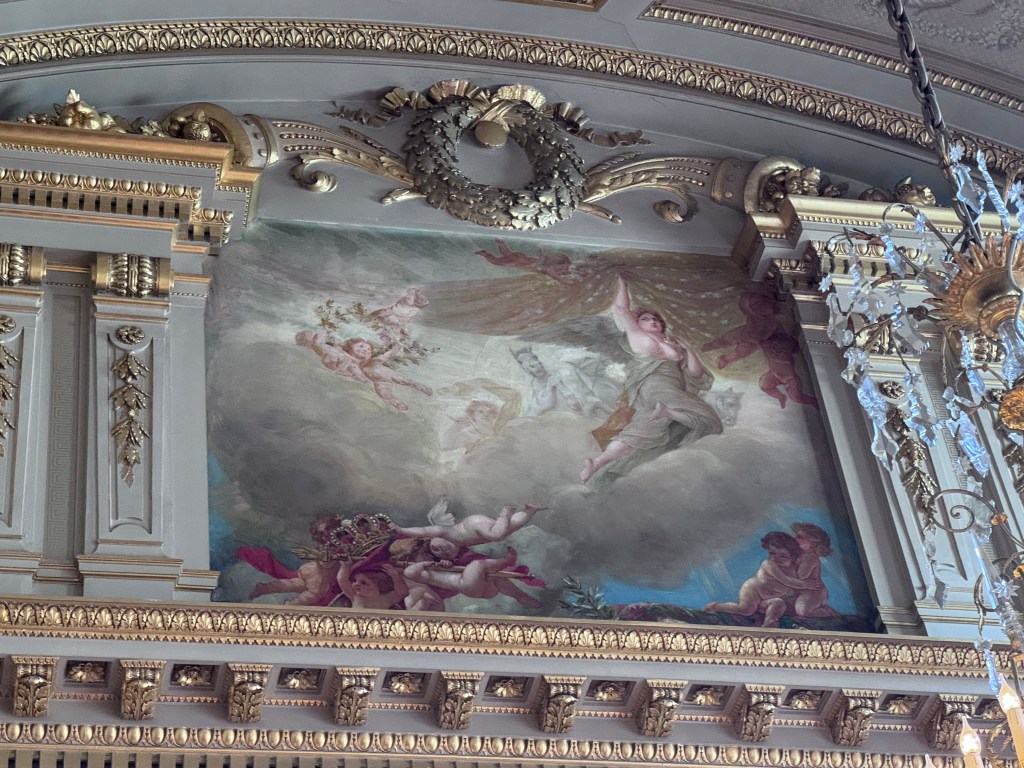
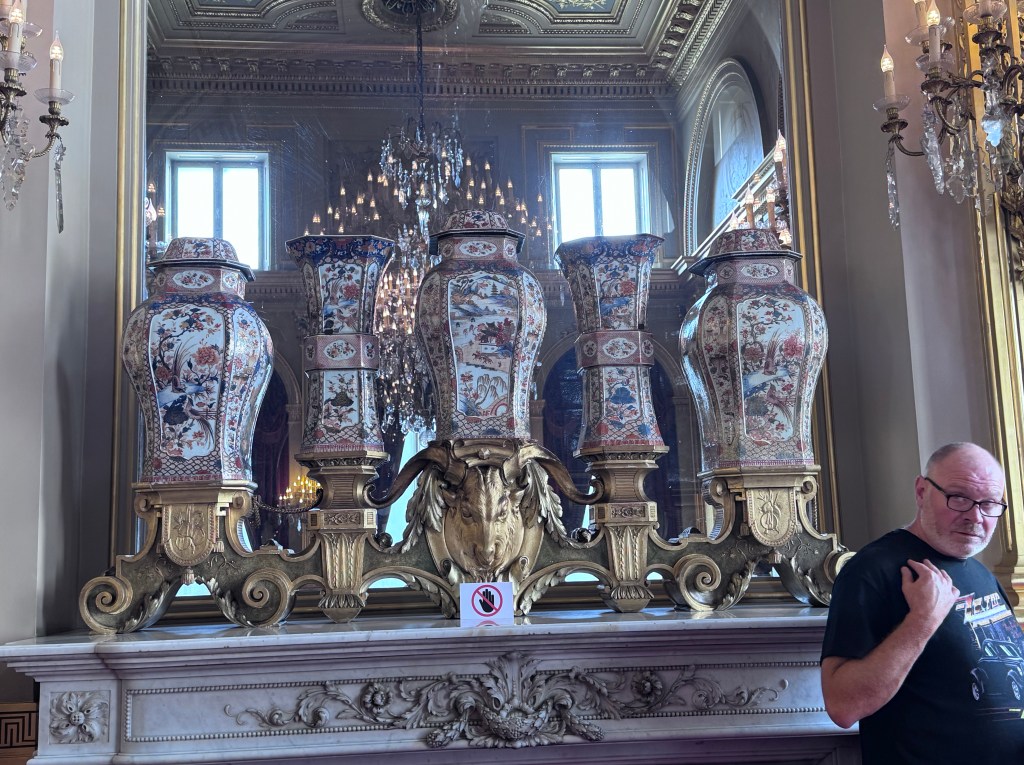
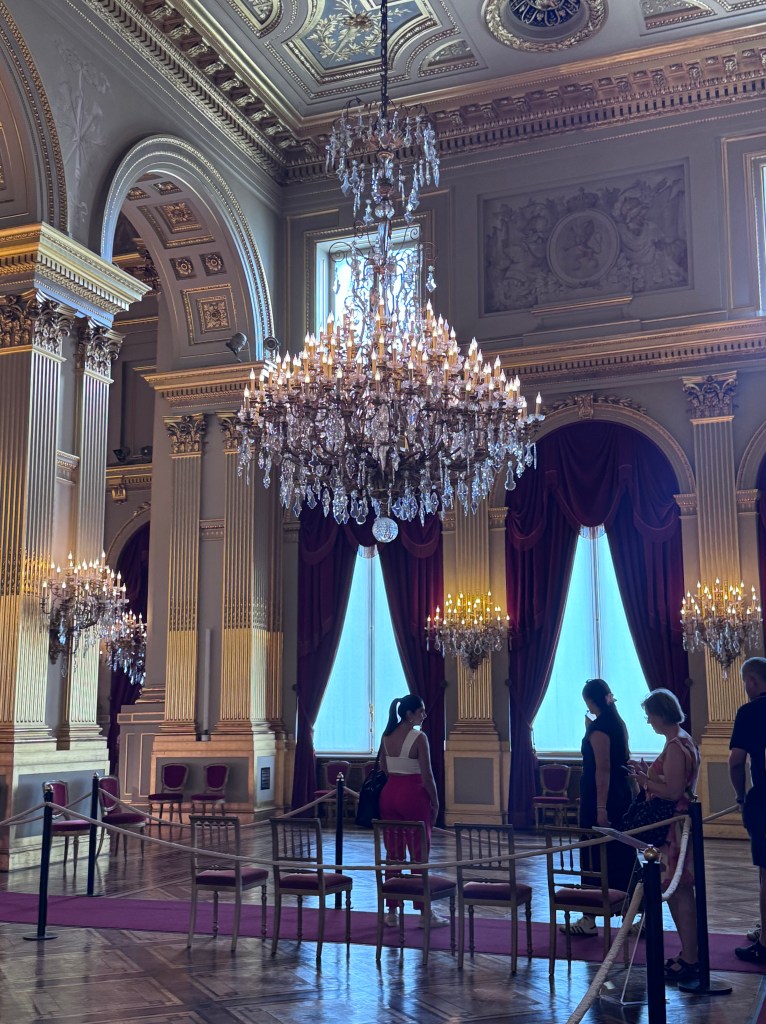
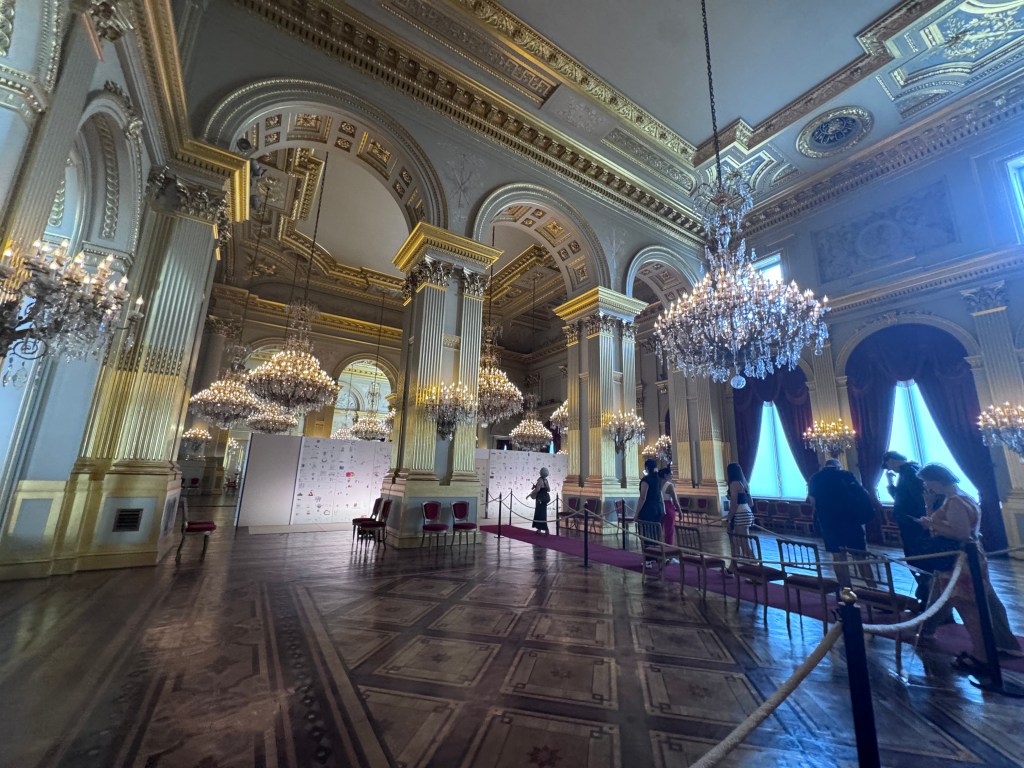
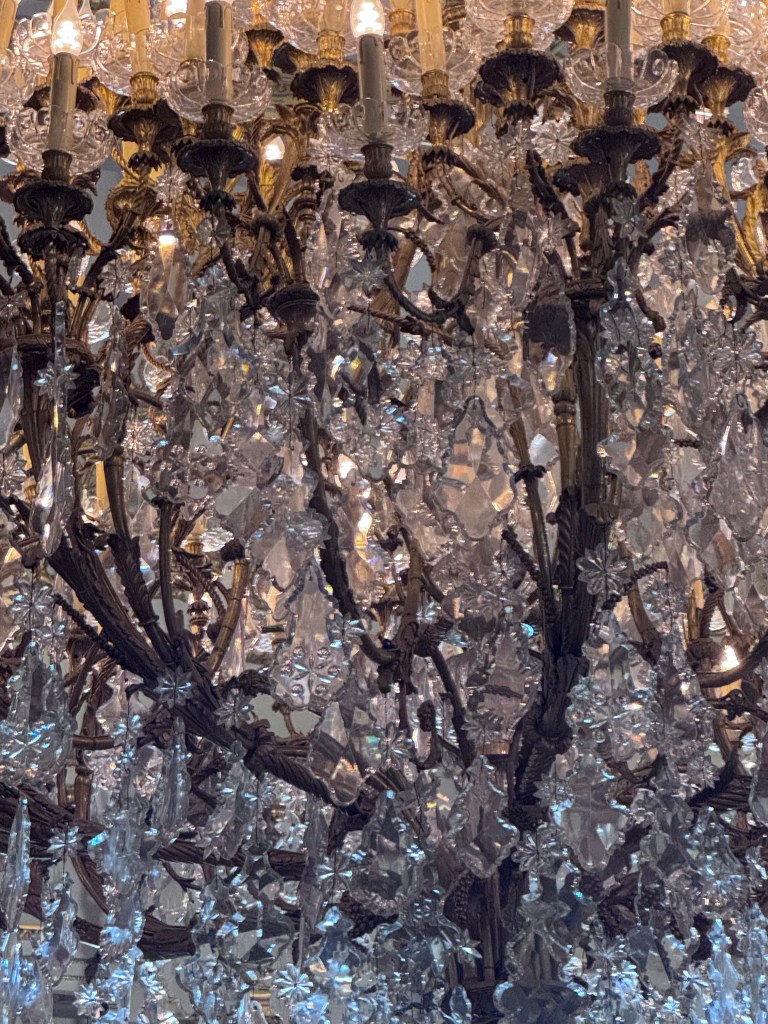
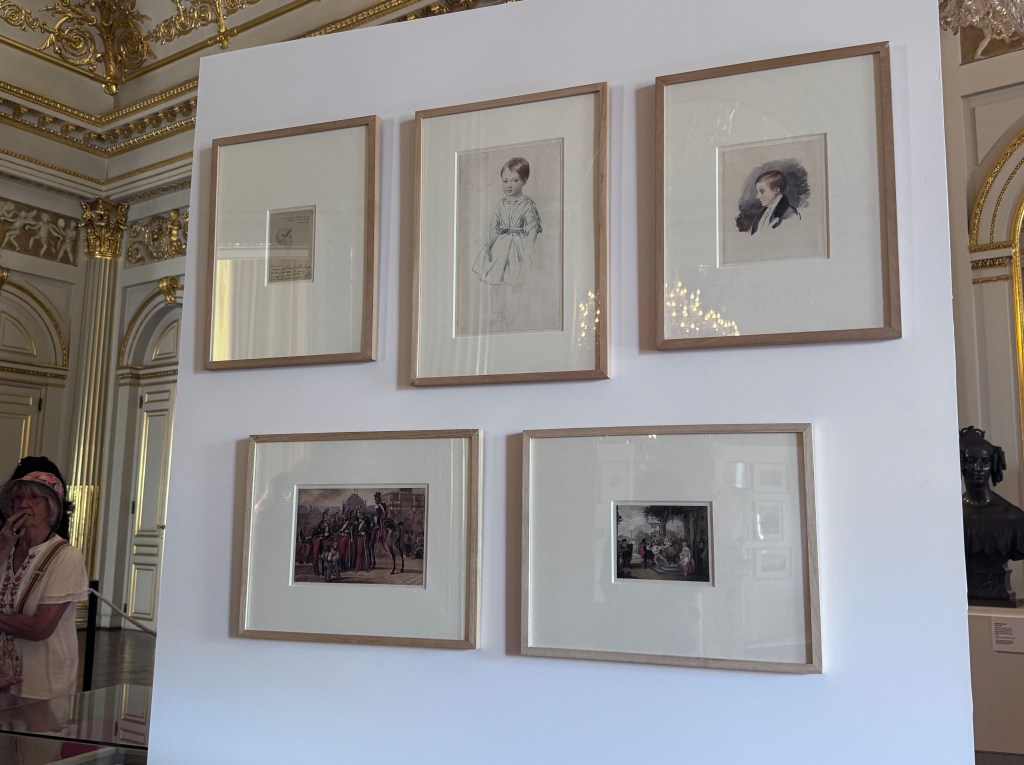
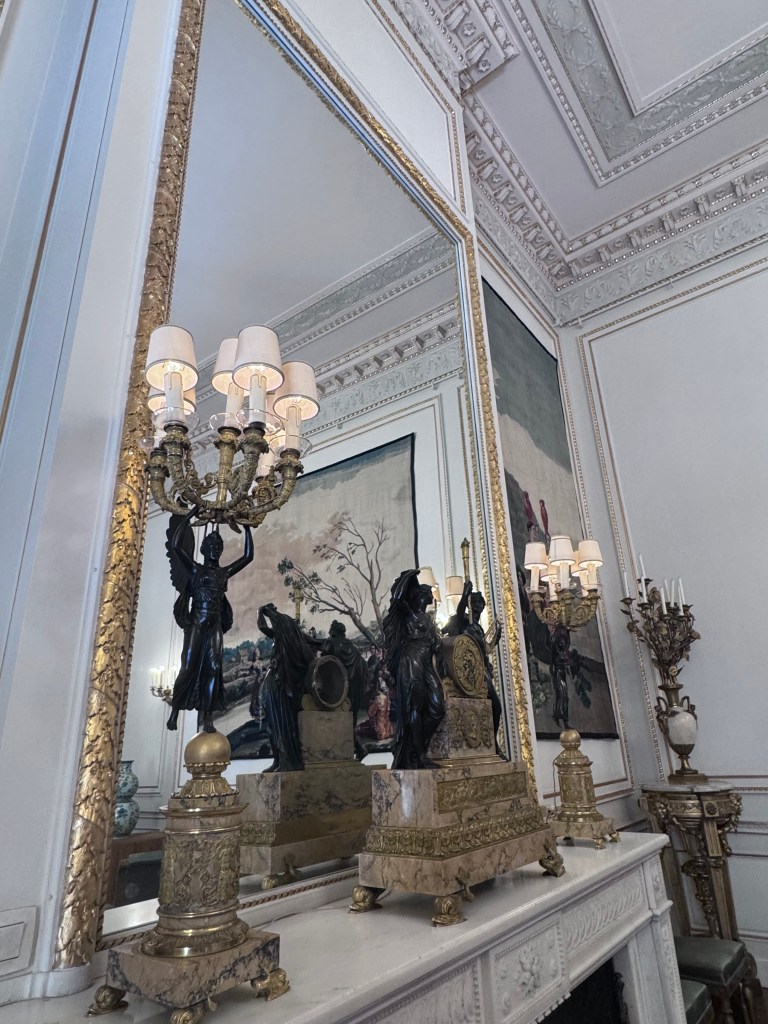
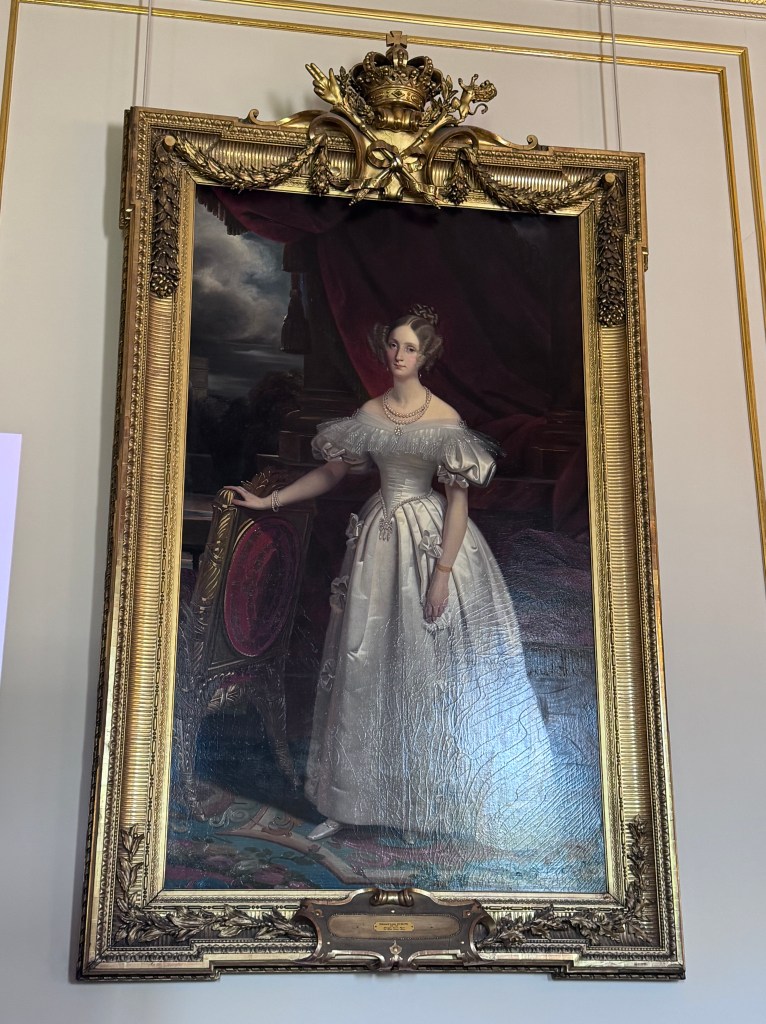
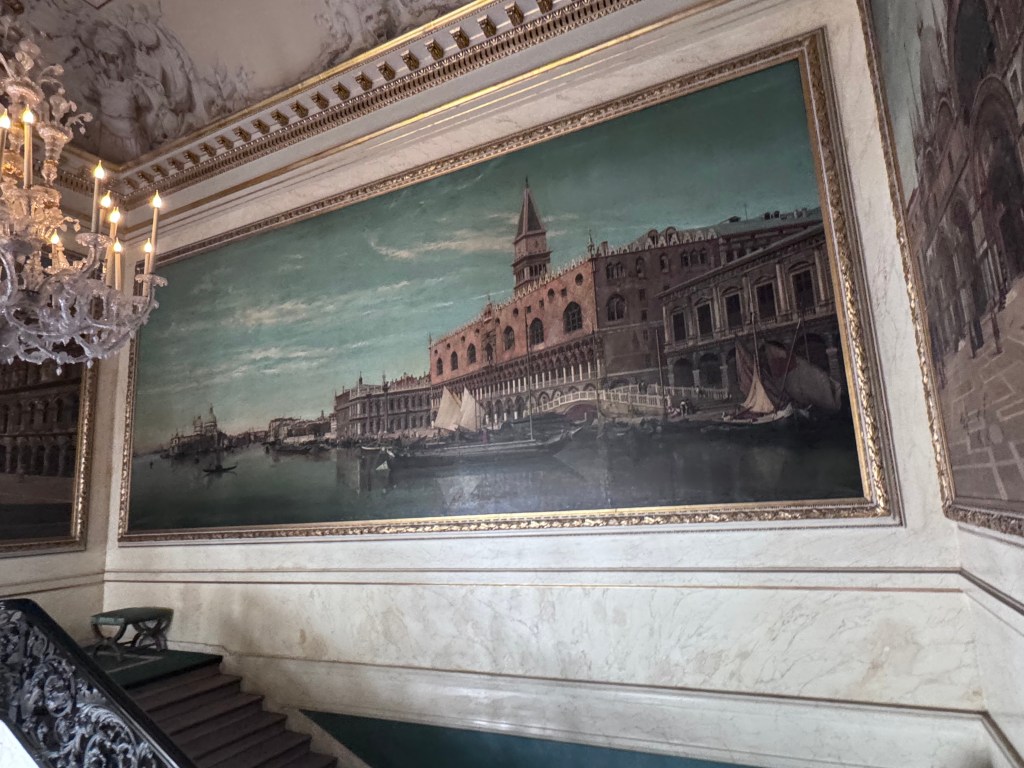
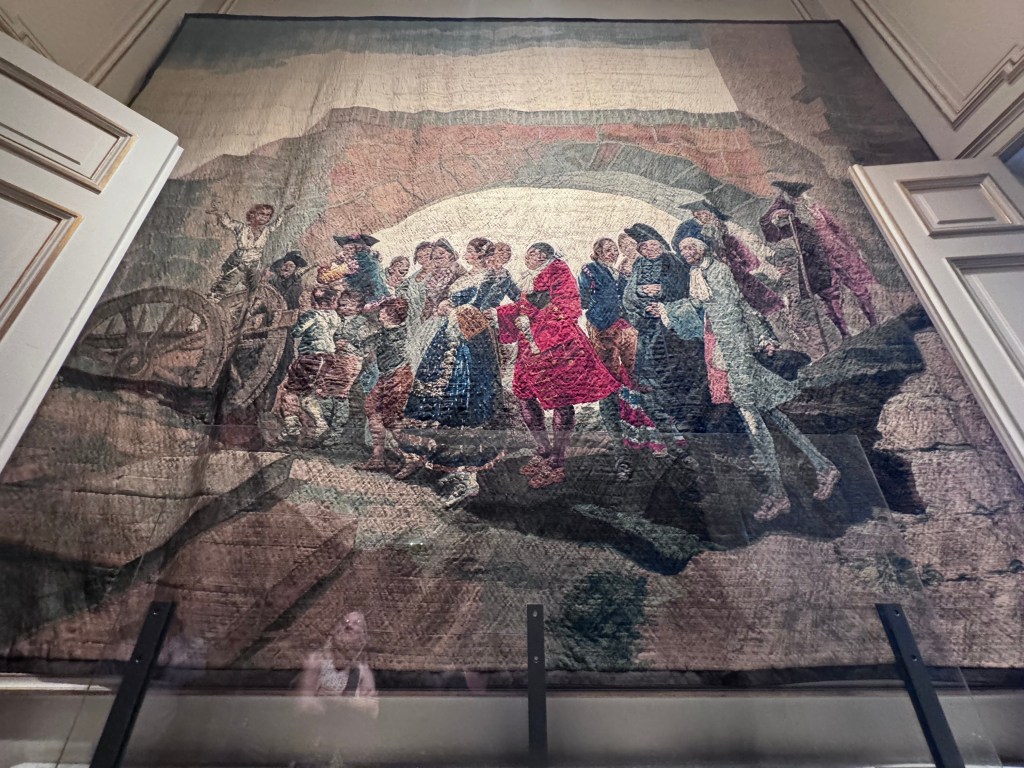
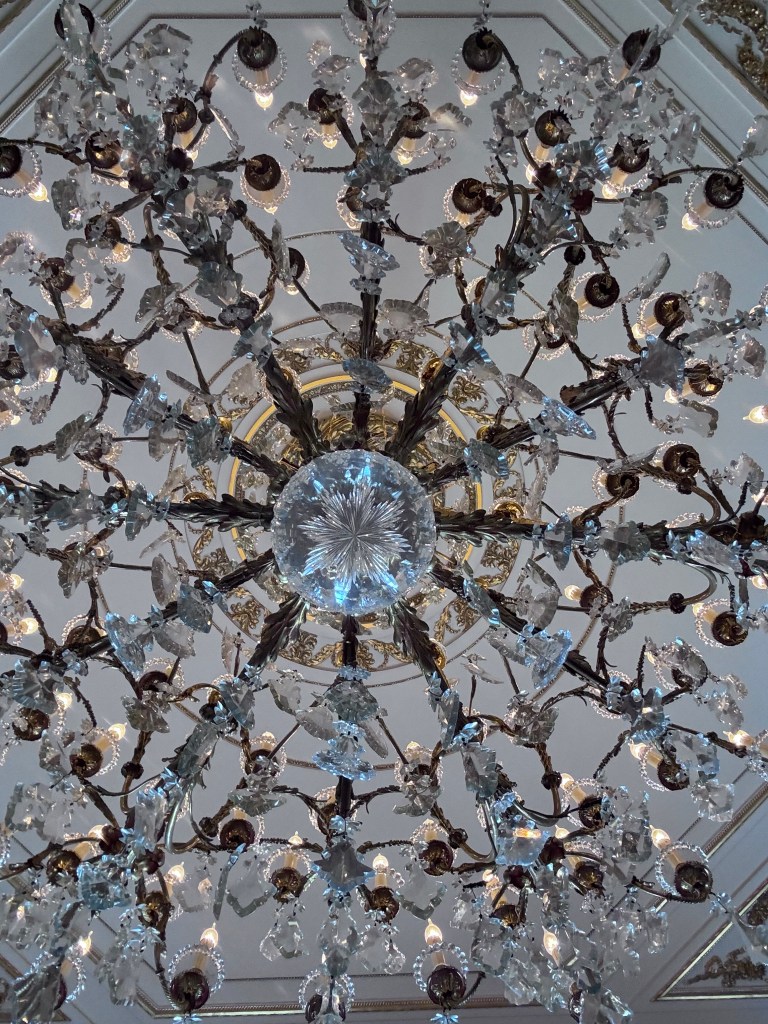
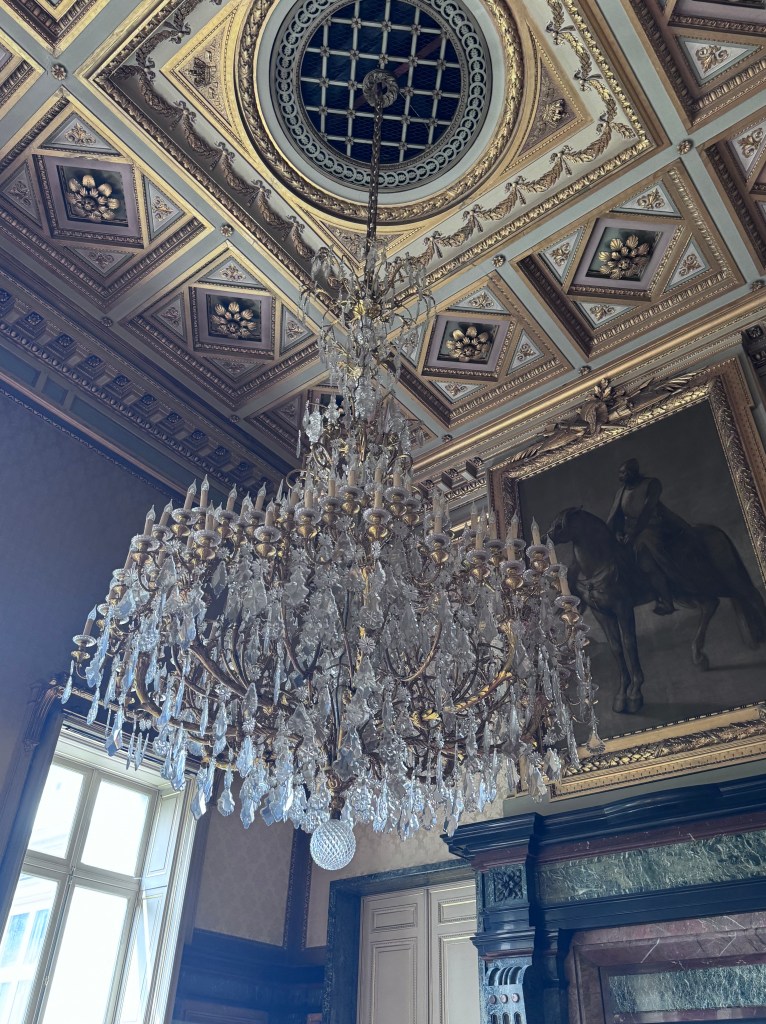
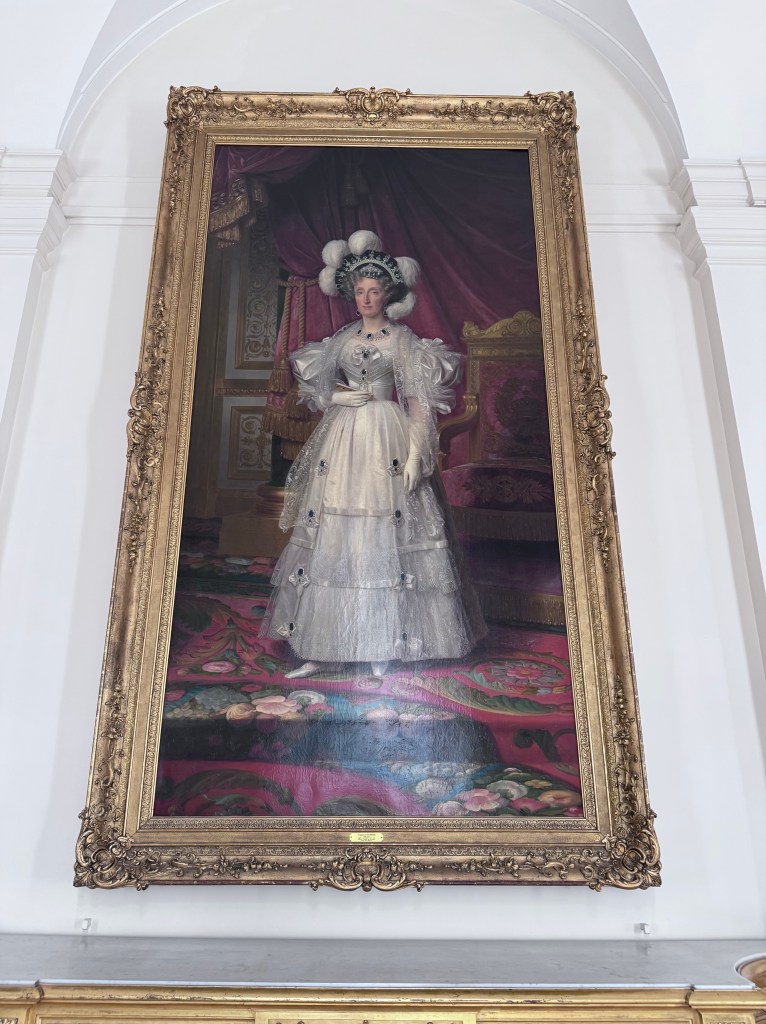
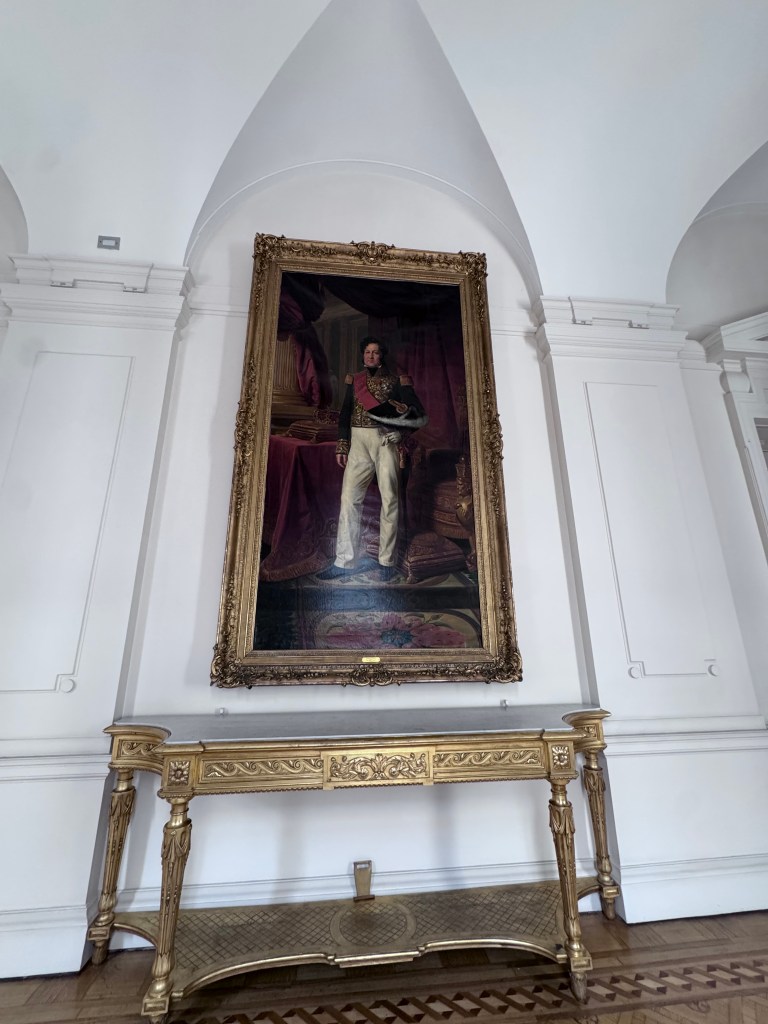
Room after room revealed soaring ceilings, enormous crystal chandeliers, elaborate fireplaces, priceless paintings, intricate tapestries, and beautifully set dining tables. Every room seemed grander than the last. One of the most fascinating spaces was the Hall of Mirrors, whose ceiling was decorated with thousands of shimmering jewel beetle wing cases, creating an iridescent work of art unlike anything we had ever seen.

Because Kiya uses a transport chair, we were able to access areas of the palace that required using a lift. The staff could not have been more gracious, patiently guiding us through the accessible routes and making sure we were able to enjoy as much of the palace as possible. Their kindness made the visit even more memorable.

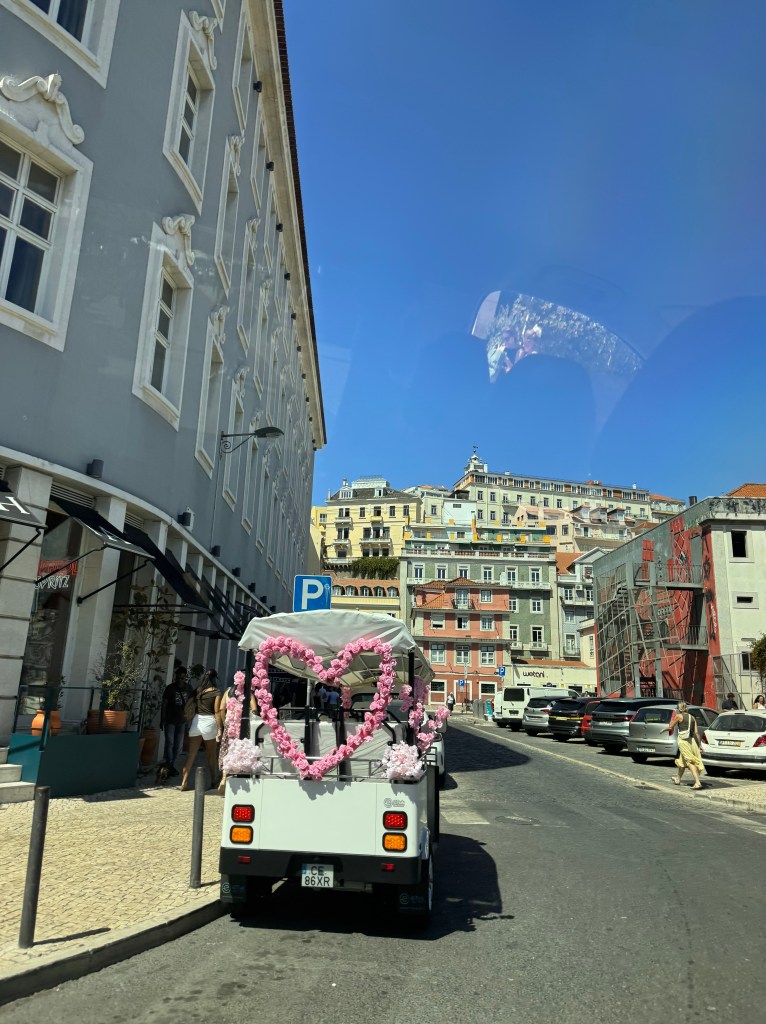
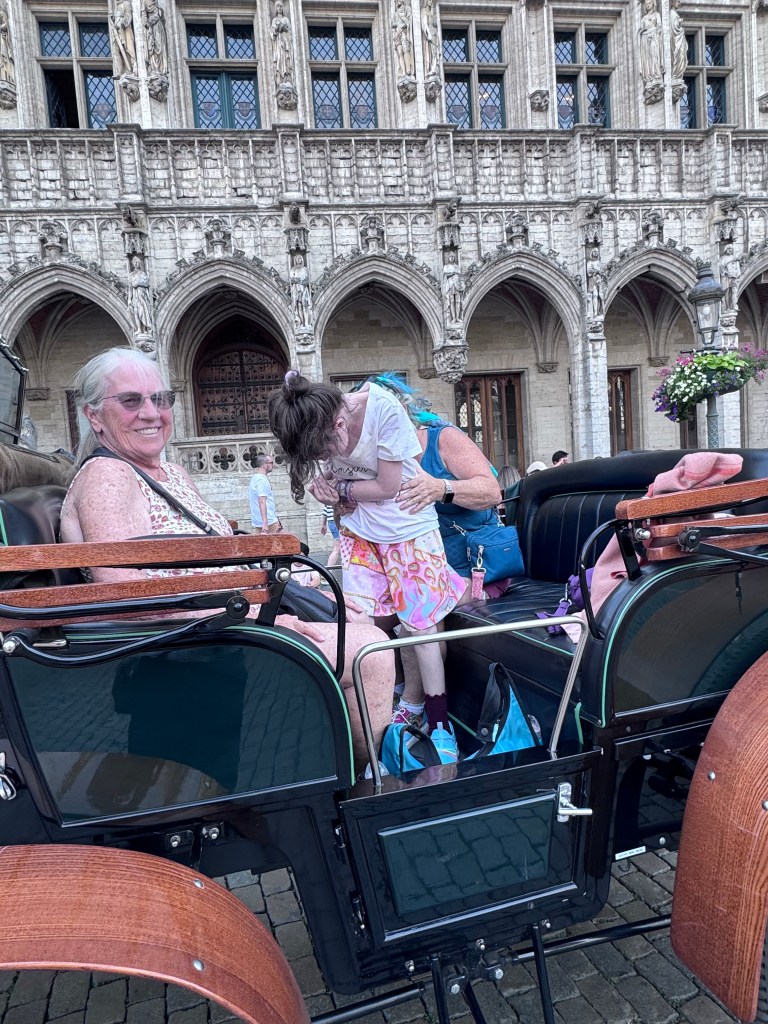
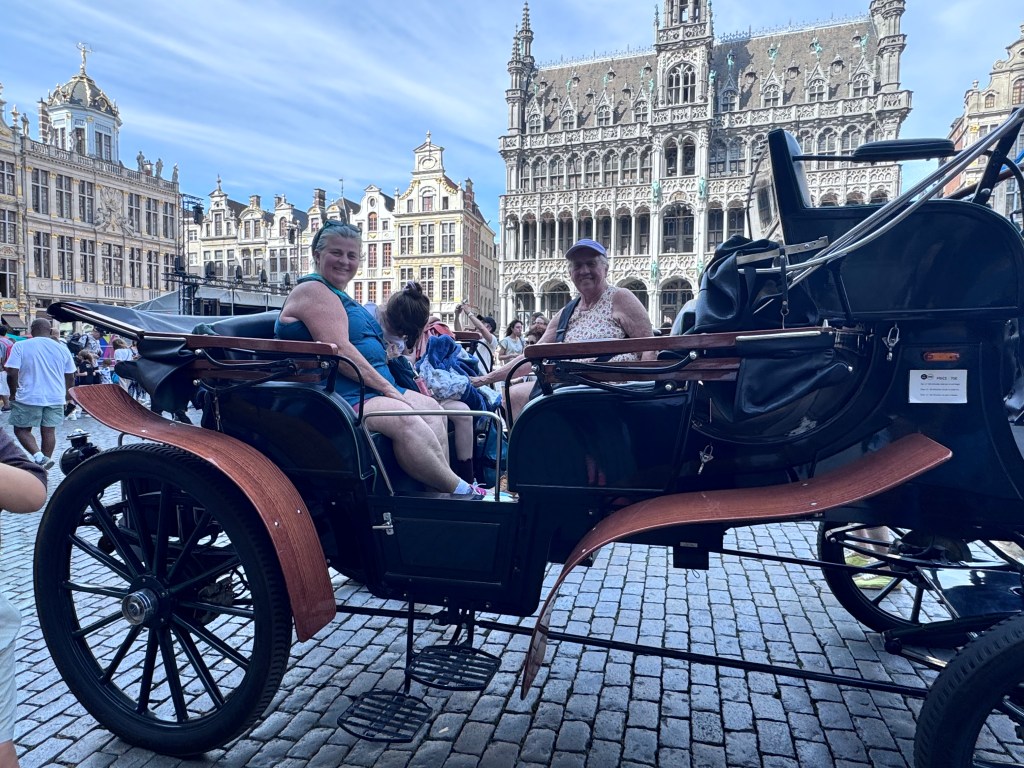
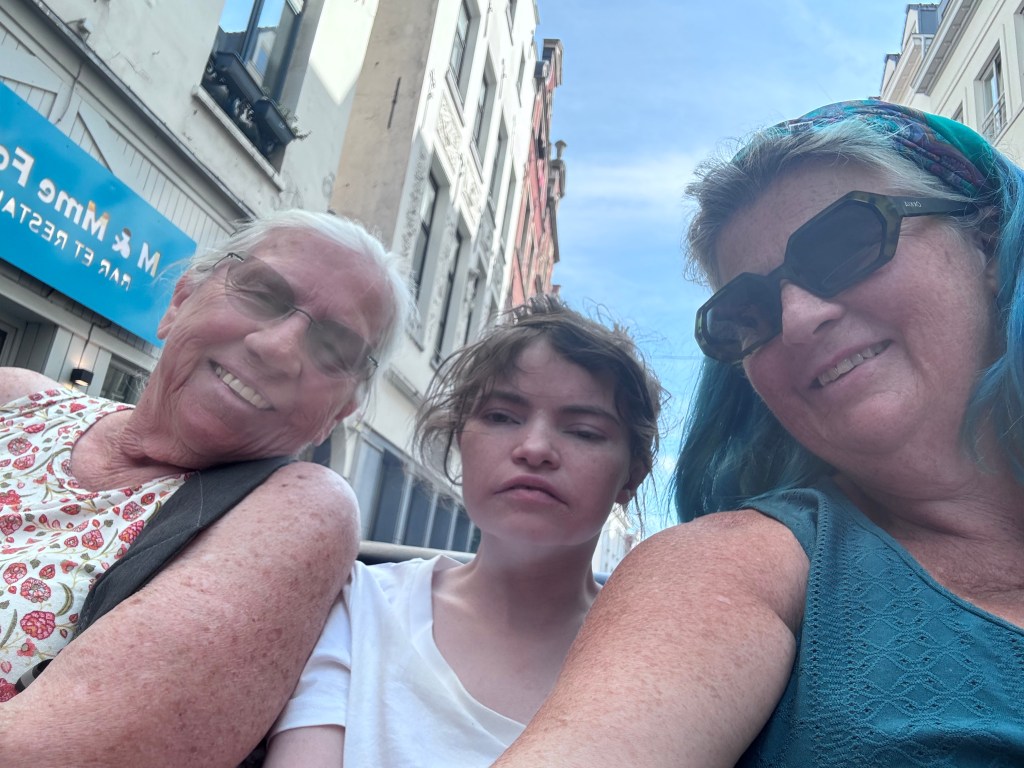
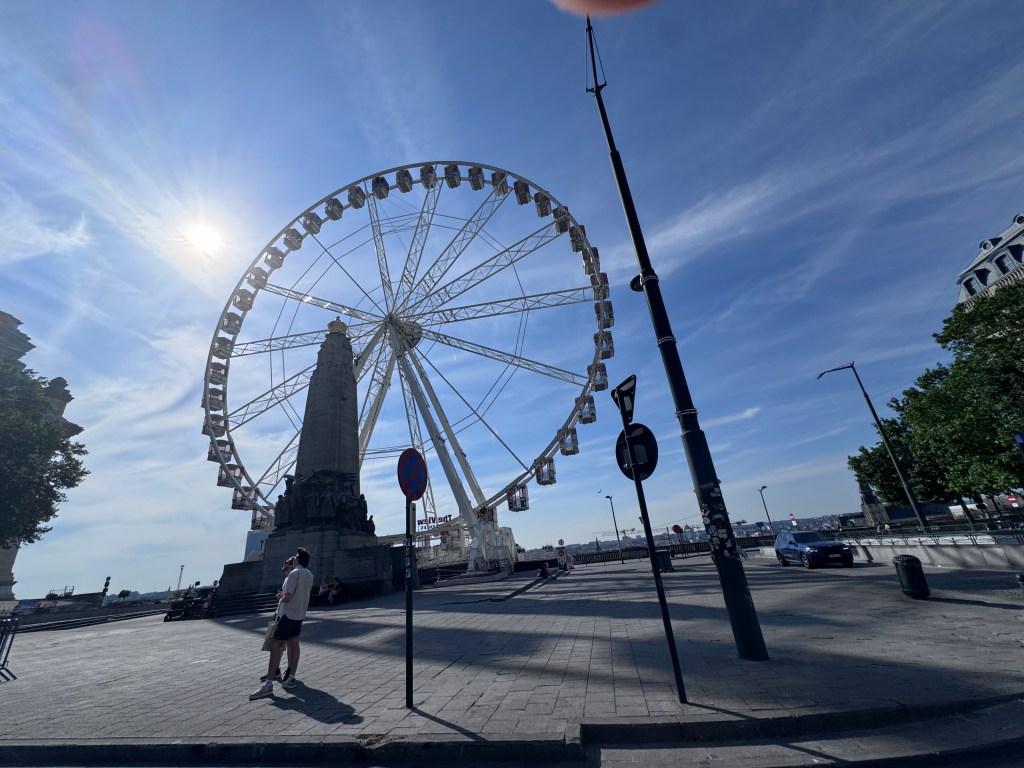
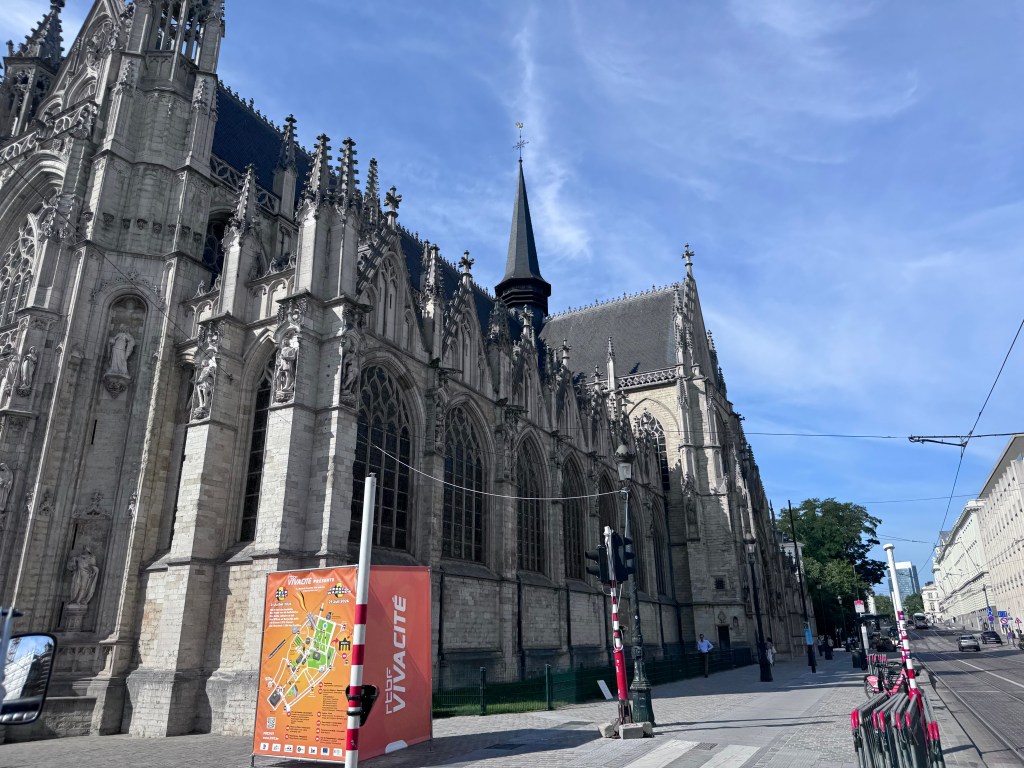
After spending several hours exploring the palace, we returned to the Grand Place. Along the way we noticed people being driven around the city in small electric sightseeing cars. It looked like so much fun that we tracked them down and booked a ride ourselves. It turned out to be one of the best ways to see Brussels. We cruised through neighborhoods we might never have found on foot while learning interesting bits of history from our driver.

Back on foot, we spent the rest of the afternoon doing what Brussels does best—chocolate tasting! If Amsterdam had been all about cheese, Brussels was all about chocolate. Nearly every chocolate shop welcomed visitors with generous samples, making it nearly impossible to walk past without stopping. We happily accepted the challenge, tasting pralines, truffles, dark chocolate, milk chocolate, and several Belgian specialties before picking out a few favorites to bring home.
We wandered through the shopping districts, browsed boutiques, and discovered another little cultural difference. In many of the shops, especially those selling scarves, jewelry, and accessories, the items on display are simply samples. When you decide what you’d like to purchase, the shopkeeper retrieves a brand-new one from storage rather than handing you the display item. It was a shopping experience we hadn’t encountered before.
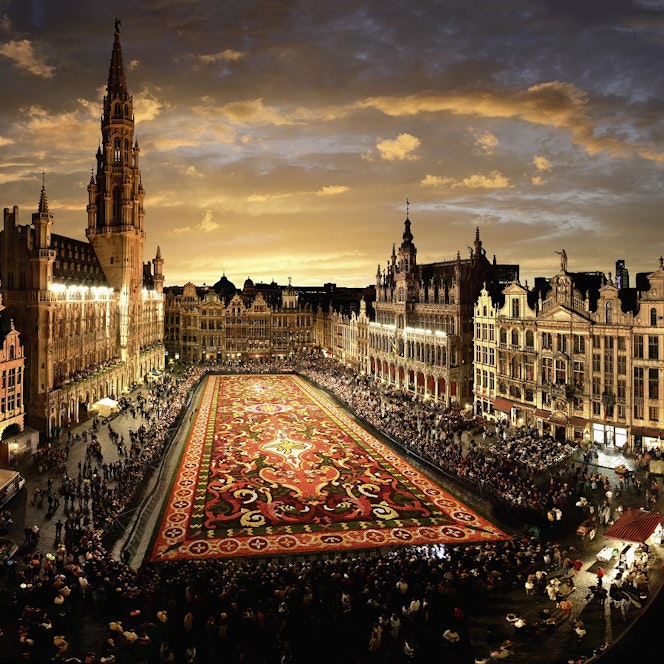
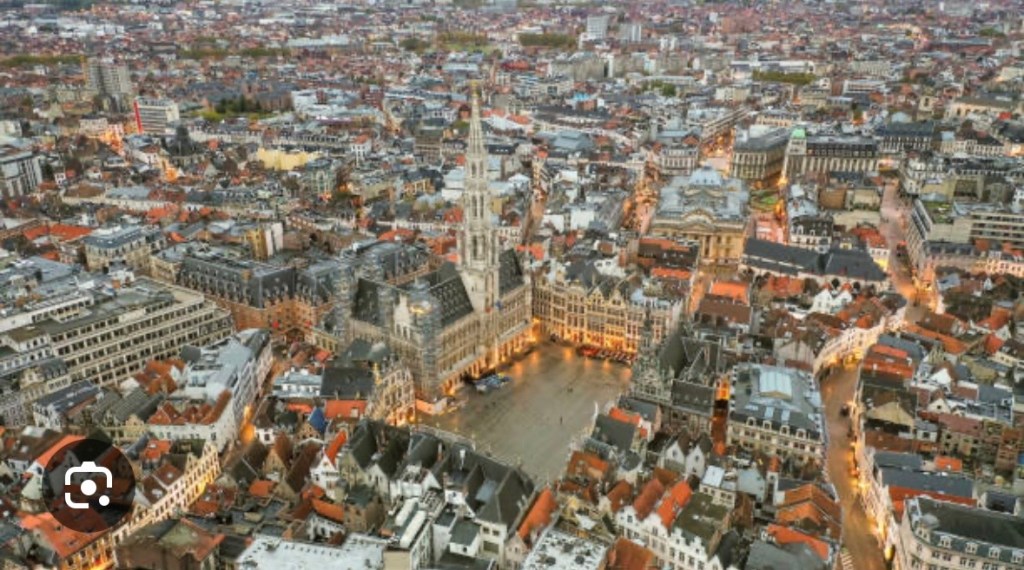
We finished the day with dinner at a wonderful Greek restaurant before taking one last stroll through the neighborhoods surrounding the Grand Place. Brussels is an incredibly compact city, making it easy to explore on foot. I’ll include an aerial photo because it’s the best way to appreciate just how closely everything is woven together. Street after street is filled with beautiful architecture, inviting shops, cafés, and hidden courtyards just waiting to be explored.
Looking back, we probably could have spent another day or two in Brussels. We certainly packed every minute full, but there was still so much left to see. That evening we returned to the apartment, repacked the few bags we had opened, and prepared for our next destination—Paris.