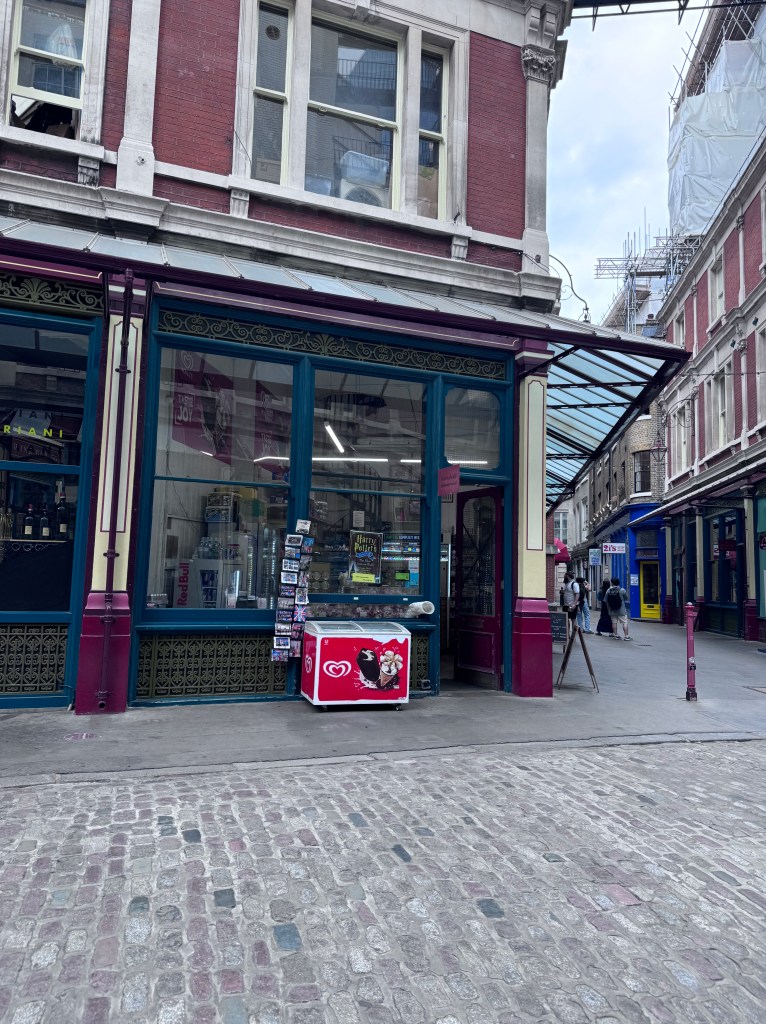
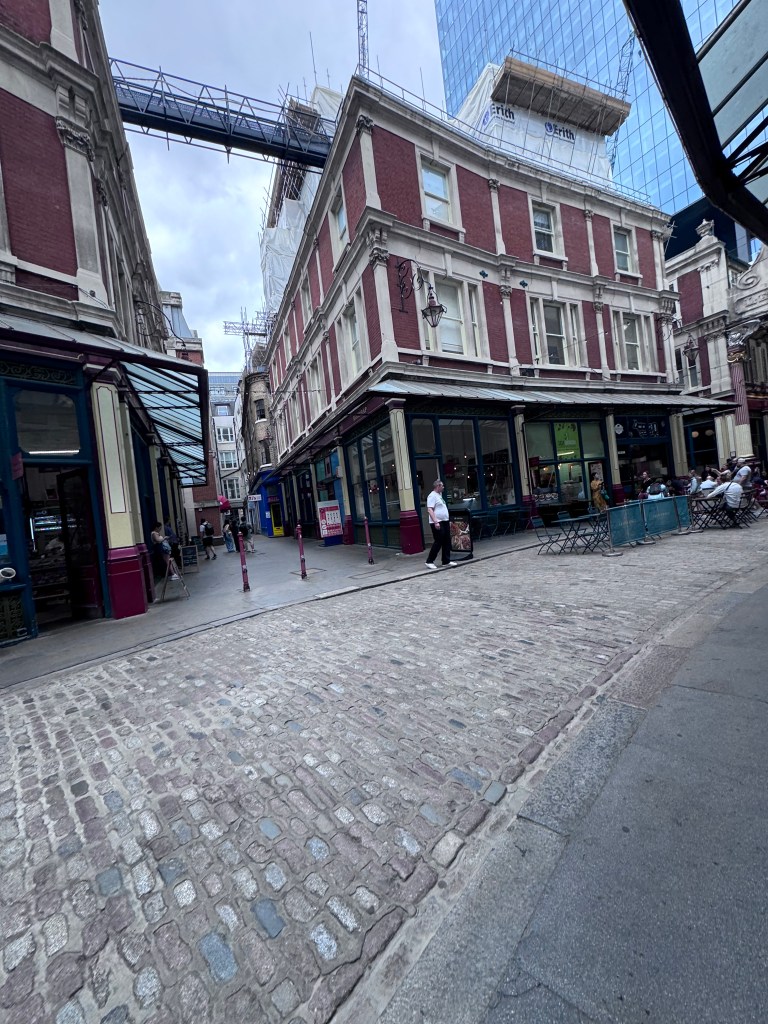
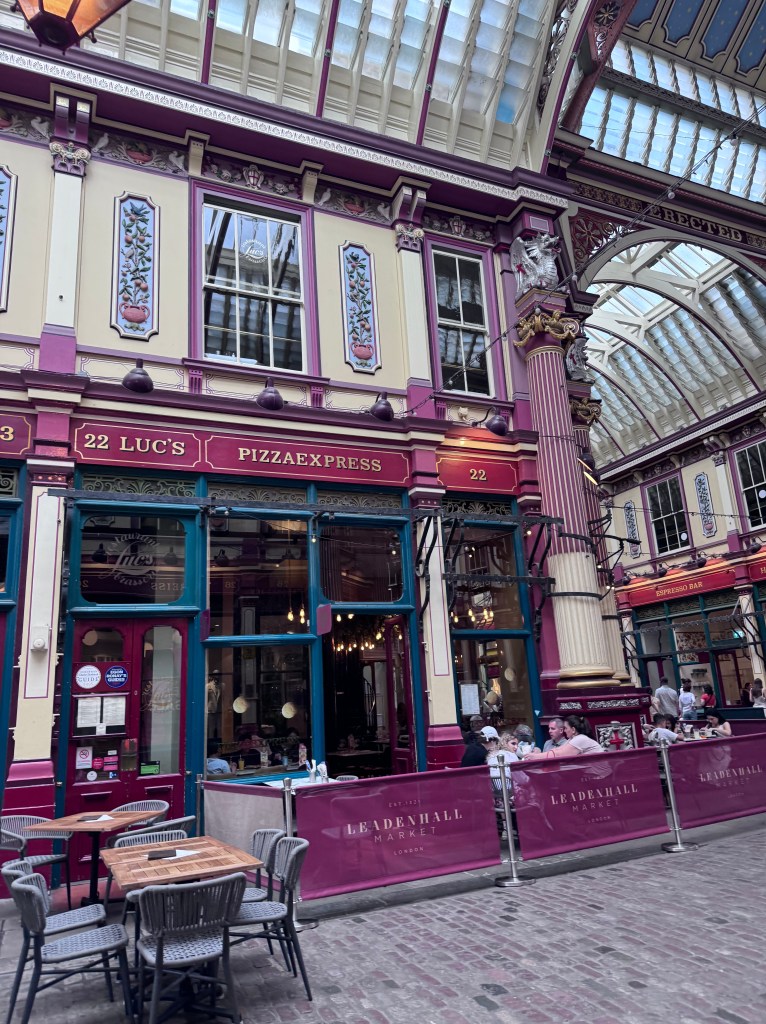
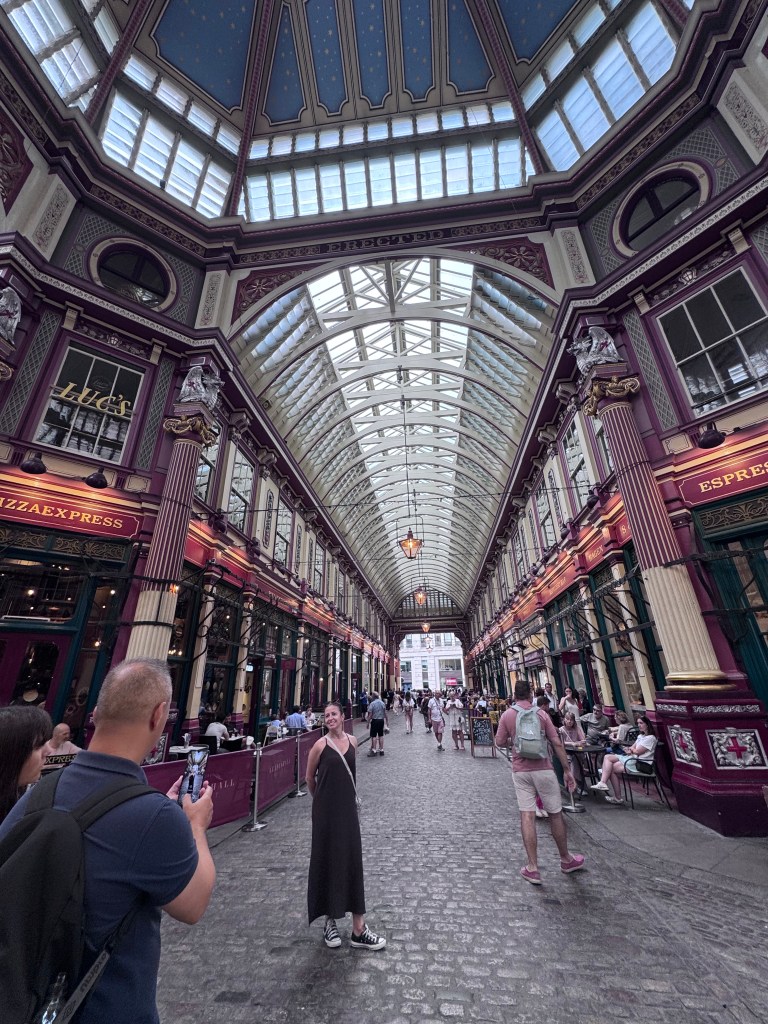
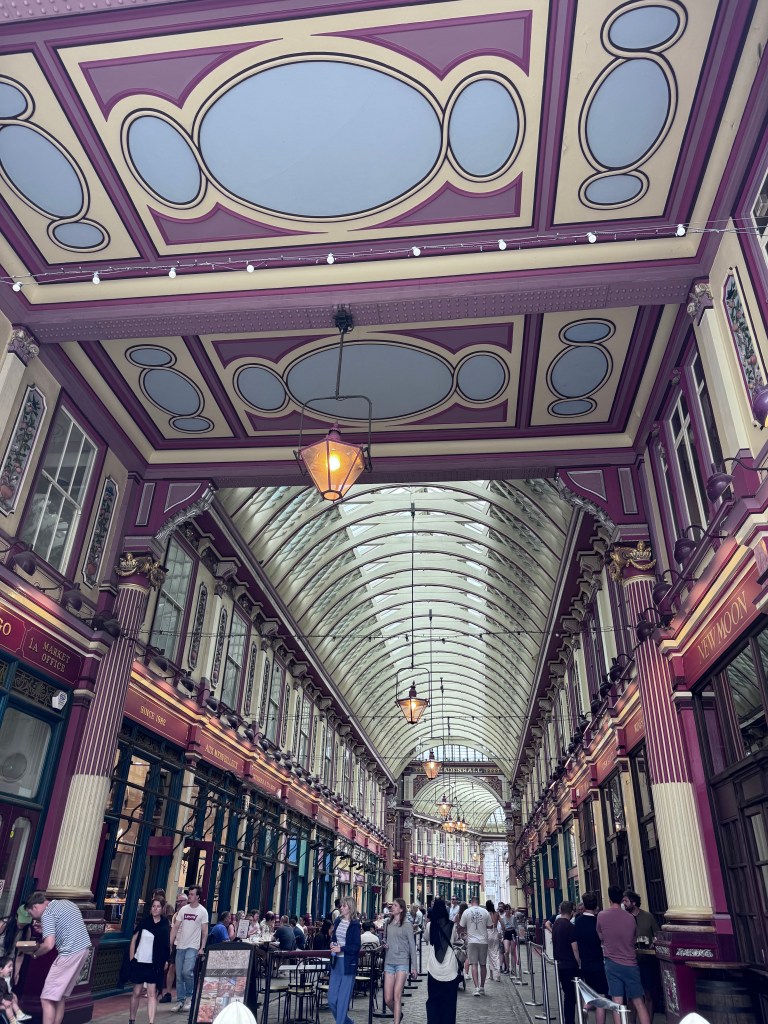
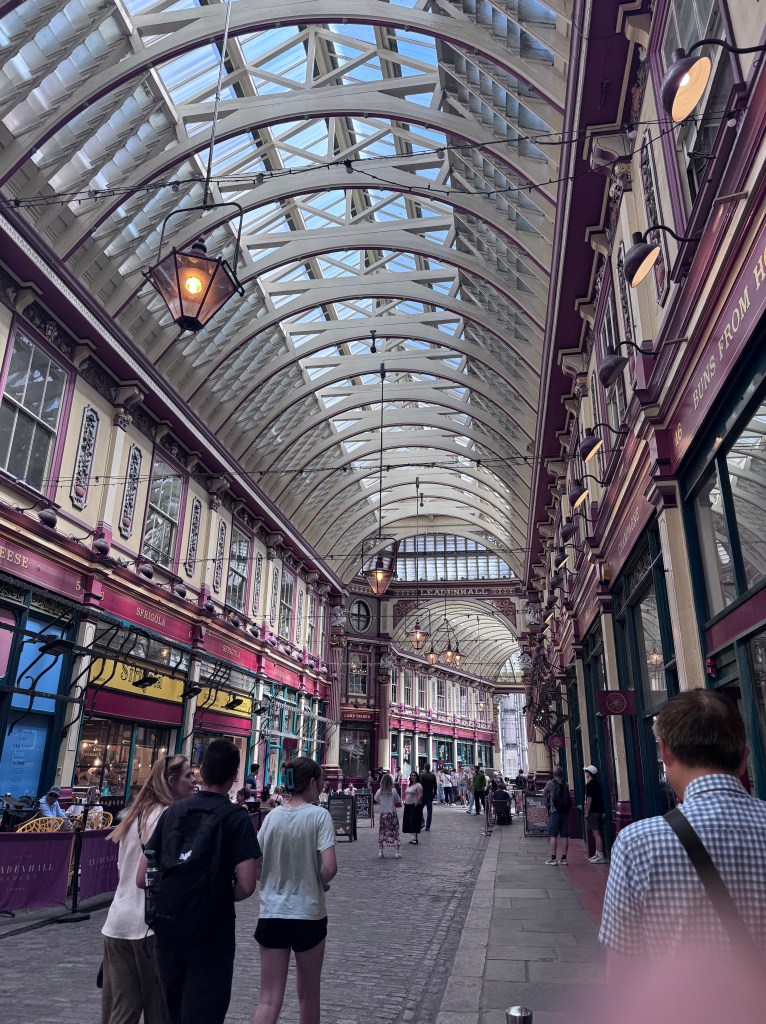
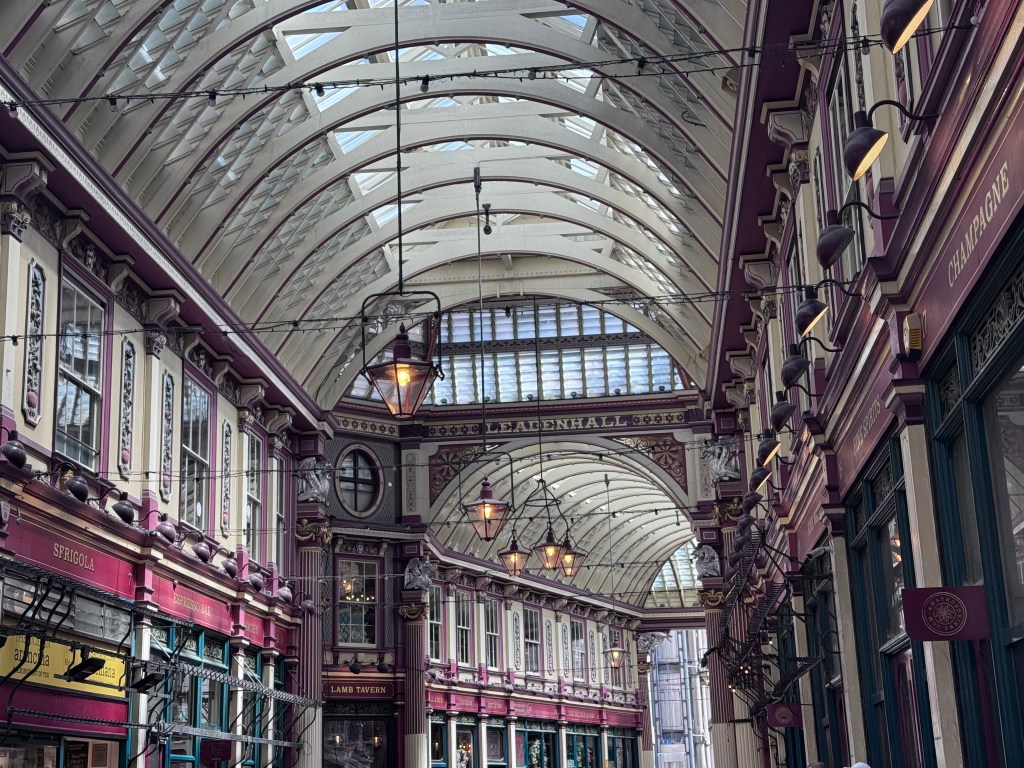
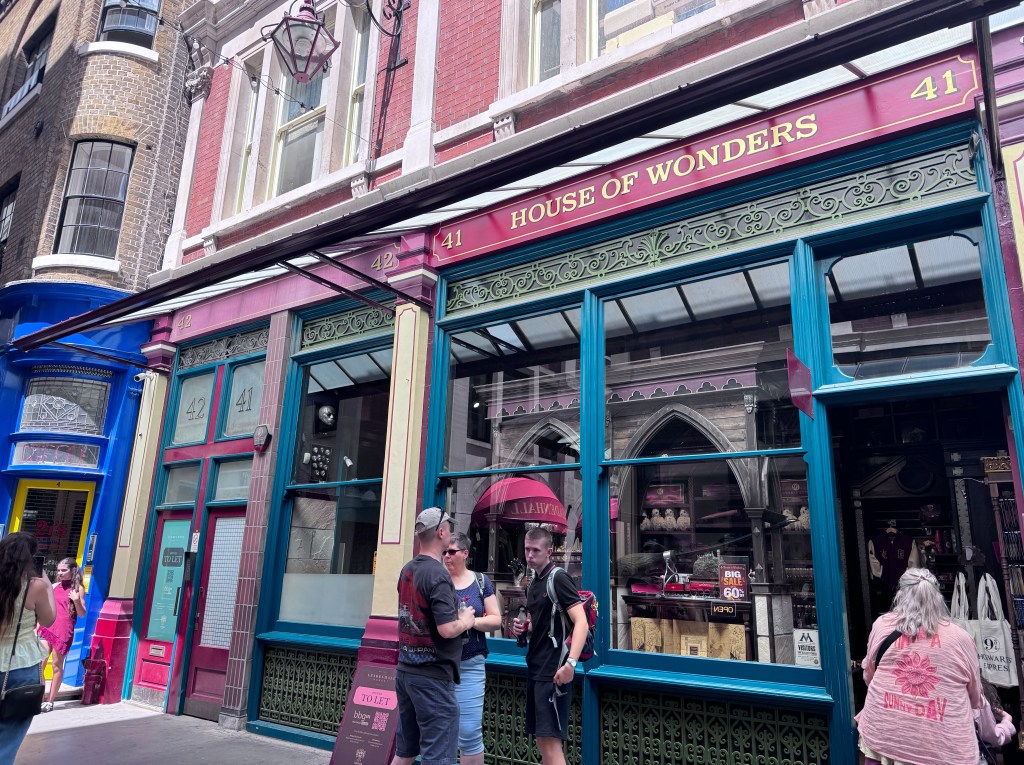
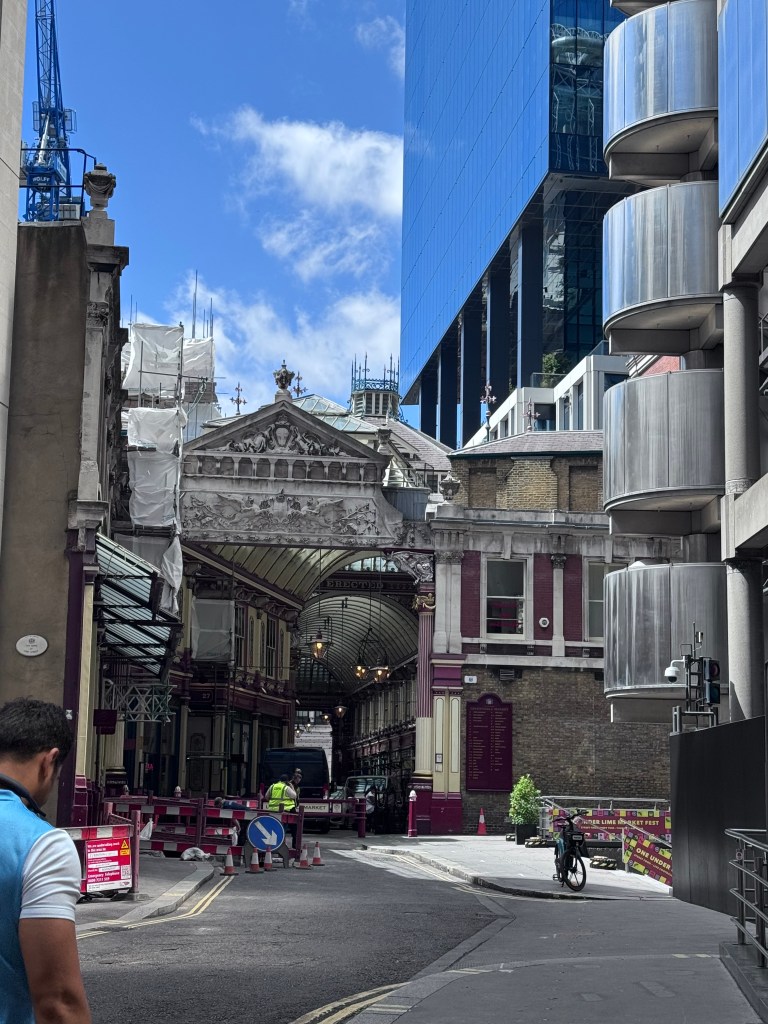
Our last day in London began with a taxi ride to Leadenhall Market, one of the city’s most beautiful covered markets. Dating back to the 14th century, the market stands on the site of what was once Roman London and was redesigned in 1881 by architect Sir Horace Jones, who also designed Tower Bridge and Smithfield Market. Its colorful Victorian ironwork, ornate roof, and cobbled walkways make it one of London’s architectural treasures.
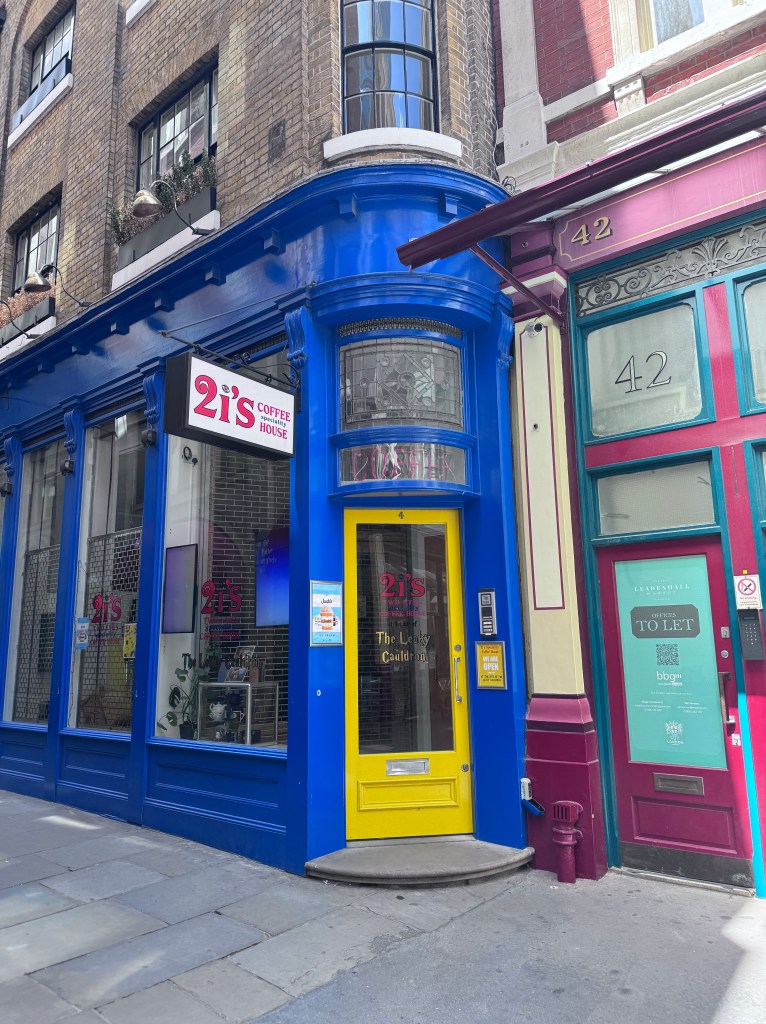
Harry Potter fans will recognize Leadenhall Market immediately. It served as the filming location for Diagon Alley in Harry Potter and the Philosopher’s Stone. The blue-fronted optician at Bull’s Head Passage was transformed into the entrance to the Leaky Cauldron, making it a must-see destination for fans of the series.
We wandered through the market, admiring the architecture before settling in for a lovely lasagna lunch. Afterwards we strolled through the surrounding neighborhoods toward the Tower of London. Along the way we found ourselves constantly looking up. London has an incredible way of blending centuries-old buildings with sleek modern skyscrapers, creating fascinating contrasts around every corner.
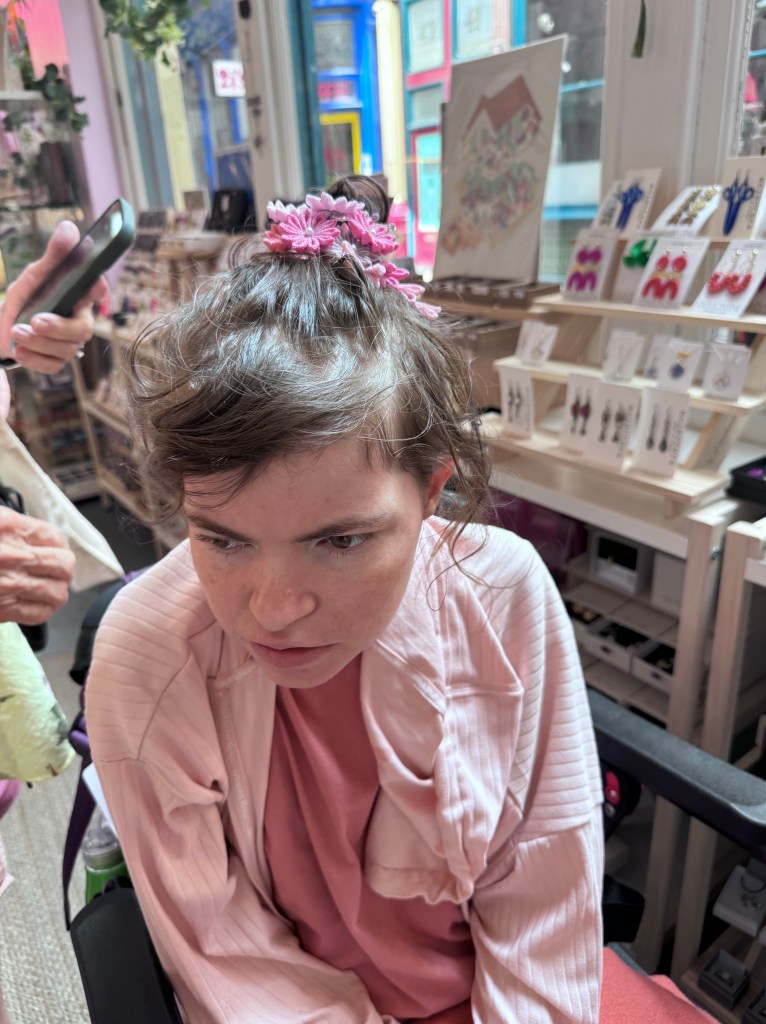
We stopped in a tourist shop where I purchased a handheld fan to help combat the summer heat. Kiya, however, had her eyes fixed on the shop across the street. Once inside, she was definitely in a shopping mood! She happily let us allow her to be pushed and wandered through the store selecting souvenirs, and we decided to let her enjoy herself by choosing whatever she liked. Watching her excitement was every bit as enjoyable as the shopping itself.
Continuing our walk, we came across a section of London’s ancient Roman Wall. Built around AD 200, the wall once enclosed the city of Londinium and stretched for nearly two miles, protecting the Roman settlement for centuries. It’s incredible to think that pieces of it still stand nearly 1,800 years later.
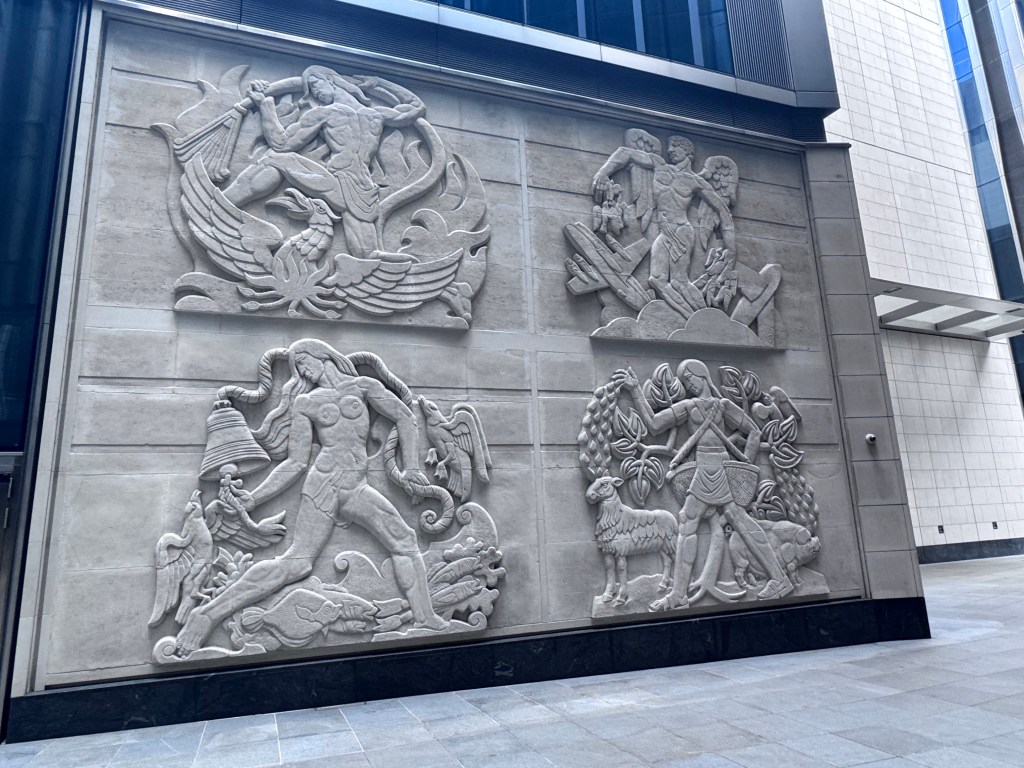
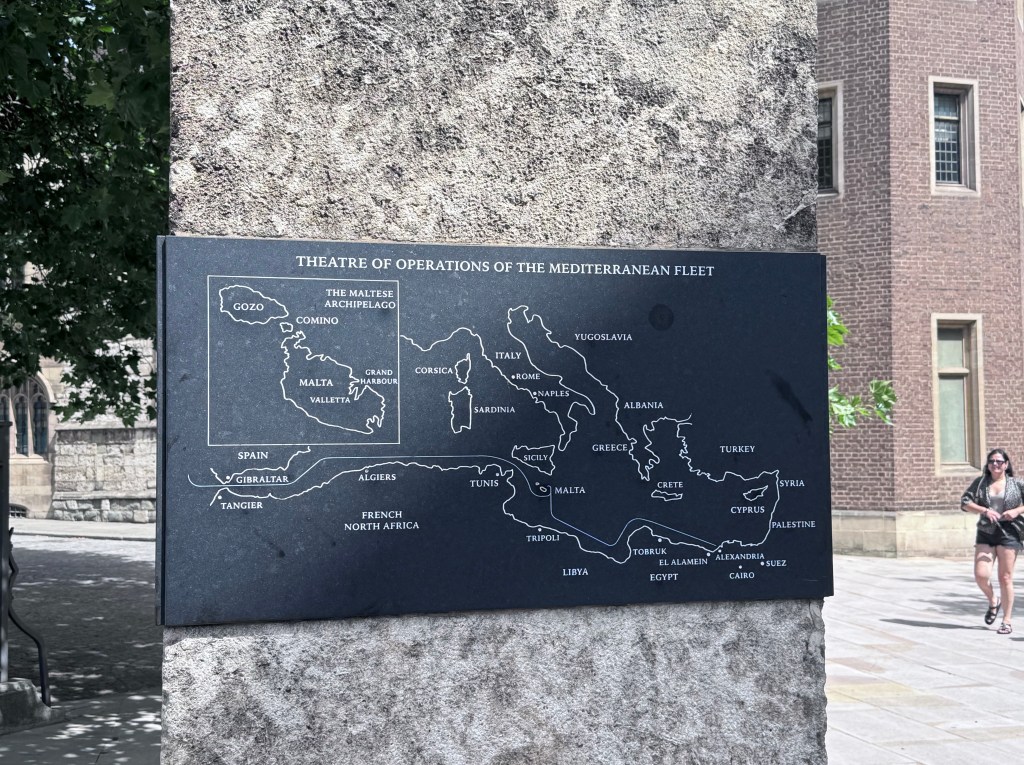
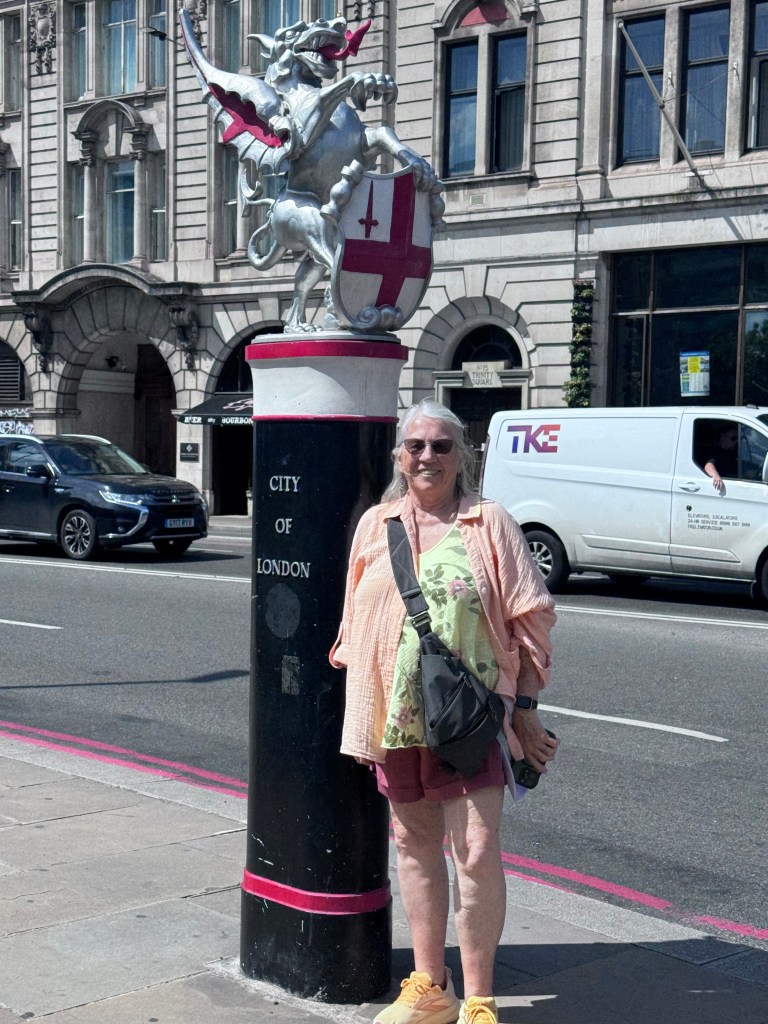
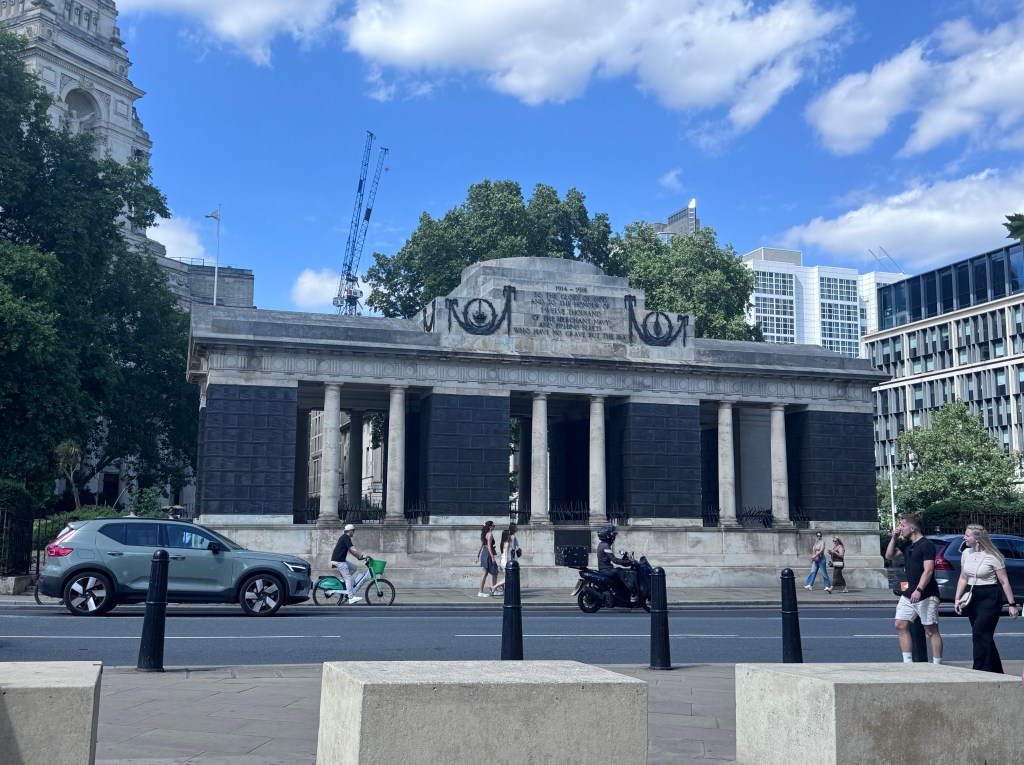
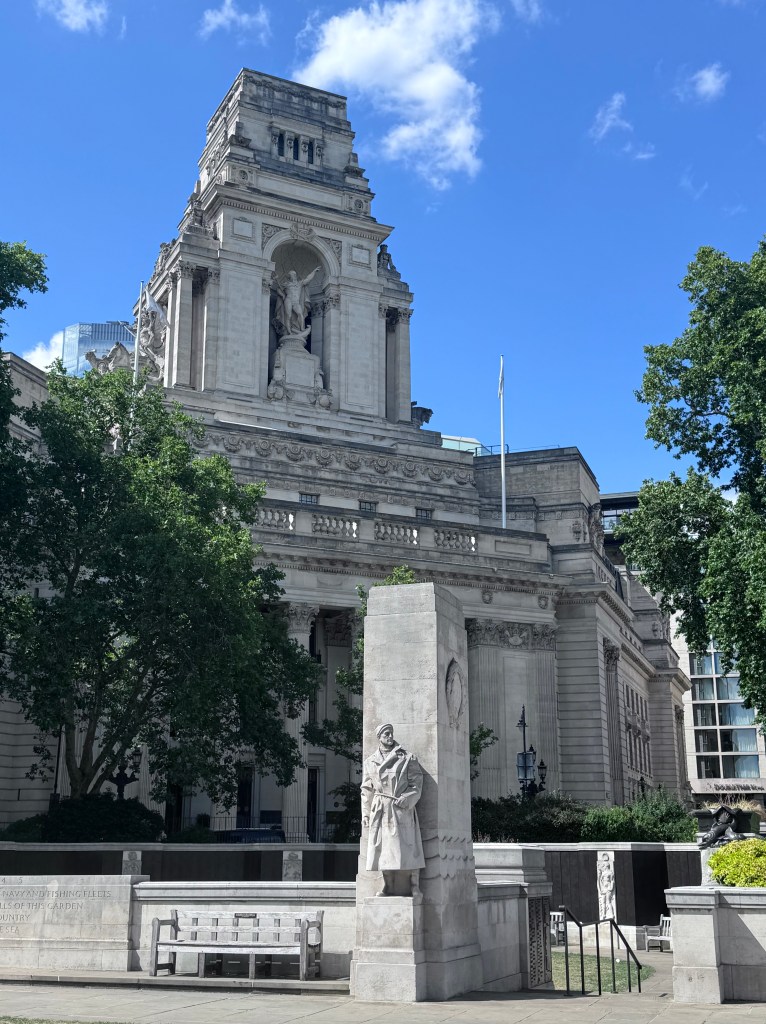
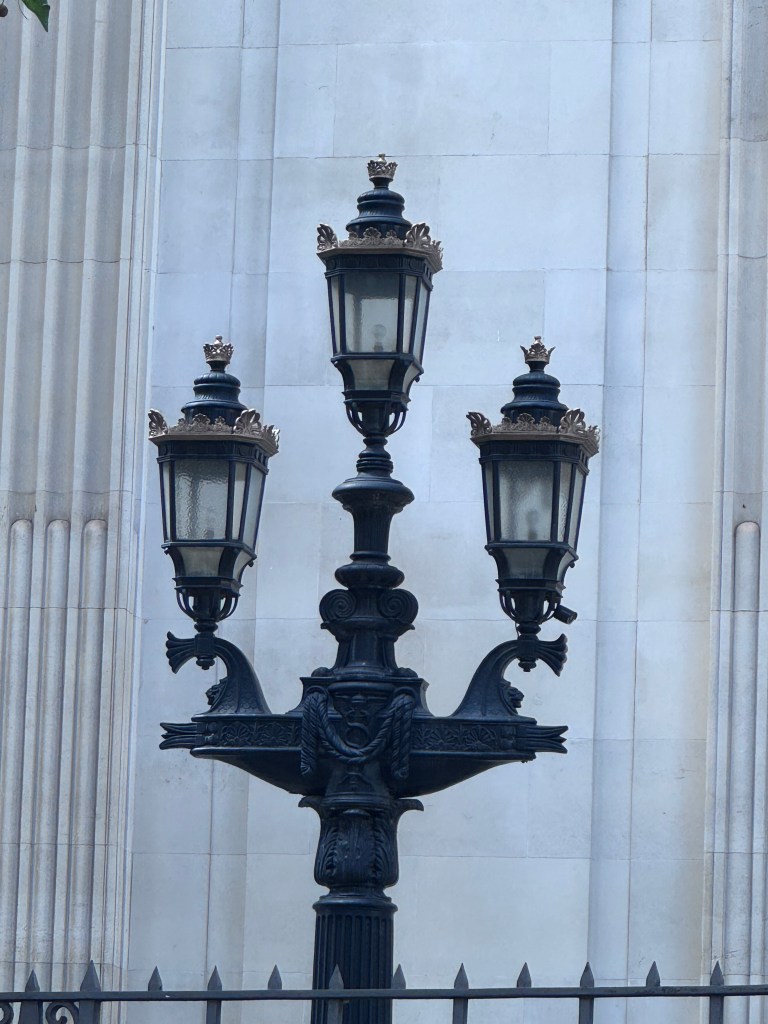
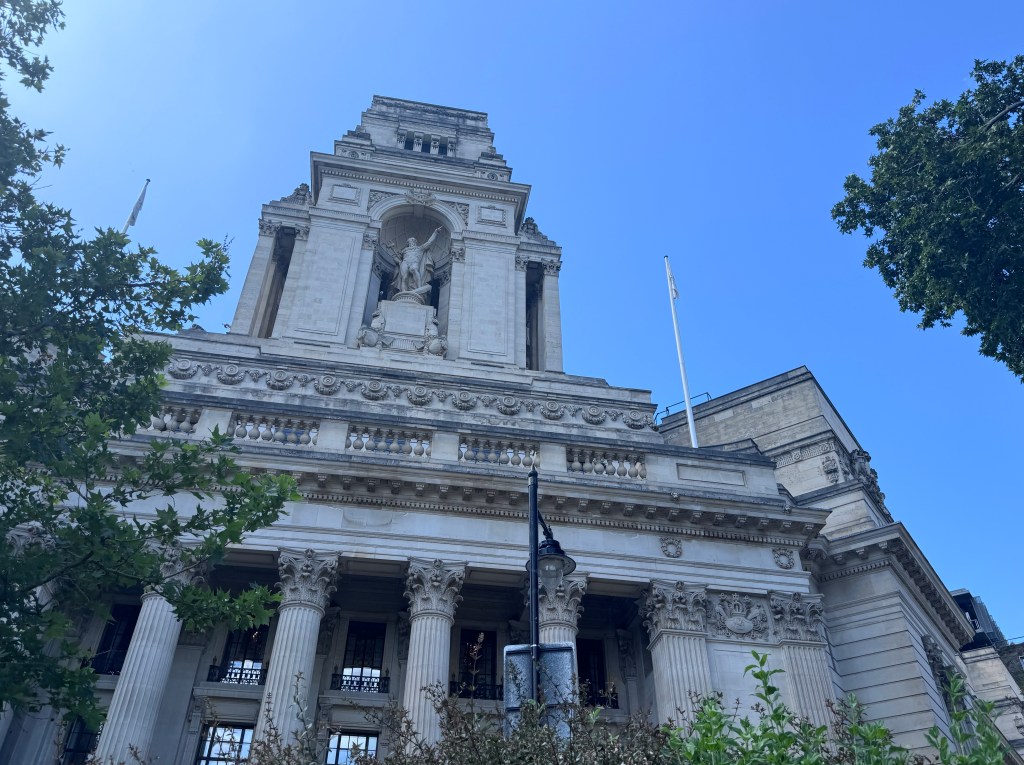
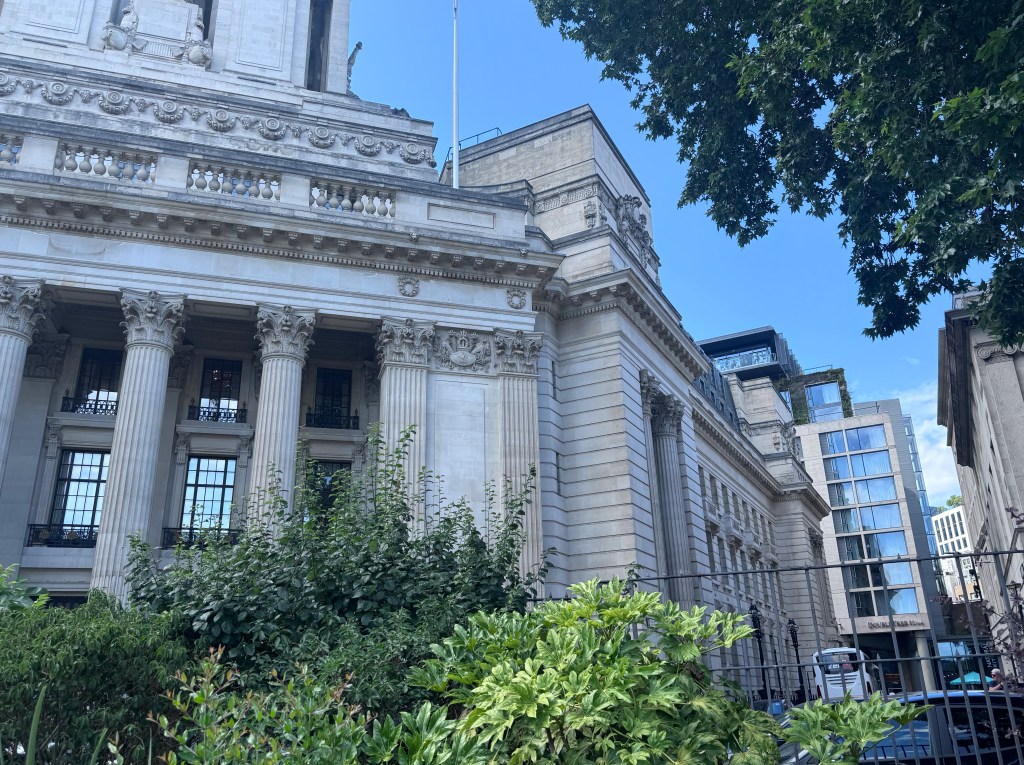
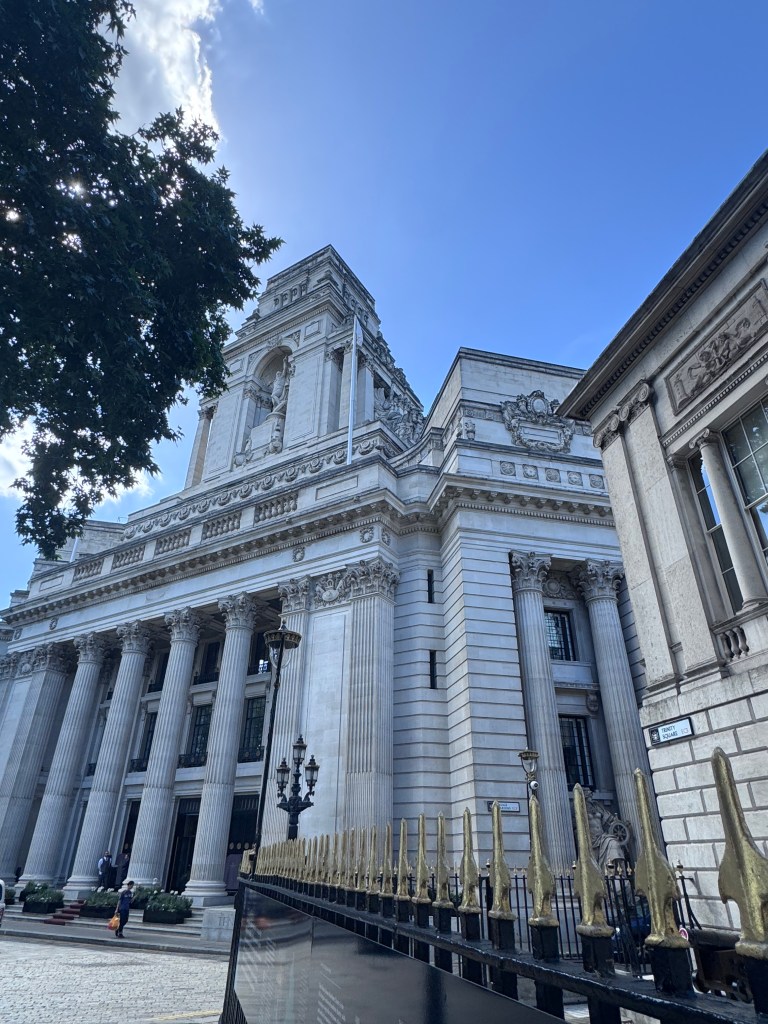
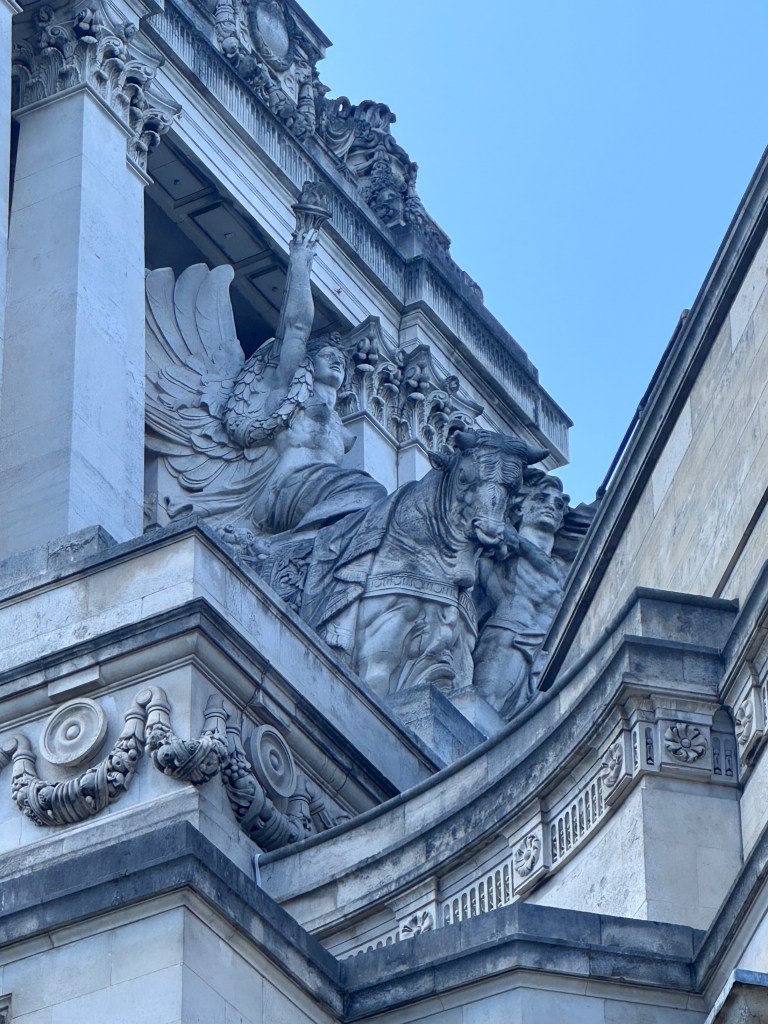
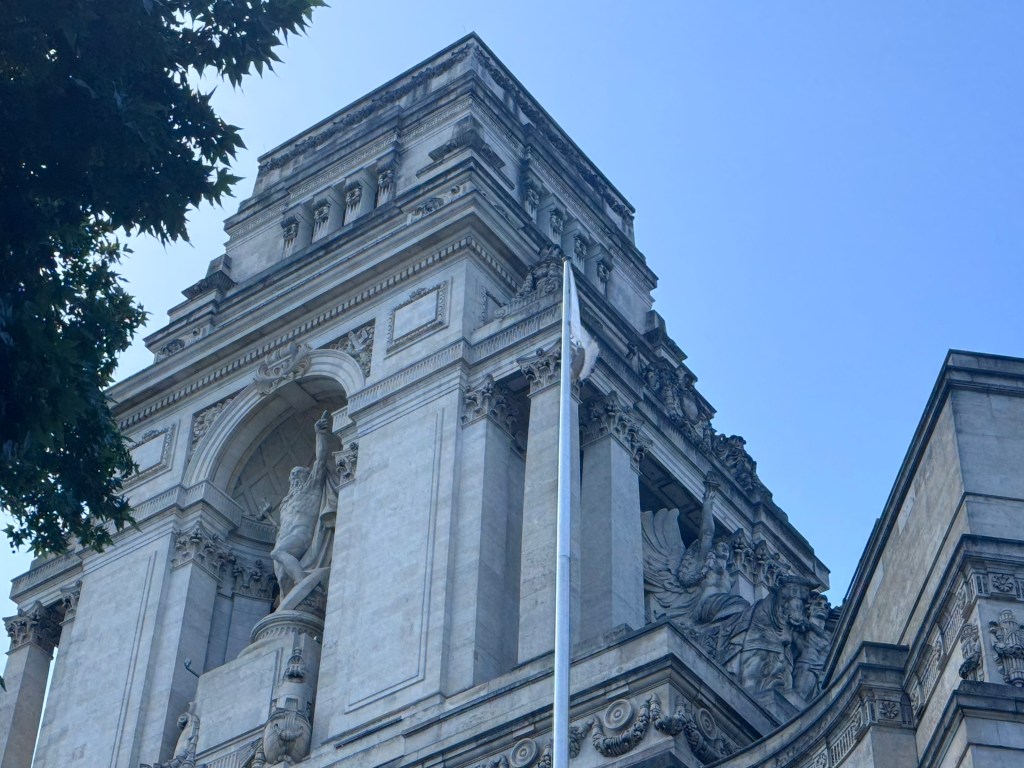
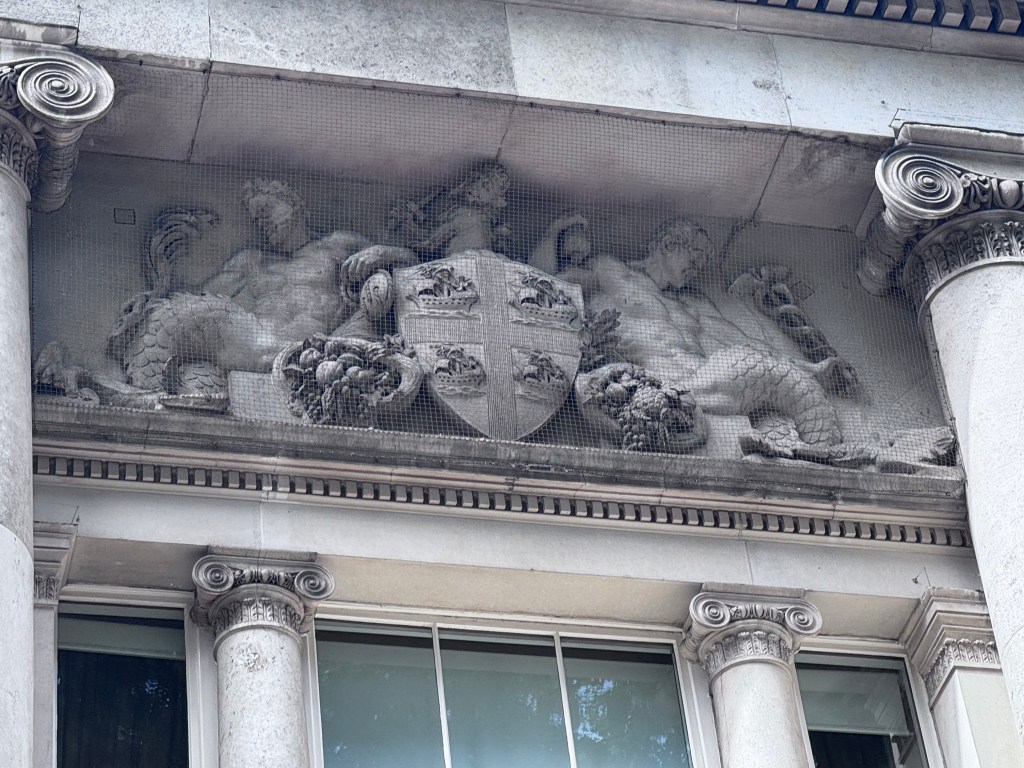
Across the street stands 10 Trinity Square, one of London’s grandest historic buildings. Completed in 1922 as the headquarters of the Port of London Authority, it overlooks the Tower of London and was designed in the Beaux-Arts style by Sir Edwin Cooper. During the Second World War, General Dwight D. Eisenhower used the building as his headquarters while planning the D-Day landings. Today it has been transformed into a luxury hotel and residences while still retaining much of its original grandeur.
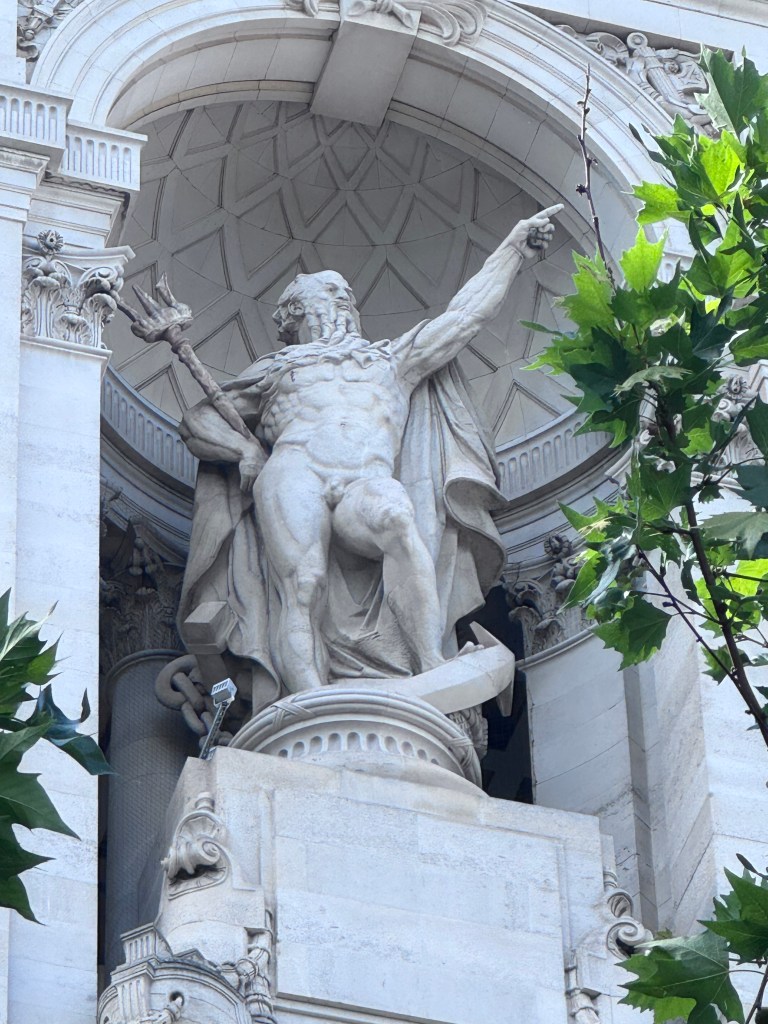
The building is richly decorated with allegorical sculptures that celebrate Britain’s role as a global maritime nation during the height of the British Empire. Around the exterior are large stone figures representing the four continents that were traditionally recognized at the time—Europe, Asia, Africa, and the Americas. Each continent is portrayed with symbolic objects and clothing that reflected how those regions were viewed in the early 20th century. Europe represents learning, government, and commerce; Asia symbolizes trade, culture, and luxury goods such as silk and spices; Africa is depicted through symbols of its wildlife, natural resources, and exploration; while the Americas represent agriculture, industry, and opportunity. Interspersed among these figures are sculptures representing Navigation, Commerce, Industry, and Seafaring, honoring the sailors, dockworkers, merchants, and explorers who helped make the Port of London one of the busiest ports in the world.
What immediately caught my eye, however, were the spectacular bronze sculptures crowning the roof. Massive horses pulling chariots appear to burst dramatically from the corners of the building, as though racing into the sky above London. These powerful quadriga sculptures symbolize triumph, progress, and Britain’s mastery of the seas. They are impossible to miss and add an incredible sense of movement and grandeur to an already stunning piece of architecture. It was one of those unexpected buildings that made us stop, stare, and appreciate the artistry that surrounds you throughout London.
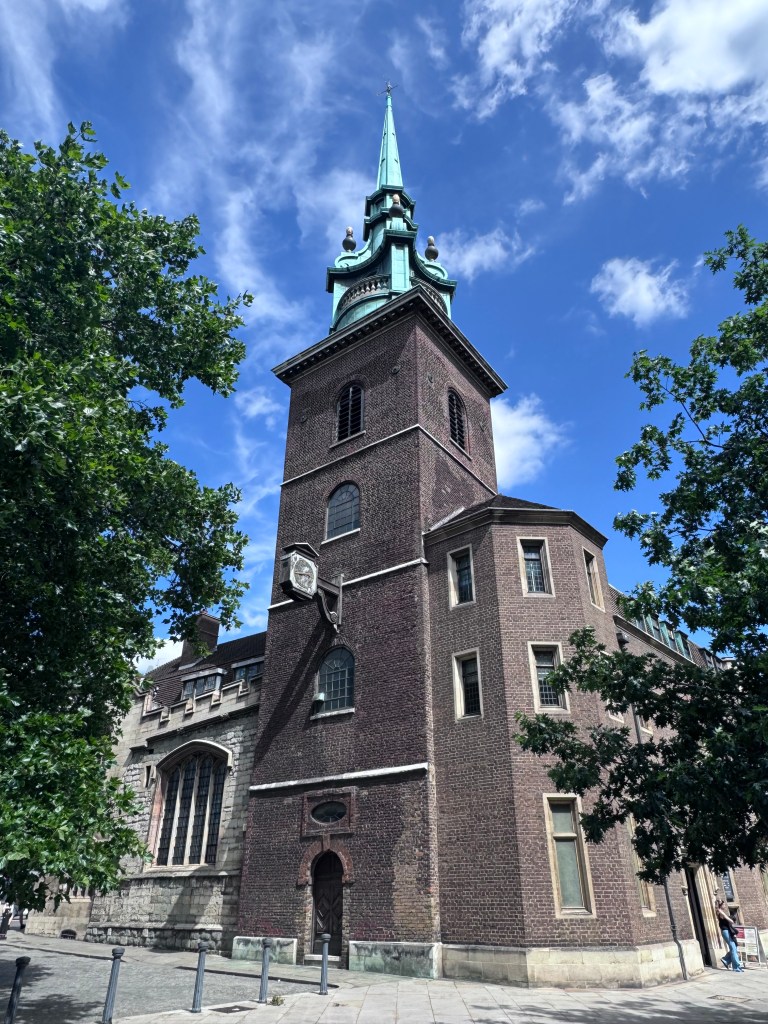
Nearby we also passed St. Bartholomew-the-Great, London’s oldest parish church, founded in 1123. Standing quietly among the busy city streets, it was another reminder that history is woven into nearly every block of London.
Soon we reached the Tower of London. Since Mom had toured it on a previous visit, she knew many of the towers and stairways would not be accessible for Kiya’s transport chair, so we chose to admire the historic fortress from the outside instead. Built by William the Conqueror beginning in 1066, the Tower has served as a royal palace, prison, treasury, mint, and armory. It has witnessed nearly a thousand years of English history, from royal coronations to famous imprisonments and executions.
We made our way to Tower Pier to catch another Uber Boat. While we were waiting, I noticed a traditional tall sailing ship making its way up the Thames. I turned to Mom and said, “They’re going to have to raise Tower Bridge.” Sure enough, within minutes the roadway slowly lifted to allow the ship to pass beneath. At almost the same time, a beautiful replica paddlewheel steamer approached from the opposite direction. Watching the bridge rise and lower was surprisingly peaceful. I expected grinding machinery and loud motors, but instead it moved almost silently and with remarkable grace.
We boarded our Uber Boat and cruised back to St. George Wharf Pier near Vauxhall.
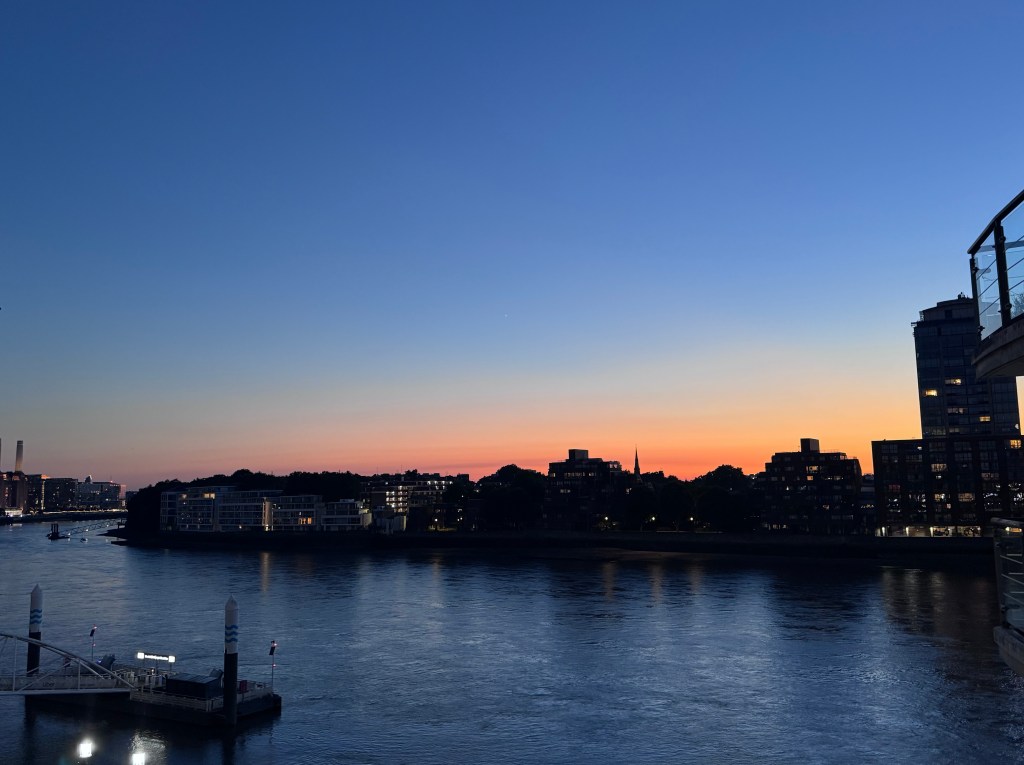
Our apartment had been in a wonderful location. Vauxhall Bridge, completed in 1906, is one of London’s oldest road bridges crossing the Thames. It connects Westminster with the Vauxhall district and is decorated with large bronze statues representing arts, sciences, engineering, agriculture, architecture, and local government. Just across the river sits the headquarters of MI6, the United Kingdom’s Secret Intelligence Service. The distinctive green glass building has become famous through numerous James Bond films. We joked that we were probably staying in one of the safest neighborhoods in London with MI6 just across the street keeping an eye on everything!
That evening we repacked our suitcases one final time and prepared for the next stage of our adventure. The following morning we would board the Eurostar, traveling beneath the English Channel and leaving England behind as we headed for Amsterdam. It was hard to believe how quickly our time in London had passed, but we were excited to see what awaited us in the Netherlands.